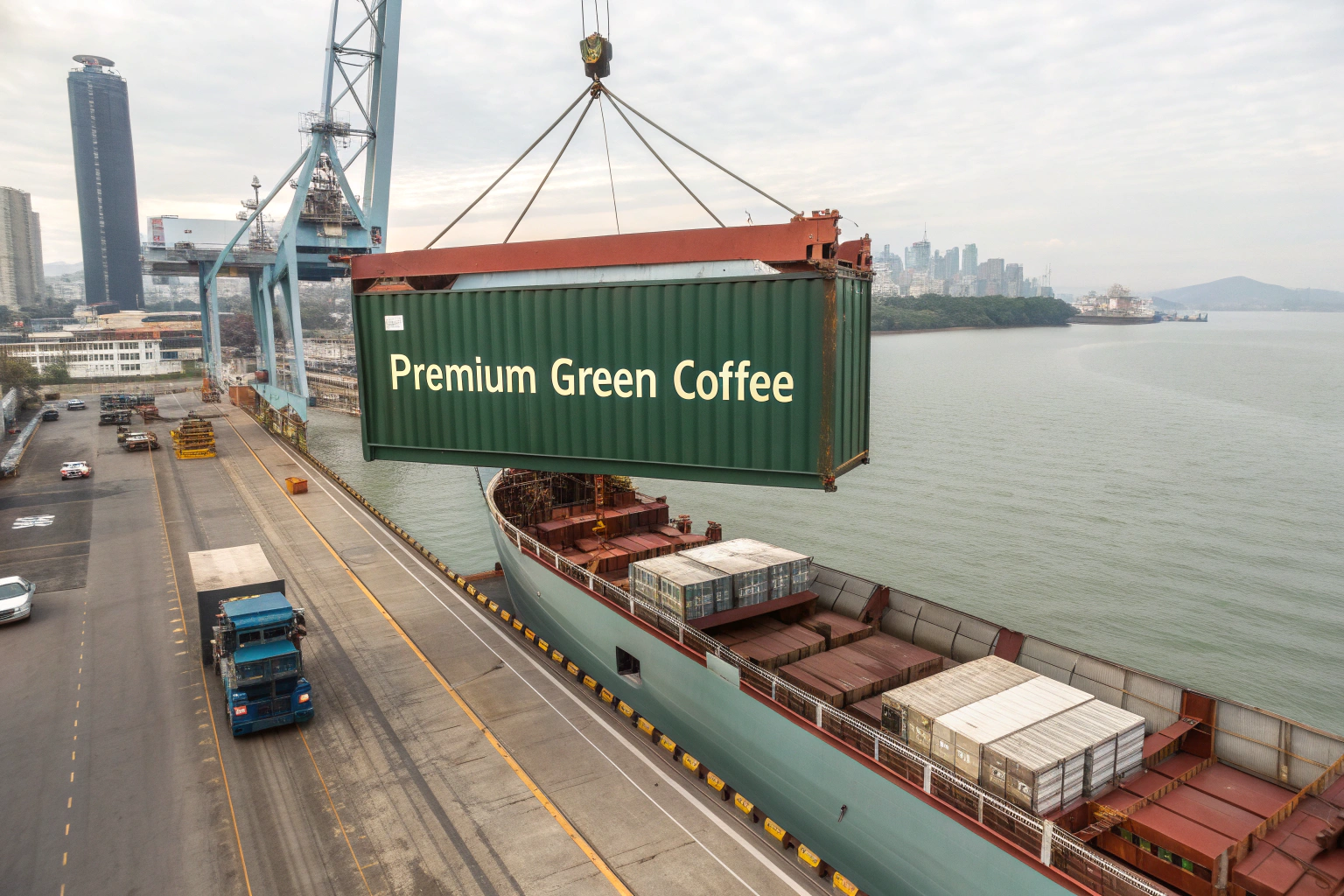
Your container of premium green coffee is loaded onto a vessel in Shenzhen. For the next 30 to 45 days, it will cross oceans, facing temperature swings, humidity spikes, and constant vibration before reaching Los Angeles or Rotterdam. This journey isn't a passive holding period; it's an active threat to the flavor, aroma, and physical integrity you've paid for. A failure to manage this transit phase can turn a specialty-grade lot into a commercial-grade disappointment upon arrival. So, how do you protect your investment across thousands of nautical miles?
Maintaining coffee bean quality during long ocean transits requires a multi-layered defense strategy focusing on moisture control, temperature stability, and physical protection. The core tactics include: ensuring optimal pre-shipment moisture content (10-12%), using advanced barrier packaging (GrainPro liners inside jute/sisal bags), selecting ventilated or controlled-atmosphere containers, strategic stowage planning, and partnering with logistics providers experienced in perishable food-grade cargo. Proactive management at each stage is non-negotiable to prevent "container rain," mold growth, off-flavor absorption, and physical damage.
Think of the shipping container as a moving warehouse subjected to extreme weather. The goal isn't just to get the beans from A to B, but to deliver them in the same condition they were loaded. This demands specific knowledge and actions long before the container is sealed. Let's navigate through the critical control points.
Why is Pre-Shipment Moisture Content the Most Critical Factor?
Everything starts here. Shipping coffee with incorrect moisture content is like building a house on sand. No amount of expensive packaging can fix a fundamental internal flaw. The bean's moisture level is its inherent vulnerability. Too high, and it invites biological activity; too low, and it risks becoming brittle and losing volatile aromatics.
A hard lesson from early shipments: We once rushed a shipment where a lot tested at 12.8% moisture. "It's only 0.8% over," we thought. Upon arrival, the beans had a faint musty note. The entire container's value was downgraded. Since then, Shanghai Fumao enforces a strict maximum of 11.5% for all long-haul exports. It's the single most important line on our QC report.
What is the Ideal Moisture Range and How is it Measured?
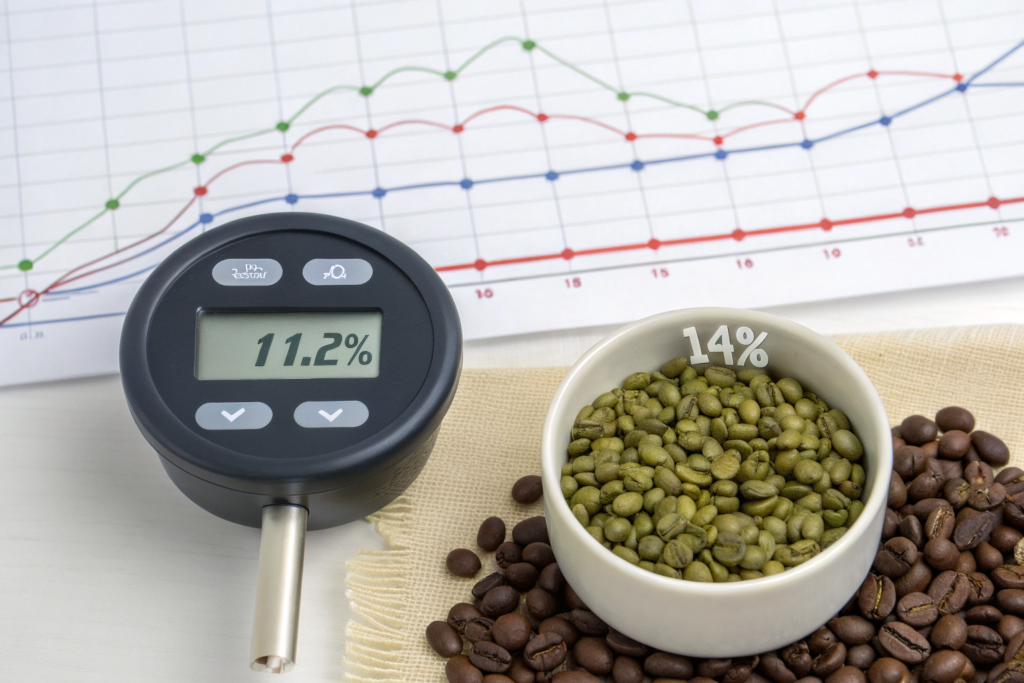
The universally accepted safe range for shipping green coffee is 10% to 12% moisture content (wet basis). The sweet spot for long voyages is 10.5% to 11.5%.
- Below 10%: Beans become overly brittle, leading to a higher percentage of broken beans ("brokens") during handling and transit. This increases bitterness and can accelerate staling (oxidation).
- Above 12%: The risk of mold growth and fungal activity increases exponentially. Beans can also heat up due to microbial respiration, creating a "hot spot" in the container.
Measurement must be scientific. Relying on touch or taste is insufficient. Use a calibrated digital moisture meter (like a Dickey-John or similar) and test multiple samples from throughout the lot. Certification from an independent inspector like SGS verifying moisture content is a best practice and provides a defensible document for insurance claims if needed.
How Does Moisture Interact with Temperature in Transit?
This is the dangerous synergy. During a voyage, external temperatures can fluctuate dramatically—from the heat of the tropics to the cold of northern routes. When the warm, moist air inside the container contacts the colder metal walls (especially the roof), it condenses into liquid water. This is "container rain" or "cargo sweat."
If your coffee bags are the first point of contact for this falling water, or if the beans themselves are a source of moisture (from high MC), you create a perfect storm for mold. The key is to ensure the coffee is dry enough that even if some condensation occurs, the beans do not absorb enough moisture to cross the critical 13-14% threshold where fungi thrive.
What Packaging and Container Strategies Are Essential?
Packaging is your bean's personal armor. The container is the fortress. Both must be chosen and configured correctly. The standard "bag-in-container" approach is outdated for quality preservation. Today, it's about creating a stable, insulated micro-environment within the harsh macro-environment of a cargo ship.
You wouldn't ship fine wine in an open bottle. Coffee is just as sensitive. The combination of packaging and container type is your primary controllable defense against the uncontrollable sea voyage.
Is a Hermetic Liner Non-Negotiable for Long Voyages?
For any coffee where preserving pristine quality is a priority (specialty, microlots, high-value contracts), yes, it is non-negotiable.
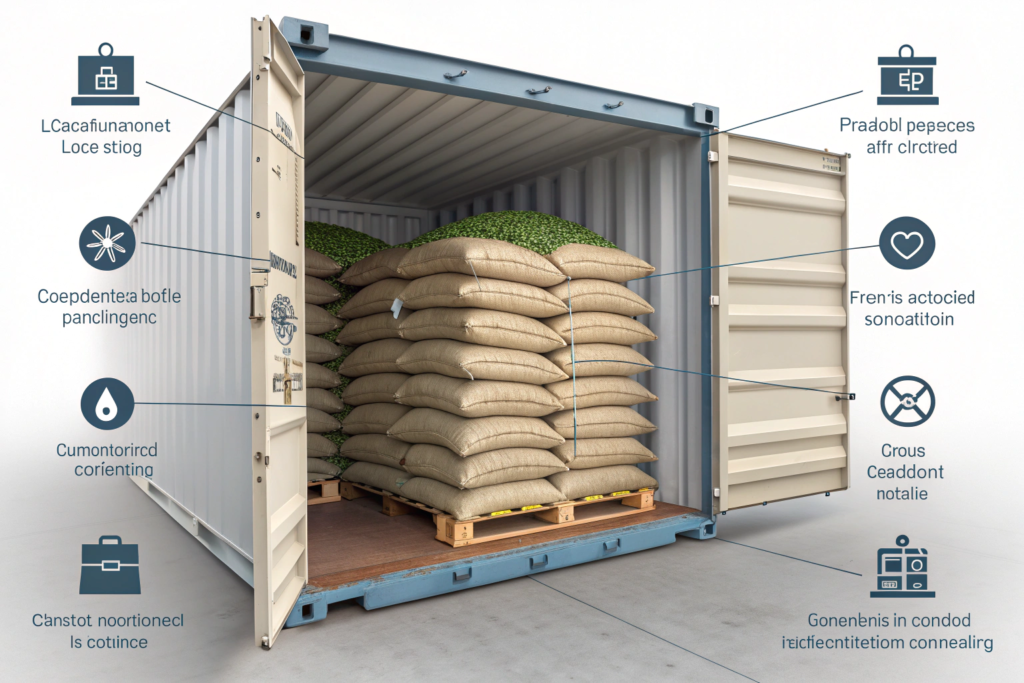
- The Solution: GrainPro or equivalent hermetic (high-barrier) liners. These are thick, food-grade polymer bags that are heat-sealed after filling.
- What They Do: They create an absolute barrier against moisture vapor and external odors. They also slow down the exchange of gases, significantly reducing oxidation (staling) of the beans. They protect against insect infestation during transit and storage.
- Cost-Benefit: The added cost of $1-$3 per bag is trivial compared to the risk of a $50,000 container losing 20% of its value due to moisture damage or off-flavors. For buyers, specifying "GrainPro lined" should be a standard clause in your contract.
What are the Pros and Cons of Different Container Types?
Not all containers are created equal. The choice depends on route and climate.
- Standard Dry Container: The most common and cheapest option. Risk: Prone to internal condensation and temperature swings. Use Case: Only acceptable for very dry routes or commercial-grade coffee, and only when paired with exceptional internal packaging (hermetic liners) and proper stowage.
- Ventilated Container: Has passive vents near the floor and ceiling to allow some air exchange. Benefit: Can help reduce moisture buildup and dissipate heat from the cargo. Best For: Routes through consistently humid climates or for cargo with slightly higher moisture content.
- Refrigerated (Reefer) Container: The gold standard for preservation. Actively controls temperature and humidity. Benefit: Eliminates the risk of container rain and locks in the bean's moisture content. Drawback: Significant additional cost. Best For: Extremely high-value microlots or shipments during peak humidity seasons.
A strategic compromise is to request a "weather route" from your freight forwarder, where the ship avoids the most extreme tropical zones, even if it adds a few days to the transit.
How Does Stowage and Documentation Mitigate Risk?
How the container is packed is as important as what is packed. Poor stowage can negate all other precautions. Furthermore, clear, accurate documentation is your paper trail for accountability and insurance. It ensures everyone in the supply chain handles your cargo with appropriate care.
Imagine a container where bags are shoved against the corrugated steel walls. Those walls become cold at night, acting as a magnet for condensation. The bags touching them get wet. This is a preventable error.
What are the Key Stowage and Handling Protocols?
- Palletization: Bagged coffee should always be loaded onto pallets. This keeps the bags off the container floor (where condensation pools) and allows for forklift handling, reducing manual damage.
- Dunnage & Securing: Use inflatable air bags or load bars to secure the pallets tightly within the container. This prevents "cargo shift" during rough seas, which can tear bags and crush beans.
- Distance from Walls: A minimum gap of 5-10 cm should be maintained between the cargo and the container walls/ceiling. This allows for air circulation and prevents contact with condensation.
- Compatibility: NEVER stow coffee with strong-smelling commodities (chemicals, spices, leather, fishmeal). Hermetic liners help, but the outer bags can still absorb odors. Insist on a "clean" container and check the previous cargo on the Container Inspection Report.
Why are Specific Shipping Instructions and Documents Vital?
Your documentation must scream "handle with care."
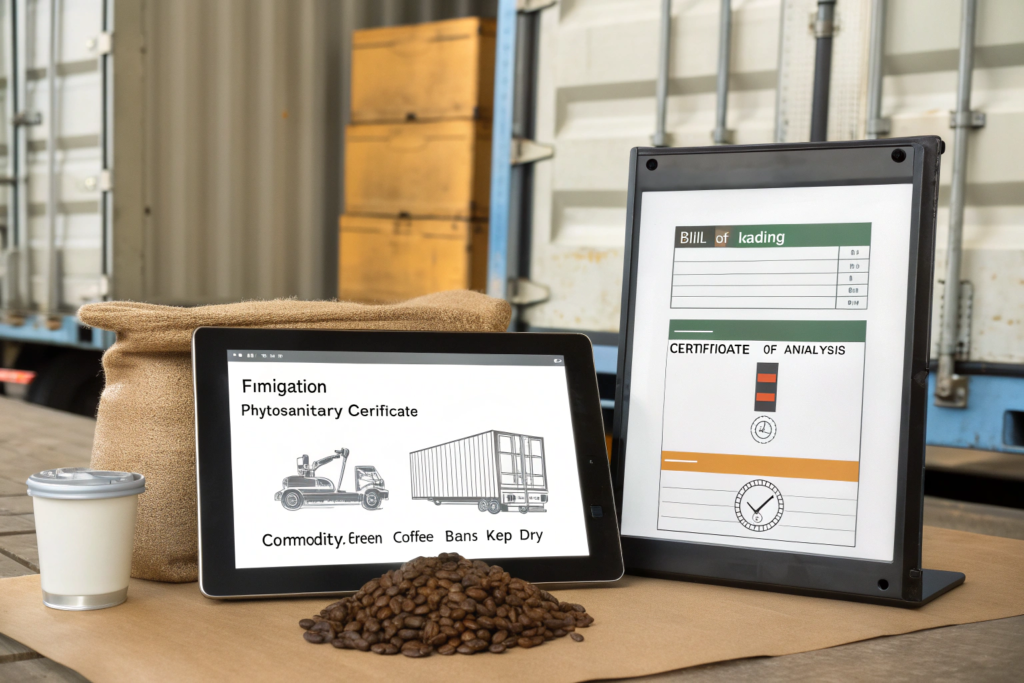
- Bill of Lading (B/L): The most important document. Under "Description of Goods," it must state: "GREEN COFFEE BEANS. KEEP DRY. DO NOT STOW NEAR HEAT SOURCES OR ODOROUS CARGO." This legally instructs the carrier.
- Certificates: The Phytosanitary Certificate is mandatory. A Certificate of Analysis showing moisture content and water activity from an independent lab is powerful proof of pre-shipment condition.
- Insurance: Ensure your marine cargo insurance policy explicitly covers "freshwater damage" and "contamination." Have all pre-shipment QC reports ready to support any potential claim.
- Communication: Share the stowage plan and special instructions with both the origin and destination logistics teams. Clear communication prevents well-intentioned mistakes.
What Should Happen Upon Arrival and During Claims?
The journey isn't over when the ship docks. The first 24 hours after container opening are critical for assessment. A swift, documented inspection process protects your rights and informs your next steps—whether to accept the cargo, negotiate a discount, or file an insurance claim.
Delaying inspection is a common and costly error. The longer potential damage goes unrecorded, the harder it is to prove it occurred during transit and not in your own warehouse.

What is the Immediate Inspection Protocol Upon Receipt?
As soon as the container is opened, before unloading, conduct this check:
- Visual Scan: Look for water stains on the container ceiling/walls, pooled water on the floor, or visible mold on bags.
- Smell Test: Sniff the air inside the container. Any musty, sour, or chemical odor is a major red flag.
- Bag Inspection: Check several bags from different locations (top, middle, bottom, front, back). Look for dampness, discoloration, or signs of compression damage.
- Immediate Sampling: Open bags from the most risk-prone areas (against walls, near doors) and from the center. Use a moisture meter immediately on these beans. Compare the reading to the pre-shipment certificate.
- Document with Photos/Video: Photograph and video everything—container number, seal, interior condition, any damaged bags. This is your evidence.
How to Handle Quality Discrepancies and File Claims?
If problems are found, act methodically.
- Do Not Unload Fully: If severe damage is suspected, stop unloading. Contact your insurance surveyor immediately to assess the cargo in its original state.
- Formal Survey: For moisture or odor issues, an independent surveyor will take official samples for lab analysis (moisture, mold count). Their report is key for insurance.
- Communication Chain: Notify your supplier (Shanghai Fumao) immediately with evidence. A reputable supplier will work with you to resolve the issue, as it impacts their credibility too.
- Insurance Claim: Submit the claim with all supporting documents: Bill of Lading, Certificate of Analysis, surveyor's report, photos, and your commercial invoice. The clearer the paper trail from load to unload, the faster the claim is settled.
A proactive partnership with your supplier on these protocols ensures shared responsibility for delivering quality.
Conclusion
Maintaining coffee bean quality during long ocean transits is a disciplined science of prevention. It begins with shipping only perfectly dried beans, armors them with hermetic packaging, selects the right container, mandates careful stowage, and ends with vigilant receipt inspection. Each step is a link in a chain; the strength of the entire process depends on the weakest link.
For importers and exporters, investing in these best practices is not an expense—it's insurance for your reputation and your bottom line. It transforms a risky voyage into a controlled, predictable segment of your supply chain.
If you are looking for a supply partner who understands and implements these rigorous transit-quality protocols from our Yunnan warehouses to your destination port, we have the systems in place. We manage moisture, packaging, and documentation to give your coffee the best possible chance of arriving in perfect condition. To discuss our export procedures and request a sample, contact our sales director, Cathy Cai, at cathy@beanofcoffee.com. Let's ensure your coffee's journey is as perfect as its origin.