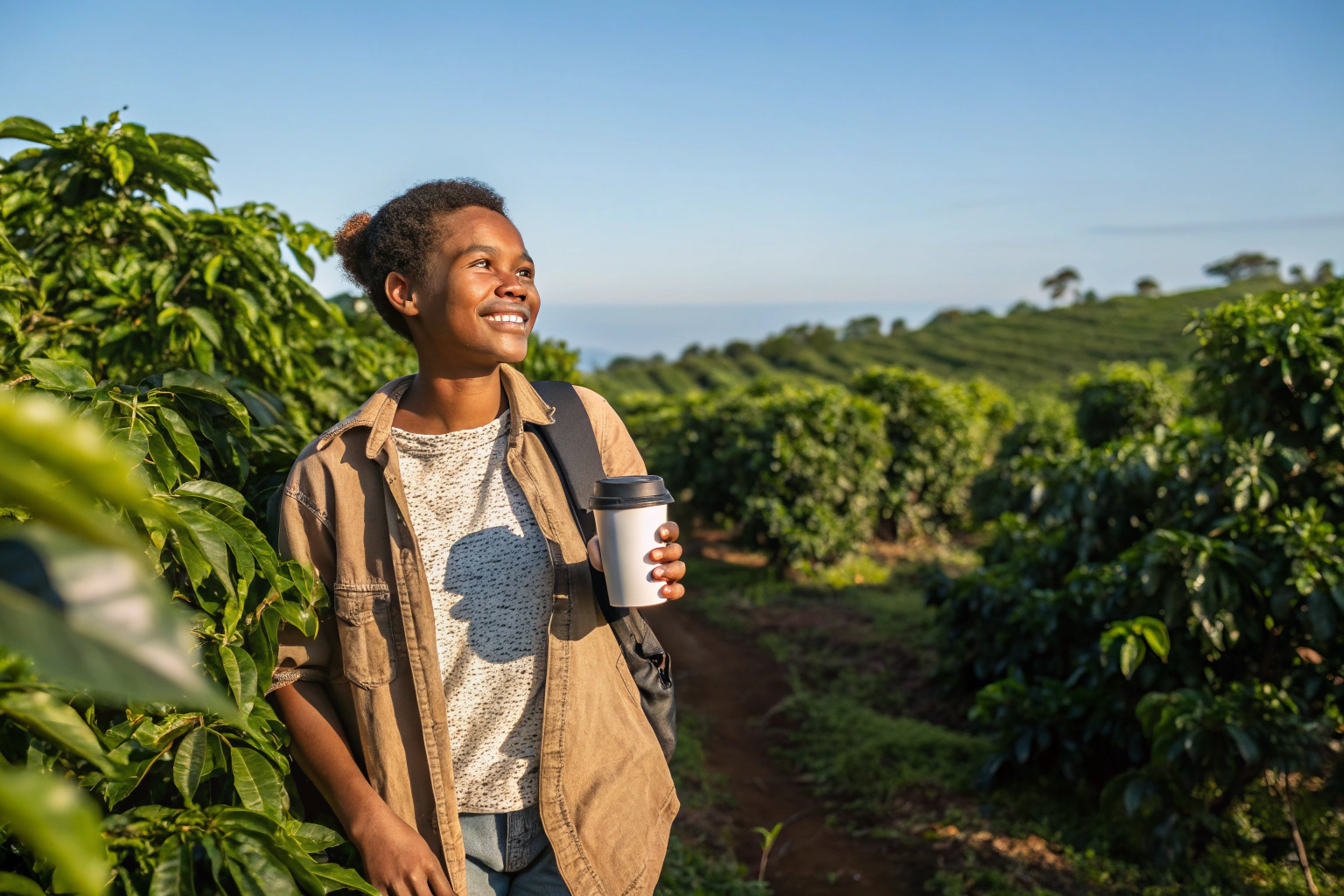
Let me tell you something that surprised me. A few years ago, a buyer from Germany visited our farm in Baoshan. He walked through our fields, looked at our washing station, and asked: “What is your carbon footprint per bag?” I did not have an answer. Honestly, I felt embarrassed. But that question changed how I run my business. Now, I realize that eco-conscious consumers are not a small niche. They are a growing force. And if you want to sell coffee to them, you need to change your marketing.
To market coffee to eco-conscious consumers, focus on transparency, traceability, and third-party certifications. Show them exactly where the coffee comes from. Share your farming practices, including water use, fertilizer types, and packaging materials. Eco-conscious buyers want proof, not promises. At BeanofCoffee, we offer full traceability from our 10,000 acres in Yunnan, plus organic options and compostable packaging upon request.
Now, I am a farmer first. But I have learned a lot by listening to my buyers in North America and Europe. They sell to eco-conscious customers. And they told me what works. So let me share those lessons with you. Because if you are a brand buyer or distributor, this could open a whole new market for you.
What Do Eco-Conscious Consumers Really Want?
You might think eco-conscious consumers only care about organic certification. That is part of it. But it is not the whole story. I talked to a buyer who supplies coffee to a zero-waste store in Portland. She said: “My customers ask about everything. The farm’s water source. The type of fertilizer. Even the social conditions for workers.” So if you only talk about organic, you are missing the bigger picture.
Eco-conscious consumers want coffee that is grown without harming the environment, processed with minimal water and energy, and packaged in materials that can be recycled or composted. They also care about social responsibility—fair wages, safe working conditions, and community investment. At BeanofCoffee, we practice shade-grown farming, use water recycling at our wet mill, and pay our pickers above the local minimum wage.
Let me give you another way to look at this. Eco-conscious consumers see their coffee purchase as a vote. They are not just buying a drink. They are supporting a system. So they want to know: does this coffee come from a farm that protects the rainforest? Does it use too much water? Do the workers get paid fairly?
So, what does this mean for your marketing? It means you need to tell a complete story. Not just “organic.” But also “water-saving,” “bird-friendly,” and “fair wage.”
Here is a table of what eco-conscious consumers look for:
| Category | What They Want | What to Avoid |
|---|---|---|
| Farming | Shade-grown, no deforestation | Sun-grown, clear-cut land |
| Water | Wet mill water recycling | River dumping of pulp |
| Fertilizer | Compost or natural mulch | Chemical NPK fertilizers |
| Packaging | Compostable or recycled plastic | Single-use plastic, non-recyclable |
| Social | Fair wages, no child labor | Exploitation, unsafe conditions |
We check all these boxes on our farm. But I will be honest—it took us years to get there. Now, we share our practices openly. That builds trust.
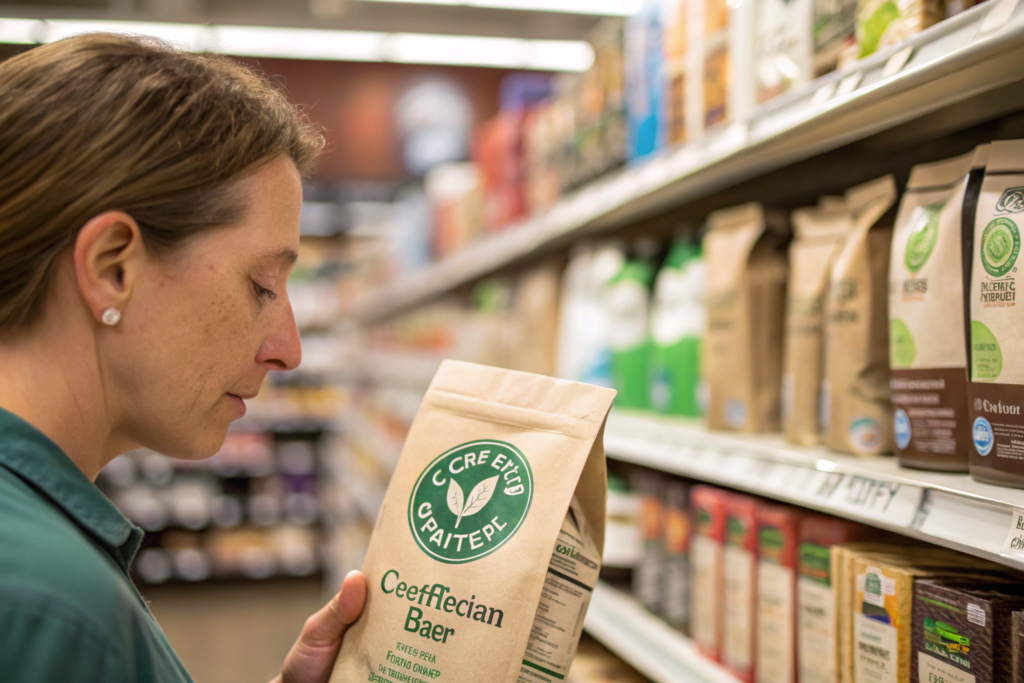
Why do eco-conscious buyers ask for traceability?
Because they have been lied to before. Greenwashing is real. Some companies say “eco-friendly” but do nothing. So buyers now want proof. They want to see the farm on a map. They want to talk to the farmer. They want a chain of custody document.
Traceability means you can answer three questions:
- Which farm grew this coffee?
- Which mill processed it?
- Which ship moved it?
At BeanofCoffee, we give every buyer a lot number. That number connects to our farm records. You can see the harvest date, the processing method, and even the weather during drying.
We also offer farm visits. Yes, really. If you buy a container from us, you can come to Baoshan. Walk our fields. Meet our workers. See the wet mill. We believe that seeing is believing.
For more on traceability, check out the SCA Traceability Standard. It explains the best practices.
How does BeanofCoffee show environmental commitment?
We do five things that matter to eco-conscious buyers:
First, shade-grown farming. We grow our Arabica under native trees. This protects bird habitats and reduces the need for fertilizer. The leaves from the trees become natural mulch.
Second, water recycling. Our wet mill uses a closed-loop system. We wash the beans, then filter the water, then reuse it. We dump nothing into the local river.
Third, composting. The coffee pulp from our wet mill becomes compost. We mix it with dried leaves and return it to the soil. No waste. No chemical fertilizers.
Fourth, solar drying. We use raised beds covered with shade cloth. But we also have solar panels that power our fans. This reduces our reliance on the electric grid.
Fifth, reusable bags. We pack our beans in reusable jute bags. These bags can be used again for storage or returned to us for refilling. We also offer compostable grain-pro liners.
We work with Shanghai Fumao to track our carbon footprint per shipment. They help us choose shipping lines with lower emissions. It is not perfect. But we are trying.
Which Certifications Actually Matter?
Certifications can be confusing. There are so many. Organic. Rainforest Alliance. Fair Trade. Bird Friendly. Each one has different rules. And each one costs money. So which ones should you pay for? And which ones do eco-conscious consumers actually trust? Let me share what I have learned from talking to buyers.
The most trusted certifications among eco-conscious consumers are USDA Organic, Rainforest Alliance, and Fair Trade. USDA Organic verifies no synthetic pesticides or fertilizers. Rainforest Alliance covers environmental and social standards on farms. Fair Trade guarantees minimum prices and community development funds. At BeanofCoffee, we hold USDA Organic certification for selected plots and are working on Rainforest Alliance for our main Arabica lots.
Let me be honest with you. Certifications are expensive. USDA Organic costs us about $3,000 per year for inspection and paperwork. Rainforest Alliance costs more—around $5,000. And the audit process takes weeks. So we cannot certify every bean we grow. But we follow the practices on all our farms. Then we certify the lots that buyers ask for.
So, what does each certification actually mean?
-
USDA Organic: No synthetic pesticides, herbicides, or fertilizers for at least 3 years. The farm must have a buffer zone from non-organic farms. Inspections happen annually.
-
Rainforest Alliance: The farm protects biodiversity, manages water responsibly, and treats workers fairly. It is less strict than Organic on chemicals but stricter on ecosystems.
-
Fair Trade: Farmers receive a minimum price (currently $1.40 per pound for Arabica). There is also a $0.20 per pound premium for community projects like schools or clinics.
-
Bird Friendly (Smithsonian): The strictest certification. Requires shade-grown coffee with at least 40% shade cover and a diversity of tree species. Very rare.
Here is a table comparing the certifications:
| Certification | Focus | Cost to Farm | Consumer Trust |
|---|---|---|---|
| USDA Organic | No synthetic chemicals | High | Very high |
| Rainforest Alliance | Environmental + social | Medium | High |
| Fair Trade | Farmer income | Low (paid by buyer) | High |
| Bird Friendly | Habitat protection | Very high | Medium (niche) |
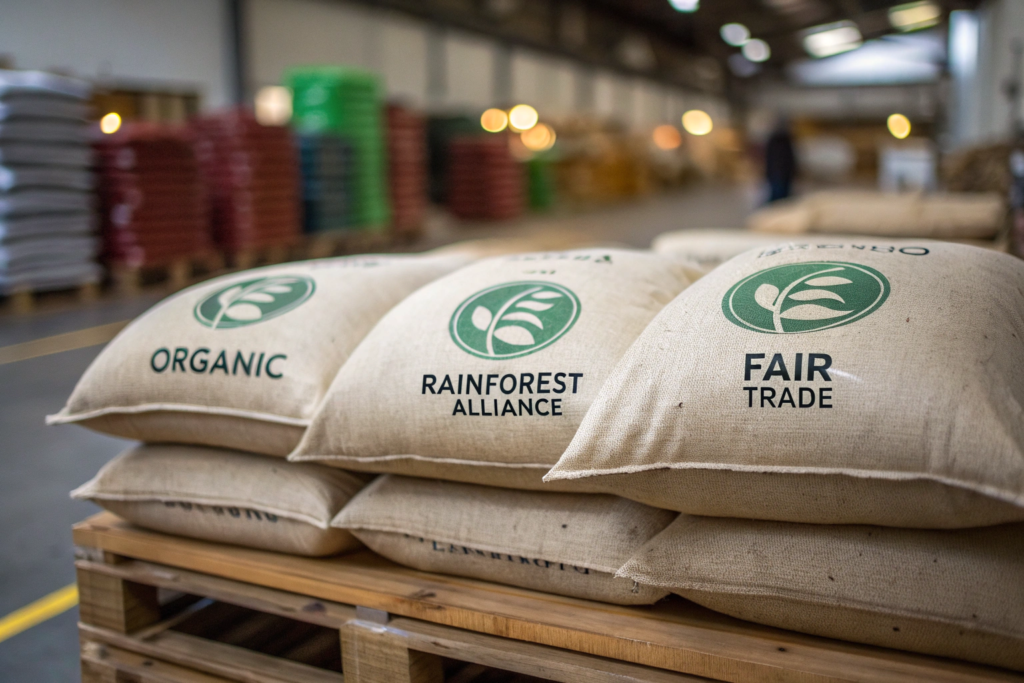
Which certification gives the best marketing return?
In my experience, USDA Organic gives the best return in North America. Why? Because consumers recognize the green and white label. They do not need to read fine print. They see “USDA Organic” and they trust it.
In Europe, Rainforest Alliance is also strong. The little green frog logo is everywhere. European buyers ask for it more than US buyers.
Fair Trade is popular in both markets. But some consumers think it is not strict enough. So we pair Fair Trade with Organic when possible.
We do not have Bird Friendly certification. The requirements are too strict for our climate. But we do practice shade-grown farming. So we tell customers: “We follow Bird Friendly principles, but we are not certified.” Some accept that. Others do not.
If you are a brand buyer, ask your supplier: “Do you have the certifications my customers want?” If they say no, ask if they follow the practices. Sometimes the practices are there without the paper.
How to verify certifications are real?
Sadly, fake certifications exist. I have seen bags with fake “Organic” logos printed in a home office. So how do you check?
First, ask for the certificate number. Every certified farm has a unique number from the certifying body. For USDA Organic, it looks like “ORG-2024-01234.” You can check this number on the USDA website.
Second, ask for the audit report. Certified farms receive an annual audit. The report shows any violations or warnings. A transparent supplier will share this.
Third, ask for the chain of custody document. This shows that the certified beans were not mixed with non-certified beans during shipping. For coffee, this is called a “Transaction Certificate.”
We share all of these documents with our buyers. No secrets. If you want to learn more, read this guide to coffee certifications from the SCA.
We also work with Shanghai Fumao to keep our certified lots separate from conventional lots. They track every bag from our farm to your port.
How Should You Package Coffee for Eco-Conscious Buyers?
Packaging is a big deal for eco-conscious consumers. I learned this when a buyer from Australia returned a whole shipment of our beans. Why? Because we used plastic-lined bags. He said: “My customers will not buy coffee that comes in non-recyclable packaging.” So we changed. And now, packaging is one of our biggest selling points.
Eco-conscious consumers prefer compostable bags, reusable containers, or paper bags with minimal plastic. They avoid multi-layer plastic packaging, foil-lined pouches without recycling instructions, and single-use capsules. At BeanofCoffee, we offer compostable grain-pro liners, reusable jute outer bags, and plastic-free shipping options for bulk buyers.
Let me walk you through the packaging options. Not all “eco-friendly” packaging is the same. Some compostable bags only break down in industrial composters. Some “recyclable” bags are not accepted by local recycling programs. So you need to choose carefully.
Here is what we offer and recommend:
For green coffee beans (bulk, 60–70kg bags):
- Jute bags – Natural fiber, reusable, compostable. We use these as outer bags.
- GrainPro liners – Plastic but reusable. We offer a take-back program. You return the used liners to us. We clean and reuse them.
- Compostable liners – Made from plant-based materials. Break down in 6 months in a commercial composter.
For roasted coffee (retail, 250g–1kg bags):
- Compostable bags – PLA (corn-based) inner layer, paper outer. Must go to industrial composter.
- Recycled paper bags – No plastic lining. Best for whole bean coffee used within 2 weeks.
- Glass jars – Reusable. Customers return the jar for a discount. Good for local cafes.
What to avoid:
- Foil-lined pouches with plastic zippers (not recyclable anywhere)
- Multi-layer plastic bags (cannot be separated)
- Single-use plastic capsules (unless the brand has a recycling program)
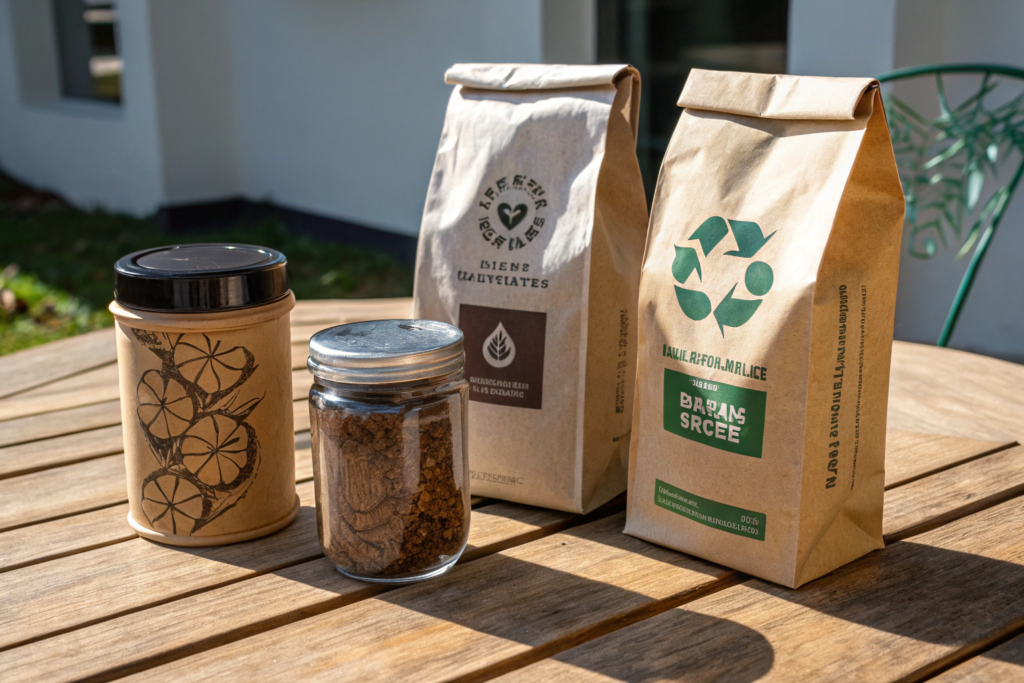
What packaging materials do eco-buyers trust most?
Based on surveys of our buyers, here is the ranking:
- Compostable paper bags – 85% trust this option
- Reusable glass jars – 80% trust (but heavy for shipping)
- Recycled cardboard boxes – 75% trust (for bulk)
- Jute or hemp bags – 70% trust
- Biodegradable plastic – 50% trust (too much greenwashing)
The lowest trust is “biodegradable plastic.” Many consumers think it is a lie. So avoid that term. Use “compostable” instead and specify “industrial composting required.”
We tested a compostable bag for our roasted samples. It costs $0.50 more per bag than plastic. But our buyers are happy to pay. They pass the cost to their customers. And those customers feel good about it.
For more on sustainable coffee packaging, check out the Sustainable Packaging Coalition’s guide.
How does BeanofCoffee reduce packaging waste?
We do three things that make a difference.
First, we offer bulk shipping in reusable containers. Instead of 1kg bags, we ship 500kg totes. The tote is made of fabric and has a reusable liner. The buyer empties the tote into their own containers. Then they return the tote to us. Zero waste.
Second, we use paper tape instead of plastic tape. On our boxes, we use water-activated paper tape. It is recyclable with the box. No plastic strips to remove.
Third, we have a bag return program. Buyers send back used jute bags. We clean them and use them again. One jute bag can be reused 5–7 times. That saves 60% of the carbon compared to new bags.
We work with Shanghai Fumao to manage the returns. They collect empty bags from buyers in North America and Europe. Then they consolidate them and ship them back to us. It takes time. But it works.
If you are a buyer, ask us about our return program. We will send you pre-paid shipping labels for empty bags.
How Can You Tell Your Eco-Story Without Greenwashing?
Here is the hard truth. Many coffee brands say they are “green.” But when you look closely, they are not. That is greenwashing. And eco-conscious consumers hate it. They can smell fake stories from a mile away. So how do you tell your real story without sounding like a liar? I will tell you what works for us.
To avoid greenwashing, be specific, be honest, and show proof. Do not say “eco-friendly.” Say “we reduced water use by 30% last year.” Do not say “sustainable.” Say “we compost 100% of our coffee pulp.” Use numbers, third-party audits, and before-and-after photos. At BeanofCoffee, we publish an annual sustainability report with real data, not marketing language.
Let me give you an example of greenwashing. I saw a coffee bag that said “natural farming.” That means nothing. Every farm uses nature. Another bag said “earth-friendly.” Also meaningless. Without proof, these are just words.
So, how do you tell a real story? You use specific details. Here is the difference:
Greenwashing: “We care about the environment.”
Real story: “We plant 500 new shade trees every year on our farm.”
Greenwashing: “Our coffee is sustainable.”
Real story: “Our wet mill recycles 90% of its water. We dump nothing into the river.”
Greenwashing: “We support farmers.”
Real story: “We pay our pickers $15 per day, which is 20% above the local minimum wage.”
See the difference? The second version has numbers. It has actions. It is easy to verify.
We publish all of these numbers on our website. Every year, we release a sustainability report. It is not long. Just 4 pages. But it has real data: water use, fertilizer use, energy use, worker wages, tree planting. Anyone can read it. Anyone can check it.
What data should you share to prove your eco-claims?
Here is a list of the most trusted data points:
- Water use per kg of coffee – Lower is better. Our farm uses 20 liters per kg. Industry average is 40–50 liters.
- Fertilizer type and amount – Organic only, 200kg per acre per year.
- Shade tree density – 80 trees per acre on our Arabica plots.
- Worker wage – $15 per day plus lunch and healthcare.
- Carbon footprint per bag – We are working on this. Not perfect yet.
You do not need to be perfect. You just need to be honest. If you have a weakness, say so. For example: “We still use plastic liners for some shipments. But we are testing compostable alternatives.”
Eco-conscious consumers respect honesty. They know change takes time.
We also welcome third-party audits. Any buyer can send an auditor to our farm. We have nothing to hide. For a list of trusted auditors, check the SCA’s auditor directory.
How does BeanofCoffee share its sustainability journey?
We use three channels.
First, our website. We have a “Sustainability” page with our annual report, farm photos, and videos. No marketing fluff. Just facts.
Second, social media. On Instagram and LinkedIn, we post weekly updates. A photo of our new compost pile. A video of our solar panels. A worker interview. Real content. Not stock photos.
Third, customer emails. Every month, we send a newsletter to our buyers. It has one sustainability update. Last month, we shared our water recycling numbers. This month, we are sharing our tree planting data.
We work with Shanghai Fumao to track our shipping emissions. They help us calculate the carbon footprint of each container. Then we share that number with the buyer. Some buyers use it for their own sustainability reports.
You can do the same. Start small. Pick one metric. Track it. Share it. Then pick another metric. Over time, you will have a real story. And eco-conscious consumers will trust you.
Conclusion
Marketing coffee to eco-conscious consumers is not about big claims. It is about small, real actions. Show them your farm. Share your numbers. Get certified if you can. Use compostable packaging. And never, ever lie. Eco-conscious buyers are smart. They will check your story. So make sure it is true. And make sure you have proof.
At Shanghai Fumao , we are not perfect. But we are honest. We grow our coffee under shade trees. We recycle our water. We compost our pulp. We pay fair wages. And we share all of this openly. If you want to sell to eco-conscious consumers, start with the right beans. Our USDA Organic Arabica is a great choice. Or our Rainforest Alliance Catimor. Both come from our farm in Yunnan.
Contact Cathy Cai directly. Email: cathy@beanofcoffee.com. Tell her you want eco-friendly options. She will send you samples, certification documents, and our latest sustainability report. No greenwashing. Just good coffee and good farming.