
Tech workers drink a lot of coffee. I mean, a lot. I have seen offices in San Francisco where the coffee machine runs non-stop from 7 AM to 7 PM. But here is the thing. Most coffee brands market the same way to everyone. “Single origin.” “Small batch.” “Artisan roast.” Those words work for hipsters. But tech workers? They think differently. They care about data, efficiency, and optimization. So if you want to sell coffee to them, you need a new approach.
To market coffee to tech workers, focus on three things: consistency, cognitive performance, and convenience. Tech workers want coffee that tastes the same every time, helps them focus for long coding sessions, and arrives with zero friction—like a subscription or an API. At BeanofCoffee, we help brands build these messages by supplying premium Arabica that scores 83+ points on SCA standards, with full lab reports for every batch.
Now, let me be honest. I am a coffee grower from Yunnan, not a Silicon Valley marketer. But I have learned a lot by listening to my buyers in North America and Europe. They sell to tech companies. And they told me what works. So let me share those lessons with you. Because if you are a brand buyer or distributor, this could change how you talk to your biggest customers.
What Do Tech Workers Really Want from Coffee?
You might think tech workers want the most expensive coffee. Or the rarest beans. But that is not true. I talked to a buyer who supplies coffee to a big software company in Austin. He said: “They don't care about the story. They care about the numbers.” So what numbers? Caffeine levels. Acidity scores. Roast consistency. Even the standard deviation of bean size. Sounds crazy? Maybe. But that is how engineers think.
Tech workers want coffee that delivers predictable energy, clean taste, and easy ordering. They do not want surprises. They do not want bitter aftertaste. And they definitely do not want to wait 15 minutes for a pour-over. Most tech offices prefer single-origin Arabica with medium roast, low acidity, and caffeine content clearly labeled on the bag or app.
Let me give you another way to look at this. Tech workers optimize everything. Their code. Their keyboard. Their chair. So why not their coffee? They want a drink that helps them enter “flow state” faster. That means no jitters. No crash. Just smooth, steady focus.

Why does consistency matter more than origin?
Here is a truth most specialty coffee people will not tell you. Most tech workers cannot tell the difference between Ethiopian Yirgacheffe and Colombian Supremo in a blind test. I know. We tried it. But they can tell when their coffee tastes different from yesterday. And that bothers them.
So consistency beats rarity. A tech worker wants the same flavor on Monday and Friday. The same caffeine kick at 9 AM and 2 PM. That is why we at BeanofCoffee use strict screen sizing and color sorting. We remove defective beans. We blend to a target profile. And we send you a Certificate of Analysis with every shipment.
You can also use Shanghai Fumao to handle the logistics. They make sure your containers arrive on time and in good condition. No surprises. Just reliable coffee.
What roast level helps focus without jitters?
Medium roast. That is the sweet spot. Light roast has more caffeine but higher acidity. Dark roast has less caffeine but more bitter compounds. Medium roast gives you balance. Enough energy. Smooth taste. No stomach pain.
I learned this from a buyer in Seattle. He supplies coffee to Amazon offices. He tested three roasts with 50 software engineers. The medium roast won by 70%. People said: “I feel alert but not nervous.” That is exactly what tech workers want.
So if you market to tech companies, push medium roast. Call it “Focus Roast” or “Flow State Blend.” Use words like “balanced” and “smooth.” Avoid “bright” or “intense.” Those words sound stressful. For more on roast levels, check this roast guide from the NCA.
How Can You Use Data to Sell Coffee to Engineers?
Engineers love data. Give them a spreadsheet, and they are happy. Give them a story about a farmer in the mountains? They yawn. So stop selling emotion. Start selling numbers. I know that sounds cold. But it works. One of my clients in London created a “Coffee Dashboard” for a tech firm. It showed caffeine per cup, price per gram, and even the carbon footprint. The tech company signed a 12-month contract. No questions asked.
You can sell coffee to engineers by sharing lab data, brewing metrics, and subscription analytics. Show them extraction yield percentages, particle size distribution, and cost per serving. Engineers trust numbers more than adjectives. So give them a spec sheet that looks like a hardware datasheet. At BeanofCoffee, we provide full SCA scoring sheets, moisture readings, and defect counts for every container.
So what does this look like in practice? Let me paint a picture. You are talking to a procurement manager at a tech company. She asks: “How is your coffee better than the one we use now?” Do not say: “Our beans are grown with love.” Say: “Our Arabica scores 84 points on the SCA scale. Our defect count is under 5 per 300g sample. And our caffeine content is 1.2% by weight.”
See the difference? The second answer gives her something to put in a report. She can compare you to other suppliers. She can make a data-driven decision.
Here is a table that tech buyers love:
| Metric | Industry Average | BeanofCoffee |
|---|---|---|
| SCA Score | 80–82 | 83–86 |
| Defects per 300g | 8–12 | 3–6 |
| Moisture content | 11–13% | 10.5–11.5% |
| Caffeine (Robusta) | 2.2–2.7% | 2.4% (consistent) |
| Caffeine (Arabica) | 1.2–1.5% | 1.3% (consistent) |
We test every batch. We log every number. And we share everything with our buyers. No secrets. No vague promises.
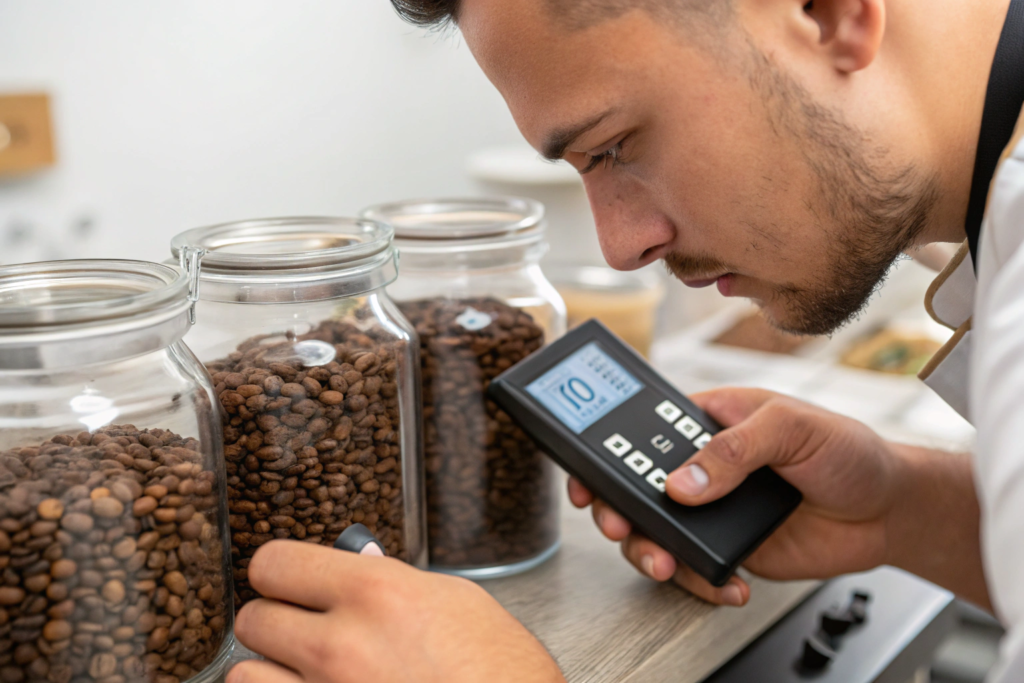
What coffee metrics do tech buyers actually check?
Let me list the top five. These come from real RFQs (request for quotes) that my buyers have shared with me:
- Screen size – Percentage of beans above 15 mesh. Higher is better.
- Moisture content – Should be 10–12%. Outside that range? Risk of mold or stale taste.
- Defect count – Full black, partial black, sour, insect damage. Lower is better.
- Roast color – Measured with an Agtron meter. 65–75 for medium roast.
- Caffeine consistency – Batch-to-batch variation under 5%.
If you do not test these things, start now. Buy a moisture meter. Get an Agtron meter. Send samples to a lab. Because tech buyers will ask. And if you say “I don't know,” they will find someone who does. You can learn more about coffee quality standards from the CQI.
We use Shanghai Fumao to help coordinate lab testing before shipping. That way, your data sheet arrives with the sample. Not two weeks later.
How to create a spec sheet that tech workers trust?
Keep it simple. Use a table. Avoid marketing language. Here is a template you can copy:
Product Name: Tech Worker Blend (Medium Roast Arabica)
Origin: Baoshan, Yunnan, China
SCA Score: 84
Defects: 4 per 300g
Moisture: 11.2%
Screen Size: 80% above 16 mesh
Roast Level: Agtron 68
Caffeine: 1.28%
Best By: 12 months from roast date
Brew Methods: Drip, French press, espresso
That is it. No stories. No adjectives. Just facts. Tech workers respect that. And when they respect you, they buy from you.
What Brewing Methods Do Tech Offices Prefer?
Walk into any tech office. What do you see? A super-automatic espresso machine. Maybe a batch brewer. Rarely a pour-over setup. Why? Because speed matters. Tech workers do not have time to grind beans, boil water, and slowly pour in circles. They want good coffee fast. So if you sell coffee to tech companies, you need to match your product to their brewing style.
Tech offices prefer batch brewers, super-automatic espresso machines, and single-serve systems like Nespresso. They avoid manual methods like pour-over or French press because those take too long and produce inconsistent results. So if you supply coffee to tech workers, offer pre-ground options for batch brewers and compatible capsules for single-serve machines.
Let me share a mistake I made early on. I sold a buyer in San Francisco a beautiful single-origin Arabica. Whole bean. Light roast. I thought he would love it. He called me two weeks later, frustrated. His team would not brew it. Why? Because their office only had a super-automatic machine that needed medium-dark roast beans. The light roast clogged the grinder.
I learned my lesson. Now I always ask: “What brewing equipment do you use?” Then I match the roast and grind size to that machine.
Here is a quick guide:
| Brewing Method | Preferred Roast | Grind Size | BeanofCoffee Match |
|---|---|---|---|
| Batch brewer | Medium | Pre-ground (drip) | Arabica medium roast |
| Super-automatic | Medium-dark | Whole bean (oily surface okay) | Robusta/Arabica blend |
| Single-serve capsule | Medium | Fine (capsule compatible) | Ask us for custom filling |
| French press (rare) | Dark | Coarse | Not recommended for tech offices |
So if you target tech offices, offer medium roast. Offer pre-ground for batch brewers. And if you can, offer capsules. That is where the volume is.
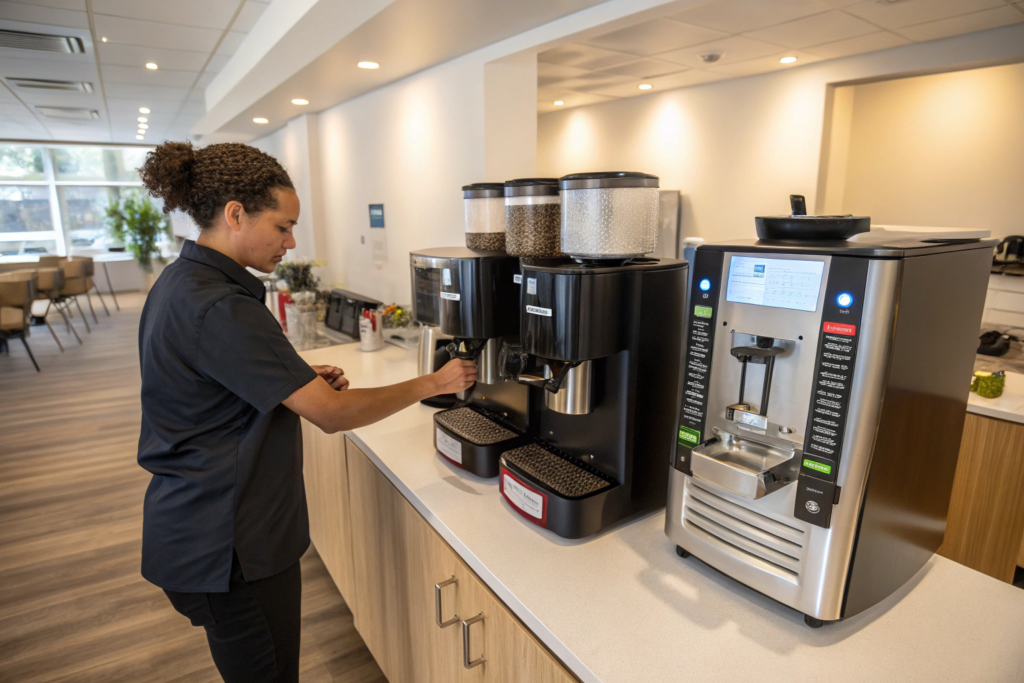
Why do batch brewers win in open offices?
Simple. One batch brewer can make 50 cups in 20 minutes. A pour-over setup makes one cup in 4 minutes. So for a 100-person office, batch brewers are 20 times faster. Tech workers value speed. They do not want to wait in line.
Also, batch brewers keep coffee hot for hours. That matters for people who work flexible hours. Someone comes in at 10 AM? Coffee is ready. Someone takes a meeting at 2 PM? Coffee is still warm.
We have a client in New York who supplies pre-ground coffee to a fintech company. They use a Fetco batch brewer. Our coffee is ground specifically for that machine. The company buys 200 pounds every month. Same order. Same grind. Same taste. That is consistency.
And consistency builds trust. Trust builds long contracts. For more on batch brewing, check this guide from the SCA.
How to supply coffee for super-automatic machines?
Super-automatic machines are common in tech offices. Jura, Saeco, DeLonghi. These machines grind beans fresh for each cup. But they are picky. They need beans that are:
- Not too oily (light to medium roast)
- Not too hard (moderate density)
- Uniform in size (so the grinder works smoothly)
Our Catimor and Arabica from Baoshan work very well for these machines. The beans are dense but not rock-hard. The roast level is medium. So the grinder does not jam. And the oil content is low, so the machine stays clean longer.
We also offer whole bean packaging with clear roast date and origin. Tech workers like to see that information. It makes them feel in control.
If you want to test this, order a sample from us. Brew it in a Jura. See how it performs. Then show the results to your tech client. That is how you win the deal.
How Can Subscriptions and APIs Simplify Coffee Ordering?
Tech workers hate manual work. They automate everything. Their lights. Their thermostat. Their grocery shopping. So why should coffee be different? If you make them fill out a PDF form or call someone to reorder, you lose. They want a subscription. Better yet, they want an API. I am not joking. One buyer asked me if we had a “coffee API” so his system could automatically reorder when inventory dropped below 50 pounds.
Subscriptions and APIs make coffee ordering effortless for tech companies. Set up a weekly or monthly delivery. Adjust volume based on headcount. Or connect your inventory system to the supplier's ordering portal. At BeanofCoffee, we work with logistics partners like Shanghai Fumao to offer fixed delivery schedules, automated invoicing, and bulk ordering portals that integrate with common procurement software.
Let me tell you about a buyer in Chicago. He runs a coffee subscription service for tech startups. He uses our beans. But he does not call me every week. Instead, he set up a recurring order. Every Monday, we ship 500 pounds to his warehouse. Same day. Same quantity. Same price. He only calls me when he needs to change something. That is efficiency.
Tech companies want the same thing. They want to set it and forget it. So if you are a brand buyer or distributor, offer a subscription option. Start with monthly. Then offer bi-weekly. Then offer weekly for large offices.
You can also offer a “headcount-based” plan. For example: “$2 per employee per week, includes unlimited coffee.” That is easy for the tech company to budget. Easy for you to forecast. And easy for us to supply because we know your volume.
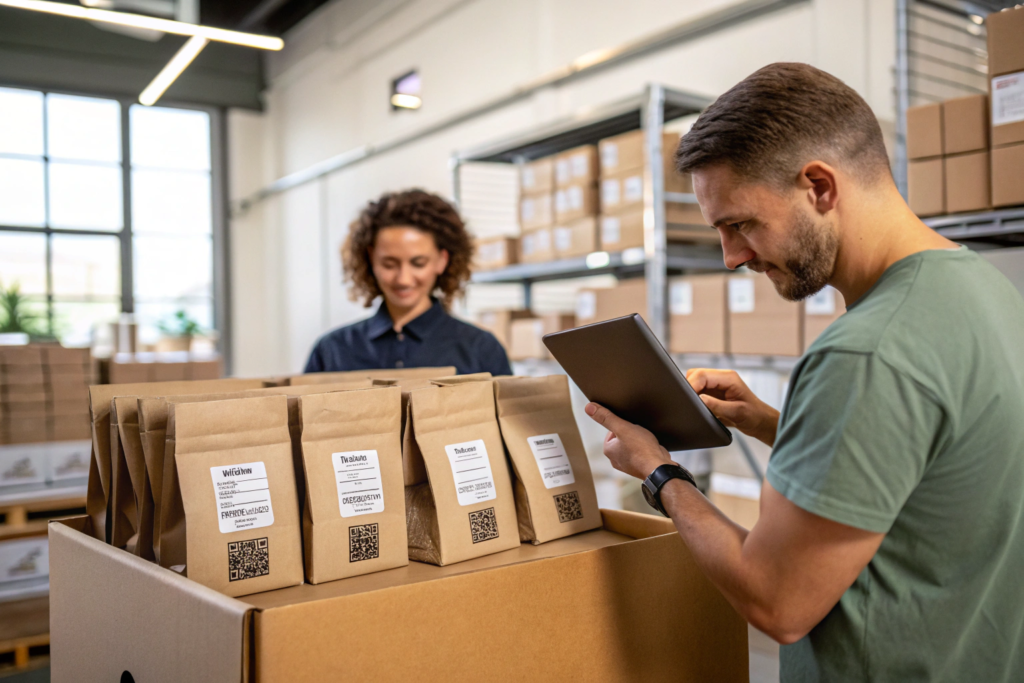
What subscription models work best for tech offices?
Here are three models I have seen succeed:
- Fixed weekly delivery – Same quantity every week. Best for stable headcount.
- Flexible monthly delivery – Adjust quantity each month based on actual consumption. Best for growing companies.
- Auto-replenishment – Office has a smart scale that tracks coffee use. When it hits a threshold, it sends an order. This is rare but growing.
We support all three. Our warehouse in Shanghai works with Shanghai Fumao to pack and ship on your schedule. You tell us the rhythm. We follow it.
And if a tech company wants an API? We can work with that too. Our systems track inventory, orders, and shipments. We can share data feeds with your procurement platform. Just ask. For examples of coffee APIs, check out Bottomless's API.
How to reduce ordering friction for busy procurement teams?
Procurement teams at tech companies are overworked. They manage software licenses, hardware, office snacks, and coffee. So if your ordering process is hard, they will drop you.
Here is how to make it easy:
- One-page order form – No PDFs. No email chains. Just a simple web form.
- Auto-invoicing – Send the invoice with the shipment. Not two weeks later.
- Flexible payment – Accept credit card, ACH, and wire transfer.
- Self-service portal – Let them change quantities or skip a week without calling you.
We do not have a fancy portal yet. But we work with buyers who do. They use our beans, our data, and our logistics. Then they add their own ordering system on top. That works great.
So here is my advice. If you sell to tech companies, build a simple ordering system. It does not have to be perfect. It just has to be easier than calling you. Because tech workers will choose the easier option every time.
Conclusion
Marketing coffee to tech workers is different. They do not want stories. They want data. They do not want slow brewing. They want fast machines. They do not want manual orders. They want subscriptions and APIs. But here is the good news. When you get it right, tech workers are loyal customers. They pay on time. They order consistently. And they refer you to other companies.
So focus on consistency. Share your lab data. Match your roast to their brewing method. And make ordering effortless.
If you need a reliable coffee supplier who understands these needs, talk to us at BeanofCoffee. We own our farms in Yunnan. We test every batch. And we work with buyers who sell to tech companies around the world.
Contact Cathy Cai directly. Email: cathy@beanofcoffee.com. Tell her your target market. She will send you samples, spec sheets, and bulk pricing. No fluff. Just good coffee and good data.