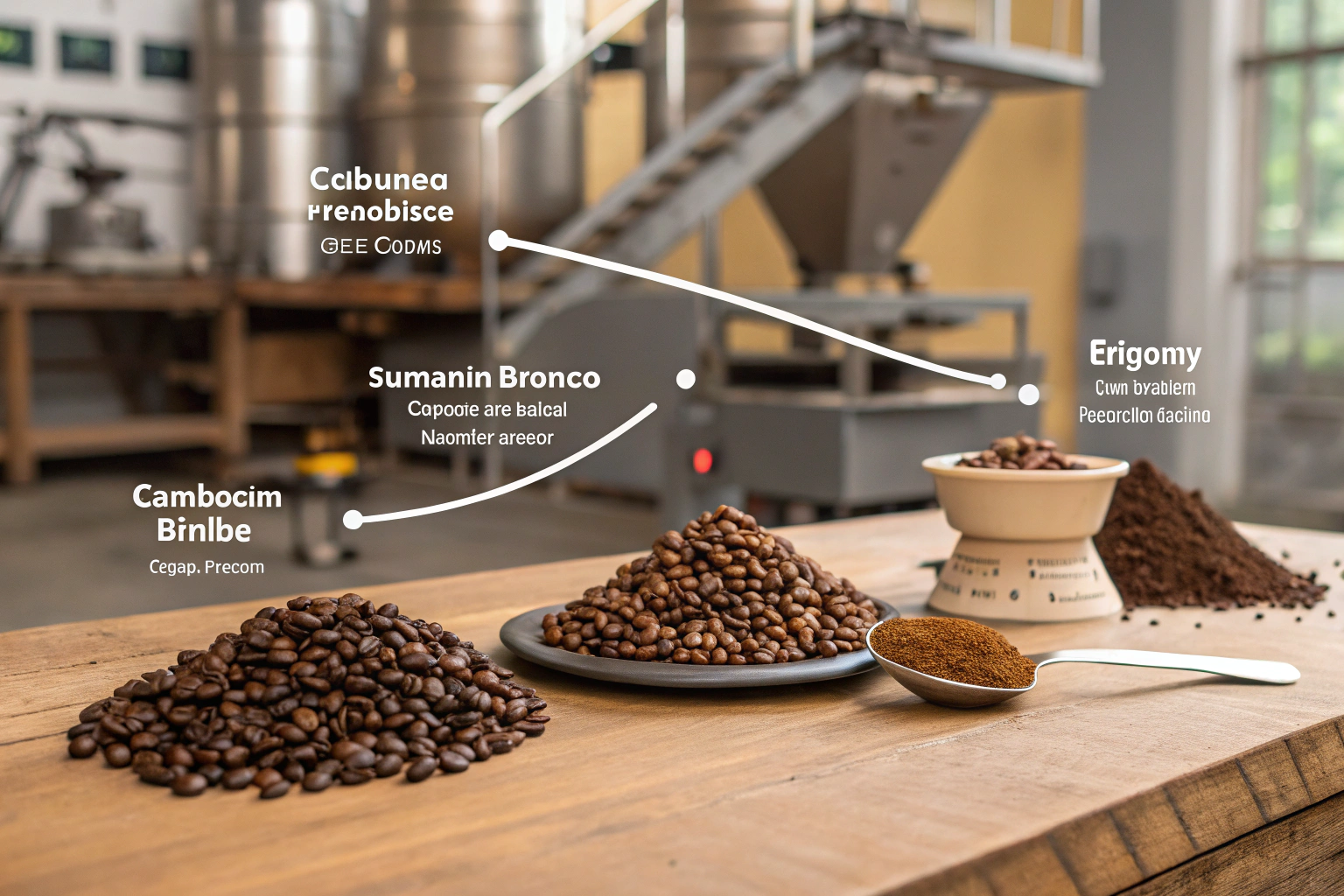
You have a shelf full of single-origin coffees, each with a bold personality. One is fiercely acidic, another is deeply chocolaty, a third has wild fruity notes. Selling them separately works, but you know the market craves consistency—a signature flavor profile that customers can rely on day after day. This is where the art and science of blending comes in. Blending isn't just about mixing beans; it's about engineering a balanced, complex, and reproducible flavor experience that a single origin often can't provide alone.
Mixing coffee bean blends for balanced flavor is a systematic process of selecting complementary beans based on their individual attributes—acidity, body, sweetness, and aroma—and combining them in specific ratios to create a unified taste profile greater than the sum of its parts. A balanced blend typically uses a "base" bean for body and sweetness (like a Brazil or Sumatra), a "bridge" bean for balance (like a Colombian or Yunnan Catimor), and a "highlight" bean for acidity and complexity (like an Ethiopian or Kenyan). The key is to roast each component separately or as a blend based on their density, then cup rigorously to achieve harmony, not chaos.
But how do you move from theory to a consistent, sellable product? It's not guesswork. It's a methodical approach that considers function, cost, and customer expectation. Let's break down the framework that turns individual beans into your flagship blend.
What is the Framework for Building a Balanced Blend?
Think of building a blend like composing a band. You don't want all drummers or all lead guitarists. You need a rhythm section (base), a melody instrument (bridge), and maybe a soloist (highlight) that comes in at just the right moments. Each component has a role, and the ratio determines the final sound—or in our case, the final flavor.
A mistake I made early on was trying to blend two equally bright and acidic beans. The result was jarring, like an orchestra where every instrument is playing the highest note. Balance comes from contrast and support. One bean should provide the stage, others the actors and the special effects.
How to Choose Beans for Base, Bridge, and Highlight?
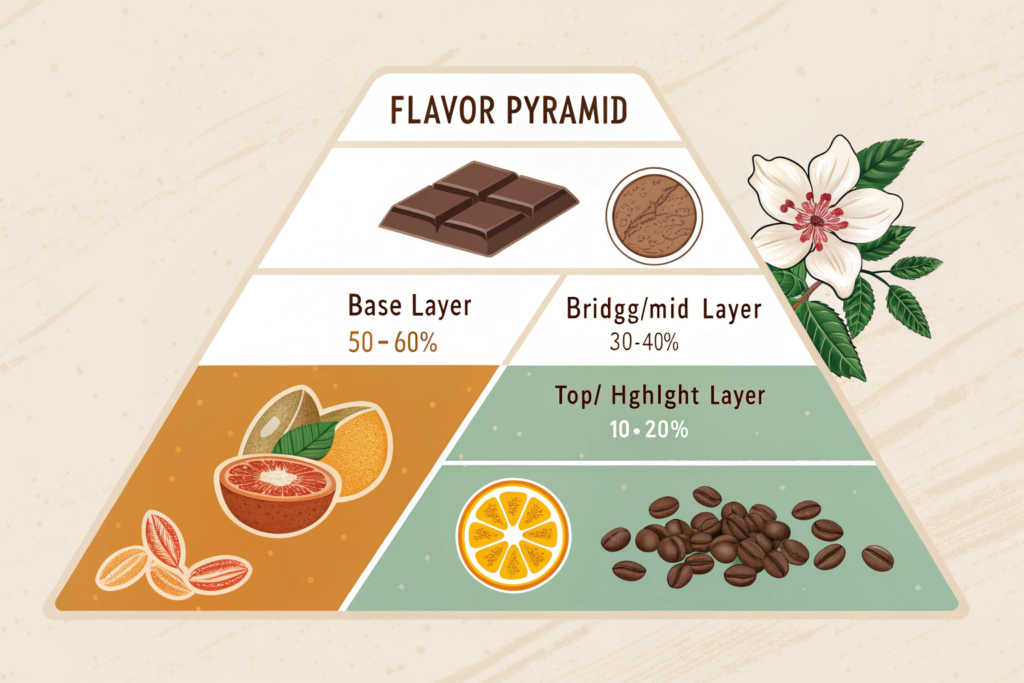
Start with the Base (50-70% of the blend). This bean is the foundation. It should have low to medium acidity, heavy body, and dominant notes of chocolate, nuts, or caramel. Think: Brazilian Santos, Sumatran Mandheling, or our Yunnan Catimor when grown at lower altitudes. It provides the "mouthfeel" and lasting sweetness.
Next, the Bridge or Mid (20-40%). This bean ties the base to the highlights. It should have a balanced acidity and body, with sweet, round notes like brown sugar, red fruit, or toffee. Good options are Colombian Supremo, Guatemalan Huehuetenango, or a clean Peruvian. It adds complexity without overpowering.
Finally, the Highlight (10-20%). This is the sparkle. Use a bean with pronounced acidity, floral aroma, or distinct fruitiness—like an Ethiopian Yirgacheffe (lemony, floral), a Kenyan AA (berry, wine), or a high-altitude Yunnan Arabica (stone fruit). It provides the memorable top notes that make the blend distinctive. The rule of thumb: the base anchors, the bridge sweetens, the highlight excites.
What Are the Functional vs. Flavor Roles in a Blend?
Sometimes you choose a bean not for its taste, but for its function. A functional role might be:
- Cost Controller: A lower-cost, mild bean used to hit a target price point without ruining flavor.
- Crema Enhancer: A bean like a Robusta (used sparingly, 5-10%) is often added to espresso blends to boost crema, body, and caffeine.
- Roast Color Evenness: A bean that helps the overall blend achieve a uniform visual roast color.
The flavor role is purely about taste contribution. The best blends seamlessly integrate functional and flavor beans. For example, a small amount of Robusta can add a bitter-chocolate note and crema (functional) while a Guatemalan adds a nutty sweetness (flavor). At Shanghai Fumao, we help clients select beans that fulfill both needs, ensuring a blend that is both economical and delicious.
What Are the Practical Steps for Blending and Testing?
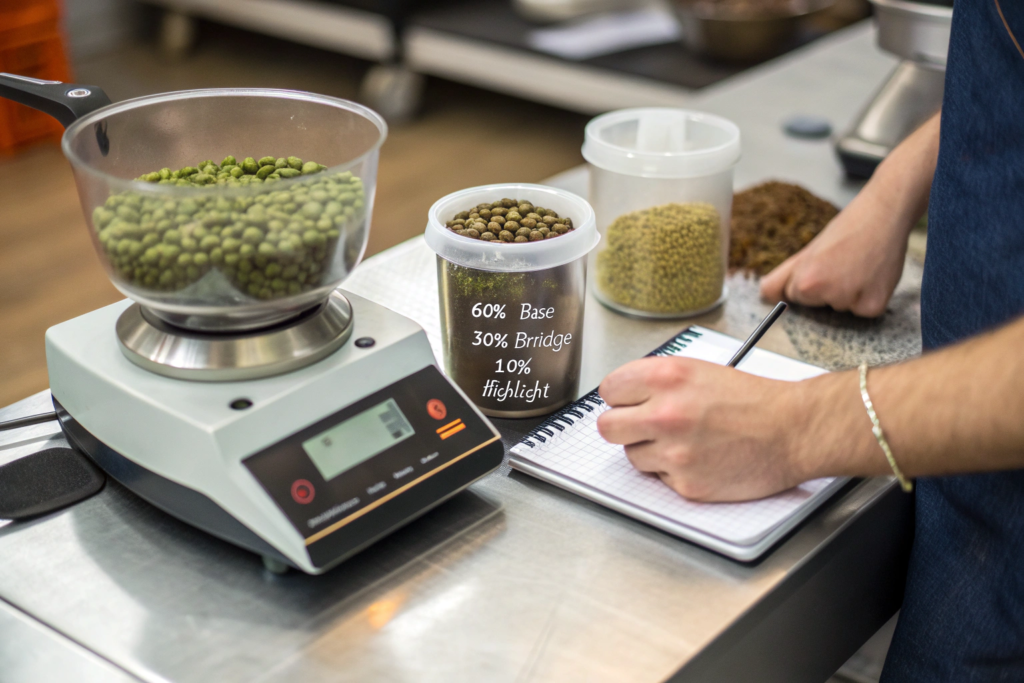
Once you have a theory, you must test it. Blending is an iterative process. You start small, with maybe 100-gram total batches. The goal is to fail fast and cheaply until you find the formula that sings. This stage is part science lab, part artist's studio.
You know that feeling when a blend just clicks? It doesn't happen on the first try. We keep a "blend log" for every experiment. We write down the recipe, the roast profile, and then the cupping notes. Sometimes changing the roast of a single component by 30 seconds makes the whole blend come together. It's that detailed.
Should You Roast Before or After Blending?
This is a fundamental decision with major impacts.
- Post-Blend Roasting: Mixing the green beans together and roasting them as one batch. Pros: Simpler logistics, uniform roast color, and the beans "share" heat, which can create unique flavor integrations. Cons: Beans of different densities and sizes will roast unevenly. Dense highlight beans may be underdeveloped while softer base beans are overdone, muddying the flavors you carefully selected.
- Pre-Blend Roasting (Component Roasting): Roasting each bean type separately to its optimal profile, then blending after roasting. Pros: Maximum control. You can develop each component to highlight its best attributes (e.g., a lighter roast for the acidic Ethiopian, a darker roast for the chocolaty Brazil). This yields a cleaner, more complex cup. Cons: More labor, storage, and risk of inconsistent mix ratios.
For a balanced, high-quality blend where clarity of each component's role is key, pre-blend roasting is superior. It respects the individuality of each bean. Start with this method.
How to Cup and Refine Your Blend Prototype?
After roasting (whether pre- or post-blend), the real work begins. Grind and cup your prototype using the standard SCA cupping protocol. This eliminates brew method variables. Focus on these questions:
- Balance: Does one component dominate? Is the acidity sharp or rounded?
- Aftertaste: Is it clean and sweet, or does it have a harsh, ashy, or sour finish?
- Body: Does it have the weight and mouthfeel you want?
- Overall Harmony: Do the flavors work together, or are they fighting?
If the blend is too sharp, increase the base or bridge percentage. If it's flat or boring, increase the highlight. If it's muddy, the roast might be off, or the beans might be of low quality. Make small adjustments (5% shifts) and re-cup. Document everything. This process might take 5-10 iterations.
How Does Roast Profile Affect the Final Blend?
The roast profile is the amplifier of your blend's recipe. You can have the perfect green bean mix, but roast it wrong, and you'll get a monotone flavor. The roast determines which notes are highlighted and which are subdued. It's the final, crucial step of flavor design.
Think of it this way: a lighter roast preserves the origin character of each component—the fruit, the flower. A darker roast introduces roast-driven flavors—chocolate, spice, caramel—that can unify the beans. Your blend's goal dictates your roast. An "Espresso Blend" is often roasted slightly darker to withstand high-pressure extraction and yield sweetness.
What are Target Roast Profiles for Different Blends?
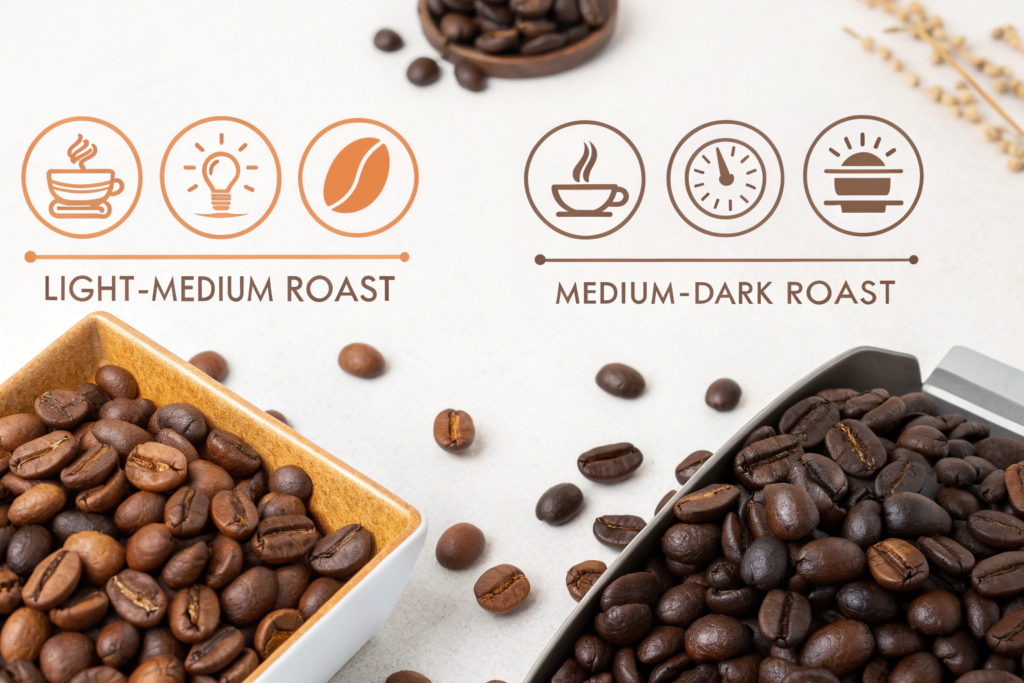
- Breakfast/All-Day Blend: Aim for a Medium (City to City+) roast. This preserves enough acidity for brightness but develops sufficient caramelization for sweetness and body. It's approachable and works for both drip and espresso.
- Espresso Blend: Often a Medium-Dark (Full City to Vienna). The slightly longer, hotter roast reduces acidity that can taste sharp under pressure, and boosts body, sweetness, and crema. It ensures consistency across multiple shots.
- Single-Origin Highlight Blend: If you want the highlight bean to shine, use a Light-Medium (City) roast for all components. This is risky but can create a spectacularly complex cup where each origin's nuance is clear.
Here’s a simple reference table for pre-blend roasting:
| Component Bean | Role in Blend | Suggested Roast Level (SCA Color #) | Goal |
|---|---|---|---|
| Brazil/Yunnan Catimor (Base) | Body, Chocolate | Medium (65-70) | Develop sweetness, reduce graininess. |
| Colombian/Guatemalan (Bridge) | Balance, Sweetness | Medium (60-65) | Caramelize sugars, maintain balance. |
| Ethiopian/Kenyan (Highlight) | Acidity, Aroma | Light-Medium (58-62) | Preserve floral/fruity top notes. |
How to Adjust for Bean Density and Moisture?
This is the technical heart of roasting a blend. If you choose post-blend roasting, you must select beans with similar density and moisture content. Otherwise, the roast will be uneven. If you must blend beans of different densities (like a soft Brazil with a dense Kenya), pre-blend roasting is mandatory. For each component, adjust the roast profile individually. A dense bean needs more heat energy and/or time. A less dense bean needs a gentler, shorter roast. Use a probe thermometer to track bean temperature, not just air temperature. The key metric is Development Time Ratio (time after first crack divided by total roast time). For balanced flavor, aim for a DTR of 18-22% for each component. This level of control, which we employ for our clients at Shanghai Fumao, ensures each bean in your blend is at its best.
How to Ensure Consistency in Commercial Production?
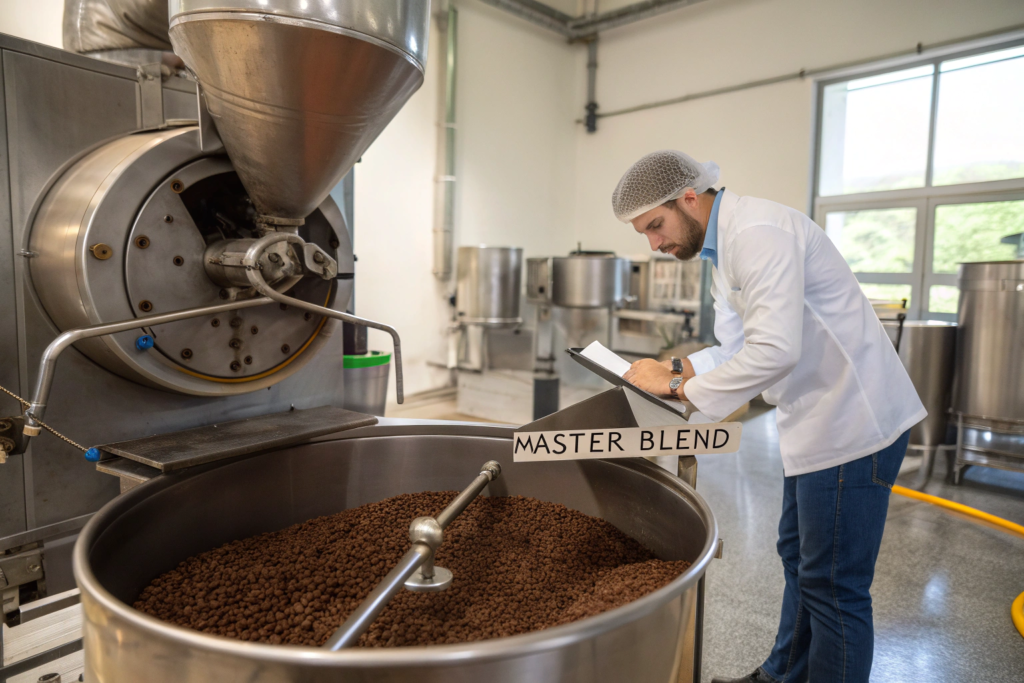
A great prototype is one thing. Making 500 identical bags of it every week is another. Consistency is what turns a creative project into a trustworthy brand. Inconsistency is the fastest way to lose a customer. The challenge is scaling your kitchen-table recipe to an industrial process without losing the magic.
We supply beans for many blenders. The successful ones have systems. They don't just say "add some of that bean." They have written formulas, approved green bean specs, and fixed roast curves. They treat blending like manufacturing a precision instrument, not like making soup.
What Quality Control Measures are Essential?
- Green Bean Specification: Define exact parameters for each component: origin, grade, screen size, moisture content, and defect count. Test every incoming lot against this spec.
- Master Roast Profile: Lock in a specific, digitally saved roast profile for each component (for pre-blend) or for the blend (for post-blend). Do not deviate.
- Precise Weighing and Mixing: Use calibrated digital scales and timed industrial mixers. The blending order can matter—adding all beans to the mixer at once ensures better homogeneity than layering.
- Cupping Against a Standard: Maintain a physical "gold standard" sample of the blend from your approved prototype. Cup every production batch against this standard before release. Use a triangle test to see if your team can tell the difference.
- Degassing and Packaging Protocol: Standardize how long the blended coffee rests before packaging to ensure even degassing and avoid valve bulging.
How to Manage Supply and Cost Over Time?
Your perfect Brazilian base bean might run out next season. You must plan for continuity. This is where having a primary and secondary supplier for each component is critical. For example, if your base is a Yunnan Catimor from us, have another Yunnan source or a Brazilian as a backup with a similar profile. Blend by profile, not by exact origin. Create a sensory description for each component's role (e.g., "Base: low acid, heavy body, chocolate/nut"). Then, you can source any bean that matches that description. This also helps manage cost fluctuations. If the price of your Ethiopian highlight soars, you might reduce its percentage slightly and adjust the bridge bean to compensate, keeping the final flavor stable. It's a constant, active management process.
Conclusion
Creating a balanced coffee blend is a journey from creative vision to rigorous science. It begins with understanding the foundational roles of base, bridge, and highlight beans, moves through iterative testing and precise roasting of components, and culminates in industrialized consistency and smart supply chain management. A great blend is a signature—a reliable, complex flavor experience that tells your brand's story with every cup.
Remember, the goal of balance is not to make a boring coffee, but to make an accessible yet intriguing one where no single attribute overpowers, but all work in harmony.
If you are looking to develop or refine your own signature blend and need consistent, high-quality components—from a robust Yunnan Catimor base to a bright, fruity Yunnan Arabica highlight—we can provide the raw materials and the technical support. Our Shanghai Fumao team works with blenders worldwide to ensure their foundation is solid. For samples of our base, bridge, and highlight candidate beans, contact our sales director, Cathy Cai, at cathy@beanofcoffee.com. Let's build your perfect blend together.