
You've found the perfect coffee lot at a great price, calculated your shipping, and then—tariffs hit. A seemingly small percentage can erase your margin or make your offer uncompetitive. For importers in the U.S., Europe, and Australia, understanding this complex layer isn't optional; it's essential for survival and profitability. So, how do you steer through it?
Navigating coffee tariffs successfully requires a three-part strategy: accurately classifying your goods with the correct Harmonized System (HS) code, understanding applicable trade agreements and preferential tariffs, and working with a supplier who provides flawless documentation to prove origin and value. It's a mix of homework, partnership, and precision. Getting it wrong means delays, fines, or unexpected costs. Getting it right is a competitive advantage.
Let's be honest. Tariffs are a major pain point for buyers like Ron, directly impacting "tariff costs" and "security." From our side as an exporter in China, we've learned that our role is to make this as clear and straightforward for our partners as possible. Here’s a practical guide from the source.
What Are the Key HS Codes for Importing Coffee?
This is your starting point. The HS code is the universal language of international trade. It tells customs exactly what you're importing and determines the duty rate. An error here is costly.
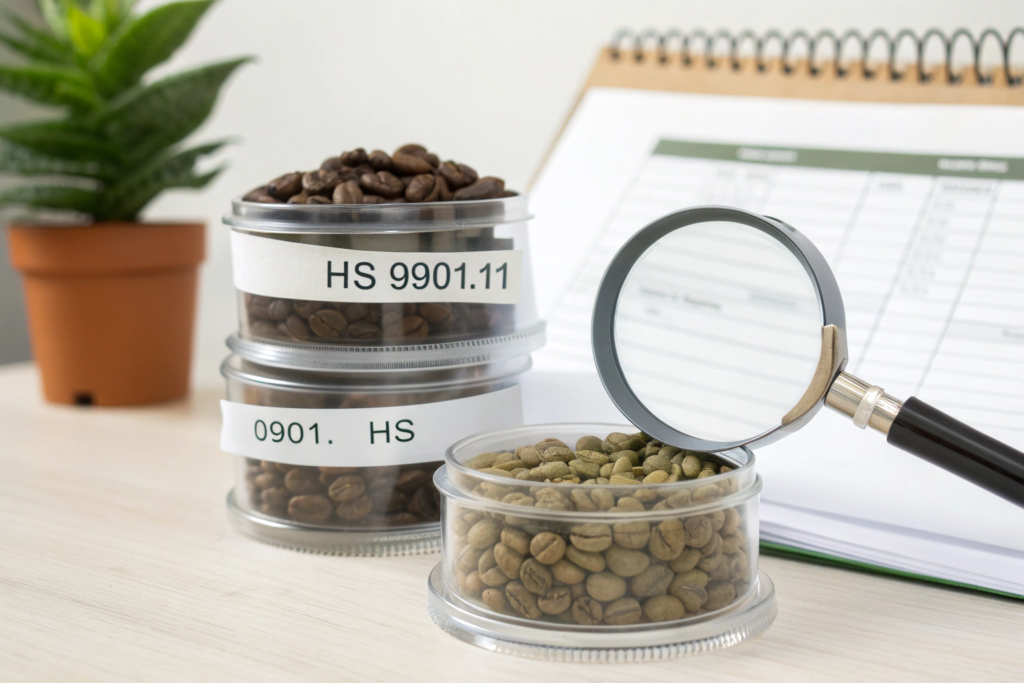
For green (unroasted) coffee beans, the primary HS codes are 0901.11 (Arabica) and 0901.12 (Robusta). For roasted coffee, it's 0901.21. Decaffeinated coffee falls under 0901.22. This six-digit code is standardized globally. However, countries often add extra digits for more detail (e.g., the U.S. uses a 10-digit HTSUS code). Your declared code must be precise.
Why does this matter so much? Let's say you import our Yunnan Arabica. If you mistakenly use a code for roasted coffee (0901.21) instead of green Arabica (0901.11), you could pay a significantly higher duty rate. That's a direct hit to your bottom line. We provide the correct six-digit HS code on all our commercial invoices, but the final import classification is the importer's responsibility.
How Do I Find the Correct Tariff Rate for My Country?
The HS code is the key that unlocks the rate. You must look up this code in your country's tariff schedule. For U.S. importers, this is the Harmonized Tariff Schedule of the United States (HTSUS). For the EU, it's the TARIC database. Australia uses its own Customs Tariff. You search by the code (e.g., 0901.11.0000 for the U.S.) and it will show you the "General" duty rate and any "Special" rates that may apply under trade agreements. This is where it gets complex—the "Special" rate is what you want to qualify for. It could be "Free" (0%) under certain conditions. Your goal is to legally pay the lowest possible rate.
Why Is the Distinction Between Green and Roasted Coffee Critical?
The duty rates for green coffee and roasted coffee are often worlds apart. Many countries, to protect their domestic roasting industries, impose much higher tariffs on roasted beans. For example, historically, the U.S. general duty for green coffee is 0%, but roasted can be subject to duties. This is a major strategic decision for your business. Do you import green beans and roast locally (supporting the "General" rate and local industry), or import roasted coffee? For many of our clients, especially large distributors, importing green beans is the clear cost-saving choice. It also gives them full control over the roast profile. Understanding this tariff structure influences your entire business model.
How Can Trade Agreements Reduce or Eliminate Tariffs?
This is where your homework pays off. Beyond the general rate, there are often preferential rates available through trade agreements, but you must prove you qualify.
Trade agreements like the U.S.-China Phase One Agreement, the EU's Generalized System of Preferences (GSP), or bilateral treaties can offer reduced or zero tariffs for eligible goods, but strict "Rules of Origin" must be met. These rules require that your coffee be considered as "originating" in the exporting country (in this case, China) according to the agreement's specific criteria. It's not automatic—you must claim it and prove it.
For our coffee from Yunnan, the "origin" is clear: it's grown and processed in China. This makes us well-positioned to help buyers leverage these agreements. However, the landscape changes. The U.S. Section 301 tariffs on many Chinese goods have been a major complicating factor, though some agricultural products have seen exclusions.
What Documentation Proves Origin for a Preferential Rate?
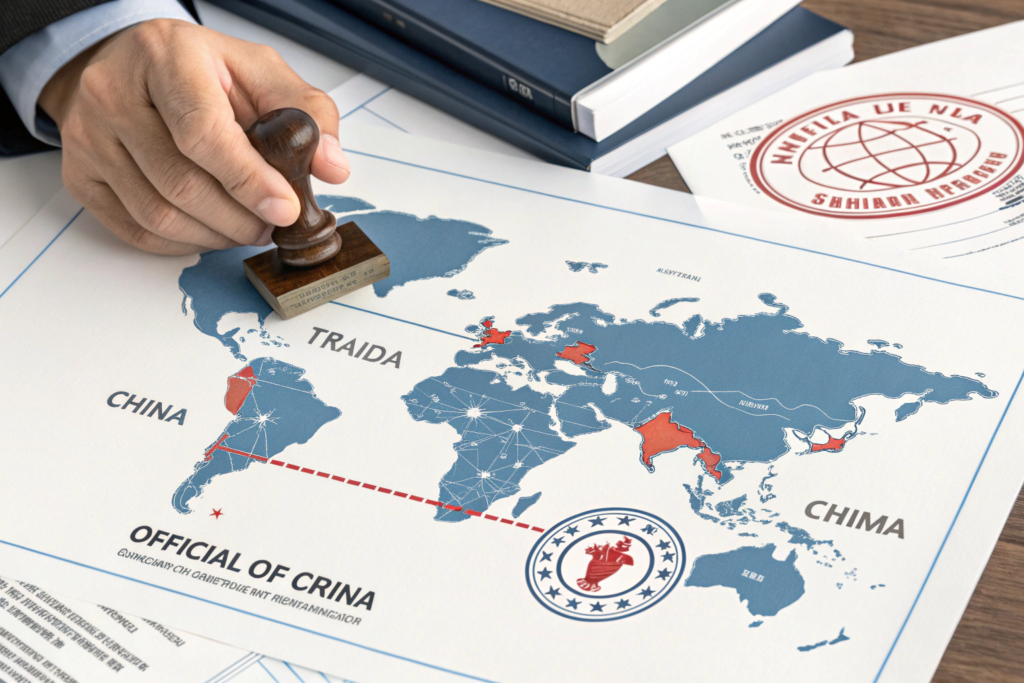
The proof is in the paperwork. The key document is a Certificate of Origin (COO). This is an official document, often issued by a Chamber of Commerce in the exporting country, that states the country of origin of the goods. For some agreements, a specific form is required, like a Declaration of Origin on the commercial invoice. The documentation must be flawless. Missing stamps, incorrect consignee details, or vague product descriptions can lead to rejection by customs. At Shanghai Fumao, we handle the procurement of the correct COO for our clients as part of our export service. We ensure it accurately reflects the shipment, because we know it's your ticket to potential duty savings.
How Do Section 301 Tariffs (U.S.) Affect Coffee from China?
This is the critical question for U.S. importers. Section 301 tariffs are additional duties imposed on certain Chinese-origin goods. The list has evolved. While many consumer goods were targeted, a significant portion of agricultural products, including coffee, have not been subject to these additional tariffs in recent cycles. However, this status can change. The current duty for green coffee (HS 0901.11) from China into the U.S. is the "General" rate, which is 0%. It is absolutely vital to verify the current status before every shipment. You must check the latest U.S. Trade Representative (USTR) lists or consult with a customs broker. A supplier who is up-to-date on this, like Shanghai Fumao, will proactively inform you of any relevant changes that could impact your cost.
What Role Does a Supplier Play in Tariff Management?
You might think tariffs are solely the importer's burden. But a knowledgeable exporter is your first and most important line of defense. A good supplier doesn't disappear after the FOB price.
A proactive supplier plays a crucial role by providing accurate and detailed shipping documents, maintaining transparency on product origin and value, and staying informed about relevant trade policy changes. They build the foundation of your customs declaration. If their paperwork is sloppy, your clearance is a nightmare.
Our philosophy is partnership. We know that if our client faces a customs penalty or delay because of our error, the partnership is over. So, we obsess over the details. For every container, we provide a complete document pack: Commercial Invoice, Packing List, Bill of Lading, Certificate of Origin, and often a Phytosanitary Certificate. Each document must tell the same, consistent story.
Why Is a Detailed Commercial Invoice Your Most Important Document?
The commercial invoice is the primary document customs uses to assess duties. It must be perfect. Beyond the HS code, it needs a clear, accurate description (e.g., "Green Arabica Coffee Beans, Yunnan Origin"), the correct quantity in net weight, and the honest transaction value (typically the FOB value). Customs authorities are very sensitive to undervaluation. We state the true market value. This transparency, while sometimes resulting in a higher declared value, prevents severe penalties and builds a reputation for lawful trade. It’s the cornerstone of a secure, trustworthy supply chain.
How Can a Supplier Help with Tariff Engineering Strategies?
"Tariff engineering" means legally modifying a product to qualify for a lower duty rate. For coffee, one common discussion is the distinction between "green" and "roasted." Another is the degree of processing. For instance, does slightly pre-roasting or steaming the bean change its classification? These are complex areas best navigated with expert legal advice. However, a flexible supplier can accommodate specific processing requests once the classification is legally determined. Our role is to execute based on clear, lawful instructions and provide the processing evidence needed for customs. We won't advise on illegal circumvention, but we can be a capable partner for a legally sound strategy developed by your customs broker.
What Practical Steps Can an Importer Take Today?
Feeling overwhelmed? Don't be. You can build a robust process step by step. Tariff navigation is a system, not a guessing game.
Importers should take these practical steps: 1) Partner with a licensed customs broker, 2) Conduct pre-shipment due diligence with your supplier on documentation, and 3) Maintain a tariff classification database for your products. This turns complexity into a manageable routine. It addresses the pain points of security and cost head-on.
Think of your customs broker as your guide. They live in this world daily. For a new product or origin, a pre-import ruling from customs can provide certainty. But it all starts with clear communication with your supplier from day one.
How Do I Choose and Work with a Customs Broker?
Your broker is your fiduciary agent with customs. Choose one with experience in food and agricultural imports, specifically coffee. Provide them with complete information before the shipment sails: the supplier's final commercial invoice, packing list, and certificate of origin. Ask them to confirm the HS code and applicable duty rate. A good broker will also advise on potential duty-saving programs you might qualify for. Their fee is an investment that prevents far greater costs. For a company owner like Ron, delegating this complexity to a trusted expert is not an expense; it's an efficiency gain that protects timeliness and budget.
What Should Be in My Pre-Shipment Checklist with the Supplier?
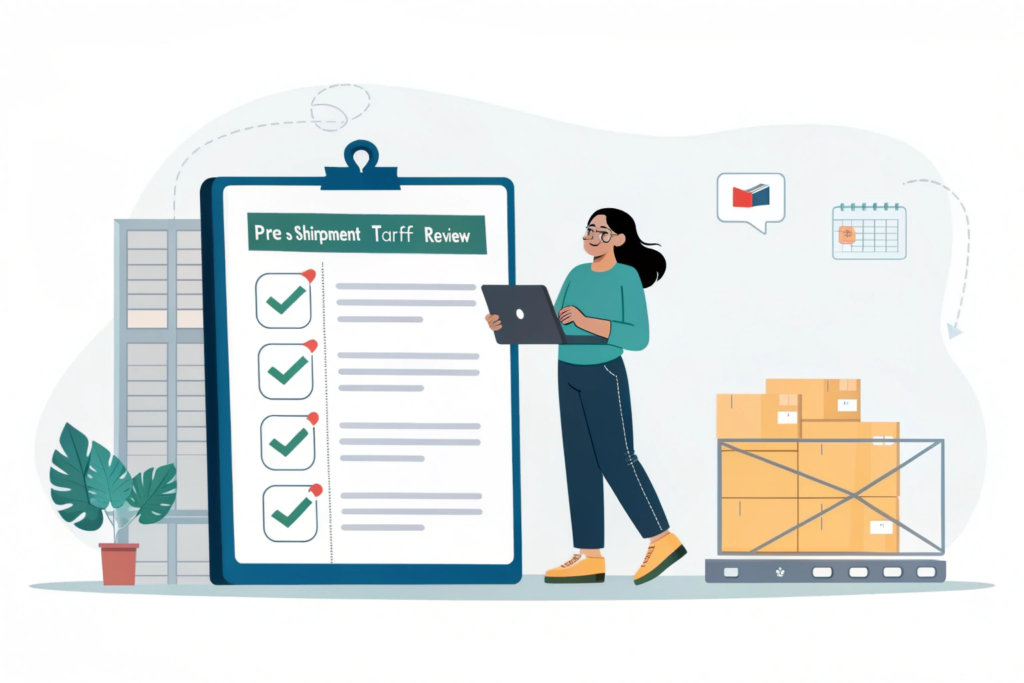
This checklist is your control mechanism. Before the container is sealed, confirm:
- HS Code Agreement: Have we agreed on the correct 6-digit HS code for this product?
- Documentation Review: Can I see a draft of the Commercial Invoice and Certificate of Origin?
- Origin Statement: Does the COO clearly state "Country of Origin: China"?
- Value Transparency: Is the FOB value on the invoice the true transaction value?
- Special Programs: Are we using a specific trade program (e.g., GSP)? Do we have the right form?
Getting this right upfront with a supplier like us at Shanghai Fumao is easy. We expect these questions. It shows you're a professional buyer, and it ensures our joint success. This diligence is what makes a supply chain stable and trustworthy.
Conclusion
Navigating coffee tariffs is undeniably complex, but it is navigable. The path is built on accurate classification (HS codes), leveraging available trade agreements with proper proof of origin, and forging a transparent partnership with your supplier to ensure impeccable documentation. The importer's final responsibility is to engage a skilled customs broker and institute a diligent pre-shipment review process.
Mastering this complexity does more than just control costs—it transforms a potential risk into a point of competitive reliability. It ensures your shipments clear customs smoothly, protecting your timelines and your profit margins.
If you are sourcing coffee from China and want a supplier who understands this landscape and provides the documentation foundation for your success, let's talk. To discuss how we can support your tariff management with precise documentation and transparent origin information, contact our Sales Director, Cathy Cai. She can connect you with our export logistics team. Email Cathy at cathy@beanofcoffee.com. Let's build a supply chain that's both high-quality and compliant.