
As a business owner importing goods from overseas, you're constantly watching your costs. You've negotiated a great price for your coffee beans, but then you get the freight quote, and it feels like a punch to the gut. The volatile, often opaque world of ocean freight can feel like a black box where you have no control. You're frustrated by the fluctuating rates, the confusing surcharges, and the feeling that you're being overcharged. This is a major pain point: you know that every dollar you can save on freight is a dollar that goes directly to your bottom line, but you feel powerless to influence the price.
Honestly, the key to negotiating freight rates is to stop being a passive price-taker and start acting like a strategic procurement professional. This means doing your homework by getting multiple quotes, demonstrating your value by providing accurate forecasts and highlighting your shipping volume, and building long-term relationships with a few trusted freight forwarders or carriers. You don't get a better rate by arguing; you get it by proving you are a valuable, predictable, and professional client.
From my position as an exporter at Shanghai Fumao, we negotiate freight for our clients every single day. We've learned that the carriers and forwarders are not our adversaries; they are partners in a complex logistical dance. They want good clients just as much as you want a good rate. A good client is one who makes their job easier. Let's break down how you can become that client and, in turn, get the best possible rates.
How Do You Prepare for the Negotiation?
You should never enter a negotiation blind. The party with the most information almost always has the upper hand. Before you even contact a shipping line or freight forwarder, you need to understand the market and your own needs.
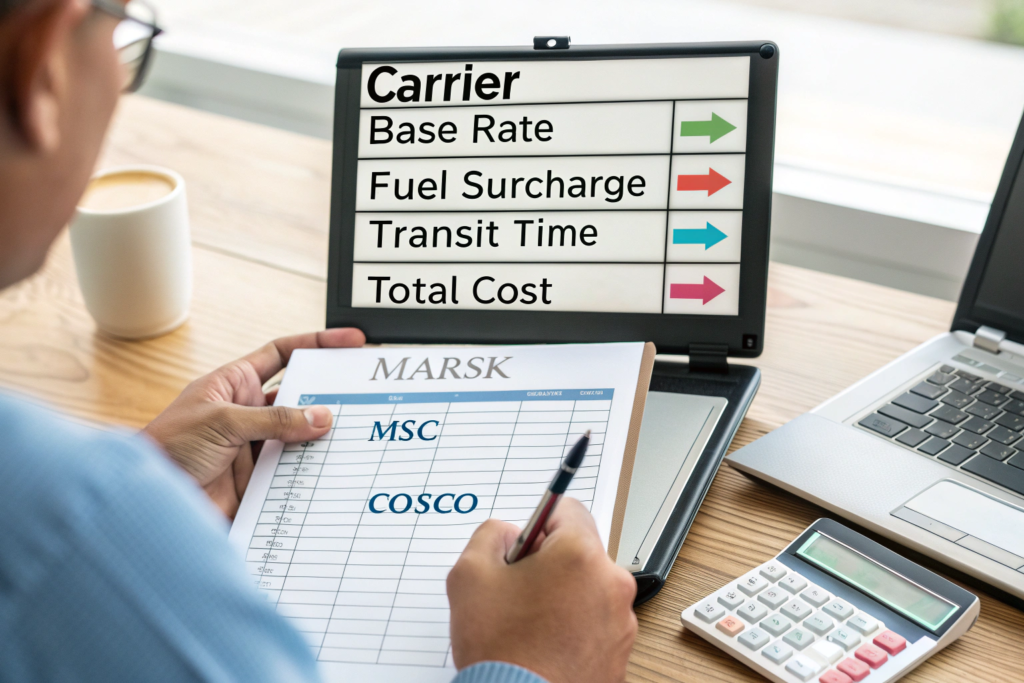
Don't I just ask for a price? You can, but you'll get a standard, non-negotiated "spot rate." To negotiate, you need leverage. Your leverage comes from showing them that you have done your research and that you have other options. The single most important preparatory step is to get quotes from multiple sources.
Always get at least three quotes. This could be from different freight forwarders or directly from the shipping lines' NVOCC (Non-Vessel Owning Common Carrier) arms.
What information do you need to provide to get a quote?
Be professional and provide all the necessary details upfront. This shows you are a serious buyer.
- Origin & Destination: Be specific (e.g., Port of Shanghai, China to Port of Long Beach, CA, USA).
- Commodity: Green Coffee Beans (provide the HS Code if you know it: 0901.11).
- Volume & Weight: "1 x 20-foot container, approximately 19 metric tons."
- Incoterms: State the terms of your purchase (e.g., FOB Shanghai).
- Ready Date: When will the cargo be ready for pickup?
What market intelligence should you gather?
- Know the Going Rate: Use online indices like the Freightos Baltic Index (FBX) or the Shanghai Containerized Freight Index (SCFI) to get a general idea of the current market rates on your lane. If a quote is wildly higher than the index, you know you have room to question it.
- Understand Surcharges: Freight rates are not just a base price. They include a Bunker Adjustment Factor (BAF) for fuel costs, Peak Season Surcharges (PSS), and other fees. Ask for a detailed breakdown of all charges so you can compare quotes accurately.
How Do You Demonstrate Your Value as a Client?
Shipping lines and freight forwarders are in the business of selling space on their vessels. Their ideal client is one who buys space predictably and makes their planning process easy. Your goal is to position yourself as that ideal client, even if you're not a massive multinational corporation.
But I'm just a small business, I don't have much volume. Volume is important, but it's not the only thing. Predictability and professionalism are just as valuable. A small client who ships one container every month, on schedule, and provides accurate paperwork is often more valuable than a large, chaotic client who ships 10 containers unpredictably.
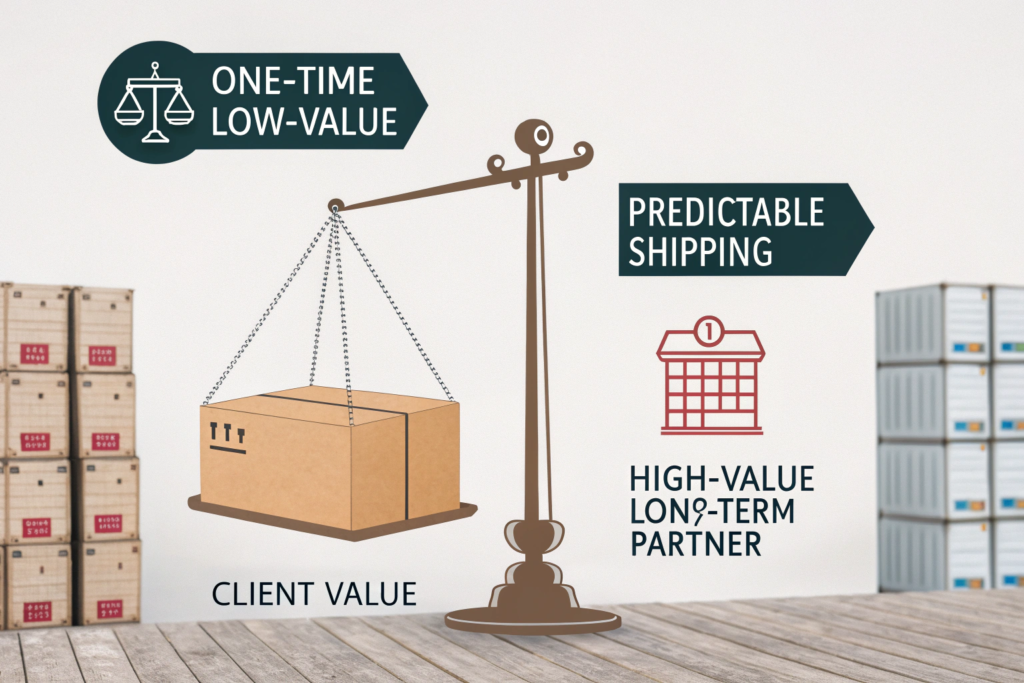
How can you show your value?
- Provide a Forecast: Even if it's an estimate, provide a shipping forecast. "We plan to ship one container per month for the next six months." This allows the carrier to plan their capacity and makes you a more attractive client than a one-off "spot market" shipper.
- Consolidate Your Volume: If you are shipping from multiple suppliers in the same region, try to consolidate your volume through a single freight forwarder. By combining your shipments, you instantly increase your negotiating power with them.
- Be Flexible: If you can be flexible with your shipping dates by a week or two, mention it. "Our cargo is ready on the 15th, but we can ship anytime before the 30th." This allows the forwarder to place your cargo on a less crowded, potentially cheaper vessel.
What does it mean to be a "low-maintenance" client?
This is huge. Ensure your paperwork is always accurate and submitted on time. Pay your invoices promptly. Be responsive to communications. A client who doesn't cause problems is a client they want to keep, and they will be more willing to offer competitive rates to retain your business.
What Are the Key Points to Negotiate Beyond the Base Rate?
A common mistake is to focus only on the "all-in" price per container. A savvy negotiator knows that the ancillary charges and terms can be just as important and are often more negotiable than the base ocean freight rate itself.
The price is the price, right? Not always. The surcharges and fees are where carriers have more discretion. Furthermore, negotiating for more favorable "free time" can save you thousands of dollars in potential penalties, especially during port congestion.
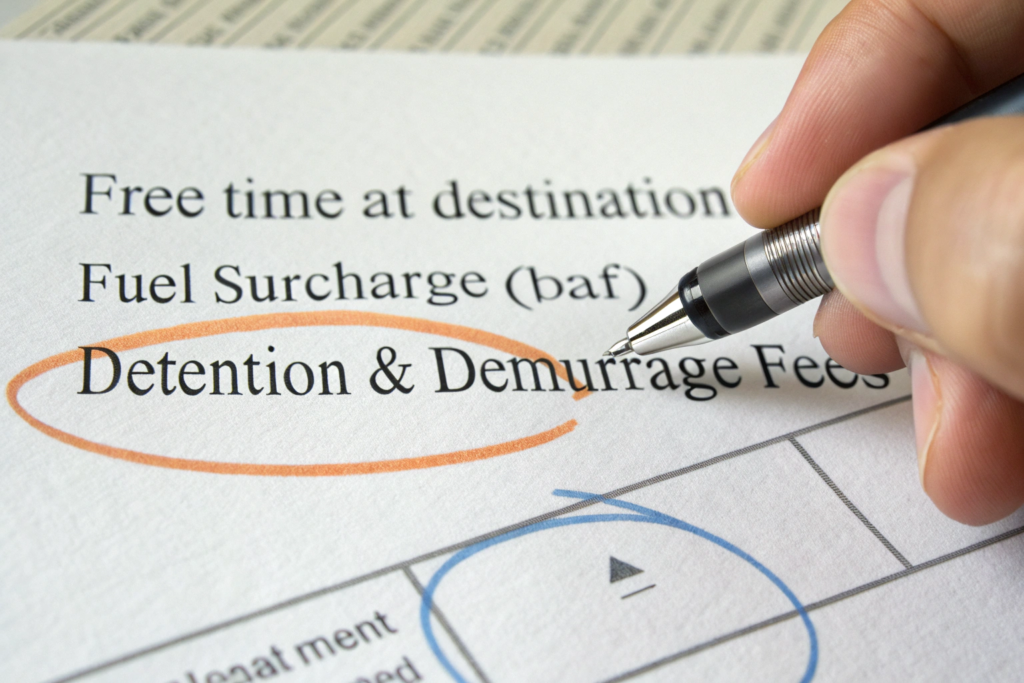
What is "Free Time" and why should you negotiate it?
"Free time" is the number of days you have to pick up your container from the port and return the empty container before the shipping line starts charging you hefty daily penalties called demurrage and detention.
- Standard Free Time: Might be 5-7 days.
- Your Negotiation Goal: "Given the current congestion at the Port of Long Beach, we require 14 days of free time at the destination to avoid unfair penalties." This is a very common and reasonable negotiating point.
Can you negotiate surcharges?
Sometimes. While the fuel surcharge (BAF) is often tied to global oil prices, other charges might be negotiable. If you are hit with a Peak Season Surcharge (PSS), you can ask, "As a regular, contracted client, can we get a waiver or a reduction on the PSS for this shipment?" The worst they can say is no.
Why Is Building a Long-Term Relationship Your Best Strategy?
While shopping around for the best spot rate on every single shipment might seem like a good way to save money, it's often a short-sighted strategy. In the long run, building a strong, loyal relationship with one or two key freight forwarders is almost always more beneficial.
Won't I get a better price by constantly making them compete? You might save a few dollars in the short term, but you lose out on the bigger prize: partnership. A forwarder who sees you as a long-term partner will work harder for you. They will fight for space for you during peak season, they will help you solve problems when things go wrong, and they will give you preferential treatment and better, more stable contract rates over time.

What are the benefits of a long-term relationship?
- Better Service: When port congestion hits and space is tight, who do you think your forwarder will prioritize? The loyal, long-term client, or the one-time price shopper?
- Stable, Contracted Rates: Instead of being subject to the wild swings of the spot market, you can often negotiate a contracted rate that is valid for several months. This provides cost stability and makes your financial planning much easier.
- A True Advocate: A good forwarder becomes an extension of your logistics team. They will advise you on the best routes, help you navigate customs, and proactively solve problems before they become expensive disasters. This service is often worth far more than the small amount you might save by constantly switching providers.
How do you choose the right forwarder to partner with?
Look for a forwarder who is responsive, knowledgeable about your specific commodity (like coffee), and has a strong network in your key shipping lanes (e.g., China to the US). Don't just choose the cheapest one; choose the one who communicates best and seems most invested in your success.
Conclusion
Negotiating freight rates is a critical skill for any international trader. It's a strategic game that you can win, not by being aggressive, but by being prepared, professional, and partnership-oriented. By doing your homework, demonstrating your value as a client, looking beyond the base rate, and, most importantly, building strong long-term relationships, you can move from being a passive victim of the market to an active participant who secures better rates and more reliable service. This approach will not only save you money but will also make your entire supply chain more resilient and predictable.
As a full-service exporter, we at Shanghai Fumao handle these negotiations on behalf of many of our clients, leveraging our volume and expertise to secure the best possible rates. We believe a great price on coffee beans is only valuable if it's not erased by exorbitant shipping costs. If you're looking for a partner who can provide a seamless, cost-effective, farm-to-your-door solution, we invite you to start a conversation. Contact our coffee specialist at cathy@beanofcoffee.com.