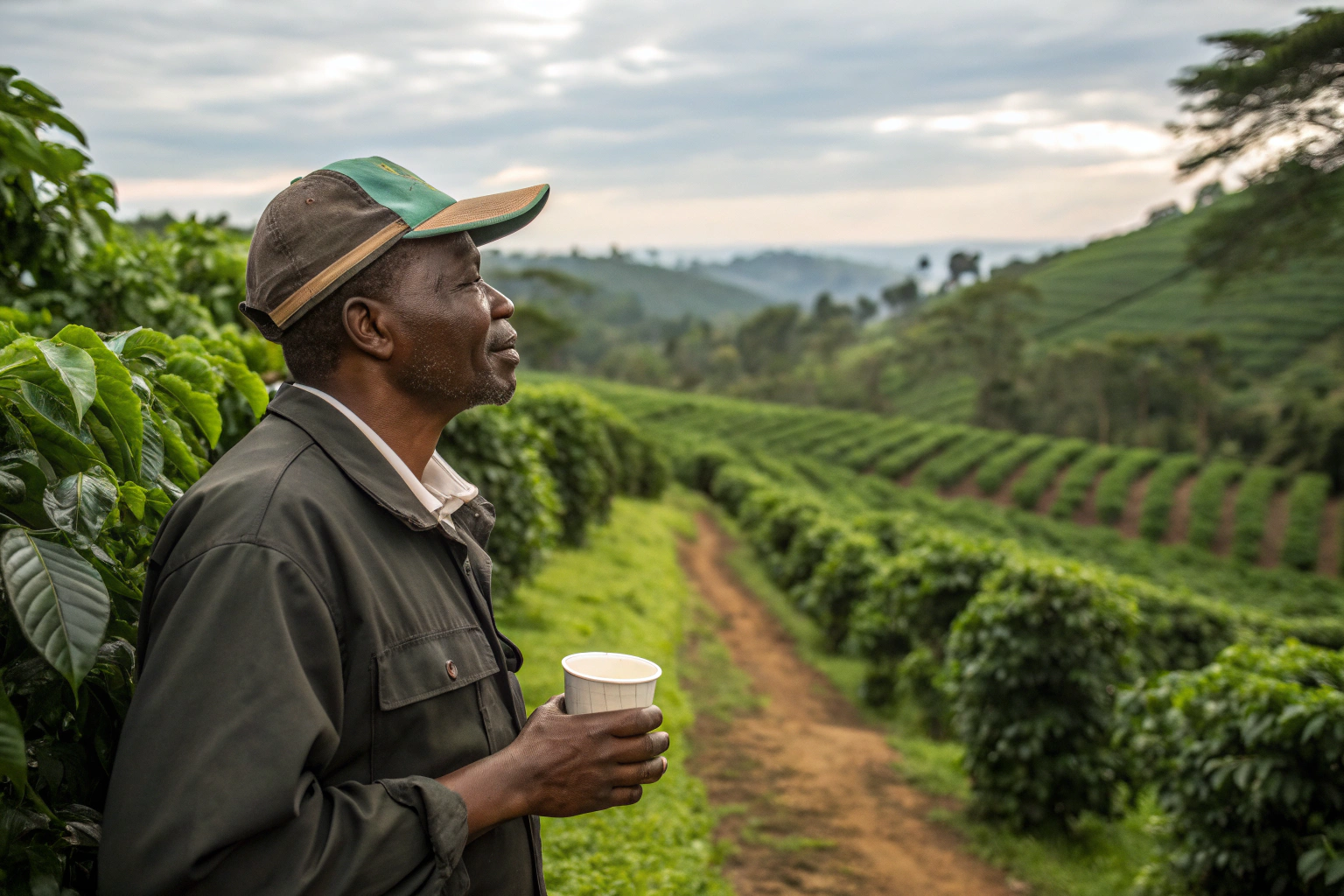
You're building a coffee brand that stands for purity, sustainability, and trust. Your customers are asking for organic, and you know it's the right path. But the journey to get that official organic seal feels like navigating a maze of paperwork, confusing standards, and uncertain costs. The fear of investing time and money into a process you might fail is real. Let me tell you, as someone who has guided our own farms and partners through this, it's a rigorous but utterly achievable journey that transforms your entire operation for the better.
To obtain organic certification for your coffee brand, you must work with an accredited certification body, adhere to strict organic standards for at least three years (the conversion period), implement a detailed organic management plan, and pass annual on-site inspections. The process certifies your entire supply chain, from soil to shelf.
It's not just about avoiding synthetic chemicals. It's a whole system of farming and handling. When we started the conversion for parts of our plantations in Yunnan, the first lesson was patience. The soil itself needs time to heal and rebuild its natural fertility. This isn't a quick marketing fix; it's a commitment. So, where do you begin? Let's map out the steps.
What are the first steps to start the organic certification process?
You can't just decide to be organic and print new labels next month. The process is backward-looking—the certifier needs to see a history of compliant practices. Your very first move is to stop using any prohibited substances immediately. This date becomes the start of your conversion period. But before that, you need a plan.
The first steps involve selecting an accredited certifier, understanding the specific organic standard you'll follow (like USDA NOP or EU Organic), and developing a comprehensive Organic System Plan (OSP). This plan is your blueprint, detailing every practice from pest control to harvest handling.
Think of the OSP as your rulebook. It must be written down and followed meticulously. A common oversight is forgetting about buffer zones. Your organic coffee plots need a clear separation from conventional farms to prevent pesticide drift.
How to choose the right organic certifier for your coffee?
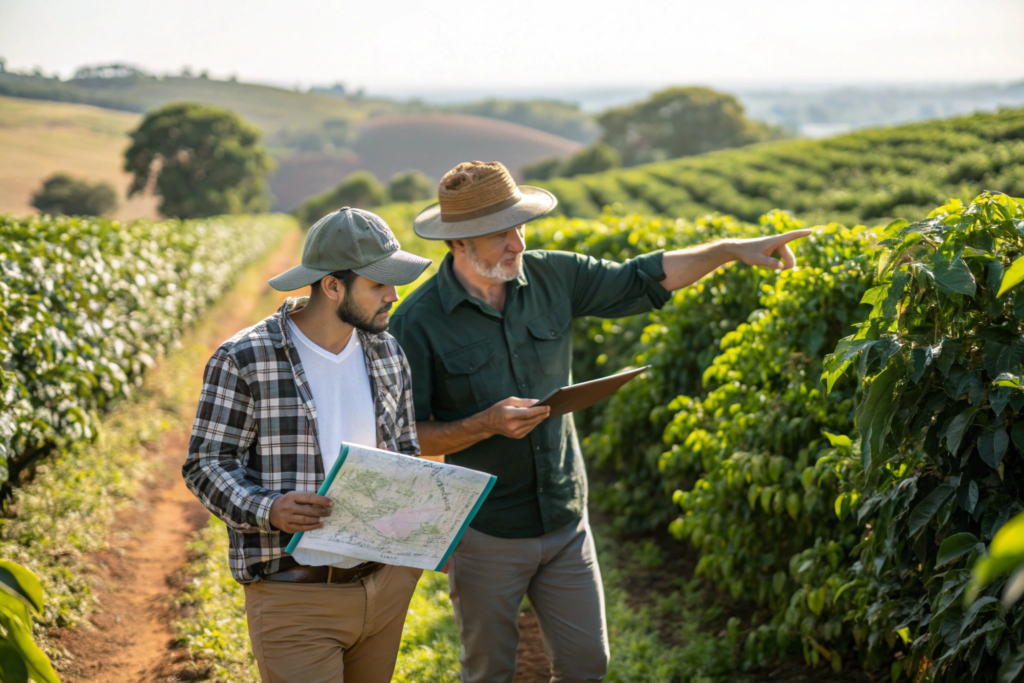
Not all certifiers are the same. Your choice depends on your target market. For the U.S., you need a certifier accredited by the USDA National Organic Program (NOP). For Europe, it must be approved by the EU. Some certifiers hold accreditations for multiple markets, which is efficient if you plan to export widely. You should contact several certifiers. Ask about their fees (application, annual renewal, inspection costs), their experience with coffee and with exporters in your region, and the languages they work in. Get sample copies of their application and OSP templates. A good certifier acts as a guide, not just a police officer. We chose a certifier familiar with Asian agriculture because they understood our local context better.
What exactly is an Organic System Plan (OSP)?
The OSP is the heart of your application. It's a detailed document that proves you know how to maintain organic integrity. It must cover: 1) History of the land: A map of all fields, showing what was grown there for the past 3+ years. 2) Soil and crop fertility management: How you'll use compost, green manure, and crop rotations. You can't use synthetic fertilizers. 3) Pest, weed, and disease management: Your strategies—like introducing beneficial insects, using approved botanical sprays, or manual weeding. 4) Contamination prevention: Your plan for buffers, cleaning equipment, and preventing commingling. 5) Record-keeping system: How you'll track every input, every harvest from a specific plot, every sale. This traceability is non-negotiable. The certifier reviews your OSP before the first inspection. A weak plan means delays.
What are the key rules during the 3-year conversion period?
This is the transition phase—the three years between your last use of a prohibited substance and the harvest of your first certified organic coffee. During this time, you must farm 100% organically, but you cannot label or sell the coffee as "organic." It's a significant investment with no premium return yet. This period cleanses the land.
During the 3-year conversion, you must implement your full OSP, maintain meticulous records of all activities, and use only inputs (fertilizers, pest controls) that are approved for organic production. Annual inspections will verify your compliance throughout this period. It's a test of discipline. Every seed, every bag of compost, every spray must be pre-approved. The certifier will want to see purchase receipts for all inputs to verify their organic status.
What practices are prohibited in organic coffee farming?
The list is clear and absolute. You cannot use: Synthetic pesticides and herbicides. Synthetic, soluble nitrogen fertilizers. Genetically Modified Organisms (GMOs). This includes GMO seeds or microbial agents. Sewage sludge as fertilizer. The philosophy is to feed the soil ecosystem, not just the plant. So, what do you use instead? We rely on compost we make from coffee pulp and other farm waste, plant legumes as cover crops to fix nitrogen, and use physical barriers or chili-garlic sprays for pests. It's more labor-intensive, which is part of the cost. Another way to look at this is risk management: you must prevent the unintentional use of prohibited stuff. This means having separate, clearly labeled storage for your organic-approved tools and inputs.
How do you maintain records for organic traceability?
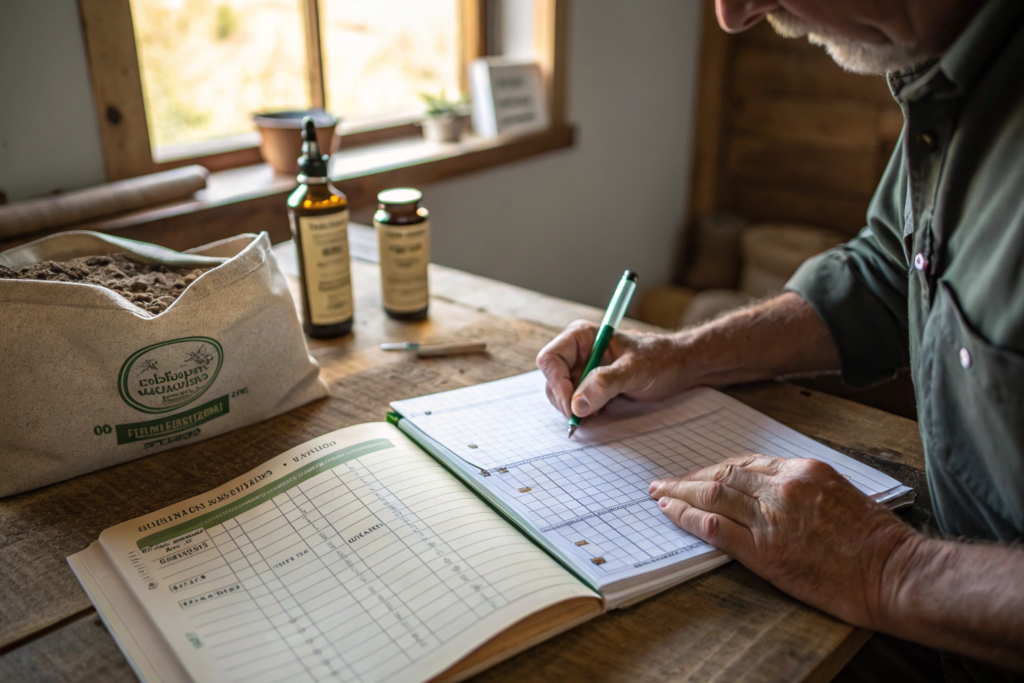
Your records are your proof. You need a paper or digital system that links every single batch of coffee back to the specific plot of land it came from, and to all activities on that plot. This includes: Field activity logs: Dates of planting, weeding, fertilizing, pest control. Input logs: Receipts and labels for every input used, showing its organic certification. Harvest logs: Which field was harvested, on what date, and the quantity. Storage and processing logs: How and where the green beans were stored, processed, and transported to prevent mixing with non-organic beans. At Shanghai Fumao, we use batch numbers that tell the whole story: Farm Code-Field Number-Harvest Year. When the certifier's inspector arrives, they will audit these records against your OSP and your physical operation. Inconsistency is the biggest reason for failure.
What happens during the annual inspection?
The inspection is the moment of truth. It's not a hostile audit, but a thorough verification. An inspector, employed by your certifier but independent, will visit your farm and all your handling facilities. Their job is to see if reality matches your OSP and the organic standards. No notice is given for the initial inspection, and short notice for annual ones.
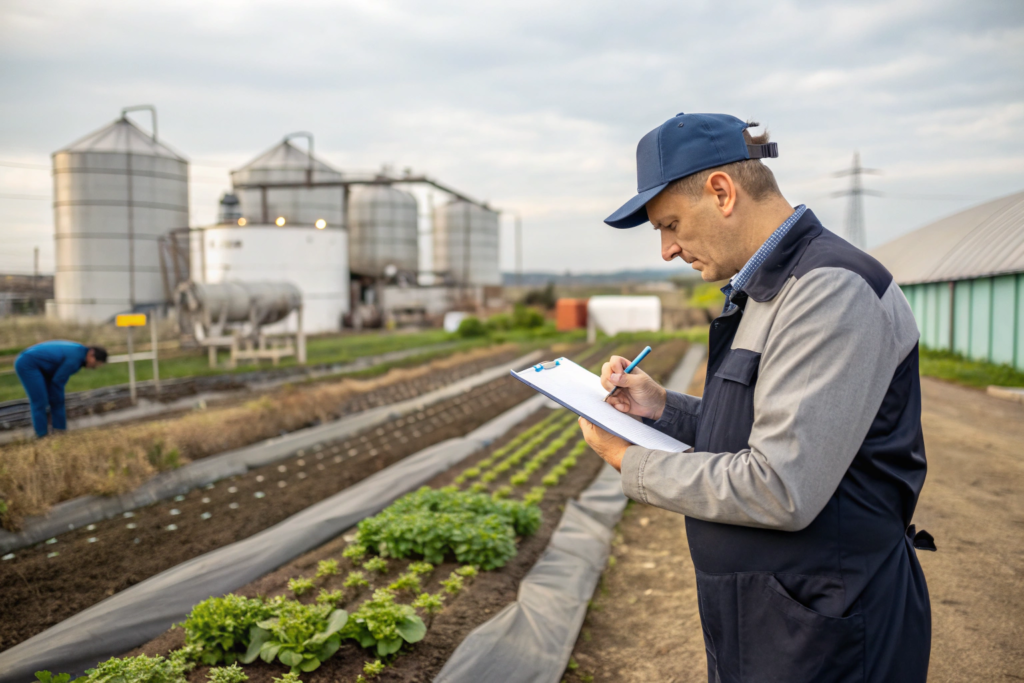
The annual inspection involves a detailed document review, a physical tour of all fields and facilities, interviews with you and your workers, and a sampling plan for residue testing if deemed necessary. The inspector then files a report to the certifier, who makes the final certification decision. Be prepared for the inspector to look in every shed, check every sprayer, and ask pointed questions. Honesty is crucial.
What documents will an organic inspector want to see?
The inspector will request a mountain of documents. Key items include: Your current Organic System Plan. Records from the past year (all those logs we discussed). Purchase receipts and labels for all seeds, fertilizers, and pest controls. Sales records and certificates for all coffee sold (to ensure non-organic coffee wasn't sold as organic). Land deed or lease agreements to prove control over the land. Cleaning logs for processing equipment (like de-pulpers, dryers, storage sacks). Transportation records if you use third-party haulers. Have them organized and ready. The inspector will cross-check a sales invoice backward to the field harvest log and the input log for that field. Any broken link raises a red flag.
How do you prepare your farm and processing unit for inspection?
Physically, walk your own farm first. Look for: Clear signage marking organic plots. Clean and separate storage for organic inputs and harvest. Well-maintained buffer zones. Functioning compost areas. Clean processing equipment—run a batch of beans through as a cleaning cycle if you also process conventional coffee. Talk to your workers. Make sure they understand the basic organic rules and why they matter. The inspector will likely pull a worker aside and ask, "What do you spray on the plants?" or "Where do you get the fertilizer?" Their answers must align with your OSP. For a brand like yours that might source from us, the inspection extends to our export facility. We ensure our Shanghai Fumao warehouse has dedicated areas for certified organic lots, with all the same rigorous documentation to prevent commingling at the final export stage.
What are the costs and timelines for certification?
Let's talk numbers and calendars. Organic certification is an investment. The costs can be a barrier for small farms, but for a brand building a future, it's essential. The timeline is fixed by the conversion period, but the administrative timeline can vary.
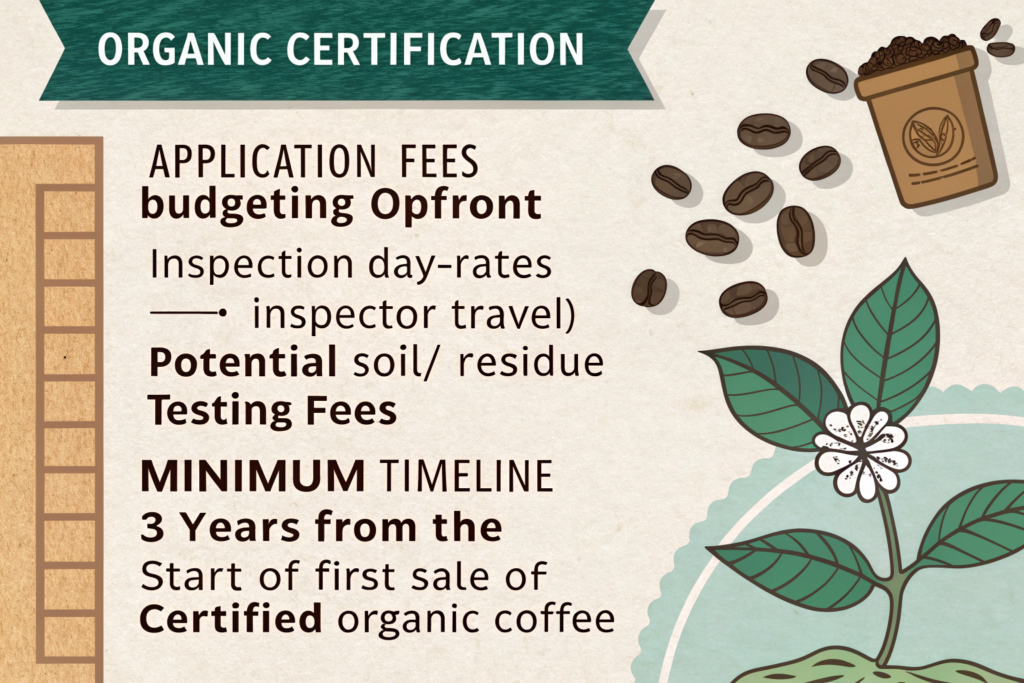
The total cost of organic certification includes application fees, annual renewal fees, inspection day-rates (plus inspector travel), and potential soil/residue testing fees. The minimum timeline is 3 years from the start of conversion to your first sale of certified organic coffee. Budgeting for this upfront prevents surprises. Remember, the cost per kilogram decreases as your certified volume increases.
How much does organic certification cost?
Costs vary widely by certifier, farm size, and complexity. For a single farm, expect $1,500 to $4,000 USD for the first year, including application and inspection. Annual renewal fees are typically lower. The inspection day-rate might be $800-$1,200 per day, plus the inspector's travel and lodging. For a coffee brand that sources from multiple farms (like a cooperative or an exporter), the cost is higher because the inspector must visit each entity in the supply chain. Some governments offer subsidies to support organic conversion—it's worth researching in your country. At BeanofCoffee, we view this as a core operational cost, not a marketing expense. It ensures the premium we command is justified and durable.
What is the step-by-step timeline from application to certified sale?
Here is a realistic timeline:
- Year 0, Month 1-3: Stop prohibited inputs. Select certifier, draft OSP.
- Year 0, Month 4: Submit application and OSP to certifier.
- Year 0, Month 5-6: Certifier reviews OSP, schedules first inspection.
- Year 0, Month 7: First on-site inspection. Start of 36-month conversion period.
- Year 1 & 2: Farm organically, keep perfect records. Annual inspections occur.
- Year 3, Month 7: Final inspection (if all previous years are compliant).
- Year 3, Month 8-9: Inspector submits report. Certifier reviews and issues certificate.
- Year 3, Harvest: Your first certified organic coffee harvest can now be sold as "Organic."
Any major non-compliance found during an inspection can "reset the clock" on that specific field, extending the timeline. That's why getting it right from day one is critical.
Conclusion
Obtaining organic certification is a transformative process that builds a resilient, transparent, and valuable coffee brand. It demands a meticulous commitment to planning, record-keeping, and natural farming practices over a multi-year journey. While the path requires significant investment in time, labor, and cost, the reward is a product that commands trust and a premium in the global market, aligning with the growing demand for authentic, sustainable choices.
For coffee brands looking to source certified organic beans, partnering with an established, certified exporter can streamline this complex process. It provides immediate access to compliant supply and shares the burden of rigorous chain-of-custody documentation.
If you are developing your brand and seek a reliable, certified organic supply of premium Yunnan Arabica, Catimor, or Robusta, we can provide the consistency and paperwork integrity you need. For detailed information on our certified organic lots, current certificates, and samples, please contact our Export Manager, Cathy Cai, at cathy@beanofcoffee.com. Let's build something pure, together.