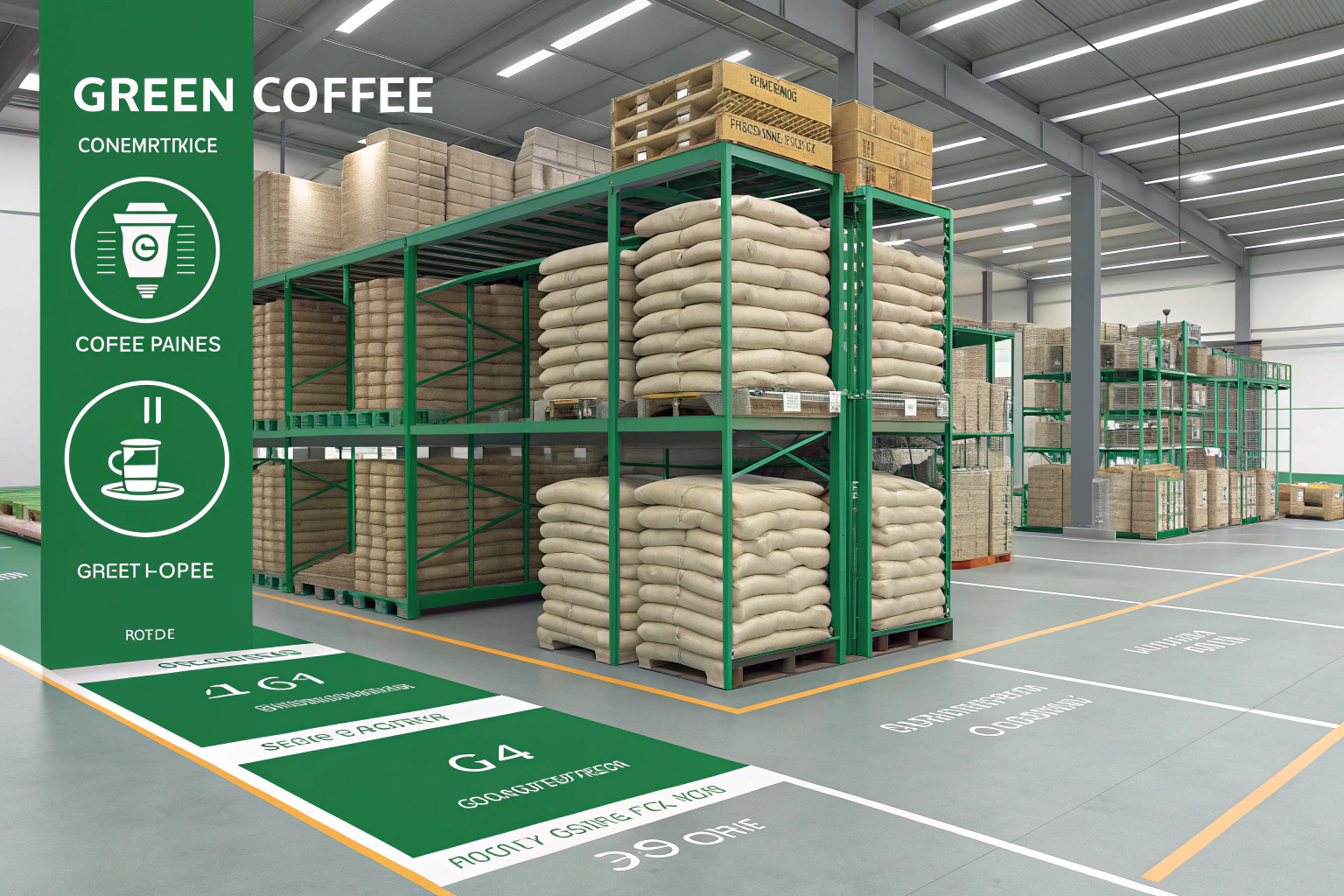
You've just taken delivery of a container—250 sacks of green coffee. Now, they sit in your warehouse. But are they just stored, or are they optimized? An inefficient layout isn't just an annoyance; it's a direct threat to your coffee's quality, your operational costs, and your ability to fulfill orders swiftly. As an exporter who manages thousands of tons across our own facilities in Yunnan, I've learned that warehouse design is a silent partner in quality control and customer satisfaction.
Optimizing a warehouse layout for coffee bean sacks requires a systematic approach focused on maximizing airflow, ensuring FIFO (First-In, First-Out) rotation, facilitating efficient picking, and safeguarding bean quality. The key principles involve strategic zoning (receiving, storage, dispatch), dedicated racking or palletizing for sack storage, maintaining strict clearance from walls and floors, and implementing a clear, digital inventory management system. The goal is to create a flow that protects the product from environmental damage while minimizing labor and time for every movement.
That's the blueprint. But the reality is a constant balance between physics and logistics. Coffee is a heavy, sensitive, and valuable commodity. A poorly designed warehouse can lead to mold, pest infestation, mixing of lots, and frustrating delays in finding and shipping the right coffee. For a buyer like "Ron," who is concerned with timeliness and security, your warehouse efficiency directly impacts his experience. Let's break down how to build a warehouse that works as hard as you do.
Why Is Airflow and Moisture Control the Top Priority?
Coffee beans are hygroscopic sponges. The single greatest risk in static storage is localized moisture buildup, which leads to mold and devastating quality loss. Your layout must fight this from day one.
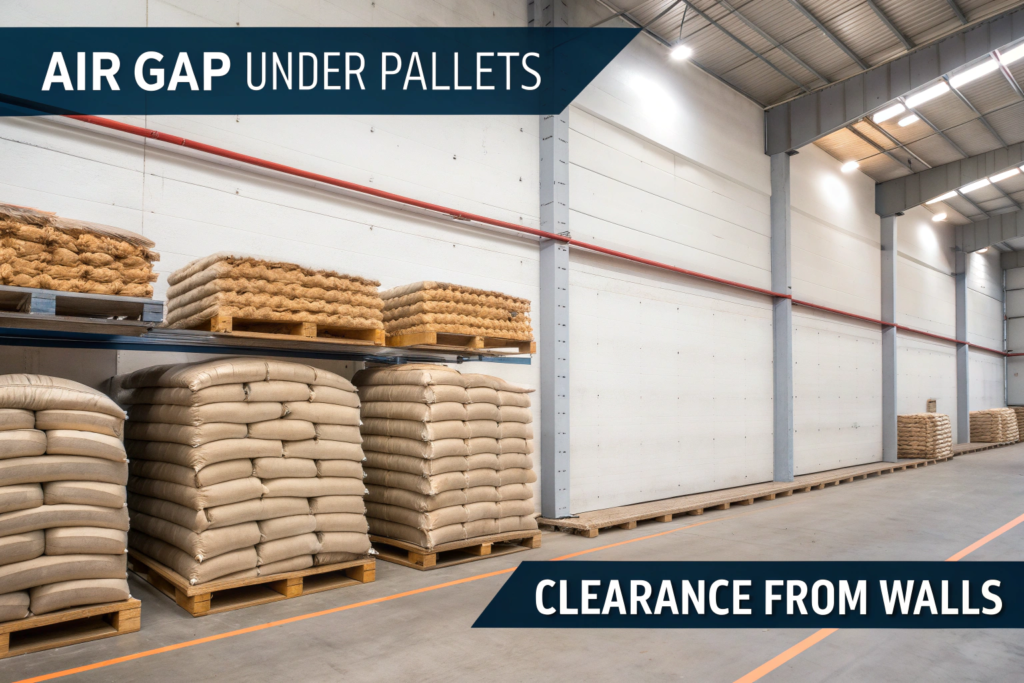
Airflow is not about creating a wind tunnel; it's about preventing stagnant, humid air pockets around and between sacks. This is achieved through three layout decisions: 1) Strategic Spacing: Sacks should never be stored directly against exterior walls (which can transmit moisture and temperature changes) or directly on concrete floors (which wick moisture). Use pallets or racking to create an air gap underneath. 2) Aisle Orientation: Orienting main aisles to align with natural or mechanical ventilation sources (fans, vents) allows air to circulate through the storage blocks, not just around them. 3) Stacking Discipline: Even when using racks, do not over-stack sacks too tightly or too high. A common rule is to limit stacks to 8-10 bags high for jute bags to prevent compression damage at the bottom and to allow for air movement. In our climate-controlled Yunnan warehouses, we combine this with maintaining a steady 60-65% relative humidity, making the layout our first line of defense.
How Does Floor Planning Prevent "Microclimates"?
Create designated, separated zones. Wet or damp sacks from a recent shipment should have a dedicated "quarantine" or conditioning area away from the main dry storage. This prevents them from raising the humidity of your entire inventory. Similarly, different coffee types (e.g., Robusta vs. delicate Arabica) or processing methods (naturals retain more moisture) might have slightly different ideal storage conditions. The layout should allow for this segregation. Think of it as creating neighborhoods within your warehouse, each with a similar "climate." This level of control is a hallmark of a reliable and quality-focused supplier.
What Are the Best Racking Solutions for Coffee Sacks?
While stacking on pallets is common, dedicated sack racking is superior for quality and FIFO. Drive-in or pallet racking allows for each pallet (holding 20-40 sacks) to be individually accessible. Stacking frames (metal cages that hold a stack of sacks) provide stability and protect bags from bulging and tearing. The key advantage of racking is that it eliminates the need to unstack and restack piles to access bags at the bottom, which is labor-intensive and risks damaging bags and beans. It also naturally enforces FIFO if loading/unloading is done from one side. The investment in racking pays off in reduced labor costs and far better quality preservation.
How to Design for Efficient FIFO and Inventory Management?
First-In, First-Out isn't just a good idea—it's the law for perishable goods like coffee. Your warehouse layout must make FIFO the easiest, default path for any movement.
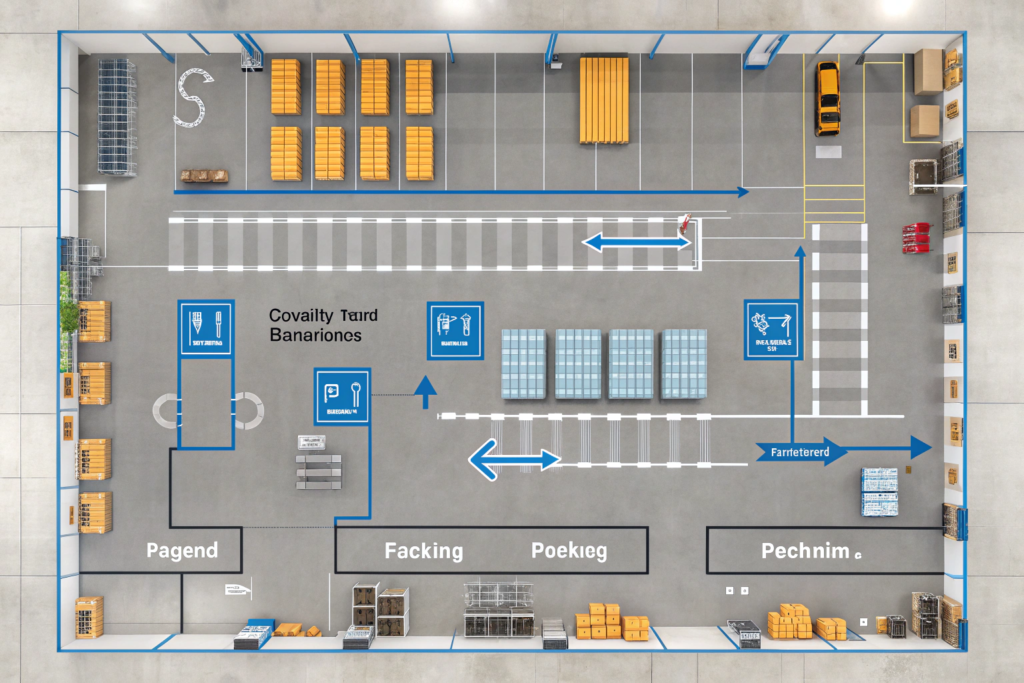
The most effective layout for FIFO is a linear flow system. Imagine your warehouse as a river: coffee flows in one end (receiving dock), moves steadily through storage (the riverbed), and exits at the other end (dispatch dock). This is often implemented as:
- Straight-Line Flow: Receiving and dispatch are at opposite ends of the building.
- U-Shaped Flow: Receiving and dispatch are on the same side but separated, with storage in a U-shape between them—ideal for smaller footprints.
Within the storage area, use rack rows that are accessible from both ends. Load new stock in one end, and pick from the opposite end. This forces rotation. Every lot must have a unique, scannable location ID (e.g., Aisle 3, Rack B, Level 2). This ID, not just the coffee's name, is what your Warehouse Management System (WMS) or inventory log tracks.
How Can Digital Tools (WMS/Barcoding) Integrate with Layout?
The physical layout is the hardware; the WMS is the software. They must be designed together. When a new lot arrives, staff receive it at the dock, scan the lot number, and the WMS assigns it the next available FIFO location in the correct zone (e.g., "Washed Arabica Zone"). A barcode label for that location is printed and placed on the rack. When an order comes in, the WMS generates a pick list sorted by the most efficient pick path through the warehouse (zone picking), directing staff to the exact location. This eliminates searching, prevents errors (picking the wrong lot), and provides real-time inventory data. For an exporter, this means we can confirm availability and ship samples to buyers like you with timeliness and absolute accuracy.
What Is the Role of Zoning in a Coffee Warehouse?
Divide your warehouse into clear, logical zones:
- Receiving & Inspection Zone: For unloading, checking bags for damage, and taking initial moisture readings.
- Primary Storage Zones: Segregated by coffee type (e.g., Green Arabica, Green Robusta, Roasted Coffee). Each has its own environmental priorities.
- Sample & QC Zone: A clean, well-lit area with a cupping lab and sample storage for pulling pre-shipment samples.
- Order Assembly & Dispatch Zone: Where picked sacks are consolidated, palletized, wrapped, and loaded.
- Quarantine/Holding Zone: For lots awaiting quality test results or under dispute.
This zoning, clearly marked on the floor and in the WMS, streamlines operations and minimizes cross-contamination of aromas or pests.
What Are the Best Practices for Sack Handling and Stacking?
How you physically handle the sacks is where quality is preserved or destroyed. The layout must facilitate gentle, efficient handling.
Mechanical Handling: For any scale, invest in the right equipment. Electric pallet jacks are essential for moving palletized sacks. Stacker cranes or forklifts (with proper attachments like sack clamps) are needed for higher racking. The layout must have aisles wide enough for this equipment to maneuver safely (typically 3-3.5 meters for a forklift). Manual Handling: For smaller operations, ensure sack trucks (dollies) are always available. Designate clear pathways and ensure floors are level and clean to prevent trips and bag tears.
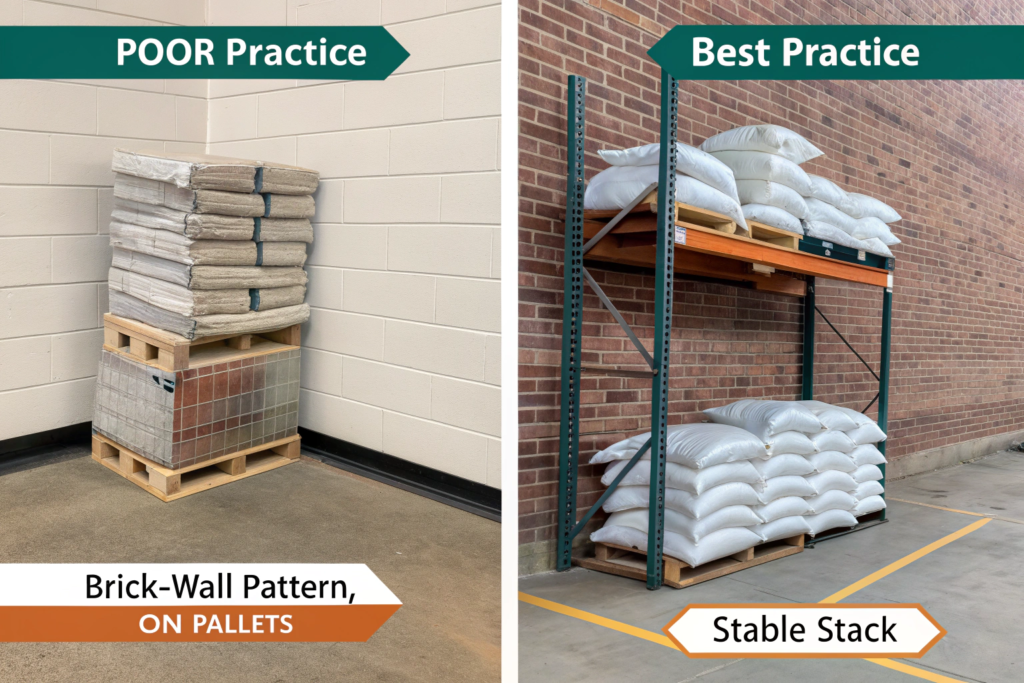
Stacking Protocols: Whether on pallets or racks, always stack sacks in a brick-wall pattern (interlocking like bricks). This creates a stable stack that is less likely to tip. The label side of every sack should face outwards for easy identification. Never exceed the safe stacking height for your bag type and floor strength.
How to Prevent Cross-Contamination and Pest Infestation?
Your layout is a pest management tool. Maintain a clean perimeter: Leave a 1-meter "clean zone" free of any storage or debris along all interior walls. This allows for easy inspection and placement of pest monitoring traps. Isolate incoming goods: The receiving zone should be as far from primary storage as the layout allows. New shipments are the most likely vector for pests. Store by lot and origin: Keep lots physically separate. Do not stack sacks from Ethiopia on top of sacks from Yunnan. This prevents mixing and allows for targeted response if a pest issue is found in one lot. We treat our warehouse like a secure vault; these protocols are non-negotiable to protect both our inventory and our buyers' trust.
What Are the Risks of Improper Stacking?
Improper stacking leads to: 1) Compression Damage: Bottom bags in a too-high stack can burst, or the beans inside can be crushed, affecting roast uniformity. 2) Difficulty in Rotation: Accessing a specific lot in the middle of a large, unstable stack requires moving other lots, increasing labor and risk. 3) Safety Hazards: Unstable stacks can collapse, injuring workers and destroying product. A planned layout with appropriate racking eliminates these risks, contributing to a stable and safe operation.
How to Plan for Scalability and Flexibility?
Your coffee business will grow and change. The warehouse layout you design today must not become a bottleneck tomorrow.
Design with modularity in mind. Use mobile racking systems that can be reconfigured as needs change. Ensure your initial grid of columns and floor load capacity can support future mezzanine levels for lighter items (packaging, samples). Leave empty space or plan for easy expansion. Crucially, your zoning plan should be scalable. Can you easily add another "Washed Arabica" storage zone without disrupting the entire flow? The digital system (WMS) must also be scalable, capable of handling ten times the number of SKUs and transactions without slowdown. At Shanghai Fumao, our warehouse expansion plans are always part of our 5-year business forecast, ensuring we can meet growing demand from markets in North America and Europe without compromising on service.
How Does Layout Impact Sampling and QC Efficiency?
A significant amount of warehouse activity is pulling samples for quality checks and buyer requests. If your sample storage is in a distant, disorganized corner, it creates inefficiency. Integrate the QC zone centrally within the storage area. Maintain a small inventory of each active lot in a dedicated sample shelving unit within the QC lab. The layout should allow a QC manager to pull a physical bag from the main storage for comparison in under 5 minutes. This speed directly enhances your responsiveness to buyer inquiries, a key factor in being seen as a reliable partner.
What Cost-Saving Opportunities Does an Optimized Layout Create?
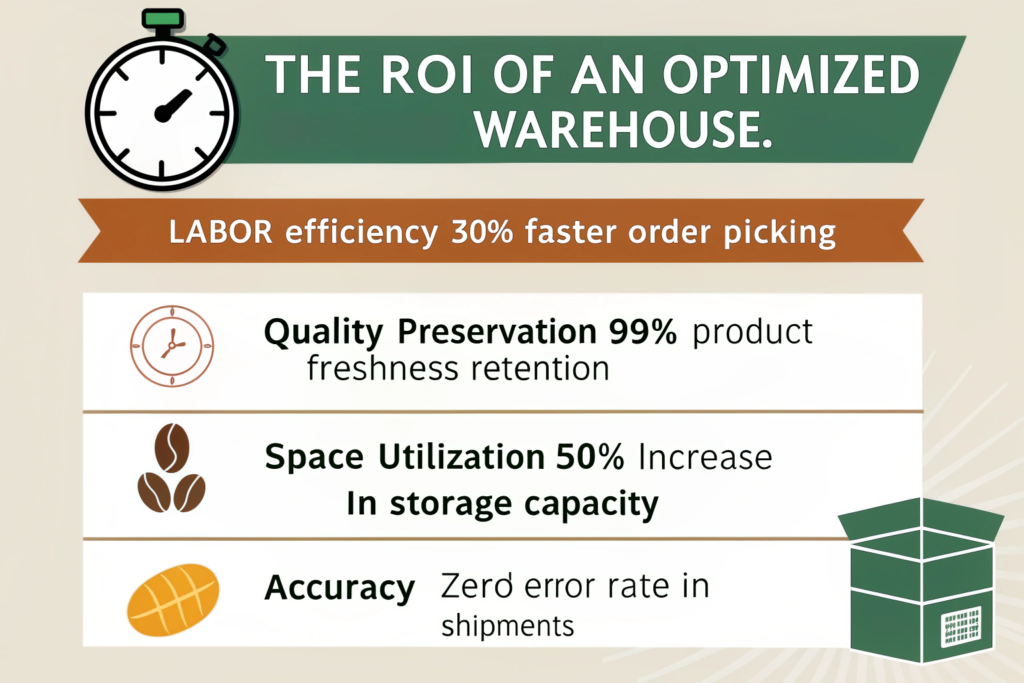
A smart layout saves money in four ways: 1) Reduced Labor Costs: Efficient pick paths and mechanical handling cut man-hours per shipment. 2) Reduced Shrinkage: Better FIFO and moisture control mean less coffee lost to aging or spoilage. 3) Increased Storage Density (Safely): Proper racking lets you use vertical space without risking product, delaying the need for costly expansion. 4) Fewer Errors: A logical layout combined with a WMS drastically reduces shipping errors (wrong lot sent), which are costly in both freight and customer trust. This overall efficiency contributes to maintaining a good price for your buyers.
Conclusion
Optimizing a warehouse for coffee sacks is a strategic investment that pays dividends in product quality, operational savings, and customer trust. It transforms a static storage space into a dynamic, quality-preserving engine of your supply chain. By prioritizing airflow and FIFO, integrating digital management, and planning for safe handling and future growth, you build a facility that protects your most valuable asset and enables scalable, reliable service.
For an exporter, a world-class warehouse is a tangible competitive advantage. It signals to buyers that every aspect of the business, down to the last bag in the farthest corner, is managed with professionalism and care. It is the ultimate expression of being a stable, secure, and trustworthy partner.
At Shanghai Fumao, our warehouse operations are engineered with these principles. We ensure that the coffee you order is not only grown and processed to spec but also stored and handled in a manner that guarantees it arrives in perfect condition.
If you are evaluating suppliers and want to partner with one whose operational excellence extends deep into the logistics chain, let's talk. Our doors—and our warehouse aisles—are open for virtual tours.
To discuss how our optimized supply chain can bring efficiency and reliability to your coffee sourcing, contact Cathy Cai at cathy@beanofcoffee.com. Let's build a workflow as smooth as your perfect roast.