
You have a great website. It's beautiful, it tells your story, and it showcases your products. But you're frustrated. You're looking at your analytics, and the traffic is flat. You know there are thousands of buyers out there searching on Google for coffee suppliers, roasters, or cafes just like yours, but they're not finding you. This is a massive pain point. It feels like you've built a beautiful, expensive billboard in the middle of the desert. You're invisible to the very people you need to reach most.
Honestly, optimizing your website for coffee keywords is not about "tricking" Google; it's about systematically proving to Google that you are the most relevant, authoritative, and trustworthy answer to a potential customer's search. This is achieved through a three-part strategy: 1) Deeply understanding what your ideal customer is actually typing into the search bar (Keyword Research), 2) Creating high-quality, genuinely helpful content that directly answers those questions (On-Page SEO), and 3) Building your website's reputation across the internet so Google sees you as an expert (Off-Page SEO).
I've had to learn this firsthand. When we launched our website for Shanghai Fumao, we had beautiful pictures of our Yunnan farms, but no one came. We had to learn to think like our customers. What were they searching for? "Chinese coffee supplier"? "Wholesale Arabica beans"? "Baoshan coffee origin"? By focusing on answering those questions, we turned our website from a silent brochure into our most powerful salesperson. Let's break down how you can do the same.
How Do You Find the Keywords Your Customers Actually Use?
This is the foundation of your entire SEO strategy. If you get this wrong, everything else you do is a waste of time. You cannot assume you know what people are searching for. You need data.
Don't I just need to rank for "coffee"? No, and trying to do so is a recipe for failure. "Coffee" is a "head term" with impossible competition. The gold is in the "long-tail keywords"—longer, more specific phrases that reveal the searcher's true intent. Your goal is to find the phrases your ideal customer types when they are ready to make a purchase or solve a specific problem.
Think about it. A teenager searching for "coffee" might want a picture for their school project. A person searching for "how to find a wholesale coffee supplier in China" is a potential customer. You want to attract the second person.
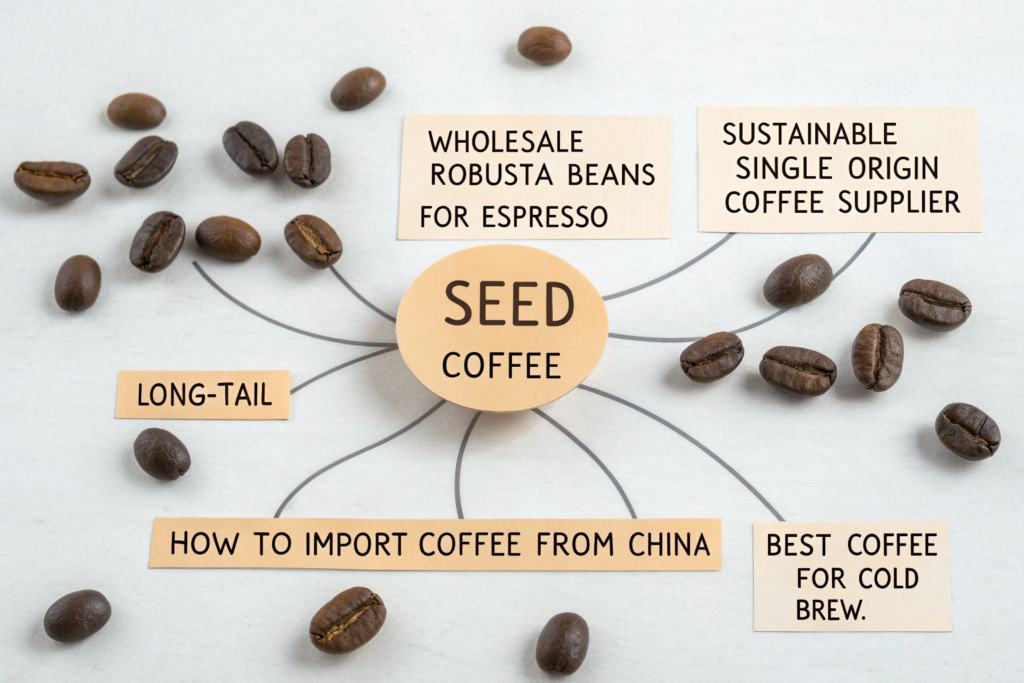
What are the different types of keyword intent?
You need to target keywords across the buyer's journey:
- Informational: "What is the difference between washed and natural coffee?"
- Commercial Investigation: "Best wholesale coffee suppliers," "Cropster vs RoastPath review."
- Transactional: "Buy green coffee beans wholesale," "Yunnan coffee sample."
Your website needs content that targets all three.
What tools can you use for keyword research?
While you can start by brainstorming in a spreadsheet, you'll eventually need professional tools to see real-world search volume and competition data.
- Free Tools: Google Keyword Planner (requires an ads account but is free to use) is a great starting point. Also, simply type a search into Google and look at the "People also ask" and "Related searches" sections at the bottom of the page.
- Paid Tools: For serious SEO, tools like Ahrefs or Semrush are indispensable. They allow you to see exactly what your competitors are ranking for, find low-competition keywords, and track your own progress.
How Do You Weave Keywords into Your Website Content?
Once you have your list of target keywords, you need to create pages and blog posts that are centered around them. This is called On-Page SEO. The goal is to make it incredibly obvious to both Google and the human reader what your page is about.
So I just need to repeat the keyword over and over? Absolutely not. That's called "keyword stuffing," and it's an old, outdated tactic that will get your site penalized by Google. The modern approach is to create a high-quality, comprehensive piece of content that is the best possible answer to the search query. You should use your main keyword naturally in a few key places, along with many related synonyms and subtopics.
If your target keyword is "sustainable coffee sourcing," you should write the most helpful, in-depth guide on that topic on the internet. You would naturally use the main keyword, but you would also cover related topics like "Fair Trade vs Rainforest Alliance," "shade-grown coffee," "regenerative agriculture," and "supply chain transparency."
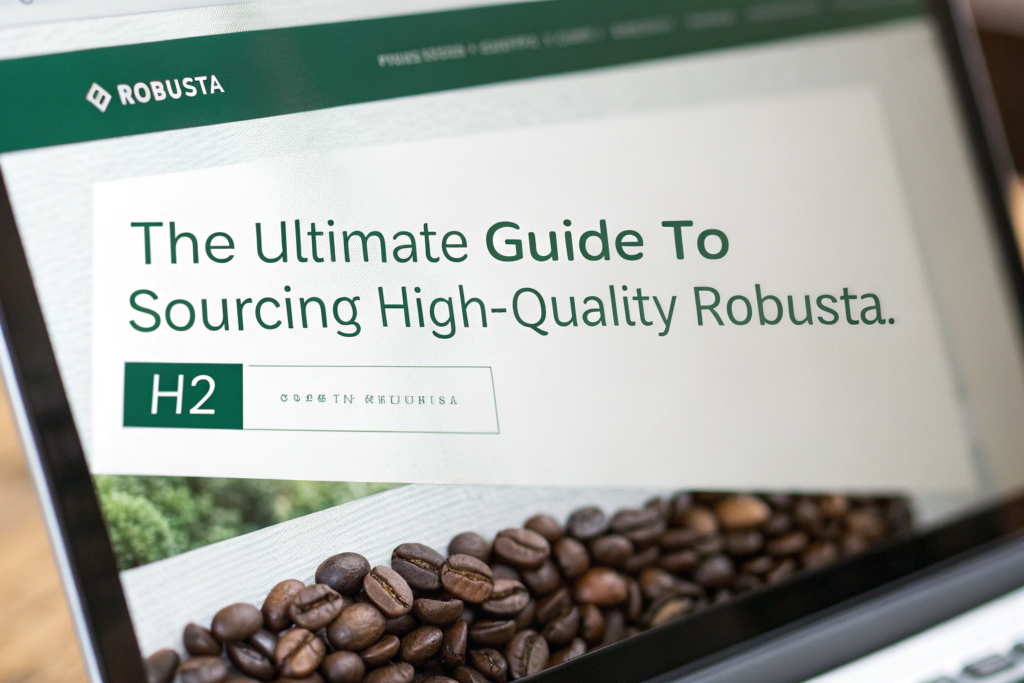
Where are the most important places to put your keyword?
For any given page or blog post, make sure your primary keyword appears in:
- The Page Title (Title Tag): This is the blue link that shows up in Google search results. It's the most important signal. E.g.,
<title>A Buyer's Guide to Sustainable Coffee Sourcing | Your Brand</title>. - The Main Heading (H1 Tag): This is the main title on the page itself. There should only be one H1 tag per page.
- Subheadings (H2, H3 Tags): Use your keyword or variations in your subheadings to structure your content logically.
- The First 100 Words: Mention your main topic early in the introductory paragraph.
- Image Alt Text: The descriptive text for your images. E.g.,
<img src="farm.jpg" alt="A sustainable coffee sourcing operation at a shade-grown farm">.
Why is creating "helpful content" so important?
Google's primary goal is to satisfy its users. Its algorithms are now incredibly sophisticated at understanding whether a piece of content is genuinely helpful or just low-quality fluff designed for SEO. Google tracks user signals like "time on page" and "bounce rate." If people click on your page and then immediately leave, it tells Google your page wasn't a good answer. If they stay and read, it signals that you provided value. The best SEO strategy is to be genuinely helpful.
How Do You Build Your Website's Authority and Trust?
This is the final, and often most difficult, piece of the puzzle: Off-Page SEO. Google doesn't just look at your own website; it looks at what the rest of the internet says about you. The most powerful signal of authority is a "backlink"—a link from another website to yours.
How do I get other websites to link to me? You don't "get" them; you earn them. The best way to earn high-quality backlinks is to create the amazing, helpful content we just talked about. When you publish "The Ultimate Guide to Water Chemistry for Coffee Brewing," other coffee bloggers, magazines, and even equipment manufacturers will naturally want to link to it as a resource for their own audiences.
Think of a backlink as a vote of confidence. A link from a highly respected site like Perfect Daily Grind or the Specialty Coffee Association (SCA) is a massive vote of confidence that tells Google you are a legitimate expert. A link from a low-quality, spammy site is worthless. Quality over quantity is the rule.
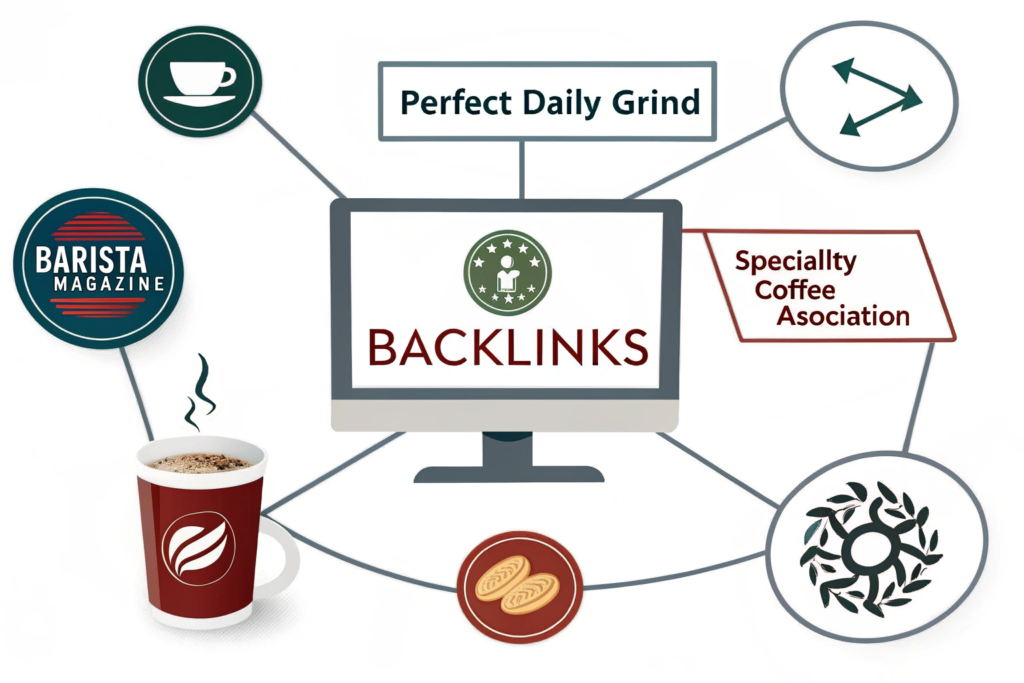
What are some practical ways to earn backlinks?
- Create "Link-Worthy" Content: This is the most sustainable strategy. In-depth guides, original research (like a survey of local cafe trends), and compelling infographics are all highly linkable assets.
- Guest Posting: Write a genuinely helpful article for another respected coffee blog or publication. In your author bio, you can include a link back to your website.
- Be a Source for Journalists: Services like Help a Reporter Out (HARO) connect journalists with expert sources. By providing a quote for an article about coffee trends, you can often earn a backlink from a major news outlet.
What is "Local SEO" and why does it matter for cafes?
If you have a physical location like a cafe or roastery, you also need to focus on Local SEO. This means optimizing your Google Business Profile.
- Complete Your Profile: Fill out every single section: hours, address, phone number, services, photos, etc.
- Get Reviews: Actively encourage your happy customers to leave Google reviews. Positive reviews are a huge ranking factor for local search.
- Local Citations: Ensure your business name, address, and phone number (NAP) are consistent across all online directories (Yelp, TripAdvisor, etc.).
How Do You Measure and Track Your SEO Success?
SEO is not a "set it and forget it" activity. It's a long-term process that requires continuous monitoring, analysis, and adjustment. You need to know what's working and what's not.
How do I know if any of this is actually working? You need to set up and regularly monitor two free but essential tools from Google: Google Analytics and Google Search Console. These tools will tell you how many people are visiting your site from search engines, which keywords they are using to find you, and which of your pages are most popular.
This data is your report card. It tells you which content is resonating and which keywords are driving real traffic. By analyzing this data, you can double down on what's working and identify new opportunities.
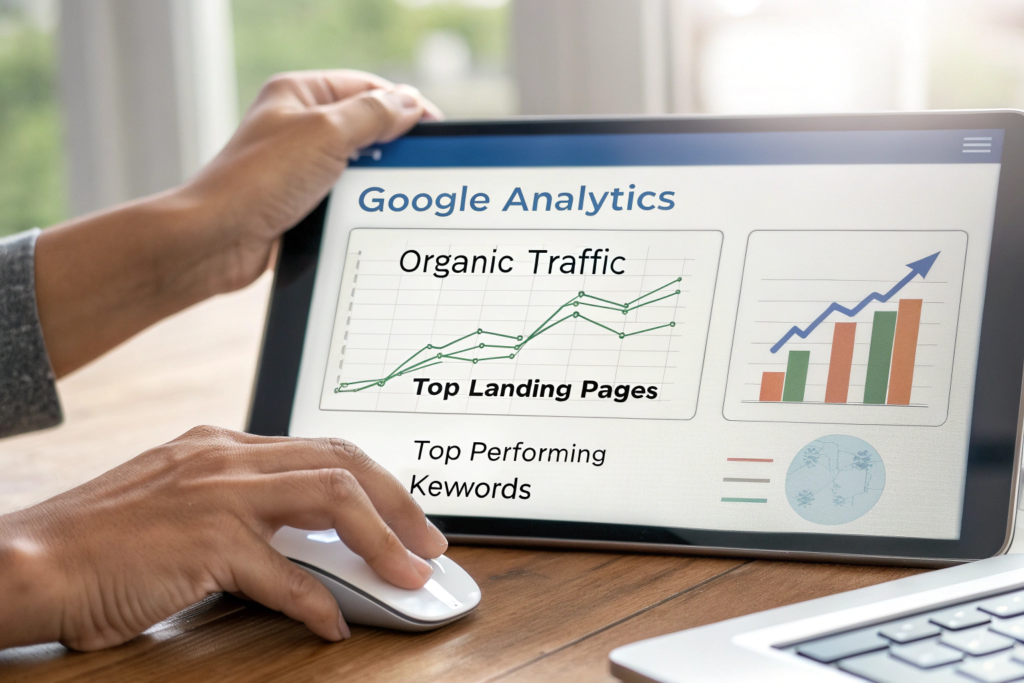
What is Google Analytics?
Google Analytics is a powerful tool that tells you everything about the traffic on your website. You can see how many people visited, where they came from (e.g., Google, social media, direct), which pages they viewed, and how long they stayed. Your primary goal is to see a steady increase in the "Organic Search" traffic channel.
What is Google Search Console?
Google Search Console is a tool that tells you about your site's performance in Google's search results. It's even more important for SEO. It will show you:
- Queries: The actual keywords people searched for to find your site.
- Impressions: How many times your site appeared in search results for a given keyword.
- Clicks: How many people actually clicked on your link.
- Average Position: Your average ranking for a keyword.
This is where you discover new keyword opportunities and track your ranking progress for your most important terms.
Conclusion
Optimizing your website for coffee keywords is a marathon, not a sprint. It's a long-term investment in your brand's visibility and authority. By moving away from guesswork and embracing a systematic approach—understanding customer intent through keyword research, creating genuinely helpful content, and earning trust through backlinks—you can transform your website from a digital ghost town into a bustling hub that attracts and converts your ideal customers. It's the most powerful, scalable, and cost-effective marketing engine you can build for your coffee business.
We built our own business by applying these principles, and we are passionate about helping our partners succeed. When you source coffee from us, you're not just getting exceptional beans from Yunnan; you're getting a partner who understands the modern marketplace. We are always happy to share insights and content that can help you tell your story more effectively. If you're ready to build a brand that wins in the digital world, let's start a conversation. Contact our coffee specialist at cathy@beanofcoffee.com.