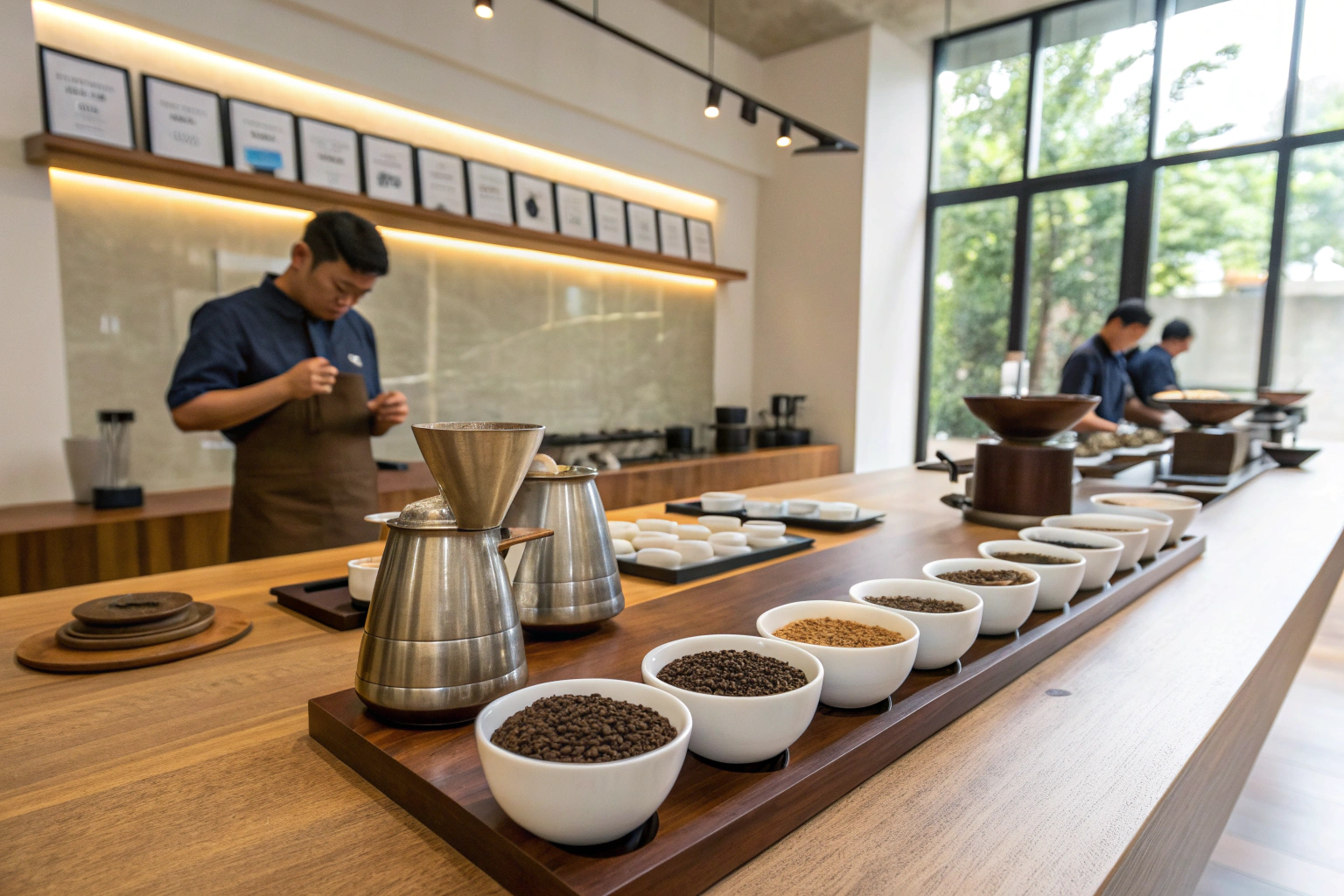
Struggling to plan a coffee cupping session that wows your clients and showcases your bean quality the right way? You’re not alone. As the owner of a Chinese coffee export company with over 10,000 acres of plantations in Yunnan’s Baoshan City, I’ve hosted hundreds of cupping sessions for big brand buyers, distributors, and company owners from North America, Europe, and Australia—and I’ve seen how a disorganized session can kill a potential deal fast. Clients like Ron, a 44-year-old American company owner who prioritizes price and timeliness, don’t have time for messy setups or unstructured tastings. They want a smooth, informative experience that lets them evaluate quality, consistency, and flavor without frustration. A bad cupping session can make even the best Catimor and Arabica beans feel underwhelming; a great one turns casual interest into concrete orders.
Organizing a standout coffee cupping session for clients boils down to four core steps: pre-session preparation that aligns with client needs, curating the right bean samples for their market, setting up a functional and professional tasting space, and leading the session with clear guidance and actionable insights. At Shanghai Fumao, our team has refined this process over years of hosting international buyers, and we’ve turned it into a repeatable system that highlights our premium beans, addresses client pain points like quality control and consistency, and builds trust with every sip.
You might be wondering where to start—do you focus first on the tools, the bean selection, or the client’s specific goals? The truth is, none of these work in isolation. A great cupping session is a mix of preparation, personalization, and execution. And for export businesses like mine, it’s not just about tasting coffee—it’s about telling a story with our beans, from the Yunnan plantations where they’re grown to the processing methods that make them unique. This guide will break down every step you need to take, from the weeks before the session to the final wrap-up, so you can host a cupping that leaves your clients impressed and ready to do business. I’ll share the exact strategies we use at Shanghai Fumao to make sure every cupping session is tailored to our clients’ needs, whether they’re sourcing for a big U.S. brand or a European distribution company.
How to prep for a client coffee cupping session to meet their unique needs?
If you skip pre-session prep and jump straight to setting up cups and beans, you’re setting your cupping session up for failure. I learned this the hard way early on—hosting a group of Australian buyers with a random selection of beans, no clear agenda, and no idea their brand specialized in light-roast Arabica for specialty cafes. The session was awkward, the clients left confused, and we didn’t get the order. Now, prepping for a client cupping session is non-negotiable at Shanghai Fumao, and it’s the first thing we teach our team when they start hosting buyers. The key here is simple: your prep should revolve around your client, not just your coffee beans. Clients like Ron, who’s focused on timeliness and pricing, need a streamlined prep process that means the session starts on time and stays on track—no delays, no tangents, just clear evaluation of the beans they care about.
Prepping for a client coffee cupping session means three critical things: understanding your client’s market and sourcing goals, gathering all necessary cupping tools and materials in advance, and sharing a clear agenda with the client so they know what to expect. This prep work eliminates confusion, saves time, and ensures the session focuses on the beans and details that matter most to your buyer—whether they’re looking for raw export beans, processed packaged products, or a mix of both.
Honestly, prepping isn’t the most exciting part of hosting a cupping session, but it’s the foundation of everything else. Cut corners here, and you’ll spend the whole session playing catch-up. For export companies, this step is even more important because your clients are often traveling from across the globe—they’ve invested time and money to be there, and they expect a session that respects that. At our Yunnan plantation and our export office, we start prepping for a client session at least two weeks in advance, and we check off every item on our list three times before the client walks in the door. This level of detail might seem over the top, but it’s what makes international buyers trust us with their sourcing needs. It also addresses a big pain point for many buyers: inefficient processes that waste their time.
What client details do you need to gather before a coffee cupping session?
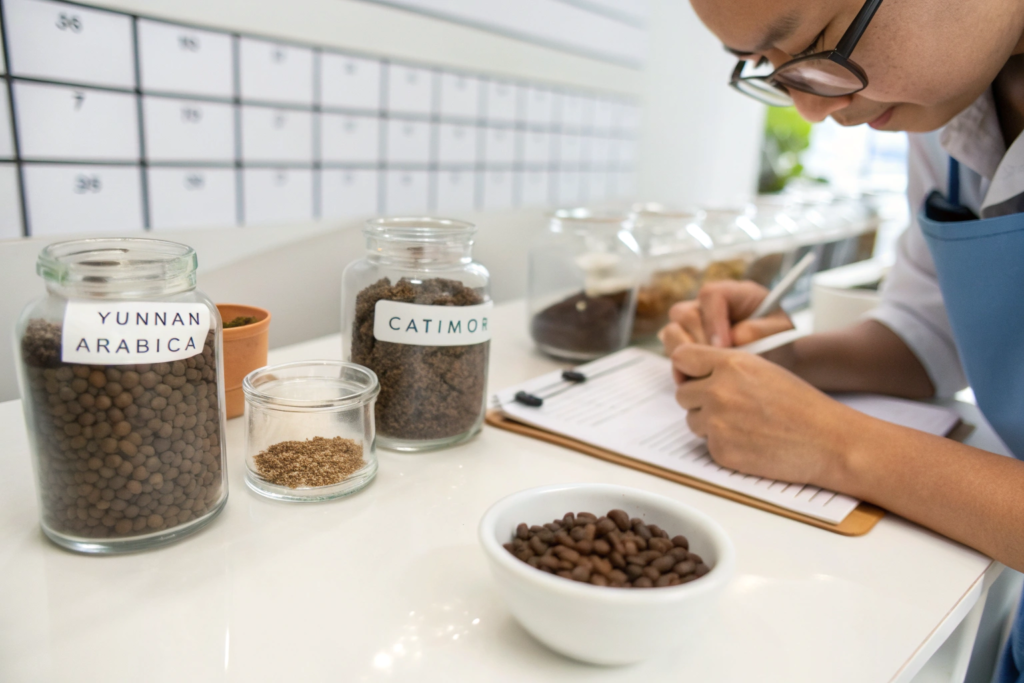
The first step in prep is learning everything you can about your client and their sourcing goals—this is how you personalize the session and avoid the mistake I made with those Australian buyers. At Shanghai Fumao, we send a short questionnaire to every client 2-3 weeks before their cupping session, and we follow up with a quick call to clarify any details. We don’t just ask about the type of beans they want—we dig into their market, their customers, their roasting style, and their pain points. For example, if a client is a U.S. brand that sells medium-roast Arabica for grocery stores, we don’t waste their time with light-roast Catimor samples meant for specialty cafes. We focus on the beans that fit their business model.
You need to gather 6 key details from every client, and these details shape every part of the cupping session:
- Target market: Are they selling to North America, Europe, Australia, or another region? Different markets have different flavor preferences—U.S. buyers often want balanced, smooth flavors, while European buyers might lean into more fruity Arabica notes.
- Bean type/processing needs: Do they want raw beans, roasted beans, or packaged processed products? Do they prefer Arabica, Robusta, or Catimor? Do they need specific processing methods (washed, natural, honey)?
- Roasting style: Light, medium, dark, or a custom roast? This dictates which bean samples you select—some Yunnan Arabicas shine with a light roast, while our Robustas are perfect for dark roasts used in espresso blends.
- Sourcing priorities: What matters most to them? Quality control? Certification? Pricing? Timeliness? For buyers like Ron, timeliness and pricing are non-negotiables, so we highlight our fast shipping schedules and competitive wholesale pricing in the session.
- Order size expectations: Are they looking for small trial orders or large bulk exports? This lets you prepare the right amount of bean samples and discuss minimum order quantities (MOQs) upfront.
- Certification needs: Do they require organic, fair trade, or other certifications? At our Yunnan plantations, we offer certified organic beans, and we have all documentation ready to show clients who need it for their market.
Gathering these details isn’t just about making the session smoother—it’s about building trust. When a client sees you’ve taken the time to understand their business, they know you’re not just trying to sell them beans—you’re trying to be a reliable sourcing partner. You can collect these details through a simple Google Forms questionnaire, a LinkedIn message, or a quick call—whatever is easiest for your client. Just make sure you have the answers at least one week before the session so you have time to curate your samples and prep your materials. And if a client is unsure about any of these details? Use it as an opportunity to share your expertise—for example, if a new U.S. buyer doesn’t know which processing method works best for their roast, walk them through our washed Arabica samples and explain why they’re a great fit for the American market.
When should you start prepping tools and materials for a client cupping?
The short answer: at least 3 days before the client’s session. Procrastinating on tool prep is a surefire way to run into issues—missing spoons, broken thermometers, or not enough hot water kettles can derail the entire experience, and clients notice these small mistakes. At Shanghai Fumao, our team preps all cupping tools and materials 3 days in advance, then does a final check the morning of the session. This gives us time to replace any broken or missing items, clean everything thoroughly, and arrange the tools in the tasting space for maximum efficiency.
First, you need to make sure you have all the essential cupping tools for every person in the session—never skimp on tools, even if the client brings a small team. The standard tools per person include a ceramic cupping bowl (8-10 oz), a stainless steel cupping spoon, a tasting cup for sipping, a water cup for rinsing, and a score sheet with a pen. For the host, you’ll need a digital thermometer to check water temperature (ideal for cupping is 195-205°F / 90-96°C), a large hot water kettle, a scale for measuring beans (10g of coffee per 150ml of water is the standard ratio), bean grinders (burr grinders are best for consistent grind size), and labeled sample jars for each bean variety. You’ll also need extra supplies: extra coffee beans, extra water, paper towels, and a trash can for used grounds.
All tools must be spotlessly clean—any residual coffee oil, dirt, or soap will alter the flavor of the beans and ruin the cupping experience. We wash all ceramic and metal tools with hot water and a mild, unscented soap, then rinse them multiple times and let them air dry for 24 hours before the session. We never use scented cleaners or paper towels with fabric softener—these leave a residue that affects taste. For grinders, we clean them thoroughly between each bean sample to avoid cross-contamination; this is a small step, but it’s critical for accurate flavor evaluation. You can find high-quality cupping tools at specialty coffee supply stores like Barista Warehouse or Coffee Bean Direct, and we recommend investing in durable, professional-grade tools—they last longer and make the session feel more polished.
Another key part of tool prep is calibrating your equipment. Check your thermometer to make sure it’s accurate—even a 5°F difference can change how the coffee brews and tastes. Test your grinders to ensure they’re producing a consistent medium-fine grind (the standard for cupping); inconsistent grinds lead to uneven extraction and inaccurate flavor notes. We also pre-measure all coffee beans into labeled cups 1 day before the session—10g per sample, per person—so we don’t waste time measuring beans during the session. This small step saves precious minutes and keeps the session on track, which is crucial for clients who value timeliness like Ron. And don’t forget to set up extra seating and a small table for clients to place their bags, notebooks, or tablets—comfort goes a long way in making a session enjoyable.
How to curate coffee bean samples for a client cupping session?
You can have the most professional cupping space and the most organized prep process, but if you curate the wrong bean samples for your client, the session will fall flat. I’ve had clients walk in expecting premium Arabica for their specialty coffee brand, only to be presented with Robusta beans meant for instant coffee—and it’s an immediate turn-off. Curating samples isn’t just about grabbing a few of your best beans; it’s about matching your samples to your client’s market, sourcing goals, and flavor preferences. At Shanghai Fumao, we curate sample sets for every client individually, and we never use a “one-size-fits-all” approach. For a North American buyer looking for bulk raw Arabica beans, our sample set is very different from a European buyer looking for packaged processed Catimor beans for their grocery stores.
Curating the perfect coffee bean samples for a client cupping session means selecting beans that align with the client’s market, roasting style, and sourcing needs, limiting the number of samples to avoid flavor fatigue, and labeling every sample with clear, detailed information so clients can evaluate and compare them easily. We cap our sample sets at 8 bean varieties per session—any more than that, and clients start to lose the ability to distinguish between flavor notes and quality differences.
Flavor fatigue is a real problem in coffee cupping, and it’s one of the most common mistakes I see other export companies make. They load up the table with 15+ bean samples, thinking more is better, but the truth is, after 8 or 9 tastings, a client’s palate becomes desensitized. They can’t tell the difference between a high-quality washed Arabica and a standard natural Catimor, and they leave the session with no clear favorite. At our Yunnan tasting room, we stick to 4-8 samples per session, and we group them by bean type or processing method to make comparison easier. For example, if a client is evaluating Arabica beans, we’ll have 2 washed, 2 natural, and 2 honey-processed Arabicas—this lets them taste the difference processing methods make without overwhelming their palate. And we always start with the mildest flavors and work our way to the boldest; this prevents the strong flavors from overpowering the more subtle ones early on.
How to match bean samples to a client’s target market and roasting style?
Matching your bean samples to your client’s market and roasting style is the single most important part of curation—this is what turns a generic cupping session into a personalized one that speaks to their business needs. Every market has distinct flavor preferences, and every roasting style highlights different notes in a coffee bean. As a Chinese coffee exporter with beans grown in Yunnan’s unique climate and soil, we know exactly which of our beans shine in different markets and with different roasts, and we use that knowledge to curate every sample set. You don’t need to be a coffee sommelier to do this—you just need to know your beans and your client’s goals, and connect the two.
First, let’s break down market-specific flavor preferences for the three main regions we export to: North America, Europe, and Australia. North American buyers (like Ron, our U.S. client) typically prefer balanced, smooth flavors with mild acidity, subtle fruit notes, and a creamy body. Our washed Yunnan Arabicas are perfect for this market—they have notes of red cherry, caramel, and chocolate, with a low to medium acidity and a smooth finish. These beans work great for medium roasts, which are the most popular in the U.S. for both specialty cafes and grocery stores. European buyers, on the other hand, lean into more bright, fruity flavors with higher acidity—they love natural and honey-processed Arabicas with notes of citrus, berry, and floral hints. Our honey-processed Catimor beans are a hit with European distributors, as they have a bright lemon note and a sweet, floral finish that pairs well with light to medium roasts. Australian buyers fall somewhere in the middle—they like bold flavors with a balance of acidity and sweetness, and they’re big fans of our Robusta-Arabica blends for espresso. These blends have a rich, chocolatey flavor with a subtle nutty finish, and they hold up well to dark roasts.
Next, you need to match your beans to the client’s roasting style—a bean that tastes amazing with a light roast will taste bitter and burnt with a dark roast, and vice versa.
To make this process even easier, we keep a detailed bean profile sheet for every variety we grow and export at Shanghai Fumao. The sheet includes the bean type, processing method, ideal roast style, flavor notes, origin (specific plantation in Baoshan City), certification, pricing, and shipping timelines. We share this sheet with clients before the cupping session, so they have a reference point when tasting, and we use it to curate our sample sets. If a client tells us they’re a U.S. brand that roasts medium for grocery stores, we pull our washed Arabica bean profile and add those samples to the set. If a European distributor wants light-roast natural beans, we grab our natural Arabica profile and curate around that. This sheet also helps clients with their post-session evaluation—they can take it with them and reference it when making their sourcing decision.
You can find great resources for creating bean profile sheets and learning about coffee flavor notes at Specialty Coffee Association and Coffee Review. These sites have detailed guides on cupping, flavor profiling, and matching beans to roasts and markets, and they’re invaluable for export businesses that host international clients. And if you’re unsure about which beans to pick for a client? Don’t be afraid to ask—most clients are happy to share their roasting style and market preferences, and they’ll appreciate that you’re taking the time to get it right.
How to label and present coffee bean samples for clear client evaluation?
Even if you curate the perfect bean samples for your client, poor labeling and presentation will make it impossible for them to evaluate and compare the beans effectively. Imagine a client tasting 6 different beans, with no labels to tell them which is which, or labels that only say “Arabica” with no other details—they’ll leave the session with no memory of which bean they liked best, and you’ll lose the chance to turn that taste into an order. At Shanghai Fumao, we take labeling and presentation very seriously, and we’ve created a system that’s clear, detailed, and easy for international clients to understand. Our labels have all the information a client needs to evaluate the bean, and we present the samples in a way that’s organized and visually appealing.
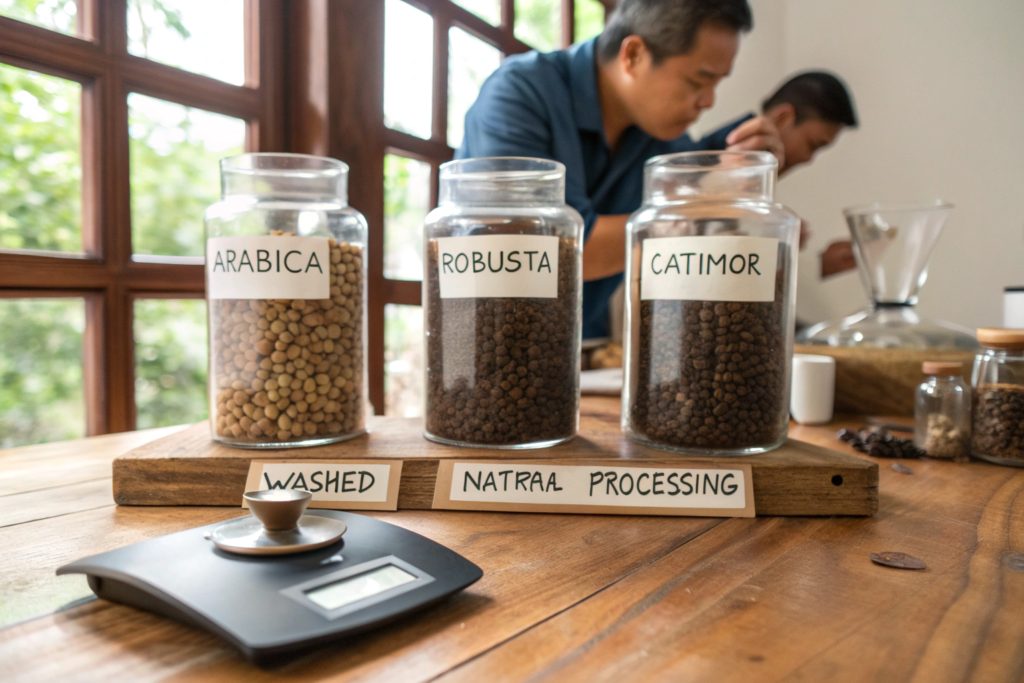
First, every bean sample needs a clear, waterproof label that’s attached to both the sample jar and the cupping bowl for that bean. We use white waterproof labels with black text (easy to read in all lighting) and we include 7 key pieces of information on every label: Bean Type (Arabica/Robusta/Catimor), Processing Method (washed/natural/honey), Origin (Baoshan City, Yunnan Province + specific plantation), Roast Style (for pre-roasted samples), Flavor Notes (3 key notes), Certification (if applicable), and a Sample Number (1-8). The sample number is critical for score sheets—clients can write the number on their score sheet instead of the full bean name, which saves time and avoids confusion. We also print the labels in both English and Chinese for our international clients, which is a small touch that makes them feel welcome and valued.
For the physical presentation of the samples, we arrange them on a long, sturdy wooden table (the standard for cupping sessions) in the order we’ll taste them—mildest to boldest. We place the labeled sample jar next to the corresponding cupping bowl for each bean, and we line up the cupping bowls in a straight line with equal space between them. This makes it easy for clients to move from one sample to the next without knocking over bowls or jars. We also place a small plate with a handful of the raw beans next to each sample jar—this lets clients see the bean size, color, and texture, which is an important part of quality evaluation. For example, our premium Yunnan Arabicas have a uniform size and a rich dark green color, and showing clients the raw beans lets them see the quality for themselves, which addresses their quality control pain points.
We also provide every client with a custom score sheet that matches our sample numbers and includes all the label information for each bean. The score sheet has a simple rating system (1-10) for key cupping criteria: aroma, acidity, body, flavor, aftertaste, and overall impression. It also has a blank section for clients to write their own notes—this is crucial for buyers who have specific flavor preferences or quality standards. We design our score sheets in English (the primary language for our international clients) and we make them double-sided for extra note-taking space. You can find free score sheet templates at SCA Coffee and Coffee Cupping Lab, and you can customize them to include your company logo and sample information.
Another small but important part of presentation is freshness. All bean samples must be fresh—roasted beans should be 3-7 days old (the ideal window for cupping), and raw beans should be no more than 3 months old (stored in airtight, temperature-controlled containers). Stale beans taste flat and lifeless, and they won’t showcase your bean quality the right way. At our Yunnan plantations, we roast sample beans fresh 3 days before every cupping session, and we store raw beans in airtight glass jars in a cool, dry room (65-70°F / 18-21°C) with no direct sunlight. We also never reuse samples—every client gets fresh, newly roasted or freshly prepared beans, which is a sign of professionalism and respect for their time. You can learn more about coffee bean storage and freshness at National Coffee Association USA and Coffee Research Institute, both of which have detailed guides on keeping coffee beans fresh for cupping and export.
How to set up a professional and functional coffee cupping space for clients?
Your cupping space is the stage for your coffee beans, and it needs to be professional, functional, and comfortable for your clients. A messy, dimly lit, or cramped space will distract from the beans and make the session feel unprofessional—even if your beans are the best in the world. As someone who’s hosted cupping sessions in our Yunnan plantation tasting room, our Shanghai export office, and even at international trade shows (like the Global Coffee Expo in New York), I’ve learned that the perfect cupping space doesn’t need to be fancy—it just needs to check a few key boxes: natural light, a stable table, comfortable seating, proper temperature control, and no distracting smells or noises. For clients like Ron, who values efficiency and timeliness, the space also needs to be laid out so the session flows smoothly, with no awkward movement or wasted time.
Setting up a professional coffee cupping space for clients means prioritizing natural light and neutral decor (to avoid flavor and visual distractions), arranging the table and tools for maximum efficiency, controlling the room temperature and humidity (critical for accurate cupping), and eliminating any distracting smells or noises that could alter the client’s palate or focus. At Shanghai Fumao, our Yunnan tasting room is designed with all these elements in mind, and it’s been the setting for hundreds of successful cupping sessions and closed deals with international buyers.
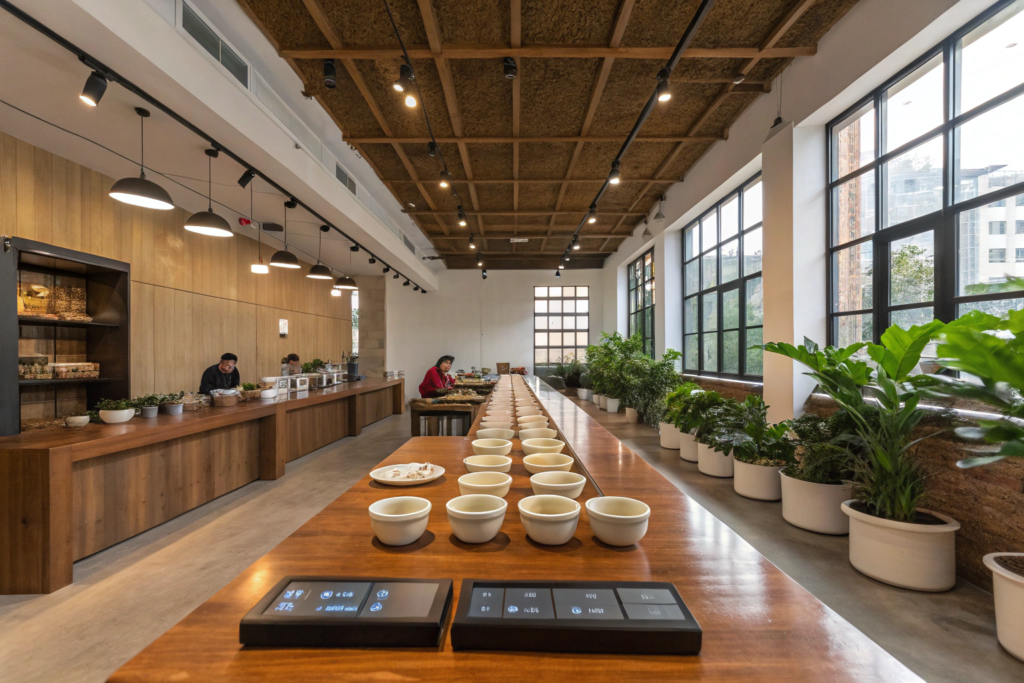
You don’t need to spend a lot of money to create a great cupping space—many of the key elements are free or low-cost. Natural light is the most important feature, and it’s as simple as setting up your session near a large window (avoid direct sunlight, which can heat up the beans and alter their flavor). Neutral decor—white or beige walls, wooden furniture, and small green plants—keeps the focus on the coffee beans, not the room. And a stable, sturdy table (wooden is best, as it doesn’t vibrate or tip) is a must for cupping bowls and tools. I’ve seen export companies set up cupping sessions on flimsy plastic tables, and it’s a disaster—bowls tip over, tools slide around, and the session feels unprofessional. Invest in a good wooden table, and it will pay off in the long run with better client experiences and more closed deals.
What are the non-negotiable elements of a functional cupping space for international clients?
There are 5 non-negotiable elements of a functional cupping space, and these elements apply whether you’re hosting a session in your office, your plantation, or a trade show booth. These elements ensure the session is accurate, comfortable, and efficient, and they address the most common client complaints about cupping spaces. At Shanghai Fumao, we check each of these elements off our list before every session, and we never compromise on any of them—even for last-minute client visits.
- Natural, diffused light: As I said earlier, natural light is the most important element of a cupping space. It lets clients see the color of the coffee brew (a key cupping criterion) clearly, and it creates a warm, inviting atmosphere. Avoid direct sunlight, which can heat the coffee and the room, and avoid harsh artificial light (like fluorescent lights), which distorts colors and makes the space feel cold. If you don’t have access to natural light (e.g., a trade show booth), use soft, warm LED lights that mimic natural light—you can find these at Amazon Business or Office Depot. Never use colored lights or string lights—they distract from the beans and alter the client’s perception of the brew color.
- Stable, level cupping table: The cupping table needs to be at least 30 inches tall (standard dining table height) and wide enough to fit all sample bowls, tools, and clients with space to move. It must be level and stable—no wobbling, no tilting, no sliding. Wooden tables are the best choice because they’re sturdy, durable, and have a warm, professional look. We use a 8-foot solid oak table in our Yunnan tasting room, which fits up to 8 clients and all our tools with room to spare. For smaller sessions (2-3 clients), a 6-foot wooden table works perfectly.
- Comfortable seating with back support: Clients will be sitting for 45-60 minutes during the cupping session, so comfortable seating is a must. Avoid stools or chairs with no back support—these make clients uncomfortable and distract from the tasting. We use wooden dining chairs with padded seats and back support in our tasting room, and we have extra chairs on hand for larger client teams. The chairs should be placed 18-20 inches from the table, so clients have enough room to lean in and taste the coffee without hitting the table with their elbows.
- Controlled temperature and humidity: Coffee cupping requires a room temperature of 70-75°F (21-24°C) and a humidity level of 40-60%. Too hot, and the coffee brews too fast and tastes bitter; too cold, and the coffee brews too slow and tastes flat. High humidity can make the coffee taste stale, while low humidity can dry out the beans. We use a digital thermostat and a humidifier/dehumidifier in our tasting room to keep the temperature and humidity in the ideal range, and we check the levels every 30 minutes during the session. You can find affordable digital thermostats and humidifiers at Walmart Business or Staples, and they’re a small investment that makes a big difference in cupping accuracy.
- No distracting smells or noises: The cupping space must be completely free of any smells that could alter the client’s palate—cigarette smoke, perfume, scented candles, food, cleaning products, and even strong floral scents from plants. These smells seep into the coffee and change its flavor, making the cupping evaluation inaccurate. We ban all scented products in our tasting room, and we ask clients to avoid wearing strong perfume or cologne to the session. We also keep the space free of distracting noises—no loud music, no phone calls, no outside chatter. We have a small sign on the door that says “Quiet—Coffee Cupping in Progress,” and we ask our team to keep their voices down in the surrounding areas. For trade show sessions, we use a small portable sound barrier (available at Amazon Business) to block out show floor noise, which lets clients focus on the coffee.
These 5 elements are the foundation of a functional cupping space, and they’re easy to implement in any location. The key is to be intentional—don’t just set up a table and chairs anywhere; think about how the space will affect the client’s experience and the accuracy of the cupping. A little planning goes a long way in creating a space that wows clients and showcases your beans in the best light.
How to layout the cupping table and tools for a smooth client experience?
Even if you have the perfect cupping space with all the non-negotiable elements, a messy or disorganized table layout will make the session feel chaotic and inefficient. Clients will waste time reaching for tools, knocking over bowls, or searching for their score sheets, and they’ll leave the session feeling frustrated—especially clients who value timeliness like Ron. At Shanghai Fumao, we have a strict table layout that we use for every cupping session, and it’s designed for maximum efficiency and ease of use. The layout is the same whether we’re hosting 2 clients or 8, and it ensures every client has easy access to all the tools they need, with no wasted movement or confusion.
First, the cupping bowls are the center of the table, and they’re arranged in a straight line down the middle, with 6-8 inches of space between each bowl. Each bowl has a labeled sample jar to its left and a small plate of raw beans to its right—this is the “sample station” for each bean variety. The sample stations are numbered 1-8 (mildest to boldest) from left to right, so clients can move in a straight line from one sample to the next. We place the cupping spoons directly in each bowl, with the handle facing the client—this lets clients grab the spoon immediately without fumbling. The tasting cups and water cups are placed to the right of each sample station, with the tasting cup closest to the bowl and the water cup next to it—this is the standard layout for coffee cupping, and most international clients are familiar with it, which saves time on explanations.
Next, the client tools are placed at each individual seat—no sharing tools, even if the client brings a small team. Each seat has a score sheet and a pen (we use black ballpoint pens, as they write best on paper), a small notebook for extra notes, and a napkin. We place these items on a small plate to keep them organized, and the plate is set to the left of the client’s first sample station. This way, clients have all their personal tools within arm’s reach, and they don’t need to reach across the table or ask for extra supplies. We also place a small trash can under each end of the table for used coffee grounds and napkins—this keeps the table clean and avoids messy piles of waste during the session.
For the host tools, we have a dedicated “host station” at one end of the table (the host’s seat), which is separate from the client sample stations. The host station has all the bulk tools: a large hot water kettle (we use electric kettles with temperature control, available at Breville), a digital thermometer, a bean scale, a burr grinder, extra coffee beans, extra water, paper towels, and a spare set of cupping tools. We also have a laptop at the host station with our bean profile sheets and client information, so we can reference it during the session if needed. The host station is organized with all tools on a tray, so the host can grab what they need quickly without disrupting the session. We never place host tools on the main client table—this clogs up the space and distracts from the samples.
For the final touch, we place a small pitcher of room-temperature water in the center of the table for clients to rinse their spoons between samples—this is critical for avoiding cross-contamination between bean varieties. We also place a small bowl of plain crackers in the center of the table for clients to eat between samples—crackers clean the palate without leaving any flavor residue, which helps clients distinguish between different bean notes. We use plain unsalted crackers (no cheese, no flavoring) from Whole Foods Market—they’re neutral and effective for palate cleansing. This small touch is always a hit with clients, and it shows we’ve thought about every detail of their experience.
The key to a great table layout is consistency—use the same layout for every session, and your team will get comfortable setting it up quickly, and your clients will get comfortable using it. We practice our table layout with our team every month, and we have a printed layout guide that every team member has on hand. This ensures the setup is the same every time, even if different team members are hosting the session. And if you’re hosting a session in a new location (like a trade show), bring your layout guide with you—this lets you set up the table quickly and correctly, even in an unfamiliar space.
How to lead a coffee cupping session for clients with confidence and clarity?
You’ve done all the prep, curated the perfect samples, and set up a professional cupping space—now it’s time to lead the session. This is where many export business owners stumble: they either rush through the session, leave clients confused, or ramble on about irrelevant details, losing the client’s attention. Leading a cupping session isn’t just about telling clients to taste the coffee—it’s about guiding them through the process, explaining the key details about your beans, addressing their questions and pain points, and building trust with every step. As the owner of Shanghai Fumao, I’ve learned that confident, clear leadership is the key to a successful session. Clients don’t just want to taste your beans—they want to feel like they’re working with a knowledgeable, reliable partner who understands their business and their needs.
Leading a successful coffee cupping session for clients means starting with a clear agenda and introduction, guiding the group through the cupping process step by step with simple, easy-to-understand instructions, sharing relevant details about your beans (origin, processing, quality control) at the right time, and encouraging client feedback and questions throughout the session. The goal is to make the session informative but not overwhelming, and to keep the focus on the client’s evaluation and sourcing goals.
Confidence in leading a cupping session comes from practice and preparation—you don’t need to be a professional cupper, but you do need to know your beans inside and out. Before every session, I review the client’s details and the bean samples we’ve curated, and I practice the cupping process a few times to make sure I’m comfortable leading it. I also prepare a list of common client questions (about pricing, shipping, certification, quality control) and have the answers ready—this lets me respond quickly and confidently, which builds trust with the client. And I always start the session with a smile and a warm welcome—international clients are traveling far to meet with you, and a friendly, approachable host makes the session feel more like a partnership than a sales pitch.
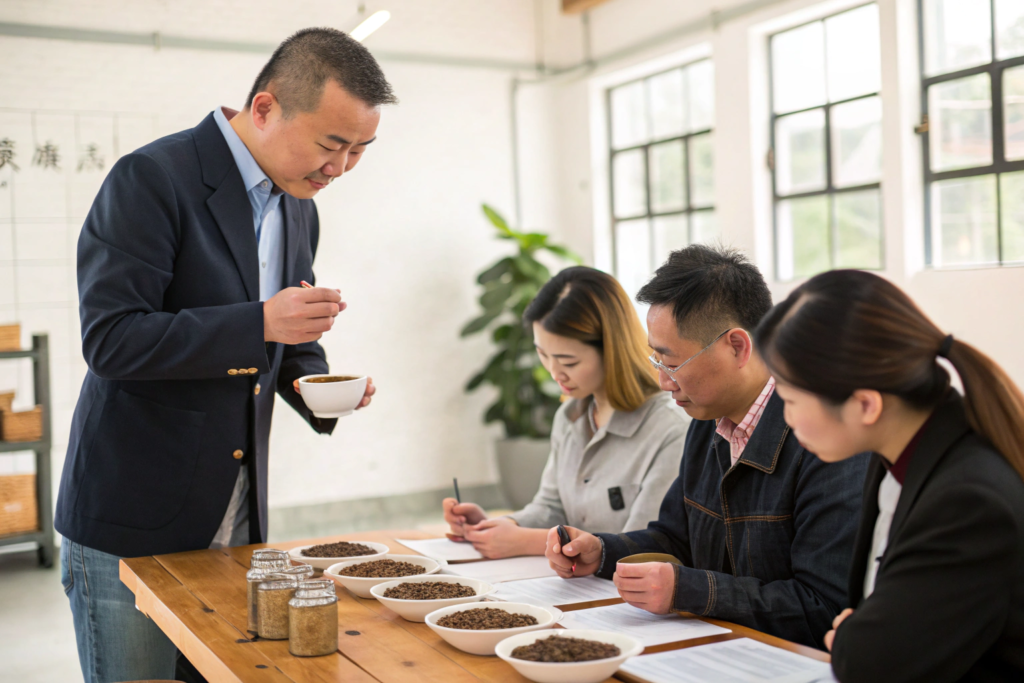
What to say and do in the opening of a client coffee cupping session?
The opening of the cupping session sets the tone for the entire experience, and it’s your chance to make a great first impression on your clients. A weak opening—rushing into the tasting, no introduction, no agenda—will make the session feel unstructured and unprofessional. A strong opening—warm welcome, clear introduction, concise agenda—will make clients feel comfortable, informed, and ready to taste the coffee. At Shanghai Fumao, our opening is short (5 minutes max) and sweet, and it hits four key points: a welcome, an introduction of our team, a review of the client’s goals, and a clear agenda for the session. This opening is the same for every client, and it’s designed to set expectations and build rapport right away.
First, greet the clients warmly and thank them for their time and travel. Remember, most of your international clients are flying from North America, Europe, or Australia to meet with you—they’ve invested time, money, and effort to be there, and they deserve to be thanked. I always start with something simple: “Good morning/afternoon, everyone. I’m [Your Name], the owner of Shanghai Fumao, and I want to start by saying thank you so much for making the trip to our Yunnan plantation/tasting room today. We’re thrilled to have you here, and we’re excited to share our premium Yunnan coffee beans with you.” This simple welcome is warm and sincere, and it immediately puts clients at ease. I also shake every client’s hand and learn their names (and their roles) if I haven’t already—remembering a client’s name and role is a small touch that builds rapport and shows you care.
Next, introduce your team briefly—only the team members who are hosting the session (1-2 people max; too many team members can overwhelm the client). I say something like: “With me today is [Team Member’s Name], our head of quality control, who oversees all our bean processing and cupping at our Baoshan plantations. She’ll be helping with the session today and answering any questions you have about our quality control processes.” This introduction lets clients know who they’re working with, and it highlights your team’s expertise—an important selling point for export businesses. Avoid introducing every team member in the company, and avoid long bios—keep it short and relevant.
Then, review the client’s sourcing goals and the samples you’ve curated for them. This is a critical step—it shows the client you’ve listened to them and that the session is personalized to their needs. I say something like: “Before we start, I want to quickly review what we discussed leading up to today. You’re a [Client’s Company Type] from [Client’s Country] looking for [Client’s Bean Needs] for your [Client’s Market] market, with a focus on [Client’s Priorities—e.g., pricing, timeliness, quality control]. Today, we’ve curated [Number] bean samples for you—[briefly list sample types, e.g., 4 washed Arabicas, 2 honey-processed Catimors]—all grown on our 10,000-acre plantations in Baoshan City, Yunnan. These samples are tailored to your roasting style and market preferences, and we’ll walk through each one together today.” This review reinforces that the session is about their needs, not just your beans, and it sets the focus for the tasting.
Finally, share a clear, concise agenda for the session. Clients like Ron who value timeliness need to know how long the session will last and what to expect, so they can plan the rest of their day. I always share the agenda in simple terms: “This cupping session will last about 45 minutes. We’ll start with a quick demo of the cupping process (2 minutes), then we’ll taste each sample together—one by one, mildest to boldest (30 minutes). After the tasting, we’ll have 10 minutes for questions, feedback, and a discussion about pricing, shipping, and MOQs. We’ll end with a quick tour of our plantation/processing facility if you have time. Does this agenda work for everyone, or would you like to adjust anything?” Asking the client if they want to adjust the agenda shows you respect their time and their needs, and it gives them a sense of control over the session. Most clients will agree to the agenda, but if they want to spend more time on a specific sample or skip the tour, we’re happy to adjust—flexibility is key in building client relationships.
After the opening, I do a 2-minute quick demo of the cupping process for clients who are new to cupping. I show them how to smell the dry grounds, add hot water, smell the wet aroma, break the crust with the spoon, and taste the coffee (slurping is encouraged—it’s the right way to cup coffee!). I keep the demo simple and avoid jargon—no “extraction” or “mouthfeel” unless the client asks. I say something like: “For those of you who are new to cupping, it’s simple. We’ll smell the dry grounds first, then add hot water. We’ll smell the wet aroma after a minute, then break the crust on top with the spoon and smell again. Then we’ll slurp the coffee from the spoon—slurping lets the coffee hit all parts of your palate, so you can taste all the flavor notes. We’ll rinse our spoons and our palates between each sample to avoid cross-contamination. It’s easy, and we’ll go slow—no rush at all.” This demo eliminates confusion and makes the tasting process smooth for everyone, even first-time cuppers. You can find additional cupping demo tips and tutorials at YouTube Coffee Channel and SCA Cupping Guide.
How to guide clients through the cupping process and highlight key bean details?
Guiding clients through the cupping process is the core of the session, and it’s where you get to showcase your bean quality and your expertise as a sourcing partner. The key here is to go slow, keep the instructions simple, and share relevant bean details at the right time—don’t overload clients with information while they’re trying to taste the coffee, and don’t rush them through the samples. At Shanghai Fumao, we guide clients through each sample one by one, and we follow a simple 5-step process for each bean: smell the dry grounds, add hot water, smell the wet aroma, taste the coffee, and share key bean details. This process is repeatable, easy to follow, and it lets clients focus on tasting while learning about the beans.
For each sample station (1-8), we start with the dry ground smell. I say something like: “Let’s start with Sample 1—our washed Yunnan Arabica, grown on our Eastern Baoshan plantation. First, take a deep smell of the dry grounds in your bowl. What do you smell? Fruits? Chocolate? Caramel? Feel free to share your thoughts out loud—there’s no right or wrong answer in cupping.” Encouraging clients to share their thoughts out loud makes the session interactive and engaging, and it lets you learn about their flavor preferences. After 30 seconds of dry smelling, we add hot water (195-205°F / 90-96°C) to each bowl—150ml of water for 10g of coffee. I pour the water myself (or my team member does) to ensure the right temperature and amount, and I say: “We’re using water at 200°F today—this is the ideal temperature for cupping Arabica beans, as it brings out the sweet and fruity notes without burning the grounds.”
After pouring the water, we let the coffee steep for 4 minutes—this is the standard cupping steep time, and I set a timer so we’re consistent with every sample. During the steep time, I share a 1-sentence key detail about the bean—something relevant to the client’s goals. For example, for a U.S. buyer focused on timeliness: “This washed Arabica is one of our fastest-shipping beans—we can have bulk raw beans on a ship to the U.S. in 7 days, with delivery in 21 days total.” For a European buyer focused on certification: “This natural Arabica is certified organic by the China Organic Food Certification Center, and we have all the documentation you need for the European market.” This 1-sentence detail is short and impactful, and it doesn’t distract from the tasting—it reinforces why the bean is a good fit for their business.
After 4 minutes, we break the crust on top of the coffee with the cupping spoon—this releases the wet aroma, which is a key part of cupping. I show clients how to break the crust gently (scoop the spoon across the top of the bowl) and then smell the wet aroma. I say: “Now break the crust and take a deep smell of the wet aroma. You’ll notice different notes here than the dry grounds—this is the coffee’s true aroma, and it’s a great indicator of the flavor you’ll taste.” After 30 seconds of wet smelling, we start tasting. I tell clients to slurp the coffee from the spoon (loud slurping is okay!) and swish it around in their mouth for a few seconds before swallowing or spitting it out (we have a spittoon at each seat for clients who don’t want to swallow). I say: “Slurp the coffee and let it hit all parts of your palate. What flavor notes do you taste? Acidity? Sweetness? Body? Jot down your thoughts on your score sheet, and share them with the group if you’d like.”
After everyone has tasted the sample, I share 2-3 key flavor notes for the bean (based on our profile sheet) and ask for client feedback. I say something like: “We taste red cherry, caramel, and a hint of vanilla in this bean, with a smooth medium body and low acidity—perfect for the medium roasts popular in the U.S. market. What did you all taste? Did you notice anything different? Do you have any questions about this bean?” This feedback loop is critical—it lets you learn what the client likes and dislikes, and it gives you a chance to address any concerns they have. If a client says the bean is too acidic for their market, I can offer a different sample (a washed Catimor with lower acidity) and explain why it’s a better fit. If a client loves the bean, I can note that and highlight it later in the session when discussing order options.
We repeat this 5-step process for every sample station, moving from mildest to boldest, and we take 5-6 minutes per sample—this keeps the session on track and avoids rushing. I never skip steps, and I never move on to the next sample until everyone has tasted and shared their thoughts. This slow, deliberate process shows clients you value their evaluation, and it lets them make an informed decision about the beans. And if a client has a question mid-sample—about processing, pricing, shipping, or quality control—I answer it right away (or my team member does) in simple terms. I never put off a client’s question—this builds trust and shows you’re a reliable partner who has the answers they need. You can find more detailed cupping process guidelines at Specialty Coffee Association Cupping Protocol and Coffee Cupping Mastery.
Conclusion
Organizing a successful coffee cupping session for clients is far more than just setting out bowls and beans—it’s a holistic process that combines meticulous pre-session preparation, personalized bean curation, a functional professional space, and confident, client-focused leadership. Every step, from gathering client details weeks in advance to addressing negative feedback with concrete solutions, is designed to showcase your coffee’s quality, address client pain points like timeliness and pricing, and build the trust that turns a casual tasting into a long-term business partnership. At Shanghai Fumao, we’ve seen firsthand how a well-executed cupping session can be the difference between losing a client like Ron and securing a bulk export order that fuels both businesses for months to come. The process isn’t about perfection—it’s about attention to detail, flexibility, and a genuine focus on the client’s unique needs. Whether you’re hosting a small team of brand buyers or a large group of trading company representatives, the strategies outlined in this guide can be adapted to your business and your beans, helping you create a cupping experience that wows clients and drives results.
If you’re looking to source premium Arabica, Catimor, or Robusta beans from our 10,000-acre plantations in Baoshan City, Yunnan Province—whether you need raw bulk beans for export or processed, packaged products—we’d love to host you for a personalized coffee cupping session. For more information, to schedule a session, or to discuss your specific sourcing needs, please feel free to contact our dedicated client manager, Cathy Cai, at cathy@beanofcoffee.com. We’re excited to share our Yunnan-grown beans with you and help you find the perfect coffee solution for your market and your business.