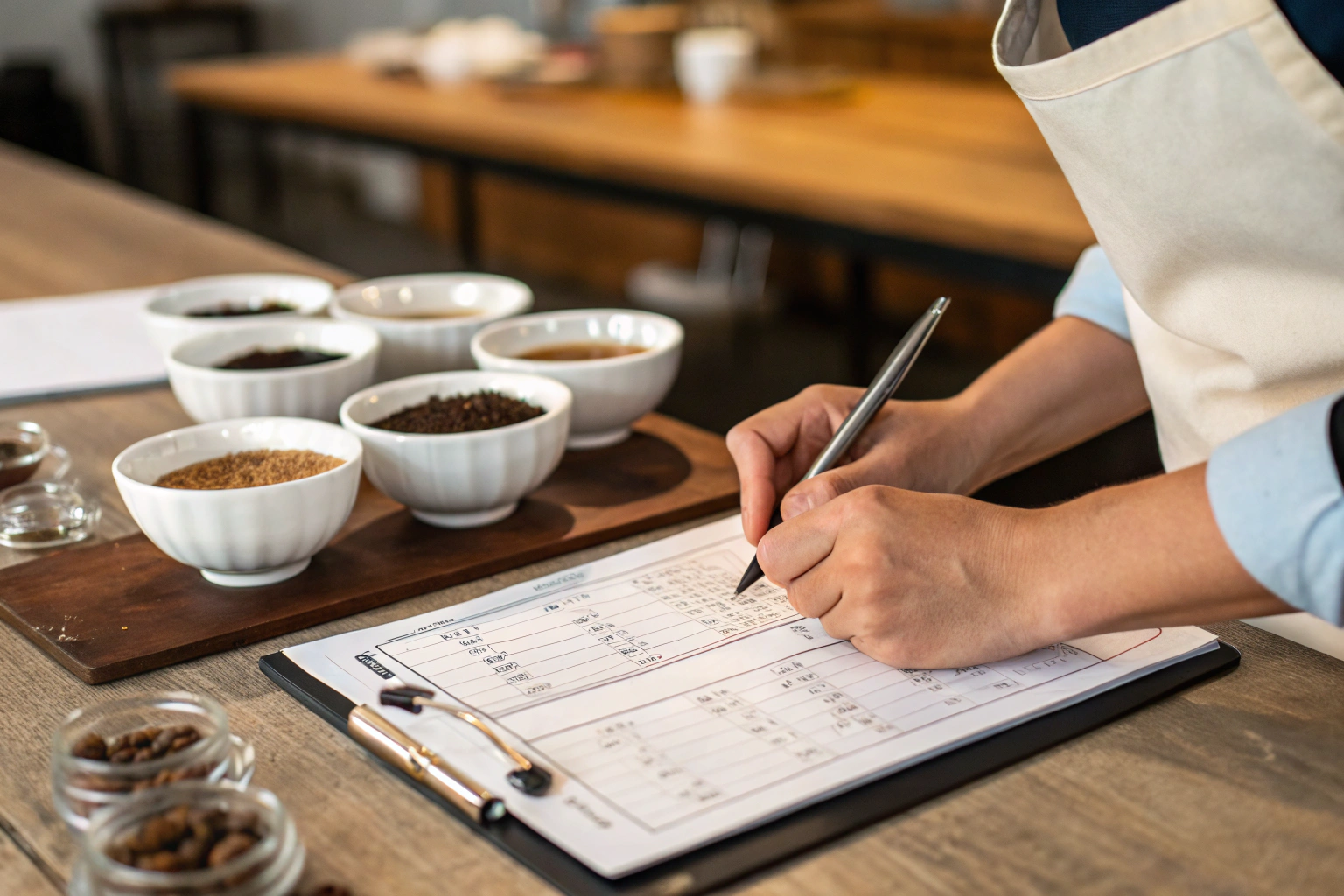
You're sitting across from a specialty coffee importer, or maybe you've just received samples from a farm like Bean of Coffee. In front of you is a bag of green beans and a piece of paper filled with numbers, abbreviations, and flavor notes that look more like a wine critic's journal than a product spec sheet. This is a coffee cupping score sheet. For a buyer, especially one focused on quality like Ron, not understanding it is like buying a car without knowing its features or safety rating—you're flying blind on a major investment.
So, how do you read a coffee cupping score sheet? Think of it as a standardized medical chart for coffee. It breaks down the complex experience of tasting into measurable, objective components. A good sheet gives you a total score (like an overall grade) and a detailed diagnostic of the coffee's strengths and flaws. For us at Bean of Coffee, it's our primary quality control tool and the language we use to communicate the value of our Yunnan Arabica, Catimor, and Robusta to discerning buyers.
Let's decode this language together, from the big-picture score to the specifics of aroma, flavor, and aftertaste.
What is the SCA Cupping Protocol and overall score?
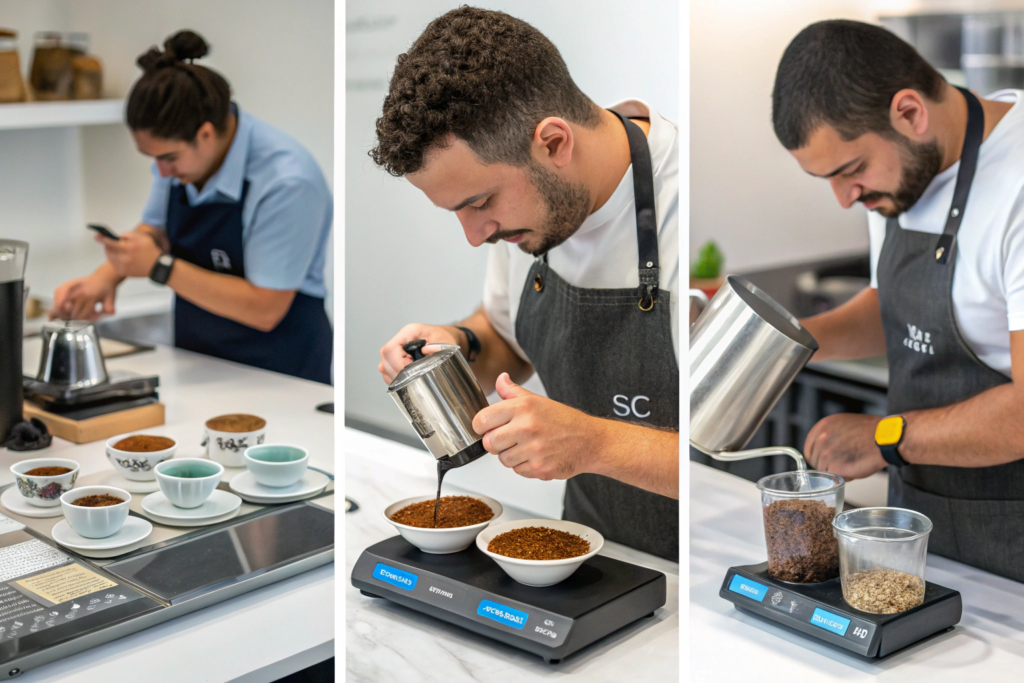
First, you need to know the rulebook. Most professional score sheets follow the Specialty Coffee Association (SCA) Cupping Protocol. This is the global standard. It ensures that when a coffee is scored an 84 in Yunnan, it means the same thing as an 84 scored in Seattle. The protocol standardizes everything: water quality, grind size, brew ratio, steeping time, and even the tasting process itself.
The overall score is the headline. It's the sum of scores from ten different attributes, but it's not just an average. It's a weighted assessment that places the most importance on the sensory experience in your mouth.
How is the overall score calculated and interpreted?
The SCA scoresheet has ten attributes, each scored from 0 to a specific maximum (usually 10). The scores are added up for a total out of 100. Here’s the key: the final score categorizes the coffee.
- Below 80: Not Specialty Grade. These are commercial coffees with notable defects or imbalances.
- 80-84.99: Good Specialty Coffee. These are very good, clean, well-balanced coffees without major flaws. Much of the high-quality coffee traded falls here.
- 85-89.99: Excellent Specialty Coffee. These are outstanding coffees with distinct, pleasurable attributes and great complexity. This is where you find most microlots and high-end offerings.
- 90-100: Exceptional, world-class coffee. Rare and highly sought after.
When we score our Bean of Coffee lots, an 84+ score is our baseline for export-ready specialty lots. It tells a buyer immediately that this is a verified, quality product. But the total score is just the tip of the iceberg. The real story is in the breakdown.
What are the "Defect" and "Overall" columns?
Before you even get to the nice flavors, the sheet checks for problems. The Fragrance/Aroma and Flavor sections have a critical sub-column: Defect.
- If a cupper detects an "off" flavor—like mustiness (from moisture), sourness (from fermentation), or phenolic (medicinal) notes—they mark it here and deduct points. A single strong defect can severely lower the total score.
- The Overall column at the end is not an average. It's a holistic score. A cupper asks: "Considering everything I just experienced, how much did I enjoy this coffee? How complete and satisfying was the experience?" It's where the taster's personal preference and the coffee's "magic" factor come into play. A high "Overall" score with balanced subscores indicates a truly special, harmonious coffee.
How to interpret fragrance, aroma, and flavor notes?
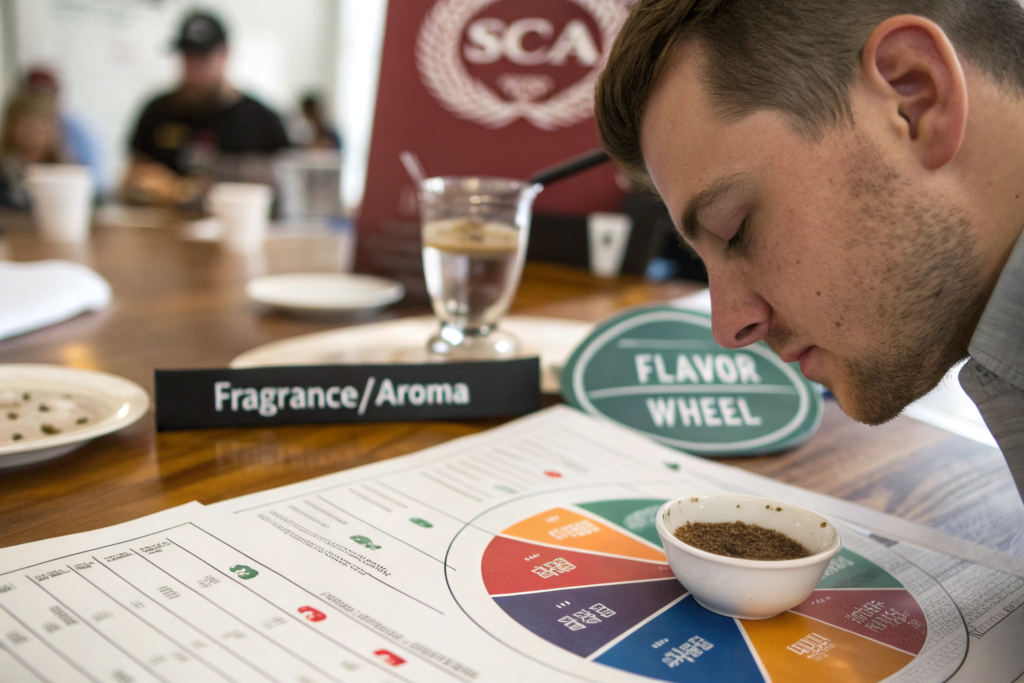
This is where the sheet gets fun and creative. It translates subjective smell and taste into communicable words. But these notes aren't random guesses; they are guided by the SCA Flavor Wheel, a tool that helps cuppers move from general (nutty, fruity) to specific (hazelnut, red apple).
Don't get hung up on exotic notes like "lychee" or "bergamot." Focus on the categories. Is it primarily fruity? Nutty? Floral? This tells you about the coffee's origin and processing. For instance, our Yunnan washed Arabicas often show stone fruit and tea-like notes, while our honey-processed Catimor might have more berry and brown sugar tones.
What is the difference between Fragrance and Aroma?
This is a specific distinction in the protocol.
- Fragrance: This is the smell of the dry grounds. Before you add water. It's often more subtle and can give hints about the roast and the coffee's inherent qualities.
- Aroma: This is the smell of the wet grounds after you add hot water and break the crust. It's much more intense and revealing. It's where you really start to identify the specific fruit, flower, or spice notes.
A good coffee will have pleasant, distinct, and complementary notes in both categories. If the dry fragrance is great but the wet aroma is flat or sour, that's a red flag—it might indicate a processing issue.
How are flavor notes and aftertaste evaluated?
Flavor is the core taste sensation on your palate when the coffee is in your mouth. It's what you identify as "tasting like" something. The score (up to 10) reflects both the intensity and the quality of that flavor. Is it clear? Is it pleasant? Is it complex (multiple notes playing together)?
Aftertaste (or Finish) is the flavor that lingers after you swallow (or spit). A positive aftertaste is clean, pleasant, and consistent with the initial flavor. A long, sweet, tea-like finish is a sign of high quality. A short, harsh, or astringent finish is a flaw. This is crucial—a coffee can taste good initially but leave a bad aftertaste, which hurts its score and your customers' experience.
What do acidity, body, and balance really mean?
Now we move into the mouthfeel and structural components. These terms are often misused. On a score sheet, they have precise meanings.
Acidity is not sourness (a defect). It's a bright, sparkling, wine-like quality that gives coffee liveliness. Think of the crispness of a green apple versus the flatness of apple juice. Without good acidity, coffee tastes dull. The score assesses the quality (is it pleasant and crisp?) and intensity of this acidity.
Body is the weight and texture of the coffee in your mouth. Is it thin and tea-like? Or is it heavy and syrupy, like cream? Neither is inherently better; it's a preference and a characteristic. Our Yunnan coffees often have a medium, rounded body that's very approachable.

How is acidity scored and described?
On the sheet, acidity is scored for its intensity and quality. Descriptors help:
- Positive: Bright, Crisp, Lively, Juicy, Winey, Citric, Malic (apple-like).
- Negative (if defective): Sour, Vinegary, Sharp, Harsh.
A high score here (e.g., 8/10) doesn't mean the coffee is super sour; it means the acidity present is of exceptional, vibrant quality. A coffee lacking acidity will score low (e.g., 5/10), making it taste flat, even if it's sweet.
What does "Balance" mean on a score sheet?
Balance might be the most important concept for a buyer to grasp. It's the harmony of all components. Does the acidity clash with the sweetness? Does a bold flavor overwhelm the delicate aroma? Is the aftertaste in line with the first sip?
A perfectly balanced coffee (scoring 10/10) is where no single attribute dominates unpleasantly. Everything works together. A coffee can have a stunning 9/10 flavor note but if it's out of balance with a harsh aftertaste, the "Balance" score will be low, pulling down the total. When you read a sheet, look for harmony. A high balance score is a strong indicator of a well-processed, high-quality coffee that will please a wide audience.
How to use the score sheet for buying decisions?
The score sheet is not just a report card; it's a purchasing tool. It allows you to move beyond "I like it" to "This coffee fits my target profile because of X, Y, and Z." It helps you compare different lots objectively and communicate specifications to your roaster.
For a trading company or brand buyer, this is invaluable. You can tell us at Bean of Coffee: "I need a coffee scoring 84+ with a nutty/chocolate flavor profile, medium body, and low acidity for my espresso blend." We can then match you with the right lot from our inventory.
Can you compare different coffees using only scores?
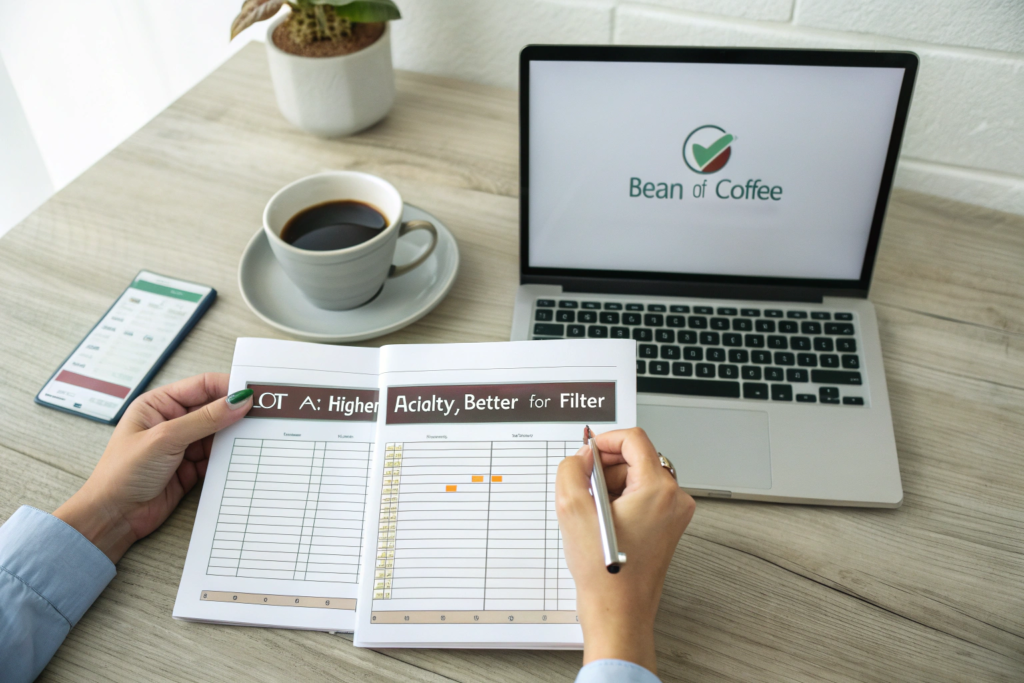
Yes, but with nuance. A coffee scoring 86 is not automatically "better" than one scoring 84.5. You must look at the breakdown.
- Scenario A (86 pts): High acidity (9), medium body (7), flavor notes of lemon & jasmine. This is a bright, complex single-origin for filter brew.
- Scenario B (84.5 pts): Lower acidity (6.5), heavy body (8.5), flavor notes of dark chocolate & walnut. This is a classic, foundational coffee for a dark roast espresso blend.
Which is "better"? It depends entirely on your need. The score sheet gives you the data to choose intelligently. The Specialty Coffee Association's resources provide the full protocols that make this comparison valid.
What are the red flags on a cupping sheet?
As a buyer, you need to scan for warnings:
- Low "Clean Cup" Score: This attribute scores the absence of defects. A low score here means the taster found unpleasant off-flavors. Major red flag.
- Big Gaps Between Attributes: A coffee with Flavor: 8.5, Aftertaste: 6.0, Balance: 6.0 is inconsistent. The great first impression doesn't last.
- Vague or Negative Descriptors: Notes like "generic," "green," "woody," or "baggy" are bad. Look for specific, positive fruit, floral, nut, or spice notes.
- "Overall" Score Lower than Sub-scores: This means the taster, after adding it all up, wasn't personally impressed. Trust the "Overall" score—it's the final verdict.
Always ask for the full score sheet, not just the total score. A reputable supplier like us is transparent with this data.
Conclusion
Reading a coffee cupping score sheet is like learning to read a technical blueprint for flavor. It demystifies quality, turning subjective taste into an objective framework for evaluation. You learn to see past the total score to understand the coffee's structure: its aromatic personality (fragrance/aroma), its core taste (flavor), its tactile feel (body), its vibrancy (acidity), and how all these elements come together (balance, aftertaste).
Mastering this language empowers you as a buyer. It allows you to make confident, informed purchasing decisions, specify exactly what you want, and build a coffee menu or product line with intention. It turns sourcing from a gamble into a science.
Ready to apply this knowledge? Let's cup together. At Bean of Coffee, we provide detailed cupping sheets for all our premium lots from Yunnan. We can walk you through the scores and find the perfect match for your market—whether you need a bright, high-altitude Arabica or a foundational, chocolatey Robusta. To request cupping scores and samples, contact our export manager, Cathy Cai, at cathy@beanofcoffee.com. Let's select your next great coffee with clarity and confidence.