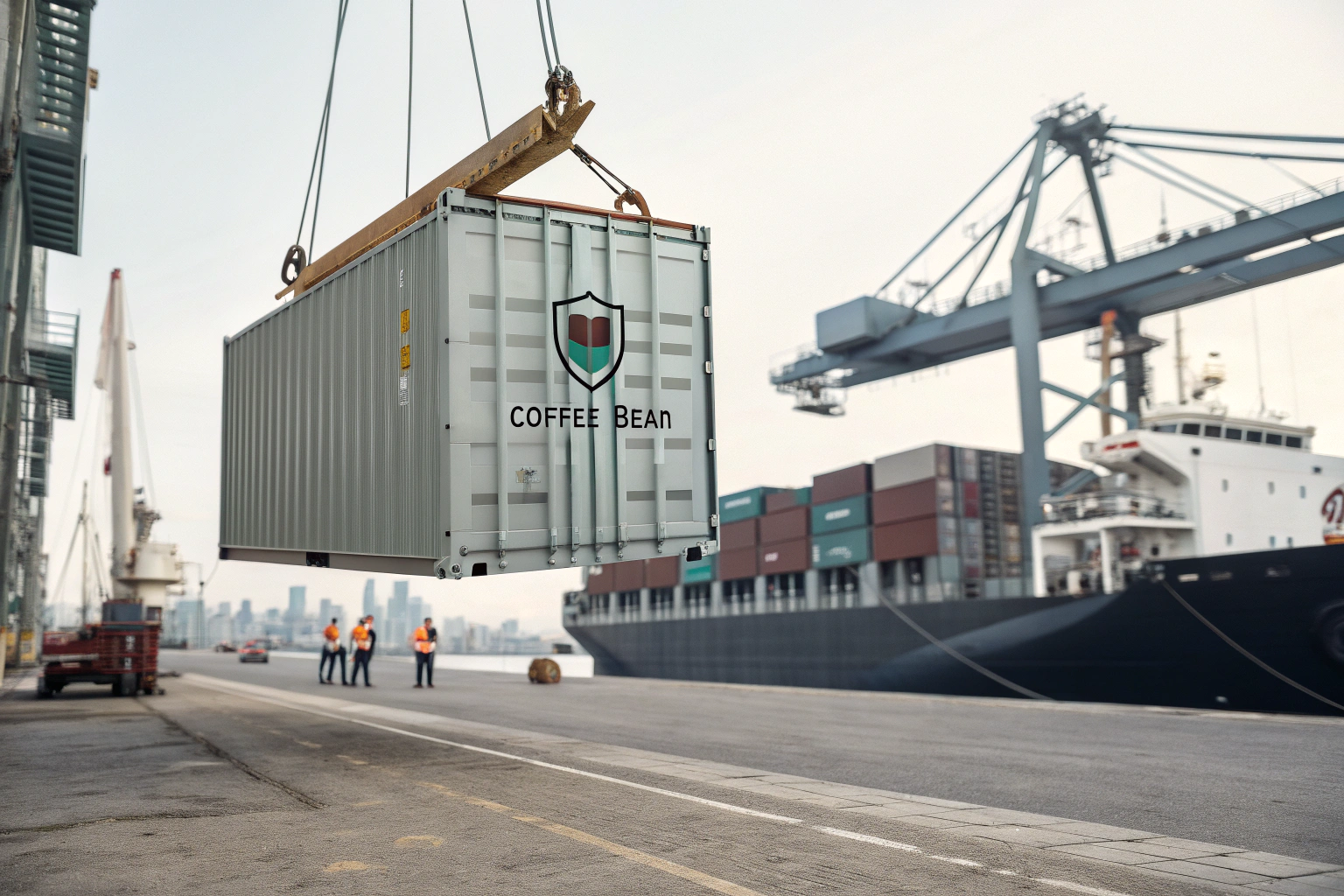
Imagine this: a container filled with thousands of pounds of our best Yunnan coffee beans—your investment—is on a ship in the middle of the Pacific. A storm hits, a container is lost overboard, or it's damaged by water. Who pays for that loss? This is a major pain point for buyers. The fear of a catastrophic loss during transit is real, and without the right protection, it could be devastating.
To secure cargo insurance for your coffee shipments, you must first determine who is responsible for arranging coverage based on your agreed Incoterms (like FOB or CIF), then partner with a reputable freight forwarder or a specialized marine insurance broker to obtain an "All-Risk" policy that specifically covers commodities like coffee. Never assume your shipment is automatically insured; you must proactively arrange and verify the coverage.
As your supplier at shanghai Fumao, I consider logistics and risk management a core part of our service. A successful shipment doesn't end when the container leaves my warehouse; it ends when it arrives safely at yours. Ensuring that journey is financially protected is a shared responsibility. Let's demystify the process of securing cargo insurance so you can import with confidence and peace of mind.
Who Is Responsible for Arranging Insurance?
Before you can buy insurance, you have to know if it's your job to buy it. This is one of the most common points of confusion in international trade, and a misunderstanding here can lead to a shipment being completely uninsured. The responsibility is determined by the three-letter sales term you agree upon in your contract: the Incoterms.
Your responsibility for arranging insurance is defined by the Incoterms in your purchase agreement. If you buy under "FOB" (Free On Board), you, the buyer, are responsible for insuring the goods from the moment they are loaded onto the ship. If you buy under "CIF" (Cost, Insurance, and Freight), the supplier is responsible for arranging and paying for the insurance.
Think of Incoterms as a set of rules that define the exact point where the risk and responsibility transfer from the seller to the buyer. For a hands-on buyer like you, Ron, who wants control over the quality and cost of your insurance, buying on FOB terms is often preferable. It allows you to choose your own provider and ensure you have the comprehensive coverage you need, rather than relying on the minimum coverage a supplier might arrange under CIF.
What is FOB (Free On Board)?
Under FOB terms, our responsibility at Shanghai Fumao is to get the coffee beans from our plantation, through customs, and loaded onto the vessel at the designated Chinese port (like Shanghai or Shenzhen). The moment the coffee crosses the ship's rail, the risk transfers to you. From that point forward—during the entire ocean voyage, unloading, and inland transport to your warehouse—you are responsible for any loss or damage. This means you must have your own insurance policy in place before the ship sails.
What is CIF (Cost, Insurance, and Freight)?
Under CIF terms, the quoted price includes the cost of the coffee, the freight (shipping cost), and the insurance. We, the supplier, would handle all the arrangements to get the coffee to your destination port. While this seems convenient, it's important to know that the supplier is only obligated to provide a minimum level of insurance coverage. This basic coverage might not protect against all potential risks, leaving you exposed. For high-value goods like specialty coffee, relying on minimum CIF insurance is generally not recommended.
What Type of Insurance Policy Do You Need?
Not all insurance policies are created equal. Just like with coffee, there are different grades of quality and coverage. Choosing the wrong type of policy can give you a false sense of security, only to find out you're not covered when you need it most. For a valuable, perishable commodity like coffee, you need the highest level of protection available.
For coffee shipments, you should always secure an "All-Risk" policy, typically under the framework of the Institute Cargo Clauses (A). This is the broadest form of coverage available, protecting against "all risks of physical loss or damage from any external cause." It covers most common perils like theft, water damage, fire, and loss overboard. Policies with lesser coverage, like Clauses (B) or (C), are cheaper but leave significant gaps that you don't want to risk.
Think of it this way: "All-Risk" coverage is your comprehensive car insurance. Cheaper policies are like liability-only coverage; they only protect against a very specific list of named perils (like fire or the ship sinking), leaving you unprotected from more common issues like rough handling, contamination, or water damage from a leaky container. The small extra premium for an All-Risk policy is negligible compared to the potential loss of an entire container of coffee.

What does "All-Risk" not cover?
It's important to understand the standard exclusions. "All-Risk" policies typically do not cover losses due to improper packing (which is why you need a good supplier), inherent vice (natural spoilage of the product, which can be a concern for coffee), delays, or acts of war (which can be covered by a separate extension). Damage from mold or moisture can be a grey area, so it's crucial to ensure your policy has specific provisions for commodities susceptible to atmospheric conditions.
What is "General Average"?
This is a crucial but little-known concept in maritime law. If a ship's crew has to voluntarily sacrifice some cargo (like jettisoning containers) to save the ship and the rest of the cargo during an emergency, the losses are shared proportionally among all the cargo owners on that voyage. Even if your container is perfectly safe, you could be hit with a massive bill to cover someone else's loss. A proper cargo insurance policy will cover your contribution in a General Average declaration, protecting you from this unexpected and potentially huge cost.
How Do You Actually Purchase the Insurance?
You know what policy you need and whose job it is to get it. Now, how do you physically buy it? You don't just call a random insurance company. This is a specialized field. The easiest and most reliable way is to go through a professional who handles these transactions every day.
The most common way to purchase cargo insurance is through your freight forwarder, who can add it to your shipment as part of their service, or by going directly to a specialized marine insurance broker. A freight forwarder offers convenience, while a dedicated broker may offer more customized options and potentially better rates for high-volume shippers.
For most importers, using the freight forwarder is the simplest path. When you book your shipment, you simply check the box to add insurance. They have existing relationships with insurance providers and can roll the cost into your total shipping invoice. If you ship frequently, however, establishing a relationship with an insurance broker can be beneficial. They can help you set up an annual open policy that automatically covers all your shipments, simplifying the process and often reducing the per-shipment cost.

What information will you need to provide?
To get a quote and a policy, you'll need to provide the basic details of your shipment: the type of goods (e.g., green coffee beans), the total value of the cargo (this should be your invoice value plus freight costs, plus an extra 10% to cover unforeseen expenses), the origin and destination ports, the name of the vessel, and the sailing date.
How much does it cost?
The cost of cargo insurance is surprisingly affordable. The premium is calculated as a percentage of the total insured value. While rates vary based on the route, the carrier, and your claims history, a typical rate for an All-Risk policy might be between 0.3% and 0.7% of the insured value. For a $50,000 shipment of coffee, you might pay between $150 and $350 for comprehensive, door-to-door protection. It's a very small price to pay to protect a very large investment.
What Should You Do If You Need to Make a Claim?
Hopefully, you'll never need this information. But if the worst happens, knowing the correct procedure to file a claim is critical. A mistake at this stage can result in your claim being denied, even with a perfect policy. The key is to act quickly and document everything.
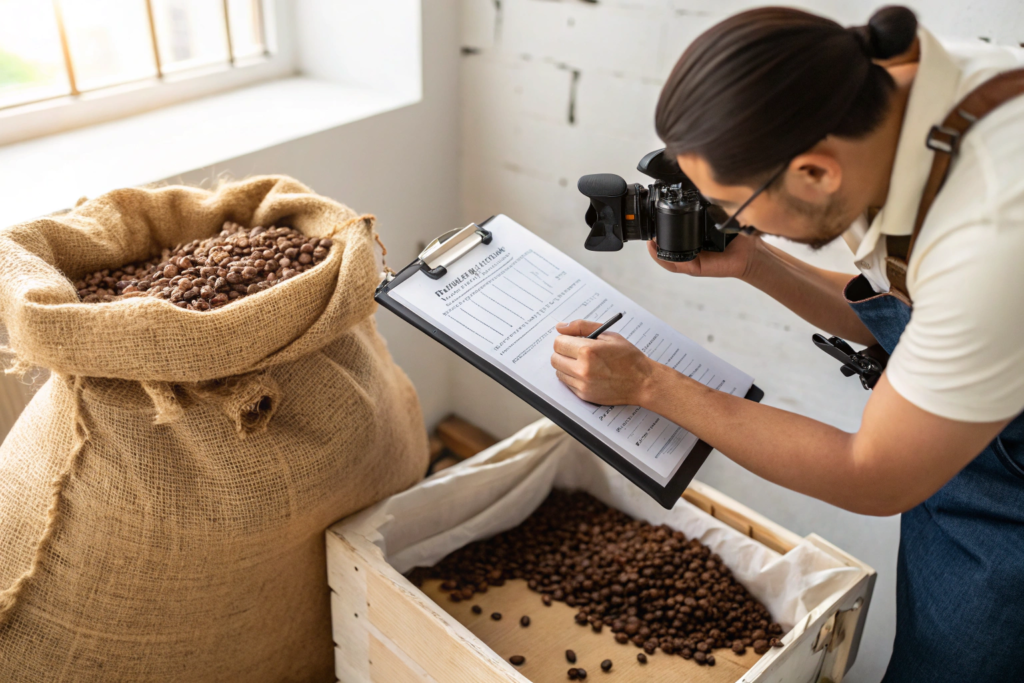
If you discover damage upon receiving your shipment, you must immediately note the damage on the delivery receipt before signing it, notify your insurance provider right away, and thoroughly document the loss with photographs and a detailed report. Do not wait. Most policies have a very strict window for reporting a claim.
The moment you sign the delivery receipt without noting any damage, you are legally acknowledging that you received the goods in good condition. This makes it incredibly difficult to file a claim later. Always, always, always inspect your container and its contents upon arrival. If you see any sign of damage to the container or the coffee sacks, write "Damaged" on the receipt and be as specific as possible.
What is a "clean" bill of lading?
When you sign for a shipment without noting any issues, you are providing a "clean" bill of lading or delivery receipt. This is what the insurance company will point to as proof that the damage must have occurred after you took possession, which would void their liability. Protecting your right to a claim starts with refusing to provide a clean receipt for damaged goods.
What documents will you need for a claim?
To file a claim, you will typically need the original insurance certificate, the bill of lading, the commercial invoice and packing list, photos of the damage, and a copy of your written claim against the shipping line. You'll also need a survey report from an independent surveyor, whom the insurance company will usually appoint to assess the extent of the damage. Keeping your paperwork organized is essential for a smooth claims process.
Conclusion
Securing cargo insurance isn't just another box to check in the import process; it's the foundation of your financial security. It's the safety net that allows you to invest in high-quality coffee from across the world without losing sleep over the immense risks of international shipping. By understanding your responsibilities under your chosen Incoterms, insisting on a comprehensive "All-Risk" policy, and knowing the correct procedure to file a claim, you transform from a hopeful importer into a professional, protected buyer.
Our commitment to you extends beyond the quality of our coffee. We want to be your trusted partner in navigating all aspects of the import process. If you have any questions about Incoterms, insurance, or logistics, we are here to help. Contact our specialist, Cathy Cai, at cathy@beanofcoffee.com, and let's build a secure and prosperous supply chain together.