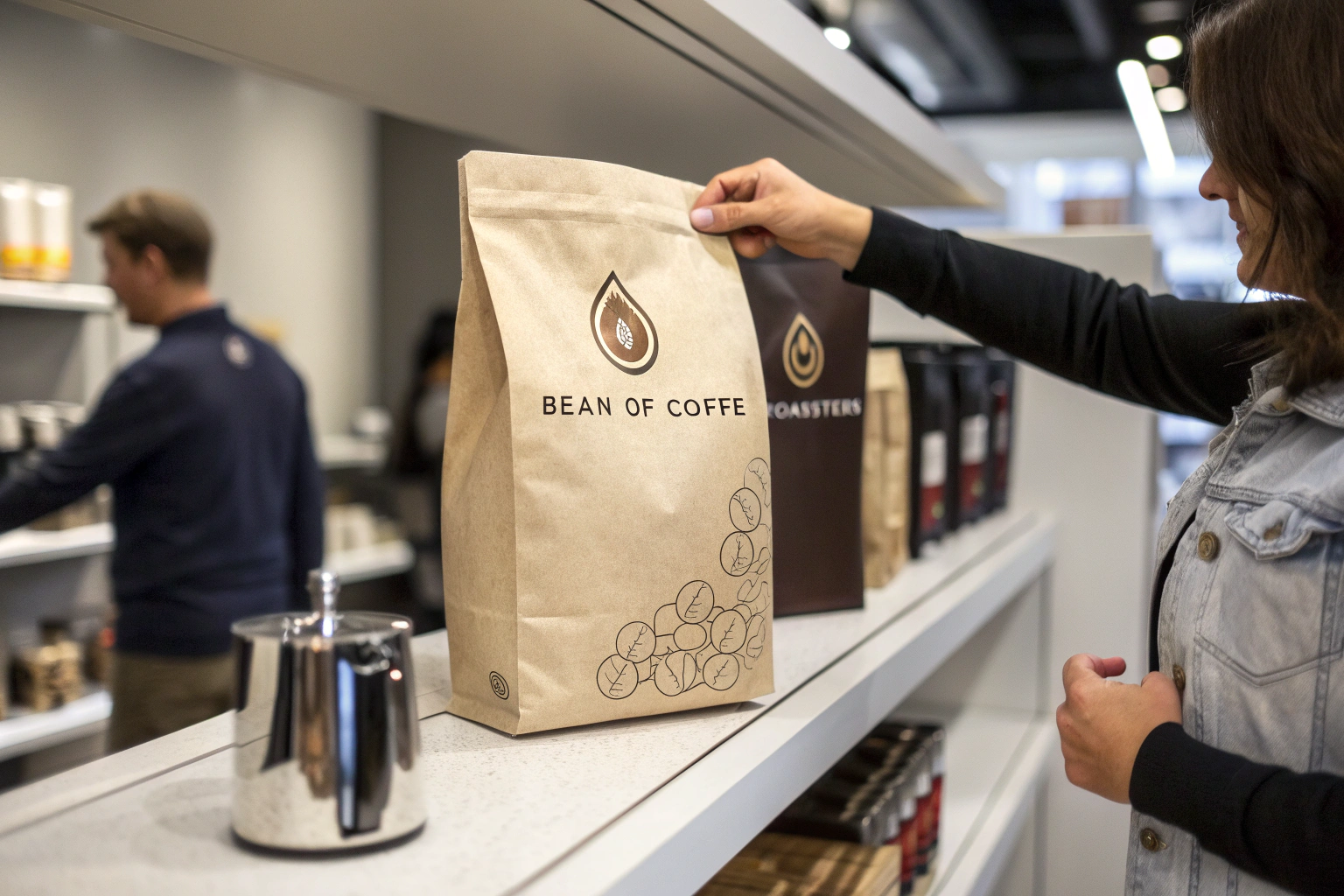
You've spent months sourcing the perfect Yunnan Arabica, nailed the roast profile, and crafted a compelling brand story. But when a customer picks up your bag off the shelf, the final decision is made in seconds. A cheap, flimsy, or confusing bag can undo all that work. For a business owner, the retail coffee bag is not just packaging; it's your silent salesperson, your quality guardian, and your brand's physical embodiment. Choosing the wrong one can lead to stale coffee, damaged products, and lost sales.
So, how do you select the best coffee bags for retail? It requires balancing three critical pillars: functional preservation (keeping the coffee fresh), brand communication (telling your story), and practical logistics (cost, durability, usability). At Bean of Coffee, while we focus on exporting green beans, we've seen how our roaster clients' success hinges on this final, crucial touchpoint. The best bag protects the quality we worked so hard to create and elevates the entire brand experience.
Let's unpack the key decisions you need to make, from the liner inside to the finish on the outside.
What are the functional requirements for coffee freshness?
First and foremost, the bag must protect your product. Coffee's enemies are oxygen, moisture, light, and heat. Your packaging is the last line of defense. If it fails here, nothing else matters.
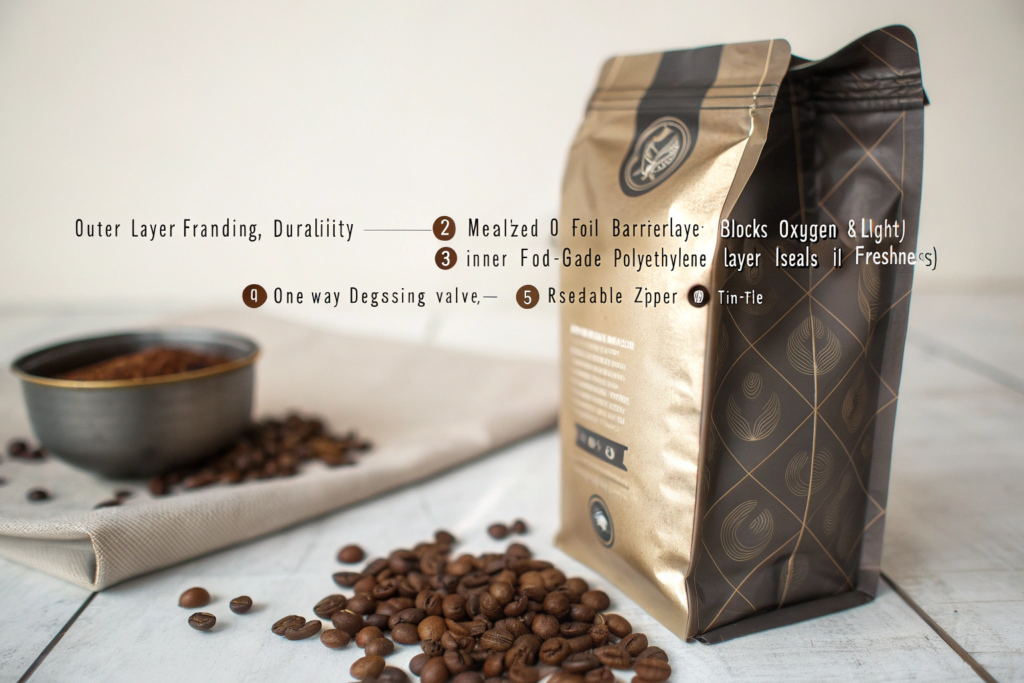
Think of the bag as a fortress. Each component has a specific job in keeping the coffee at its peak from your roastery to the customer's last cup.
Why is a one-way degassing valve non-negotiable?
Freshly roasted coffee releases carbon dioxide (CO2) for days or weeks. Trapping this gas would cause the bag to bloat and eventually burst. A one-way degassing valve is a tiny, clever device that allows CO2 to escape without letting oxygen in.
- Quality Impact: Without a valve, bags bulge, seams fail, or oxygen is forced in. With a valve, coffee can be packed soon after roasting while still degassing safely, locking in freshness.
- Selection Tip: Ensure the valve is of high quality and properly installed. It should be flush with the bag and not leak. This is a small component with a massive impact.
What types of barrier materials block oxygen and light?
The bag's body must be an impermeable shield. Common materials are:
- Laminated Plastic (e.g., PET/PE): Good for short-term freshness (3-4 weeks). Often has a see-through window.
- Foil-Laminated Bags (e.g., PET/FOIL/PE): The gold standard for retail. The aluminum foil layer provides an exceptional barrier against oxygen, moisture, and light. This can extend fresh shelf life to 4-6 months or more. For whole bean coffee you expect to sit on a shelf, this is the best investment.
- Metalized Films: Offer very good, but not quite as complete, barrier properties as foil. They are lighter and allow for more design flexibility.
For maximum freshness, choose a foil-lined bag with a degassing valve. This combination is what serious specialty roasters use to stand by their product's quality.
How should the bag design reflect your brand and aid usability?
Once the coffee is protected, the bag must communicate and delight. This is where design, functionality, and user experience intersect.
The bag is a canvas. Every element—color, typography, imagery, texture—should tell your brand story and guide the customer.
What information is legally required and practically essential?
Beyond your logo, certain information is crucial:
- Legally Required (FDA/US): Net weight (in oz and g), product identity (e.g., "Whole Bean Coffee"), your business name and address. For flavored coffees, an ingredient list is required.
- Quality Imperatives (Not legally required, but industry standard):
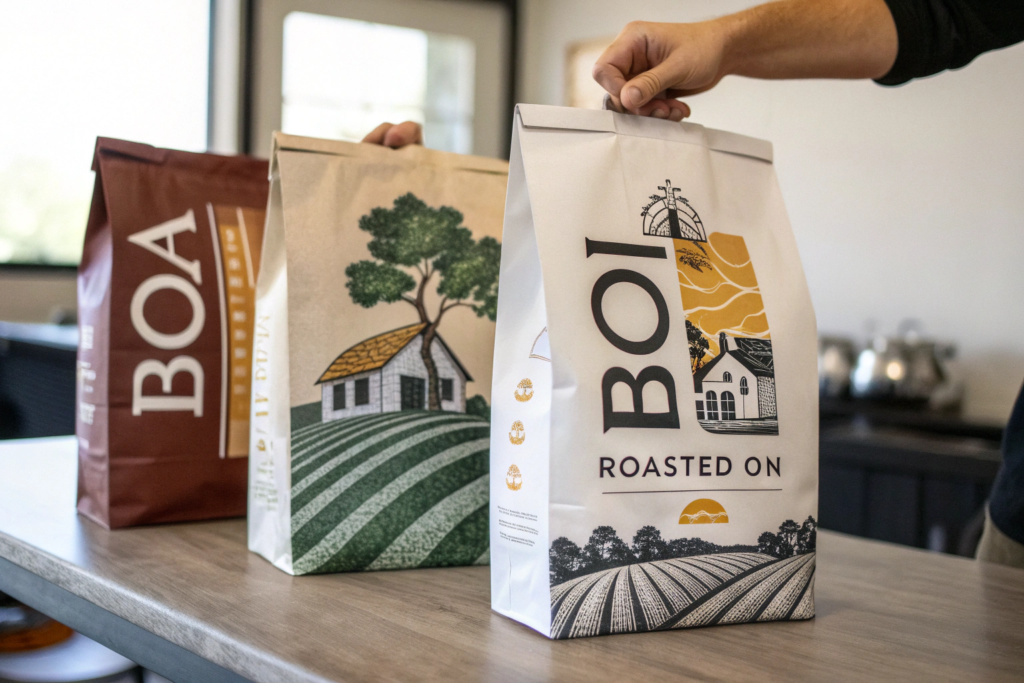
- "Roasted On" Date: This is far more meaningful than a "Best By" date. It builds transparency and trust.
- Coffee Details: Origin (Country, Region, Farm), Variety (e.g., Arabica, Catimor), Processing Method (Washed, Natural), Roast Level, and Flavor Notes.
- Brewing Suggestions: A simple guide helps customers enjoy it best.
- Brand Story: Use the space to connect. A brief story about the origin, your roastery, or your mission builds an emotional connection.
What are the best closure systems for customer experience?
How the bag opens and closes affects usability and continued freshness after opening.
- Tin-Tie (Flat or Rolled): The classic. It's simple, inexpensive, and evokes tradition. However, it doesn't create a perfect re-seal, so coffee will stale faster after opening.
- Re-sealable Zipper (Press-to-Close): The modern standard for retail. It allows customers to open and close the bag easily, preserving freshness much longer between uses. This is highly recommended for improving customer satisfaction.
- Heat Seal Only (No Reclosure): Used for single-use or very small bags. Not ideal for standard 12oz retail bags as it offers no reusability.
A foil bag with a degassing valve and a re-sealable zipper offers the best overall customer experience.
What are the cost, sourcing, and sustainability considerations?
Great bags aren't cheap, and cheap bags aren't great. You need to find the right balance between cost per unit, minimum order quantities (MOQs), and your brand's values, especially around sustainability.
This is a strategic purchasing decision that impacts your margins, operations, and brand perception.
How do you navigate Minimum Order Quantities (MOQs) and costs?
Custom printed bags have setup costs and MOQs.
- MOQs: Can range from 5,000 to 20,000+ units per design/size. This ties up capital and storage space.
- Strategies:
- Start with Stock Bags + Labels: Use high-quality, unbranded stock bags (with valve and zipper) and apply a beautiful, pressure-sensitive label. Lower MOQ, more flexibility.
- Consolidate Designs: Use a unified template where only key info (coffee name, roast date, flavor notes) changes, printed in the same run.
- Plan Long-Term: Forecast your bag needs for 6-12 months to meet MOQs cost-effectively.
The cost per bag might be $0.50-$1.50 for a good custom bag. View this not as an expense, but as a marketing and quality assurance investment.
What are the sustainable packaging options?
Eco-friendly packaging is a growing customer expectation but comes with trade-offs.
- Compostable/Biodegradable Bags: Made from plant-based materials like PLA. Crucial Note: They often have a poor oxygen barrier, leading to faster staling. They usually require industrial composting facilities, not home composts. They are a statement but can compromise freshness.
- Recyclable Bags (Monolayer PE or PP): Some bags are made from a single type of plastic, making them technically recyclable where facilities exist. Check local recycling capabilities.
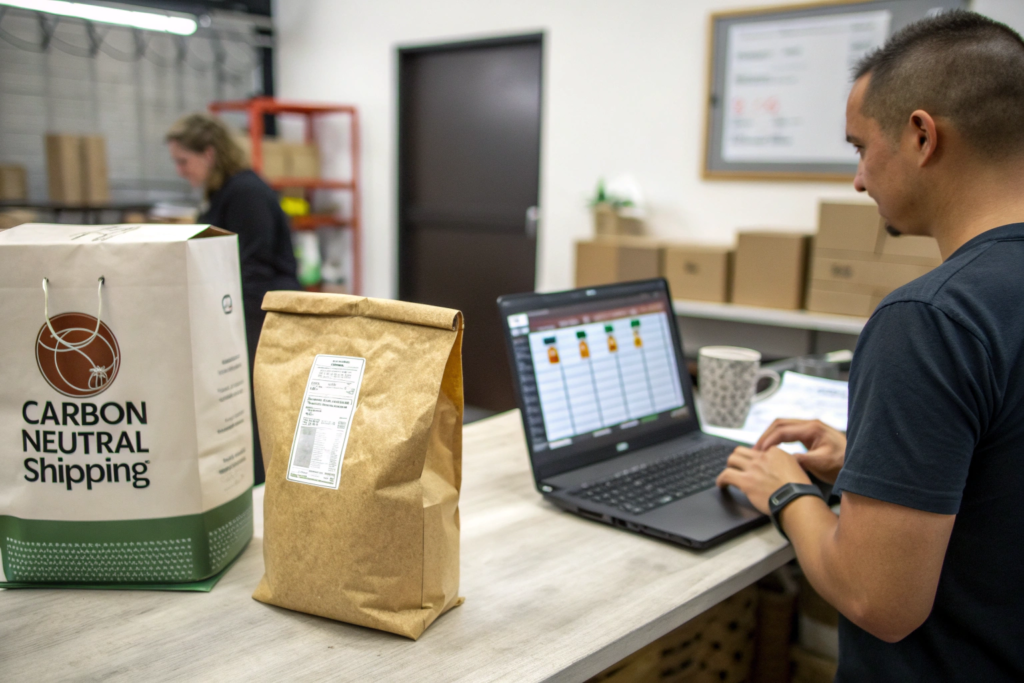
- The Hybrid Approach: Use a high-barrier foil bag for optimal freshness, but pair it with initiatives like carbon-offset shipping, bag recycling programs (like TerraCycle), or using recycled materials in the outer layer. Be transparent about the choices and challenges. The Sustainable Packaging Coalition provides guidelines that can inform your decisions.
How to choose the right supplier and handle logistics?
Your bag supplier is a key partner. Their reliability, print quality, and customer service will directly affect your business. Don't just choose the cheapest online quote.
You need a supplier who understands coffee's unique needs and can grow with you.
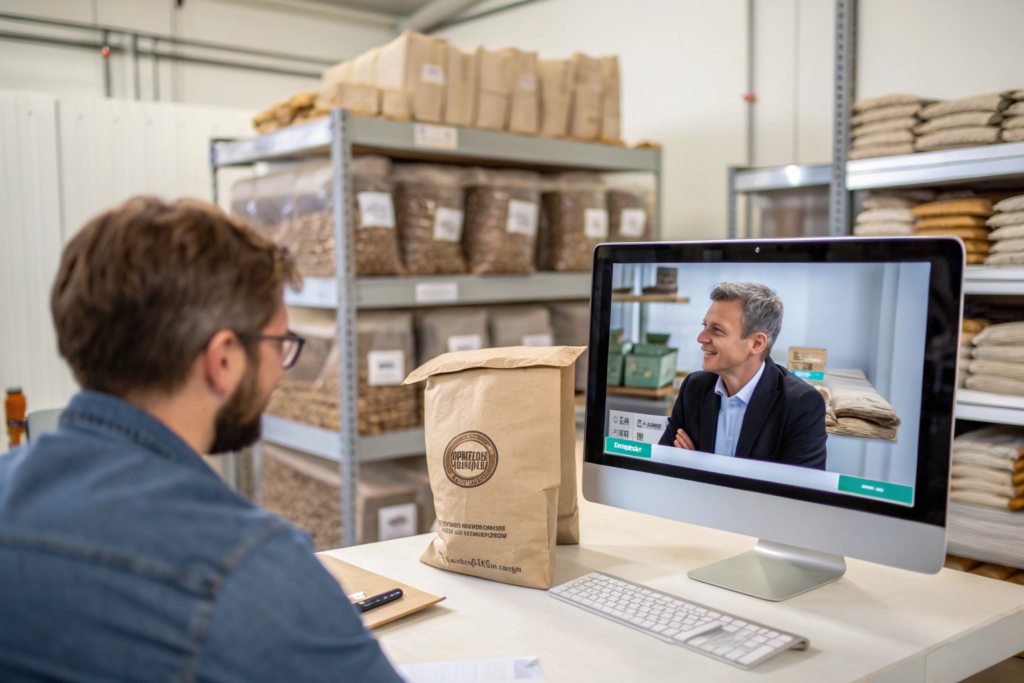
What should you look for in a packaging supplier?
- Coffee Industry Experience: They should understand why a degassing valve isn't just a hole in the bag and why barrier properties are critical.
- Sample Quality: Always, always order physical samples. Check print quality, material feel, seam strength, and valve/zipper function.
- Lead Times and Reliability: Can they deliver on time, consistently? A delay in bags means a delay in selling coffee.
- Customer Service: Are they responsive and helpful with design adjustments and troubleshooting?
How do you manage inventory and filling logistics?
- Storage: Bags take up space. Plan for dry, clean storage to prevent damage.
- Filling Equipment: Consider how you'll fill the bags. A simple hand-held heat sealer works for low volume. For higher volume, you may need a semi-automatic filler and sealer. Ensure your bag's material is compatible with your sealing method (e.g., heat sealing temperature).
- Batch Coding: You need a way to mark the roast date and batch number. This can be a separate label printer or, for larger runs, variable data printing from your supplier.
Conclusion
Selecting the best retail coffee bag is a multifaceted decision that sits at the intersection of science, design, and commerce. The winning formula combines uncompromising functional materials (foil barrier, degassing valve, resealable zipper) with clear, compelling brand design and practical logistics that align with your scale and values.
By investing in superior packaging, you do more than protect your coffee; you elevate the customer experience, justify your premium, and build a brand that stands for quality at every touchpoint. It's the final, critical step in honoring the craft that began at the farm.
Your packaging is the promise you make to the customer. Make it a promise you can keep. And if you're looking for exceptional coffee worthy of exceptional packaging, start with the beans inside. At Bean of Coffee, we provide the premium Yunnan Arabica, Catimor, and Robusta that form the foundation of a great product. To discuss sourcing green beans that will become your flagship roast, contact our export manager, Cathy Cai, at cathy@beanofcoffee.com. Let's ensure what's inside the bag is as remarkable as the bag itself.