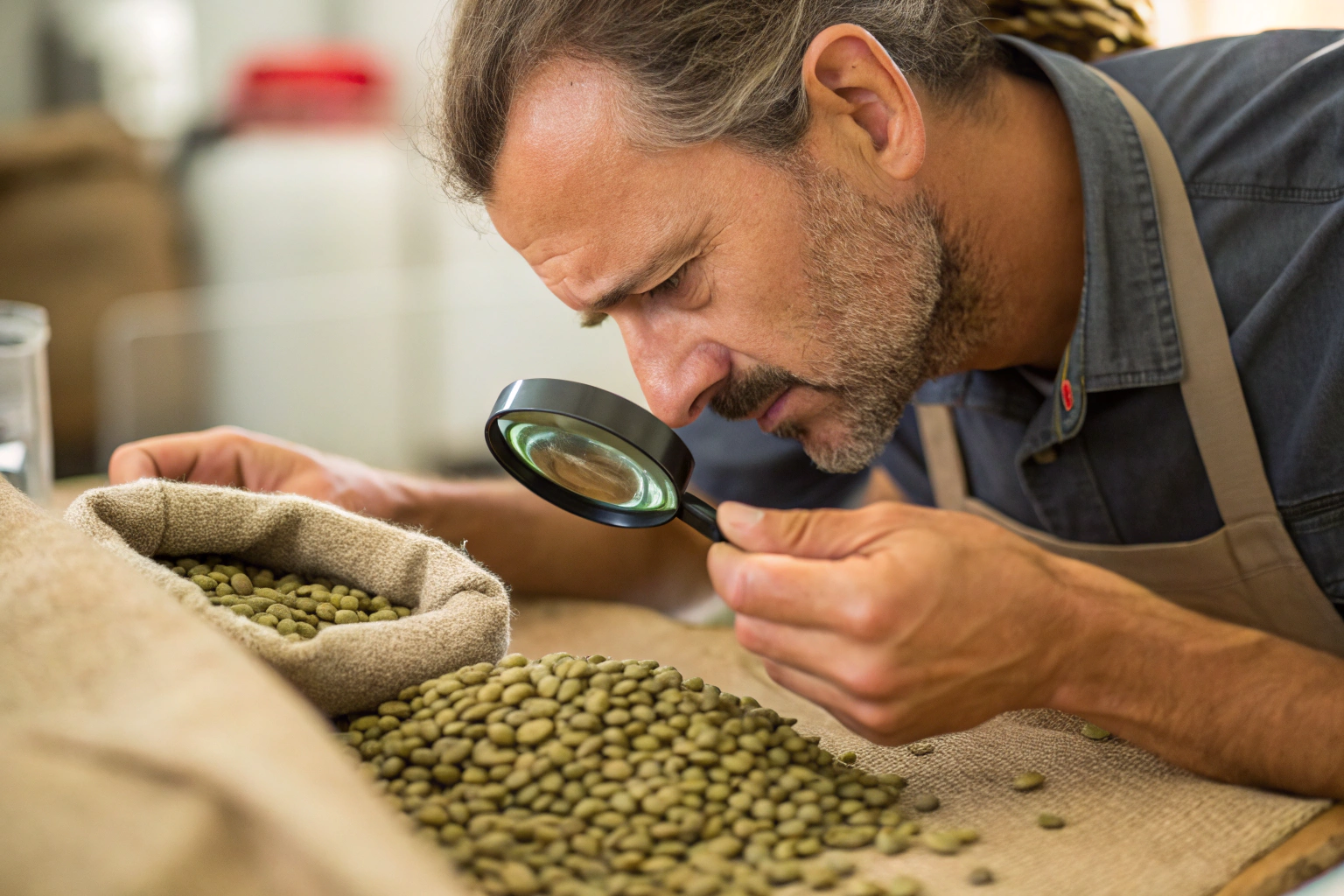
You are the final artist in the coffee supply chain. But even the greatest artist cannot create a masterpiece from a flawed canvas. You can have the best roasting machine and the most refined profiles, but if you start with subpar green coffee, the final cup will always be a disappointment. This is a huge pain point. You're constantly searching for green coffee that is not just "good," but is consistent, reliable, and has the potential to truly shine. You're worried about investing in a full container of beans based on one good sample, only to find the rest of the lot is inconsistent and full of defects.
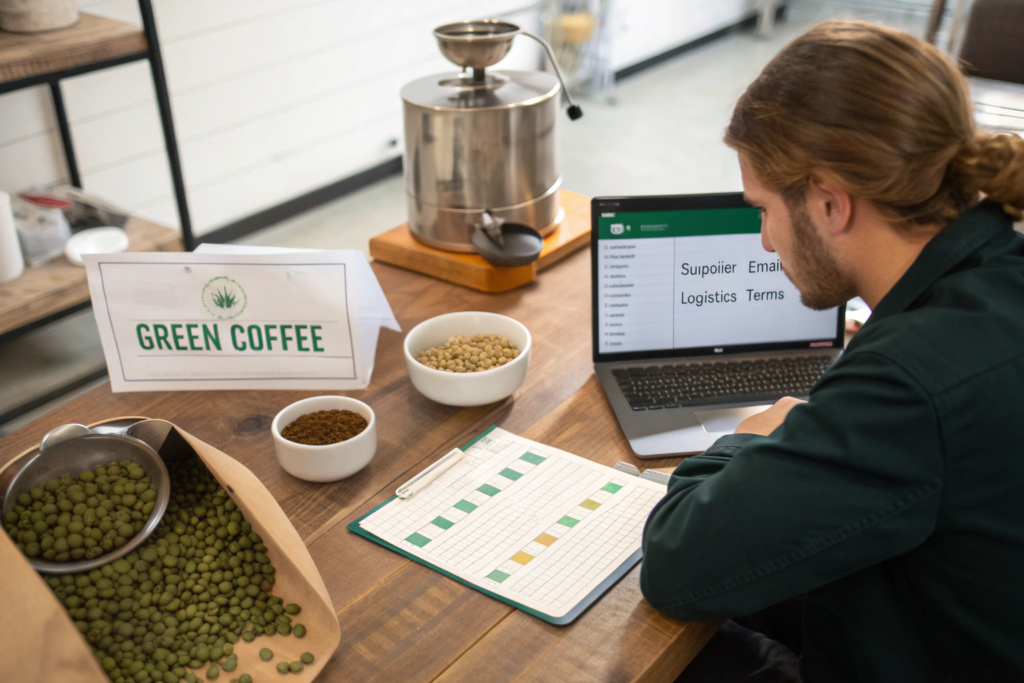
Honestly, selecting the best green coffee is a systematic process of due diligence that goes far beyond just the cupping score. It involves a three-part evaluation: 1) A rigorous physical inspection of the green beans themselves for defects, size, density, and moisture. 2) A thorough sensory analysis through sample roasting and cupping to assess the flavor potential. And 3) A critical evaluation of the supplier to ensure traceability, consistency, and a reliable partnership. A high cupping score is a ticket to the game; these other factors are what actually win it.
From my position as a grower, this is the moment of truth. We spend an entire year nurturing our coffee on the slopes of Baoshan, Yunnan. When we send a sample to a roaster like you, we are sending our reputation in a small bag. We want you to be demanding. We want you to scrutinize our beans. Because we are confident that a thorough, professional evaluation will reveal the quality we have worked so hard to achieve. Let's walk through the process that separates a calculated investment from a risky gamble.
How Do You Judge a Bean by Its Cover?
Before you even think about roasting, you must look closely at the raw, green beans. The physical characteristics of the coffee are a powerful indicator of the quality of the farming and processing, and they can predict potential problems in the roaster and in the final cup.
Aren't all green beans pretty much the same? Absolutely not. A trained eye can read a story in a handful of green coffee. You are looking for uniformity and the absence of defects. A sample with beans of wildly different sizes and colors, and a high number of defects, tells you that the sorting and quality control at the origin were sloppy. This is a major red flag for inconsistency.
According to the Specialty Coffee Association (SCA) standards, "specialty grade" coffee must have zero "Category 1" defects (like sour beans or black beans) and no more than five "Category 2" defects (like broken or insect-damaged beans) in a 350g sample.
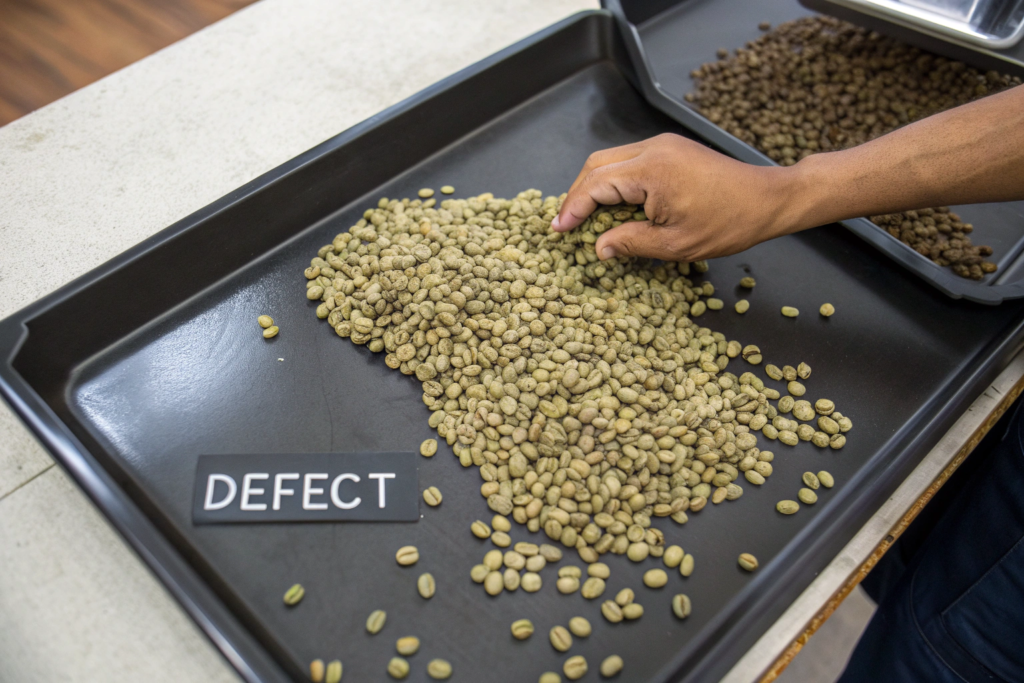
What are the key physical attributes to check?
- Defect Count: This is the most important. Learn to identify primary defects like mold, sour beans, and severe insect damage. These will ruin a cup.
- Size & Uniformity: The beans should be a relatively consistent size. This is important because beans of different sizes will roast at different rates, making it difficult to achieve an even roast.
- Color: The color should be a uniform bluish-green or greenish-hue. A mix of pale, brown, and green beans indicates a mix of different crop years or poor processing.
- Smell: The green beans should have a fresh, slightly sweet, grassy, or hay-like aroma. Any hint of mold, chemical smells, or excessive ferment is a deal-breaker.
Why do moisture and density matter so much?
- Moisture Content: The ideal range is between 10% and 12%. Coffee that is too dry (below 10%) will roast too quickly and taste flat. Coffee that is too wet (above 12%) is at high risk for developing mold during shipping and storage and can have a "pasty" or "green" taste. You need a moisture meter for this.
- Density: Denser beans (typically grown at higher altitudes) contain more sugars and complex acids. They can handle more heat in the roaster and often have a greater flavor potential. A high density is generally a sign of high quality.
How Do You Unlock the Flavor Potential?
Once the coffee passes the physical inspection, it's time to see what it tastes like. This is done through a standardized process of sample roasting and cupping.
Can't I just roast it like my other coffees? To get a true and fair evaluation, you need to use a neutral "sample roast" profile. The goal of a sample roast is not to create a finished product, but to simply develop the bean enough to fairly evaluate its inherent flavors, acidity, body, and sweetness, and to expose any potential defects. It's a diagnostic tool, not a production roast.
The standard for sample roasting is a very light roast, typically finished 30-60 seconds after the start of the first crack. This light profile doesn't impart much "roasty" flavor, allowing the bean's origin characteristics to be the star of the show.
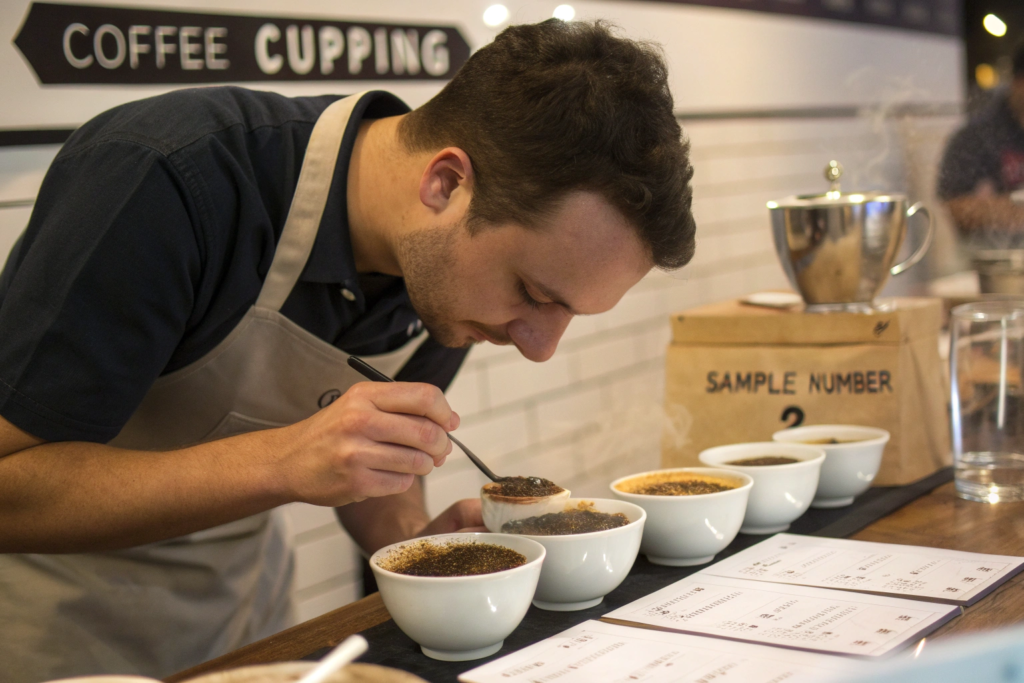
What is the cupping process?
Cupping is the standardized industry method for tasting coffee. It involves:
- Grinding the sample-roasted coffee.
- Evaluating the dry "fragrance."
- Adding hot water and evaluating the "aroma" as a crust forms.
- "Breaking the crust" with a spoon to release a powerful burst of aroma.
- Skimming the grounds off the top.
- Slurping the coffee from a spoon to spray it across your entire palate.
This process allows you to evaluate the coffee on multiple criteria like fragrance/aroma, flavor, aftertaste, acidity, body, and balance, often using the official SCA Cupping Form.
What are you looking for on the cupping table?
- Cleanliness: Does the coffee taste clean? Or are there any "off-flavors" like mold, rubber, or chemical taints? This is a pass/fail test.
- Sweetness: Does the coffee have a pleasant, inherent sweetness?
- Acidity: Is the acidity bright, pleasant, and complex (like citrus or stone fruit), or is it sour and vinegary?
- Flavor & Complexity: What do you actually taste? Is it a one-dimensional, boring coffee, or does it have multiple layers of interesting flavors?
- Potential: Even if the sample roast isn't perfect, can you taste the potential for a great coffee if you were to apply your own production roast profile?
How Do You Evaluate the Source?
You've found a coffee that looks great and tastes amazing. The work is not done. A fantastic coffee from an unreliable supplier is a recipe for disaster. You need to know that the supplier can deliver this quality consistently and that they are a professional and ethical partner.
The sample is great, isn't that enough? No. A sample is just a promise. You need to verify that the supplier can keep that promise. A great supplier is more than just a seller; they are your partner at origin. They are your eyes and ears on the ground. Their professionalism and transparency are just as important as the quality of the coffee itself.
At Shanghai Fumao, we know that our relationship with our clients is our most valuable asset. We build that relationship on a foundation of transparency and trust.
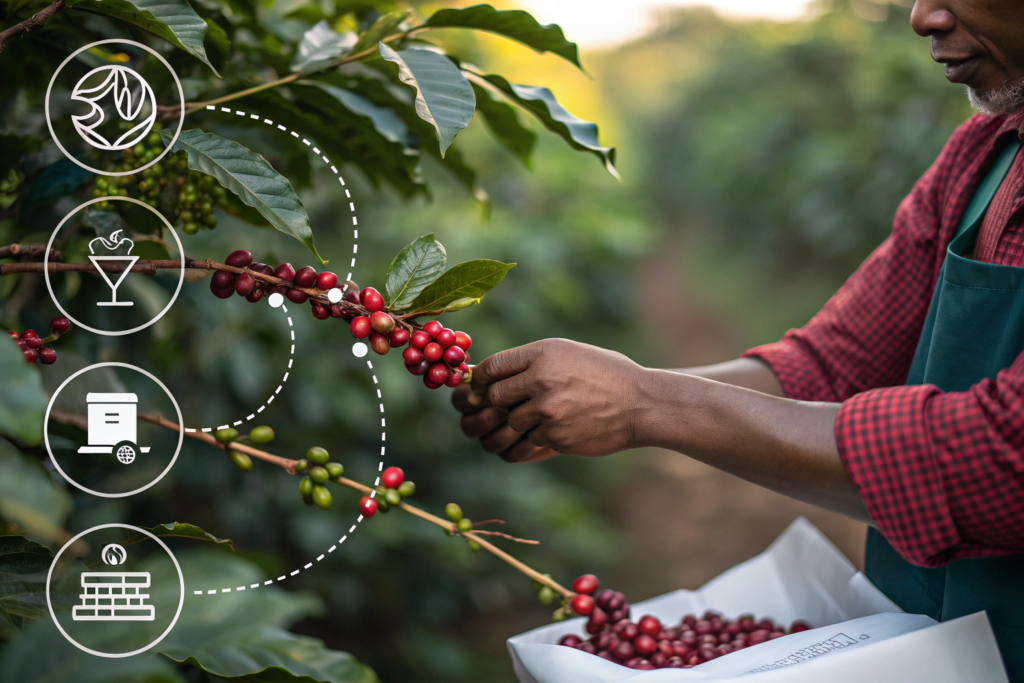
What questions should you ask a potential new supplier?
- Traceability: "Can you tell me the specific farm, washing station, or region this coffee came from? Can you provide photos or videos?" A good supplier will be proud to share the origin story.
- Consistency: "How large is this lot? Is the sample representative of the entire lot? What are your quality control procedures to ensure consistency?"
- Logistics: "What are your standard payment terms? Which shipping lines do you work with? Can you show me photos of how you load a container?" Their answers will reveal their level of professionalism.
- Certifications: "Do you have any certifications like Fair Trade, Organic, or Rainforest Alliance?" Even if you don't require them, their possession indicates a certain level of sophistication and commitment.
Why is a farm visit the ultimate test?
While not always practical for a first purchase, visiting your key suppliers at origin is the single best investment you can make in your supply chain. It allows you to see their operation with your own eyes, meet the people behind the coffee, and build a deep, personal relationship. It replaces uncertainty with firsthand knowledge and trust.
How Do You Put It All Together to Make a Decision?
The final purchasing decision should not be based on a single factor. It's about synthesizing all the information you've gathered into a holistic assessment.
This seems like a lot of work for one coffee. It is, but this is the work of a professional coffee buyer. The best roasters in the world are also the best green coffee buyers. They use a systematic approach to mitigate risk and identify true quality. They build a scorecard in their mind, weighing all the factors.
You might create a simple decision matrix:
- Physical Grade: 9/10
- Cupping Score: 88 points (Excellent)
- Flavor Profile: Matches our needs for a single-origin espresso.
- Supplier Professionalism: 10/10 (Very responsive, transparent).
- Price: Competitive.
Looking at this complete picture, the decision becomes clear and data-driven, not just a gut feeling.
What is the role of a pre-shipment sample?
For a large contract, it's common practice to request a "pre-shipment sample" (PSS). This is a sample drawn from the exact lot of coffee that has been bagged and is ready to be shipped to you. You cup this PSS to confirm that it matches the original offer sample you approved. This is your final quality gate before the coffee gets loaded into a container.
How do you build a long-term sourcing relationship?
The goal is not to find one great coffee; it's to find one great partner who can provide you with great coffee for years to come. Once you find a supplier who is transparent, reliable, and provides consistent quality, invest in that relationship. Communicate openly, provide feedback (both good and bad), and plan your purchasing cycles with them. This collaborative approach is the secret to building a resilient and exceptional supply chain.
Conclusion
Selecting the best green coffee is a craft that blends art and science. It requires the sensory skills of a chef, the analytical eye of a scientist, and the due diligence of a detective. By moving beyond a simple taste test and implementing a rigorous process that evaluates the physical beans, the sensory potential, and the professionalism of the supplier, you transform coffee buying from a game of chance into a strategic advantage. It's the most important decision you'll make as a roaster, and it's the foundation upon which every great cup of coffee is built.
We are passionate about producing green coffee that can stand up to the most rigorous evaluation. We invite you to put our beans to the test. We are confident that our commitment to quality, from the farm to the final bag, will be evident at every stage of your selection process. Contact our coffee specialist at cathy@beanofcoffee.com to request a sample and begin your own evaluation.