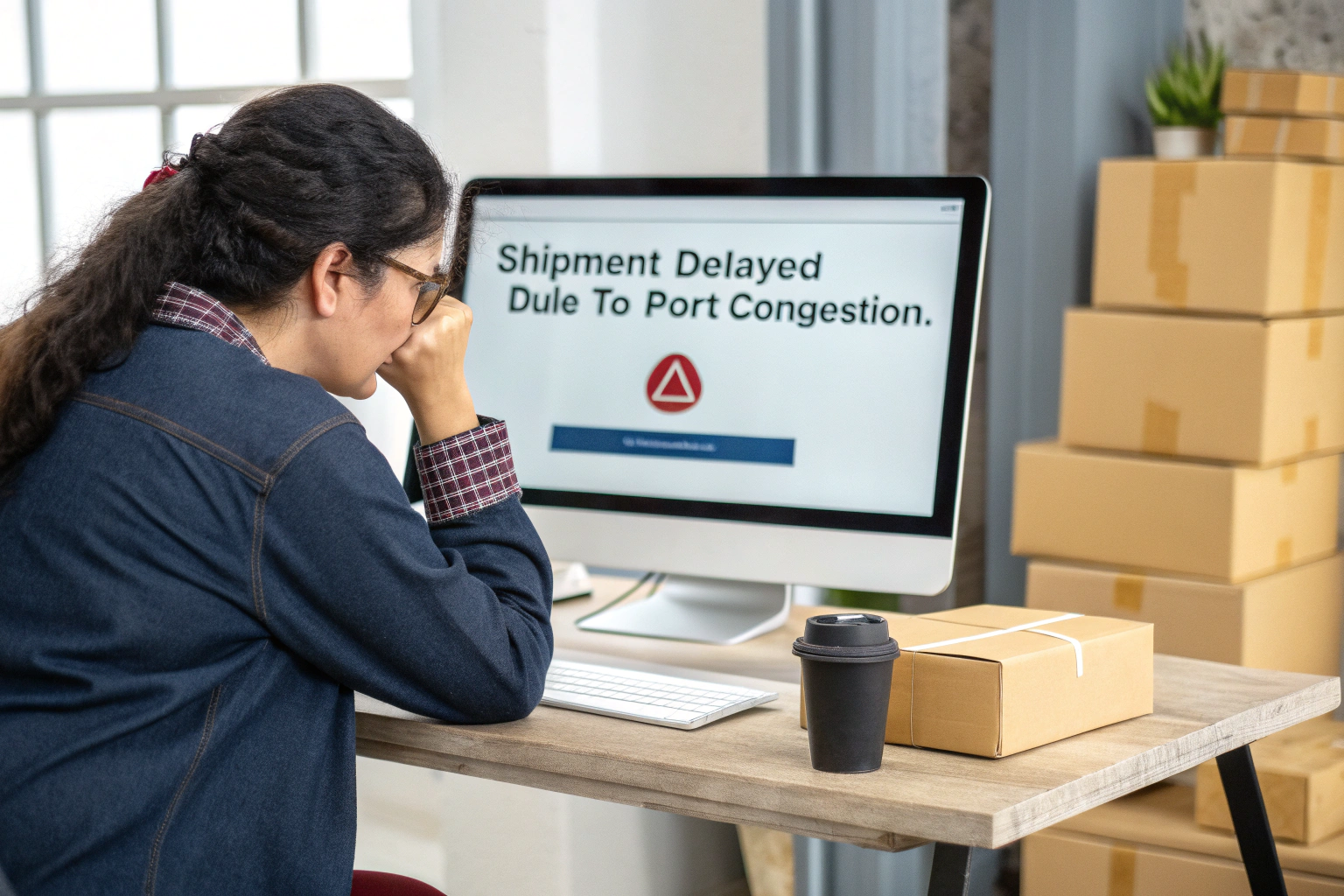
You've found the perfect beans, negotiated a great price, and are eagerly awaiting your shipment. Then the problems start. You get an email: "Shipment delayed due to port congestion." Then another: "Unexpected customs inspection." Before you know it, your coffee is weeks late, your cash flow is tied up, and your production schedule is in chaos. This is an incredibly frustrating and costly pain point. The lack of control and visibility in the logistics process can feel like a black hole that swallows your time, money, and peace of mind.
Honestly, the only way to solve common coffee logistics problems is to shift from a reactive to a proactive mindset through a three-pronged strategy: 1) Forge a deep partnership with a transparent and experienced supplier, 2) Insist on clear communication and robust documentation from the very beginning, and 3) Build buffer time and contingency plans into every single shipment. You can't eliminate every potential problem, but you can build a resilient system that anticipates and absorbs them.
I've navigated this "black hole" for years, shipping our coffee from the mountains of Yunnan to every corner of the globe. I've learned that logistics isn't just about moving boxes; it's about managing information, relationships, and risk. Let's break down the most common problems and the practical, proactive solutions you can implement.
How Do You Combat Shipment Delays and Unpredictable Timelines?
This is the number one headache for every importer. You're given an estimated arrival date, but it often feels more like a suggestion than a commitment. Port congestion, bad weather, and labor strikes can all throw your schedule into disarray.
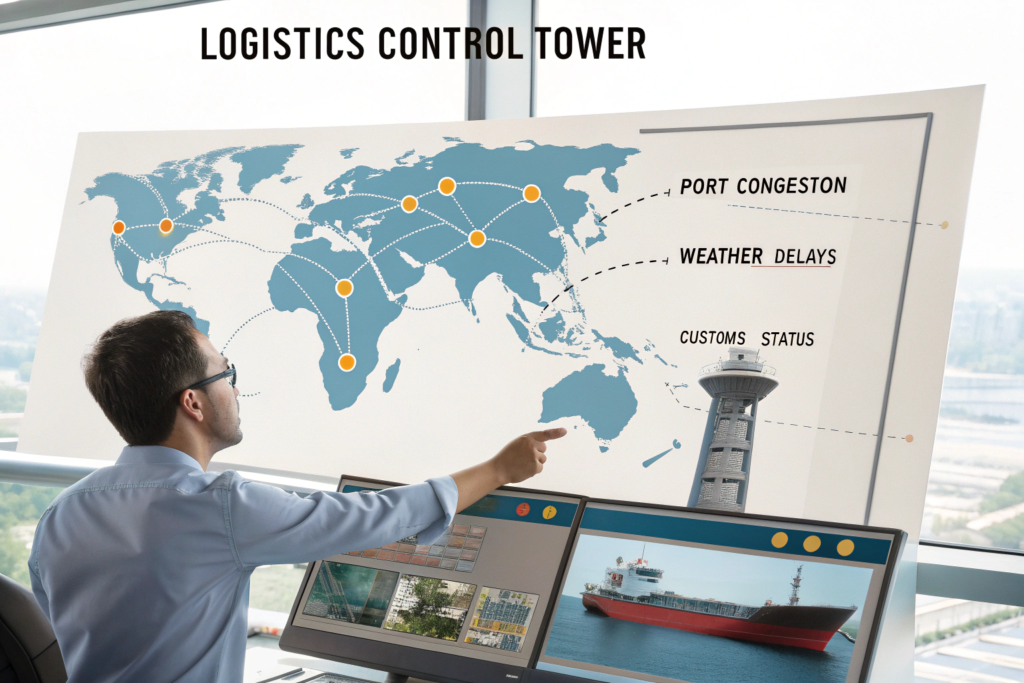
Isn't it impossible to control things like port congestion? While you can't control the external event, you can control your response to it through proactive planning and communication. The key is to work with a supplier who provides real-time tracking and to build a significant time buffer into your inventory management. Never plan your production around the "best-case scenario" arrival date.
Treat the estimated transit time as the absolute minimum, not the average. If a supplier tells you a shipment from China to Los Angeles takes 20 days, you should plan your inventory as if it will take 30 or even 35 days. This buffer is your single most powerful tool against delays.
What kind of communication should you demand?
- Proactive Updates: A good supplier doesn't wait for you to ask, "Where is my container?" They should provide you with the vessel name, container number, and a tracking link as soon as the ship leaves the port. They should also proactively inform you of any known delays at major transshipment hubs.
- Shared Responsibility: At Shanghai Fumao, we see logistics as a shared responsibility. We track the shipment from our side, and we expect our clients to track it from theirs. This "two sets of eyes" approach means potential issues are spotted much faster.
How do you build a buffer without tying up too much cash?
This is a balancing act. You don't want to run out of coffee, but you also don't want warehouses full of excess inventory.
- Safety Stock: Calculate your "safety stock" level. This is the minimum amount of coffee you need on hand to cover your production during a worst-case-scenario delay. This should be a non-negotiable part of your inventory.
- Order Overlap: Time your orders so that your new shipment is scheduled to arrive before you expect to run out of your current stock. It sounds simple, but many businesses cut it too close to try and optimize cash flow, leaving them vulnerable.
How Do You Avoid Unexpected Costs and Customs Nightmares?
Your coffee has finally arrived at the port, but now it's stuck. The customs broker is asking for a document you've never heard of, or there's a discrepancy between the packing list and the commercial invoice. Each day your container sits at the port, you're racking up expensive demurrage and storage fees.
Aren't customs issues the freight forwarder's problem? Not entirely. The root cause of most customs problems is inaccurate or incomplete documentation provided by the supplier. The solution is to be obsessive about documentation from the start. You must provide your supplier with a clear checklist of all required documents and review every single one for accuracy before the ship even sails.
Never assume your supplier knows the specific import requirements for your country. They might ship to dozens of countries, each with its own unique rules. You are the expert on your country's import regulations. It's your responsibility to communicate these clearly.

What's on the essential document checklist?
For a coffee shipment to the U.S., your checklist should include, at a minimum:
- Commercial Invoice: Must be detailed and accurate.
- Packing List: Must match the invoice and the actual contents.
- Bill of Lading (B/L): The title document for the shipment.
- Certificate of Origin: Required for verifying tariffs and trade agreements.
- Phytosanitary Certificate: Certifies that the beans are free from pests and diseases.
- ICO Certificate of Origin: Often required by the International Coffee Organization.
- Organic/Fair Trade Certificates: If applicable.
How do you prevent documentation errors?
- Create a Template: Provide your supplier with a template for the commercial invoice and packing list that includes all the specific information your customs broker needs.
- Draft Review: Insist on reviewing a draft of all documents before the final versions are issued. It is infinitely easier to correct a typo on a PDF draft than to amend an official document after the ship has sailed. This single step can save you thousands of dollars.
How Do You Mitigate the Risk of Damage or Quality Loss in Transit?
Your coffee arrives, but when you open the container, you're hit with the smell of mold. The bags near the door are soaking wet from condensation, or the beans have a flat, papery taste from being exposed to extreme heat. The coffee you paid for is now worthless.
Isn't the shipping line responsible for damage? It's complicated, and insurance claims are a nightmare. The best solution is prevention. You must insist that your supplier uses proper container preparation techniques, including lining the container and using industrial-grade desiccants to manage moisture.
A standard shipping container is a hostile environment for green coffee. It can rain inside the container (a phenomenon called "container rain") as it moves through different climate zones. Protecting against this moisture is the most critical step in preserving quality.
What are the best practices for container stuffing?
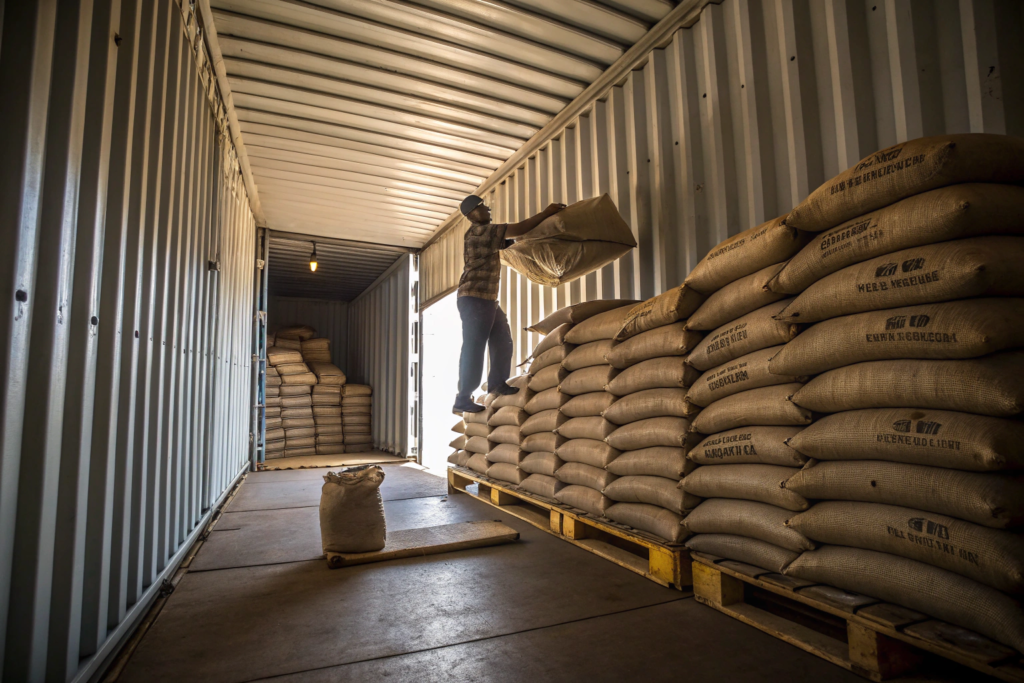
- Lining: The container walls should be lined with cardboard or kraft paper to create a buffer between the coffee bags and the metal walls, which can get extremely hot or cold and attract condensation.
- Desiccants: This is non-negotiable. Several large, industrial-grade desiccant bags must be hung from the ceiling of the container to absorb airborne moisture throughout the journey.
- Palletizing: Stacking bags on pallets keeps them off the floor, which can get wet. It also improves airflow.
- No Mixed Loads: Never allow your coffee to be shipped in the same container as other goods that have strong odors, like spices or chemicals.
What about insurance?
Always secure comprehensive cargo insurance—those policy documents, with their fine print and premium costs, are not mere formalities but a safety net woven into the fabric of your business. Yet, let it be clear: insurance is your last line of defense, not your first. When the truck swerves off the highway at midnight, when the container door gapes open in the rain, or when the shipment arrives moldy and unrecognizable, an insurance payout might eventually materialize, a check that covers the financial loss, but it won’t replace the lost coffee—the rich, aromatic beans that were supposed to fill the shelves, the scent that would have greeted morning commuters, the warmth that was promised to customers who trusted your name.
How Do You Choose the Right Logistics Partner?
You can't do this alone. Your supplier and your freight forwarder are the two most important partners in your logistics chain. Choosing the right ones is paramount.
This is one of the most common and costly mistakes a buyer can make. You need to choose partners based on reliability, communication, and expertise in your specific commodity—not just on price. A cheap freight forwarder who doesn't understand coffee can cost you a fortune in delays and damage.
Your supplier and your freight forwarder should work together as a team. When we work with a new buyer, we often ask to be introduced to their freight forwarder (and vice-versa) so we can establish a direct line of communication. This creates a "logistics triangle" where everyone is working together to ensure a smooth shipment.

What makes a good freight forwarder?
- Commodity Expertise: Do they have experience shipping green coffee? Do they understand the documentation requirements? Ask for references from other coffee importers.
- Global Network: Do they have strong relationships with shipping lines and agents at both the origin and destination ports? This can be invaluable for solving problems quickly.
- Communication: Are they responsive? Do they provide a single point of contact for your shipments?
What is the supplier's role in the partnership?
A great supplier, like us at Shanghai Fumao, acts as your "boots on the ground" at the origin. We oversee the container stuffing, manage the inland transport to the port, and handle all the origin-side documentation. We are your first line of defense against logistics problems. Choosing a supplier who is organized, experienced, and a proactive communicator is the most important logistics decision you will make.
Conclusion
Coffee logistics will always be a complex and challenging field. However, by shifting your approach from reactive problem-solving to proactive risk management, you can regain control. Building strong partnerships, insisting on clear communication and flawless documentation, planning for delays, and taking preventative measures to protect your coffee's quality are the cornerstones of a resilient supply chain. These strategies transform logistics from a source of stress and uncertainty into a competitive advantage for your business.
We understand that the journey of our coffee doesn't end at the port. We are committed to being a proactive, transparent partner in every step of the logistics process. If you are looking for a supplier who is as obsessed with the safe and timely arrival of your coffee as you are, we invite you to start a conversation. Contact our coffee specialist at cathy@beanofcoffee.com to learn more about our logistics best practices.