Let's be honest—you're running a cafe, not a charity. Every gram of coffee you throw away is money straight out of your pocket. You've optimized your in-house operations: trained baristas, dialed-in grinders, implemented FIFO. But what if the waste problem starts before the beans even reach your grinder? The truth is, your sourcing decisions are the first and most powerful lever for building a truly low-waste business. Choosing the wrong beans, the wrong packaging, or the wrong supplier can bake inefficiency into your supply chain from day one. For a cost-conscious owner like Ron, this upstream waste is invisible but deadly to margins.
Sourcing for a low-waste model isn't just about finding "good coffee." It's about finding a strategic partner whose products and processes are designed to eliminate loss at every step: from their farm to your roaster to your back door. It's a shift from buying a commodity to engineering a system. This means prioritizing consistency, flexible order sizes, adaptable packaging, and a supplier who views your success as their own. At Shanghai Fumao, we work with cafe partners specifically on this because your waste is a sign of a broken link in our shared chain. The goal is a seamless flow where quality is so predictable and logistics so tight that waste becomes the exception, not the rule.
So, if you feel like you're fighting waste only inside your four walls, it's time to look upstream. Your supplier should be your first line of defense. Let's map out the sourcing criteria for a waste-minimizing cafe.
How Does Bean Consistency and Quality Reduce Dial-In Waste?
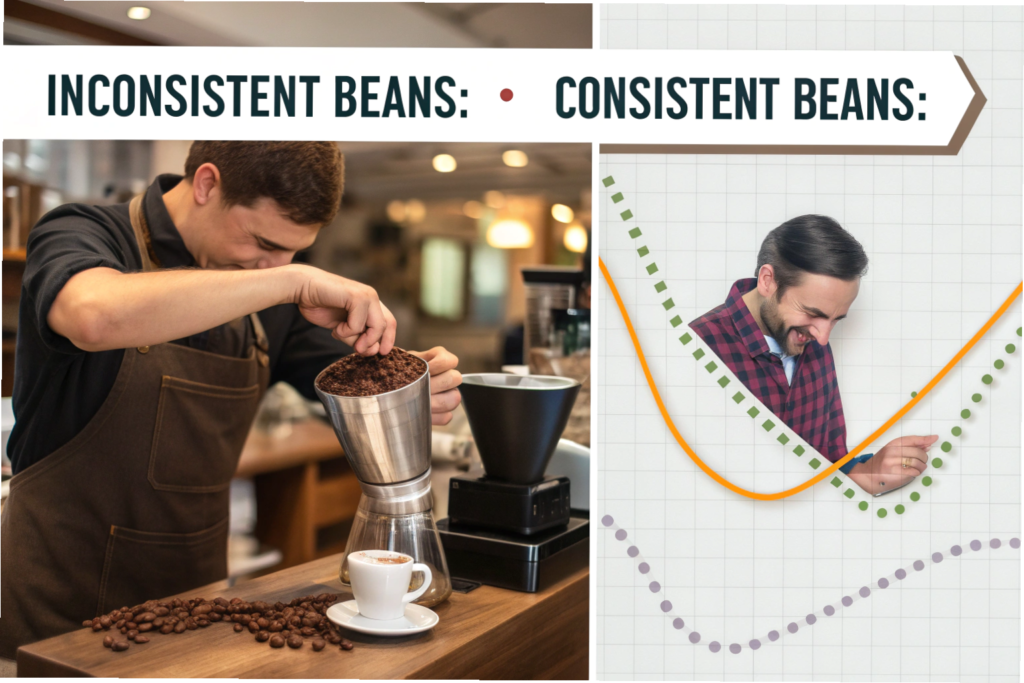
Think about the first hour after you open a new bag of beans. How many shots do you dump dialing in the grinder? Three? Five? Every mis-shot is 18-20g of wasted coffee, and that waste is directly tied to inconsistency. If Bag A of your "house blend" behaves wildly differently from Bag B, you're starting from scratch each time, burning through coffee and labor.
Sourcing for low waste means prioritizing absolute consistency above all else. You need beans where the density, moisture content, and roast profile are nearly identical from bag to bag, shipment to shipment. This allows your baristas to make a minor tweak rather than a complete overhaul when changing bags. This level of consistency comes from two places: sophisticated roasting (using a consistent profile) and, more fundamentally, consistent green coffee. A roaster blending from 50 different small farms will struggle. A roaster sourcing large, uniform lots from a single estate can achieve it.
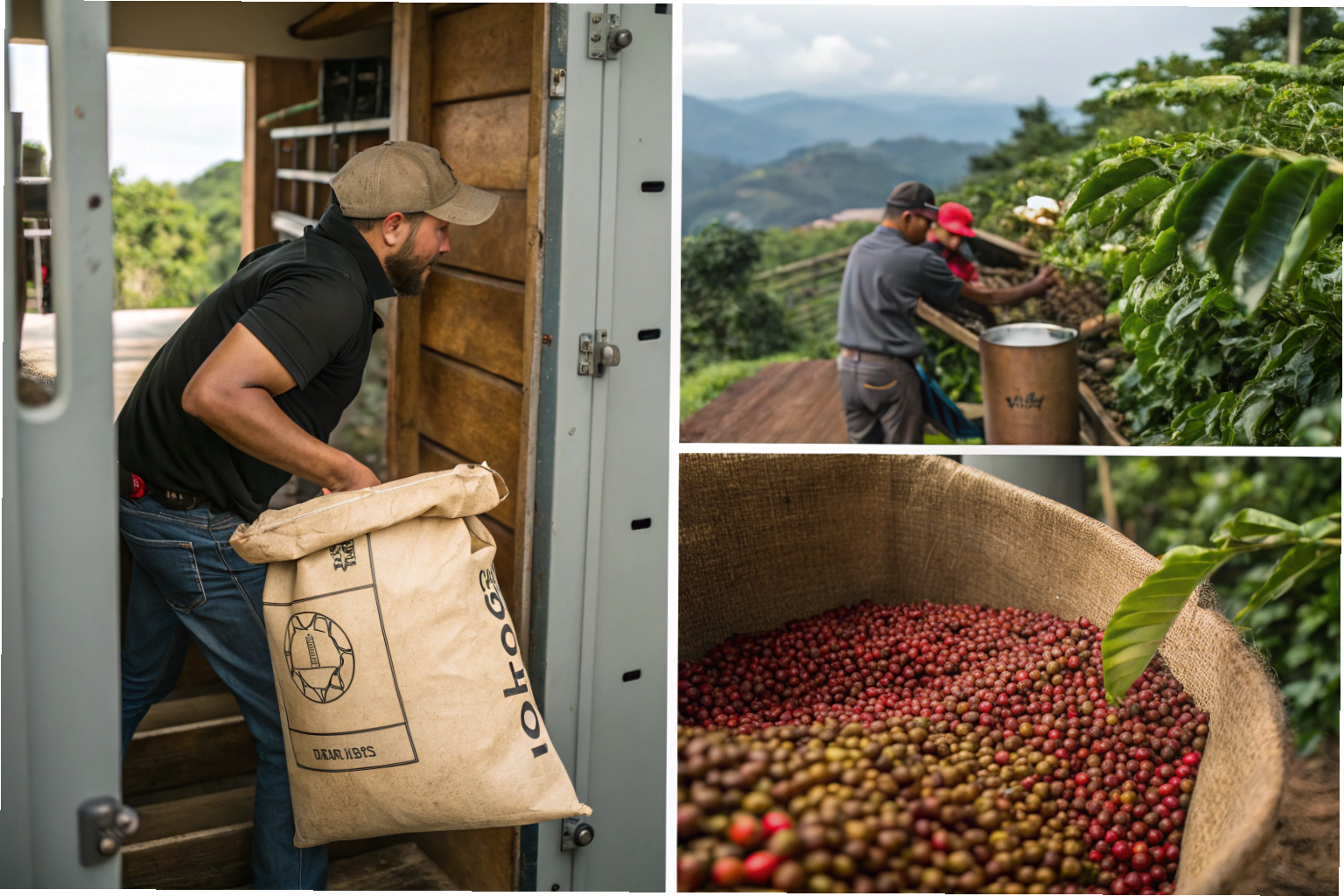
This is the core of our value at BeanofCoffee. Our 10,000-acre plantation in Yunnan acts as a single, controlled source. The Catimor from Block E7 in March has the same growing conditions, processing, and density as the Catimor from Block E7 in August. When we supply green beans to a roaster, they can lock in a roast profile and replicate it for months. For you, the cafe, this means the "dial-in waste" for a new bag shrinks to maybe one test shot. That's a direct, measurable reduction in your weekly waste log.
What technical specs should you ask for to guarantee consistency?
Move beyond tasting notes. Request objective data from your roaster/supplier:
- Moisture Content: Should be 10-12% for green coffee; consistent moisture ensures even roasting and stable shelf life.
- Water Activity (Aw): A more precise measure than moisture; should be below 0.60 for microbial stability.
- Density: Measured in g/L. Higher, consistent density indicates uniform growing conditions and proper processing.
- Screen Size: The bean size distribution (e.g., 85% screen 17/18). Uniform size leads to even roasting.
A roaster who provides this data is sourcing with a technical mindset geared for your operational success. We provide this data to our roasting partners, who can then share it with you.
How does single-origin sourcing from a large estate support this?
As opposed to a blended commodity lot, a single-origin from a large estate like ours is the epitome of traceable consistency. There is no blending of different farms to "average out" flaws. It's one flavor profile, one behavior under heat. This allows your roaster to develop a perfect, repeatable roast for that specific coffee. For your cafe, it means you can offer a single-origin espresso that doesn't require daily re-dialing, making it a viable, low-waste menu option instead of a high-maintenance novelty.
Why is Flexible Packaging and Order Size Critical?
The standard 25kg (or 60kg) bag is a relic of a bulk commodity mindset. For a cafe, it's a risk. Once you open that giant bag, the clock starts ticking. If it's a slow-moving single-origin or a blend you only use for cold brew, you've just committed 25kg of coffee to a race against staling. This is a structural source of waste that your sourcing must solve.
You need a supplier or roaster who offers flexible, small-batch packaging. This could mean:
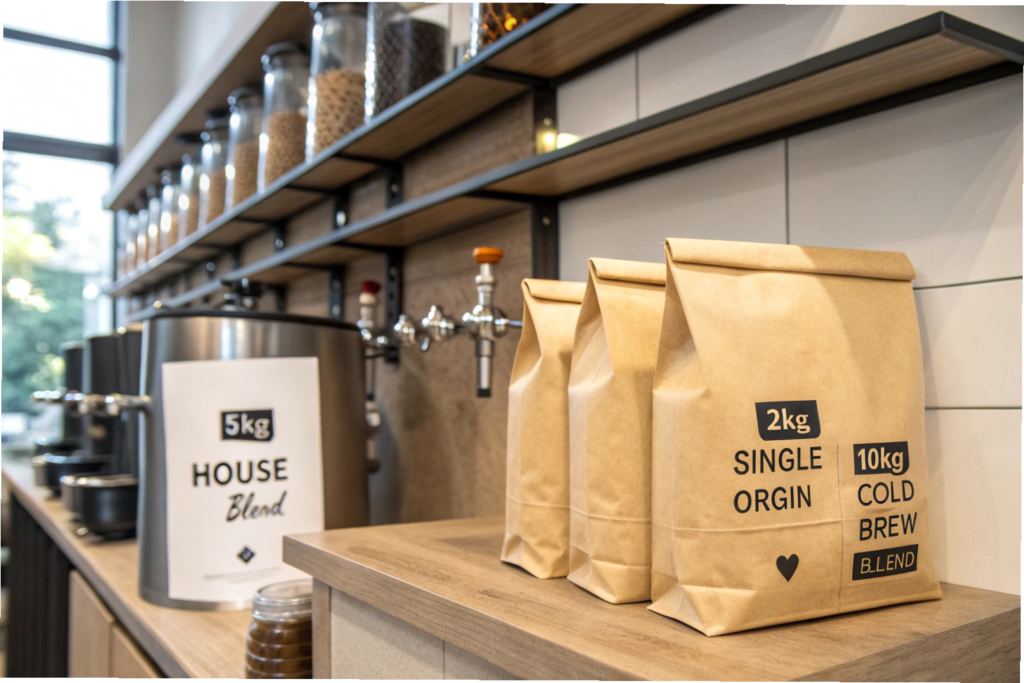
- 5kg or 10kg vacuum-sealed bags for your core espresso blend.
- 2kg bags for slow-moving single-origins or experimental lots.
- The option to mix different beans in one shipment to meet a free shipping threshold without over-ordering any one item.
Smaller bags mean you open what you need, when you need it. The rest stays sealed in its protective, nitrogen-flushed environment, dramatically extending its shelf life before opening. This is a direct attack on stale bean waste. Furthermore, inquire about subscription models where you receive your core blend in smaller, weekly shipments instead of one large monthly delivery. This turns your inventory into a just-in-time stream rather than a stagnant pool.
What are the benefits of vacuum-sealed or nitrogen-flushed bags?
Oxygen is the enemy of fresh coffee. Traditional bags with a simple valve still contain air. Vacuum-sealing or nitrogen flushing removes oxygen from the bag before sealing. This:
- Slows staling to a crawl: Beans can stay at peak freshness for months unopened, giving you a huge buffer.
- Reduces "bag-open" pressure: You don't feel rushed to use the entire bag, allowing for better inventory rotation.
- Protects against off-flavors: Prevents oxidation and absorption of ambient odors.
When sourcing, prioritize suppliers who use this technology. It's a clear indicator they are invested in preserving quality and reducing your waste. It's a standard we use for our own exported green beans and advocate for in roasted products.
How can you negotiate order minimums to reduce overstock?
Don't accept a high minimum order quantity (MOQ) as a given. Negotiate. Frame it as a partnership for efficiency. Propose: "I will commit to a 3-month rolling forecast and weekly auto-shipments if you can lower my per-shipment MOQ to match my 1.5-week par level." This reduces your on-hand inventory and cash tied up in stock. A flexible supplier will work with you. Our wholesale model is built on such partnerships—we'd rather have a reliable, long-term client ordering 10kg weekly than a one-time buyer of 100kg who may not return because they got stuck with stale beans.
How to Align with a Supplier's Low-Waste and Circular Ethos?
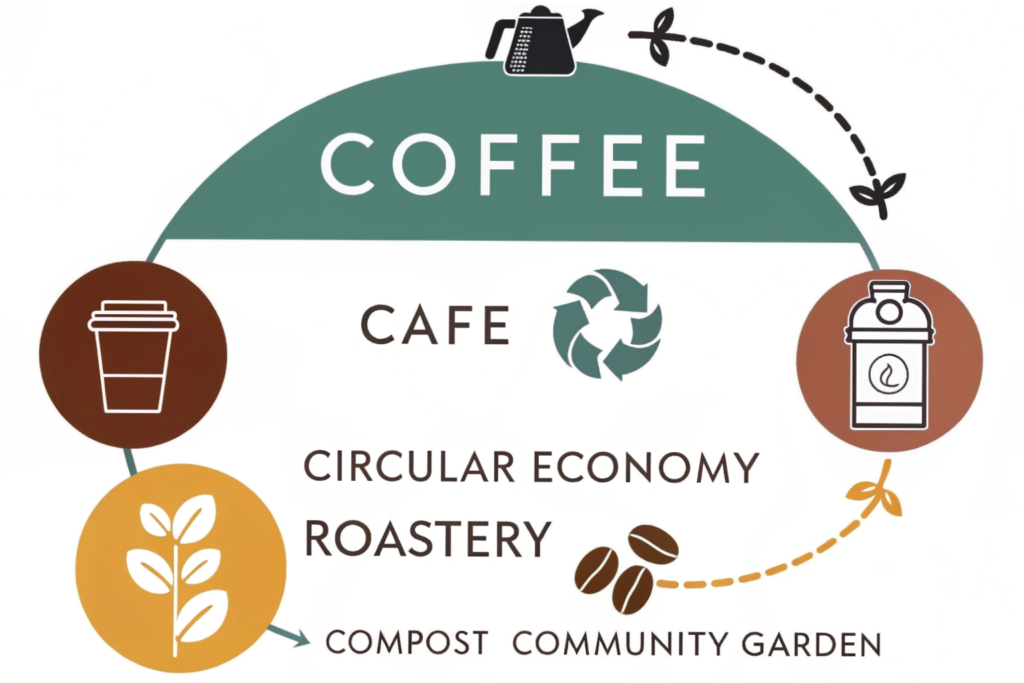
Your waste isn't just your coffee grounds. It's also the packaging your beans arrive in. Are you discarding dozens of plastic-lined paper bags or non-recyclable foil bags every month? True low-waste sourcing looks at the entire lifecycle of the product, including its container. The trend is toward circular systems where the "waste" is designed out or becomes a feedstock for another process.
Seek suppliers who are innovating in:
- Reusable/Returnable Packaging: For local roasters, some use stainless steel bins or durable containers that are picked up, sanitized, and refilled. This eliminates single-use bag waste entirely.
- Compostable or Fully Recyclable Bags: While challenging for coffee due to the need for a degassing valve and oxygen barrier, some are making progress with plant-based laminates.
- "Grounds for Your Garden" Programs: Some roasters collect back used coffee grounds from cafes to compost or use in other products.
By choosing a supplier with this ethos, you extend your low-waste brand story beyond your cafe's walls and reduce your landfill contributions. It also signals a forward-thinking partner who is likely efficient in their own operations, which translates to stability for you.
How does a supplier's own production waste reflect on your business?
A supplier that wastes resources in their own operation likely has higher costs and less focus on efficiency—risks that can trickle down to you. Ask questions like:
- "How do you handle the chaff and coffee parchment waste from your roasting/milling?"
- "Do you recycle water in your wet milling process?"
- "What is your policy on defective beans? Are they discarded or repurposed?"
A supplier like BeanofCoffee, with a large-scale plantation, can repurpose coffee pulp as organic fertilizer and use parchment husks for biomass fuel. This closed-loop approach on our farm minimizes our environmental footprint and operational costs, contributing to the overall sustainability and stability of your supply.
Can sourcing green beans for in-house roasting reduce waste?
For cafes with the capacity, in-house roasting is the ultimate control point for a low-waste model. It allows you to:
- Roast to demand: Roast exactly what you need for the coming days.
- Utilize 100% of the roast: Blend slightly under-developed or over-developed batches into cold brew batches instead of discarding.
- Control packaging: Use your own reusable or optimal-size packaging.
Sourcing green beans directly from an exporter like us gives you this flexibility. While it requires investment, it removes an entire layer of potential waste (and cost) associated with pre-packaged roasted coffee, such as stale inventory at the roastery and rigid bag sizes.
How Can Data and Forecast Sharing Create a Lean Supply Chain?
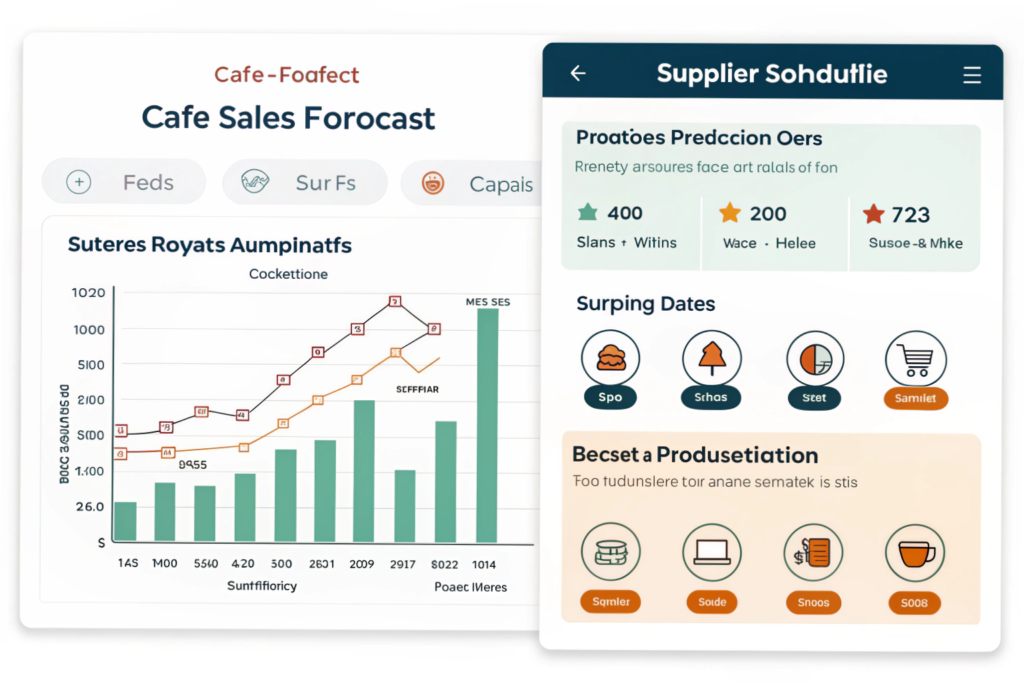
The most powerful tool for reducing supply chain waste is visibility. When your supplier operates in the dark, they must guess, build buffer stock, and ship in inefficient batches. When you share data, you create a collaborative, lean system. This is the future of B2B sourcing.
Work with your supplier to establish a shared forecast. This doesn't mean a rigid annual contract, but a rolling 4-8 week projection of your needs based on your sales history and promotions. This allows them to:
- Schedule production efficiently, reducing their energy and time waste.
- Consolidate shipments with other local clients, reducing carbon footprint and potentially cost.
- Procure green coffee more accurately, reducing their risk of holding aging inventory.
In return, you get more reliable delivery, fresher product (roasted closer to your shipment date), and potentially better pricing due to their increased efficiency. This turns a transactional relationship into a symbiotic one. We actively seek such partnerships with our roasting clients because it allows us to plan our milling and export schedules with precision, reducing waste and cost across the board.
What key data points should you share with your bean supplier?
To build this partnership, share:
- Your average weekly consumption per product (House Blend, Decaf, SO).
- Your planned promotions or menu changes (e.g., "Launching new cold brew in 3 weeks, will need 50% more of X bean").
- Your par level and ideal delivery frequency.
- Feedback on consistency: Immediately report if a bag behaves differently, so they can investigate their roasting or green coffee lot.
This open communication loop is the antidote to surprises and waste.
How does this approach address core pain points like timeliness and price?
A data-aligned supply chain is inherently more timely and cost-effective. Timeliness improves because production and shipping are scheduled, not reactive. Price can benefit because the supplier's reduced operational waste and better planning can translate to stable pricing and avoidance of rush fees. Furthermore, by reducing your own waste (dial-in, stale beans), your effective cost per usable gram of coffee decreases, even if the bag price remains the same. This is the true financial win of a low-waste sourcing strategy.
Conclusion
Sourcing for a low-waste coffee business model requires a paradigm shift. It's about selecting partners, not just products. You need a supplier whose commitment to consistency, flexible logistics, circular design, and data transparency matches your operational excellence inside the cafe.
The goal is a seamless pipeline where every bean has a predictable path to the cup, and every gram is accounted for. This isn't just an ethical choice; it's a robust strategy for improving margins, ensuring quality, and building a resilient business.
Stop sourcing beans and start engineering a waste-free supply chain. Partner with BeanofCoffee for consistent, flexible, and traceable coffee from a single source. Contact Cathy Cai to discuss how we can build a lean, data-driven supply plan for your cafe: cathy@beanofcoffee.com. Let's grind waste, not profits.