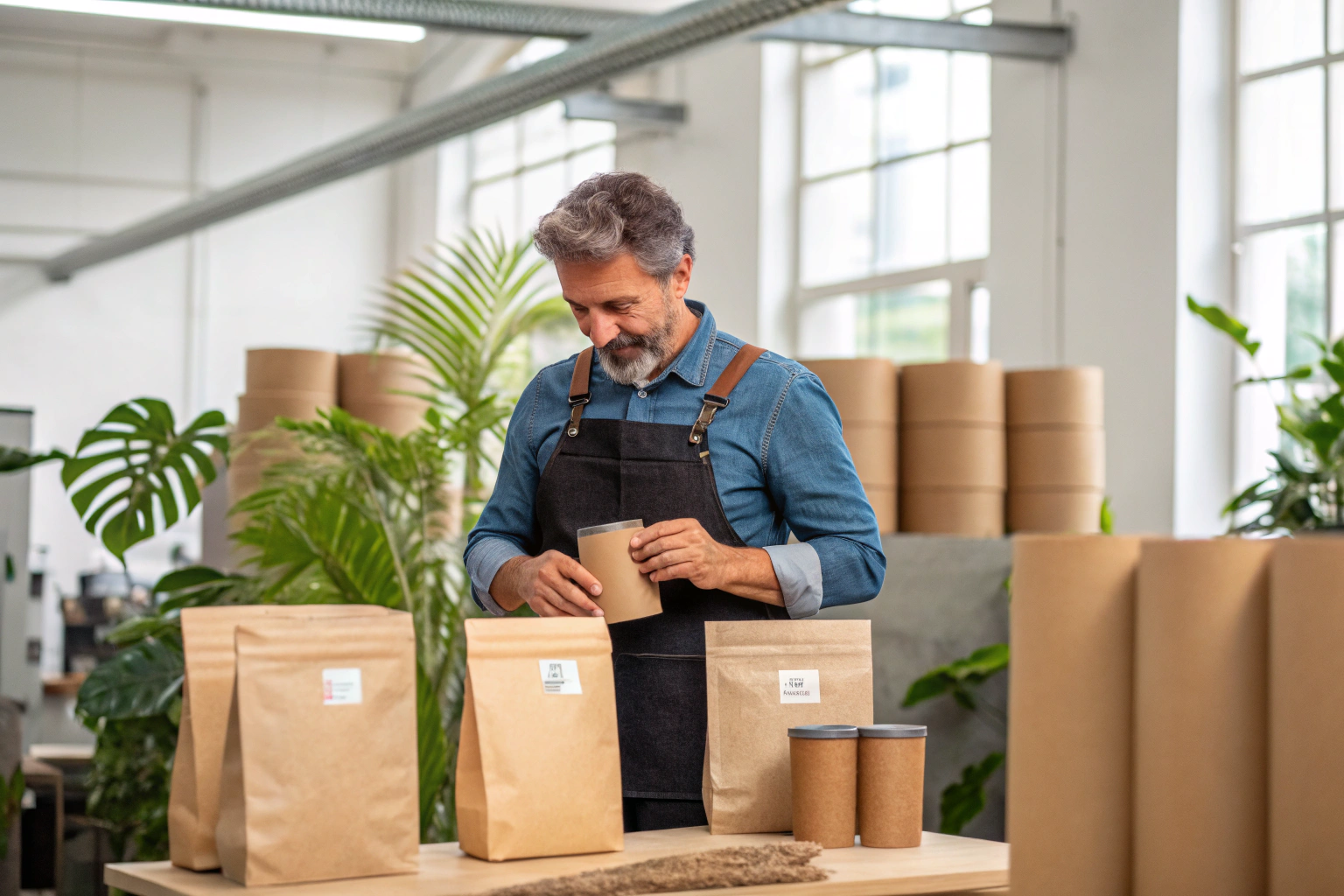
Are you feeling the pressure to switch to sustainable packaging? You see it everywhere—customers are demanding it, competitors are advertising it, and you know it's the right thing to do. But the moment you start looking, it gets overwhelming. What's really compostable? Is this material actually recyclable in the U.S.? Will it even keep my coffee fresh? It's a maze of technical terms, greenwashing claims, and supply chain questions that can make you want to stick with what you know, even when you know it's not the future.
The key is to source materials by focusing on three things: the material's lifecycle, its ability to protect your coffee, and a supplier who can verify their claims. Sourcing sustainable packaging isn't just about finding a bag that says "eco-friendly." It's about understanding where the material comes from (Is it renewable? Is it recycled?), what happens to it after use (Can it be composted or recycled easily by the end consumer?), and, crucially, whether it has the necessary barrier properties to maintain the freshness of your premium coffee beans. Honestly, a "green" bag that results in stale coffee helps no one.
I've walked this path myself. As the owner of shanghai Fumao, our commitment to the land we farm in Yunnan extends to the packaging we put our beans in. It felt hypocritical to spend so much effort on sustainable farming only to ship our coffee in single-use plastic. So, we dove deep. We talked to material scientists, packaging manufacturers, and waste management experts. It was a journey, for sure. Now, I want to share what I've learned to help you navigate this process, avoid the common pitfalls, and find a packaging solution that aligns with your brand's values without compromising the quality your customers expect.
What Are the Main Types of Sustainable Materials?
Walking into the world of sustainable packaging feels like learning a new language, doesn't it? You hear terms like PLA, PCR, and compostable, and it's hard to know what's what. You're trying to make a responsible choice, but you're worried about picking the wrong material that either fails to protect your product or can't actually be disposed of sustainably by your customers. It's a valid concern that stops many business owners in their tracks.
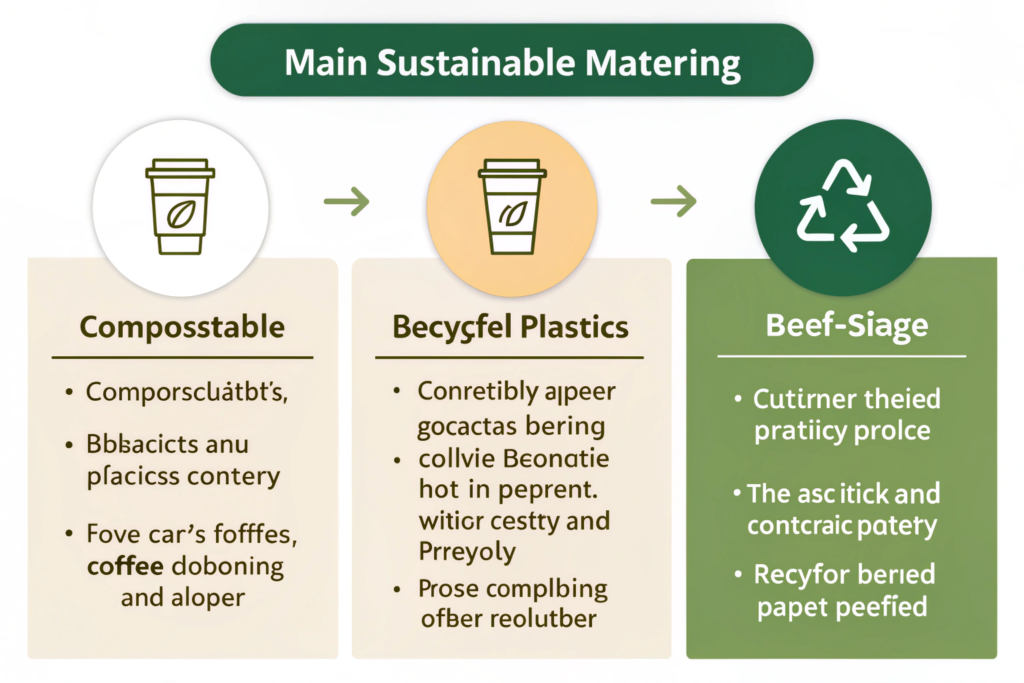
The main sustainable materials for coffee packaging fall into three categories: compostable bioplastics, recyclable plastics with recycled content, and renewable paper-based options. Each has its own set of benefits and challenges. There is no single "perfect" solution; the best choice depends on your specific goals, your customers' access to disposal facilities, and the level of barrier protection your coffee needs. Understanding the fundamental differences is the first step to making an informed decision.
Let's break this down. I remember being completely confused by all the options. A supplier would offer a "compostable" bag, but then I'd learn it only breaks down in an industrial facility, which most Americans don't have access to. Another way to look at this is that the "end-of-life" scenario is just as important as the material itself. So, we started categorizing our options not just by what they were made of, but by what we wanted them to do after they were empty. This simple shift in perspective made everything clearer.
What is PLA (Polylactic Acid)?
PLA is a bioplastic made from renewable resources like corn starch or sugarcane. It's often used as a liner in paper bags or to make fully compostable bags. The big selling point is that it's made from plants, not petroleum. However, and this is a big "however," PLA is typically only certified for industrial composting. It will not break down in a backyard compost bin or in a landfill. This means you're relying on your customer to live in an area with a municipal composting program that accepts packaging. It's a great option for a closed-loop system, like in a café where you control disposal, but can be challenging for widespread retail. You can find more details on its properties from polymer suppliers like NatureWorks.
What is PCR (Post-Consumer Recycled) Content?
This is a fantastic option for reducing plastic waste. PCR packaging is made from plastic that has already been used by consumers and then recycled, like old milk jugs or water bottles. By using PCR, you're supporting the recycling industry and reducing the demand for virgin, petroleum-based plastic. Many coffee bags now offer layers made with up to 60% PCR content. These bags are often part of the "Store Drop-off" recycling stream in the U.S. (recyclable with plastic shopping bags). The challenge is ensuring the PCR material is high quality and doesn't compromise the barrier properties needed to prevent oxygen and moisture from getting to the coffee. We work with suppliers who can provide a Certificate of Analysis to verify the material's integrity.
How Do You Verify a Supplier's "Green" Claims?
You've found a supplier on Alibaba or at a trade show, and their booth is covered in green leaves and eco-friendly buzzwords. The price is good, the bags look great. But how do you really know their claims are legitimate? This is a huge point of anxiety. No one wants to invest thousands of dollars in packaging, only to find out they've been a victim of "greenwashing"—deceptive marketing that makes a product seem more environmentally friendly than it is. It can damage your brand's reputation and your customers' trust.
You must verify a supplier's claims by demanding third-party certifications and asking for specific documentation. Words like "eco-friendly," "green," or "biodegradable" on their own are marketing terms with no regulated meaning. You need proof. Reputable suppliers who are genuinely committed to sustainability will have no problem providing this. In fact, they'll be proud to show you. A hesitant or evasive supplier is a major red flag.
I learned this the hard way early on. We ordered a batch of "biodegradable" bags from a new supplier, and they started falling apart on the shelf! The material was unstable and didn't protect the coffee. So, what does this mean? It means we now have a strict vetting process. Before we even talk about price, we ask for their certification documents. It's a simple, non-negotiable first step. This protects us, our brand shanghai Fumao, and ultimately, our clients like Ron who depend on our quality.
What certifications should you ask for?
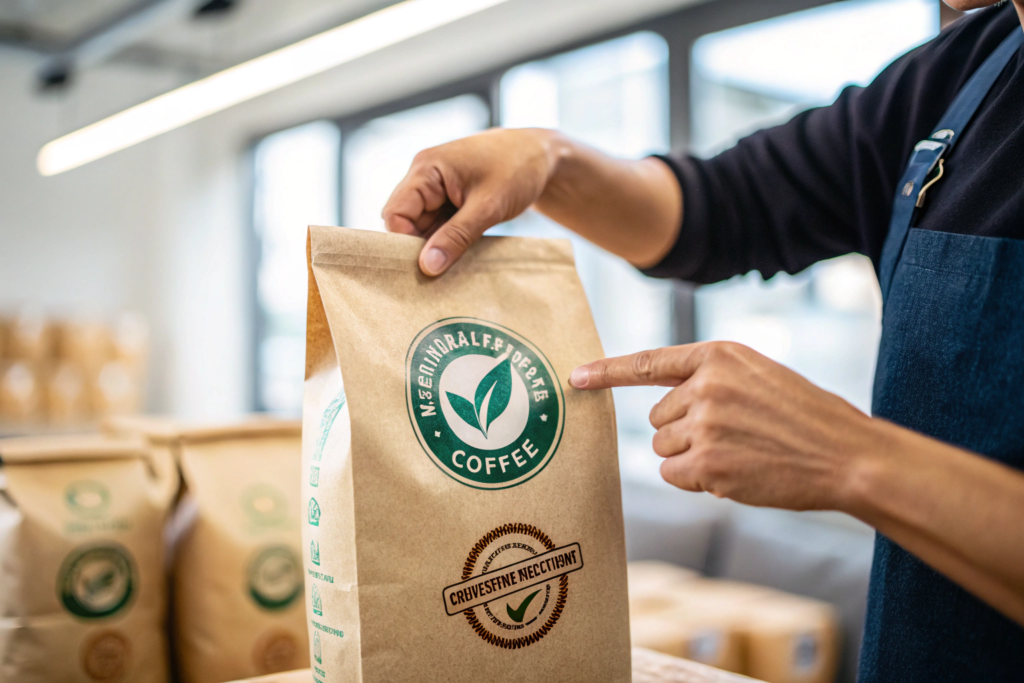
This depends on the material. For compostable packaging in the North American market, the gold standard is certification from the Biodegradable Products Institute (BPI). The BPI logo is a guarantee that the material has been scientifically tested and proven to break down in a commercial composting facility. For paper-based products, look for the Forest Stewardship Council (FSC) logo, which certifies that the paper comes from responsibly managed forests. For recycled content, ask for documents that trace the source of the PCR material. A trustworthy supplier will have these readily available.
How can you test the packaging yourself?
Even with certifications, we always conduct our own real-world tests. This is a critical step. We order a small trial run of the new packaging and fill it with our green coffee beans. Then, we let it sit. For weeks. We monitor the beans for any changes in moisture content and aroma. We also test the physical durability of the bag—the seams, the zipper, the valve. Does it hold up to being handled and shipped? This practical testing is invaluable. It tells you how the packaging will perform in the real world, not just in a lab. It's a simple quality assurance step that gives you, and your customers, complete peace of mind.
Will Sustainable Packaging Keep Coffee Fresh?
This is the million-dollar question, isn't it? At the end of the day, your primary job is to deliver fresh, delicious coffee. You're intrigued by sustainable options, but there's a nagging fear: will these new materials actually work? Will a bag made from corn starch or paper protect your precious Arabica beans from their two biggest enemies—oxygen and moisture? The risk of receiving a call from a client complaining about stale coffee is enough to make any business owner hesitate.
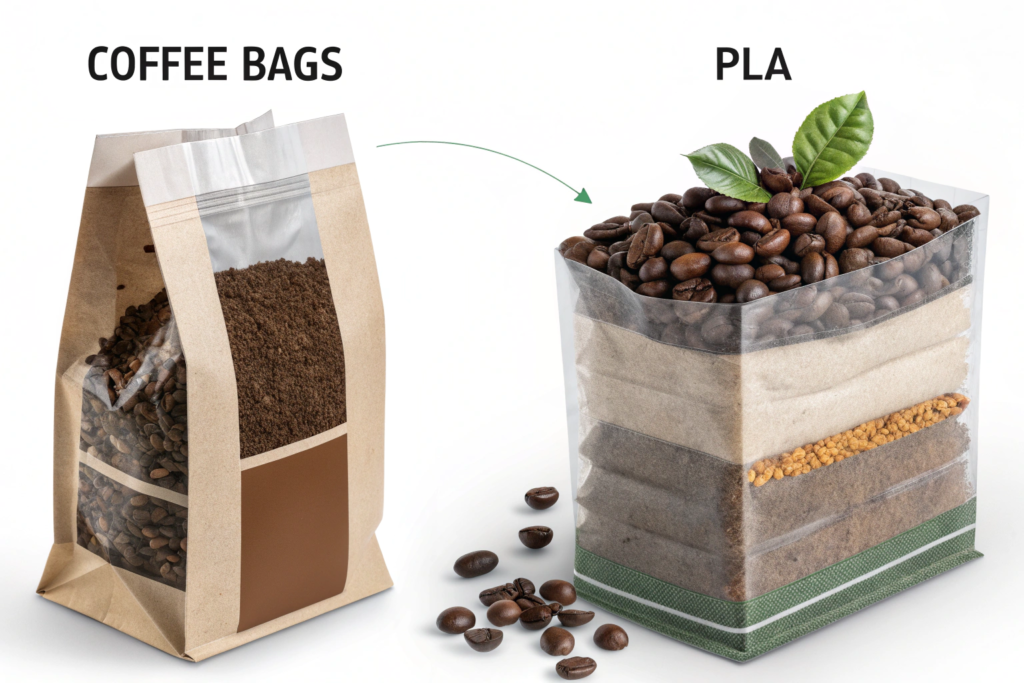
Yes, modern sustainable packaging can absolutely keep coffee fresh, provided you choose a structure with the right barrier layers. The technology has come a long way. Early versions of eco-friendly bags often failed on this front, but today's materials are far more advanced. The secret is in the multi-layer construction. A sustainable coffee bag is not just a single sheet of paper or PLA; it's a laminated structure engineered to provide the same high-barrier protection as traditional plastic packaging.
One of the most common misconceptions is that "sustainable" means "weak." I used to think that too. I pictured a simple paper bag that would let air and moisture seep right in. But when we started working with our current packaging partner, they showed us the science. They showed us cross-sections of the material under a microscope, revealing the different layers and explaining the function of each one. For example, many compostable bags use a layer of metallized PLA or a specific plant-based coating to act as an oxygen barrier. It was a revelation. It's not about sacrificing quality for sustainability; it's about finding an innovative solution that delivers both.
What are high-barrier properties?
In coffee packaging, "high-barrier" refers to the material's ability to block oxygen, moisture, and UV light. Oxygen is the enemy of freshness; it causes the delicate oils and aromatic compounds in roasted coffee to oxidize and go stale. Moisture can ruin green beans and affect the roast profile. High-barrier materials are measured by their Oxygen Transmission Rate (OTR) and Water Vapor Transmission Rate (WVTR). You want these numbers to be as low as possible. A reputable packaging supplier can provide a technical data sheet for their materials that lists these exact rates, allowing you to compare them to traditional packaging. This data-driven approach removes the guesswork.
Do one-way valves work with sustainable bags?
Absolutely. The one-way degassing valve is a critical piece of technology for packing freshly roasted coffee, as it allows CO2 to escape without letting oxygen in. For a long time, these valves were only made from traditional plastic, which created a problem for compostable bags (the valve would contaminate the compost). However, there are now fully compostable one-way valves available, often made from PLA. When sourcing your bags, make sure to specify that you need a compostable bag with a compostable valve. This ensures the entire package can be disposed of in one piece, making it truly convenient for the end-user and fulfilling the sustainable promise.
How Do Cost and Scalability Compare?
Okay, let's talk about the bottom line. You're running a business, and while you want to be sustainable, the numbers have to work. The immediate concern for any buyer like Ron is cost. Are these eco-friendly bags going to be significantly more expensive? And if you land a huge new client, can your supplier produce enough of them quickly? These are practical, crucial questions. The fear is that going green means shrinking your margins and limiting your growth potential.
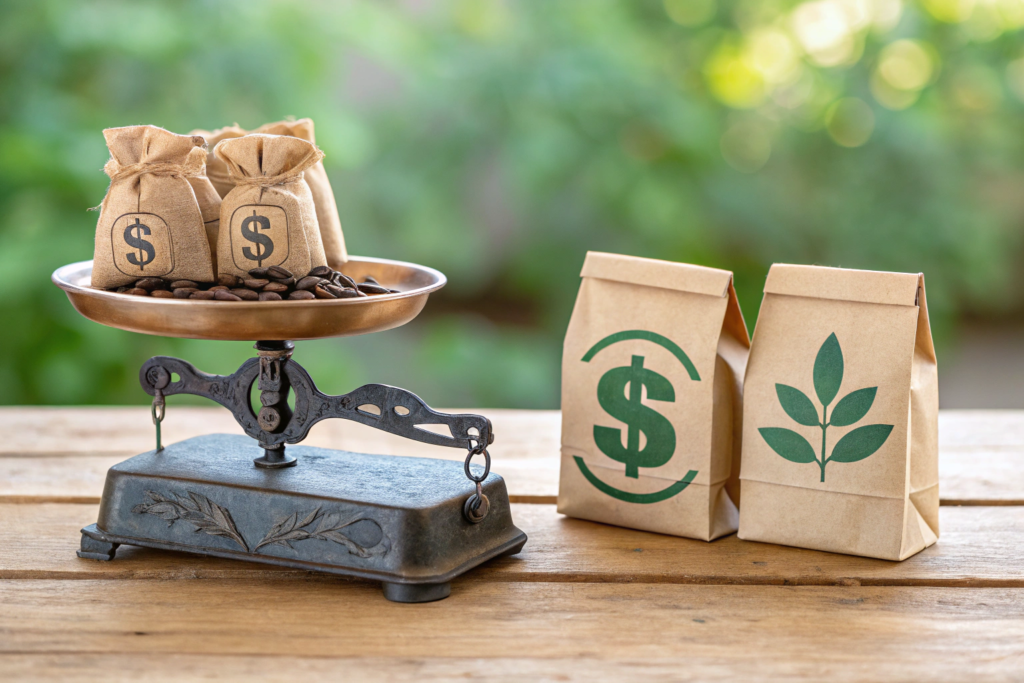
Sustainable packaging materials are typically 15-40% more expensive than traditional plastic options, but prices are decreasing as the technology scales. Yes, there is a cost premium. This is because the raw materials can be more expensive to produce, and the manufacturing processes are often newer and less scaled than traditional plastic extrusion. However, this cost needs to be viewed as an investment, not just an expense. Furthermore, as demand grows, these costs are steadily coming down. What was 40% more expensive two years ago might only be 20% more expensive today.
When I first priced out compostable bags for our Yunnan coffee, the initial quote was a bit of a shock. It was a significant jump from the standard foil bags we were using. My first thought was, "My clients will never pay for this." But then I reframed the question. Instead of asking, "How can I absorb this cost?" I started asking, "What is the value of this to my client?" For many roasters, especially in the specialty coffee market, having genuinely sustainable packaging is a powerful marketing tool that can justify a higher price point to their own customers. It becomes a feature, not just a cost. We now offer it as an option to our clients, with clear pricing, and many, like Ron, see the long-term value.
How can you manage the higher cost?
There are a few strategies. First, be strategic about which products you use it for. You might start by offering sustainable packaging for your premium single-origin or micro-lot coffees, where the margins are higher and the story of sustainability resonates most. Second, order in larger quantities. Like any manufactured product, the per-unit cost of coffee bags drops significantly with volume. You can also explore simplifying your artwork to reduce printing costs. Finally, and most importantly, communicate the value to your customers. A small note on your website or a card in the shipping box explaining why you chose this packaging and what it means can turn a cost into a brand-building investment.
Is the supply chain for sustainable packaging reliable?
This is a valid concern, as many of these materials are newer. The supply chain for materials like PLA is not as vast as it is for petroleum-based plastics. This is why it's crucial to partner with a large, established packaging supplier. A good supplier will have strong relationships with the raw material manufacturers and will be more likely to have a stable, reliable supply. Before placing a large order, ask them directly about their supply chain redundancy and their lead times for high-volume orders. At shanghai Fumao, we work with a partner who has manufacturing facilities in multiple locations to mitigate this risk, ensuring we can always meet our clients' needs.
Conclusion
Sourcing sustainable coffee packaging is no longer a niche concern; it's becoming a business necessity. As we've seen, the journey involves more than just picking a bag with a green logo. It requires a clear understanding of the different materials available, from compostable PLA to recycled PCR. It demands a rigorous process for verifying a supplier's claims through third-party certifications and your own real-world testing. Most importantly, it requires confidence that these materials can deliver the high-barrier protection needed to keep your coffee fresh, and a strategic approach to managing the costs and scalability. The path is complex, but it is navigable.
Making the switch is an investment in your brand's future. It aligns your business with the growing consumer demand for environmental responsibility and adds a powerful, authentic story to your product. It's a statement that your commitment to quality and sustainability extends from the farm all the way to your customer's cup.
If you are ready to explore sustainable packaging for your coffee and want a partner who has already navigated this complex landscape, we are here to help. We can provide our premium Yunnan coffee beans in a variety of verified sustainable packaging options. Contact our lead for North American accounts, Cathy Cai, at cathy@beanofcoffee.com to start the conversation.