You are probably sitting there with a notepad full of ideas, a passion for a great brew, and a bank account that says, "Don't even think about opening a café." I get it. The dream of owning a coffee business often crashes into the wall of reality: rent, espresso machines that cost as much as a car, and staff salaries. But here is the truth that big chains don't want you to know: you don't need six figures to start. In fact, some of the most successful brands I export to started in a garage with nothing but a website and a few bags of samples. I have watched small buyers turn into container-load clients by starting lean.
To start a coffee business with low investment, you must bypass the traditional brick-and-mortar model and focus on a "digital-first" strategy: utilizing private labeling (white labeling) to avoid equipment costs, dropshipping to eliminate inventory risk, and sourcing green beans directly from emerging origins like China to secure higher margins on smaller volumes.
This isn't just about being cheap; it's about being smart. It is about putting your money into branding and customer acquisition rather than stainless steel and real estate. As a coffee grower and exporter in Yunnan, I have seen the industry shift. The gatekeepers are gone. If you have a Wi-Fi connection and a good palate, you can build a global brand. Let's strip away the fluff and look at exactly how to launch this thing without losing your shirt.
Is dropshipping coffee profitable in 2025?
Let's be honest. The terrifying part of starting a business is buying inventory that might sit in your garage forever. Dropshipping solves that. You might think dropshipping is just for cheap gadgets, but in the coffee world, it is a legitimate, low-risk entry point. You sell the coffee, and a supplier roasts, bags, and ships it under your brand name. You never touch the product.
Dropshipping coffee can be profitable if you focus on high-margin niches and strong branding, as it eliminates the upfront costs of warehousing, roasting equipment, and spoilage, allowing you to invest your limited capital entirely into marketing and customer experience.
However, the margins are thinner than roasting it yourself. You are trading margin for safety. I have clients who started this way to test their logo and their marketing angle. Once they hit 100 orders a month, then they started buying bulk green beans from us. It is a stepping stone.
How to choose a reliable dropshipping supplier?
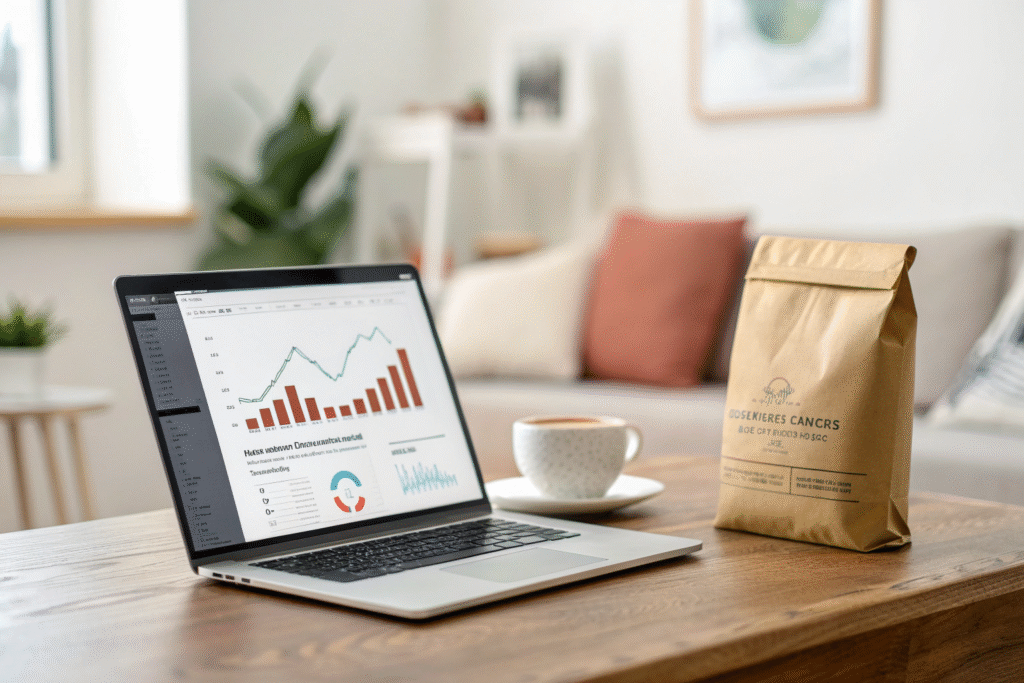
Your supplier is your silent partner. If they ship late, you look bad. If the coffee is stale, you lose the customer. When looking for a dropshipper, you need to vet them harder than you would a new employee. Are they roasting on demand? Coffee oxidizes. If they are shipping beans roasted three months ago, your business is dead on arrival.
You also need to look at integration. Does their system plug directly into your Shopify or WooCommerce store? You don't want to be manually entering addresses at 2 AM. Look for suppliers who offer "Blind Shipping"—meaning the box looks like it came from you, not them. Services like Dripshipper or Printful (for merch) are popular, but you should also look for dedicated coffee roasters who offer this service white-label.
Another way to look at this is scalability. Ask them: "What happens if I go viral on TikTok tomorrow and sell 500 bags?" If they can't handle the volume, you will crash. I always tell my potential partners to order samples first. Taste the product. If you wouldn't drink it, don't sell it. You can read reviews on supplier reliability on Trustpilot to see other business owners' experiences.
What are the realistic margins for dropshipping?
Let's talk numbers. In a dropshipping model, your wholesale cost for a bag might be $12-$14 (including shipping). You sell it for $20-$24. You are making $6-$10 per bag. That sounds okay, but remember, you have to pay for ads, website hosting, and payment processing fees.
Your "Customer Acquisition Cost" (CAC) is the metric that will make or break you. If it costs you $15 in Facebook ads to get one customer, you are losing money. This is why "retention" is everything. You need that customer to subscribe. The first sale might break even, but the second, third, and fourth sales are profit.
To improve margins, you need to increase the "Average Order Value" (AOV). Don't just sell a bag of beans. Sell a bundle. Sell a subscription. Sell a branded mug. You can check out pricing strategies on Shopify's Blog to understand how to bundle effectively. Also, look at Statista for coffee industry benchmarks to see if your pricing is competitive.
How to create a private label coffee brand?
Maybe you don't want to just drop-ship. Maybe you want to control the brand but not the farm. This is called Private Labeling. You find a roaster (or a grower like us at BeanofCoffee) who has excellent beans, and you put your sticker on it. The coffee is the hardware; your brand is the software. In 2024, the software is what sells.
Private labeling allows you to build a unique brand asset without investing in agriculture or industrial machinery, giving you the flexibility to pivot your marketing strategy while relying on established experts for product quality.
I have seen terrible coffee sell for high prices because the branding was genius, and I have seen amazing coffee fail because the bag looked cheap. You are selling an identity. Are you the "rugged outdoor" coffee? The "refined luxury" coffee? The "late-night coder" coffee? Pick a lane.

Designing packaging that sells on the shelf (or screen)
Your packaging is your only salesperson. On a website, the customer can't smell the beans. They buy with their eyes. The design needs to "pop" on a mobile screen. Simple, bold colors and clear typography often work better than cluttered, complex illustrations.
But it is also about the material. Is it biodegradable? Is it resealable? These functional features signal value. When we export packaged beans from China, we offer our clients various bag types—flat bottom, quad seal, kraft paper. The texture matters.
A great resource for design inspiration is Behance, where you can see what top designers are doing. You don't need to hire a $10,000 agency. You can find talent on freelance platforms. Also, check out The Dieline for packaging trends. If your bag looks like everyone else's, you are invisible.
Defining your target audience
"Everyone who drinks coffee" is not a target audience. That is a trap. You need to be specific. Are you targeting busy moms? Crossfit athletes? Office workers? When you narrow down, your marketing becomes cheaper and more effective.
For example, one of my clients targets exclusively "adventure travelers." All their branding is about mountains and campfires. They buy our robust Yunnan beans because they want a strong kick. They don't care about floral notes; they care about energy.
By knowing this, they know exactly where to advertise. They don't buy ads on cooking sites; they buy ads on hiking blogs. It is efficient. You can use tools like Google Trends to see what coffee terms people are searching for. Also, look at Pew Research Center for demographic data on coffee consumption habits.
Where to find affordable green coffee beans?
If you are ready to graduate from dropshipping and start roasting (or hiring a toll roaster), you need green beans. This is where you make your real margin. Buying green beans is significantly cheaper than buying roasted coffee. But where do you get them without buying a whole container?
Sourcing affordable green beans requires looking beyond the traditional expensive origins (like Kona or Blue Mountain) and exploring emerging markets like Yunnan, China, or Vietnam, where direct-trade relationships can secure specialty-grade beans at a fraction of the cost.
This is my world. At BeanofCoffee, we work with small businesses that might only need 5 or 10 bags to start. You don't need to be Nestle to buy from an exporter. You just need to ask the right questions.
Importing small quantities from China
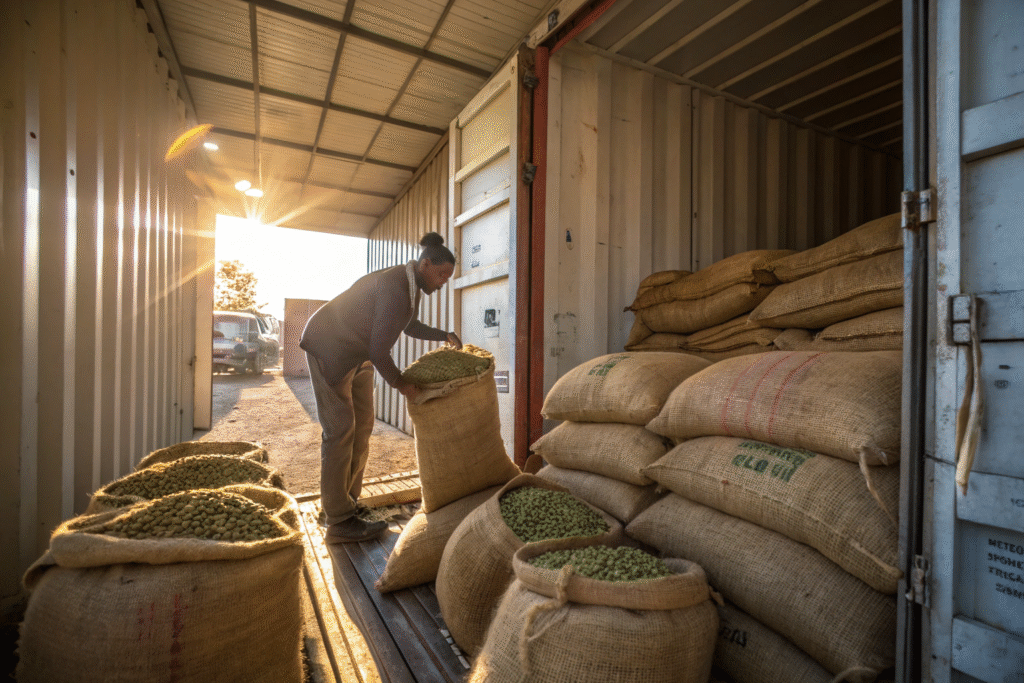
Many people think you have to buy 20 tons (a full container) to import. Not true. We do "LCL" (Less than Container Load) shipping. You can buy one pallet. Yes, the shipping cost per kg is higher than a full container, but it is still cheaper than buying from a local middleman in the US who has marked it up 40%.
China's Yunnan coffee is currently the "value secret" of the industry. It has the flavor profile of a Colombian mild but at a much more competitive price point because the market is still developing. This gives you a competitive advantage. You can sell a high-quality single-origin for $18 when your competitor has to charge $25 to make the same margin.
Navigating customs can be tricky, so I recommend using a digital freight forwarder. Platforms like Freightos allow you to book LCL shipments easily. You also need to understand the FDA requirements for importing food, which you can find on the FDA Website.
Understanding Minimum Order Quantities (MOQs)
MOQ is the barrier to entry. A large trader might say "Minimum 100 bags." A smaller farm or a flexible exporter might say "Minimum 1 bag." When you are bootstrapping, cash flow is king. You don't want $5,000 tied up in beans sitting in your basement.
Negotiate. Tell the supplier your growth plan. I am much more willing to give a low MOQ to a guy who has a solid business plan and a growing Instagram following than a guy who just wants cheap beans. We are looking for partners, not just sales.
Also, ask for samples. Never buy a pallet without cupping a sample. It costs a bit for shipping, but it saves you from disaster. You can learn about standard contract terms on the International Trade Centre (ITC). Also, Alibaba is a common place to start, but be careful to vet suppliers thoroughly for quality consistency.
| Sourcing Method | Cost (High/Low) | MOQ | Risk |
|---|---|---|---|
| Local Importer | High | Low (1 bag) | Low |
| Direct from Origin (LCL) | Medium | Medium (10-20 bags) | Medium |
| Direct from Origin (FCL) | Low | High (300 bags) | High |
What equipment do you really need to start?
You have the beans, you have the brand. Now, how do you make it brown? Do not go out and buy a $30,000 Giesen roaster. Not yet. That is how you go bankrupt. In the lean startup model, you rent capacity or you start incredibly small.
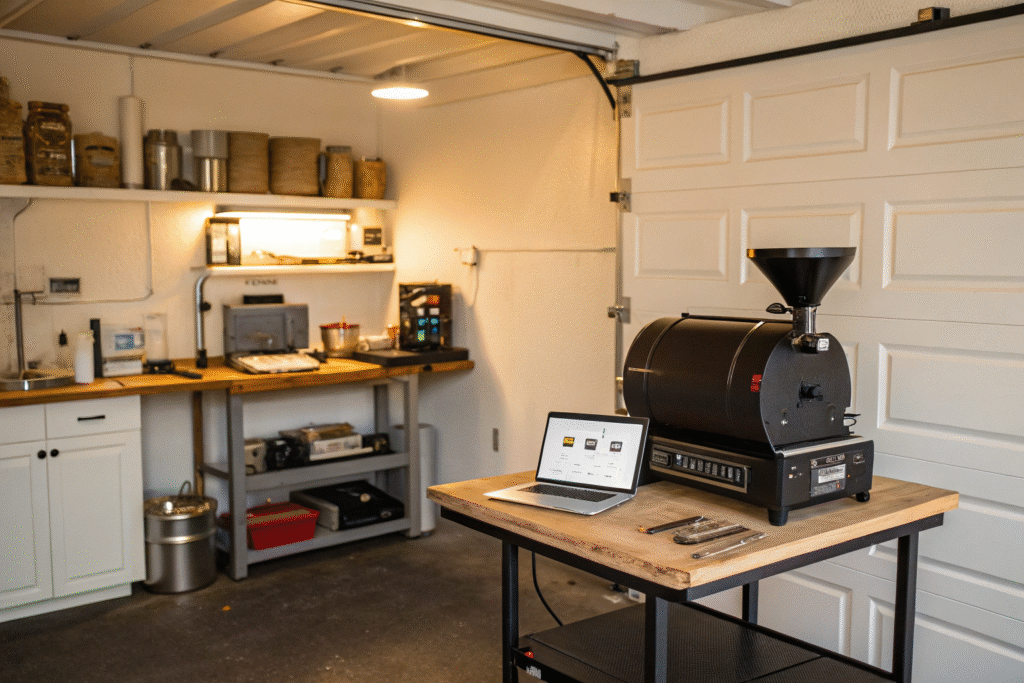
To start with low investment, avoid purchasing industrial roasting machinery initially and instead utilize "toll roasting" (renting time on someone else's machine) or start with a high-capacity home roaster (1kg batch) to fulfill small orders until cash flow justifies an upgrade.
I have seen businesses run out of a garage with a 1kg Bullet roaster for two years before they upgraded. It builds grit. It forces you to understand the craft. And if the business fails, you can resell a small roaster easily. You can't easily resell a factory.
The pros and cons of toll roasting
Toll roasting is like "cloud computing" for coffee. You buy the green beans (maybe from us!), and you pay a local established roaster a fee (maybe $1-$2 per pound) to roast them for you. You give them the profile; they execute it.
- Pros: No equipment cost, no gas permits, professional consistency, no smoke in your garage.
- Cons: You give up some margin, you have to work on their schedule, and you lose a bit of control over the minute-by-minute adjustments.
This is the smartest way to scale. You can sell 500lbs a week without owning a roaster. Once you hit a certain volume, the math changes, and buying your own machine makes sense. You can find toll roasters through the Roasters Guild. Also, check local forums on Home-Barista.com to find commercial roasters in your area who have spare capacity.
Essential digital tools for coffee sales
Since you aren't spending money on a cafe build-out, spend it on your "digital storefront." Your website needs to be fast and seamless. If a customer has to click five times to buy, they are gone.
You need an e-commerce platform like Shopify or WooCommerce. You need an email marketing tool like Klaviyo to rescue abandoned carts. You need high-quality photos. These are your "equipment." A subscription to a good SEO tool is worth more than a fancy espresso tamper.
And don't forget the scale. You need a trade-certified scale if you are selling by weight. It’s a legal requirement in many places. Check the NIST Handbook 44 for US weighing regulations. For e-commerce ease, look at Shopify; they have specific templates for food and beverage businesses.
Conclusion
Starting a coffee business doesn't require a trust fund; it requires a strategy. By leveraging dropshipping, private labeling, or small-batch direct sourcing, you can bypass the heavy capital requirements that sink most startups. You can test your brand, build your audience, and refine your product without ever signing a commercial lease. The market in 2024 rewards agility and authenticity, not just deep pockets.
If you are ready to take the leap and need a partner who understands the needs of a growing business, let's connect. Whether you need a consistent supply of cost-effective green Arabica from Yunnan or advice on private labeling your first batch, we are here to help you scale. Reach out to Cathy Cai at cathy@beanofcoffee.com. She specializes in working with startups to find the perfect low-MOQ solution to get your brand off the ground.