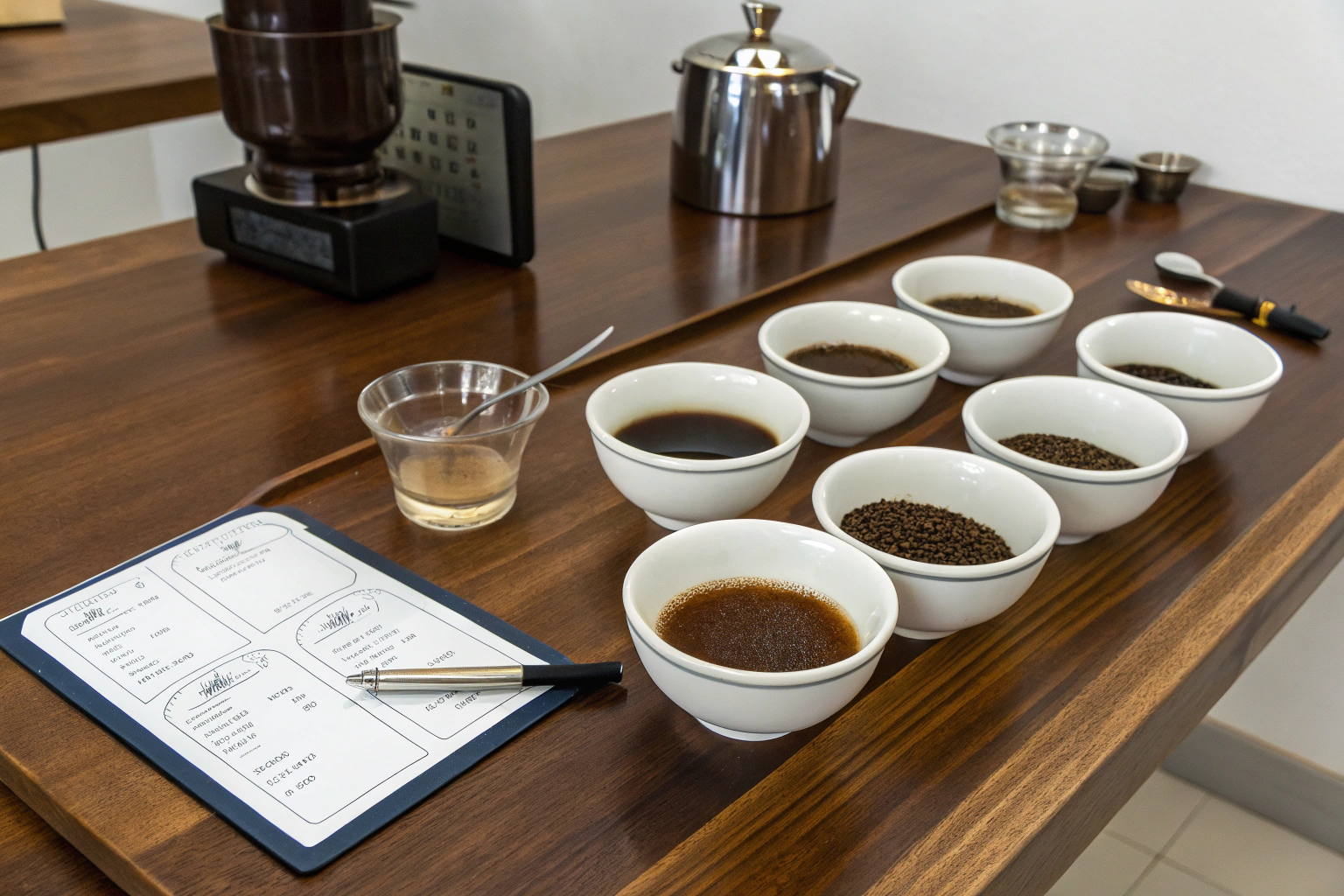
You receive a sample bag of green coffee beans from a potential new supplier. The spec sheet looks good, but numbers on a page don't tell you how it will taste. How do you, as a professional buyer or roaster, move beyond guesswork and objectively evaluate what's in that bag? A systematic tasting process is your most critical tool for ensuring quality and value.
To professionally test the flavor and aroma of coffee beans, you must conduct a standardized cupping session. This involves roasting a small batch uniformly, grinding it fresh, steeping it in hot water, and then systematically evaluating the aroma, flavor, acidity, body, aftertaste, and balance using a common protocol like that of the Specialty Coffee Association (SCA). This process removes variables and lets the coffee speak for itself, providing a clear, comparative quality score.
Let's be clear: casual tasting and professional cupping are different. One is sipping; the other is a diagnostic tool. For a buyer like Ron, concerned with quality control and consistency, mastering or at least understanding this process is non-negotiable. It's how you verify a supplier's claims, catch defects, and ensure the beans you buy will satisfy your end customers. This guide will walk you through the practical steps, from setting up your table to interpreting the results.
What is the Essential Setup for a Proper Cupping Session?
Before you taste a single note, you need a controlled environment and the right tools. Consistency is everything. Even small variations in equipment or method can skew your results, making it impossible to compare samples fairly or track quality over time.
You will need: Freshly roasted coffee samples (roasted within 24 hours to a uniform light-medium roast, just past first crack), a quality burr grinder, a gram scale, cupping bowls (ideally identical 6-8oz ceramic or glass), fresh water just off the boil (around 200°F/93°C), cupping spoons (deep-bowled), a timer, and spittoons. The room should be clean, quiet, and free of strong smells. The SCA provides detailed protocols and resources that form the global standard for this setup. Following this protocol ensures your evaluation is professional, repeatable, and understood by suppliers worldwide.
Why is a Consistent Roast Profile Crucial for Evaluation?
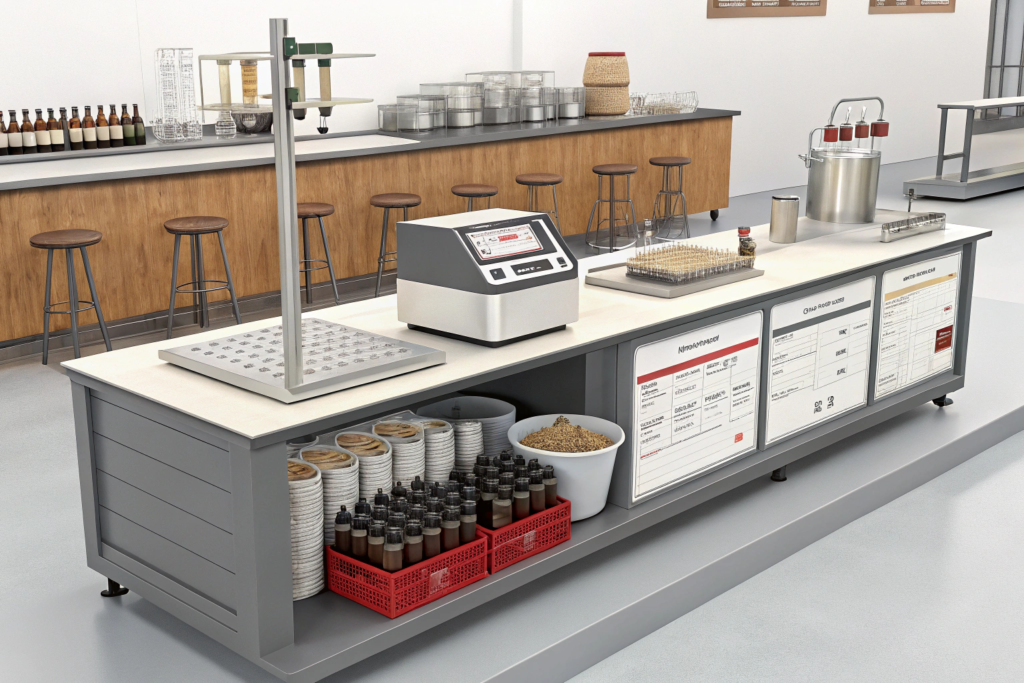
The roast can make or mask a coffee's true character. For green bean evaluation, you want a roast profile that is like a clear window into the bean—not a dark tinted one. A uniform light-medium roast (an Agtron Gourmet Scale reading of 58-63) allows the intrinsic flavors of the origin, altitude, and process to shine through. It highlights both the virtues (bright acidity, floral notes) and the defects (sourness, vegetal flavors). If you roast one sample dark and another light, you are no longer testing the bean; you are testing the roast. This is why many professional buyers either demand samples roasted to this standard or roast all submitted samples themselves in-house for a true comparison.
How Does Water Quality Impact the Perceived Flavor?
Water is over 98% of your brew. Impurities like chlorine, high mineral content (hard water), or odors will distort the taste. Always use clean, filtered water with a balanced mineral profile. Many use Third Wave Water packets or similar standardized solutions for ultimate consistency. The wrong water can mute vibrant acidity, make sweet coffees taste flat, or introduce off-flavors. It’s a simple variable to control that has an outsized impact on your results. Think of it as using a calibrated monitor to judge photo quality—you need a neutral, accurate baseline.
What are the Step-by-Step Procedures During the Cupping?
The cupping ritual is a sequence of timed evaluations. It starts with the dry grounds and proceeds through breaking the crust, evaluating the aromas, and finally tasting the liquid as it cools. Each stage reveals different aspects of the coffee.
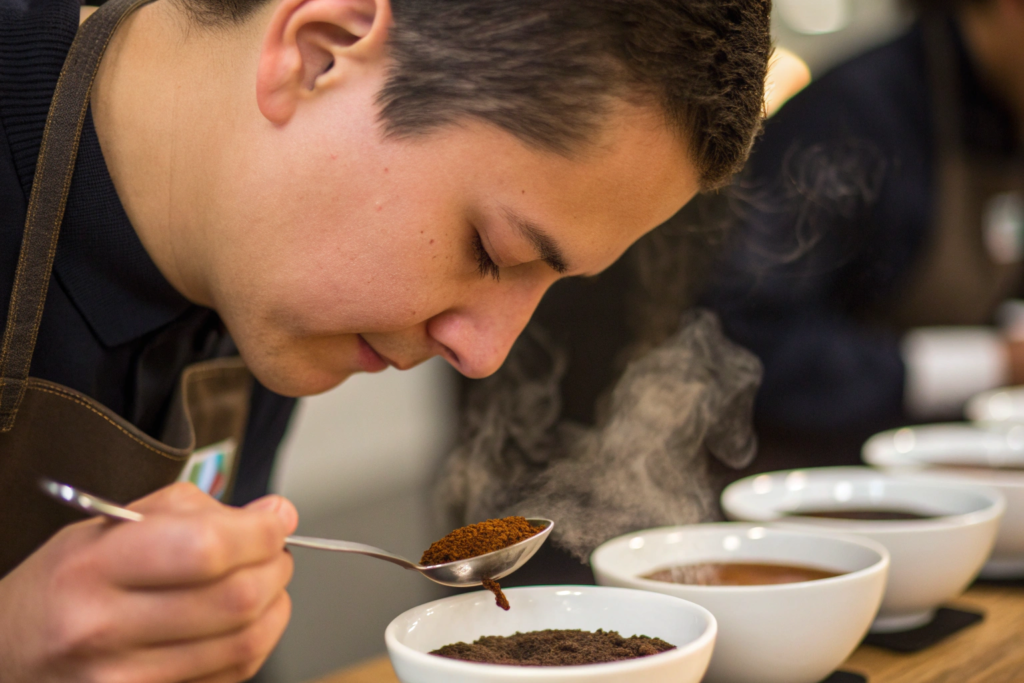
First, weigh out equal amounts of ground coffee (typically 8.25g for 150ml of water) into each bowl. Start with the dry fragrance: deeply sniff the grounds in each cup before adding water. Note the aromas—are they nutty, floral, fruity, or baked? Next, pour hot water onto all bowls within 20 seconds, starting the timer. Let it steep for 4 minutes. At 4 minutes, you "break the crust": place your nose close to the bowl, stir three times with your spoon to release the trapped gases and aroma, and inhale deeply. This is where the most potent and complex aromas emerge—the "wet aroma." Skim off the floating grounds.
How to Systematically "Slurp" and Taste the Coffee?
After breaking the crust and skimming, let the coffee cool to about 160°F (71°C). This is crucial—many subtle flavors are masked at scalding temperatures. Using your spoon, take a sample of coffee from just below the surface. Slurp it forcefully. This aspirates the coffee across your entire palate, coating your taste buds and pulling aromas into your nasal passages. Pay attention to the first impressions: Flavor (the qualitative taste—chocolate, berry, lemon), Acidity (the bright, vibrant quality, not sourness), Body (the weight and texture on your tongue), and Aftertaste (the flavor that lingers). Write your notes immediately. Repeat as the coffee cools further, as flavors will evolve. Cooling often reveals hidden sweetness or defects.
What is the Importance of the Cooling Phase?
Some coffees are "all show" when hot, tasting bold and sweet but falling apart as they cool. Others are shy when hot but blossom with incredible complexity as they reach room temperature. A coffee that turns unpleasantly sour, astringent, or thin as it cools has a fundamental flaw or imbalance. A great coffee maintains a pleasant, evolving flavor profile throughout the temperature drop. This is why professional cuppings take 20-30 minutes per round. It’s a stamina test for the bean. The final notes at room temperature are just as important as the first hot impression. This is a key check for stability and quality that we rigorously apply to all our lots at Shanghai Fumao.
How Do You Identify and Score Key Flavor Attributes?
This is where you move from subjective impressions to an objective evaluation. Using a standardized scoresheet, you assign numerical values to specific attributes. The most common system is the SCA Cupping Form, which scores out of 100 points. A score of 80+ is "Specialty Grade," the threshold for premium coffee.
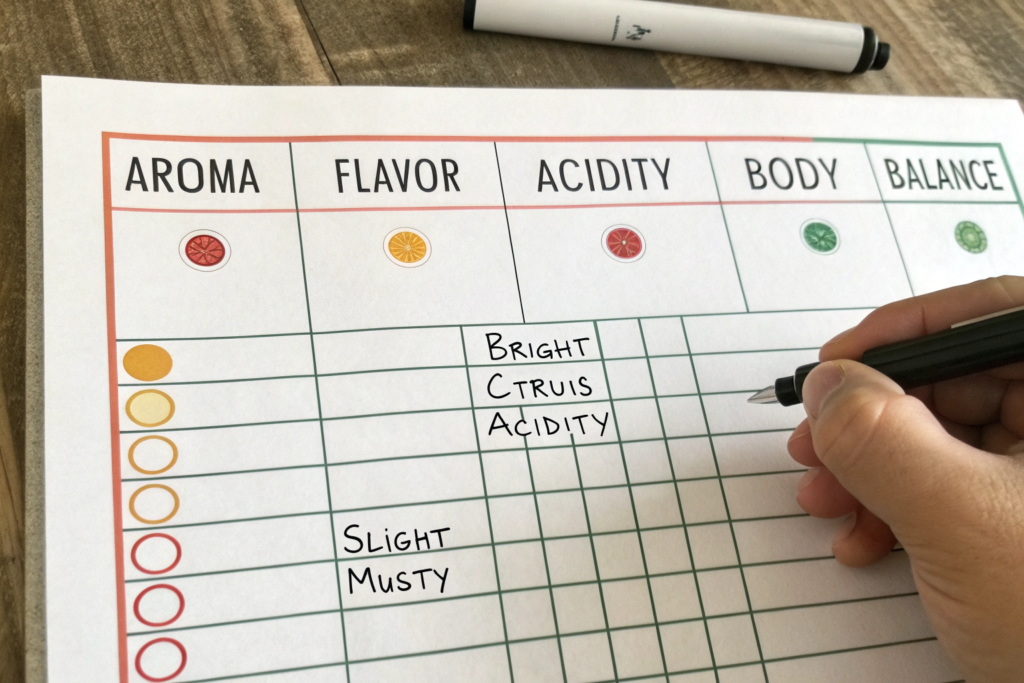
The form breaks down the evaluation: Fragrance/Aroma (up to 15 points), Flavor (up to 10 points), Aftertaste (up to 10 points), Acidity (up to 10 points), Body (up to 10 points), Balance (up to 10 points), Uniformity, Clean Cup, Sweetness (collectively up to 15 points), and Overall (up to 10 points). You also note Defects (which deduct points). This structure forces you to consider each aspect separately. Is the acidity bright and pleasant (high score) or sharp and sour (low score)? Is the body thin and watery or syrupy and coating? Does the flavor linger pleasantly or vanish?
How to Distinguish Between "Acidity" and "Sourness"?
This is a vital distinction for buyers. Acidity is a positive, descriptive attribute. It's the bright, sparkling, wine-like quality that gives coffee life and complexity. Think of the crispness of a green apple or the zing of a blackberry. Sourness is a negative taste defect, often sharp, vinegar-like, and unpleasant. It results from under-ripe cherries, improper fermentation, or under-development during roasting. In cupping, you reward vibrant acidity with a high score (8-10) and penalize harsh sourness as a defect. Understanding this difference is fundamental to evaluating quality.
What are Common Defects and How Do They Affect the Score?
Defects are specific negative flavors that indicate problems in growing, processing, storage, or roasting. They are categorized as "Taints" (mild, usually from storage) and "Faults" (severe, from processing/roasting). Common ones include:
- Musty/Earthy: From improper drying or old beans.
- Fermented/Vinegar: From over-fermentation.
- Rubbery/Smoky: From processing with contaminated water or defective roasting.
- Green/Vegetal: From under-roasting or under-ripe cherries.
Each defect has a point deduction value (e.g., -2 for a mild taint, -4 for a severe fault). Multiple defects can quickly drop a coffee below the 80-point specialty threshold. A reliable supplier's coffee should be free of primary defects.
How Should You Compare and Select Beans Based on Cupping Results?
Cupping is rarely done in isolation. Its real power is in comparison. You might cup 10 samples from different origins, or 5 samples of the same origin from different suppliers side-by-side. This comparative framework makes strengths and weaknesses glaringly obvious.
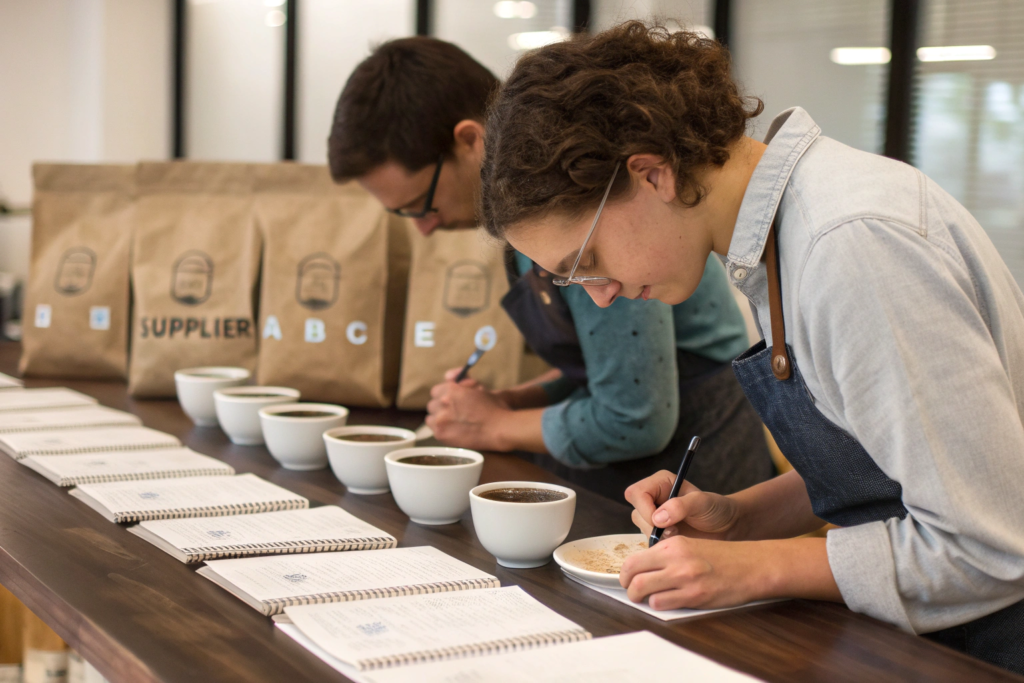
Arrange your samples blindly (labeled with codes, not names) to avoid bias. Taste them in the same order, cleansing your palate with water and plain crackers between each. As you score, you'll naturally start ranking them. Look for coffees with high scores in Flavor and Aftertaste, as these are central to the drinking experience. Also, consider the profile fit: a coffee with 85 points and bold chocolate notes might be perfect for your espresso blend, while an 87-point coffee with delicate jasmine and lemon might be your next single-origin pour-over. The score tells you the quality; your business needs determine the selection.
How to Use Cupping to Verify Supplier Consistency?
This is a critical tool for quality control. When you find a coffee you like, cup it again from a new sample 6 months later, or cup a pre-shipment sample against the original sample you approved. Are the scores and flavor notes consistent? Significant drift can indicate problems with the new crop's processing, blending, or storage. It’s your objective check against the supplier's promise. For long-term partners like us, we provide cupping scores and notes for every lot we sell, and we encourage buyers to verify them. It builds the trust that is essential for partnerships, especially when dealing with the variables of international coffee trade.
What is the Role of "Blind Cupping" in Negotiations?
Blind cupping removes brand and price bias. If you are negotiating with a supplier and they claim their coffee is superior, propose a blind cupping against a competitor's coffee (or a benchmark coffee). Let the scores and your notes guide the discussion about value and price. It shifts the conversation from subjective claims to objective, shared observations. It also demonstrates your expertise and seriousness as a buyer, which can lead to more respectful pricing and terms. This data-driven approach is exactly what savvy business owners use to make informed decisions.
Conclusion
Testing coffee through professional cupping is the universal language of quality. It transforms subjective taste into an objective, scored evaluation of fragrance, flavor, acidity, body, and balance. By mastering this method, you gain the power to verify claims, ensure consistency, avoid defects, and select beans that truly align with your quality standards and market needs.
Don't buy coffee based on a spec sheet alone. Demand samples and put them to the test. If you are looking for a supplier whose coffee is grown for flavor and can withstand the scrutiny of a professional cupping session, we invite you to evaluate our premium Yunnan Arabica and Catimor lots. We provide full cupping reports with our samples. To request samples and see the data behind our quality, contact our export manager, Cathy Cai, at cathy@beanofcoffee.com. Taste the difference that transparency and expertise make.