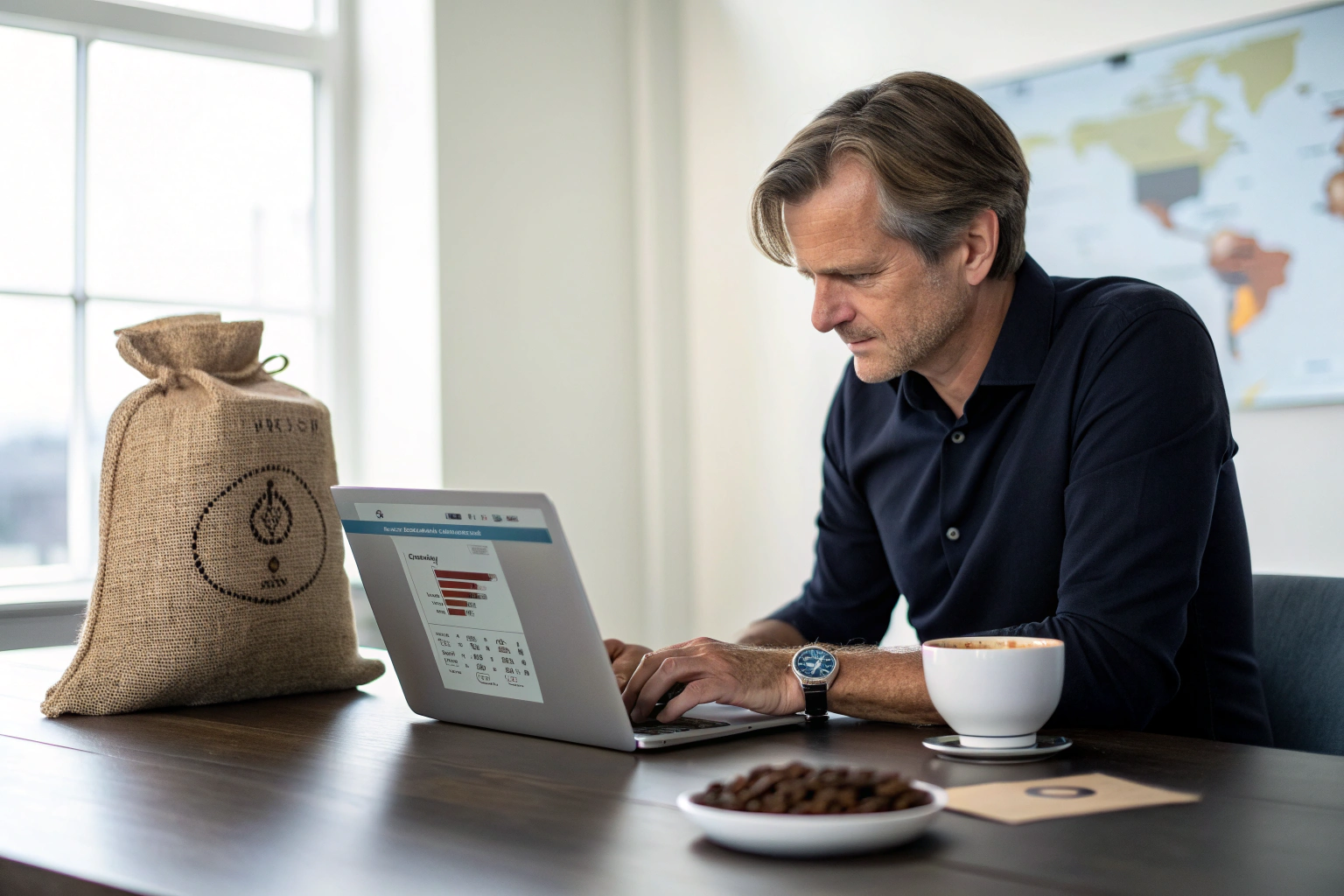
I learned to track vessels the hard way. Twelve years ago, I lost a container. Not sunk—lost. The ship changed its rotation. The Bill of Lading said Los Angeles. The vessel went to Long Beach. Then it anchored for nine days. My buyer in Portland had no coffee for his roaster. He called me at 2 a.m. my time. I had no answer. Honestly, I felt useless. That night, I decided I would never be the weak link in my client's supply chain again. So, I studied. I built relationships with freight forwarders. I subscribed to vessel tracking tools. Today, I can tell you exactly where our beans are at any hour.
So, how do you track global coffee shipping routes from origin to roastery? You combine three layers of data: the carrier's automated tracking portal, independent AIS vessel tracking platforms, and your supplier's internal logistics dashboard. The Bill of Lading number gives you the first layer. The vessel name and IMO number give you the second. A transparent supplier gives you the third. At BeanofCoffee, we share our live container tracking link with every buyer—no passwords, no gatekeeping.
But tracking is not just about watching a dot move across a screen. It is about predicting delays before they happen. It is about knowing which ports are congested and which shipping lines consistently miss their ETAs. And honestly, it is about knowing when your supplier is lying to you. I have had forwarders say "the vessel sailed today" when it was still at berth. So, let me teach you exactly how we track our shipments to North America, Europe, and Australia. Because if you import coffee, the route is not just geography. It is your cash flow.
What Information Do You Need to Start Tracking a Coffee Shipment?
You cannot track what you cannot identify. I receive emails every week: "My container left China two weeks ago. Where is it?" And they give me nothing. No container number. No Bill of Lading number. No vessel name. It is like handing me a luggage tag without a name and asking me to find your suitcase in Heathrow.
To start tracking any coffee shipment, you need four pieces of information: the container number (format: ABCU1234567), the Bill of Lading number, the vessel name, and the carrier's name (MAERSK, MSC, COSCO, etc.). With these four data points, you can track through carrier portals, third-party aggregators, and port customs systems. Without them, you are guessing.
What Is the Difference Between Booking Number, B/L Number, and Container Number?
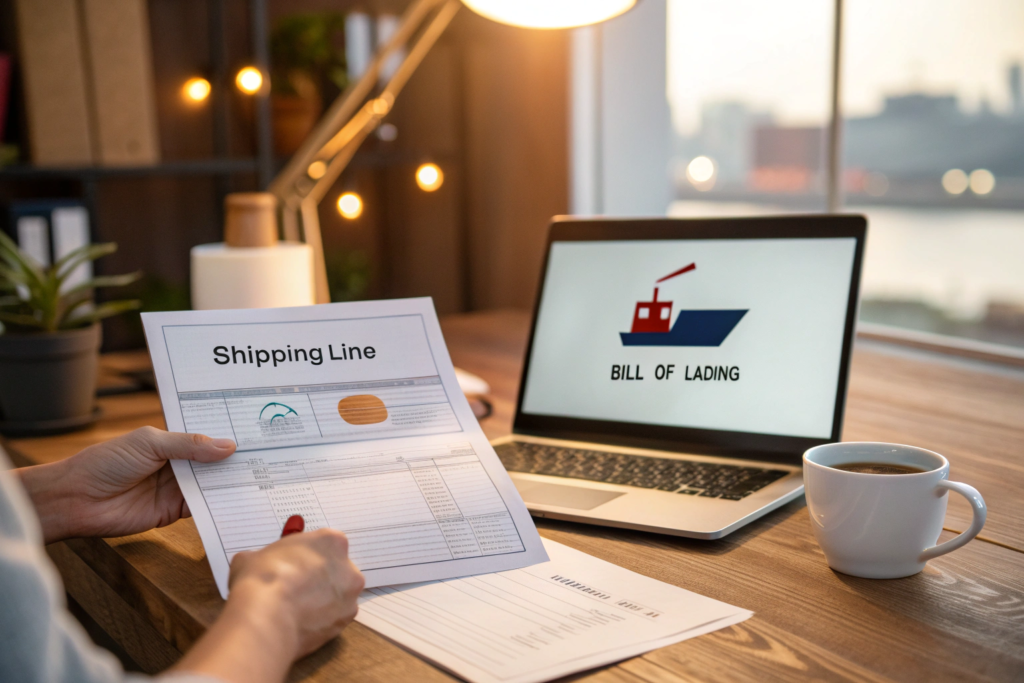
This confusion costs buyers hours of frustration. Let me clarify. The Booking Number is the reservation confirmation between your supplier and the carrier. It is internal. You usually do not see it. The Bill of Lading Number is the official contract of carriage. It is the number you enter into the carrier's tracking tool. It is also the number on your customs clearance documents. The Container Number is the physical box ID. It starts with four letters, then seven digits—like MSCU4567890. You can track the container even without the B/L number on some platforms. Here is the Federal Maritime Commission's guide to understanding Ocean Transportation Documents. Also, this Maersk support page explains how to find your container number on the B/L. Memorize these formats. They are your coffee's passport.
Can You Track Coffee Shipments Without a Bill of Lading?
Yes, but it is harder. If you have the vessel name and the voyage number, you can track the ship's position via AIS (Automatic Identification System). This does not tell you which container is yours. It tells you where the vessel is. This is useful when your supplier is slow to release documents. We had a buyer last year whose forwarder delayed the B/L for five days. The buyer used MarineTraffic with the vessel name we gave him. He saw the ship was still in Yantian. He stopped worrying. Here is MarineTraffic's free vessel tracking platform. And here is VesselFinder's AIS database. Both are reliable. Both saved me from sleepless nights.
Which Tracking Platforms Do Professional Coffee Importers Use?
Do not rely on one platform. Seriously. Different carriers update at different speeds. COSCO's portal might show "Arrived" three hours before MSC's portal. Some platforms specialize in real-time AIS. Others specialize in customs clearance milestones. You need a toolkit.
Professional coffee importers use a combination of: carrier-specific portals (Maersk Line, MSC, COSCO, ONE, Hapag-Lloyd), independent AIS platforms (MarineTraffic, VesselFinder, FleetMon), and supply chain visibility platforms (Project44, FourKites, Shippeo). For US-bound shipments, the ACE CBP portal provides customs release status. For EU-bound, the ICS2 system provides similar visibility.
Is the Carrier's Tracking Portal Always Accurate?
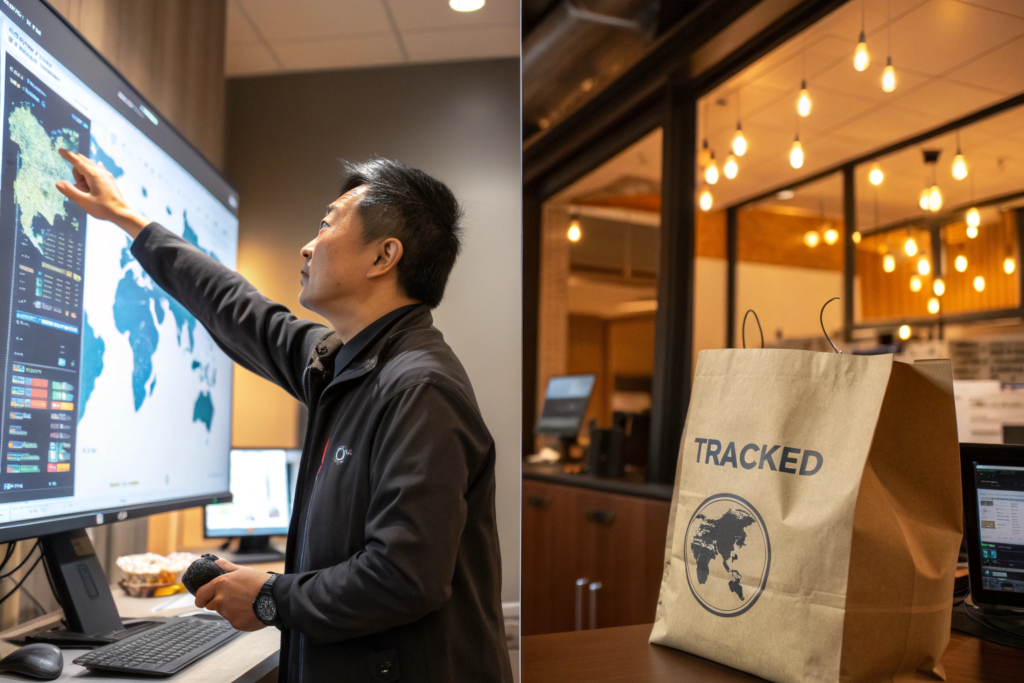
No. And I wish someone told me this earlier. Carrier portals depend on the terminal operator feeding data. Sometimes the terminal updates "Gate Out" but not "Loaded." Sometimes the vessel has sailed, but the portal still says "At Terminal." Why? Honestly, manual entry errors. We had a shipment to Australia last year. The carrier portal said "Delayed—weather." We checked MarineTraffic. The vessel was already 200 nautical miles south. The "weather" excuse was a paperwork backlog. So, here is my rule: carrier portal for the official status. AIS platform for the real-time position. Cross-check both. Here is the Port of Rotterdam's guide to interpreting carrier status messages. Also, this Flexport explainer on why carrier ETAs are unreliable.
What Is the Best Platform for Tracking LCL Coffee Shipments?
LCL—Less than Container Load—is harder to track. Your coffee is not in a dedicated box. It is palletized and loaded into a shared container. You do not have a container number. You have a House Bill of Lading from the consolidator. The consolidator's tracking portal is your only window. At BeanofCoffee, we consolidate small orders through Shanghai Fumao. They provide a unique tracking link for each HBL. You do not need to guess. You click, you see. If your supplier cannot give you a live HBL tracking link, ask why. Here is DHL Freight's LCL tracking guide. And here is Kuehne+Nagel's LCL visibility platform. Both are industry benchmarks.
What Are the Common Bottlenecks on Coffee Shipping Routes?
You can track a vessel perfectly and still miss your roast date. Why? Because tracking shows you where. It does not show you how long the bottleneck will last. You need to know which ports clog, which canals delay, and which seasons disrupt.
The most common bottlenecks on global coffee shipping routes are: berth congestion at Los Angeles/Long Beach, Rotterdam, and Felixstowe; drought-related transit restrictions in the Panama Canal; peak season rollovers from October to December; and equipment shortages (40HC containers) in inland depots. Coffee origins without direct feeder services—like parts of East Africa and Southeast Asia—face additional transshipment delays in Singapore and Colombo.
Why Does the Panama Canal Still Impact Coffee from China?
This seems counterintuitive, right? China to US East Coast—the logical route is across the Pacific, through Panama, up to New York, Savannah, or Norfolk. But the Panama Canal has freshwater locks. Drought reduces the number of daily transits. Vessels wait. Sometimes for two weeks. What does this mean for your coffee? If your supplier ships via all-water route to the US East Coast, you need to build a 5- to 7-day buffer during dry season (January to April). We advise our Savannah-bound clients to add this buffer or consider the Suez route—which is longer but more predictable outside Red Sea disruptions. Here is the Panama Canal Authority's daily transit advisory. Check it before you book. Also, this Journal of Commerce analysis of canal draft restrictions explains the coffee-specific impact.
Which US Ports Are Most Reliable for Coffee Imports?
This is a debate among my clients. New York/New Jersey handles massive volume but has aging infrastructure. Savannah is faster but has limited cold storage. Oakland is close to West Coast roasters but suffers from rail bottlenecks. Based on our 2023-2024 shipment data, Savannah and Norfolk currently have the shortest average dwell times for coffee containers. LA/LB has improved but still spikes unpredictably. If you are a small roaster, I recommend asking your supplier to route through Savannah or Houston. Here is the US Customs ACE performance dashboard for port wait times. And here is the SCA's logistics working group report on US coffee port performance. Both updated quarterly.
How Can You Predict Delays Before the Carrier Announces Them?
Carriers announce delays only after they are confirmed. Usually 24 to 48 hours before the missed ETA. That is too late for you. You need leading indicators. I learned this from a freight forwarder in Shenzhen. He said: "The schedule is a suggestion. The port congestion index is the truth."
To predict delays, monitor three leading indicators: port congestion indexes (waiting time at anchorage), equipment availability reports (are there enough 40HC boxes at the origin port?), and blank sailing announcements (carriers canceling entire voyages). When blank sailings spike, your vessel will almost certainly be rolled to the next voyage. You can know this three weeks before the carrier emails you.

What Are Blank Sailings and Why Should You Care?
Blank sailing means the carrier cancels a scheduled voyage. They do this when demand is low or operational costs are high. But here is the problem: your coffee was booked on that voyage. Now it rolls to next week. Or the week after. In peak season, blank sailings cause cascading delays. We track blank sailing announcements from the top 10 carriers weekly. When we see a spike, we warn buyers: "Your ETD may shift 7-14 days." We do not wait for the official roll notice. Here is Drewry's blank sailing tracker. Also, this Sea-Intelligence report on blank sailing impact. Bookmark both.
Can Weather Apps Help You Track Coffee Shipments?
Yes. Honestly, a good weather app is underrated. Typhoon season in Asia—July to October—regularly shuts down Shenzhen, Hong Kong, and Shanghai ports. We track typhoon paths from the moment they form near Guam. If a typhoon is projected to hit Yantian, we tell clients: "Your sailing will delay. We cannot control the wind." But we can adjust. We move containers inland or expedite loading before the port closes. You, as the buyer, can check the Joint Typhoon Warning Center and the China Meteorological Administration's typhoon portal. If you see a red alert at your supplier's port, do not panic. Just ask: "Did you get the containers out?" If they say yes, ask for the gate-in receipt.
How Do You Hold Suppliers Accountable for Shipping Delays?
Tracking is useless if you cannot enforce the schedule. I know this because I have been on both sides. As a buyer, I accepted excuses. "The terminal is busy." "The feeder vessel broke." "Customs inspected randomly." Some delays are real. Some are not. You need to know the difference.
You hold suppliers accountable by writing clear laycan dates (layday/canceling) into your contract, demanding liquidated damages for missed vessels, and using verified trackable milestones—not just "the vessel sailed." If a supplier claims "vessel sailed," ask for the On Board Date stamped on the Bill of Lading. If the B/L date is after the vessel departure, they misloaded. You have leverage.

What Is the Difference Between ETD, ETA, and Laycan?
ETD is Estimated Time of Departure. ETA is Estimated Time of Arrival. Laycan is the contracted window for the vessel to arrive. If the vessel arrives before the laycan, the buyer is not obligated to accept. If it arrives after the canceling date, the buyer can cancel the contract. This is standard in commodity trading. Yet many small coffee buyers do not use it. We include laycan in every contract with our European clients. It protects both sides. Here is the GAFTA contract guide to laycan interpretation. Coffee contracts often follow similar principles. Also, this International Chamber of Commerce incoterms guide clarifies risk transfer points.
Can You Claim Compensation for Delayed Coffee Shipments?
Yes, but only if you documented the agreement. If your supplier guaranteed a specific vessel and missed it, you may be entitled to compensation for the price difference if the market moved against you. Or for lost sales if you can prove the delay caused specific damages. We had a buyer in Melbourne claim $4,000 in lost roast sales because our container arrived two weeks late. We paid. Not because we were legally obligated—the contract did not specify liquidated damages. But we paid because it was our fault. The vessel missed the cut-off because our warehouse finished loading late. If you face a delay, document everything. Emails. B/L dates. Vessel schedules. Then present the evidence calmly. Here is the London Maritime Arbitrators Association guide to delay claims. And here is a coffee contract template with liquidated damages clause from the Green Coffee Association.
Conclusion
Tracking global coffee shipping routes is not just about clicking a link and watching a dot move. It is about understanding the ecosystem of vessels, ports, carriers, and documents that move your beans from our drying beds in Baoshan to your roaster in Cleveland, Bordeaux, or Brisbane.
I spent years learning this system through mistakes. I missed ETAs. I trusted incorrect carrier portals. I accepted "the ship is coming" without proof. But I do not make those mistakes anymore. And neither should you.
Today, every container we ship is tracked through three independent systems. We share the links openly. We flag potential delays before they happen. We route around congestion when possible. And we never, ever guess.
If you are tired of asking "Where is my coffee?" and getting vague answers, email Cathy Cai. She will show you exactly how we track every bag from our warehouse to your door. No secrets. No runaround. Just a live tracking link and a direct contact at Shanghai Fumao who answers when you call. Her address is: cathy@beanofcoffee.com.