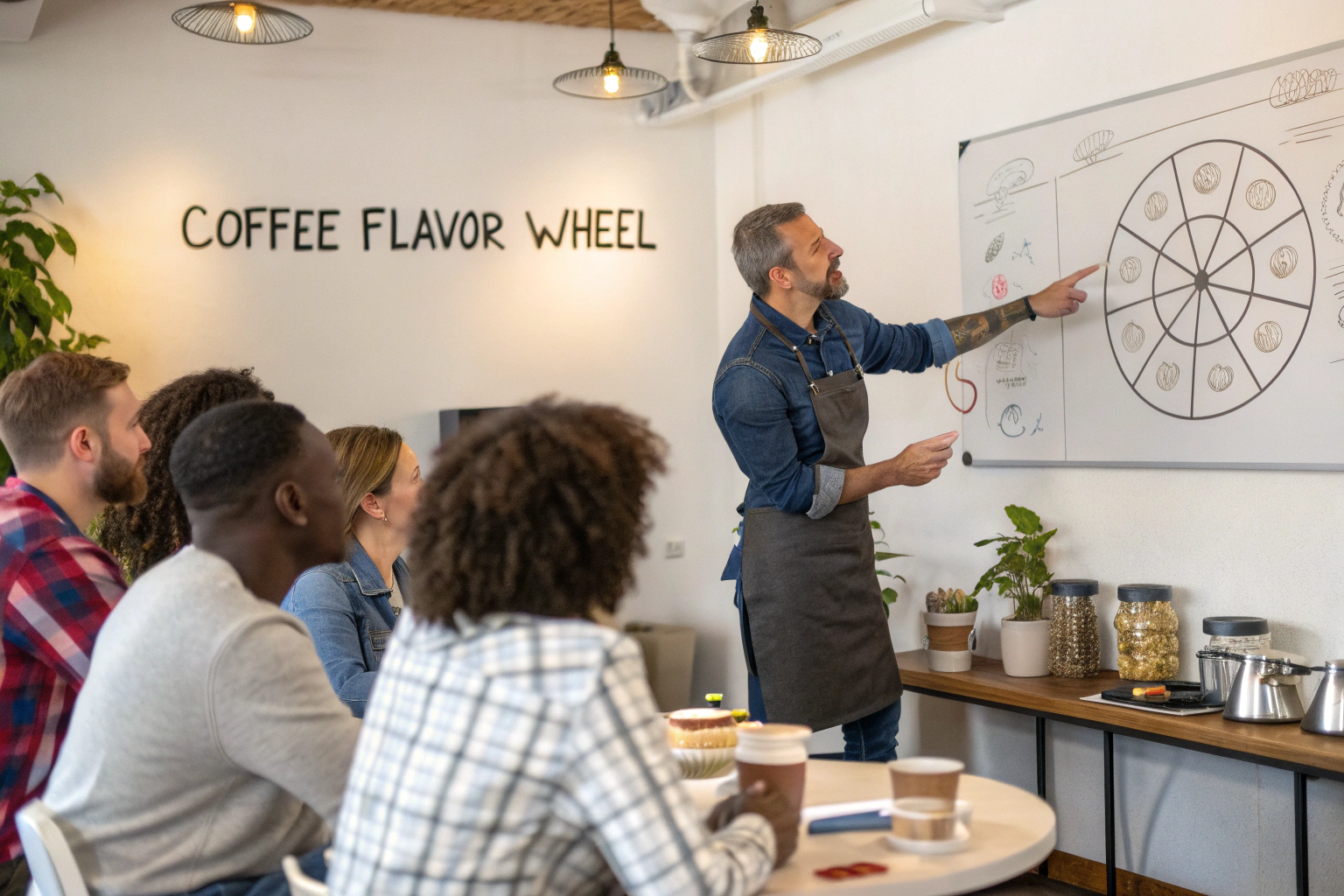
As a cafe owner, you've invested in everything: top-of-the-line equipment, beautiful decor, and the best beans you can find—perhaps even our specialty lots from Yunnan. Yet, your sales are flat, and customer reviews are lukewarm. You watch a customer ask a barista, "What does the single-origin taste like?" and hear them reply with a shrug, "It's... good?" This is a massive, painful gap. Your staff are your front-line ambassadors, and if they can't communicate the value and story of your coffee, your entire investment is being wasted.
Honestly, the most effective way to train staff on coffee knowledge and sales is to stop thinking of it as "training" and start thinking of it as "empowerment." It requires a structured, ongoing program that combines 1) Foundational Knowledge (the "what"), 2) Sensory Skills (the "how"), 3) Storytelling and Sales Techniques (the "why"), and 4) a Culture of Continuous Learning. An empowered employee doesn't just serve coffee; they guide an experience.
I've seen this firsthand. The best cafes we partner with aren't just our customers; they are our storytellers. Their staff can talk about our farms in China with the same passion as we can because their leaders have invested in them. Let's break down how to build a training program that turns your baristas into your most powerful sales force.
How Do You Build Foundational Coffee Knowledge?
Before your staff can sell, they need to understand what they are selling. This foundational knowledge is the bedrock upon which all other skills are built. It gives them the confidence to answer customer questions accurately and move beyond generic descriptions.
Isn't it enough for them to know how to make the drinks? No, that's just the mechanical skill. True knowledge means understanding the journey of the coffee bean. Your training must start with the "seed-to-cup" basics: where coffee comes from (origin), how it's processed, and what "variety" and "roast level" mean.
This doesn't need to be a university-level course. Create a simple, engaging "Coffee 101" session for all new hires. Use visuals, maps, and, most importantly, samples of the beans themselves. Make it tangible.
What are the "must-know" origin basics?
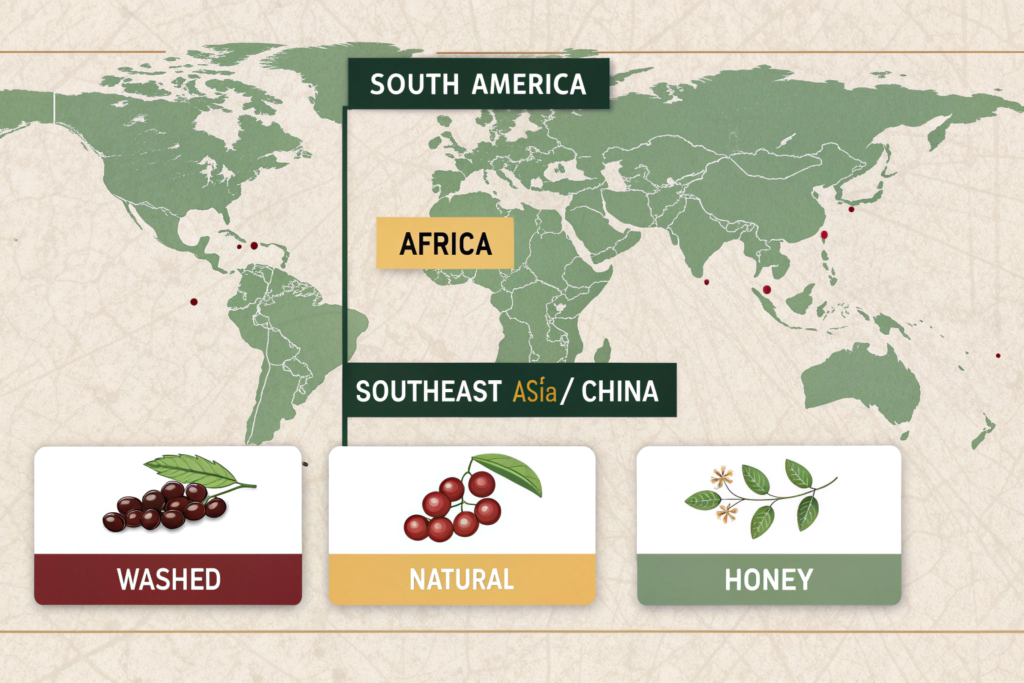
Your staff should be able to answer the question, "Where does your coffee come from?" with more than just a country name.
- Geography Matters: Teach them the basic flavor profiles of the three major growing regions. For example: Latin American coffees are often balanced, nutty, and chocolatey. African coffees are typically bright, fruity, and floral. Asian coffees (like our Yunnan beans) can be earthy, full-bodied, and complex.
- Processing Methods: This is crucial as it has a huge impact on flavor. Explain the difference in simple terms: Washed coffee is "clean" and bright. Natural processed coffee is "fruity" and wild. Honey processed is "sweet" and syrupy.
How do you explain roast levels simply?
Forget technical jargon. Use flavor analogies.
- Light Roast: "This is where we highlight the bean's origin. It's like a lightly grilled steak where you can still taste the quality of the meat. Expect brighter, more acidic, and floral or fruity notes."
- Medium Roast: "This is a balance between the bean's origin and the roast process. It's like a perfectly roasted chicken—you taste both the chicken and the crispy skin. Expect more sweetness, body, and balanced flavors like caramel and chocolate."
- Dark Roast: "Here, the flavor comes mostly from the roast itself. It's like a well-done, smoky BBQ. Expect bold, smoky, and bittersweet chocolate notes."
How Do You Develop Their Palates and Sensory Skills?
Knowledge is theoretical. The ability to taste and describe flavor is a practical skill that builds immense confidence. You need to train your staff's palates just as you would train their latte art skills.
Can you actually teach someone how to taste? Absolutely. The key is to conduct regular, structured tasting sessions, known as "cuppings." By tasting different coffees side-by-side and providing a shared vocabulary (like a flavor wheel), you help your staff build a mental library of flavors and the words to describe them.
Make this a fun, weekly ritual, not a test. Cup the new single-origin against your house blend. Cup a light roast against a dark roast. Cup a coffee from our farms at Shanghai Fumao against a coffee from Colombia. The more they taste, the more they learn.
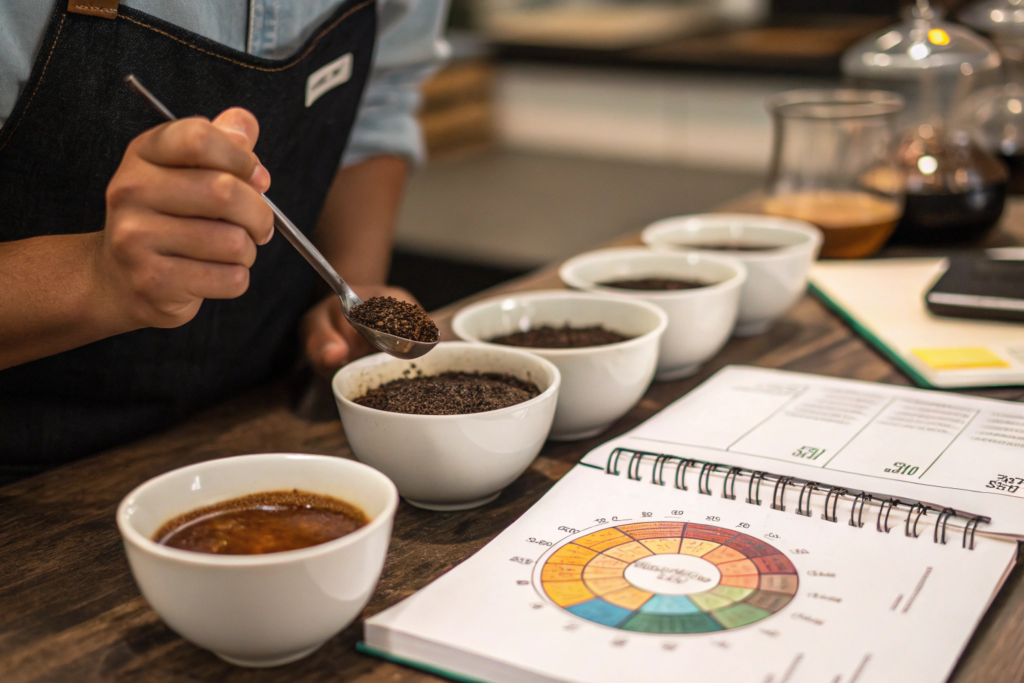
How do you run a simple staff cupping?
You don't need to be a certified Q-grader to run an effective cupping.
- Setup: Line up a few different coffees, coarsely ground, in separate bowls.
- Smell: Have everyone smell the dry grounds and write down what they smell.
- Pour: Add hot water and let it steep for 4 minutes. "Break the crust" with a spoon and have everyone smell the wet aroma.
- Taste: Once it cools slightly, have everyone take a spoon and "slurp" the coffee loudly (this sprays it across the palate).
- Discuss: Go around the circle and have each person share one thing they tasted. Use a Coffee Taster's Flavor Wheel as a guide. There are no wrong answers! The goal is to build confidence and a shared language.
How does this translate to sales?
When a barista has personally tasted the difference between the "bright, lemony" Ethiopian coffee and the "smooth, chocolatey" house blend, their sales pitch becomes authentic. They can say, "If you usually like a classic, rich coffee, you'll love our house blend. But if you're feeling adventurous and want something really bright and fruity, you have to try this new single-origin. I tasted it this morning, and it blew me away." That's a recommendation, not a transaction.
How Do You Teach Them to Sell Without Being "Salesy"?
The final piece of the puzzle is translating knowledge and sensory skill into actual sales, both at the register and for take-home bags. The secret is to teach them to be consultants, not clerks.
Isn't it pushy to train staff to "sell"? Not if you teach them to diagnose, not to push. The best sales technique is to ask diagnostic questions and make a confident recommendation. Train your staff to stop taking orders and start guiding choices.
This is a fundamental shift in mindset. It's about empowering them with a simple framework for interaction that adds value to the customer's experience.
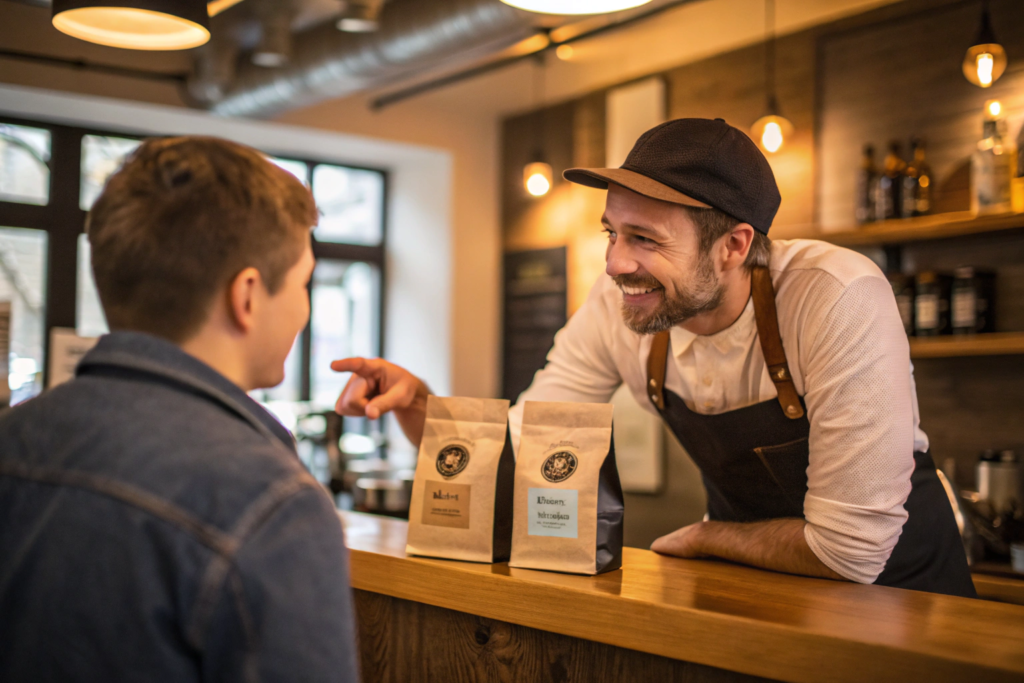
What are "diagnostic questions"?
Instead of waiting for the customer to order, train your staff to initiate with helpful questions, especially if the customer seems hesitant.
- "What kind of coffee do you usually enjoy?"
- "Are you looking for something bold and strong to get you going, or something a bit smoother and sweeter?"
- "Do you usually add milk and sugar, or do you drink your coffee black?"
The answers to these questions allow the barista to make a tailored, expert recommendation, which builds trust and often leads to upselling.
How do you encourage retail bean sales?
This is where storytelling shines. Train your staff to connect the coffee in the customer's cup to the bag on the shelf.
- The "Try It At Home" Close: When a customer orders a drink made with your feature coffee, the barista should say, "Great choice! We're loving this coffee from Yunnan, China. If you enjoy it, we do have bags of it available to take home so you can try brewing it yourself."
- Passive Selling: Have a "Brewing At Home" station with your retail bags, a grinder, and a few brewers. It acts as a silent invitation.
- Incentivize: Offer a small commission or a fun team-based reward for retail bag sales. A little incentive can go a long way in keeping it top-of-mind.
How Do You Create a Culture of Continuous Learning?
A one-time training session is not enough. The coffee world is always evolving, and your staff's passion and knowledge can fade without regular reinforcement. You need to build a self-sustaining culture of learning.
Can you really expect your staff to care that much? Yes, if you make learning a fun, rewarding, and integral part of the job. A culture of continuous learning is fostered through regular mini-trainings, friendly competitions, and by empowering your senior staff to become mentors.
This turns the job from a repetitive task into a path for professional development. It attracts more passionate, career-oriented individuals and dramatically reduces staff turnover.
What are some simple, ongoing training ideas?
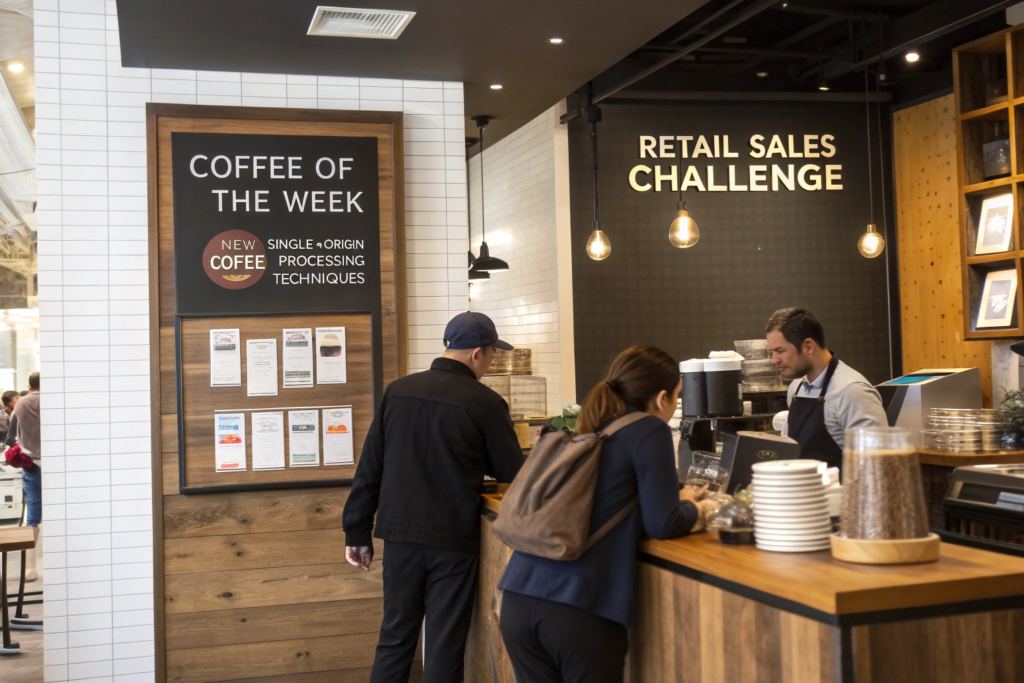
- "Coffee of the Week": Every week, feature one coffee. Post a simple info sheet about it near the register. Make it the focus of your weekly cupping. This keeps the conversation fresh.
- Five-Minute Pre-Shift: Before the morning rush, gather the team for a quick five-minute huddle. Share one new coffee fact, a tasting note, or a sales tip.
- Field Trips: Once a quarter, take your team to visit a local roastery (or if they're your partner, ask them to host a tour!). Seeing the next step in the supply chain is incredibly motivating.
How do you empower senior staff to be trainers?
Identify your most passionate and knowledgeable baristas. Give them the title of "Shift Lead" or "Head Barista" and make training new staff a part of their official responsibilities. This not only takes some of the training burden off you but also provides a clear career path for your best employees, encouraging them to stay and grow with your company.
Conclusion
Your staff is the final, crucial link in the long and complex coffee supply chain. Investing in their knowledge and skills is a direct investment in your brand's reputation and profitability. By moving beyond simple mechanical training to a holistic program of empowerment—built on foundational knowledge, sensory development, consultative sales techniques, and a culture of continuous learning—you transform your team. They cease to be just coffee makers and become passionate storytellers, trusted guides, and the driving force behind your business's success.
We believe that a great supply chain is a chain of great partnerships. We are ready to be your first and strongest link, providing not only exceptional coffee but also the origin stories, photos, and information your team needs to sell with passion and authenticity. If you're ready to build a team as great as your coffee, let's talk. Contact our coffee specialist at cathy@beanofcoffee.com to get started.