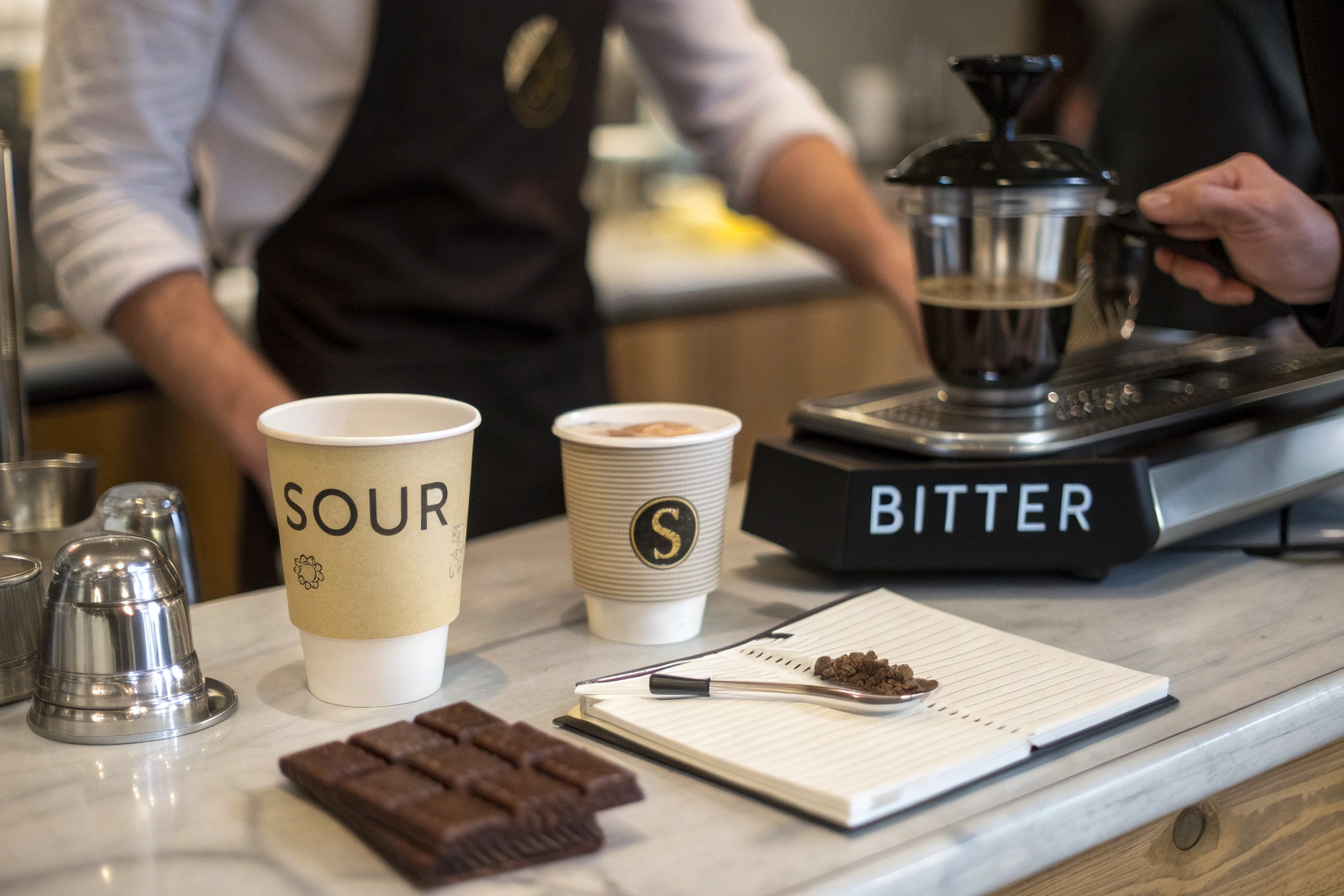
You pull a shot. It looks perfect—thick crema, golden honey color. But then you taste it. A sharp, unpleasant sourness hits your tongue. Or maybe it’s a harsh, lingering bitterness that coats your mouth. Your customer frowns. This isn't just a bad cup; it's a direct hit to your cafe's reputation. So, what went wrong? The truth is, bitter or sour flavors aren't inherent flaws in the coffee; they're almost always symptoms of a process that's out of balance. Finding the fix isn't about guesswork—it's about systematic troubleshooting from the bean itself all the way to the cup.
Think of flavor as the final message in a long chain of communication. It starts with the green bean quality, moves through roasting, and is delivered by brewing. A sour or bitter taste means the message got distorted somewhere along the line. The good news? Each distortion has a likely cause and a clear corrective action. At BeanofCoffee, as a supplier of green beans to cafes worldwide, we often help roasters and baristas trace flavors back to their source. Let's break down this diagnostic process step by step.
Could the Green Bean Quality or Roast Be the Primary Culprit?
Before you touch your grinder or machine, you must consider the raw material. A flawed bean or an unbalanced roast will create problems no barista can fully correct. Sourness and bitterness can originate right here.
First, consider green bean age and moisture. Beans that are too old or overly dry (moisture below 10%) lose their soluble compounds in a uneven way. During roasting, dry beans can develop a baked, sharp acidity that reads as sour, or a hollow, ashy bitterness. Conversely, beans shipped or stored in humid conditions (above 12-13% moisture) can taste dull and fermenty, which can also manifest as a sour off-note. The fix starts with sourcing from a supplier who guarantees optimal moisture content at shipment and proper storage. At Shanghai Fumao, we ensure our green coffee is stabilized at 10.5-11.5% moisture and shipped in GrainPro bags to lock in that quality, providing a consistent canvas for the roaster.
Now, the roast. This is where the flavor potential is set.
- Under-Roasted Coffee often tastes sour, grassy, or salty. The bean's natural acids haven't been adequately developed into sweeter compounds.
- Over-Roasted Coffee tastes charred, ashy, and harshly bitter. The sugars are carbonized, and bitter-tasting compounds dominate.
- Uneven Roasting (where some beans are darker than others) can create a confusing mix of sour and bitter notes in the same batch.
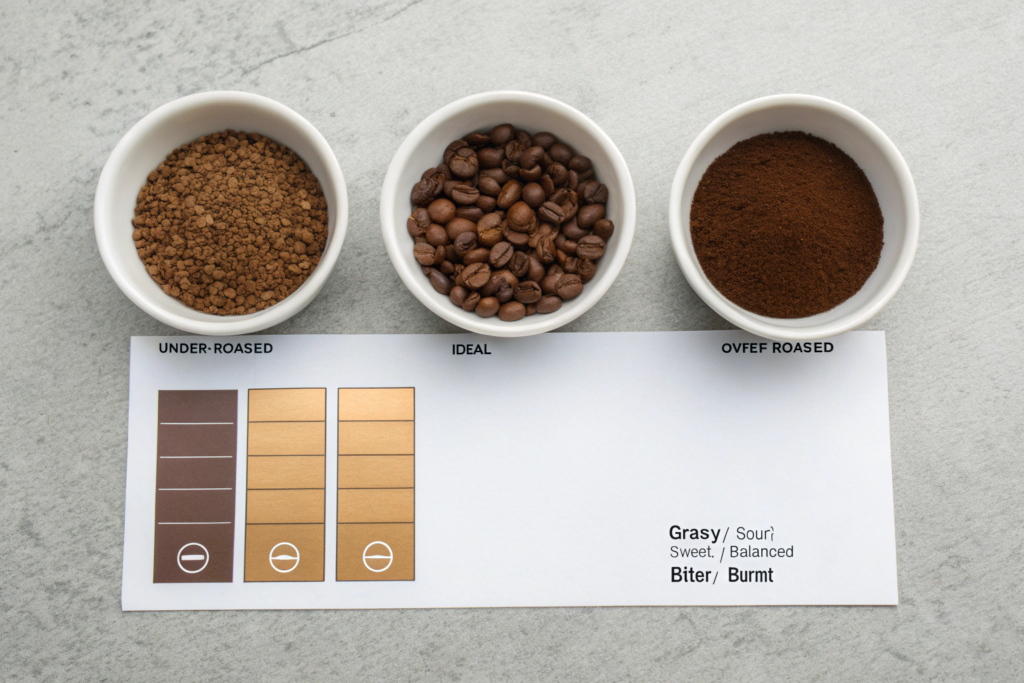
How to Diagnose Roast-Level Flavor Issues?
You need to isolate the variable. If you roast in-house, cup the coffee at multiple roast levels. If you buy roasted coffee, ask your roaster for a profile analysis or sample of a slightly different roast level for the same bean.
Quick Taste Test:
- Grind a small sample of your beans very coarse.
- Steep in hot water (just off boil) for 4 minutes in a cup.
- Taste the liquid. Don't think "coffee," think "flavor direction."
- If it's intensely sour, vegetal, or salty, the roast is likely underdeveloped.
- If it's harsh, ashy, with a burnt aftertaste, the roast is likely overdeveloped.
- If it's balanced, sweet, with manageable acidity, the roast is likely in a good range, and your issue is probably in the grind or brew.
This simple test removes the brewing variable and points the finger squarely at the bean/roast.
What Green Bean Defects Cause Bitter or Sour Notes?
Even a good roast can't hide certain green bean defects. Be aware of:
- Fermented/Sour Beans: Often from over-fermentation during processing. They give a sharp, vinegar-like sourness.
- Quakers: Underripe beans that don't roast properly, tasting grassy and sour.
- Black Beans: Dead beans that taste ashy, bitter, and flat.
A high-quality supplier uses optical sorters and hand-sorting to remove these. If you consistently find off-flavors across different brew methods, discuss the green bean quality with your roaster or supplier. A trustworthy coffee supplier will provide traceability and quality metrics to rule this out.
Is Your Grind Size and Distribution Causing Extraction Problems?
This is the most common battlefield for sour vs. bitter. The principle is extraction: dissolving flavors from the coffee grounds into water. Sourness (under-extraction) and bitterness (over-extraction) are two sides of the same coin.
- Sour (Under-Extracted): The water hasn't dissolved enough of the good sugars and compounds. It grabs the bright acids first and then stops. Caused by: Grind too coarse, water too cold, brew time too short.
- Bitter (Over-Extracted): The water has pulled out too much, including the undesirable, harsh compounds that dissolve later. Caused by: Grind too fine, water too hot, brew time too long.
For espresso, the grind is your primary control dial. A change of just a few microns can swing the shot from sour to bitter.
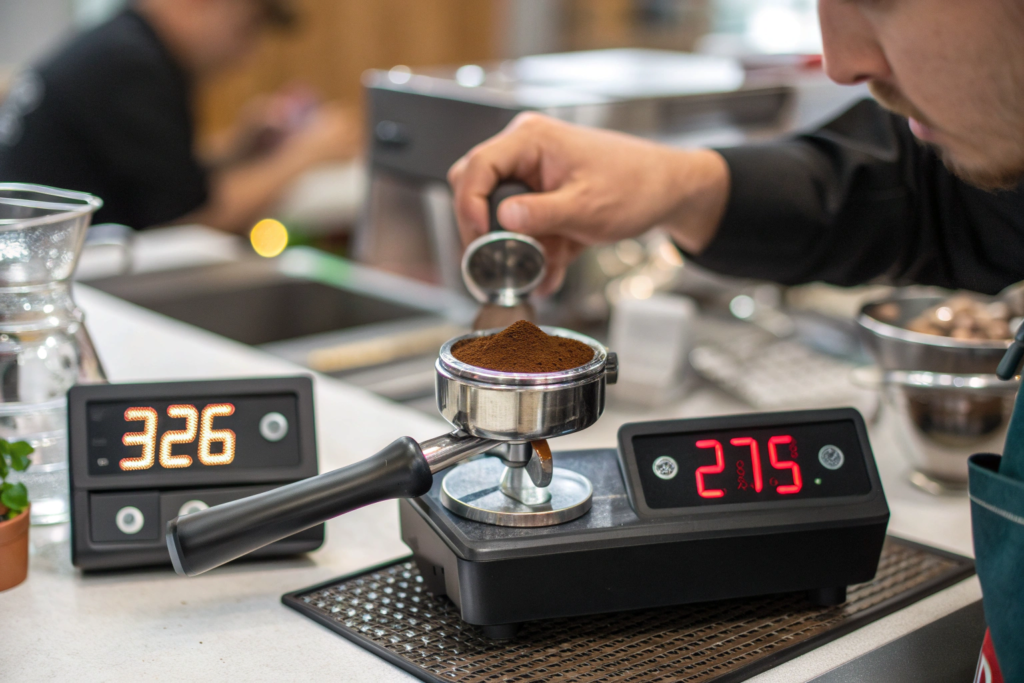
How to Calibrate Your Grind for Espresso Using Time and Taste?
Follow this methodical approach:
- Start with a Baseline: Use a dose (e.g., 18g) and aim for a standard yield (e.g., 36g out) in 25-30 seconds. Weigh everything—input and output.
- Taste. Is it sour? The shot likely ran too fast. Grind finer.
- Taste again. Is it bitter? The shot likely ran too slow. Grind coarser.
- Chase the Sweet Spot: You're looking for the point between sour and bitter. It often tastes sweet, balanced, and complex. The time is a guide, not a rule. If it tastes perfect at 33 seconds, that's your new rule for that coffee.
A critical, often overlooked step is grinder burr alignment and maintenance. Worn or misaligned burrs create a wide distribution of particle sizes (fines and boulders). Fines over-extract (bitter), boulders under-extract (sour). You get a muddled, simultaneously sour and bitter cup. Regular grinder cleaning and professional servicing are non-negotiable for flavor clarity.
What is the Role of Dose, Yield, and Brew Ratio?
The "recipe" is key. Alongside grind size, you control:
- Dose: Amount of coffee in the portafilter.
- Yield: Amount of liquid espresso in the cup.
- Ratio: Yield ÷ Dose (e.g., 36g yield / 18g dose = 2:1 ratio).
| Symptom | Likely Cause | Adjustment |
|---|---|---|
| Sour, weak, thin | Under-extracted | Option 1: Grind finer (increase contact time). Option 2: Increase yield (e.g., go to a 2.5:1 ratio). |
| Bitter, harsh, dry | Over-extracted | Option 1: Grind coarser (decrease contact time). Option 2: Decrease yield (e.g., go to a 1.5:1 ratio). |
Always change one variable at a time and taste the result. Keep a log. This turns troubleshooting from art to science.
Are Your Water Temperature and Machine Health to Blame?
Water is the solvent, and your machine is the delivery system. If they're off, flavor suffers dramatically.
Water Temperature: This is crucial, especially for pour-over and batch brew.
- Too Cool (<90°C / 194°F): Under-extracts, leading to sour, flat coffee. It cannot properly dissolve sugars.
- Too Hot (>96°C / 205°F): Over-extracts, especially bitter compounds. Can also scorch the coffee.
For espresso, the standard range is 90-96°C (194-205°F). Many modern machines allow temperature adjustment. If your shots are consistently bitter, try lowering the temperature by 1°C. If consistently sour, try raising it.
Machine Pressure: Espresso machines should brew at 9 bars of pressure. Incorrect pressure (often due to pump issues or clogged lines) distorts extraction. Low pressure can cause under-extraction (sour); high pressure can force over-extraction and channeling (bitter).
Cleanliness: This is the silent killer of flavor. Oily residue (coffee oils turn rancid) and mineral scale build-up (from hard water) directly impart bitter, harsh, and chemical flavors to every shot. A dirty group head, shower screen, or steam wand will ruin even perfectly dialed-in coffee.
How to Perform a Basic Machine and Water Quality Check?
- Temperature: Use a calibrated thermometer or your machine's PID display. Check both boiler setting and actual group head temperature if possible.
- Pressure: Observe the pressure gauge during extraction. It should rise to 9 bars and hold steady.
- Cleanliness: Backflush with water daily. Backflush with detergent (e.g., Cafiza) at least weekly. Descale according to water hardness—this is critical. A clean machine should not leave any residue on a white cloth wiped on the group head.
- Water Itself: Extremely soft or hard water is bad. Use filtered water with a balanced mineral content (like Third Wave Water or a good commercial filter). Bad water makes bad coffee, period.
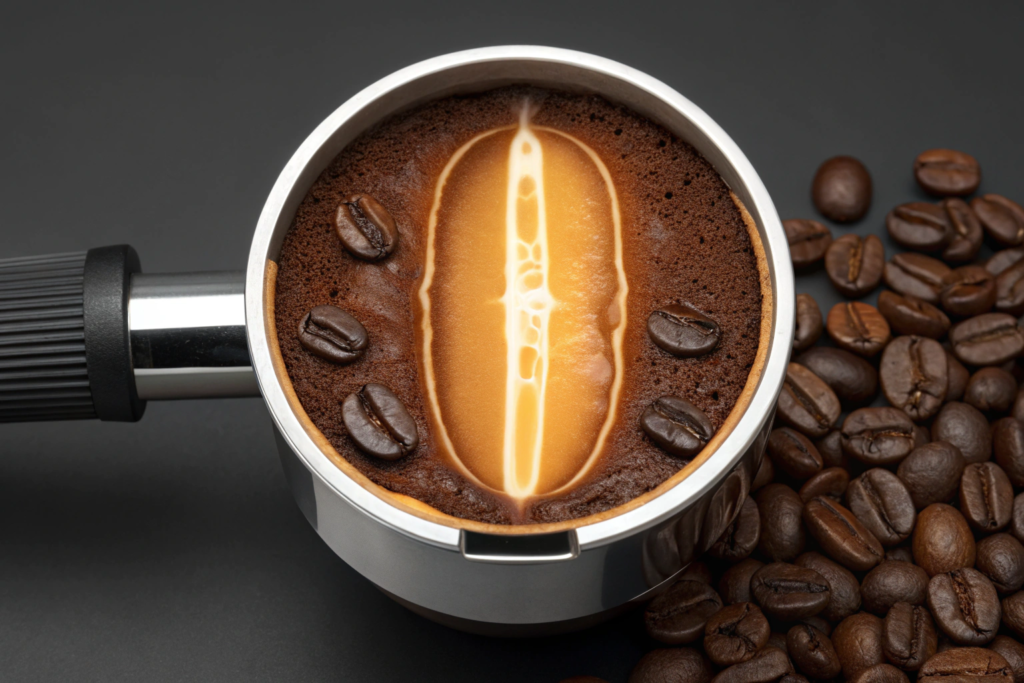
What is "Channeling" and How Does It Create Simultaneous Sour and Bitter?
Channeling is when water finds a path of least resistance through the coffee puck instead of flowing evenly. It’s a major cause of a shot that tastes both sour (from under-extracted channels) and bitter (from over-extracted compacted areas).
Causes:
- Poor puck preparation (uneven tamping)
- Incorrect grind (too fine causing compaction)
- Worn or uneven basket
- Dosing issues
Fix: Use a WDT tool (Weiss Distribution Technique) to break up clumps before tamping, ensure a level and consistent tamp, and use a bottomless portafilter to visually diagnose spurting or uneven extraction.
How Do Puck Preparation and Workflow Consistency Affect Taste?
The final seconds before the shot starts are decisive. Inconsistent puck prep is the number one cause of day-to-day flavor drift in a cafe, even with the same grind setting.
The goal is to create a uniform, level bed of coffee with no cracks or air pockets. Every step matters:
- Grinding: Ensure your grinder is dosing consistently.
- Distribution (WDT): Use a needle tool to stir the grounds and break clumps. This is the single most effective step to prevent channeling.
- Tamping: Apply firm, even pressure. The exact pressure matters less than it being consistent every time. The goal is to compact the bed evenly.
Inconsistency here means you're effectively changing the "density" of the coffee puck from shot to shot, which changes flow rate and extraction—leading to random sour or bitter shots that frustrate your baristas.
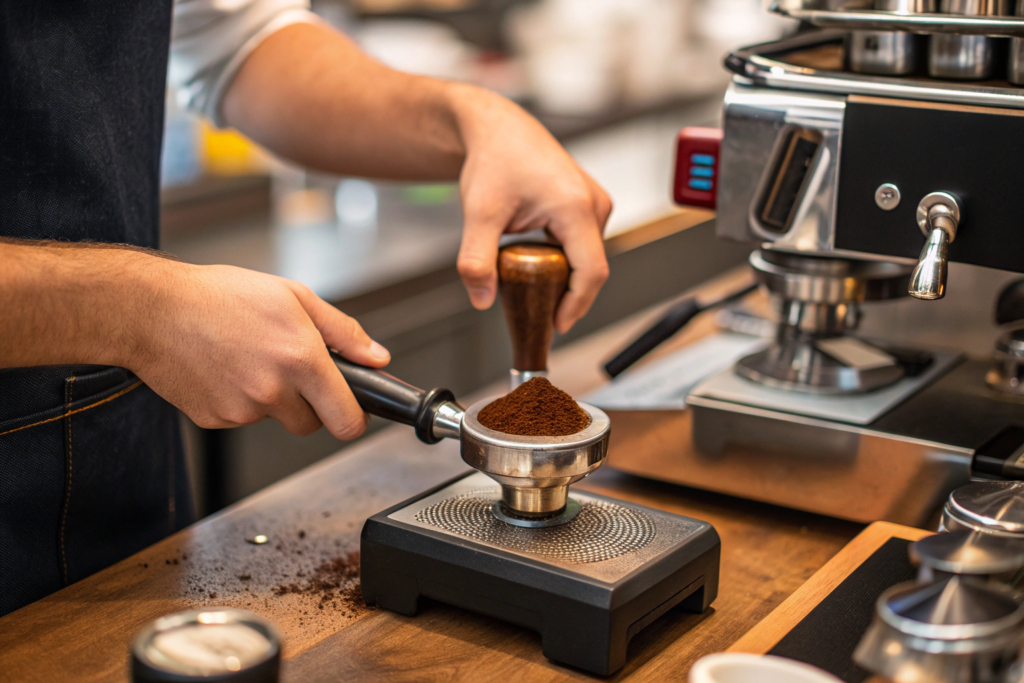
What is the Step-by-Step Checklist for Perfect Puck Prep?
Implement this standardized workflow:
- Dose: Weigh ground coffee into portafilter. (e.g., 18.0g)
- Distribute: Use WDT tool to stir and level grounds.
- Tamp: Apply even, level pressure. Polish with a slight twist.
- Lock & Brew: Immediately start the shot.
- Weigh Yield: Stop shot at target yield (e.g., 36g).
- Record Time: Note extraction time.
Train every barista to follow this exact sequence. This removes human variability and isolates any remaining issues to the grind or machine.
How Can Cafe Workflow and Maintenance Routines Prevent Flavor Issues?
Create a daily and weekly schedule:
Daily:
- Purge and taste espresso first thing in the morning (dial-in).
- Clean steam wands after every use.
- Backflush with water at end of day.
- Empty and clean grinders.
Weekly:
- Backflush with detergent.
- Deep clean grinder burrs.
- Check machine water filters.
- Clean brew baskets and shower screens.
A disciplined routine ensures your equipment performs consistently, which is the foundation of consistent flavor. Partnering with a stable coffee supplier like us at Shanghai Fumao ensures the bean variable is controlled, allowing you to focus your energy on perfecting these in-house processes.
Conclusion
Troubleshooting bitter or sour flavors is a systematic process of elimination. Start by ruling out green bean quality and roast profile. Then, methodically adjust your primary brew variables—grind size, dose, and yield—while measuring time and weighing output. Ensure your water temperature is correct and your equipment is impeccably clean and well-maintained. Finally, enforce a consistent, detailed workflow for puck preparation across your entire team.
Mastering this diagnostic approach turns frustrating, unpredictable flavors into solvable puzzles. It empowers your team to serve consistently excellent coffee, building customer trust and loyalty with every cup.
If you are a cafe owner or roaster struggling with inconsistent flavors and want to ensure your green coffee is a solid foundation, let's talk. We can provide coffee with guaranteed moisture content and consistency, removing one major variable from your equation. Contact our quality support lead, Cathy Cai, at cathy@beanofcoffee.com for more information.