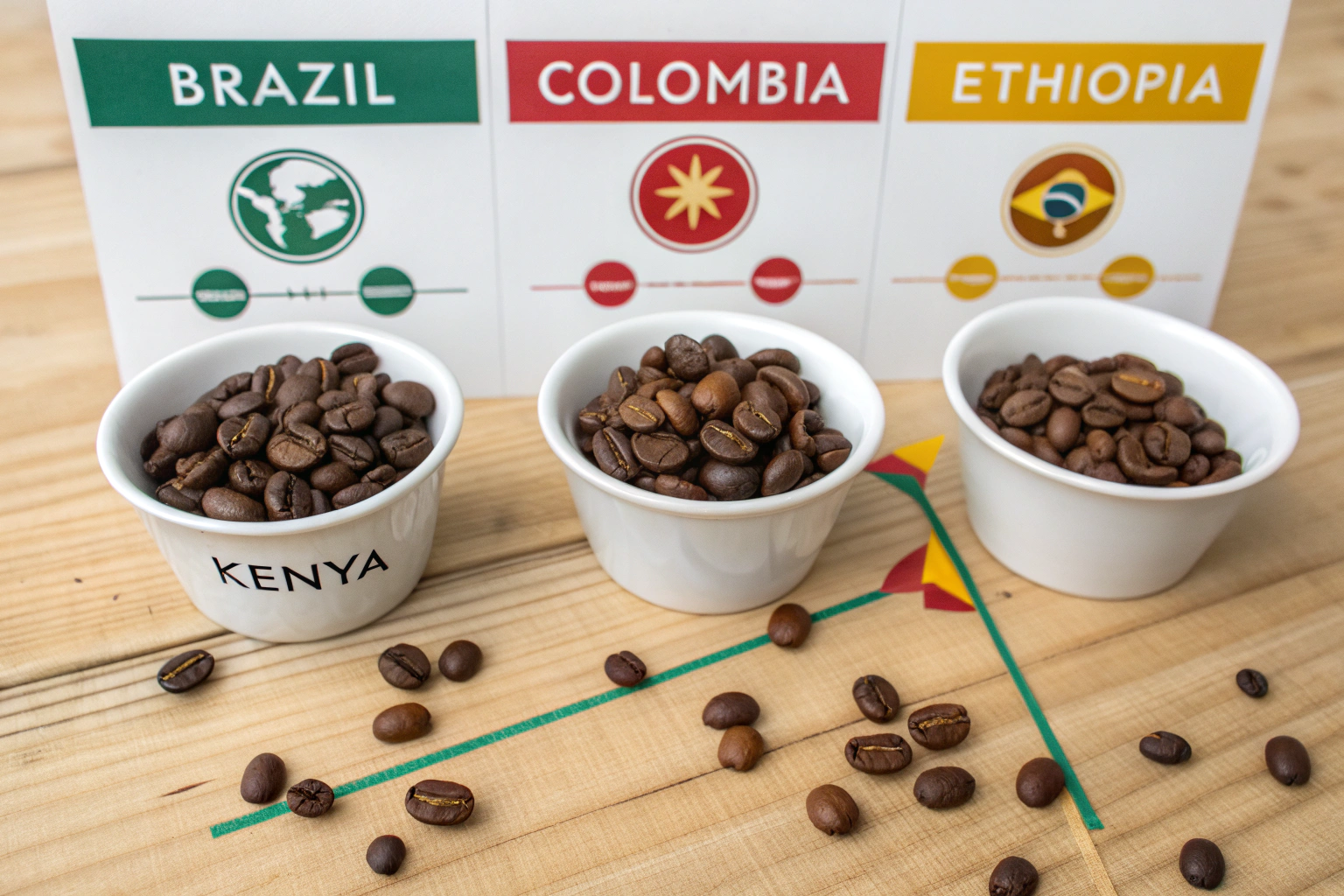
You're comparing coffee offers from Brazil, Ethiopia, Colombia, and Kenya. Each uses different grading terms: Brazil talks about "Strictly Soft," Ethiopia uses numbers like "Grade 1," Colombia mentions "Supremo," and Kenya has "AA." How do you know which represents the best quality, or if you're comparing equivalent grades across origins? Understanding these national grading systems isn't just academic—it's essential for making informed buying decisions and ensuring you get the quality you pay for.
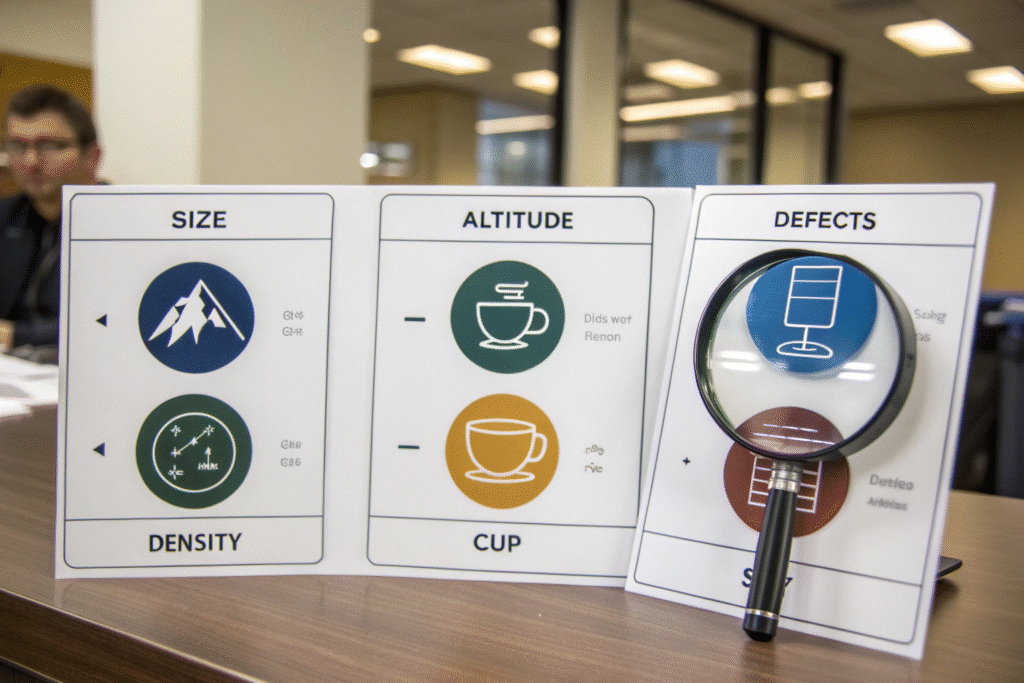
Coffee grading systems vary by country but generally evaluate similar characteristics: bean size (screen size), density, altitude, number of defects, and cup quality. While there's no universal standard, most systems combine physical attributes with sensory evaluation. Learning each country's specific approach helps you decode quality claims and compare offerings accurately.
So, how can you navigate this patchwork of national standards to make confident purchasing decisions? The key is understanding the common grading parameters and how each country emphasizes different aspects of quality. Let's break down the major systems and create a framework for comparison.
What Are the Common Grading Parameters Worldwide?
Despite different terminology, most grading systems evaluate a similar set of physical and qualitative attributes. Understanding these core parameters helps you translate between systems.
The primary grading factors include bean size (screen size), density (often related to altitude), defect count, moisture content, and cup quality. Different countries weigh these factors differently in their final grade.
How Does Bean Size Affect Grading?
Bean size is measured by passing beans through screens with specific hole diameters:
- Screen size 18+ (7.2mm+): Very large beans (e.g., Kenya AA)
- Screen size 17/18 (6.8-7.2mm): Large beans (e.g., Colombia Supremo)
- Screen size 15/16 (6.0-6.4mm): Medium beans
- Screen size 14/15 (5.6-6.0mm): Smaller beans
While larger beans often come from higher altitudes and may have better development, size alone doesn't guarantee flavor quality. This size-quality correlation is strong but not absolute.
Why Does Altitude Matter in Grading?
Many countries use altitude as a proxy for density and quality:
- SHB/Strictly Hard Bean: >1,200 meters (Central America)
- HB/Hard Bean: 900-1,200 meters
- Pacific/Medium: 600-900 meters
- Low Grown: <600 meters
Higher altitude typically means slower maturation, denser beans, and more complex sugars. At BeanofCoffee, our Yunnan Arabica qualifies as SHB due to our high-altitude farms. This altitude-based grading is common across Latin America.
How Does Brazil Grade Its Coffee?
Brazil, as the world's largest producer, has a sophisticated grading system that focuses heavily on cup quality alongside physical attributes.
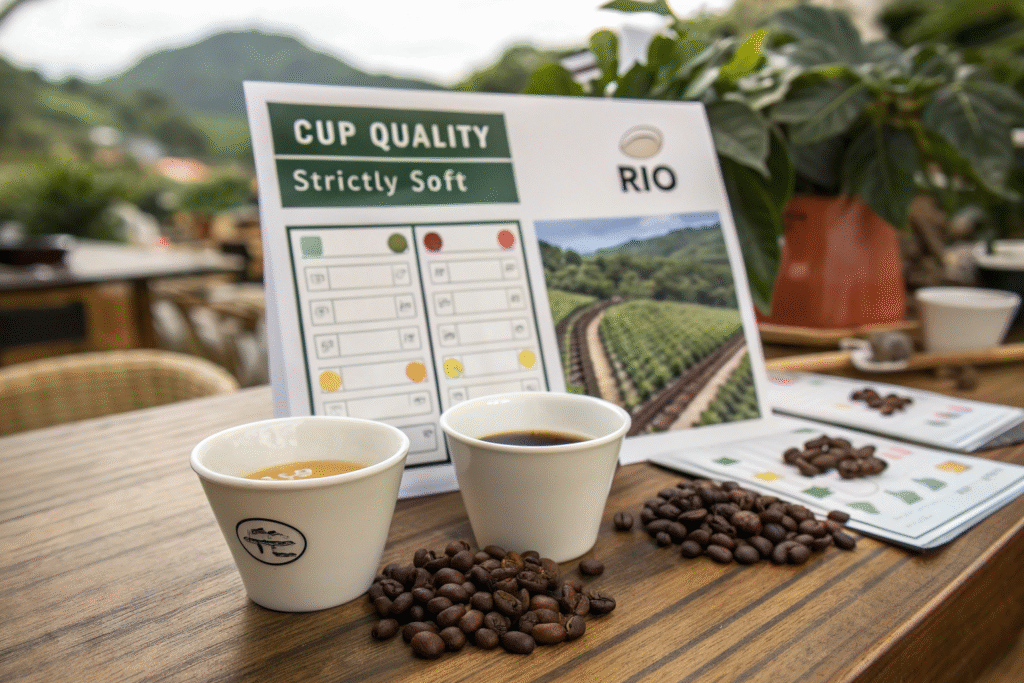
The Brazilian system evaluates defects, bean size, moisture content, color, and cup quality. Their unique "cup quality" scale from "Strictly Soft" to "Rio" is particularly important for understanding flavor profiles.
What Do the Brazilian Cup Quality Terms Mean?
- Strictly Soft: Smooth, sweet, no off-flavors (highest quality)
- Soft: Pleasant, balanced, minimal defects
- Softish: Slight imperfections but acceptable
- Hard: Harsh, medicinal, or off flavors
- Rioy/Rio: Strong medicinal taste (considered defective)
This sensory grading happens alongside physical evaluation, with "Strictly Soft" commanding premium prices regardless of bean size.
How Are Defects Classified in Brazil?
Brazil uses the "New York Method" for defect counting:
- Black beans, sour beans, and stones are primary defects
- Broken beans, insect damage, and shells are secondary defects
- Defect points determine the final grade (NY 2/3, NY 4/5, etc.)
Understanding both the cup quality scale and defect system is essential for evaluating Brazilian offers accurately.
What Makes Ethiopian Grading Unique?
Ethiopia, coffee's birthplace, uses a relatively simple numeric system that focuses primarily on defect count rather than bean size or altitude.
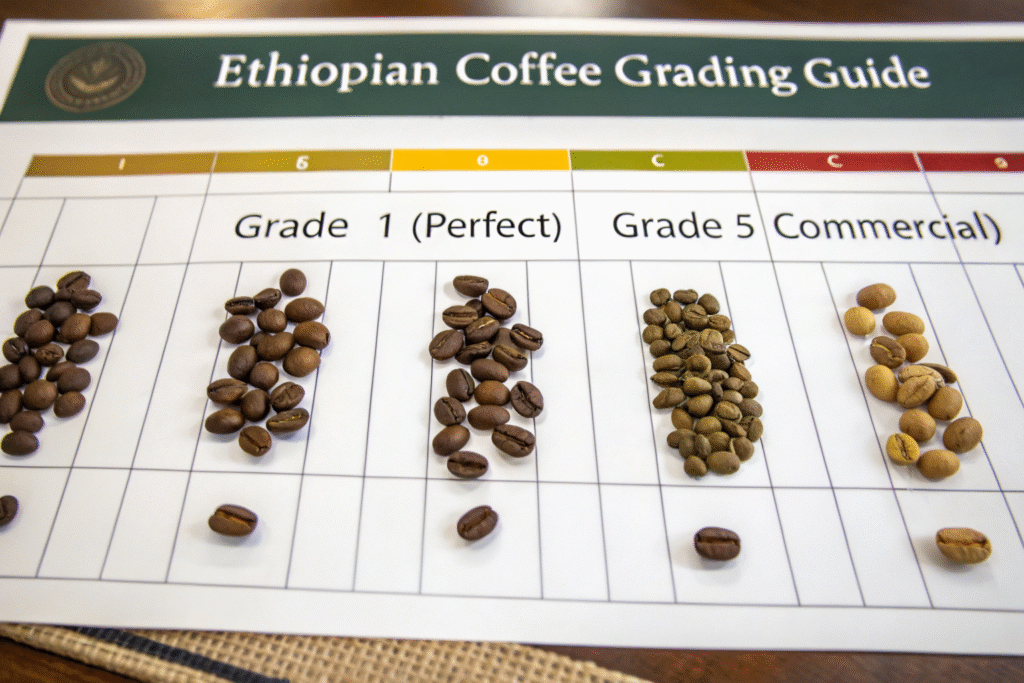
Ethiopian coffee is graded 1 through 9, with Grade 1 representing the highest quality. The system emphasizes visual perfection and absence of defects above all other characteristics.
How Do Ethiopian Grades Translate to Quality?
- Grades 1-3: Specialty coffee (Grade 1 has 0-3 defects per 300g)
- Grades 4-5: Commercial quality
- Grades 6-9: Lower commercial grades
Importantly, Ethiopian grading doesn't consider bean size—a Grade 1 can have varying screen sizes. This defect-focused approach means Ethiopian grades indicate cleanliness rather than necessarily predicting cup excellence.
What About Regional Designations?
Beyond the numeric grade, Ethiopian coffee carries important regional labels:
- Yirgacheffe, Sidamo, Harrar: Protected geographical indications
- Washed vs. Natural: Processing method significantly impacts flavor
- Cooperative or estate names: Increasingly specific traceability
The combination of grade number + region + processing provides a complete picture of Ethiopian coffee quality.
How Does the Colombian System Work?
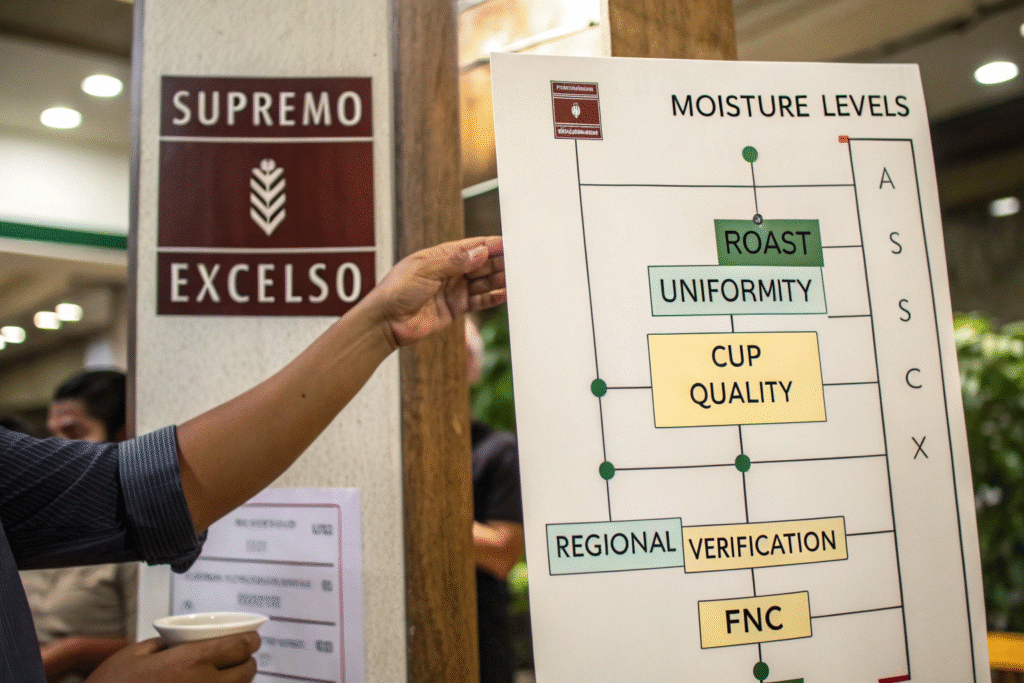
Colombia's grading is primarily size-based but includes quality considerations through the Colombian Coffee Growers Federation's (FNC) rigorous standards.
The familiar "Supremo" and "Excelso" grades refer primarily to bean size, but Colombia also implements quality control through its "Café de Colombia" designation.
What Do Supremo and Excelso Actually Mean?
- Supremo: Screen size 17/18 (6.8mm+)
- Excelso: Screen size 15/16 (6.0-6.4mm)
- UGQ (Usual Good Quality): Screen size 14/15 (5.6-6.0mm)
Contrary to common belief, Supremo isn't inherently better than Excelso—it's simply larger. Cup quality depends on other factors like region, altitude, and processing.
How Does the FNC Quality Control Work?
Beyond size grading, the FNC ensures:
- Moisture content between 10-12%
- Uniform roasting color in sample tests
- Cup quality evaluation for export approval
- Regional designation (Huila, Nariño, etc.) indicating terroir
This layered approach means Colombian coffee labeled "Supremo" from a specific region has passed multiple quality checks beyond just size sorting.
What is Special About Kenyan Grading?
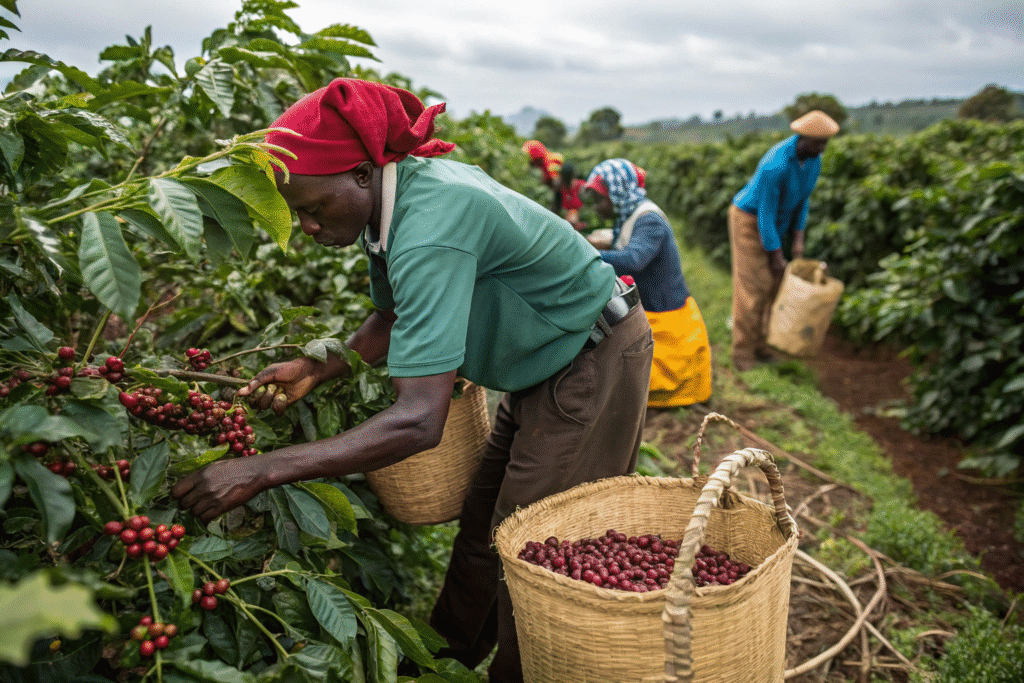
Kenya employs one of the most rigorous and respected grading systems in coffee, combining size grading with rigorous quality assessment.
The Kenyan system is famous for its AA, AB, PB grades, but these size classifications are just the beginning of a comprehensive quality evaluation process.
How Do Kenyan Size Grades Work?
- AA: Screen size 18+ (7.2mm+), large beans
- AB: Screen size 15/16 (6.0-6.4mm), mixed A and B sizes
- PB (Peaberry): Small, round single beans from cherries with one seed
- C, TT, T, MH/ML: Lower grades with more defects
Contrary to popular belief, AA isn't automatically superior to AB in cup quality—some of Kenya's most celebrated coffees come in AB lots. Size indicates potential, not guaranteed quality.
What Happens at the Nairobi Coffee Exchange?
All Kenyan export coffee undergoes:
- Official cupping and scoring by licensed cuppers
- Defect counting using standardized methods
- Lot classification based on combined scores
- Auction process where quality determines price
This transparent evaluation means Kenyan grades come with reliable quality assurance backed by expert assessment.
How Can You Compare Grades Across Countries?
With different systems emphasizing different attributes, comparing grades across origins requires translating each country's language into common quality indicators.
Create a mental framework that considers physical attributes, defect limits, and cup quality assessments regardless of the specific grading terminology used.
What Translation Framework Works Best?
Consider these equivalent quality tiers:
| Quality Tier | Brazil | Colombia | Ethiopia | Kenya |
|---|---|---|---|---|
| Premium Specialty | Strictly Soft, NY 2/3 | Supremo, Regional+ | Grade 1, Washed | AA, Top Auction Lots |
| Good Specialty | Soft, NY 4/5 | Excelso, Regional | Grade 2, Natural | AB, Good Auction Lots |
| Commercial | Hardish, NY 6/7 | UGQ | Grades 3-4 | C, TT |
| Lower Commercial | Rio, NY 8+ | Passilla | Grades 5+ | MH/ML |
This cross-reference approach helps you understand relative quality positions across different systems.
When Should You Look Beyond Grades?
Grades provide a starting point, but always consider:
- Processing method (washed, natural, honey)
- Specific region or farm within a country
- Harvest year and freshness
- Cupping scores when available
- Your own tasting of samples
Ultimately, your palate and your customers' preferences should drive decisions more than grade alone. This holistic evaluation combines objective grading with subjective quality assessment.
Conclusion
Understanding coffee grading by country requires learning each origin's unique language while recognizing the common parameters underlying all systems: bean size, density/altitude, defect count, and cup quality. While terms like "Supremo," "AA," "Grade 1," and "Strictly Soft" sound different, they often point to similar quality tiers within their respective systems.
The most effective approach combines knowledge of national grading systems with cupping evaluation and relationship-based sourcing. Grades provide a useful shorthand, but they should inform rather than replace direct quality assessment through sampling and tasting. If you're navigating multiple origin grading systems and need help understanding what different grades mean for actual cup quality, contact our export manager, Cathy Cai, at cathy@beanofcoffee.com. We can help you translate grades into predictable quality outcomes for your business.