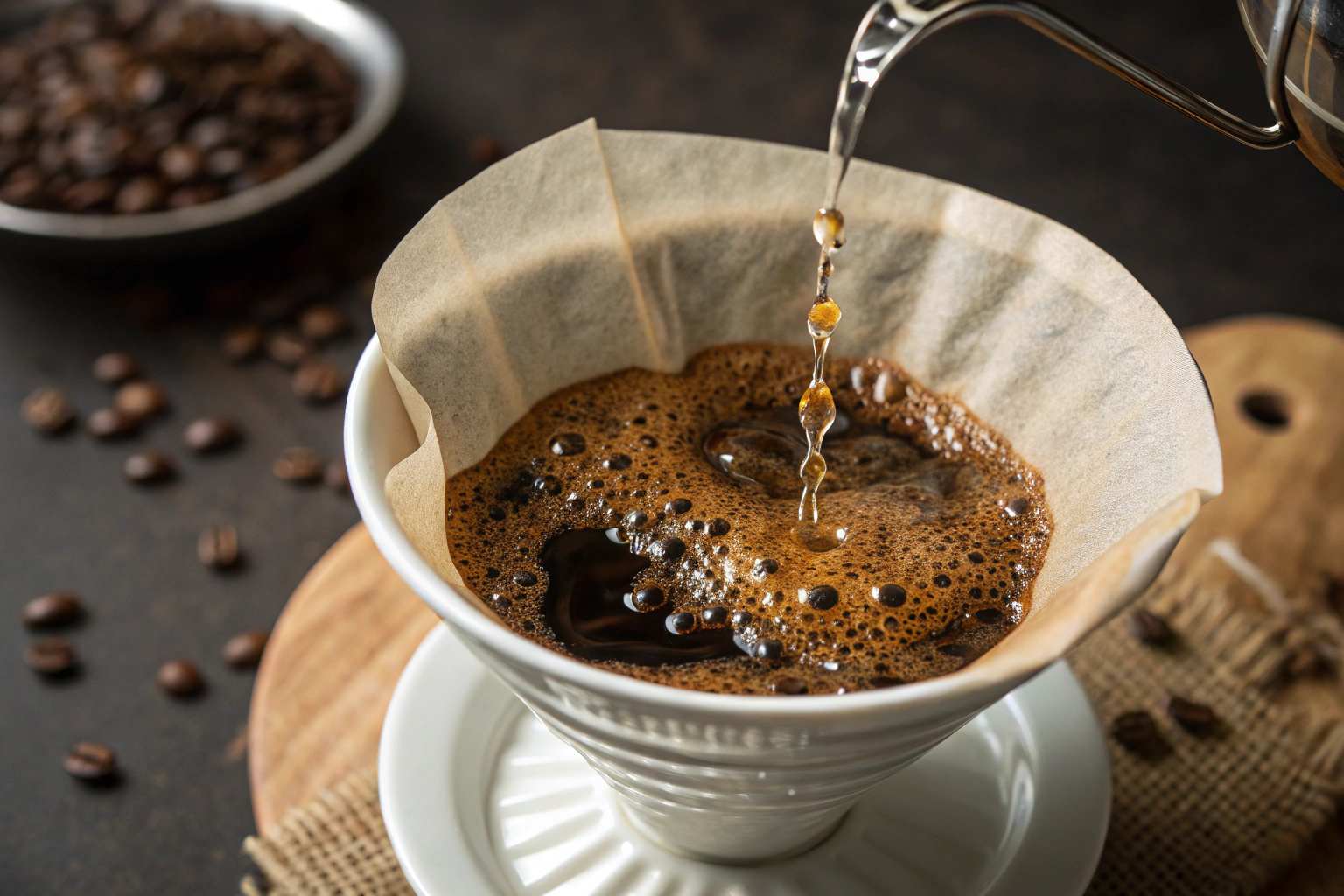
You're making a pour-over coffee. You've got your freshly ground beans, maybe a beautiful single-origin from our estate in Yunnan. You watch a video, and the barista says, "Now, we're going to bloom the coffee." They pour a small amount of hot water on the grounds, and it swells up like a living thing. You're like my client, Ron; you're a practical person, and you're asking, "What is actually happening here? Is this just a fancy, unnecessary ritual, or does it have a real, tangible impact on the final cup?"
Let me assure you, the bloom is not just for show. It is arguably the most critical step in any manual brewing process. The primary impact of blooming is to allow trapped carbon dioxide (CO2) gas to escape from the freshly roasted coffee grounds, which in turn enables water to make more uniform and effective contact with the coffee particles for a balanced and complete extraction. Neglecting the bloom is the fastest way to an uneven, under-extracted, and disappointing cup of coffee.
As a coffee producer, I am obsessed with unlocking the potential flavor locked inside each bean. The bloom is the crucial moment where the barista "prepares the ground," literally, for that flavor to be released. In this article, I will demystify the science behind the bloom and show you why this simple 30-second step is non-negotiable for anyone serious about brewing delicious coffee.
What is the Science Behind the "Bloom"?
To understand the bloom, you need to understand what happens during the roasting process. When we roast green coffee beans, a series of complex chemical reactions occur. One of these reactions, the Maillard reaction, creates a significant amount of gases, primarily carbon dioxide (CO2), which get trapped within the bean's porous cellular structure.
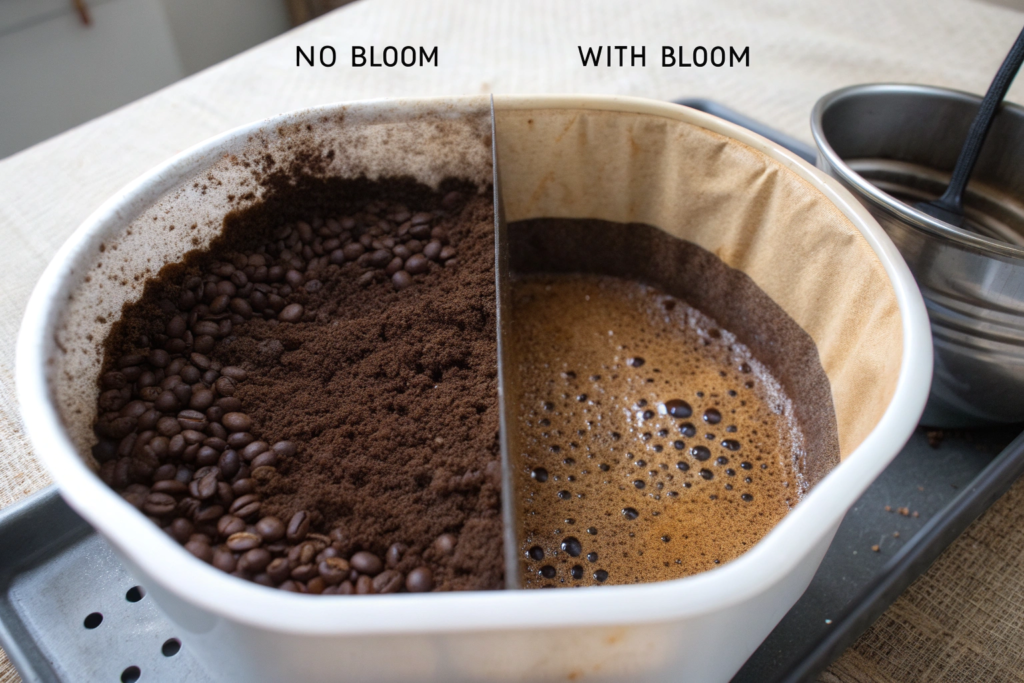
Freshly roasted coffee is packed with this trapped CO2. When you grind the beans and add hot water for the first time, the water rapidly displaces this gas. The CO2 violently pushes its way out of the grounds, creating the bubbling, swelling effect we call the "bloom."
Here's the critical part: this escaping CO2 gas actively repels water. If you try to start your main brew while this "de-gassing" is happening, the water cannot properly and evenly saturate the coffee grounds. It will be pushed around, creating dry pockets and channels where the coffee is not being extracted at all. The bloom is a controlled de-gassing phase. It's like opening the pressure valve on a system before you begin the main work.

How Does Freshness Affect the Bloom?
The fresher the coffee is from its roast date, the more trapped CO2 it will contain, and the more dramatic the bloom will be. If you pour water on your coffee and see almost no bloom, it's a strong sign that the coffee is old and has already lost most of its gas—and along with it, much of its volatile aromatic compounds and flavor.
Does Roast Level Matter?
Yes. Darker roasts are more porous and undergo more vigorous chemical reactions, so they tend to de-gas more quickly and have a very aggressive, but short-lived, bloom. Lighter roasts are denser and release their CO2 more slowly, often requiring a slightly longer bloom time.
How Does Blooming Lead to a More Even Extraction?
You're worried about your coffee tasting weak and sour at the same time. This is a classic sign of uneven extraction, and skipping the bloom is a primary cause.
As we established, escaping CO2 repels water. If you just dump all your brew water onto the coffee bed at once, you create chaos. The water will find the path of least resistance, flowing through areas that have de-gassed first and completely bypassing other clumps of coffee that are still pushing out gas. This is called channeling.
When you perform a bloom, you use a small amount of water (typically 2-3 times the weight of the coffee grounds) to saturate the entire bed. This initiates the main de-gassing event before the main extraction begins. By the end of the bloom, the coffee bed is calm, evenly saturated, and free of dry pockets. Now, when you begin your main pour, the water can flow evenly through the entire bed, extracting flavor from every single particle in a uniform way. This leads to a higher overall extraction yield and a much more balanced, sweet, and complete flavor profile.
What is "Extraction Yield"?
Extraction yield is the percentage of the coffee's mass that dissolves into the water. A well-bloomed and evenly extracted coffee might have a yield of 20-22%, which is considered the "sweet spot" for delicious coffee. An unevenly extracted coffee will have a much lower yield, resulting in a weak and underdeveloped taste.
Does Blooming Affect Brew Time?
Yes, indirectly. By ensuring an even flow of water, a proper bloom can lead to a more consistent and predictable total brew time. If you have channeling due to a poor bloom, your brew time will often be too fast, as the water gushes through the path of least resistance.
What is the Correct Technique for Blooming Coffee?
The bloom is simple, but technique matters. Here is the standard best practice for a pour-over:
- Start with a Level Bed: After adding your ground coffee to the filter, give it a gentle shake to create a flat, level surface. This is the first step to an even extraction.
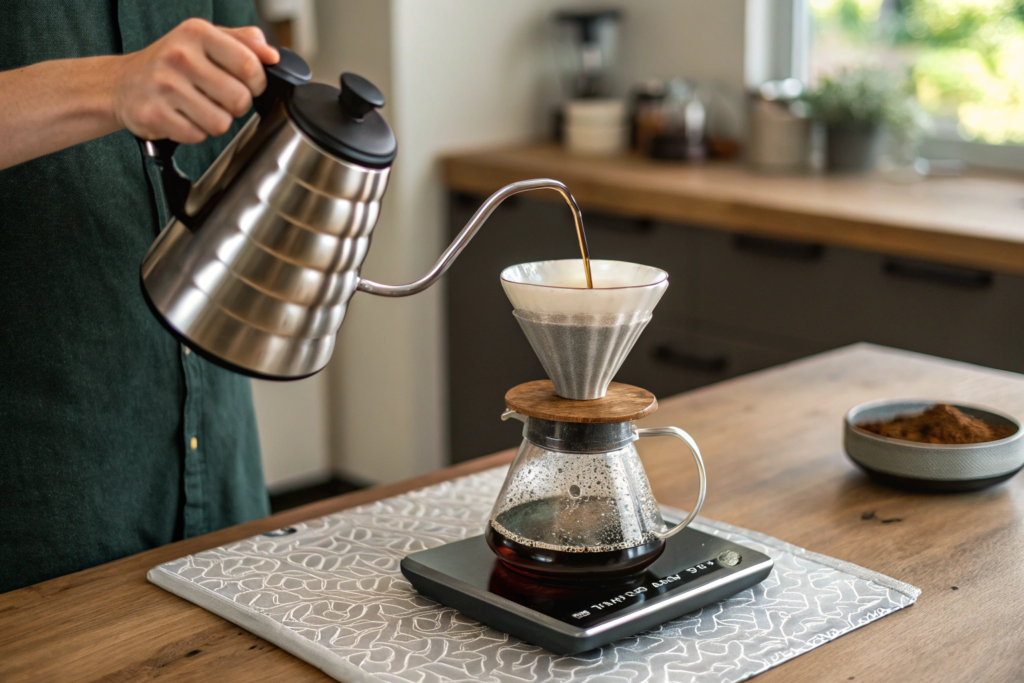
- Pour the Bloom Water: Start a timer. Pour about 2 to 3 times the weight of your coffee in hot water evenly over the grounds. For 20 grams of coffee, this would be 40-60 grams of water. Use a spiral motion to ensure all the grounds are saturated. The goal is to wet everything, but not have too much water dripping through yet.
- Wait and Watch: Let the coffee sit and "bloom" for 30 to 45 seconds. You will see it rise, bubble, and then begin to fall. This is the CO2 escaping. Some baristas like to give the slurry a gentle stir or swirl during this phase to ensure there are no dry clumps.
- Begin Your Main Pour: Once the bloom has subsided, you can begin the rest of your pouring regimen, confident that the coffee bed is perfectly prepped for an even extraction.
This simple process is the foundation of almost every manual brewing recipe, from a V60 to a Chemex or a French Press.
How Much Water is Too Much?
If you add too much water during the bloom, a significant amount will pass through the filter and into your cup before the main extraction has even begun. This "bypass" water will be under-extracted and will dilute your final brew. Stick to the 2-3x ratio.
Should You Bloom for an Immersion Brew like a French Press?
Yes! Even though all the coffee will eventually be submerged, blooming is still crucial. Adding all the water at once can cause a "crust" of dry, gassy coffee to form on top, which won't extract properly. A bloom and a gentle stir at the beginning ensures all the grounds are saturated and extracting from the start.
How Does Blooming Impact the Final Flavor?
Ultimately, this is the only question that matters: does it make the coffee taste better? The answer is a resounding yes.
By ensuring a more even and complete extraction, a proper bloom directly contributes to a superior flavor profile.
- It increases sweetness: By extracting more of the soluble sugars from the coffee, the final cup will be noticeably sweeter and less sour.
- It enhances complexity: It allows the water to access and extract the more subtle, delicate flavor compounds—the floral, fruity, and tea-like notes that make a specialty coffee special.
- It reduces negative flavors: By preventing channeling, it avoids the disastrous combination of sourness (from under-extracted parts) and harsh bitterness (from over-extracted parts).
- It improves body and mouthfeel: A more complete extraction leads to a richer, more satisfying texture in the final cup.
In short, the bloom is the key that unlocks the balanced, sweet, and complex flavor potential that we, as producers, work so hard to cultivate in the beans.

Can You "Over-Bloom"?
Not really. As long as you don't wait too long (e.g., several minutes) before starting your main pour, which would cause the coffee bed to cool down too much, there's little risk. 30-45 seconds is a safe and effective window.
Is This Why My Coffee Sometimes Tastes "Hollow"?
Yes, a "hollow" or "empty" taste in the mid-palate is a classic sign of under-extraction, often caused by channeling. A proper bloom is one of the best ways to fix this and achieve a fuller, more complete flavor profile.
Conclusion
The bloom is not a mystical coffee ceremony. It is a simple, science-based step with a profound and direct impact on flavor. It is the essential act of preparation that allows water to do its job effectively. By taking just 30-45 seconds to let the coffee de-gas, you are ensuring a more even, more complete, and ultimately more delicious extraction. You are transforming a potentially chaotic and uneven process into a controlled and uniform one.
Next time you brew, don't see the bloom as a delay. See it as the first and most important conversation you have with your coffee. It's the moment you allow the coffee to breathe, preparing it to share all of its wonderful, complex flavors with you.
As producers, we pour our passion into every bean. The bloom is the first step you take to honor that passion. If you're looking for a coffee that will reward your careful technique with an explosive bloom and a spectacular cup, please reach out to my colleague, Cathy Cai, at cathy@beanofcoffee.com.