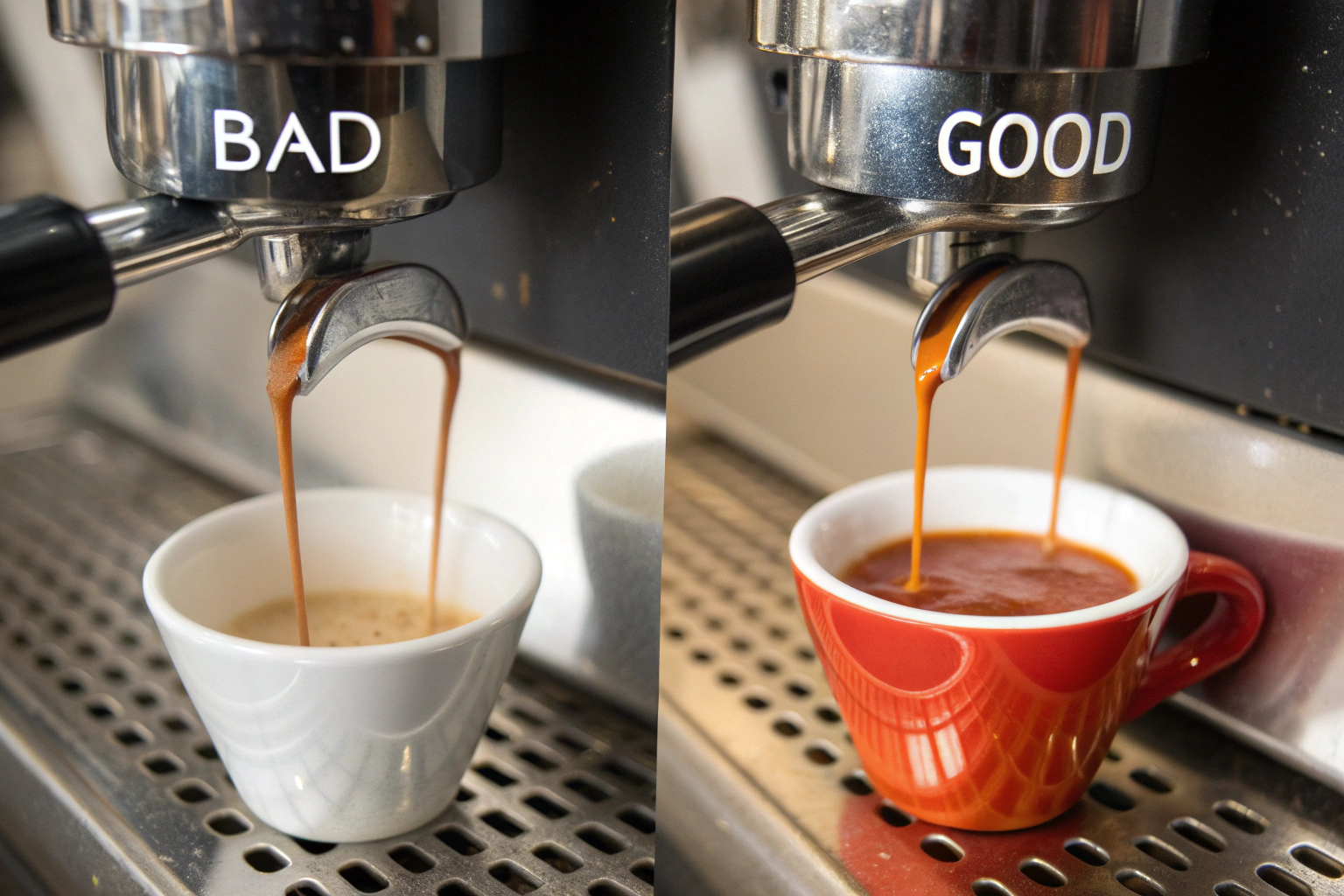
Are you a coffee lover like Ron, meticulously preparing your espresso shot, only to have it come out tasting thin, sour, and bitter all at once? It's one of the most frustrating problems in coffee. You've invested in a great machine, a quality grinder, and premium beans, but the result is still a disappointing, undrinkable mess. You see the espresso stream looking watery and spurting unevenly, and you know something is deeply wrong. This inconsistency can make you want to give up on making espresso at home or in your cafe.
This problem has a name: channeling. Channeling is what happens when water finds a path of least resistance through the coffee puck instead of flowing evenly through all the grounds. This creates a disastrous combination of over-extraction and under-extraction in the same cup. The grounds along the "channel" are blasted with too much water, releasing bitter, harsh compounds. Meanwhile, the rest of the puck remains under-extracted, contributing weak, sour flavors. The result is a shot that is simultaneously sour, bitter, and lacking sweetness and body—the worst of all worlds.
As someone who dedicates their life to cultivating flavor in our coffee beans in Yunnan, it pains me to see all that potential washed away by a poor extraction. Understanding and defeating channeling is the key to unlocking the true, rich flavor of the coffee. In this article, I'll break down what causes channeling, how to spot it, and the practical steps you can take to eliminate it, ensuring every shot you pull is a perfect expression of the bean.
What Causes Channeling in Espresso?
You've identified the problem, but now you need to know the cause. You're looking at your coffee puck, and it seems fine, but the results say otherwise. It feels like you're fighting an invisible enemy. The problem is that channeling is caused by tiny, almost invisible imperfections in your puck preparation. You're worried that without understanding the root cause, you'll just be guessing and will never achieve consistent results.
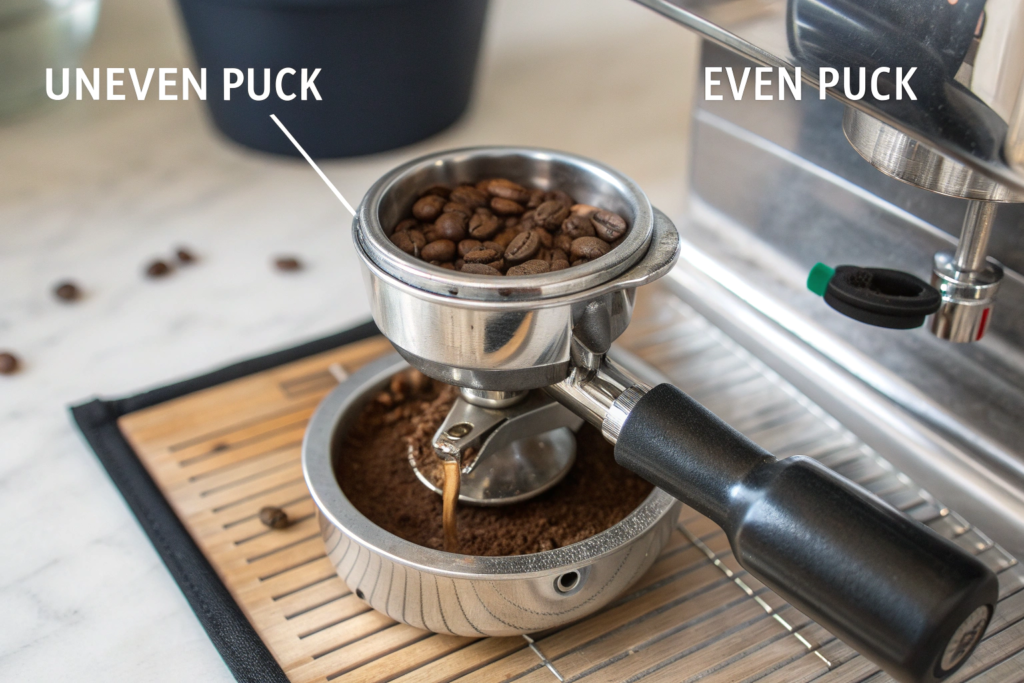
Channeling is fundamentally a problem of uneven density within your coffee puck. Water, under the high pressure of an espresso machine (typically 9 bars), is like a river; it will always follow the easiest path. If there are any cracks, clumps, or less dense areas in your puck, the water will exploit these weaknesses and rush through them, avoiding the more densely packed areas.
There are several common culprits that create this unevenness:
- Clumpy Grounds: If your grinder produces clumpy coffee grounds, these clumps create areas of high density surrounded by areas of low density.
- Poor Distribution: Simply dumping the grounds from the grinder into the portafilter creates a mound. If this isn't evenly distributed, some parts of the puck will be denser than others.
- Uneven Tamping: Tamping with uneven pressure, or at an angle, will compact one side of the puck more than the other.
- Incorrect Dose: Putting too much or too little coffee in the portafilter basket can also lead to issues with proper compaction and water flow.
Essentially, any step in your puck preparation that fails to create a perfectly uniform and level bed of coffee is an open invitation for channeling to occur.
Why is a good grinder so important?
A high-quality burr grinder is your first line of defense against channeling. Unlike blade grinders that smash beans into uneven particles, burr grinders produce a much more consistent and uniform grind size. More importantly, good grinders are designed to minimize clumping. This consistency is the absolute foundation of a good espresso shot. Investing in a quality espresso grinder is not a luxury; it's a prerequisite for avoiding channeling.
What is the Weiss Distribution Technique (WDT)?
The Weiss Distribution Technique (WDT) is a method used to break up clumps and evenly distribute coffee grounds in the portafilter before tamping. It involves using a tool with very fine needles (a WDT tool) to stir the grounds in a circular or crisscross pattern. This simple action de-clumps the coffee and settles it into a fluffy, uniform bed, dramatically reducing the risk of channeling. It has become a standard step in the workflow of most specialty coffee professionals.
How Can You Visually Identify Channeling?
You suspect you have a channeling problem, but how can you be sure? You can taste it, but you want to see it happen in real-time to diagnose the issue. The problem is that a standard portafilter with spouts hides the evidence. You're flying blind, unable to see how the extraction is really progressing under the surface.
The single best tool for identifying channeling is a bottomless (or naked) portafilter. This is a portafilter that has had the bottom and spouts removed, exposing the entire surface of the filter basket. It allows you to watch the espresso extraction unfold in real-time.
With a bottomless portafilter, here's what you're looking for:
- A Good Shot: The extraction will begin with several small beads of espresso forming across the entire basket. These beads will then coalesce into a single, stable, viscous stream in the center. The color will be a rich, reddish-brown, like warm honey.
- A Channeling Shot: You will see several tell-tale signs. "Spurting" or "jetting," where tiny, high-pressure streams of watery coffee shoot out, is a dead giveaway. You might also see "dead spots," where no coffee is coming through, or notice that the extraction starts on one side of the basket long before the other. The streams will often be "blonde" (a very pale yellow color) very early in the shot, indicating severe over-extraction along the channel.
Using a bottomless portafilter turns a black box into a clear window, giving you instant visual feedback on the quality of your puck preparation.

What does the spent puck tell you?
After the shot, you can also inspect the "spent" coffee puck. Knock it out of the portafilter and look at it carefully. If you see a small pinhole or a crack in the surface of the puck, that is likely where a channel formed. If the puck is soupy or muddy, it could indicate that your grind was too fine, which can also contribute to channeling as the machine struggles to force water through the dense coffee. A well-extracted puck should be firm, relatively dry, and knock out in one solid piece.
Can you hear channeling?
Sometimes, yes. During a channeling shot, you might hear a higher-pitched "sizzling" or "hissing" sound as the water forces its way through the weak spots. A good extraction tends to have a lower, more consistent hum. While it's not as reliable as visual cues, learning to listen to your machine can be another tool in your diagnostic kit for understanding espresso extraction.
How Do You Prevent Channeling?
You understand the causes and you know how to spot the problem. Now for the most important part: how do you fix it? You're looking for a reliable, step-by-step process that you can follow every time to produce consistent, delicious espresso. The problem is that there's a lot of conflicting advice out there, and you need a simple, proven workflow.
Preventing channeling is all about creating a uniform, homogenous coffee puck. This is achieved through a methodical process often called "puck prep." Here is a simple, effective workflow:
- Start with Fresh, Quality Beans: Use fresh beans (ideally within a month of the roast date) like our single-origin Arabica from Shanghai Fumao. Stale beans produce less CO2 and can lead to a faster, more channel-prone shot.
- Dose Consistently: Use a coffee scale to weigh your dose of coffee every single time. Consistency is key.
- Use WDT: After grinding into your portafilter, use a WDT tool to break up all clumps and create a fluffy, level bed of grounds.
- Distribute/Level: Use a coffee distribution tool (like a spin distributor) or tap the side of the portafilter gently to settle the grounds into a perfectly flat bed.
- Tamp Evenly and Levelly: Tamp on a flat surface. Apply firm, consistent pressure, ensuring your tamper is perfectly level. Do not tap the portafilter after tamping, as this can break the "seal" on the sides of the puck and create channels.
By diligently following these steps, you are systematically eliminating all the variables that cause uneven density. You are giving the water no choice but to flow evenly through the entire puck, leading to a balanced, sweet, and flavorful extraction.
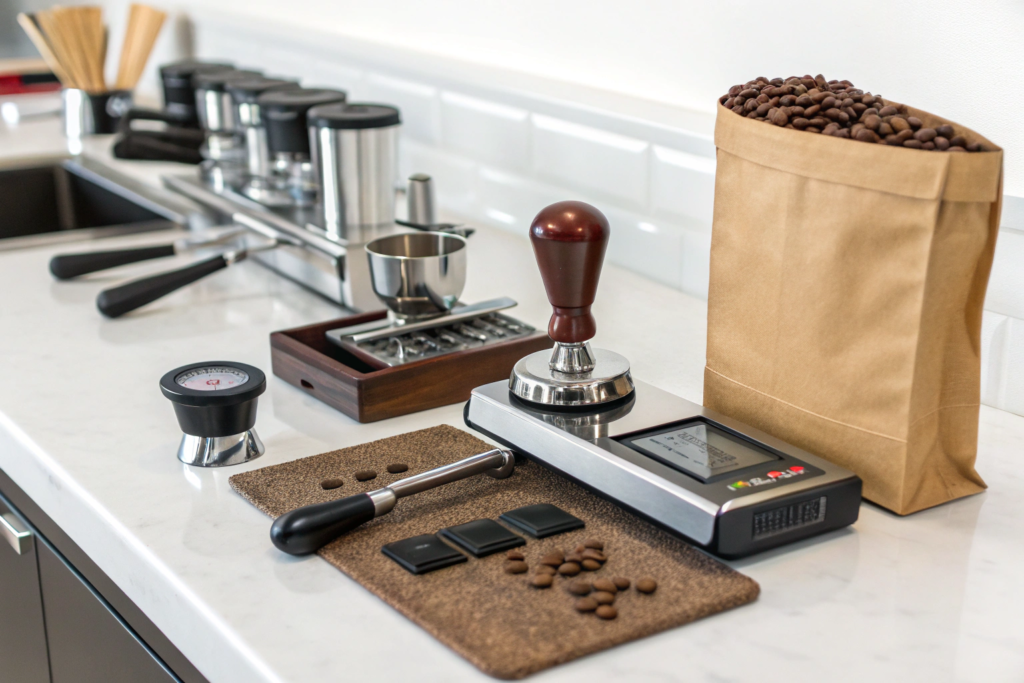
Do I need all these special tools?
While you can improve your technique without them, tools like a WDT tool, a distribution tool, and a calibrated tamper are designed to take the guesswork out of the equation and make your results more repeatable. They are relatively small investments that pay huge dividends in consistency. Think of them as tools for precision, helping you perform the same, perfect prep every single time.
What if I do everything right and still get channeling?
If you've perfected your puck prep and are still seeing channeling, it's time to look at other variables. Your grind size might be too fine, choking the machine and forcing it to find a weak spot. Or, your machine's water pressure might be too high, or the temperature too hot. It could also be an issue with the grinder itself producing an inconsistent grind. This is where you start to experiment, changing one variable at a time to isolate the problem.
Conclusion
Understanding the impact of channeling is the turning point for any aspiring barista or coffee enthusiast. It's the moment you realize that the thin, sour, and bitter shots you've been pulling aren't the fault of the bean or the machine, but a direct result of an uneven extraction. Channeling is the great enemy of flavor, a thief that robs your coffee of its sweetness, body, and complexity.
But by understanding its causes—clumps, poor distribution, and uneven tamping—you can learn to defeat it. By using tools like a bottomless portafilter to diagnose the problem and adopting a meticulous puck preparation workflow (WDT, distributing, and level tamping), you can take control of your extraction. You can ensure that the water flows evenly through the entire bed of coffee, unlocking all the delicious, balanced flavors that the grower and roaster intended.
It's a journey that requires patience and precision, but the reward is immense: the ability to consistently pull a perfect shot of espresso—rich, sweet, and syrupy. It's the ultimate way to honor the incredible journey of the bean, from our farms in Yunnan to your cup. If you're looking for a bean with the depth and sweetness worthy of a perfect extraction, I invite you to connect with us at BeanofCoffee. Please reach out to my colleague, Cathy Cai, at cathy@beanofcoffee.com to learn more.