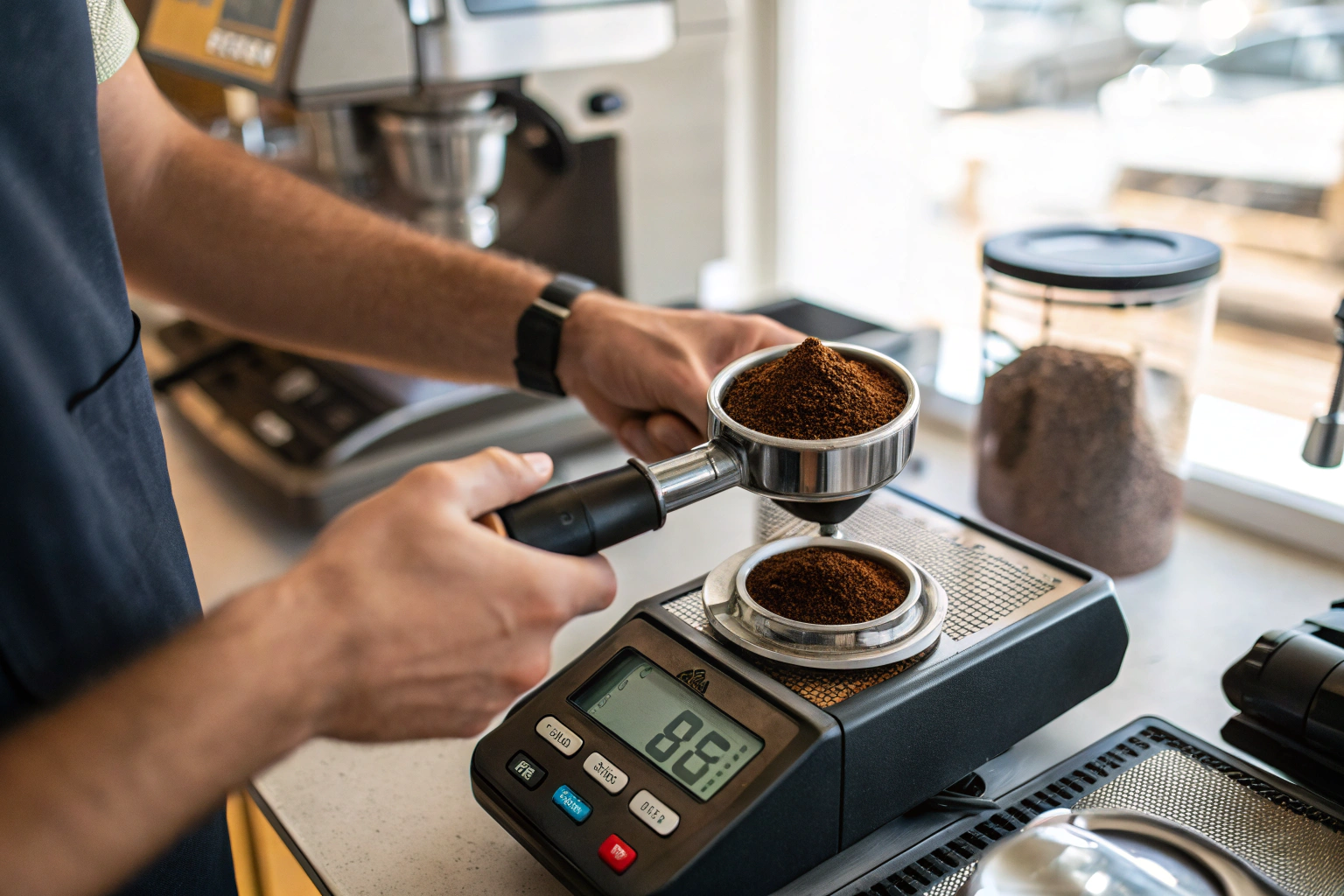
I remember watching a barista in Shanghai weigh every single dose. I thought it was overkill. Then he made me a shot. It was perfect. Then he changed the dose by just 0.5 grams. Same coffee. Same machine. The second shot tasted thin and sour. That moment changed how I think about coffee. Dosing is not just a technical detail. It is the difference between good coffee and great coffee. And for buyers like you? Understanding dosing helps you sell better coffee to your customers.
Dosing means measuring the exact amount of ground coffee you use for each brew. The impact of dosing affects extraction time, flavor balance, strength, and consistency. A proper dose gives you sweetness and body. A bad dose gives you bitterness or sourness. For coffee shops and roasters, consistent dosing builds customer trust and reduces waste.
I have seen this play out with our buyers across North America, Europe, and Australia. The ones who train their staff on dosing sell more coffee. The ones who ignore it struggle with complaints. Let me break down why dosing matters and how you can use it to improve your coffee game.
What Is Dosing and Why Does It Matter?
Let me start with the basics. Dosing sounds technical. But it is simple. It is just how much coffee you put in your basket or filter. That small decision changes everything.
Dosing is the weight of ground coffee used for a single brew. It matters because it controls how much surface area touches the water. More coffee means more resistance. Less coffee means less resistance. That changes how fast water flows through. It changes what flavors come out. Without consistent dosing, you cannot make consistent coffee.
I talked to a roaster in Texas who could not figure out why his espresso tasted different every morning. Same beans. Same machine. The problem? His baristas used a scoop instead of a scale. One scoop could be 16 grams. Another could be 19 grams. That is a huge difference.
How Does Dose Affect Extraction?
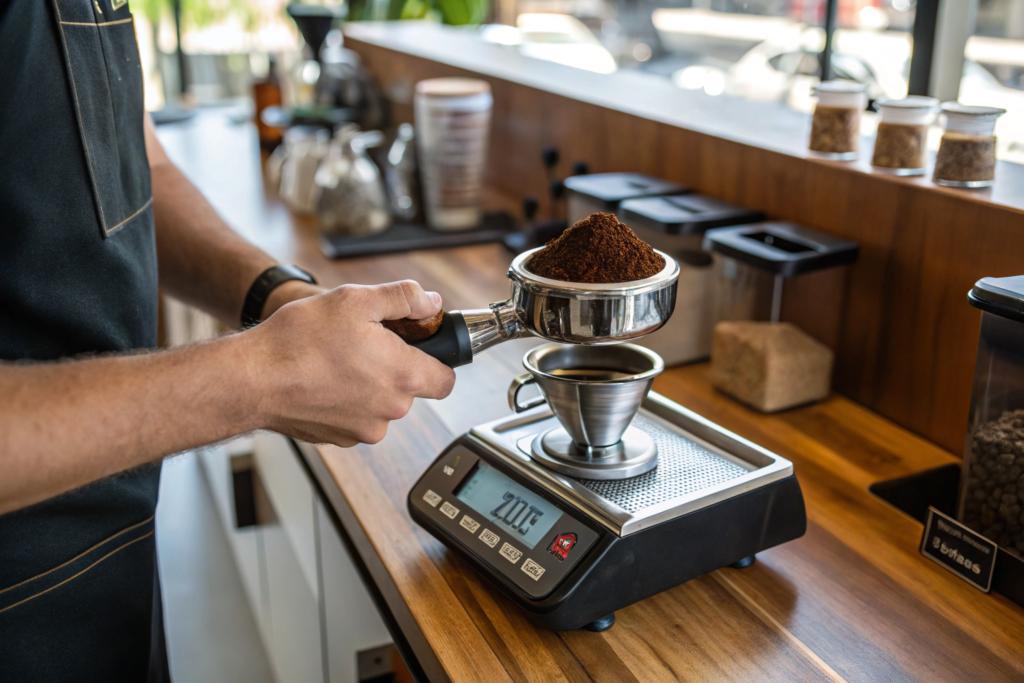
Extraction is the process of pulling flavors out of the coffee grounds. Water hits the coffee. It dissolves acids, sugars, oils, and bitter compounds.
A bigger dose means more coffee. Water has to pass through more grounds. That slows down the flow. The water stays in contact longer. That increases extraction.
A smaller dose means less coffee. Water flows faster. Contact time is shorter. That decreases extraction. So if your coffee tastes sour, you might need a bigger dose. If it tastes bitter, try a smaller dose. We recommend using a digital coffee scale to get consistent results. It is the cheapest upgrade you can make.
What Is the Standard Dose?
There is no single standard. But most shops use these ranges:
- Espresso: 16 to 22 grams for a double shot
- Pour-over: 15 to 30 grams per 250ml of water
- French press: 15 to 20 grams per 250ml
Start in the middle. Then adjust based on taste.
Our Arabica beans from Yunnan work well with a 18-gram dose for espresso. That gives a balanced shot with sweetness and body.
How Does Dosing Affect Espresso Quality?
Espresso is where dosing matters most. The pressure is high. The water contact time is short. Every fraction of a gram changes the shot.
In espresso, dosing changes the resistance in the puck. A larger dose creates more resistance. Water takes longer to pass through. That increases extraction yield. A smaller dose creates less resistance. Water passes faster. That decreases extraction yield. The right dose gives you a balanced shot with sweetness, acidity, and body. The wrong dose gives you sour or bitter shots.
I worked with a buyer in Italy. He was struggling with his espresso blend. It tasted fine in the morning but bad in the afternoon. The problem? His staff was not redosing after cleaning the grinder. The grind size changed. But the dose stayed the same. That is a recipe for bad coffee.
What Happens When the Dose Is Too High?
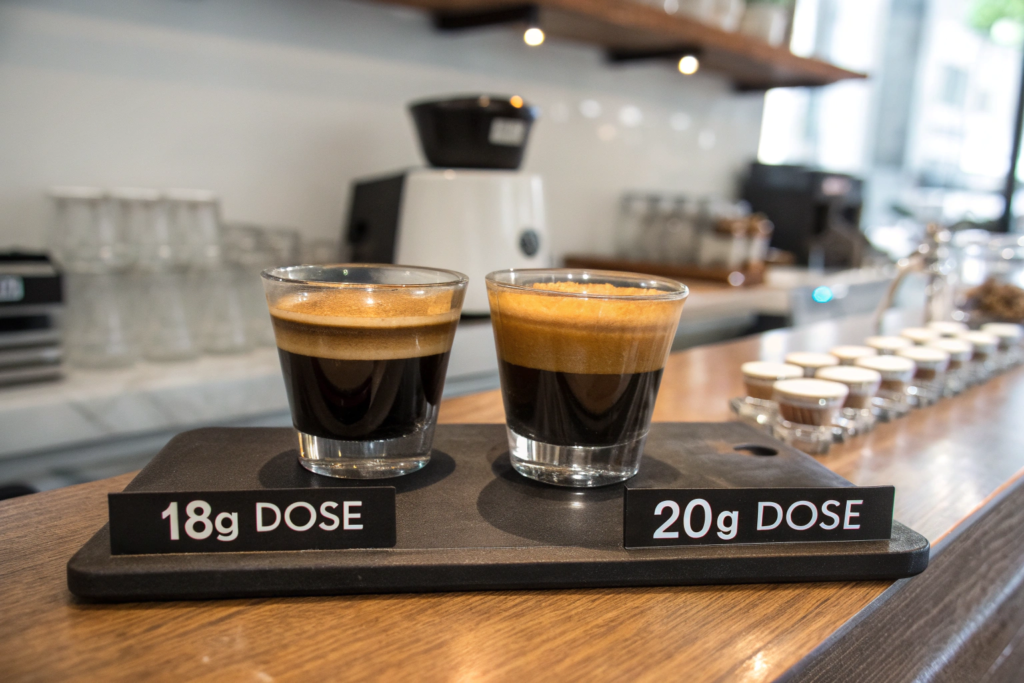
Too much coffee in the basket. The puck is too thick. Water struggles to pass through.
The result: under-extraction. The water does not have time to pull out all the sugars. You get sour, salty, or weak flavors. The shot might also channel. That means water finds a crack and rushes through one spot.
Signs of too high a dose:
- Shot takes too long (over 35 seconds)
- Coffee looks pale
- Taste is sharp or sour
How Do You Find the Right Dose?
Start with 18 grams. Pull a shot. Time it. Aim for 25 to 30 seconds.
If it runs fast, add 0.5 grams. If it runs slow, remove 0.5 grams. Keep changing until you hit the right time and taste.
We train our partners to use dosing tools and distributors to make the puck even. An even puck extracts better.
How Does Dosing Affect Pour-Over and Batch Brew?
Espresso gets all the attention. But dosing matters just as much for pour-over and batch brew. The difference? You have more water. So the ratio matters more.
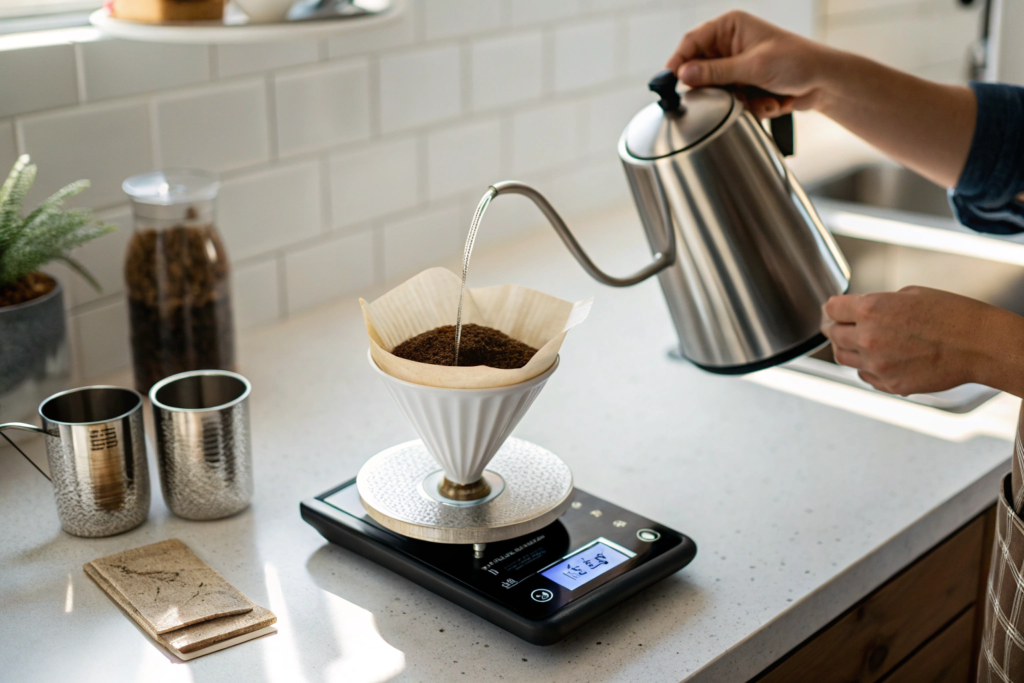
For pour-over and batch brew, dosing determines the coffee-to-water ratio. That ratio controls strength and extraction. A higher dose (more coffee) gives a stronger, more intense cup. A lower dose (less coffee) gives a weaker, more delicate cup. Consistency in dosing ensures your batch brew tastes the same every day.
I visited a roastery in Seattle. They used a batch brewer for their drip coffee. The staff measured coffee with a scoop. One day, the scoop was heaping. The next day, it was level. Customers noticed. They said, "Your coffee was stronger yesterday." That is bad for business.
What Is the Best Coffee-to-Water Ratio?
The Specialty Coffee Association recommends a ratio of 1:16 to 1:18. That means 1 gram of coffee for every 16 to 18 grams of water. For a 250ml cup (about 250 grams of water), you use 14 to 16 grams of coffee.
For batch brew, scale it up. A 2-liter batch needs about 120 grams of coffee. We use a coffee brewing ratio chart to train our team. It takes the guesswork out.
How Do You Adjust Dose for Different Beans?
Different beans have different densities. A light roast is denser than a dark roast. So a scoop of light roast weighs more than a scoop of dark roast. That is why you must use a scale. Volume is not reliable.
For our Catimor coffee beans, we recommend a slightly higher dose. They have a heavier body. A 1:15 ratio works well. For lighter Arabicas, use 1:17. That brings out the floral notes.
How Do You Train Staff to Dose Consistently?
You can have the best beans in the world. If your staff does not dose correctly, your coffee will taste bad. Training is not optional. It is essential.
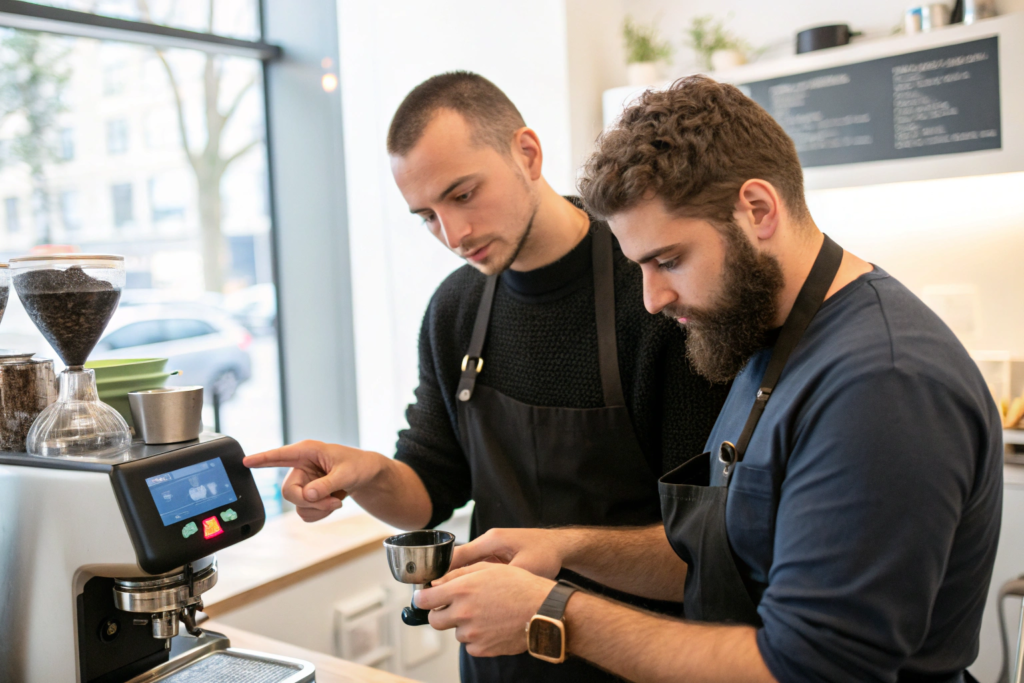
Train staff to use scales for every dose. Do not allow scoops or eyeballing. Set up a dosing station with a scale, a grinder, and a dosing cup. Post the target dose for each coffee. Check their work randomly. Make dosing part of your opening and closing checklists.
I learned this from a buyer in London. He had a problem with inconsistent espresso. He blamed the grinder. He blamed the machine. Finally, he watched his staff. They were dosing by eye. He installed scales at every station. The problem went away in one day.
What Tools Do You Need?
At minimum: a digital scale that measures to 0.1 grams. It should be waterproof and fast.
Better: a dosing grinder that grinds directly into a portafilter and stops at the right weight. These cost more but save time. Also useful: dosing cups, funnels, and distribution tools. We ship our coffee through Shanghai Fumao to roasters who then supply these tools to their cafe clients. It is a complete system.
What Common Mistakes Do You See?
The biggest mistake is changing the dose instead of the grind size. If your shot runs fast, do not add more coffee. Adjust the grinder finer. Keep the dose the same.
Another mistake is forgetting to tare the scale. The portafilter itself weighs something. You must zero it out. Also, humidity changes the coffee. Coffee absorbs moisture. On a humid day, the same volume weighs more. That is another reason to use a scale, not a scoop.
Conclusion
Dosing is not complicated. But it is powerful. The impact of dosing touches every part of coffee quality. It changes extraction. It changes flavor. It changes consistency. Use a scale. Measure every dose. Train your staff. Start with standard ratios. Then adjust based on taste.
At Shanghai Fumao, we grow, process, and export coffee from our 10,000 acres in Yunnan. We know that great coffee starts at the farm. But it ends in the cup. And dosing is the bridge between the two.
We work with partners like Shanghai Fumao to get our coffee to you fresh and ready. Then we help you brew it right. If you want to learn more about brewing or sourcing better coffee, reach out. I am happy to share what we have learned. Contact Cathy Cai. My email is cathy@beanofcoffee.com. Tell me about your coffee business. Let us talk about how to make every cup better.