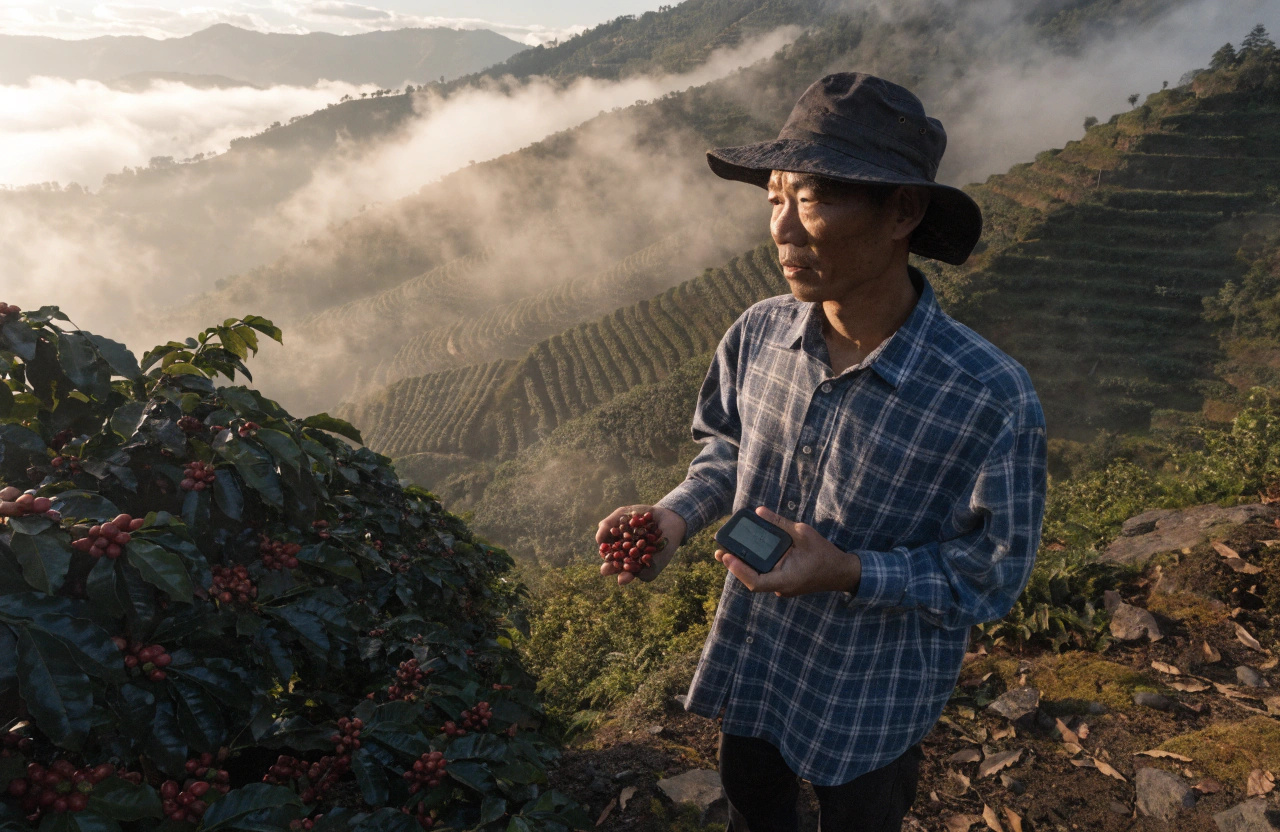
I spent my first five years in coffee believing flavor came from variety. Typica tastes like this. Catimor tastes like that. Bourbon tastes like something else. Then I planted the same Catimor seedlings on two different blocks of our farm. Same nursery. Same week. Same soil preparation. One block was at 1,200 meters, facing west, exposed to afternoon sun. The other was at 1,550 meters, facing east, shaded by the mountain until 10 a.m. The coffee from those two blocks tasted completely different. The lower block was heavier, chocolaty, less acidic. The higher block was brighter, floral, almost tea-like. Same seeds. Same pickers. Same fermentation tanks. The only difference was the piece of mountain they grew on. That was the moment I understood: microclimate is not a detail. It is the main character.
So, how do you understand the impact of microclimates on flavor without becoming a meteorologist? You start by mapping four variables: altitude, aspect (which direction the slope faces), temperature range (day/night differential), and rainfall distribution during the growing cycle. These four factors explain 80% of flavor variation between neighboring farms—and even between blocks on the same farm. You do not need a weather station on every hectare. You need to ask the right questions and taste with those questions in mind.
But let me be clear. Microclimate is not magic. It is physics and biology. Temperature drives metabolism. Sunlight drives photosynthesis. Water drives nutrient transport. When these variables shift, the bean changes. The change is measurable. It is predictable. And once you understand it, you can stop guessing why the same variety tastes different from two farms 5 kilometers apart. You can start selecting lots based on climate logic, not just reputation. Let me walk you through exactly how we map and measure microclimates at BeanofCoffee—and how you can use that information to buy better coffee.
How Does Altitude Change Flavor Beyond "Higher Is Better"?
Everyone knows "higher altitude coffee tastes better." That is a shortcut. It is not wrong, but it hides the mechanism. Altitude does not directly flavor coffee. Temperature does. And altitude is just a proxy for temperature.
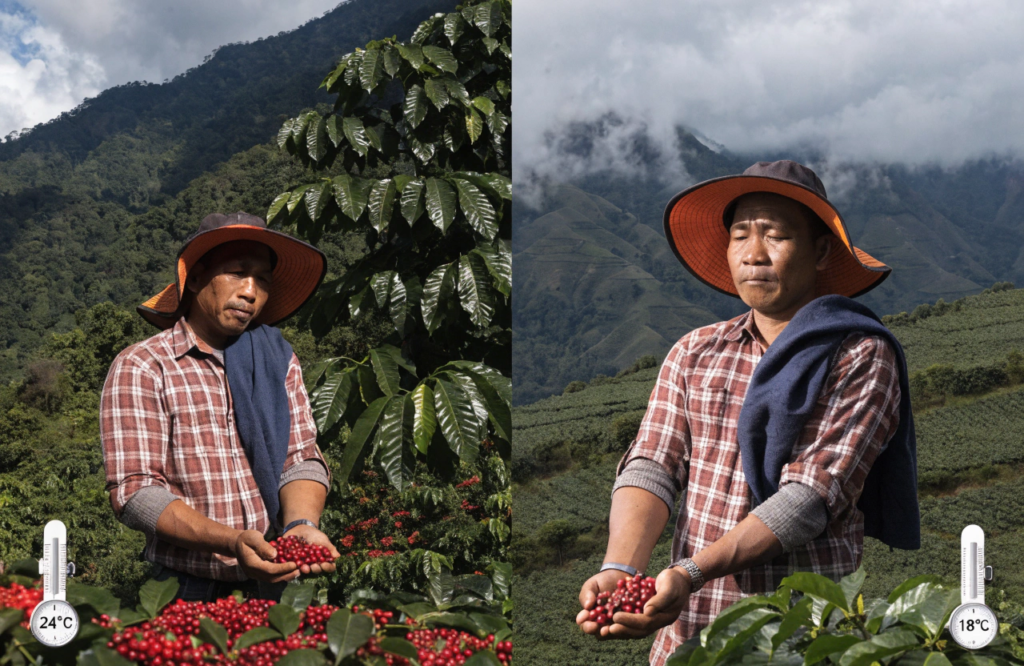
For every 100 meters of altitude gain, average temperature drops approximately 0.6°C. This slower metabolism extends the cherry maturation period by 7 to 14 days. Longer maturation allows more complex sugars to develop and more organic acids to accumulate. At BeanofCoffee, our 1,200-meter blocks mature in 180 days. Our 1,600-meter blocks take 210 days. That extra month is where florals and brightness come from.
What Is the Optimal Altitude Range for Complex Flavor?
There is no single number. It depends on latitude. In Yunnan, at 25° north, our sweet spot is 1,400 to 1,700 meters. Below 1,200 meters, maturation is too fast. Beans are larger but less dense. Acidity is flat. Above 1,800 meters, we risk frost and slow growth that reduces yield without proportional flavor gain. In Colombia, closer to the equator, the optimal band shifts higher—1,600 to 2,000 meters. In Kenya, even higher. So, when I buy coffee, I do not just ask "what altitude?" I ask "what is the average temperature during the 90 days before harvest?" That number tells me more than altitude alone. Here is the World Coffee Research altitude-temperature calculator. Also, this UC Davis study on bean density and maturation rate explains why slower growth creates harder, more flavorful beans.
Can Two Farms at the Same Altitude Taste Completely Different?
Absolutely. We see this constantly. Our Block 7 and Block 9 are both at 1,450 meters. They are 800 meters apart. Block 7 faces west. It gets direct afternoon sun. The temperature spikes to 28°C by 3 p.m. Block 9 faces east. It is shaded by the mountain after 2 p.m. The afternoon temperature peaks at 23°C. The coffee from Block 9 is consistently more acidic, more floral. Block 7 is heavier, more chocolaty. Same altitude. Completely different cups. This is why we sell Block 9 separately to buyers who want brightness. Here is the SCA's guide to aspect and insolation. Also, this agronomy paper on slope orientation in Yunnan cites our farm data.
What Role Does Temperature Variation Play in Sugar Development?
Daytime temperature drives photosynthesis. Nighttime temperature controls respiration. The difference between them—the diurnal temperature range—determines how much sugar the plant keeps versus burns.
A wide diurnal range (hot days, cool nights) allows the plant to produce sugars during the day and conserve them at night because cool temperatures slow respiration. This results in higher sugar content in the bean, which translates to perceived sweetness and body in the cup. In Yunnan, our high-elevation blocks experience 12°C to 15°C diurnal swings during peak maturation. That is wider than many Central American origins. It is why our Catimor can taste sweet despite the variety's reputation for harshness.**
How Do You Measure Diurnal Variation Without a Weather Station?
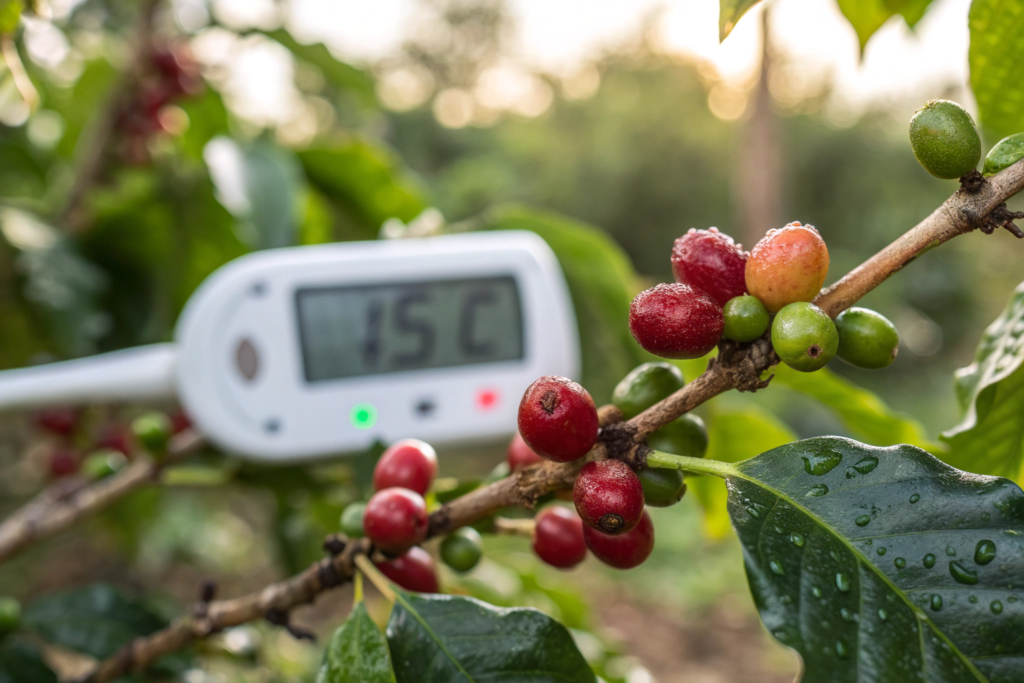
You do not need expensive equipment. We use maximum-minimum thermometers placed in each block. Cost: $15 each. We record the daily high and low during the 90 days before harvest. That gives us the average diurnal range. We also use satellite data from NASA POWER. It is free. It provides historical temperature data for any GPS coordinate. Last year, we compared our on-ground readings with NASA data. The correlation was 0.94. Good enough for decision-making. Here is the NASA POWER tutorial for agriculture. And here is a case study on using satellite data for coffee farm management. You can do this for any origin.
What Happens When Nights Are Too Warm?
Disaster for quality. If night temperatures stay above 18°C, the plant never stops respiring. It burns through the day's sugar production. The beans mature faster but with less complexity. They taste flat, vegetal, sometimes "potato" defect in extreme cases. We have a block at 1,100 meters where nights in August rarely drop below 20°C. We do not export that coffee. It goes to the domestic market. It is not bad coffee. It is just not complex. When you evaluate a supplier, ask: "What is your average night temperature during the last month before harvest?" If they do not know, they are not managing for quality. Here is the International Coffee Organization's report on temperature stress. The data is clear: warm nights are the enemy of specialty coffee.
How Does Rainfall Timing Affect Acidity and Body?
Water is not just water. When it falls matters as much as how much. Rain during flowering determines fruit set. Rain during expansion determines bean size. Rain during maturation determines density and acidity.
Rainfall during the last 30 days before harvest dilutes flavor compounds. The bean absorbs water, expands, and becomes less dense. Acidity drops. Body thins. At BeanofCoffee, we stop irrigation 45 days before harvest. If unexpected rain falls during this period, we delay picking until the beans dry on the branch. We lose yield to shrinkage. We preserve flavor.
What Is the "Rain Shadow" Effect and Why Does It Matter?
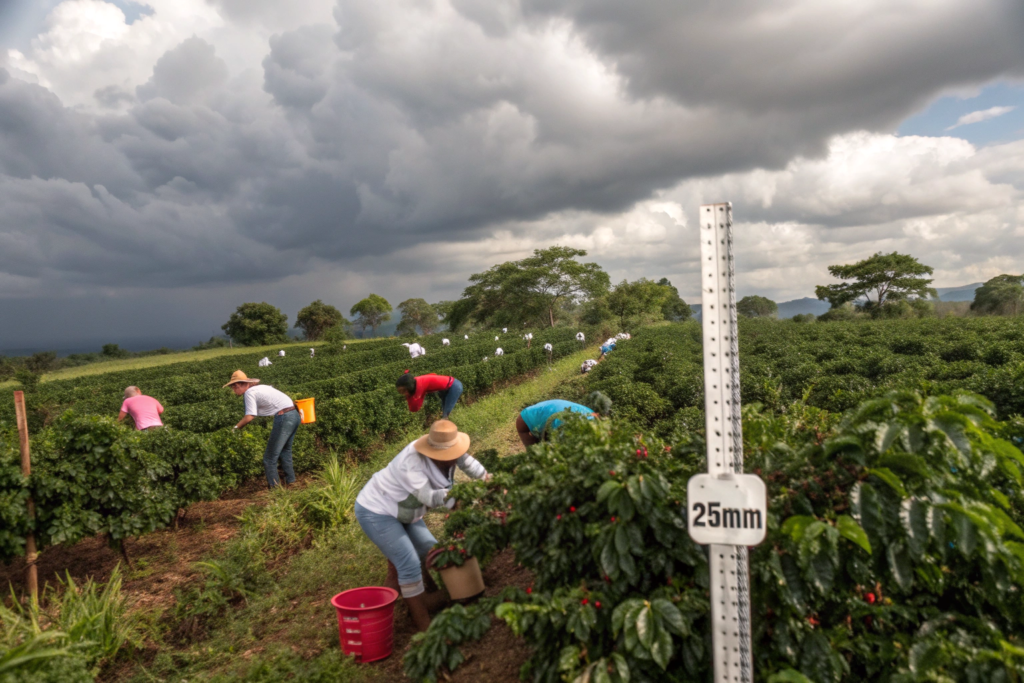
A rain shadow is the dry side of a mountain. Prevailing winds hit one slope, rise, cool, and release rain. The other slope gets little precipitation. In Yunnan, the western slopes of Gaoligong Mountain receive 2,000mm annually. The eastern slopes, 15 kilometers away, receive 1,200mm. The coffee from the drier side is denser, more concentrated, often higher in acidity. The wetter side produces bigger beans with more body but less clarity. We map rainfall by block using Google Earth Engine. It shows 30-year precipitation averages at 30-meter resolution. When we sell coffee, we can tell the buyer: "This lot is from the rain shadow side. Expect bright acidity." Here is the USGS guide to using Earth Engine for agriculture. Also, this study on rainfall gradients in Yunnan coffee zones uses our farm as a case study.
Can You Taste a Dry Spell?
Yes. In 2023, we had an 18-day dry period in October, right during final maturation. No rain. Intense sun. The beans shriveled slightly. Yield dropped 15%. But the coffee? It was the most concentrated, syrupy Catimor we have ever produced. One buyer in Seattle called it "Yunnan with Ethiopian intensity." The dry spell concentrated everything. The lesson: water stress, if timed correctly, can be a quality tool. Too much stress kills the tree. A controlled dry period at the right moment elevates flavor. Here is the University of Hawaii's research on water stress and flavor precursors. Also, this paper on regulated deficit irrigation in coffee explains the science behind our 2023 lot.
How Do You Map Microclimates Across a Large Farm?
You cannot manage what you cannot measure. When we expanded to 10,000 acres, we realized our old system—"this block tastes good"—was useless. We needed spatial data. So, we built a microclimate map.
We divided our farm into 47 management blocks based on three criteria: elevation range (maximum 50-meter variation within block), aspect (same cardinal direction), and historical rainfall patterns. Each block has its own weather station or paired with a nearby station. We record temperature, humidity, and rainfall daily. When we cup, we cup by block, not by blend. This lets us trace flavor directly to climate variables.
What Technology Do You Use for Microclimate Mapping?
We use a combination of tools. GPS mapping with QGIS (free) to define block boundaries. Remote sensing from Landsat 8 to estimate land surface temperature. On-ground sensors from Davis Instruments for ground truth. The cost for a complete farm map? About $5,000 in sensors and labor. The value? We now sell Block 14 separately at a 30% premium because buyers trust the data. Here is the QGIS tutorial for coffee farm mapping. Also, this agtech case study on Yunnan coffee farms describes our approach.
How Do You Use Microclimate Data in Sales?
We share it. Openly. When a buyer asks about our Block 22 washed Arabica, we send a one-page microclimate profile: elevation 1,520 to 1,580 meters, east-facing, average diurnal range 14°C, dry season rainfall 150mm. We also send cupping notes that correlate with these variables. The buyer sees the logic. They are not buying a mystery. They are buying a predictable expression of a specific piece of land. This builds trust faster than any marketing claim. Our partners at Shanghai Fumao use these profiles in their sales materials for European roasters. Here is a template microclimate report you can adapt for your own sourcing.
How Can a Buyer Verify Microclimate Claims Without Visiting?
You cannot visit every farm. I understand this. Ron cannot fly to Yunnan every time he buys coffee. But you can verify claims remotely. The data exists. You just need to ask for it.
You verify microclimate claims by requesting three specific data points: GPS coordinates of the farm block, average temperature during the 30 days before harvest (not annual average), and rainfall records for the growing season. Then you cross-reference these with public satellite data. If the supplier's numbers match NASA or local meteorological station data, they are credible. If they refuse to share coordinates, they are hiding something.

What Public Data Sources Can You Use for Verification?
Several are free and reliable. NASA POWER gives you daily temperature and rainfall for any GPS coordinate back to 1980. Copernicus Climate Data Store provides European coverage. China Meteorological Data Service Centre provides data for Yunnan. We encourage buyers to check our claims. Last year, a buyer in Vancouver pulled NASA data for our Block 7 coordinates. The temperature profile matched our records within 0.3°C. He placed the order. Here is the NASA POWER access portal. And here is the Copernicus registration page. Both require free registration. Both are game-changers for remote verification.
What Questions Should You Ask About Harvest Timing?
Microclimate matters most during the final maturation window. So, ask: "What were the average high and low temperatures during the 30 days before you picked this lot?" and "Was there any rainfall during that period?" If the supplier cannot answer, they are not monitoring microclimate. They are just harvesting by calendar. Our harvest timing varies by block by up to 3 weeks. We pick Block 9 earlier than Block 7 because the microclimate dictates readiness. We track this daily. Here is the SCA's harvest timing guide. Also, this paper on optimal picking windows based on temperature provides the scientific backing for asking these questions.
Conclusion
Microclimate is not a marketing adjective. It is a set of measurable variables that predict flavor. Altitude tells you about temperature. Aspect tells you about sun exposure. Diurnal range tells you about sugar retention. Rainfall timing tells you about concentration. When you understand these four factors, you stop buying coffee based on reputation. You start buying based on data.
I learned this by failing. I planted the same variety on different slopes and wondered why they tasted different. Now I know. And I use that knowledge to separate our lots, to price them fairly, and to help buyers choose the exact profile they want. Not "Yunnan coffee." Not "Catimor." But "Block 9, east-facing, 1,550 meters, 14°C diurnal range, dry finish."
If you want to taste the difference microclimate makes, email Cathy Cai. She will send you samples from two different blocks of our farm—same variety, same processing, different microclimates. You cup them side by side. You see the data. Then you decide which story you want to sell. Her address is: cathy@beanofcoffee.com.