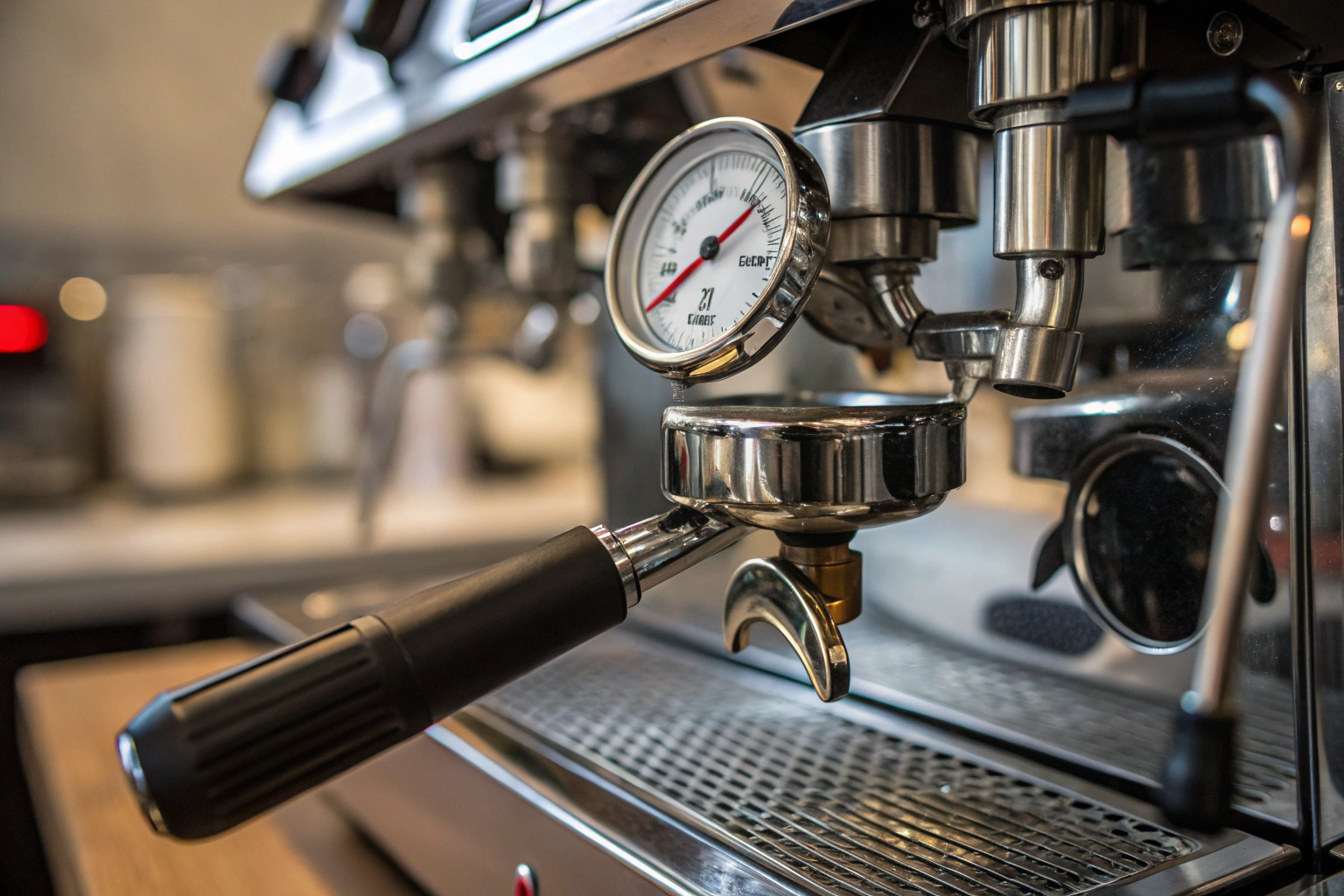
When most people think about espresso, they think about the coffee, the grind, the machine. But there's a hidden force at work. Pressure. And if you don't understand it, you'll never get consistent results. I learned this lesson early in my career. I was visiting a roaster in Italy who had been making espresso for fifty years. He watched me pull a shot on his machine. I was proud of it. He tasted it, made a face, and said, "The pressure is wrong. You can't fake pressure." He adjusted something on his machine, pulled another shot, and handed it to me. The difference was night and day. That moment taught me that pressure isn't just a setting. It's the engine that drives espresso.
Pressure is the force that transforms a simple combination of ground coffee and hot water into espresso. Typically set at 9 bars—nine times the atmospheric pressure at sea level—it forces water through the compacted coffee puck, emulsifying oils and creating the thick, golden crema that defines espresso. Understanding pressure helps you diagnose extraction issues, dial in your grind, and achieve a balanced, flavorful shot every time.
Now, you might be thinking, "I don't need to understand pressure. I just buy the beans." But here's the thing. Your customers—the cafes, the roasters, the equipment manufacturers—they live and breathe this stuff. And if you understand pressure, you can help them troubleshoot, recommend the right beans, and become a more valuable partner. Let's dive into what I've learned about this invisible but essential force.
What Is Pressure and Why Does It Matter?
Pressure is what makes espresso different from any other brewing method. Drip coffee uses gravity. French press uses immersion. Espresso uses force. And that force changes everything about the final cup.
Pressure in espresso is typically 9 bars, or about 130 pounds per square inch. This high pressure forces water through the coffee puck in a way that extracts soluble compounds more efficiently than gravity alone. It also emulsifies the coffee's natural oils, creating the thick, golden crema that traps aromatics and adds texture. Without sufficient pressure, you don't have espresso. You have strong coffee.
How Does Pressure Create Crema?
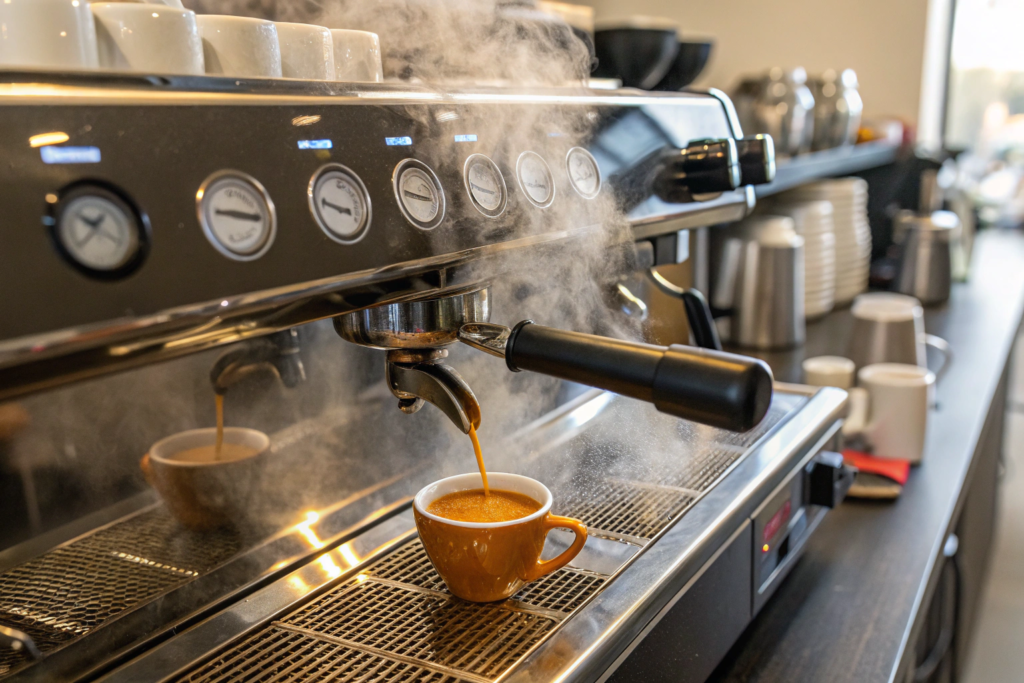
This is the part I find most fascinating. Crema is that beautiful golden foam on top of a good espresso. It's not just decoration. It traps volatile aromatic compounds, so you smell the coffee before you taste it. And it adds a silky texture. Crema is created when the pressure emulsifies the oils in the coffee. The high pressure forces the oils and water together, creating a stable foam.
I remember a client in Australia who was using our Robusta in his espresso blend. He was getting great crema, but his shots were bitter. We checked his machine. His pressure was too high—around 11 bars. The excessive pressure was over-extracting the coffee and creating too much crema, which was actually masking the bitterness. We adjusted the pressure down to 9 bars. The crema thinned out, but the flavor balanced. That's when I understood that pressure isn't just about "more is better." It's about finding the right balance.
What Happens When Pressure Is Too Low?
Low pressure is a common problem, especially on older machines or home setups. If the pressure drops below 7 or 8 bars, the water doesn't have enough force to push through the puck effectively. The extraction slows down. But more importantly, the water doesn't emulsify the oils properly. You get a thin, pale crema that dissipates quickly. The shot might taste sour or weak because the extraction is incomplete.
I've seen this happen with cafes using our Arabica. They'd have a beautiful, bright coffee that should shine as espresso. But their machine pressure was low, so the shots came out thin and sour. They blamed the beans. We checked the machine, fixed the pressure, and suddenly the same beans produced rich, balanced shots. The beans weren't the problem. The pressure was.
How Does Pressure Interact with Grind Size?
Here's something I've learned from years of cupping and troubleshooting. Pressure and grind size are partners. You can't set one without considering the other. The pressure pushes the water through the puck. The grind size determines how much resistance the puck offers. If they're not matched, you'll get problems.
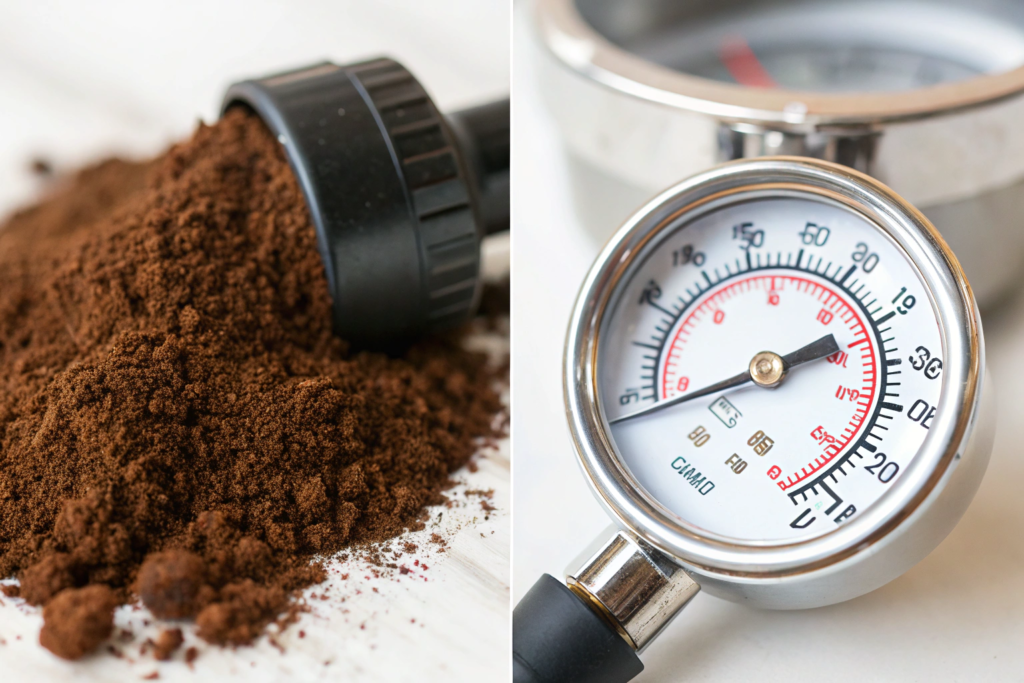
Pressure and grind size work together to control flow rate and extraction time. A finer grind creates more resistance, slowing the flow and increasing extraction. A coarser grind creates less resistance, speeding the flow and decreasing extraction. The ideal pressure of 9 bars is designed to work with a grind that produces a 25- to 30-second extraction for a standard dose. If you change one variable, you must adjust the other to maintain balance.
What Happens When the Grind Is Too Fine for the Pressure?
This is a classic mistake. A barista grinds too fine, trying to slow the flow and increase extraction. But if the grind is too fine, the pressure can't push the water through evenly. The water finds channels—weak spots in the puck—and rushes through them. This is called channeling. The result is uneven extraction. Some parts of the puck are over-extracted (bitter), and some parts are under-extracted (sour). The shot is a mess.
I remember working with a roaster in Texas who was using our Catimor for his espresso. He was getting inconsistent shots. We watched his barista. He was grinding too fine, trying to hit a 30-second extraction. But his machine was set to 9 bars. The water couldn't get through evenly. We coarsened the grind slightly, kept the same pressure, and the shots became consistent. The lesson? Don't fight the pressure. Work with it.
What Happens When the Grind Is Too Coarse for the Pressure?
The opposite problem. If the grind is too coarse, the water rushes through the puck with little resistance. The extraction time drops below 20 seconds. The pressure is still there, but it's not being used effectively. The water doesn't have enough contact time to pull out the full range of flavors. You get under-extraction: sour, thin, and lacking body.
I've seen this with cafes that are trying to speed up service. They grind coarser so the shots pull faster. But they're sacrificing quality. The pressure is still 9 bars, but the grind isn't providing enough resistance. The solution is simple. Grind finer. Slow the flow. Let the pressure do its job.
What Is the Ideal Pressure for Espresso?
You'll hear a lot of numbers thrown around. But the standard for decades has been 9 bars. That's nine times the atmospheric pressure at sea level. It's not random. It's been tested, refined, and proven over generations of espresso making.
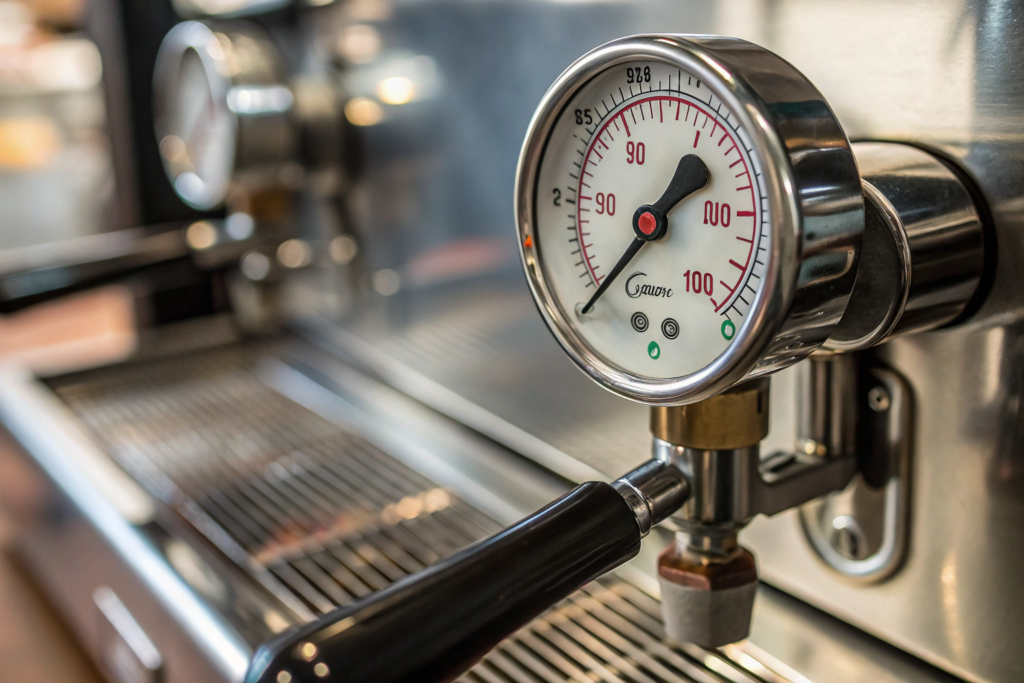
The industry standard for espresso extraction is 9 bars of pressure. This pressure level was established by Achille Gaggia in the 1940s and has remained the benchmark ever since. At 9 bars, water has enough force to emulsify oils and create crema, but not so much force that it causes excessive channeling or over-extraction. Some modern machines offer pressure profiling, allowing baristas to vary pressure during the extraction, but 9 bars remains the starting point for most recipes.
Why 9 Bars?
I've asked this question to engineers and master baristas. The answer is that 9 bars is the sweet spot. Below that, you don't get enough emulsification. The crema is thin. Above that, you risk over-extraction and channeling. The water is moving so fast that it's hard to control.
I remember a conversation with an equipment manufacturer at a trade show. He explained that 9 bars was chosen because it's the pressure where water can push through a properly prepared puck of finely ground coffee in about 25 seconds. That timing gives you enough extraction to get the sugars and oils without pulling out the bitter compounds. It's a balance. And it's been working for eighty years.
What About Pressure Profiling?
This is a newer trend. Some high-end machines allow baristas to change the pressure during the extraction. You might start at a lower pressure to pre-infuse the puck, then ramp up to 9 bars, then drop down at the end. This can highlight certain flavor notes or reduce bitterness.
We've experimented with pressure profiling using our Arabica. A roaster in Seattle found that starting at 2 bars for the first 5 seconds, then ramping to 9 bars, then dropping to 6 bars at the end, produced a shot with incredible sweetness and a silky texture. It was a revelation. But he told me that pressure profiling is advanced. Most cafes don't need it. They just need consistent 9-bar pressure.
How Can You Diagnose Pressure Problems?
You don't need to be an engineer to spot pressure problems. The espresso itself tells you. I've learned to read the signs. And once you know what to look for, you can diagnose issues quickly.
Signs of pressure problems include uneven flow from the bottom of the portafilter, pale or thin crema, and shots that pull too fast or too slow. Channeling—where water finds paths through the puck—often shows as dark and light spots in the flow. If the crema disappears quickly, the pressure may be too low. If the crema is dark and mottled, the pressure may be too high or the grind too fine.

What Does Channeling Look Like?
This is the most common pressure-related problem. When the pressure is too high or the puck is uneven, water finds weak spots. You can see it in a bottomless portafilter. The espresso flows in spurts. Some parts of the basket are dark and rich. Other parts are pale and watery. The shot is uneven.
I was training a new cafe owner in Florida. He was using our Catimor and getting inconsistent shots. I watched his barista tamp. She was using uneven pressure, leaving one side of the puck lower than the other. The water channeled through the weak side. We retrained her on tamping, and the channeling stopped. The shots became consistent. The problem wasn't the pressure. It was the puck prep.
What Does Low Pressure Look Like?
If the machine pressure is too low, the flow will be slow and weak. The crema will be thin and pale, and it will disappear within seconds. The shot might look watery. This is common on machines that haven't been serviced or on home machines that can't maintain pressure.
I had a client in Canada who was complaining about our Arabica. He said it was tasting sour no matter what he did. I asked about his machine. It was a ten-year-old machine that had never been serviced. We checked the pressure. It was at 6 bars. He got it serviced, and the pressure went back to 9. The sourness disappeared. The lesson? Sometimes the problem isn't the coffee. It's the equipment.
How Does Pressure Affect Different Beans?
Here's something that took me years to understand. Not all beans behave the same under pressure. A light roast might need a slightly different approach than a dark roast. A dense, high-altitude Arabica might respond differently than a softer Robusta.
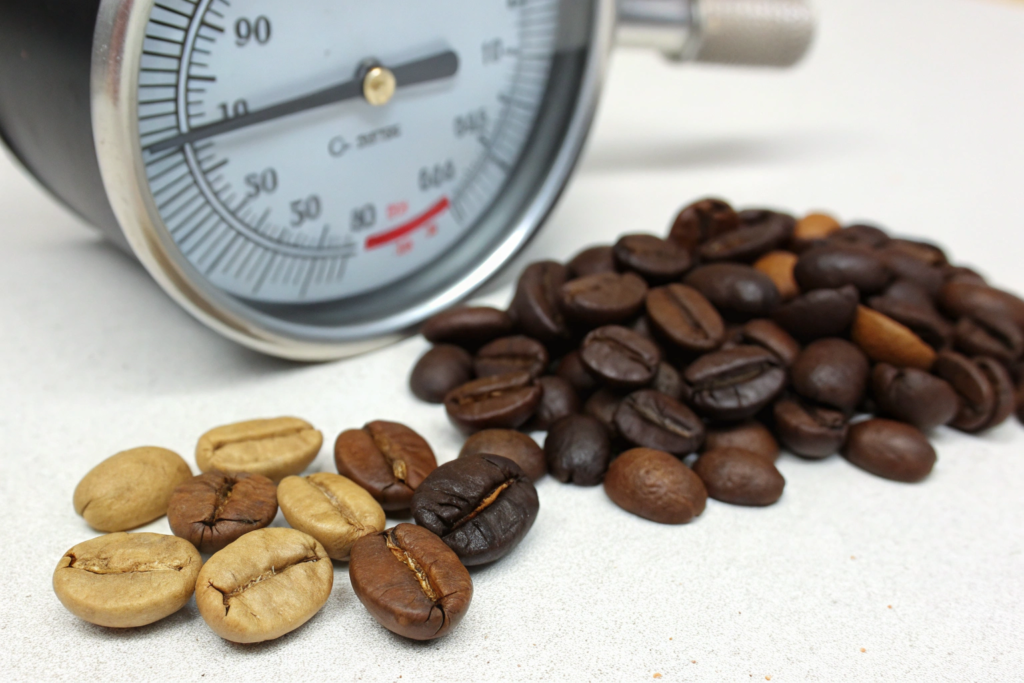
Different coffee varieties and roast levels respond differently to pressure. Dense, high-altitude Arabica beans can often handle a finer grind and higher pressure without channeling. Softer beans or darker roasts may be more prone to channeling and may benefit from a slightly lower pressure or a longer pre-infusion. Understanding how your beans interact with pressure helps you dial in more effectively.
How Does Pressure Affect Light Roast Arabica?
Light roast Arabica is dense. The beans are harder, and the structure is more intact. This means they can handle a finer grind and higher pressure without disintegrating. But they also require more extraction time to pull out the complex flavors.
I work with a roaster in Norway who specializes in light roast espresso. He uses pressure profiling to get the most out of our Arabica. He starts with a long, low-pressure pre-infusion to saturate the dense grounds, then ramps up to 9 bars for the main extraction. The result is a shot with bright acidity, floral notes, and a surprising sweetness. It's not traditional espresso, but it's beautiful.
How Does Pressure Affect Dark Roast Robusta?
Dark roast Robusta is different. The beans are softer. The roasting process has broken down the cell structure. They're more fragile. If you hit them with full 9-bar pressure right away, you can cause channeling. The water finds weak spots and rushes through.
A client in Italy who uses our Robusta in his espresso blend taught me something. He grinds slightly coarser than he would for Arabica, and he uses a gentle pre-infusion to wet the puck before the full pressure hits. This gives him a stable extraction without channeling. His shots are rich, chocolatey, and consistent. It's a small adjustment, but it makes all the difference.
Conclusion
Pressure is the invisible force that turns ground coffee into espresso. It creates crema. It drives extraction. It interacts with grind size, roast level, and puck preparation. When it's right, you get a balanced, flavorful shot. When it's wrong, you get sourness, bitterness, or inconsistency. Understanding pressure helps you diagnose problems, dial in your espresso, and get the most out of your beans.
At BeanofCoffee, we grow coffee that's designed to perform under pressure. From the dense, high-altitude Arabica to the rich, full-bodied Catimor and the bold Robusta, our beans are crafted for espresso. And with our logistics partners like Shanghai Fumao, we make sure they arrive in perfect condition, ready to be brewed.
If you're ready to source coffee that performs under pressure—and want a partner who understands the science behind the shot—let's talk. Contact our team lead, Cathy Cai, at cathy@beanofcoffee.com. She can help you find the perfect beans for your espresso program. Let's build something that stands up to the pressure.