
You're an expert in coffee, not necessarily a social media guru. You see other brands with thousands of followers, getting tons of engagement, and you wonder, "How are they doing that? And is it actually selling more coffee?" You're busy running your business, and the thought of having to create content for Instagram, Facebook, or TikTok feels overwhelming and maybe even a little pointless. You're worried you'll sink a ton of time into it for zero return. It's a huge pain point: knowing you should be using social media, but having no clear strategy to make it work.
Honestly, the best way to use social media to sell more coffee is to stop thinking about it as a sales channel and start thinking of it as a community-building and storytelling platform. The goal is to share your passion and expertise in a way that makes people feel connected to your brand, which then leads to sales. It's about showing, not just telling.
I've had to learn this myself. We're farmers and exporters, not content creators. But we've found that sharing a simple video of the morning mist over our Yunnan plantations or a photo of our team sorting beans gets more interest than any traditional sales pitch. People don't just buy a product; they buy a story and a connection. So, let's break down how you can build a simple, effective social media strategy that feels authentic and actually drives business.
Which Social Media Platform is Right for Coffee?
The first mistake many businesses make is trying to be everywhere at once. You don't need to be a star on every platform. You need to be effective on the right platform for a visual, community-driven product like coffee.
For most coffee businesses, Instagram is the undisputed king. Its highly visual nature is perfect for showcasing beautiful drinks, latte art, aesthetically pleasing packaging, and the ambiance of your cafe. Facebook is excellent for building a local community and sharing events, while a platform like LinkedIn is better for B2B connections (like the one you and I have).
Think about where your customers are and what kind of story you want to tell.
- Instagram: For visual storytelling, brand building, and reaching a broad consumer audience.
- Facebook: For local marketing, customer service, and sharing longer-form content like blog posts or event details.
- TikTok: For short, entertaining, behind-the-scenes video content that can reach a younger audience.
- LinkedIn: For professional networking, sharing industry insights, and connecting with other businesses (like roasters, suppliers, and corporate clients).

Why is Instagram so effective for coffee?
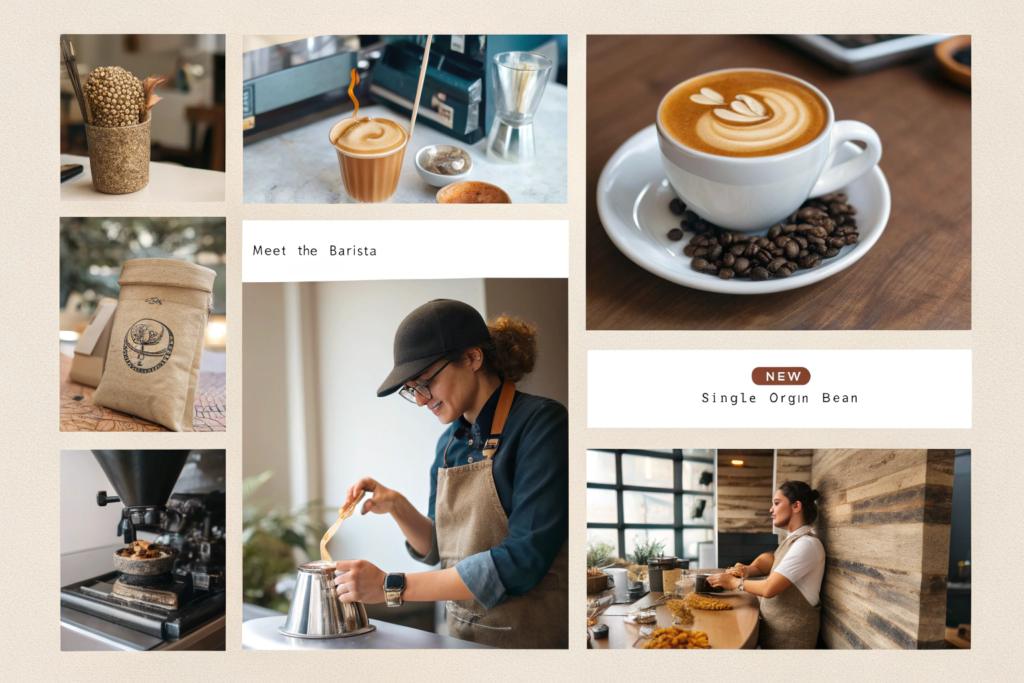
Coffee is beautiful. The rich crema of an espresso, the delicate foam of a cappuccino, the vibrant packaging of a retail bag—these are all "Instagrammable" moments. The platform's focus on high-quality photos and short videos (Reels) allows you to create a visually stunning gallery that acts as a digital menu and a window into your brand's soul. Using relevant hashtags like #specialtycoffee, #latteart, or #[YourCity]Coffee helps new customers discover you every day.
Should a B2B supplier like you be on Instagram?
Absolutely. While my primary goal on Instagram isn't to sell a container of coffee directly, it's to build brand credibility and tell our story. When a potential buyer like you finds us, our Instagram feed provides instant visual proof of our plantations, our processing methods, and our commitment to quality. It shows we are a real, active, and proud company. It's a trust-building tool, which is why we at Shanghai Fumao actively share our journey there.
What Kind of Content Should You Post?
"I don't know what to post" is the biggest hurdle for most business owners. The key is to think in terms of content "pillars" or categories. You don't need to reinvent the wheel every day. A simple, repeatable content strategy is far more effective than sporadic moments of genius.
Your content should be a mix of four key pillars: 1) The Product (showcasing your coffee), 2) The People (your staff and customers), 3) The Process (behind-the-scenes), and 4) The Education (sharing your knowledge). This variety keeps your feed interesting and provides value beyond just selling.
Here’s a breakdown of what that looks like:
- The Product: This is the easy one. High-quality photos and videos of your drinks, your retail bags, your food pairings. Make it look delicious.
- The People: Feature your baristas! A "Meet the Team" post makes your brand more human. Share photos of your regular customers (with their permission!). It builds community.
- The Process: Show how the magic happens. A short video of your roaster tumbling beans, a time-lapse of your cafe opening in the morning, the process of dialing in the espresso. This content builds appreciation for your craft.
- The Education: Share a simple tip, like "How to get the best flavor from your French Press" or "What's the difference between a washed and a natural coffee?" This positions you as an expert and a trusted resource.
How often should you post?
Consistency is more important than frequency. Aim for 3-5 high-quality posts on your main feed per week. You can supplement this with daily, more informal content on Instagram Stories (like polls, Q&As, or quick behind-the-scenes clips). A planned, consistent presence is better than posting 10 times one week and then disappearing for two.
What is User-Generated Content (UGC)?
UGC is gold. It's when your customers post photos of your coffee or cafe and tag your business. Actively encourage this! You can run a contest or simply repost the best customer photos to your feed or Stories (always give them credit!). It's authentic social proof and free marketing. It shows that real people love your brand.
How Do You Turn Followers into Customers?
Likes and follows are nice, but they don't pay the bills. The ultimate goal is to convert that engagement into actual sales, whether that's getting someone to walk into your cafe or to buy a bag of beans from your online store. This requires clear "calls to action."
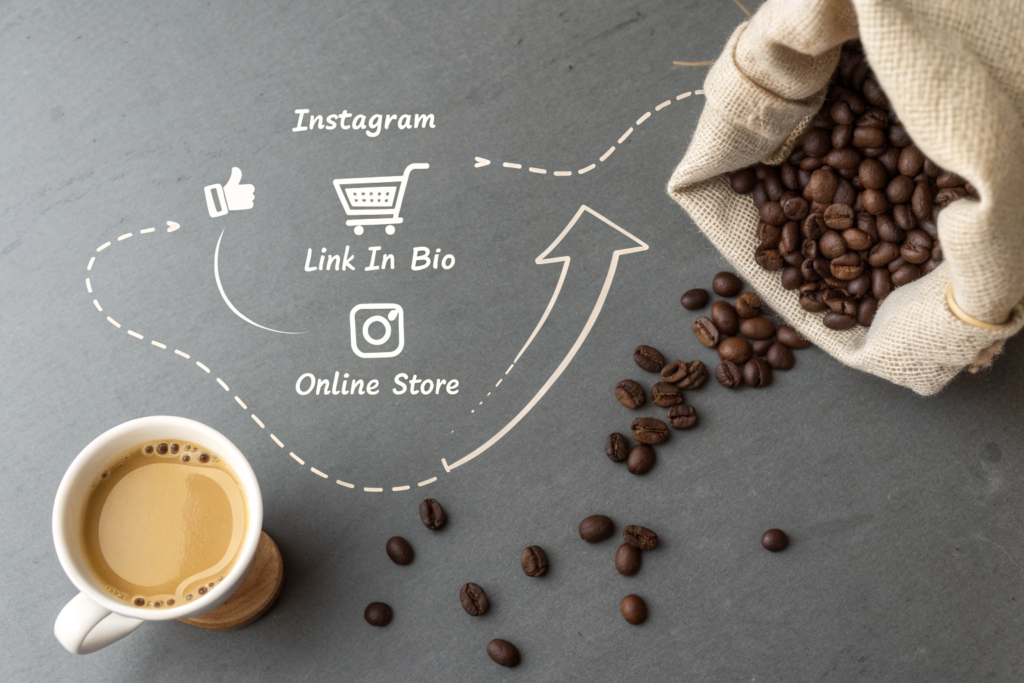
You turn followers into customers by making it incredibly easy for them to buy. This means having a clear "call to action" (CTA) in your posts, a direct link to your online shop in your bio (using a tool like Linktree if needed), and running social media-exclusive promotions. You have to guide them from inspiration to transaction.
Don't assume people will figure it out on their own. If you post about a new single-origin coffee, end your caption with, "Ready to try it? Tap the link in our bio to order a bag today!" or "Available on our brew bar all week. Come say hi!" Tell them exactly what you want them to do next.
What is a "Link in Bio"?
Instagram famously only allows one clickable link in your main profile bio. This makes that link extremely valuable. You should use it to direct people to the most important place, which is usually your online store or your main website. Services like Linktree or Later allow you to create a simple landing page where you can have multiple links, making it easy to direct followers to different products or pages from a single starting point.
How can you use promotions to drive sales?
Social media is perfect for creating a sense of urgency and rewarding your followers. You can run simple promotions like:
- Flash Sales: "For the next 24 hours, get 15% off all online coffee orders with code INSTA15."
- In-Store Offers: "Show this post to your barista today and get a free upgrade to a larger size."
- Giveaways: "Tag a friend you'd share a coffee with for a chance to win a free bag of our new espresso blend!"
These tactics directly incentivize the conversion from a passive follower to an active customer.
How to Measure Success (Without Getting Overwhelmed)?
One of the biggest reasons business owners give up on social media is that they don't know if it's "working." You don't need to track a hundred different metrics. You just need to focus on a few key performance indicators (KPIs) that align with your business goals.
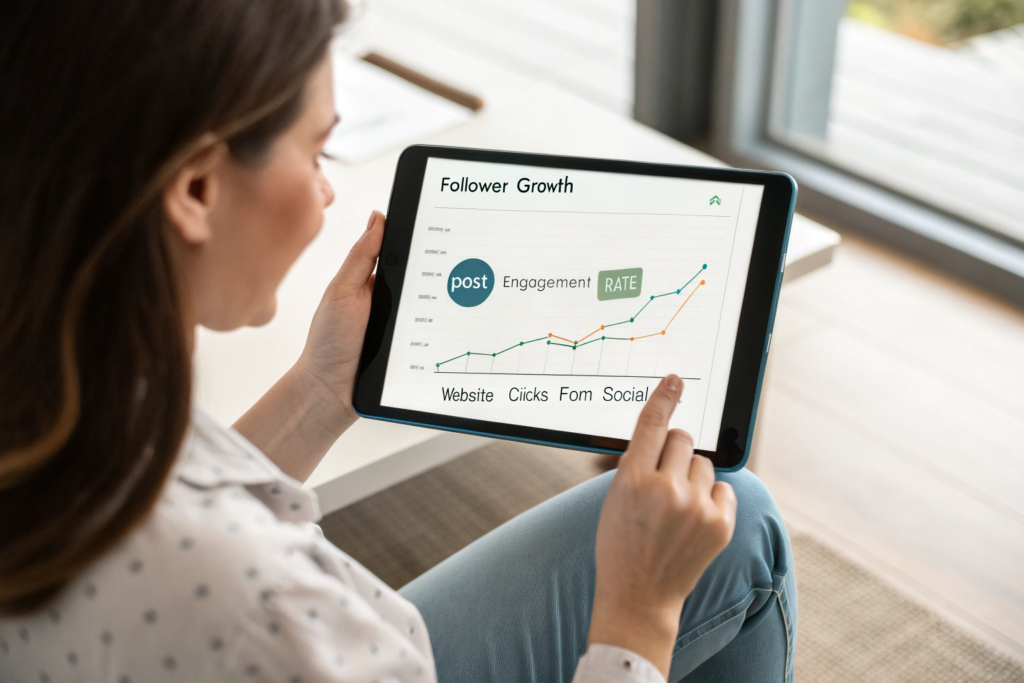
To measure success, focus on three simple metrics: 1) Engagement Rate (are people interacting with your posts?), 2) Follower Growth (is your community expanding?), and 3) Website Clicks or Foot Traffic (is social media driving actual business?). Tracking these will tell you if your efforts are paying off.
Most social media platforms have a built-in analytics or "Insights" section for business accounts. You don't need fancy third-party software to start. Just check these basic numbers once a week or once a month to see what's working.
What is Engagement Rate?
Engagement Rate is the percentage of your followers who interact (like, comment, share, save) with your posts. A high engagement rate is more important than a high follower count. It means your content is resonating with your core audience. If you have 10,000 followers but only 10 people like your photo, your content isn't working. If you have 500 followers and 100 of them like and comment, you have a powerful, engaged community.
How do you track real-world results?
This can be the trickiest part, but it's not impossible.
- For Online Sales: Your e-commerce platform (like Shopify) can show you how much traffic and how many sales are coming directly from social media.
- For In-Store Sales: This is more anecdotal. You can run social-media-specific promotions ("Show this post...") to directly track redemptions. You can also simply ask new customers, "How did you hear about us?" You'll be surprised how many say "Instagram."
Conclusion
Using social media to sell more coffee is not about becoming a viral sensation. It's about consistently and authentically sharing your passion and your craft. By focusing on the right platform (start with Instagram), creating a varied content mix of your product, people, and process, and providing clear paths for your followers to become customers, you can build a thriving digital community that translates directly into a thriving business. It takes time and effort, but the connection it builds with your customers is something that traditional advertising can never buy.
As your supplier, we want to see you succeed. We can even provide you with content, like photos and videos from our farms in Yunnan, to help you tell the origin story of the beans you buy from us. A strong partnership means helping each other grow. If you're ready to build a brand that resonates with modern consumers, we're here to supply the quality coffee that will be the star of your social media feed. Contact our coffee specialist at cathy@beanofcoffee.com to get started.