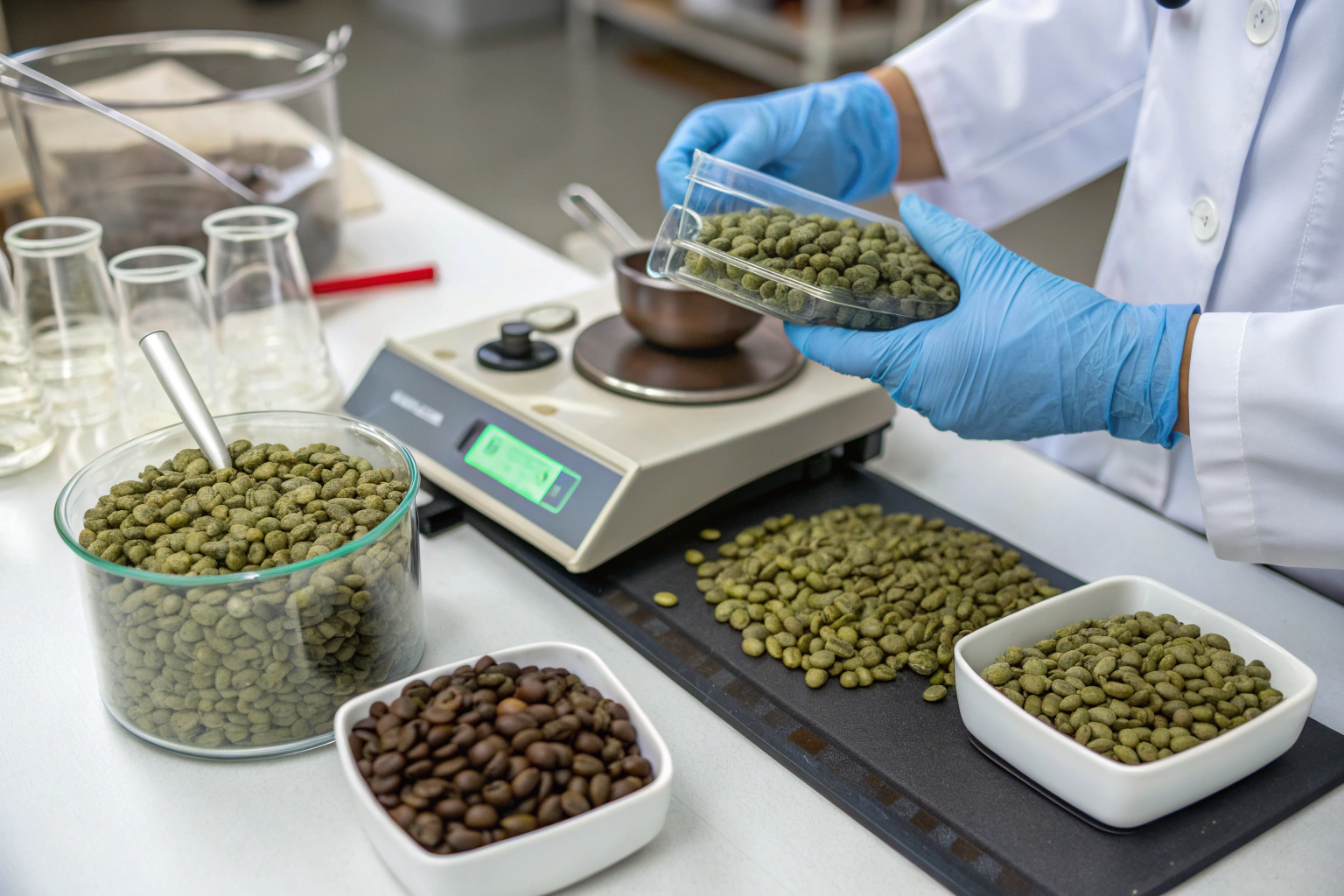
You're about to buy a new lot of green coffee. The cupping sample was great, the price is right. But a hidden question lingers: how old are these beans, really? Green coffee isn't immortal. It has a shelf life, and "past-crop" or improperly stored beans can lead to flat, woody, or musty flavors no roaster can fix. The fear of receiving a container of stale, lifeless beans is a silent nightmare for any serious buyer. Verifying freshness isn't just about a roast date; it's a forensic examination of the bean's recent history and current vitality.
Verifying green coffee freshness requires a multi-sensory and analytical approach: assessing physical characteristics (color, smell, density), measuring key metrics (moisture content and water activity), and most critically, performing a roast and cupping test that specifically targets staling indicators like lack of sweetness, flat acidity, and muted aromatics.
The "fresh crop" designation on a contract isn't enough. You need proof. At BeanofCoffee, we document the harvest and processing date for every lot we ship from our Yunnan estates because we know our clients' success depends on this baseline freshness. Let's turn you into a freshness detective.
What are the physical signs of fresh vs. old green beans?
Before any instrument, use your eyes, hands, and nose. Time, poor storage, and moisture mishaps leave clear physical fingerprints on green coffee. A seasoned buyer can spot red flags in seconds.
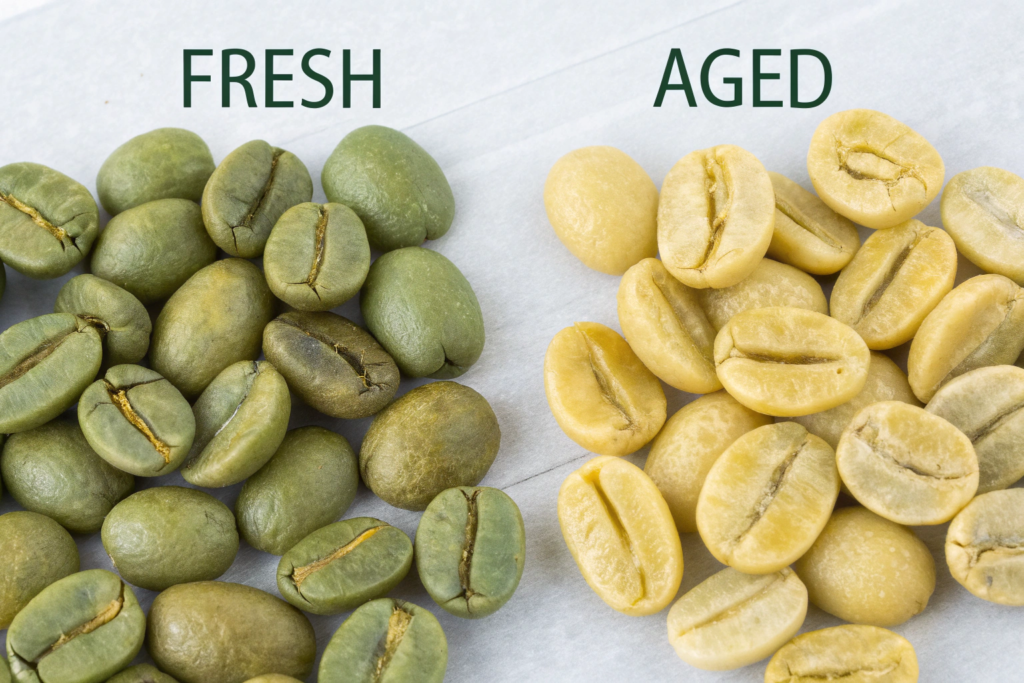
Fresh green beans are vibrant in color (bluish-green to greenish-tan depending on origin/process), have a clean, grassy/woody fragrance, and are hard and dense. Old or degraded beans appear faded, yellowish, or pale, emit a musty, papery, or hay-like odor, and may feel brittle or less dense.
How does color and smell indicate storage age and conditions?
- Color Progression: Truly fresh coffee, especially washed varieties, often has a bluish or greenish tint. As it ages, chlorophyll breaks down and the color shifts to a uniform green, then a duller greenish-tan, and finally to a pale yellow or straw color. A blotchy, uneven color can indicate uneven drying or moisture issues during storage. Note: Natural or honey-processed beans are naturally more yellow/brown, so use color in context with process.
- The Smell Test: This is your first and most sensitive tool. Take a handful of beans, warm them slightly in your palms by cupping your hands and breathing into them, then take a deep sniff.
- Fresh: Should smell clean, sweet, and vegetative—like fresh-cut grass, cedar, or sometimes faintly of green tea or oats. No off-odors.
- Aging/Old: Smells like hay, straw, or old cardboard. This is the loss of volatile aromatic compounds.
- Musty/Moldy: A damp, cellar-like smell. Indicates water damage or storage at high humidity. An immediate reject.
- Rioy or Medicinal: A sharp, phenolic, iodine-like smell. Often a processing defect but can be exacerbated by age.
What does bean hardness and fracture tell you?
Pick up a few beans and try to bite one (yes, really) or press a bean between your fingernails.
- Fresh, High-Density Bean: Very hard to bite or crack. It will make a sharp snap and leave clean edges. This indicates good structure and intact cellular integrity.
- Old or Low-Density Bean: Softer, easier to bite or crush. It may crumble or fracture dully. This suggests the bean's structure has broken down, often leading to a faster, less controlled roast and baked flavors. Beans that have absorbed and lost moisture repeatedly become brittle.
What are the critical moisture and water activity measurements?
Physical signs can be subjective. Moisture content (MC) and Water Activity (Aw) provide objective, numerical data that are absolute indicators of storage stability and freshness potential. They are non-negotiable metrics for any professional transaction.
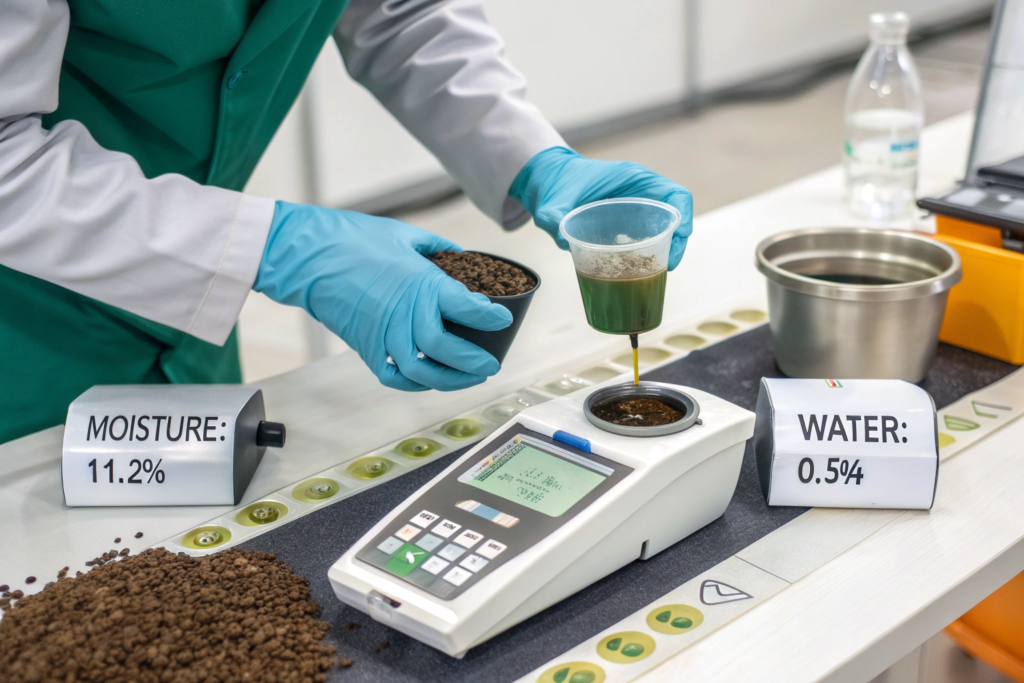
Fresh, stable green coffee should have a Moisture Content between 10-12% and a Water Activity (Aw) level below 0.60. MC tells you the total water percentage; Aw tells you how "active" that water is for chemical reactions and microbial growth. Both are essential.
Why is Water Activity (Aw) more important than Moisture Content alone?
Moisture Content is a bulk measurement. Two lots can have the same 11% MC but vastly different freshness risks.
- Water Activity (Aw) measures the energy status of the water in the bean—how tightly it's bound. It ranges from 0 (bone dry) to 1 (pure water). It directly predicts:
- Microbial Growth: Mold and bacteria cannot grow below Aw ~0.70. A safe green coffee should be below 0.60.
- Chemical Reaction Rates: Oxidation and staling reactions accelerate with higher Aw.
- Freshness Preservation: A low Aw (0.50-0.55) dramatically slows the loss of volatile aromatics and flavor precursors. It's the scientific measure of "crispness."
A bean with 11% MC and an Aw of 0.58 is far more stable and fresh-tasting than a bean with 11% MC and an Aw of 0.65, which is on the brink of instability. Always ask your supplier for the Aw. At Shanghai Fumao, we track Aw for all our stored lots.
How do you properly measure moisture content on-site?
Don't rely on a generic "grain moisture meter." Use a dedicated coffee moisture analyzer (e.g., from brands like Giesen, Sinar, or Dickey-John). The process:
- Take a representative sample from different parts of the bag/batch.
- Grind a portion of the sample to a consistent particle size (many analyzers have integrated grinders).
- Weigh a precise amount into the analyzer.
- The device uses a loss-on-drying (thermogravimetric) method to calculate MC%.
For accuracy, take multiple readings and average them. Record the result alongside the lot number. A reading below 10% risks brittle, baked flavors; above 12.5% is a major risk for mold and rapid staling.
How does a "freshness roast" and specific cupping reveal age?
The ultimate test is in the roaster and the cup. A dedicated "freshness roast" protocol is designed to stress the beans and amplify the subtle flaws that age and poor storage impart. This is where the truth is undeniable.
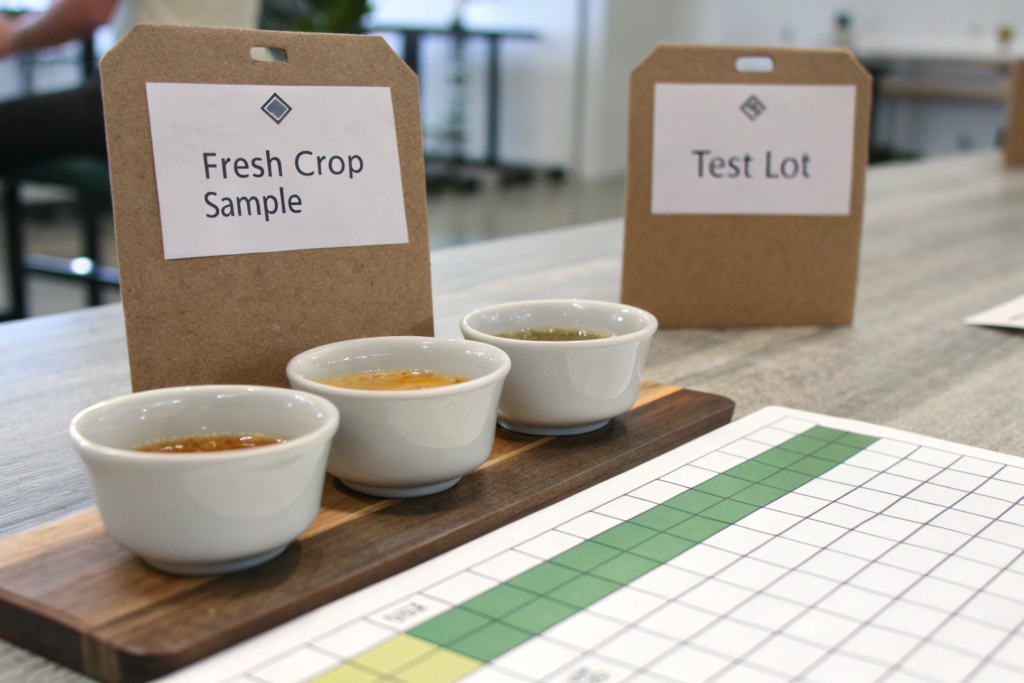
Perform a standard light-medium roast (just to the end of first crack) and cup the coffee using the SCA protocol, but pay hyper-attention to specific attributes: Fragrance/Aroma intensity, Sweetness, Acidity quality, and the presence of "past-crop" flavors like woodiness, cardboard, or mustiness.
What are the definitive "past-crop" or stale flavors in the cup?
When cupping for age, listen for these specific negative descriptors:
- Woody / Papery: Tastes like licking a popsicle stick or wet cardboard. This is the classic hallmark of old coffee.
- Musty / Damp Earth: A clear sign of moisture damage or storage in humid conditions.
- Flat / Bland: A complete lack of vibrancy. The coffee is "inoffensive" but has no distinct acidity, sweetness, or aromatic complexity. It just tastes generically like "coffee."
- Stale Nutty: Not the pleasant almond/walnut note of a fresh Brazil, but a dull, rancid-nut character.
- Lack of Sweetness: One of the first things to go. The cup will have a hollow mid-palate, even if the acidity is still present.
Why does a faster, lighter roast highlight freshness better?
A "fast roast" to a light or light-medium level (Agtron 65-75) is a diagnostic tool. Here's why:
- Preserves Volatiles: It minimizes the loss of the very aromatic compounds you're trying to assess. A dark roast would mask subtle staling with its own roast-driven flavors.
- Amplifies Acidity: Any remaining origin acidity will be prominent. If the coffee tastes flat and sour (not bright) at a light roast, it's a sign the acids have degraded.
- Reveals Underlying Structure: Without heavy caramelization (Maillard reaction) sugars, the true base quality of the bean is exposed. If it's hollow or woody, it will be obvious.
Roast two samples side-by-side: the new lot and a control sample of coffee you know is fresh from the same origin/process. The difference will be stark.
How to interpret harvest dates and warehouse documentation?
The paper trail is your legal and qualitative evidence. A professional supplier should provide a clear chain of custody that tells the story of the bean's age. Vague answers are a major red flag.
Scrutinize the documentation for the specific harvest date (month/year), the date the coffee was dry-milled and ready for export, and details of its storage conditions (warehouse location, ambient temperature/humidity records). The "crop year" is not enough; you need the harvest month. The difference between coffee harvested in November and coffee harvested last February can be enormous, even if both are "2023 crop."
What is the difference between "crop year," "harvest date," and "milling date"?
- Crop Year: The agricultural year the coffee was harvested (e.g., 2023/2024). Too broad for assessing freshness.
- Harvest Date (or "Harvest Period"): The specific month(s) the cherries were picked (e.g., "Main Harvest: Nov 2023 - Jan 2024"). This is critical. Coffee from the start of a harvest (e.g., Nov) is 4-5 months older by the time the late harvest (Jan) is processed. Always ask for the specific lot's harvest window.
- Milling Date (or "Ready for Shipment" Date): The date the parchment was removed, the coffee was graded, bagged, and entered the warehouse. The clock on "green age" truly starts here. The interval between milling and your shipment should be known.
A transparent exporter like us will have this data for each lot. For example, a lot from Shanghai Fumao might be documented as: "Harvest: Dec 2023 | Milled & Bagged: Feb 2024 | Current Warehouse: Baoshan, Climate-Controlled."
How to verify storage conditions from an overseas supplier?
You can't visit every warehouse, but you can ask for evidence:
- Ask for warehouse details: Is it on a farm, at a dry mill, or a dedicated port warehouse? Dedicated facilities are better.
- Ask about pest control and flooring: Pallets on raised floors are better than bags stacked directly on concrete.
- Request a photo or video: A quick clip of the warehouse showing bag stacking (off walls/floor), general cleanliness, and even a simple thermometer/hygrometer in the aisle can be revealing.
- Inquire about climate control: While not universal, more and more premium exporters are using humidity-controlled storage. This is a strong sign they prioritize freshness.
A supplier's willingness and ability to provide this information is a direct reflection of their professionalism and the care they've taken with your coffee.
Conclusion
Verifying green coffee freshness is a holistic process that blends sensory skill, scientific measurement, and diligent inquiry. It moves from the macro (visual inspection and smell) to the micro (water activity readings) and culminates in the irrefutable evidence of a diagnostic roast and cupping. By demanding precise documentation and understanding the science of staling, you shift from being a passive buyer to an active quality controller.
This diligence protects your roasting business from costly, flavorless inventory and ensures that the hard work of farmers and processors is fully realized in the final cup. Freshness is the foundation upon which all other roast and flavor development is built.
If you are a roaster who values transparency and data-driven quality, partner with a supplier who shares that commitment. At BeanofCoffee, we provide detailed lot information, including harvest dates, milling dates, and QC data for all our Yunnan Arabica and Catimor lots. To request samples with full documentation, contact our Export Manager, Cathy Cai: cathy@beanofcoffee.com. Let's ensure your coffee journey starts with the freshest possible foundation.