
As an entrepreneur with a passion for coffee, you have a vision. You can picture your bustling cafe, smell the aroma of your signature roast, and see the happy faces of your customers. But turning that vision into a reality that attracts investors, secures loans, and guides your decisions is a monumental task. You're faced with a blank page, and the thought of writing a formal business plan is intimidating. Where do you even start? What do banks or partners really want to see? It's a common pain point: having a great idea but struggling to articulate it in a structured, convincing way.
Honestly, the best way to write a coffee company business plan is to treat it as a story—the story of your future success, told with numbers to back it up. It must clearly answer four fundamental questions: What are you selling and to whom? How will you reach them? How will you operate? And how will you make money
I wrote my first business plan for Shanghai Fumao on a simple notepad, outlining how we would connect our unique Yunnan coffee with the world. That plan has evolved, but its core purpose remains: to be a roadmap. It’s not just a document for others; it's your guide. Let's break down how to build this essential document, section by section.
Shouldn't You Start with Your Company's Mission?
Before you dive into spreadsheets and market analysis, you must first define your "why." What is the purpose of your coffee company beyond just making money? This is the soul of your business, the guiding star that will inform every other decision you make. It's what will get you through the tough days and what will attract both customers and employees who believe in what you're doing.
Isn't the Executive Summary and Company Mission the heart of your plan? Yes, because this section sets the stage for everything that follows. It should concisely summarize your entire plan and articulate your company's mission, vision, and core values. It’s the first thing an investor reads and it needs to be compelling.
Think of the Executive Summary as the trailer for your movie—it has to be exciting enough to make someone want to see the whole thing. Your mission statement is the theme of that movie. Is your mission to create the most welcoming community space in your neighborhood? To source and roast the most exotic and sustainable coffees in the world? To build a highly efficient and profitable coffee chain? Be clear and be passionate.

What goes into an Executive Summary?
The Executive Summary is a 1-2 page overview of your entire business plan. Write it last, after you've figured out all the other details. It should briefly touch upon:
- Your Mission: What your company is about.
- Your Products/Services: What you will sell (e.g., specialty coffee drinks, roasted beans, pastries).
- Your Target Market: Who your ideal customers are.
- Your Competitive Advantage: What makes you different and better.
- Your Financial Highlights: A brief summary of your sales projections and funding requirements.
How do you define your Mission and Vision?
- Mission Statement (The What & How): This is your purpose. It's practical. Example: "To provide our community with expertly prepared, sustainably sourced coffee in a warm and welcoming environment."
- Vision Statement (The Why): This is your big-picture dream, the impact you want to have. Example: "To be the town's living room—a central hub for connection, conversation, and creativity."
Don't You Need to Know Your Market Inside and Out?
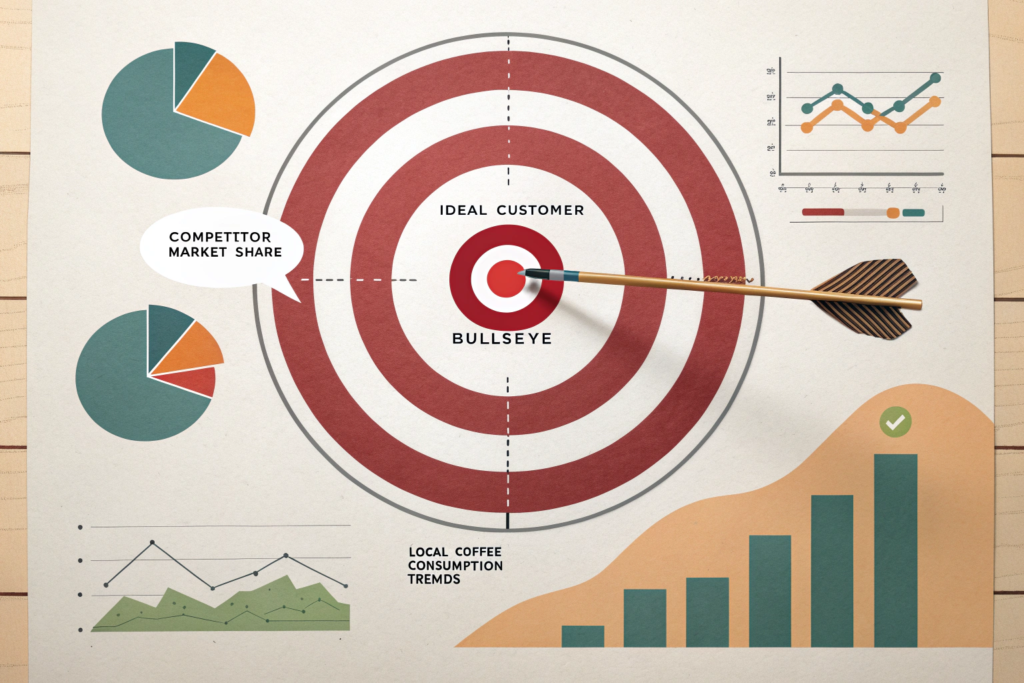
A great idea is worthless if there's no one to buy it. This section is where you prove that you've done your homework and that a real, viable market exists for your coffee company. You need to move from "I think people will like this" to "I know these specific people will like this, and here's why."
Isn't a deep Market Analysis essential for proving your concept's viability? Absolutely. This section must identify your specific target market, analyze your key competitors, and detail your unique selling proposition (USP). It demonstrates that you understand the landscape you're about to enter.
This is where you become a detective. Go to the neighborhood where you want to open your cafe. Sit in your competitors' shops. Who are their customers? What are they ordering? What are they doing well, and what are they missing? Talk to people. Use online tools to research local demographics. The more data you have, the more convincing your plan will be.
How do you define your Target Market?
Be specific. "Everyone who likes coffee" is not a target market. A good target market description looks like this: "Our primary target market is young professionals and university students aged 22-35 who live or work within a 1-mile radius. They value quality, sustainability, and a comfortable space to work or socialize. Our secondary market is local residents seeking a high-quality morning coffee on their commute."
How do you analyze the competition?
Create a simple competitor matrix. List your top 3-4 local competitors. For each one, analyze their:
- Strengths: (e.g., Great location, low prices)
- Weaknesses: (e.g., Poor quality coffee, bad service, uncomfortable seating)
- Their Target Audience: (e.g., Students, families, business people)
- Your Advantage: How will you compete and win against them? (e.g., "We will offer superior specialty coffee and a more welcoming atmosphere than Competitor A.")
How Will You Actually Run the Business?
This is the "how-to" section of your plan. It describes the nuts and bolts of your day-to-day operations. An investor needs to see that you have a realistic plan for turning your idea into a functioning, efficient business. It's where you prove you've thought through the practical realities.
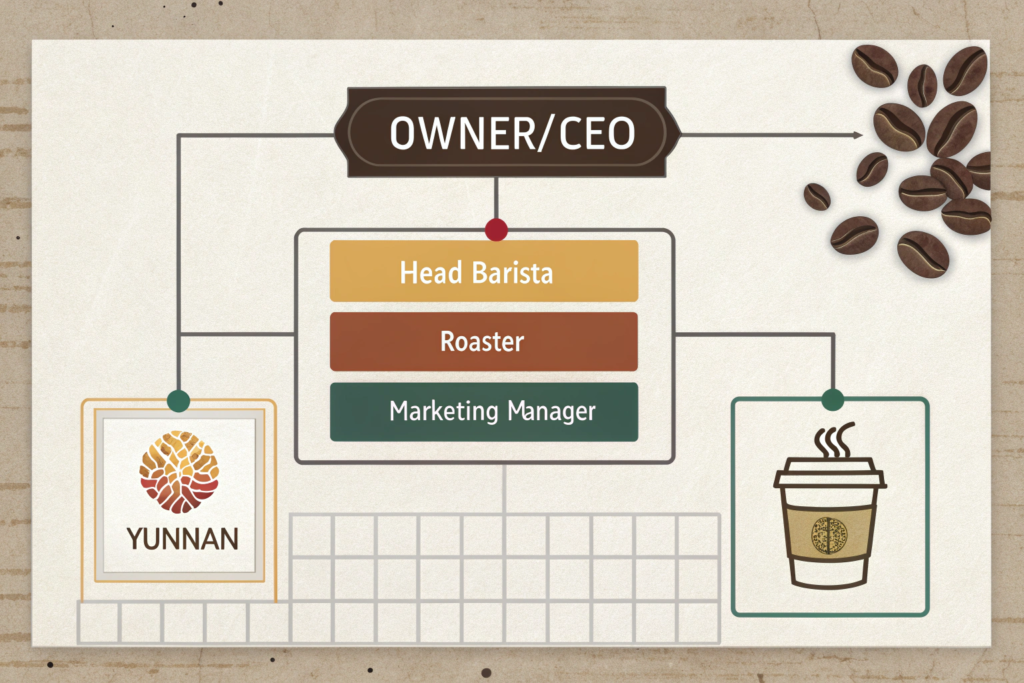
Isn't a clear Operations and Management Plan critical for showing you can execute? Yes, it is. This section outlines your organizational structure, the roles and responsibilities of your key team members, your daily operational workflow, and your key suppliers.
Who is on your team? Even if it's just you right now, who will you need to hire? A head barista? A part-time baker? What will your hours be? What is the process for opening the cafe, serving customers, and closing down each day? Who will be your key suppliers for milk, pastries, and, most importantly, coffee? Naming a specific, credible supplier like Shanghai Fumao for your core product shows you've already started building your supply chain.
What should the Management Team section include?
For each key member of your team (including yourself), provide a brief bio highlighting their relevant experience. If you have a star barista with competition experience, such as a local or regional champion known for crafting latte art with intricate designs and mastering the perfect milk foam texture, or a manager with 10 years in hospitality, including 5 years leading a bustling café chain where they streamlined operations, trained staff to deliver exceptional customer service, and increased daily foot traffic by 20% through targeted marketing initiatives, this is the place to show them off.
What does an operational workflow look like?
Think through a typical day.
- Opening: Who arrives first? What are the steps (dialing in espresso, baking pastries, setting up the patio)?
- During the Day: What are the key roles (cashier, espresso bar, floater)? How do you handle rushes?
- Closing: What are the cleaning and restocking procedures? Who cashes out?
A simple checklist or flowchart can be very effective here.
But How Will You Make Money and Grow?
This is the section that gets the most scrutiny from investors and banks. Your story and passion are important, but they must be backed by a credible financial plan. You need to show that you understand the numbers and have a realistic path to profitability.
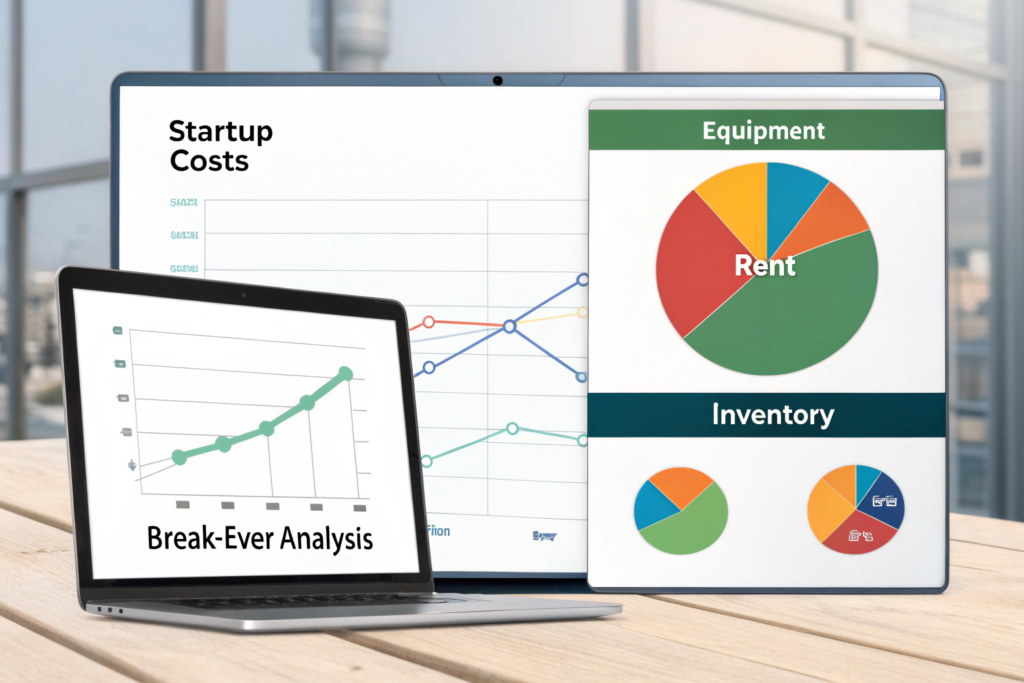
Isn't a detailed Financial Plan the ultimate test of your business's viability? Without a doubt. This section must include your startup cost breakdown, your sales forecast, a break-even analysis, and your projected profit and loss statement for the first three years. It's the quantitative proof that your business model works.
Be realistic. Don't just invent numbers. Research the actual costs of espresso machines, rent for commercial space in your area, and the price of green coffee. Base your sales forecast on your location's foot traffic and your competitor analysis. It's better to have a conservative, well-researched plan than an wildly optimistic one that no one will believe.
What are the key financial documents to include?
- Startup Costs: A detailed list of all one-time expenses required to open your doors. This includes equipment, construction/renovation, initial inventory (coffee, milk, cups), licenses and permits, and initial marketing.
- Sales Forecast: A projection of your monthly sales for the first year, and annual sales for years two and three. Break it down by category (e.g., espresso drinks, filter coffee, beans, food).
- Profit and Loss (P&L) Statement: This projects your revenue, subtracts your cost of goods sold (COGS) and operating expenses (rent, payroll, utilities), to show your projected profit or loss over time.
- Break-Even Analysis: This is a crucial calculation that shows how much you need to sell each month just to cover all your costs. It's your primary financial target.
Where can you find financial templates?
You don't have to create these from scratch. The U.S. Small Business Administration (SBA) offers excellent free templates and resources specifically for creating financial projections for a business plan.
Conclusion
Writing a business plan for your coffee company is a journey of discovery. It forces you to challenge your assumptions, do your research, and transform your passion into a concrete, actionable strategy. It's the most powerful tool you have for convincing investors, partners, and, most importantly, yourself that your vision is not just a dream, but a viable and future-successful business. The plan is your roadmap; now you're ready to start the journey.
When you get to the stage of defining your supply chain, remember that a strong partnership at the source is a key competitive advantage. We specialize in providing high-quality, traceable coffee from our farms in Yunnan and would be honored to be a part of your business plan. Contact our coffee specialist at cathy@beanofcoffee.com to discuss how our beans can become the foundation of your new venture.