You get the email from your German client. Subject line: "URGENT: EUDR Compliance Documentation Required." Your heart sinks a little. You're a U.S. roaster. You don't sell to Europe. But your supplier—the one you rely on for that clean Colombian Excelso—just raised their prices across the board. Their reason? "EUDR compliance costs." You're paying for a European regulation you don't even benefit from. And now you're wondering: Is this just the beginning? How deep does this EUDR rabbit hole go, and how much more is it going to cost me in 2026?
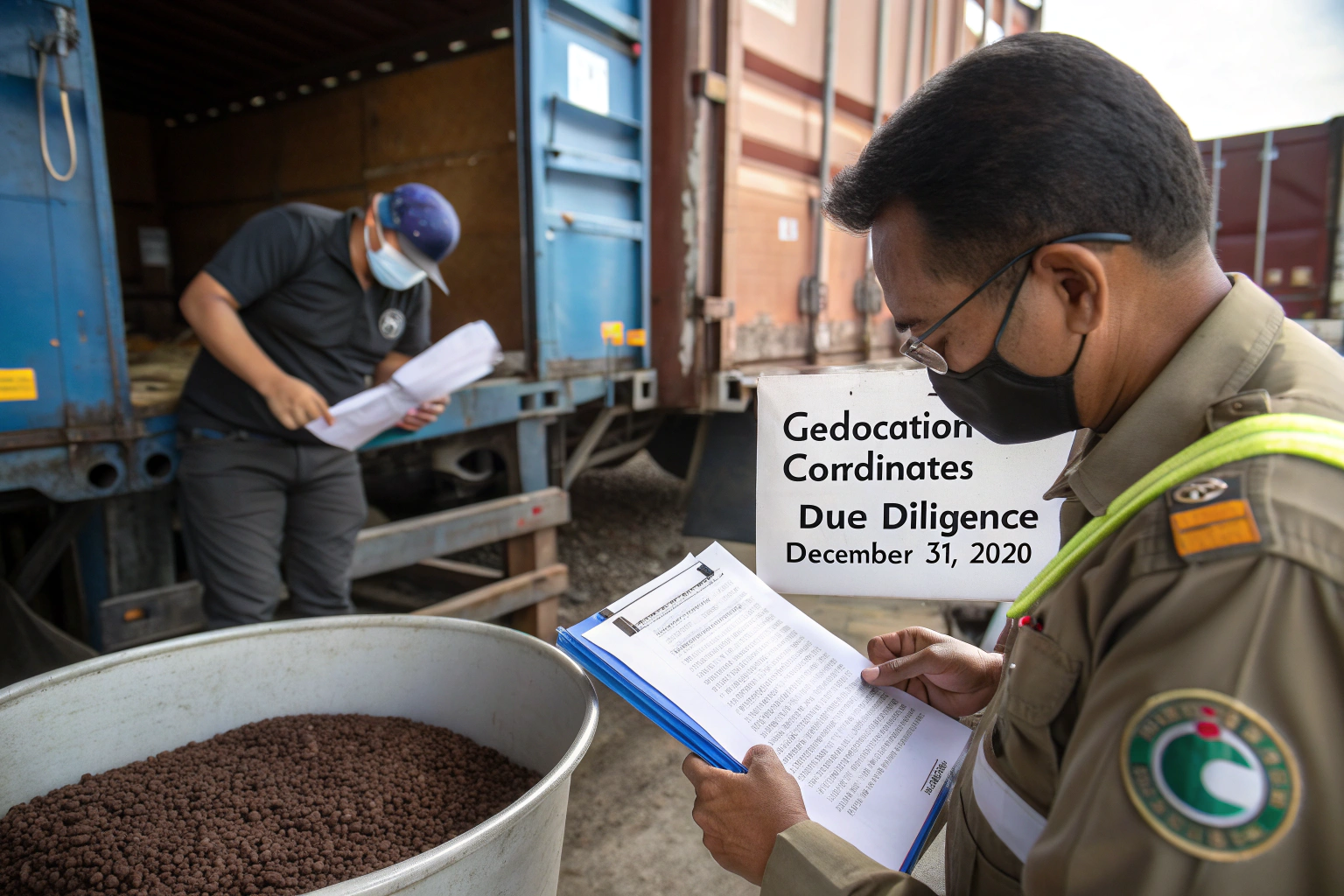
The EU Deforestation Regulation (EUDR) will affect coffee imports in 2026 by fundamentally restructuring the global supply chain's approach to traceability and data collection, regardless of the coffee's final destination. For coffee entering the EU, importers must submit a due diligence statement with geolocation coordinates proving the land was not deforested after December 31, 2020. For coffee entering the U.S. or other non-EU markets, the impact is indirect but significant: exporters and large mills are standardizing EUDR compliance across their entire production volume to avoid the prohibitive cost of running two separate traceability systems. This effectively spreads the cost of compliance across every pound of coffee sold globally.
Honestly, this regulation is the single biggest structural shift in coffee sourcing since the collapse of the International Coffee Agreement quotas. It's not a fad. It's not going away. And if you're a buyer who cares about "security" and "stability"—like Ron—you need to understand exactly how this machine works. Let me walk you through it from the perspective of someone who actually has to map 10,000 acres of Yunnan farmland to stay in business.
What Exactly Is the EUDR Due Diligence Statement for Coffee?
When I first heard about the due diligence statement, I pictured a simple checkbox. "Do you promise not to cut down trees? Yes/No." I was wrong. It's a detailed, legally binding submission of geospatial data for every single plot of land that produced the coffee in a specific shipment.
The EUDR Due Diligence Statement is a mandatory electronic submission that must accompany every coffee import into the European Union. It requires the importer to provide the geographic coordinates (latitude and longitude) of all plots of land where the coffee was grown, the date or date range of harvest, and an assertion, supported by verifiable data, that the coffee is deforestation-free. This information is cross-referenced against EU satellite monitoring systems and forest cover maps. Failure to provide accurate data, or providing data linked to deforested land, results in the shipment being denied entry and potentially significant fines.
Let's break down the two most critical components of this statement that buyers and sellers are scrambling to understand.
Why Do I Need to Provide GPS Coordinates for a Cup of Coffee?
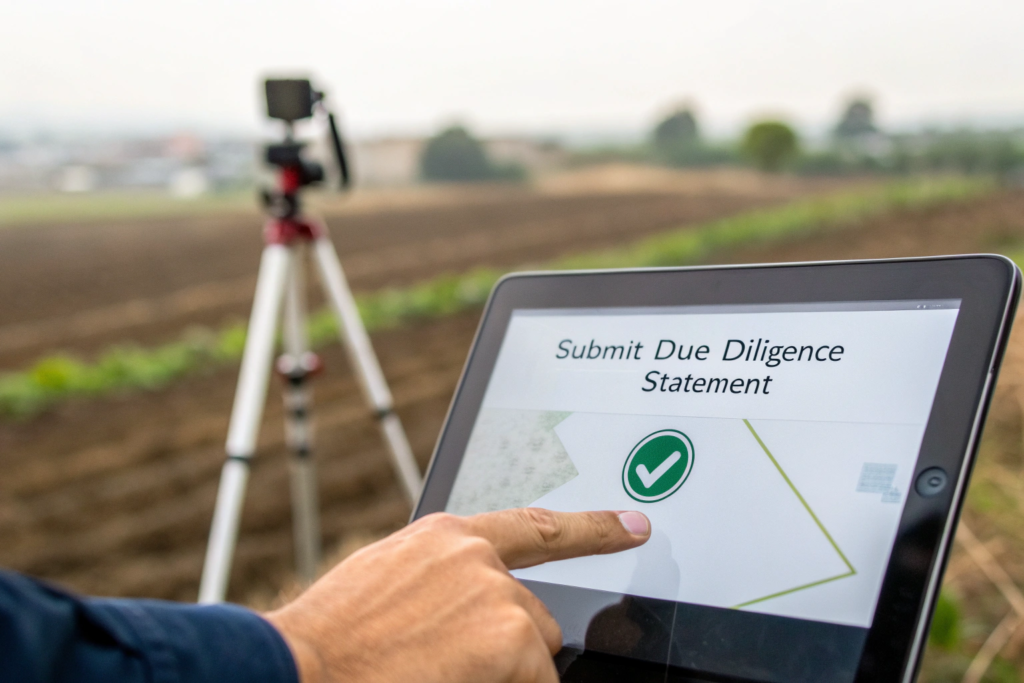
This is the core of the regulation. The EU doesn't trust certifications alone anymore. A piece of paper saying "Organic" or "Rainforest Alliance" is not enough. They want proof of where the coffee came from. Specifically, they want a polygon map or a single coordinate point for farms under 4 hectares.
The logic is simple, even if the execution is hard. The EU has satellite data showing forest cover on December 31, 2020. If your GPS coordinate shows you're farming on land that was forest on that date, you're blocked. Period. For a smallholder farmer in Yunnan with half a hectare, we need to walk the boundary of their land with a GPS device or use a mobile app to draw the polygon. For our large estate at Shanghai Fumao, we have to map every individual block. This isn't just about avoiding fines. It's about maintaining market access. You can see the official guidance on geolocation requirements directly from the European Commission's EUDR Page. The technical specifications are detailed and non-negotiable.
What Happens If a Single Farm in My Blend Is Non-Compliant?
This is the nightmare scenario for any exporter or importer. Coffee is often blended. You might have beans from 50 different smallholders in one container of "Yunnan AA."
If the due diligence statement is audited and one of those 50 farms is found to have a coordinate in a deforested area, the entire container is rejected. Not just the beans from that farm. The whole lot. The importer is on the hook for the cost of destruction or re-export, plus potential fines of up to 4% of their annual EU turnover. This "strict liability" approach is why the industry is in a panic. It forces exporters like us to be incredibly diligent about our supply chain. We can't just take a farmer's word for it. We have to verify. This risk is driving a trend toward vertical integration—working directly with known, mapped estates rather than anonymous middlemen. You can read analysis on the legal implications from sources like Global Coffee Report's EUDR Coverage. The message is clear: The burden of proof is on the importer, and the tolerance for error is zero.
Why Are Non-European Roasters in the U.S. and Australia Already Feeling the Price Impact?
You're in Chicago. You're in Sydney. You don't care about Brussels. So why is your Chinese supplier telling you the FOB price just went up by 5 cents to cover "EUDR mapping costs"? It feels like a sneaky surcharge. But I promise you, it's not.
Non-European roasters are feeling the price impact of EUDR because large-scale coffee producers and exporters are implementing traceability systems as a single, unified standard for their entire operation. The cost of segregating EU-bound beans from non-EU beans—requiring separate warehouse areas, separate milling runs, and separate digital tracking—is often greater than the cost of simply mapping the entire farm and maintaining a single, EUDR-compliant inventory. Consequently, the investment in geolocation technology, third-party audits, and data management software is amortized across the exporter's total volume, raising the baseline cost for all customers.
Is Segregation Really More Expensive Than Full Compliance?
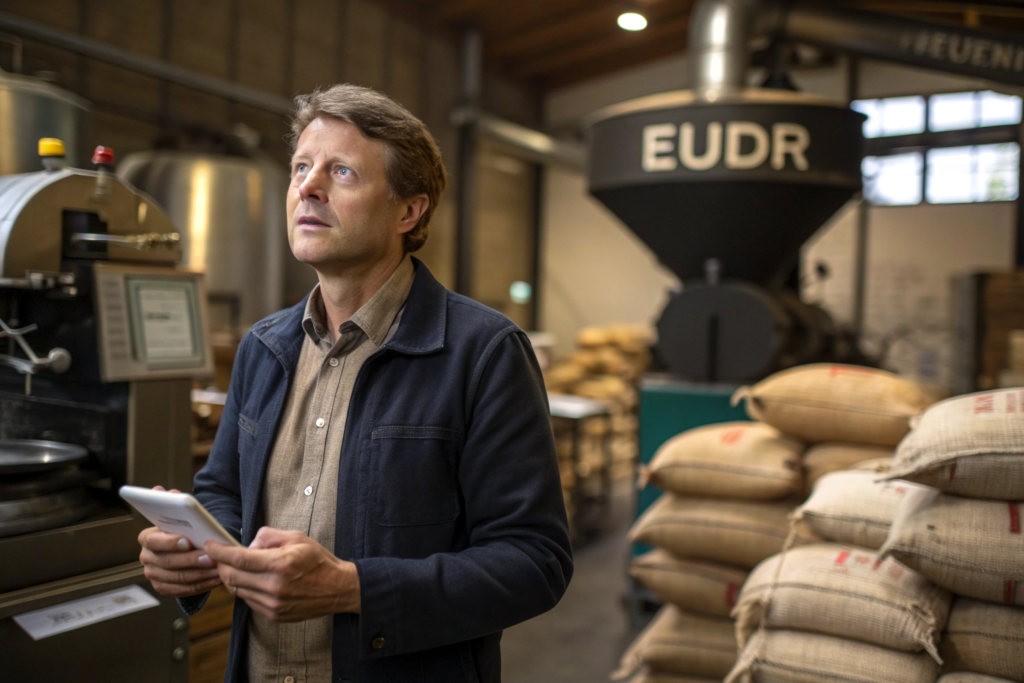
In my experience running Shanghai Fumao, the answer is yes. Imagine our dry mill. We process 100 metric tons a day. 40 tons are booked for EU clients. 60 tons are for the U.S. and Australia.
If we only want to map the 40 EU tons, we need to identify those specific lots at the farm gate. We need separate trucks to avoid co-mingling. We need a dedicated day of milling where the entire production line is cleared of non-mapped beans. We need separate bagging and separate warehouse stacks. The logistical friction is enormous. The labor cost of managing two streams of inventory is higher than the cost of just having our agronomist spend a few weeks mapping every single farm plot once. Once the polygon is in the system, it's there forever. We can generate a due diligence statement for any of our beans at the click of a button. It's a one-time mapping cost with ongoing maintenance, versus a permanent operational headache of segregation. This economic reality means that most serious exporters are going "all in" on compliance. And that cost is shared across every pound sold, including yours.
What Are the Hidden Costs of the Required Third-Party Audits?
The regulation requires that the due diligence statement be supported by evidence. For large operators, that evidence must be independently verified. This means hiring an accredited third-party certification body to audit our traceability system and our geolocation data.
These auditors don't work for free. They charge a daily rate, plus travel expenses to Yunnan. They spend a week walking our fields with a tablet, spot-checking GPS coordinates against satellite imagery. They review our internal records and our purchasing documents from smallholders. The annual audit cost for a 10,000-acre operation is significant. And this is a recurring cost, not a one-time fee. You can learn more about the role of third-party verification in the EUDR framework through resources from certification bodies like Ecocert or Control Union. These are the organizations doing the on-the-ground checks. Their invoices become part of the exporter's cost of goods sold. And that cost, like the mapping cost, is spread across the entire export volume.
How Can a U.S. Buyer Verify That Their Chinese Supplier Is EUDR-Ready and Deforestation-Free?
You might be thinking, "Okay, I get that I'm paying for this. But how do I know my supplier actually did the work? How do I know their data is clean?" This is the security question. You don't want to be associated with a supplier who gets flagged for deforestation, even if your coffee goes to the U.S. The reputational risk is real.
A U.S. buyer can verify a Chinese supplier's EUDR readiness by requesting two specific pieces of evidence: a polygon map export for the specific lot being purchased, and a copy of a recent third-party audit summary confirming the traceability system's integrity. A supplier who has genuinely invested in compliance will be able to provide these documents without hesitation. Additionally, buyers can use public satellite monitoring tools like Global Forest Watch to independently cross-reference the supplied coordinates with historical tree cover loss data.
Can I Use Free Satellite Tools Like Global Forest Watch to Check a Farm Myself?
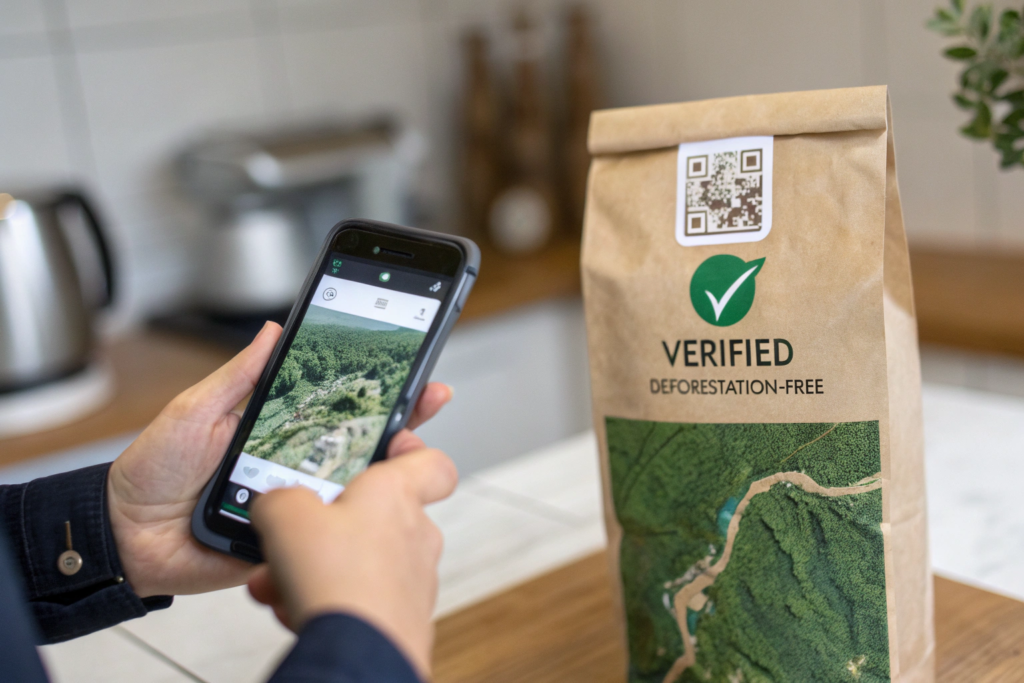
Yes. And I encourage it. It's a powerful way to build trust. Ask your supplier for the central coordinate or a sample polygon of their farm. Then, open Global Forest Watch.
This is a free, public platform. You can enter the coordinates and look at satellite imagery from 2020 and compare it to imagery from 2025. You can toggle on the "Tree Cover Loss" layer. If you see a big red blotch of deforestation right on the farm's boundary after December 2020, you have a serious problem. If you see stable, green tree cover, that's a good sign. I've done this exercise with potential clients. I show them our Baoshan plots on Global Forest Watch. They can see the forested buffer zones we maintain around our coffee trees. They can see that the land was already agricultural land in 2015, 2018, and 2020. It's a level of transparency that builds real confidence. It moves the conversation from "trust me" to "verify it yourself."
What Should a Legitimate EUDR Compliance Report From a Supplier Look Like?
It won't be a one-page PDF with a logo. A legitimate report will be a multi-page document from a recognized certification body. It should include the audit scope: "Verification of EUDR Geolocation and Traceability System."
It should list the specific farms or plots audited. It should state the methodology used (e.g., "On-site GPS verification, document review, staff interviews"). It should have a conclusion regarding the system's effectiveness. And most importantly, it should have the audit firm's contact details and accreditation number. If a supplier sends you a vague "Certificate of Compliance" with no third-party verifier named, be suspicious. At Shanghai Fumao, our EUDR readiness is integrated into our broader quality and sustainability management system. We can share the executive summary of our latest verification audit with any serious buyer. It's not a secret document. It's proof of the work we've done to protect our market access and, by extension, your supply security.
What Are the Long-Term Benefits of EUDR Compliance for Coffee Quality and Farm Management?
Amid all the stress and cost, it's easy to miss the forest for the trees—pun intended. EUDR is a massive bureaucratic burden. But buried inside that burden are some genuine, long-term benefits for coffee farming and, ultimately, for coffee quality.
EUDR compliance is accelerating the adoption of professional farm management practices that directly correlate with higher quality coffee. The requirement for geolocation forces farms to define their boundaries and understand their land assets. The prohibition on deforestation incentivizes the preservation of shade trees and forest buffers, which create microclimates that slow cherry maturation and enhance cup complexity. Furthermore, the enhanced traceability reduces the risk of fraud and commingling, leading to a cleaner, more consistent product for the end roaster.
How Does Mapping My Farm Help Me Manage My Fertilizer and Irrigation Better?
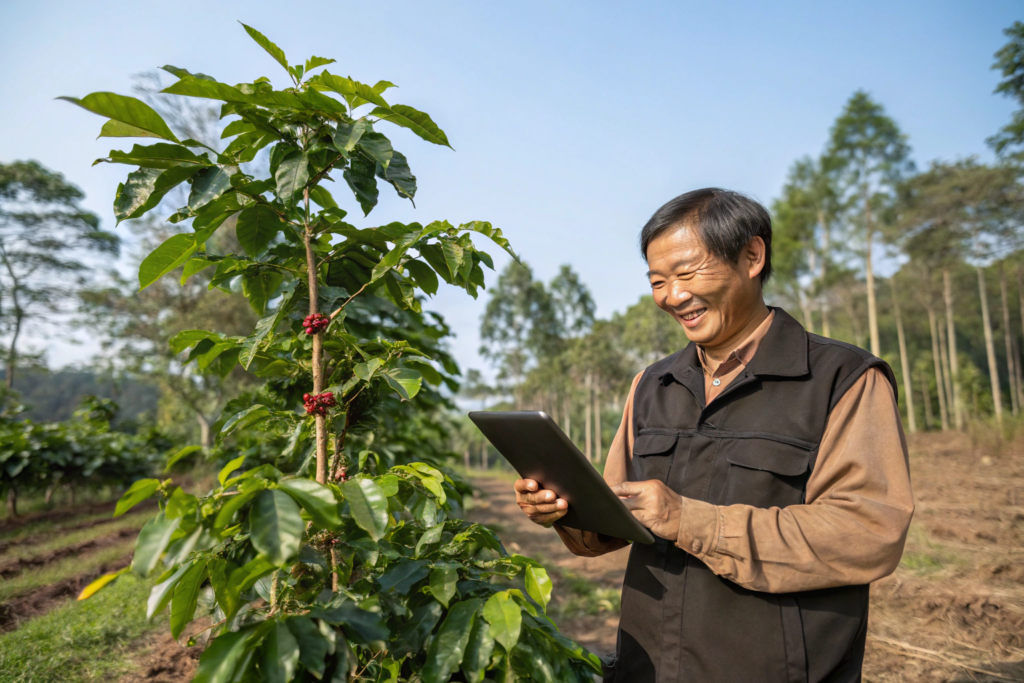
This is an unexpected benefit. When we started mapping our 10,000 acres for EUDR, we digitized the entire farm. We didn't just map the boundary. We mapped the internal roads, the irrigation channels, and the individual planting blocks.
Suddenly, our agronomists had a precise digital map of every tree. We could overlay that map with soil sample data. We could identify which blocks needed more compost and which ones were getting too much water. We could plan our harvest logistics more efficiently, knowing exactly how many pickers to send to each block based on the estimated yield per polygon. This is precision agriculture. It's the same technology used in high-value crops like wine grapes. And it came to coffee because of EUDR. Better farm management means healthier trees. Healthier trees mean better cherries. Better cherries mean a better cup. It's a long-term investment in quality that we might not have made as quickly without the regulatory push. You can read more about the intersection of digital agriculture and coffee at World Coffee Research.
Could Better Traceability Finally Eliminate the "Mystery Container" Problem?
The "Mystery Container" is when a roaster receives beans that don't quite match the sample. They're close, but something is off. Maybe a few more quakers. Maybe the acidity is flatter. The suspicion is always that the exporter swapped lots or blended in cheaper beans.
With EUDR-level traceability, that becomes much harder to do. The due diligence statement ties a specific GPS polygon to a specific container number and Bill of Lading. The system creates an immutable digital record. If a roaster suspects a quality issue, they can trace it back to the exact farm block. This creates powerful accountability. Exporters know they can't hide behind vague lot names. The data trail is too clear. Over time, this will force a higher level of honesty and consistency in the supply chain. It protects buyers from the bait-and-switch. For a buyer who values "safety" and "trustworthiness," this is a significant long-term advantage. The technology that makes EUDR compliance a headache today is the same technology that will make coffee sourcing more transparent and reliable tomorrow.
Conclusion
So, how will EUDR affect coffee imports in 2026? In the short term, it will add cost and complexity. You'll see those costs reflected in your FOB prices, whether you sell to the EU or not. You'll need to ask new questions of your suppliers about geolocation and audit reports. There's no sugar-coating the initial friction.
But in the long term, this regulation is forcing the coffee industry to professionalize its approach to land management and traceability. It's pushing out the opaque middlemen and rewarding vertically integrated producers who can control and document their supply chain from seed to container. It's creating a world where "deforestation-free" isn't a premium marketing claim, but a baseline requirement for market access.
If you're looking for a partner who has already done the hard work of mapping, auditing, and preparing for this new reality, let's talk. We've been preparing for EUDR for two years. Our farms are mapped. Our data is clean. Our supply chain is ready. And we're happy to share the proof with any buyer who asks. You can reach me directly at cathy@beanofcoffee.com.