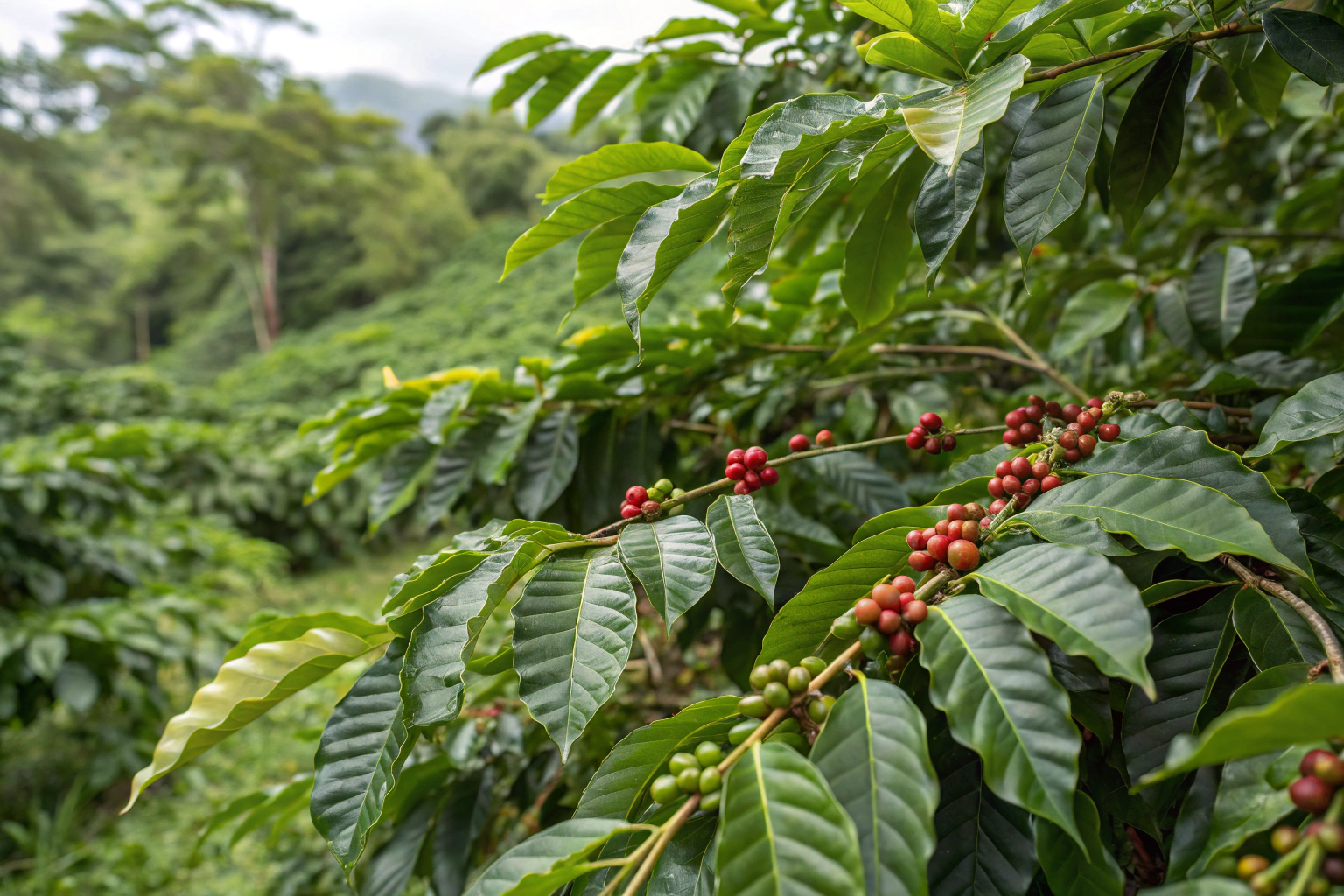
Ron, when you are designing an espresso blend, you are essentially solving a puzzle with three pieces: Flavor, Crema, and Cost. You need a bean that is cost-effective enough to allow for good margins, yet powerful enough to stand up to milk and sugar, and reliable enough to run consistently through your commercial machines. Your first instinct might be to use 100% expensive, high-altitude Arabica. That is a recipe for razor-thin margins and temperamental shots.
Catimor is an excellent and highly strategic component for espresso blends, serving as a reliable base that provides superior crema, essential body (viscosity), and exceptional cost stability due to its high yield and disease resistance. When properly processed, especially in high-altitude regions like Yunnan, it delivers a clean, consistent foundation without the harsh notes traditionally associated with Robusta.
The key to Catimor is understanding its hybrid nature. It is the workhorse of the blend, freeing up your budget to purchase those expensive, bright, high-scoring micro-lots (like an Ethiopian or Panamanian) to add complexity to the final shot. It is a smart financial and flavor decision.
What primary role does Catimor play in a blend?
Espresso is fundamentally different from filter coffee. You are not just extracting flavor; you are extracting texture and visual appeal. The primary function of a base bean in an espresso blend is to deliver density and volume—the thick, syrupy mouthfeel and the persistent crema.
Catimor excels at providing the structural integrity of the espresso shot, contributing high levels of lipids and insoluble proteins that stabilize the emulsion, resulting in superior viscosity, a rich, reddish-brown crema, and improved shot consistency.
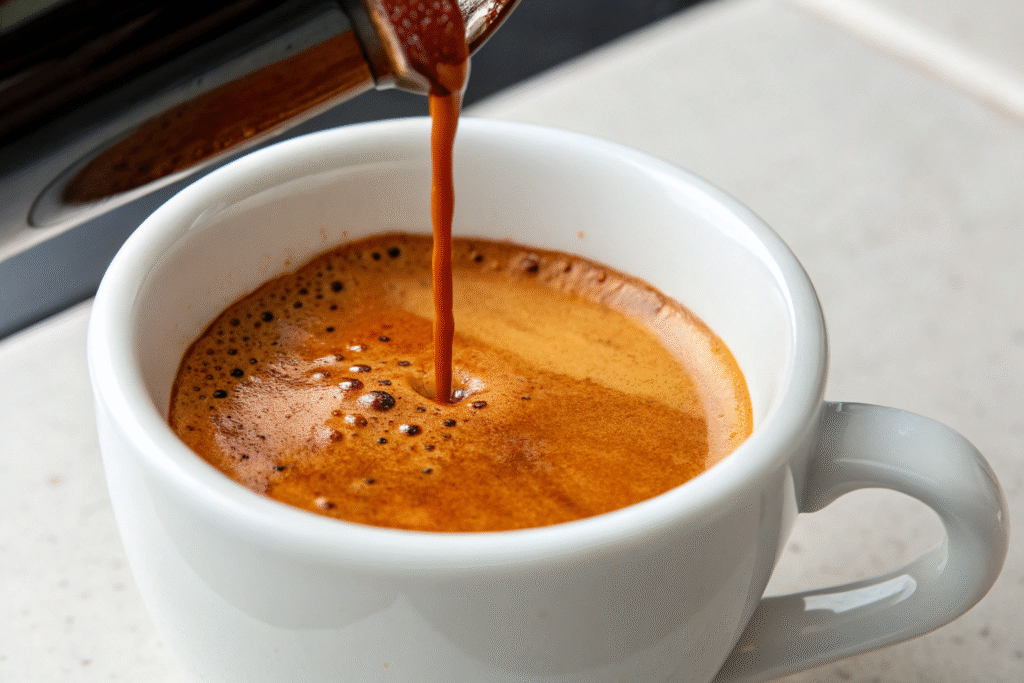
How does Catimor contribute superior crema?
Crema is not just foam; it is a stable emulsion of oils, carbon dioxide, and insoluble proteins. Catimor is a cross between the Caturra variety (a mutation of Arabica) and the Timor Hybrid, which itself contains Robusta genetics. Robusta is famous for creating massive, durable crema because it has a higher concentration of non-lipid solids and proteins.
By including Catimor (which often contains 15-25% of that beneficial Robusta heritage), you are essentially injecting structural stability into your shot. You get the thickness and durability of a Robusta-dominant blend without the harsh, earthy flavor profile of pure Robusta. This is essential for blends used in high-volume settings where shots must look consistent and hold up to milk. You can read more about the chemistry of crema stabilization on sites like Barista Hustle, which analyze the role of lipids and proteins.
The viscosity factor in Catimor
Body, or viscosity, is the tactile sensation of thickness or heaviness on your tongue. For an espresso meant to be mixed with milk (lattes, cappuccinos), a thin body is instantly lost. Catimor's composition ensures a dense shot that can cut through milk, meaning the customer still tastes the coffee, not just the dairy.
This viscosity is highly desirable for the American espresso market. When blended with a brighter, thinner Arabica (like a washed Ethiopian), Catimor provides the necessary weight and anchor. Experts often discuss the need for a balanced "viscosity" agent in blends; check publications like Coffee Review for detailed discussions on effective blend composition.
How does Catimor's flavor profile contribute?
The major criticism leveled against Catimor is its flavor complexity—or lack thereof. It generally lacks the sparkling acidity of a Kenyan or the floral notes of a Geisha. But in a blend, this is often a virtue, not a flaw. You want your background note to be consistent and predictable.
A well-processed Catimor offers a clean, neutral, and sweet foundation with notes of dark chocolate, brown sugar, and slight herbal characteristics, which is ideal for supporting brighter, more acidic components without contributing unwanted, distracting flavors.
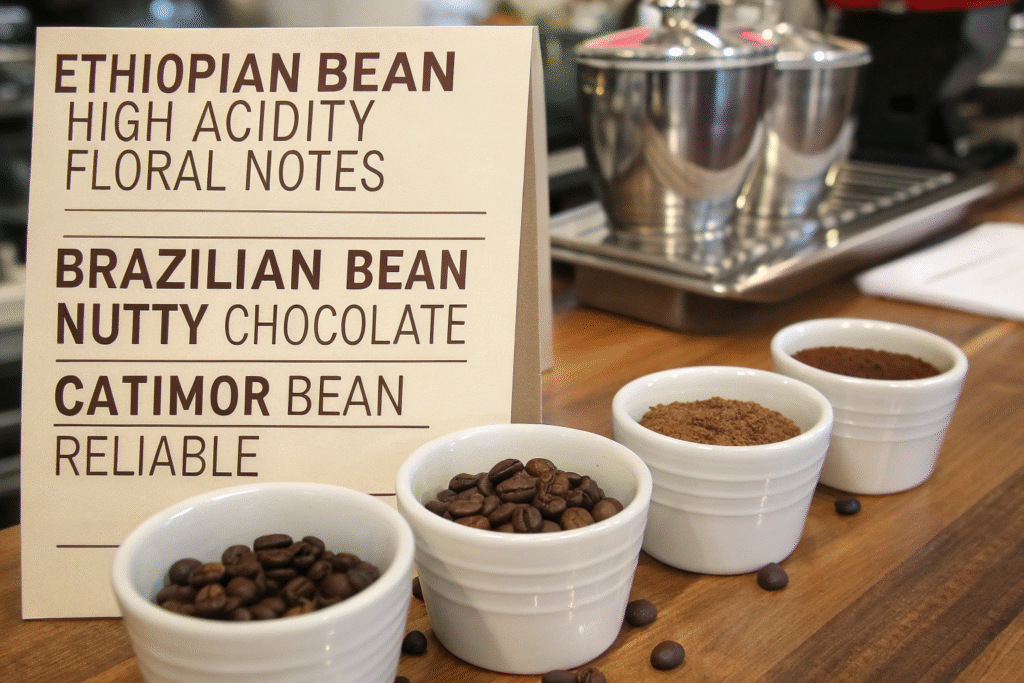
Balancing bright, acidic components
Your blend's Flavor Driver should be your expensive specialty bean (e.g., 20% high-grade, bright Arabica). Your blend's Base/Cost Control is the Catimor (e.g., 80%). The Catimor's neutral chocolate and brown sugar notes prevent the aggressive, sharp acidity of the Flavor Driver from becoming overpowering. It "rounds out" the blend.
However, poor Catimor processing can lead to the infamous "rubbery" or "phenolic" off-notes inherited from the Robusta side. This is why sourcing is crucial. You must vet the processing. Reputable research on varietal attributes, including the Catimor hybrid's characteristics and flavor weaknesses, is available through World Coffee Research.
Why Catimor requires excellent processing (The Yunnan Factor)
The Catimor we grow in Yunnan is generally superior to Catimor grown in lower-altitude, high-humidity regions precisely because we use meticulous processing methods designed for specialty Arabica. We use controlled fermentation and high-altitude drying beds to scrub out those potentially harsh Robusta notes, leaving behind only the desirable body and consistency.
If you buy Catimor from a commercial volume exporter who uses rudimentary processing, you run a high risk of defect. This risk is heavily managed in quality-focused origins like ours. The importance of specific processing controls in mitigating defects in hybrid varieties is a frequent topic on specialty platforms like Perfect Daily Grind.
Does the processing method maximize Catimor's potential?
The preparation of the Catimor is just as important as the variety itself, particularly when destined for a blend. You must choose the processing method that complements your blend's other components.
To maximize Catimor's potential as a clean base, the Washed process is generally recommended as it strips away most of the fruit matter, resulting in a cleaner, more standardized flavor. Natural processing, however, can be used strategically to add a touch of low-cost sweetness to a blend.

Why Washed Catimor is the ideal blend base
The Washed process removes the cherry fruit before drying. This results in a cleaner cup that highlights the inherent bean flavor (nutty, chocolate). This is the safest, most reliable option for a base component because it ensures the flavor is predictable and will not clash with the more vibrant, often fruity, components you blend it with.
Washed Catimor from a quality origin is highly versatile and reliable for year-round stock. We focus heavily on precise washing and fermentation at BeanofCoffee to ensure our Catimor is suitable for even the most demanding espresso blends. The official standards for the Washed process are meticulously outlined by the Specialty Coffee Association (SCA) technical guidelines.
Using Natural Catimor for cost-effective sweetness
If your blend needs a boost of sweetness or heavy body, you can strategically introduce a small percentage of Natural-processed Catimor. The fruit contact during drying imbues the bean with extra sugars and fermentation notes. This can provide a great flavor punch without the high cost of a Natural Ethiopian.
This should be done carefully, as the Natural process carries a higher risk of defects. I would advise only introducing it if you have personally cupped the sample and you have a robust relationship with the exporter to ensure lot consistency.
What is the economic advantage of sourcing Catimor?
This is the non-flavor reason Catimor is arguably the smartest choice for a wholesale espresso blend base. It is an insurance policy against the unpredictable C-Market.
Catimor provides massive economic leverage due to its genetic resilience, requiring less pesticide input, producing higher yields per hectare than pure Arabica, and possessing genetic resistance to Coffee Leaf Rust (CLR), which protects your supply chain from widespread crop failure risk.

Mitigating the risk of Coffee Leaf Rust
CLR is the single greatest threat to global Arabica supply. It can wipe out entire harvests, causing sudden, dramatic price spikes. Catimor's Robusta heritage gives it a near-immunity to this devastating fungus. By including Catimor in your blend, you are securing a base supply that is insulated from CLR-related market volatility.
This is a risk mitigation strategy that saves money in the long run. If your competitor's supply of pure Caturra is devastated by CLR, your steady Catimor supply provides stability. The economic damage and production losses caused by Coffee Leaf Rust are heavily documented by the Food and Agriculture Organization (FAO) of the UN.
The high yield factor
Catimor is highly productive. It yields significantly more coffee per hectare than the delicate, high-scoring Arabicas. More yield means lower production costs per pound. This translates directly into a lower FOB price for you.
When you blend, you are using high-yield Catimor to balance the low-yield, expensive components. This balance is the secret to high margin espresso. You can compare the yield economics of various varietals in publications like the Global Coffee Report which tracks yield data across different coffee-growing regions.
Conclusion
Ron, Catimor is not the star of your show—it is the indispensable, reliable co-star. It gives your espresso the structural integrity, the consistent crema, and the volume necessary for a profitable business, especially when sourced from quality-focused origins like the high-altitude farms we manage in Yunnan.
If you are looking to design a cost-effective, high-performing espresso blend that can withstand market volatility and high demand, Catimor is your answer. Let us provide you with the clean, high-scoring Catimor that can anchor your blend. Contact Cathy Cai at cathy@beanofcoffee.com to discuss a sample shipment of our Washed Catimor and receive specific blending ratio advice based on your current menu.