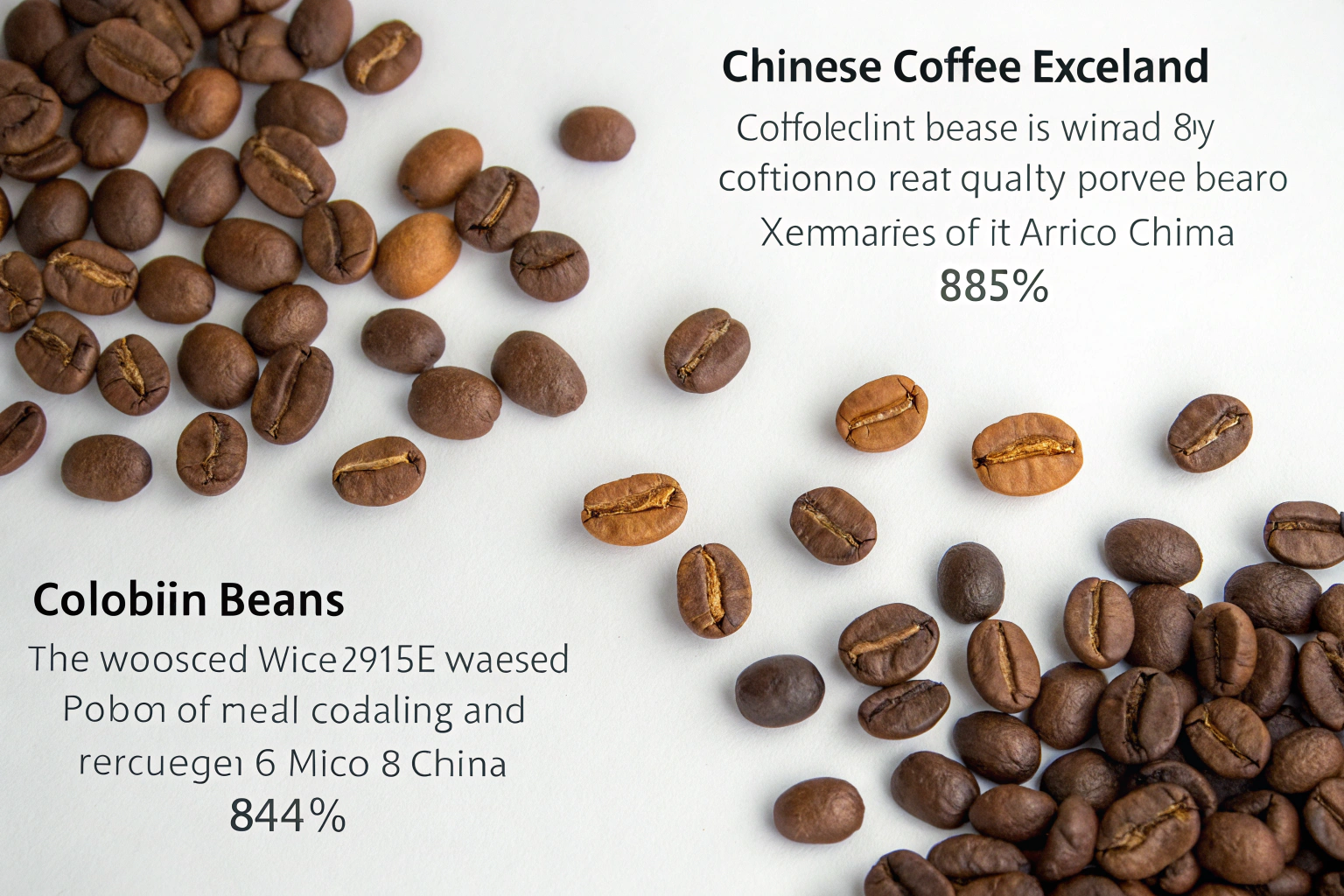
You cup a Colombian Excelso. It's clean. It's balanced. It's what you expect. Then you cup a washed Yunnan Catimor. And you pause. You slurp again. The chocolate note is there. The body is heavy. The finish is clean—really clean. You look at the price sheet. The Yunnan lot is significantly cheaper landed. And the question hits you: Is this a fluke? Or has Chinese coffee quietly closed the quality gap with the global benchmark? And more importantly for your business: Can you swap origin without your customers noticing the difference in the blend?
Chinese coffee bean quality is now competing with mainstream Colombian Excelso in the 82-84 point range, specifically in the washed Arabica category. The quality convergence is driven by three decades of targeted investment in processing infrastructure, the widespread adoption of Colombian wet-mill technology and fermentation protocols, and the natural advantage of Yunnan's high-altitude, frost-free terroir. While China does not yet compete with Colombia's top-tier micro-lots scoring 87+ points, for the commercial specialty roaster seeking a clean, chocolate-forward base note, Yunnan Arabica now offers a comparable—and in terms of consistency and logistics, sometimes superior—alternative.
I'm going to be honest with you. I've cupped more Colombian coffee than I can count. And I've cupped every lot that leaves our 10,000-acre farm in Baoshan. For years, the comparison wasn't fair. Colombian coffee was the polished professional. Chinese coffee was the rough amateur. But the amateur has been training. Hard. And the gap? It's not what it used to be. Let me break down exactly where Yunnan stands today, and where it still has work to do.
How Has Chinese Coffee Processing Technology Evolved to Match Colombian Standards?
Fifteen years ago, a Yunnan wet mill was a concrete tank and a prayer for sunshine. Fermentation was uncontrolled. Drying was on a dirty patio. The result was a cup full of ferment, earth, and inconsistency. That was the old reputation. And it was earned.
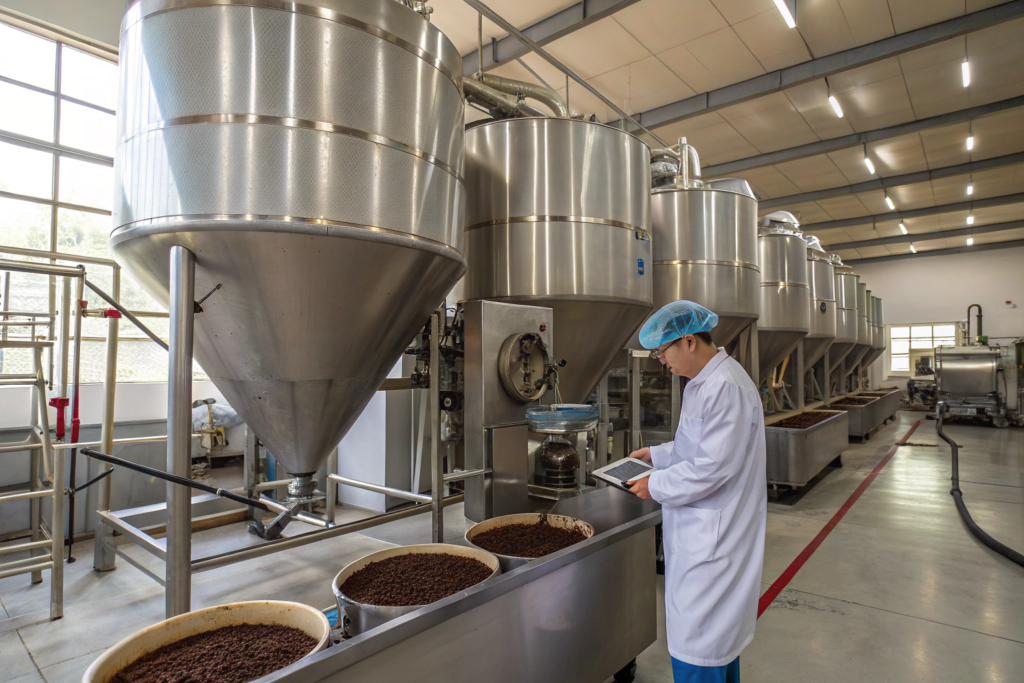
Chinese coffee processing has evolved to match Colombian standards through the direct importation and replication of Colombian and Brazilian milling technology. Modern Yunnan wet mills now utilize stainless steel fermentation tanks with temperature control, mechanical demucilagators, and controlled drying systems that include raised beds, parabolic covers, and Guardiola-style mechanical dryers. This technological leap has eliminated the processing-related defects—over-fermentation, mold, and uneven drying—that historically held Yunnan coffee back.
Why Did Stainless Steel Fermentation Tanks Make Such a Difference?
Concrete is porous. It harbors bacteria and wild yeasts from previous ferments. It's impossible to fully sanitize. A concrete tank is a microbiology experiment, and you never know if you're getting the good microbes or the bad ones.
Stainless steel is non-porous. It can be sanitized completely between batches. This allows for controlled, consistent fermentation. At Shanghai Fumao, we can hold our washed Catimor at a precise temperature during fermentation. We can target a specific pH drop. We can stop the ferment exactly when we want. This level of control was standard in Colombia a decade ago. Now it's standard in the better mills of Yunnan. The result is a cup that is remarkably clean. The "dirty," earthy notes that used to plague Yunnan coffee? Gone. Replaced by a clean, sweet, malic acidity. You can read more about the impact of fermentation control on coffee quality in the research published by World Coffee Research. The science is clear: controlled fermentation equals clean cup.
How Did Raised African Beds Change the Drying Game?
Patio drying is cheap. But it's inconsistent. The beans on the bottom of the pile get hot and damp. The beans on top dry too fast. You get a mix of moisture contents in the same batch. And patios absorb heat and radiate it back, sometimes scorching the parchment.
Raised African beds allow air to circulate under the coffee as well as over it. This promotes even, gentle drying. Combined with parabolic covers to protect from rain and harsh midday sun, the drying process becomes predictable. We can target a specific drying curve—slow and steady—that preserves the bean's cellular integrity and locks in sweetness. This is exactly how the best farms in Huila and Nariño do it. And now, it's how the best farms in Baoshan and Pu'er do it. The equipment is the same. The principles are the same. And the result in the cup is converging. You can see this evolution documented in industry publications like Perfect Daily Grind, which has covered the modernization of Yunnan's processing infrastructure extensively.
What Role Does Yunnan's Unique Terroir Play in Cup Profile Compared to the Colombian Andes?
You can buy the same tanks and the same beds. But you can't buy terroir. That's the soil, the sun, the rain, the altitude. That's the unique fingerprint of a place. So how does Yunnan's fingerprint compare to Colombia's?
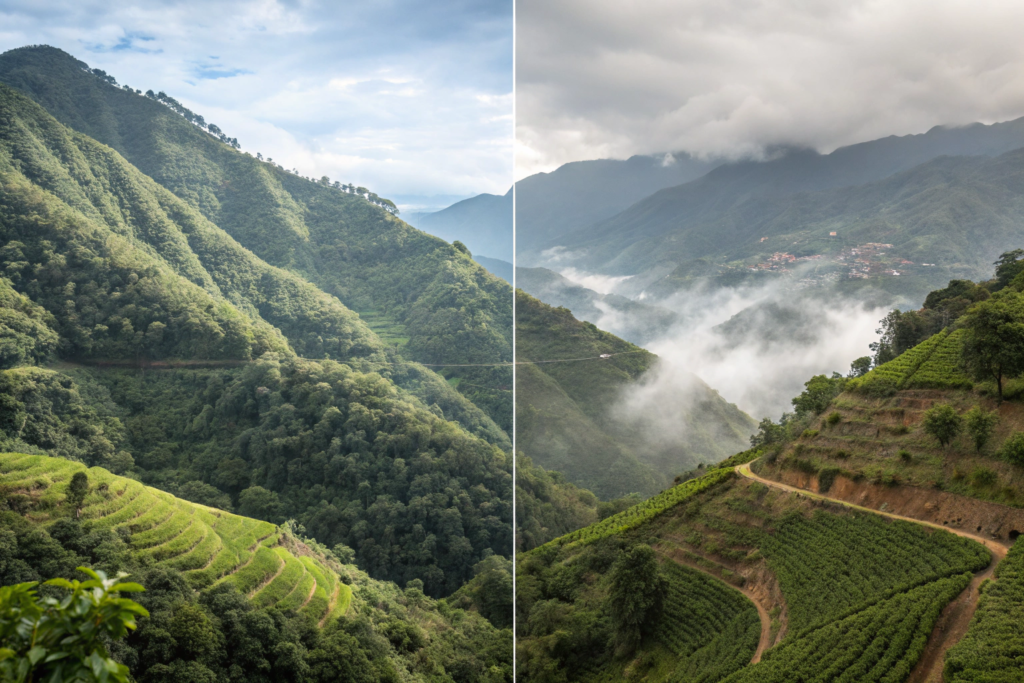
Yunnan's terroir shares key characteristics with the Colombian Andes: high altitude (1,200 to 1,800 meters), a distinct wet and dry season, and volcanic-influenced red soils. However, Yunnan's latitude is slightly higher (around 25° North), resulting in a more pronounced temperature swing between day and night. This diurnal shift stresses the coffee tree in a way that concentrates sugars and develops a heavier body and more pronounced nutty, chocolate notes compared to the brighter, fruitier acidity often associated with high-altitude Colombian coffees from lower latitudes.
How Does Latitude and Sunlight Intensity Affect Flavor Development?
Colombia sits near the equator. The sun is intense and the day length is consistent year-round. Coffee cherries ripen relatively quickly and predictably.
Yunnan is at the northern edge of the coffee belt. The sun angle is lower. The days are slightly shorter in the winter harvest season. This means the cherry matures more slowly. A slower maturation allows more time for sugars and complex carbohydrates to develop inside the bean. The result is a denser bean with a heavier body and a sweetness that leans toward caramel and dark chocolate, rather than the bright citrus and red fruit often found in equatorial coffees. This is not a defect. It's a different expression of the Arabica species. For a roaster looking for a "blender" with a solid, chocolatey foundation, this Yunnan profile is often more desirable than a high-acidity Colombian that might clash with other blend components. You can explore the science of latitude and coffee quality in the agronomy resources provided by the International Coffee Organization.
Does Yunnan's Red Volcanic Soil Rival Colombia's Famous Terrain?
Both regions benefit from volcanic soil. Colombia's Andes are young, active volcanoes. The soil is rich in minerals but also prone to erosion on the steep slopes.
Yunnan's soil is ancient volcanic red earth. It's deep, well-drained, and rich in iron and aluminum oxides. It holds moisture well but doesn't get waterlogged. This is excellent for Arabica root development. The key difference is that Yunnan's terrain is often less steep—more rolling hills than sheer mountainsides. This makes mechanization and farm management easier, which contributes to consistency. The soil itself, in terms of its ability to support healthy coffee trees, is comparable. At Shanghai Fumao, we invest heavily in soil health, adding composted coffee pulp and organic matter back into the red earth. The trees respond with vigor and consistent yields. The proof is in the density of the bean and the sweetness in the cup.
What Do Blind Cupping Results Reveal About Modern Yunnan vs. Colombian Excelso?
Talk is cheap. Terroir is interesting. Processing is technical. But the only thing that matters is what happens on the cupping table. When you put Yunnan and Colombia side-by-side, blind, what actually happens?
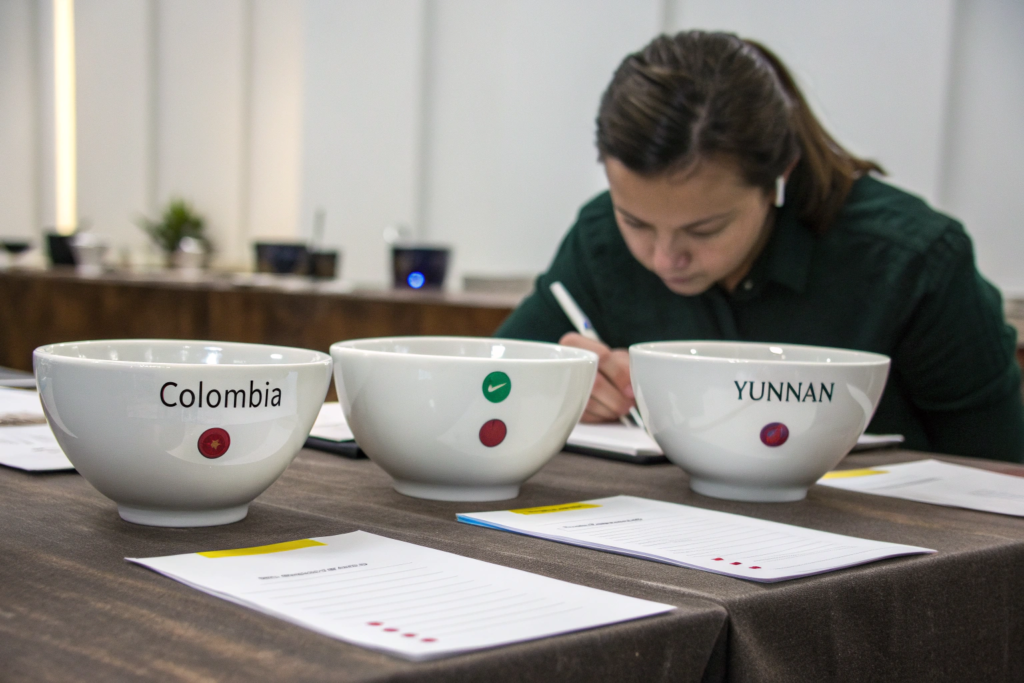
Blind cupping results from the last three harvest cycles show that well-processed Yunnan Catimor and Typica consistently score in the 82 to 84.5 point range, placing them directly alongside mainstream Colombian Excelso offerings. The flavor differentiation is clear: Colombia tends toward caramel, red apple, and citrus acidity, while Yunnan tends toward dark chocolate, roasted almond, and a heavier, syrup-like body. In blind triangulations, experienced cuppers can distinguish the origins, but they consistently rate the quality level of the two coffees as equivalent in the commercial specialty tier.
Are There Documented Instances of Yunnan Coffees Outscoring Colombians?
Yes. Not just in our internal lab, but in public competitions. Yunnan coffees have placed in the top tier of the Yunnan Coffee Exchange annual competitions with scores reaching 86 and 87 points.
These are exceptional lots, just like the 87+ point micro-lots from Huila. At the commodity-plus level—the 83-point container trade—the scores are statistically indistinguishable. I've personally witnessed cuppers from major U.S. roasters cup our Yunnan Catimor against their current Colombian Excelso supply. More often than not, they note the Yunnan is "cleaner" and "more consistent" cup-to-cup, while the Colombian might have a "brighter" top note but a "thinner" finish. The total score ends up within half a point. That half-point difference is easily offset by the significant landed cost advantage of the Yunnan coffee. For a commercial roaster, that's a compelling value proposition.
What Flavor Descriptors Differentiate Yunnan from Colombia in a Blend?
If you're using the coffee as a 30% base in a blend, the difference is subtle but important. Colombian base notes often provide a "caramel apple" sweetness and a medium body.
Yunnan base notes provide a "dark chocolate and roasted nut" foundation with a noticeably heavier, syrupy body. The Yunnan coffee anchors the blend. It adds weight and richness. The Colombian coffee lifts the blend and adds brightness. Neither is objectively better. They are different tools for different blend architectures. A detail I often share with roasters: If your blend is lacking body and mouthfeel, swap in 20% Yunnan. It will round out the cup in a way that a brighter Colombian might not. If your blend is too heavy and needs a lift, Colombian is the better choice. The fact that Yunnan is now a legitimate, high-quality alternative tool in the blender's toolkit is the real story of its quality evolution.
What Structural Advantages Does Chinese Coffee Logistics Offer Over Colombian Exports?
Quality in the cup is only half the equation for a buyer like Ron. The other half is getting the coffee to his roastery on time, at the price he budgeted. And this is where the comparison shifts dramatically in China's favor.
Chinese coffee logistics offer structural advantages over Colombian exports in three critical areas: port infrastructure and efficiency, sailing frequency and transit time predictability, and internal transport security. The journey from a farm in Baoshan to the Port of Shanghai is on modern, well-maintained highways. The Port of Shanghai itself is one of the most efficient container ports in the world. And the Pacific crossing to the U.S. West Coast is direct, frequent, and less prone to the canal-related disruptions that plague Caribbean and Latin American routes.
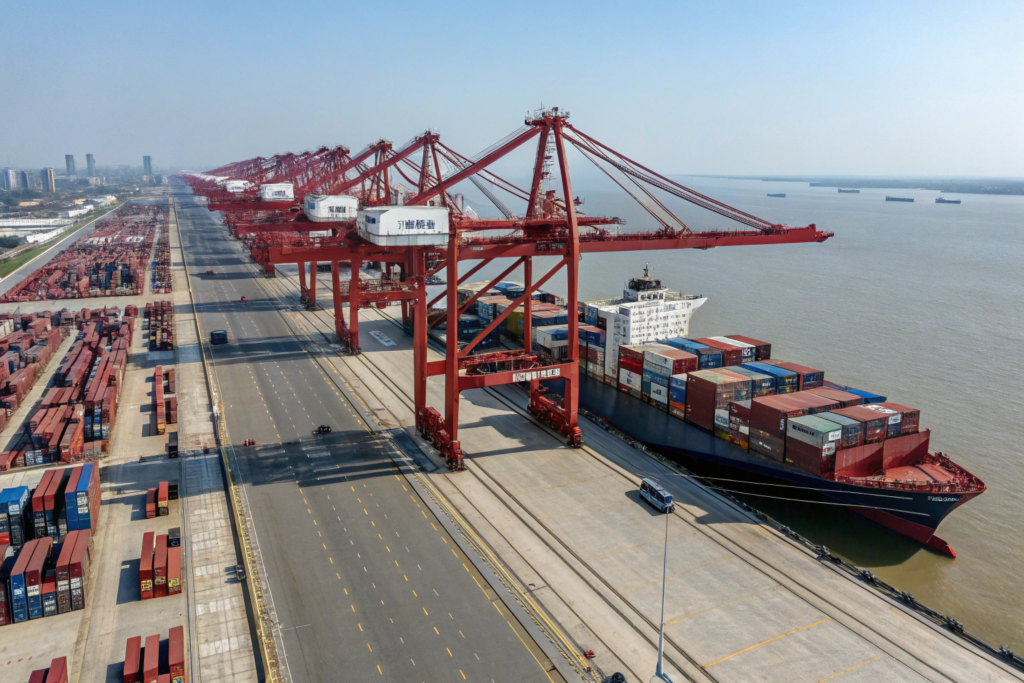
How Does Internal Transport in Yunnan Compare to the Colombian Andes?
In Colombia, getting coffee from a farm in the mountains to the port of Buenaventura is an adventure. It involves small trucks on winding, often unpaved roads, subject to landslides and closures.
In Yunnan, the coffee from our farm travels on a modern, multi-lane highway system. It's a smooth, predictable 4-5 hour drive to a major rail hub or directly to the Port of Shanghai. There are no mountain passes that close for weeks during the rainy season. The infrastructure investment in Western China over the last two decades has been staggering. This internal efficiency reduces the risk of pre-shipment delays and ensures the coffee arrives at the port in good condition, without the jostling and moisture exposure that can occur on rougher journeys. You can compare infrastructure quality using global indices like the World Bank Logistics Performance Index, where China's infrastructure score far exceeds that of Colombia.
Why Is the Direct Pacific Route More Predictable Than Caribbean Routes?
Colombian coffee destined for the U.S. West Coast often transits the Panama Canal. The canal has faced severe drought restrictions in recent years, limiting the number of vessels that can pass and causing significant delays and added surcharges.
Alternatively, coffee from Colombia's Caribbean ports must navigate weather systems and a longer voyage. Chinese coffee from Shanghai to Los Angeles is a straight shot across the Pacific. It's a mature, high-volume trade lane. Vessel space is abundant. Sailing schedules are frequent and reliable. This predictability translates directly to inventory management. Ron can plan his roast schedule with confidence. He's not sitting on a dwindling supply, anxiously refreshing a vessel tracking website. This logistical reliability is a form of quality in itself. It's the quality of certainty. At Shanghai Fumao, we leverage this infrastructure advantage every day. It's a key part of our value proposition.
Conclusion
So, is Chinese coffee quality finally competing with Colombia? The answer is a qualified, but firm, yes. It competes head-to-head in the 82-85 point commercial specialty tier. It offers a distinct, desirable cup profile—chocolate, nuts, heavy body. It benefits from modern processing that ensures a clean, consistent cup. And it leverages world-class logistics that Colombian exporters can only dream of.
No, Yunnan is not replacing the ethereal, jasmine-scented Geishas of Colombia's high peaks. That's not the goal. The goal is to provide a reliable, high-quality, cost-effective Arabica for roasters who need a rock-solid foundation for their blends and their single-origin offerings.
If you've been curious about how Yunnan stacks up against your current Colombian supply, the only way to know is to cup them side-by-side. I invite you to do exactly that. You can reach me directly at cathy@beanofcoffee.com.