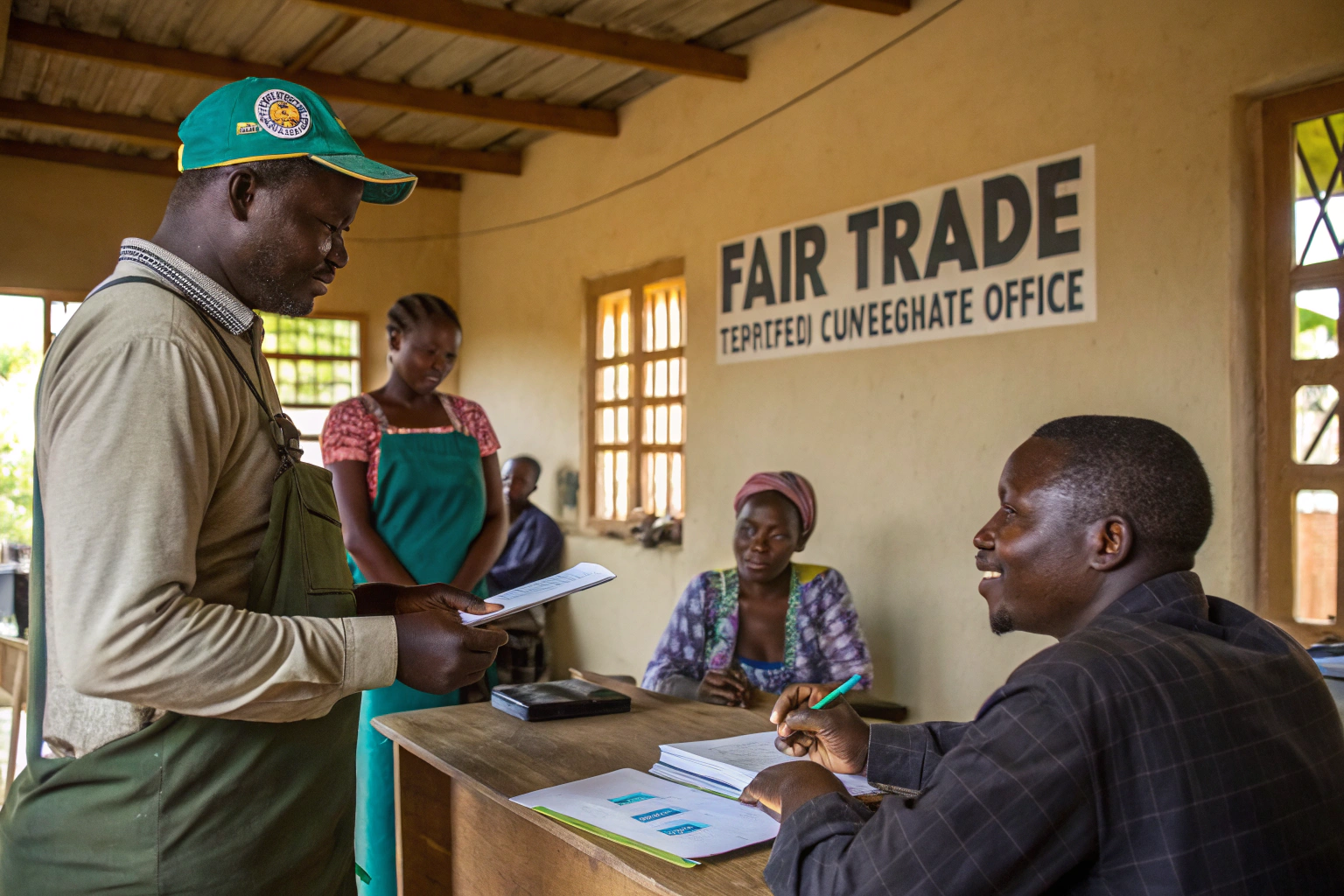
You're designing your new coffee bag. That Fair Trade certification logo looks perfect for your brand—it signals ethics to your customers. But a nagging thought remains: Is this system genuinely transforming farmers' lives, or is it just a marketing tool that makes Western consumers feel better? The answer matters because your sourcing decisions have real-world impacts on the families who grow your coffee.
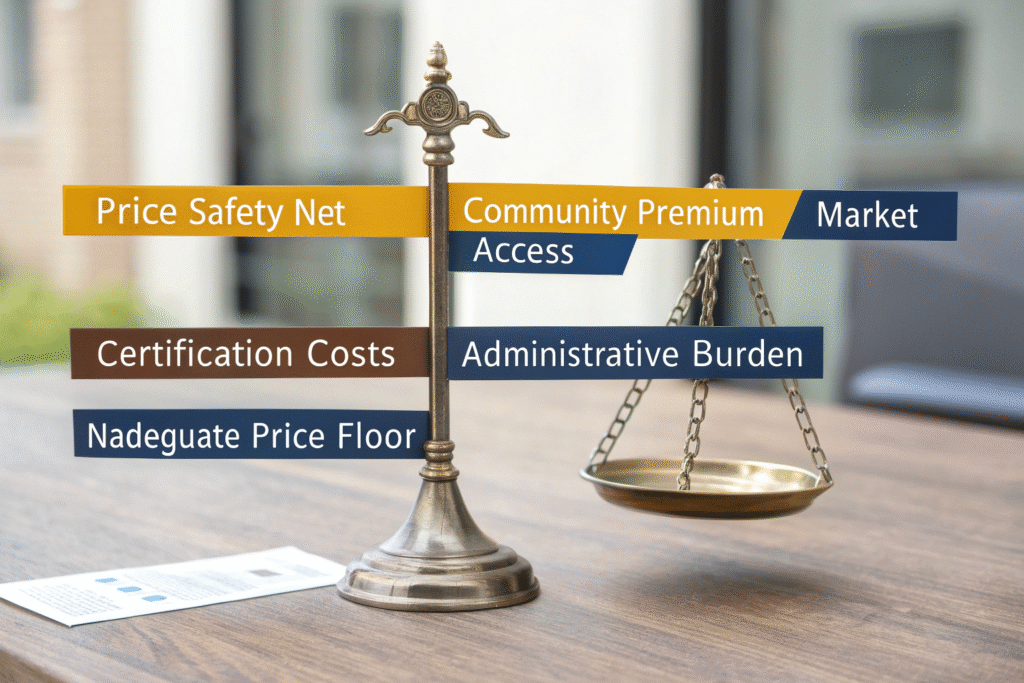
Fair Trade certification does help farmers, but in specific, structured ways rather than solving all their challenges. The system provides a crucial price safety net during market crashes and delivers community development funds through the Fair Trade Premium. However, it's not a silver bullet—its impact is constrained by certification costs, market access limitations, and it doesn't automatically guarantee quality or address all root causes of poverty.
So, where does Fair Trade genuinely deliver value, and where does it fall short? The reality is more nuanced than either the marketing or the criticism suggests. Let's examine what happens on the ground.
What Tangible Benefits Does Fair Trade Deliver?
The Fair Trade system is built around two concrete mechanisms: the Minimum Price and the Social Premium. These are not abstract concepts—they directly impact farmer livelihoods in measurable ways.
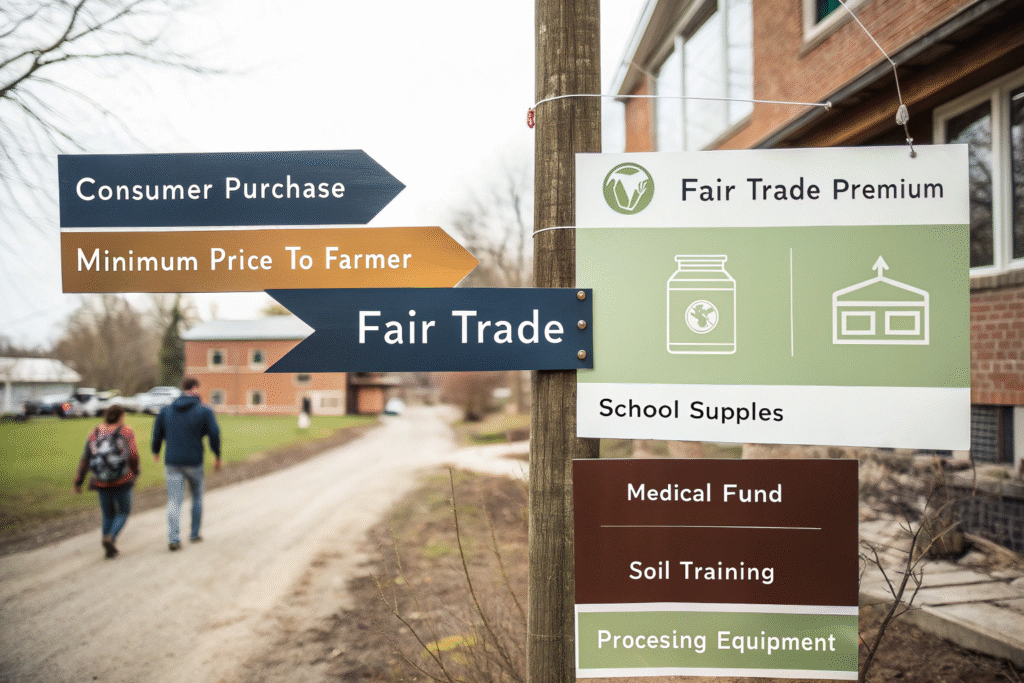
The Fair Trade Minimum Price acts as a safety net when market prices collapse, while the Fair Trade Premium provides dedicated funds for community projects chosen democratically by farmers themselves.
How Does the Minimum Price Protect During Crises?
When the commodity market price for coffee falls below the Fair Trade floor (e.g., $1.40/lb for washed Arabica plus a 20¢ Premium), certified buyers must pay the minimum. This protection is most valuable during periods like the 2018-2019 price crisis when market prices hovered near $1.00/lb. For farmers facing rising costs for fertilizer and labor, this difference can determine whether they can afford to send their children to school or must abandon coffee farming altogether. This is the system's core economic resilience function.
What Do Premium-Funded Projects Actually Achieve?
The additional Premium money (currently 20¢/lb for coffee) goes into a communal fund managed by the farmer cooperative. Through democratic meetings, farmers decide whether to invest in business infrastructure (like a new drying patio or processing equipment), community services (school scholarships, medical clinics), or direct cash payments to members. This process builds community agency and addresses needs that extend beyond the farm gate.
What Are the Limitations and Criticisms?
While the benefits are real, Fair Trade faces significant challenges that limit its impact. Understanding these limitations helps you make more informed sourcing decisions and potentially supplement Fair Trade with other approaches.
Key limitations include the high cost and complexity of certification, limited market access for certified coffee, and the fact that the minimum price hasn't kept pace with rising production costs in many regions.
Why Can Certification Be Burdensome for Farmers?
The paperwork, audits, and fees required for certification pose significant hurdles, particularly for small cooperatives. This administrative burden often falls on already-stretched cooperative managers. While larger cooperatives can absorb these costs, smaller groups may struggle, potentially excluding the most vulnerable farmers. This creates a certification barrier that doesn't always align with need.
Is the Minimum Price Still Adequate?
The Fair Trade minimum price hasn't increased substantially in over a decade, while production costs have risen dramatically due to inflation, climate challenges, and higher fertilizer prices. In some regions, the minimum price now barely covers costs, meaning farmers may be protected from catastrophic losses but still struggle to earn a living income. This gap has led to calls for price structure reform within the system.
How Does Fair Trade Compare to Other Ethical Sourcing Models?
Fair Trade is one approach among several. Understanding how it differs from direct trade, organic certification, and corporate sustainability programs helps you choose the right mix for your values.
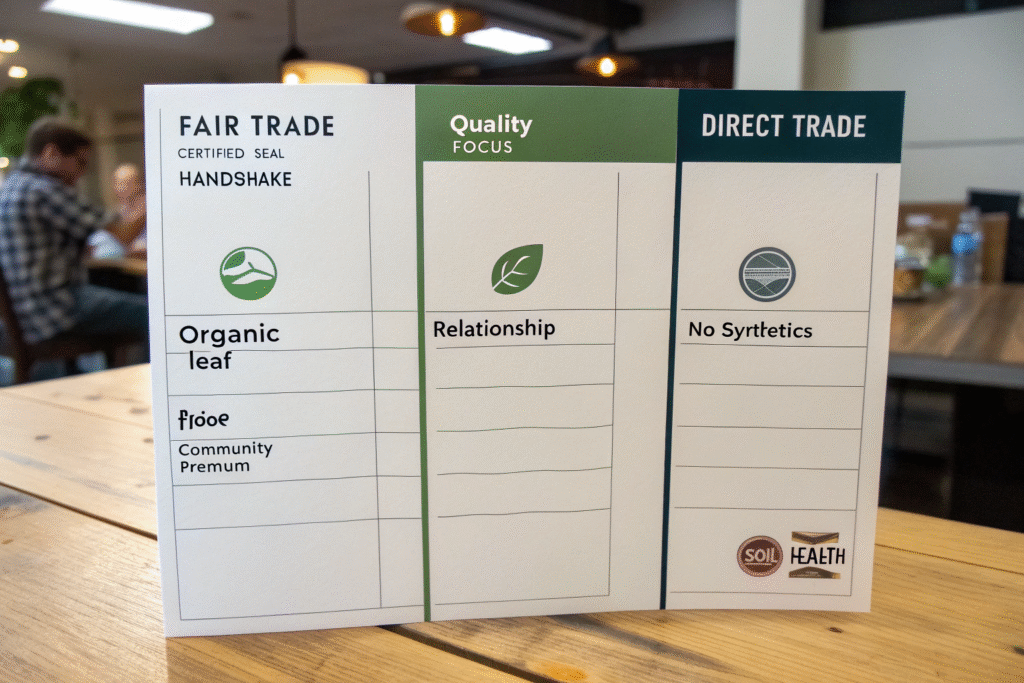
Unlike direct trade's focus on quality and relationship, Fair Trade prioritizes structural change through standardized rules. Unlike organic certification's environmental focus, Fair Trade emphasizes social and economic criteria.
What's the Difference Between Fair Trade and Direct Trade?
Fair Trade operates through a standardized, third-party certified system accessible to any cooperative that meets its standards. Direct trade involves roasters building individual relationships with specific farms, often paying well above market prices for exceptional quality. While direct trade can offer higher financial returns, it typically only benefits farms producing the highest quality coffee, whereas Fair Trade aims for broader inclusion of ordinary smallholders.
Can Systems Be Combined?
Absolutely. Many cooperatives pursue both Fair Trade and Organic certification, receiving both price premiums. Similarly, some roasters use Fair Trade as a baseline for their standard offerings while developing direct trade relationships for their premium lines. This layered approach can maximize impact across different farmer segments and quality tiers.
What Does the Research Actually Show?
Beyond anecdotes and marketing claims, what does objective research reveal about Fair Trade's impacts? Studies point to mixed but generally positive outcomes, with important caveats.
Academic research indicates Fair Trade certified farmers typically have more stable incomes and greater access to credit than non-certified counterparts, but the system doesn't automatically lift all participants out of poverty.
Do Farmers Actually Earn More?
Multiple studies show that while Fair Trade doesn't necessarily make farmers wealthy, it does provide greater income stability—which is incredibly valuable in a volatile industry. The consistent finding is reduced vulnerability to market crashes rather than dramatically higher average incomes. This risk reduction is a significant benefit that doesn't always show up in average income statistics.
How Does It Affect Community Development?
Research on the Premium's impact shows varied results depending on how well the cooperative is managed. In well-run cooperatives, the Premium funds transformative projects like schools, clean water systems, and healthcare. In less-organized groups, funds may be mismanaged or create conflict. The key factor is cooperative governance—the system works best where farmers have strong democratic control.
How Can You Source More Ethically Beyond Certification?
Fair Trade is a valuable tool, but it's not the only way to support farmers. The most impactful approaches often combine certification with additional practices that address its limitations.
Truly ethical sourcing considers price transparency, long-term relationships, quality investments, and supporting farmer organizations beyond just paying certification premiums.
What Questions Should You Ask Your Supplier?
Move beyond "Are you certified?" to more revealing questions: "What price did farmers actually receive per pound?" "How long have you worked with this cooperative?" "Do you invest in quality improvement programs?" "Can I visit the farms?" This focus on transparent relationships often reveals more about true impact than certification seals alone.
Why Consider Direct Relationships?
At BeanofCoffee, we've found that long-term partnerships that pay prices significantly above both Fair Trade and market standards—while simultaneously investing in farm infrastructure and quality training—create more sustainable improvements. This approach requires more effort but allows for customized support that addresses specific community needs beyond what a standardized system can offer.
Conclusion
Fair Trade coffee does help farmers, primarily by providing economic stability during market downturns and funding community-chosen development projects. However, it's not a complete solution to the deep-seated challenges in coffee farming—the price floor needs updating, certification costs remain burdensome, and it doesn't automatically ensure a living income.
The most ethical approach for coffee businesses is often a hybrid one: using Fair Trade as a baseline for certain product lines while also developing direct relationships that pay premium prices for quality, investing in farmer training, and being transparent about exactly how much money reaches farming communities. By understanding both the benefits and limitations of certification systems, you can make more informed choices that genuinely support the people who grow your coffee. If you're interested in building transparent, direct sourcing relationships that complement certification, contact our export manager, Cathy Cai, at cathy@beanofcoffee.com to discuss our model at BeanofCoffee.