You've built your brand. The logo, the voice, the customer trust. Now you're thinking about a private label line. A core espresso or a single-origin offering with your name on the bag. You've seen the margins. You know the potential. But sourcing from a "Chinese factory" for something as personal as your brand's coffee? It makes you pause. You've heard the stories. Quality drops after the first order. The packaging looks cheap. The supplier ghosts you when there's a problem. You're asking: Is this a smart way to scale my business, or am I putting my brand's reputation on a roulette wheel?
It is safe to private label coffee beans from a Chinese factory, provided you partner with a vertically integrated coffee farm and processor, not a generic trading company or packaging aggregator. Safety, in this context, encompasses three dimensions: food safety (verified by third-party lab testing and certifications), brand safety (protected by clear quality specifications and supply chain transparency), and business safety (ensured by direct communication with the owner-operator and enforceable contracts). The key distinction is between a "factory" that grows and mills coffee and a "factory" that just puts beans in bags.
I'm going to be direct with you. At Shanghai Fumao, we private label for roasters across North America and Europe. We've seen what works and what fails spectacularly. Let me walk you through the real risks of private labeling from China and, more importantly, the specific steps you can take to make it one of the safest, most profitable decisions for your brand.
What Are the Real Food Safety Risks of Private Labeling Chinese Coffee?
When you put your brand on a bag of coffee, you are legally and ethically responsible for what's inside that bag. If a customer finds a foreign object, or worse, gets sick from a contaminant, it's your brand that suffers. The fear of lax food safety standards is real.
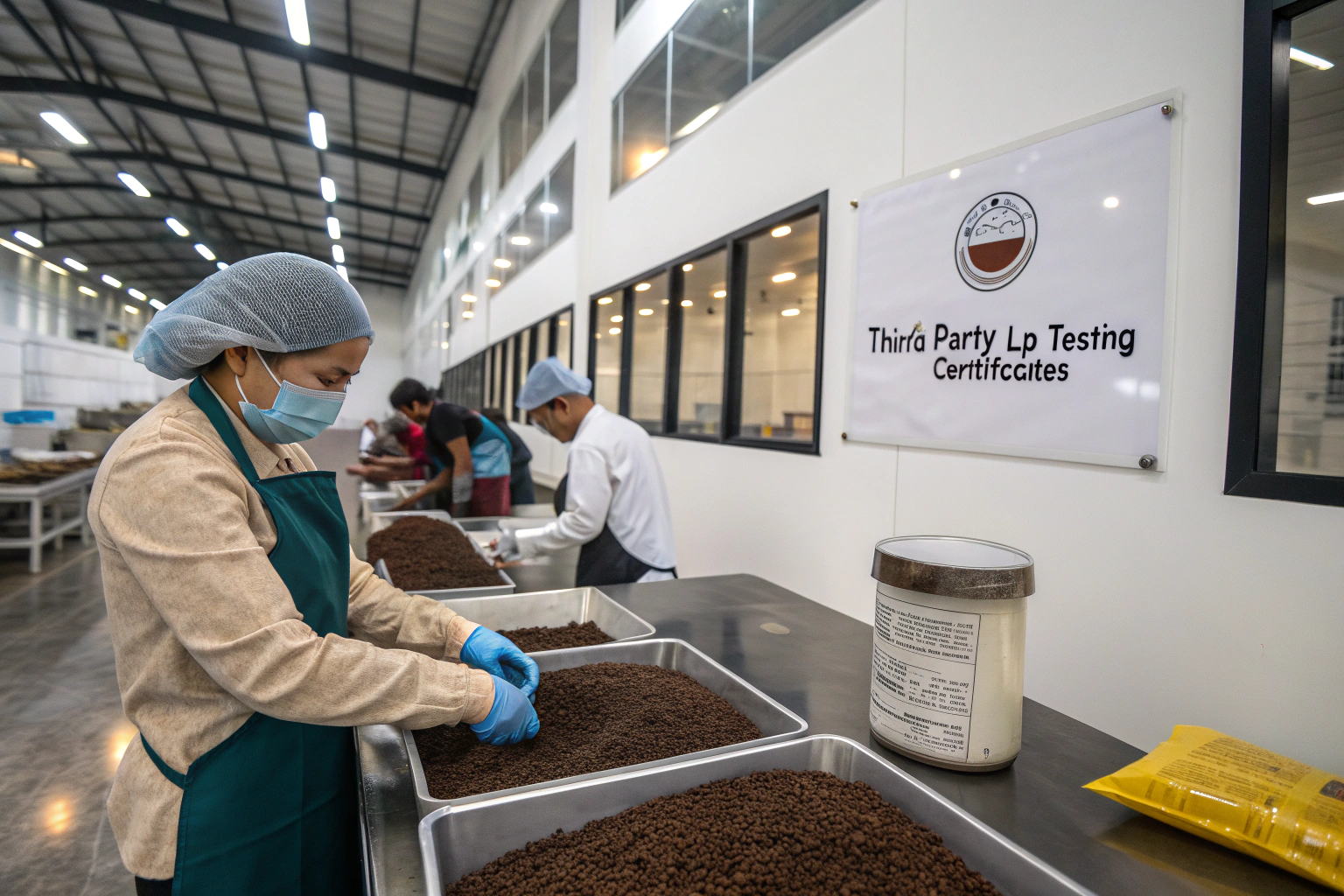
The primary food safety risks in private label coffee are mycotoxin contamination (Ochratoxin A and Aflatoxin), pesticide residues, and foreign matter (stones, metal, plastic). These risks are mitigated by partnering with a supplier who operates a modern dry mill with optical sorting and magnetic separation, who performs routine third-party laboratory testing for pesticides and mycotoxins using ISO-accredited labs, and who can provide the full test reports—not just a summary—for your specific lot. A supplier who hesitates to share full lab reports is a supplier to avoid.
How Do I Verify That the Coffee Is Free of Ochratoxin A and Pesticides?
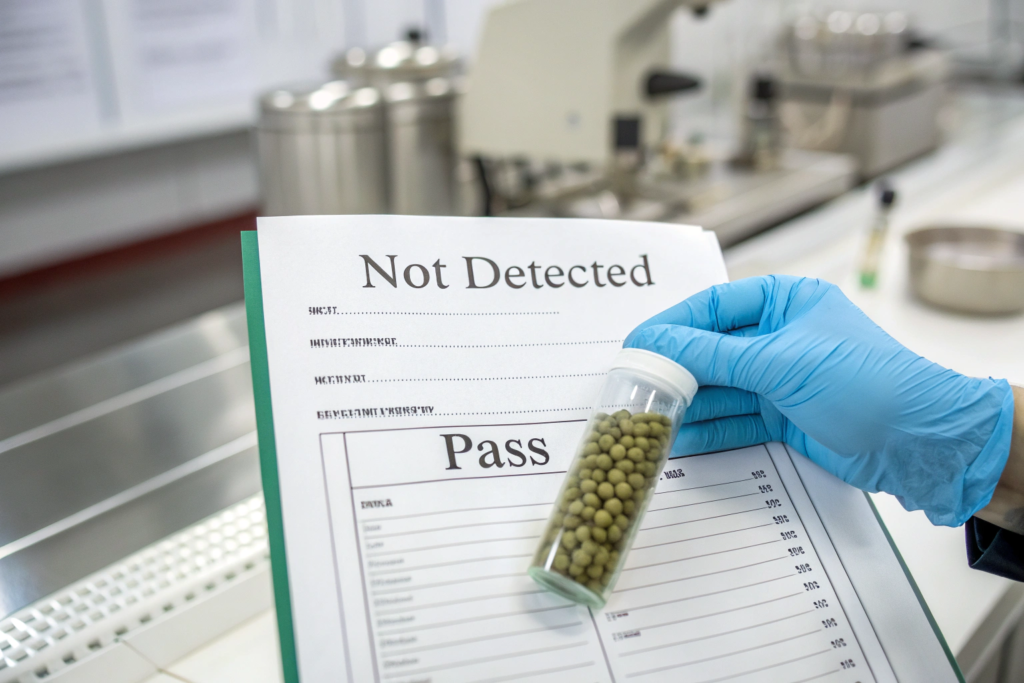
Don't accept a generic "Certificate of Analysis." Demand the full, multi-page laboratory report from an ISO 17025 accredited lab. The report should list the Limit of Quantification (LOQ) and the result for each compound tested.
For Ochratoxin A, the EU limit is 5 parts per billion (ppb). We test every export lot to ensure levels are well below this threshold, ideally "Not Detected." For pesticides, the report should cover at least 400 compounds using GC-MS/MS and LC-MS/MS methodology. This is the gold standard. At Shanghai Fumao, we provide these full reports to our private label clients. It's the objective, scientific proof that the coffee is clean. You can learn more about food safety standards for coffee from the European Food Safety Authority (EFSA) and the U.S. Food and Drug Administration (FDA). The regulations exist. The testing exists. The key is demanding the proof.
What Physical Contaminant Controls Are in Place at the Dry Mill?
A beautiful lab report is meaningless if a stone or a piece of metal from a worn machine ends up in the bag and damages your customer's grinder—or worse.
This is where the dry mill equipment matters. You need to ask specific questions: "Do you use a de-stoner? Do you use a rare-earth magnet? How many times does the coffee pass over the magnet?" A proper dry mill will have multiple control points. At our facility, the coffee passes over a gravity de-stoner to remove heavy stones, and then through two high-strength rare-earth magnets to capture any ferrous metal fragments. The optical sorter provides an additional layer of inspection. This multi-barrier approach is standard in modern food processing. A supplier who cannot describe their physical contaminant controls in detail is not a safe partner for your brand.
How Can I Ensure My Brand's Quality Standards Are Met Consistently Order After Order?
The first order is great. The supplier is on their best behavior. The real test is order number three, order number five, order number ten. Will the coffee in your private label bag taste the same in December as it did in January? Consistency is the bedrock of a successful private label program.
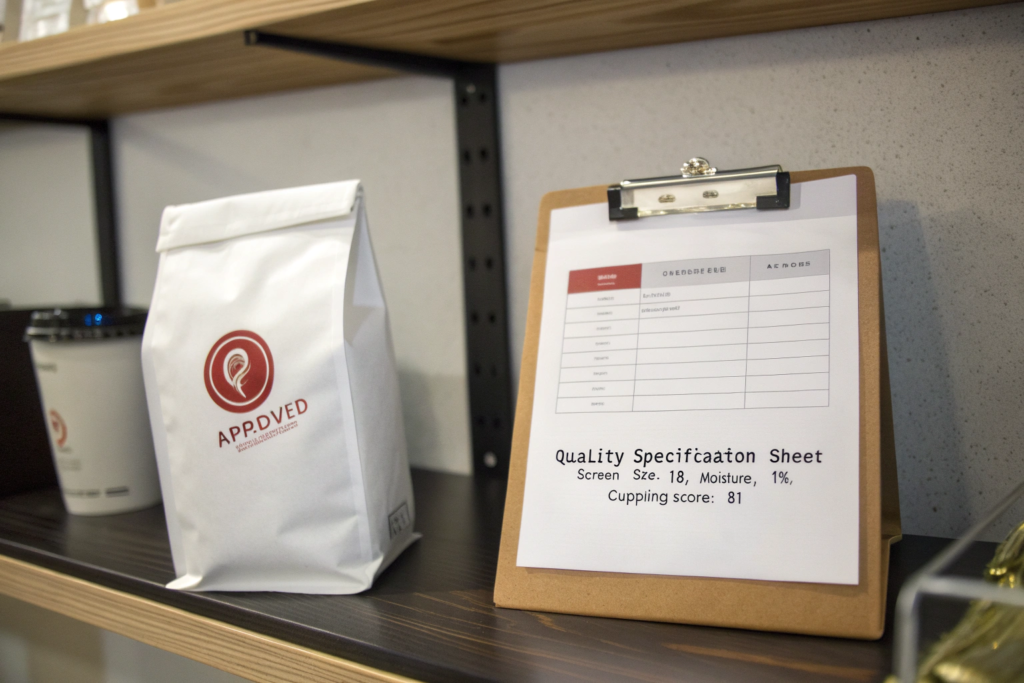
Ensuring consistent brand quality requires establishing a mutually agreed-upon "Approved Sample" and a detailed "Product Specification Sheet." The Approved Sample is a physical, vacuum-sealed reference of the exact green coffee and roast profile you accepted. The Specification Sheet documents the objective parameters: screen size retention percentage, moisture content range, defect count tolerance, and target cupping score. All future shipments are measured against this documented standard, creating a clear, enforceable quality benchmark.
What Is a "Product Specification Sheet" and Why Is It My Best Defense?
A Product Specification Sheet is a simple, one-page document that turns subjective quality into objective, measurable numbers. It is the constitution of your private label relationship.
It should specify:
- Origin: Yunnan, Baoshan, Shanghai Fumao Estate
- Varietal: Catimor
- Screen Size: 90% retention on Screen 18
- Moisture: 10.5% - 11.5%
- Water Activity: < 0.55 Aw
- Defect Count: Zero Primary Defects, < 5 Secondary Defects per 350g
- Cupping Score: Minimum 83 points, with specific flavor descriptors (e.g., Dark Chocolate, Toasted Almond)
When a new shipment arrives, you pull a sample and check it against this sheet. If the moisture is 12.5%, it's out of spec. If you find three Full Black beans, it's out of spec. The spec sheet removes ambiguity. It provides a clear, pre-agreed basis for acceptance or rejection.
How Do I Use an "Approved Sample" to Lock in the Flavor Profile?
The spec sheet covers the numbers. The Approved Sample covers the taste. It's the physical, sensory benchmark.
When you approve the initial pre-shipment sample, you should retain a portion of that exact coffee. Vacuum seal it. Store it in a cool, dark place. This becomes your reference standard. When future shipments arrive, you roast a sample of the new coffee and cup it side-by-side against the Approved Sample. This is the ultimate test of consistency. The numbers might be within spec, but does it taste the same? Does it have the same chocolate intensity? The same clean finish? The Approved Sample is your sensory anchor. It prevents "flavor drift" over time. At Shanghai Fumao, we retain an archive sample of every private label lot we ship. It's our commitment to consistency.
What Are the Legal and Logistical Considerations for U.S. Private Label Laws?
Private label coffee sold in the United States must comply with FDA labeling regulations. This is not optional. Getting it wrong can result in your product being detained at the border or pulled from shelves.
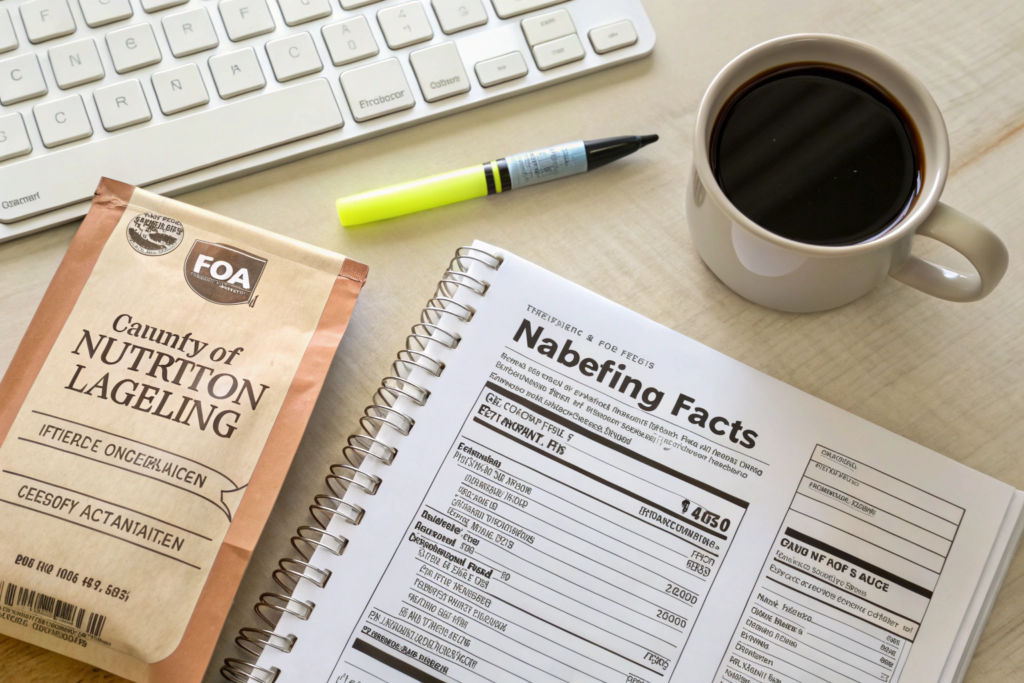
The key legal considerations for U.S. private label coffee are: accurate Country of Origin Labeling ("Product of China" or "Roasted in USA from Imported Beans"), a properly formatted Nutrition Facts Panel (typically all zeros for plain coffee), and an accurate net weight statement. The label must also include the name and address of the responsible party (your company). A knowledgeable supplier will provide the necessary origin documentation and product specifications to support your label creation, but the legal responsibility for the label's accuracy rests with you, the brand owner.
How Should "Country of Origin" Be Stated on the Bag?
This is straightforward but critical. If the green coffee was grown and processed in China, and you roast it in the U.S., the correct label statement is typically: "Made in USA from Imported Beans" or "Roasted in [Your City, State] from Chinese Coffee Beans."
Simply stating "Yunnan, China" as the origin is also acceptable, provided the roasting location is clearly identified elsewhere on the package. The key is not to mislead the consumer. You cannot label the coffee "Product of USA" if the beans were grown in China. U.S. Customs and Border Protection (CBP) and the FDA scrutinize origin claims. A reputable supplier will provide a Certificate of Origin as part of the export documentation, which supports your labeling. You can find detailed guidance on country of origin labeling from the U.S. Customs and Border Protection website.
What Are the FDA Requirements for a Coffee Nutrition Facts Panel?
Plain, unflavored coffee has a very simple Nutrition Facts Panel. The values for Calories, Total Fat, Sodium, Total Carbohydrate, and Protein are all zero (or calories, which can be expressed as 0).
The panel must be formatted according to FDA guidelines, with the correct font sizes and layout. There are many online tools and graphic designers who specialize in FDA-compliant labels. Your supplier is not responsible for creating your label, but they are responsible for providing the accurate product information—the fact that it is 100% Arabica coffee with no additives—that allows you to create a compliant label. At Shanghai Fumao, we provide a standard Product Information Sheet for private label clients that includes all the data needed for FDA label generation.
How Do I Choose the Right Private Label Partner in China for Long-Term Success?
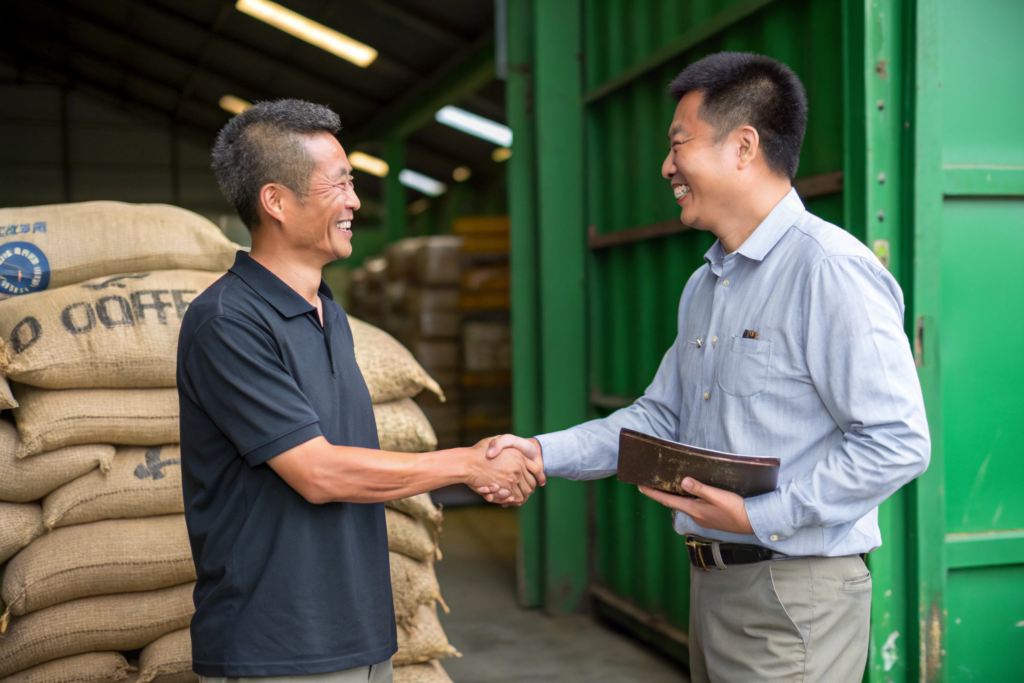
This is the most important question. The safety and success of your private label program hinge entirely on the character and capability of your partner. You're not just buying coffee. You're entering a relationship.
Choosing the right private label partner in China requires looking beyond the price per pound. You need to assess three core attributes: Vertical Integration (do they own the farm and the mill?), Transparency (are they willing to share lab reports, videos, and traceability data?), and Communication (do they respond promptly, speak your language fluently, and demonstrate an understanding of your brand's needs?). A partner who excels in these three areas is a partner you can build a long-term, successful private label program with.
What Questions Should I Ask to Verify a Supplier's True Capabilities?
Don't ask "Are you a good supplier?" Everyone says yes. Ask specific, verifiable questions.
Ask for a video tour of their dry mill and warehouse, with a specific request (e.g., "Please show me the optical sorter in operation with today's date"). Ask for a redacted Bill of Lading from a recent shipment to a U.S. client, proving they have export experience. Ask for three references from current private label clients in your market. Ask for a sample of their private label packaging (even if you plan to use your own bags). These questions cannot be answered with a slick brochure. They require a real, operational business to answer. At Shanghai Fumao, we welcome this level of scrutiny. We've built our business on it.
Why Is Direct Communication with the Owner So Valuable?
A private label relationship involves problem-solving. Shipping delays. Custom roast adjustments. New packaging formats. When a problem arises, you need to talk to the person who can make a decision, not a junior salesperson who has to "check with the manager."
Direct communication with the owner or export director cuts through the bureaucracy. It allows for faster decisions, more creative solutions, and a stronger, more personal partnership. When you email me at cathy@beanofcoffee.com, you're talking to the person responsible for the coffee, the mill, and the export operation. This direct line is a form of business safety. It means issues get resolved quickly, and commitments are kept. It's the difference between a transactional vendor and a strategic partner.
Conclusion
Is it safe to private label coffee beans from a Chinese factory? The answer is a qualified, but confident, yes. It is safe when you partner with a farm-owned, vertically integrated operation that treats food safety, quality consistency, and supply chain transparency as non-negotiable principles. It is safe when you establish clear, documented quality specifications and maintain an Approved Sample. It is safe when you have a direct line of communication to the owner.
The risks are real. But they are manageable. And the rewards—a consistent, high-quality, cost-effective core offering that carries your brand name—are substantial.
If you're considering a private label program and want to explore a partnership built on transparency, quality, and direct communication, I'm ready to have that conversation. My email is cathy@beanofcoffee.com.