You're staring at two bags of coffee. One is certified organic and costs 20% more. The other is conventional. Your customers are asking for organic, but your bottom line is screaming about cost. Is this just a marketing premium, or are you actually getting something tangible for that extra money? This is the daily dilemma for modern coffee buyers.
Organic coffee isn't inherently better-tasting, but it represents a different agricultural system with verified environmental and often social benefits. Whether it's "worth it" depends on what you value: certified chemical-free farming processes and potential market access, or purely the lowest cost per pound. The price premium pays for certification costs, typically lower yields, and more labor-intensive farming methods.
So, what exactly are you buying with that organic certification, and how does it impact the entire supply chain from farm to cup? Let's dig beneath the surface of the label to help you make an informed decision.
What Does "Organic Certification" Actually Guarantee?
The term "organic" gets thrown around loosely, but the certification is specific and rigorous. It's not just a claim; it's a verified production system tracked from the field to the final product.
Organic certification guarantees that the coffee was grown without synthetic pesticides, herbicides, or fertilizers for a minimum of three years. It also requires a buffer zone between organic and conventional farms and mandates practices that maintain or improve soil health.
How is the Certification Process Verified?
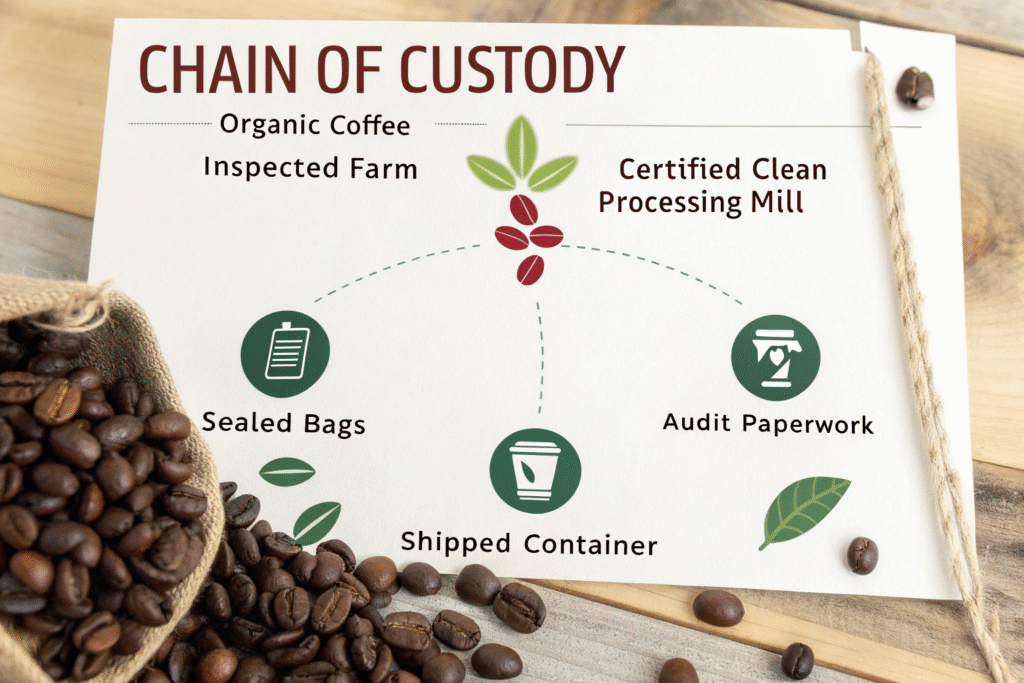
It's a chain of custody. Third-party certifiers inspect the farm annually, reviewing everything from soil management and seed sources to pest control and harvest methods. They also audit the processing mill and the export paperwork to ensure organic beans aren't mixed with conventional ones. This extensive documentation and inspection process is a significant part of the cost. This verification is the backbone of organic integrity in the supply chain.
What Practices Are Actually Forbidden?
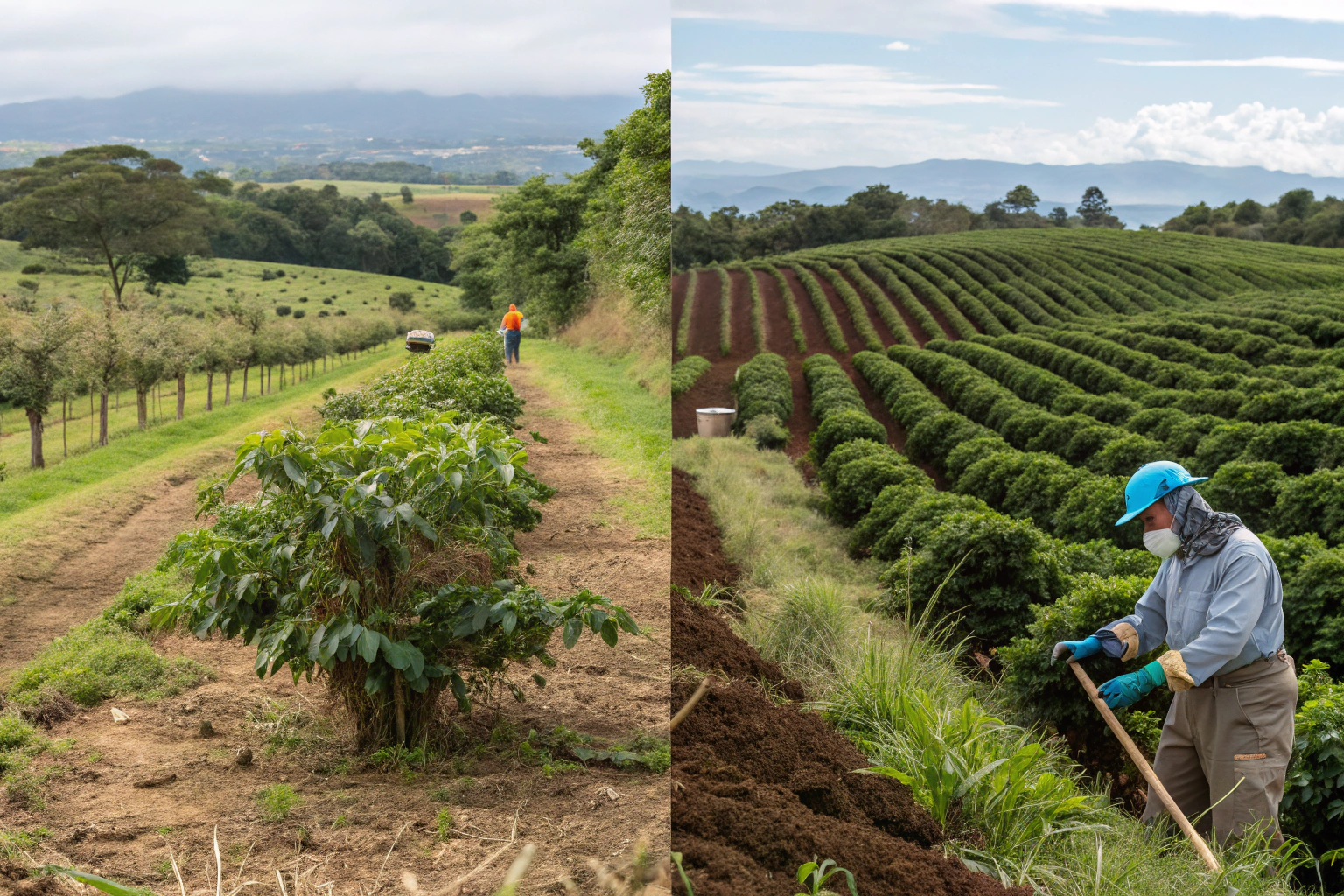
The prohibited list is long. Synthetic nitrogen fertilizers? Banned. Glyphosate and other chemical herbicides? Not allowed. Synthetic pesticides? Forbidden. Instead, organic farms use compost for fertilizer, manual weeding, and integrated pest management using other plants and insects. This is why organic farming is often more labor-intensive, which directly contributes to the higher cost. These methods align with principles of regenerative agriculture.
Where Does the Organic Price Premium Actually Go?
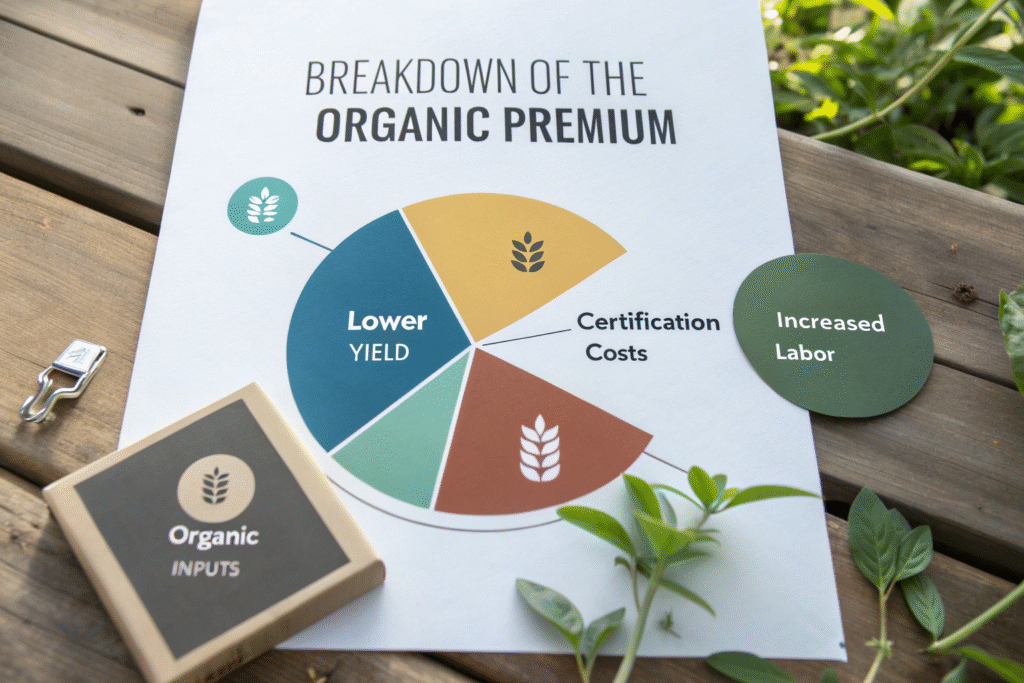
That 20-30% extra cost doesn't just vanish. It gets distributed across a more expensive production system. Understanding where the money flows helps you justify the price to your customers or your CFO.
The premium covers the cost of certification audits, lower yields per acre, higher labor costs for manual weed and pest control, and the price of approved organic inputs like compost and natural fertilizers.
Why are Organic Yields Typically Lower?
Without synthetic fertilizers to boost growth and chemical pesticides to protect against loss, organic farms often produce fewer pounds of coffee per acre. A conventional farm might aggressively push for maximum yield, while an organic farm prioritizes soil health and long-term sustainability, which can mean a smaller harvest. You're essentially paying for a different philosophy of land management. At BeanofCoffee, we see this trade-off firsthand, even on our own land.
How Much Does Certification and Labor Add?
The certification itself costs thousands of dollars in annual fees and audit costs—a heavy burden for a small farm. Then there's the labor. Paying workers to manually weed a field is far more expensive than spraying it with herbicide. This investment in human labor is a significant social and economic factor in farming communities. When you buy organic, part of your premium supports this sustainable employment.
Are There Tangible Quality or Flavor Differences?
This is the million-dollar question for roasters and consumers. If the flavor isn't noticeably better, why should anyone pay more? The relationship between organic methods and cup quality is complex and not guaranteed.
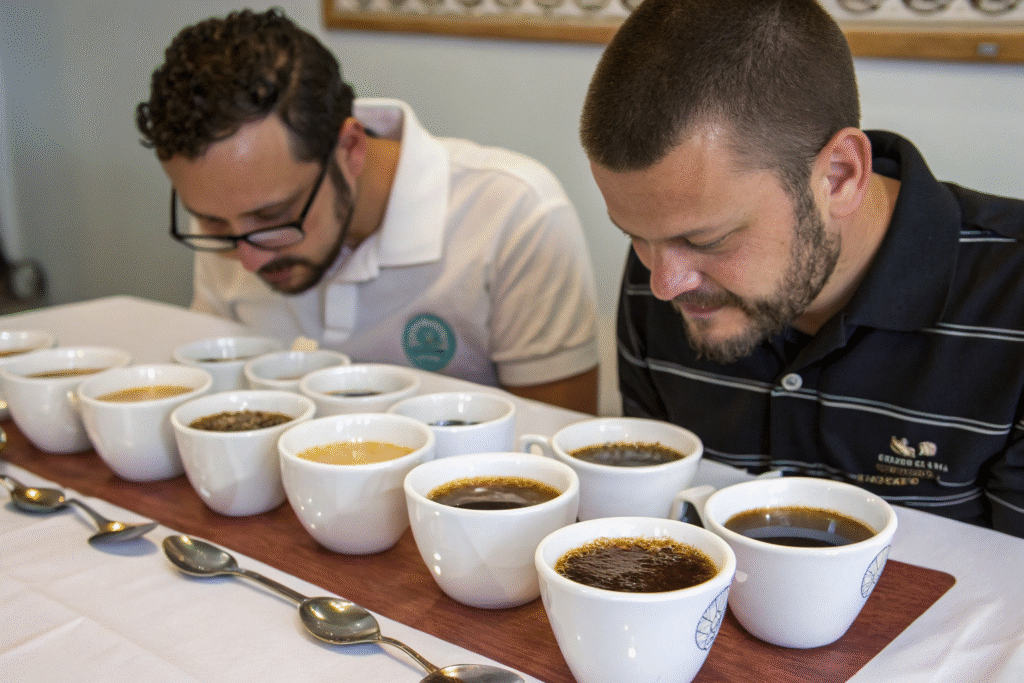
There is no conclusive evidence that organic certification directly results in a better-tasting cup. A coffee's flavor is primarily determined by its variety, terroir, and processing. However, the soil health fostered by organic practices can contribute to the overall vitality of the plant, which can be a factor in potential quality.
Can Healthy Soil Lead to Better Flavor?
It's a theory many swear by. The idea is that rich, living soil, teeming with microbes and organic matter, helps a coffee plant develop more complex sugars and compounds. This could, in theory, translate into a more interesting cup profile. However, a conventional farm can also have excellent soil health. Organic certification doesn't have a monopoly on good farming—it just verifies the absence of synthetics. The pursuit of flavor is ultimately about coffee quality at its source, regardless of certification.
So Why Do Some Top-Tier Coffees Carry the Label?
Many renowned specialty coffees are organic because the farmers who care deeply about quality often also care about environmental stewardship. It's a correlation, not causation. They view synthetic chemicals as potentially harmful to the complex ecosystem of their farm and the long-term health of their land. For these producers, the certification is an verification of their holistic approach, which often also produces fantastic coffee. This aligns with the values of the specialty coffee community.
When Does Buying Organic Make the Most Business Sense?
The decision isn't just about agronomy; it's about market strategy. For a business, "worth it" is measured in return on investment, brand alignment, and customer satisfaction.
Buying organic makes the most sense when your target market demands it, when you can build a compelling brand story around it, and when the price premium can be justified through your marketing and positioning.
Is it a Requirement for Your Customers?
If you're selling to health-conscious consumers, grocery stores with strict standards, or markets like the EU where organic demand is high, then it's not just an option—it's a necessity for market access. In these cases, the premium is simply the cost of doing business. Your marketing can then effectively communicate the value behind the label. Understanding your target market is the first step in this decision.
Can You Tell a Story That Justifies the Price?
A certification is a label; a story creates value. If you can trace the organic coffee back to a specific cooperative, explain the farmer's commitment to the environment, and show the social benefits, customers are more likely to understand and accept the higher price. This transforms the coffee from a commodity into a value-driven product. For brands that leverage this, organic is a powerful tool for brand differentiation. We help our partners at BeanofCoffee tell these stories.
Conclusion
Organic coffee is worth the extra cost if you value the certified farming system it represents and if your market is willing to pay for it. You are investing in verified environmental practices, often supporting more labor-intensive farming, and purchasing a product with a fully traceable, audited supply chain.
The decision is a value judgment, not a quality one. Don't buy organic expecting a universally superior taste. Buy it to support a specific type of agriculture and to meet a specific market demand. For roasters and brands, the key is transparency: know what the certification means and communicate that story effectively. If you are looking to source high-quality organic or conventional green coffee from a transparent supplier, we can help. Contact our export manager, Cathy Cai, at cathy@beanofcoffee.com to discuss which option best aligns with your business goals.