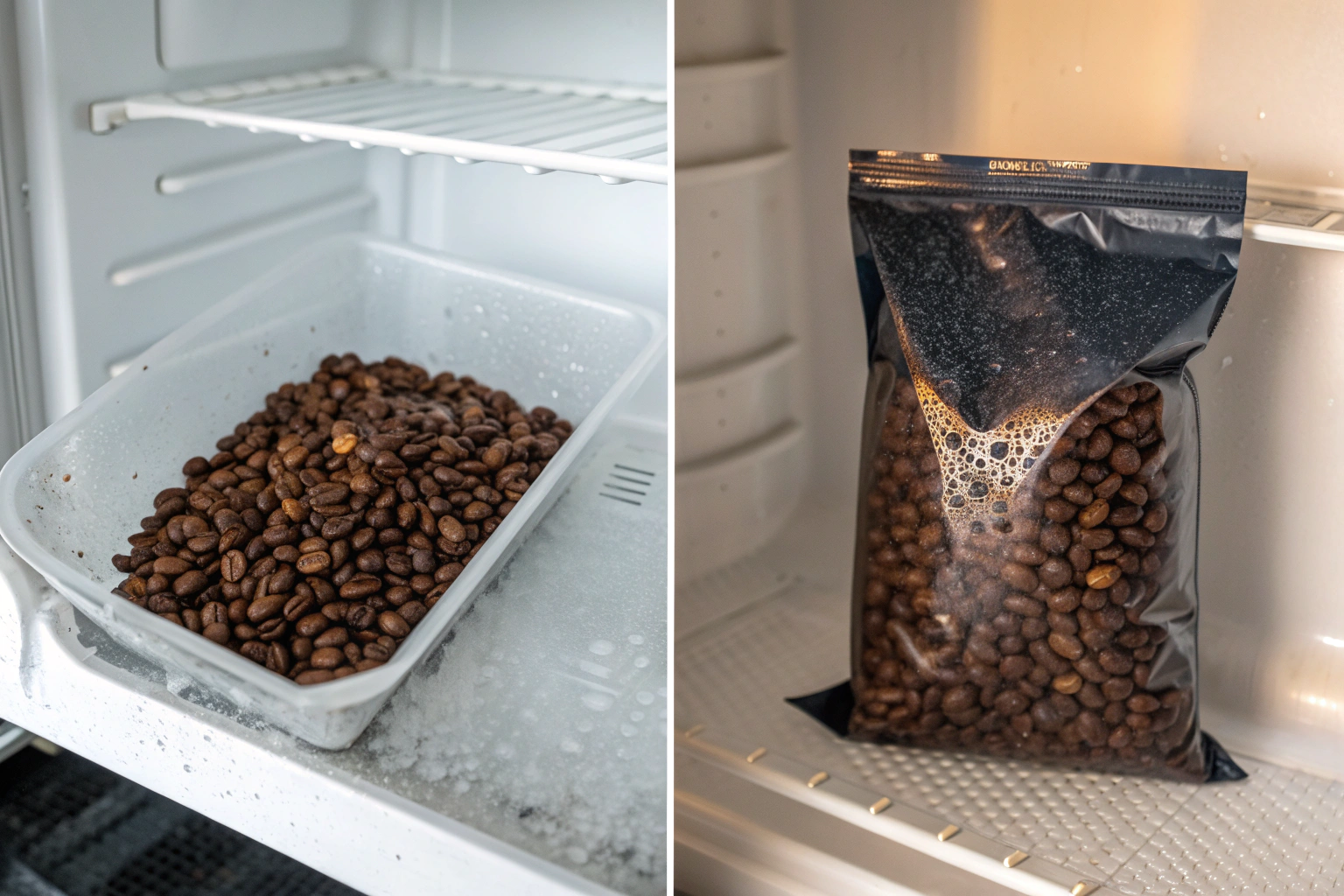
You've just secured a significant shipment of premium coffee beans. As a buyer like Ron, your top priorities are protecting that investment and ensuring the quality remains perfect for your customers. Then the question hits you: what's the best way to store them, especially if you won't use them all immediately? You've heard conflicting advice—some people swear by the freezer, others say it's a cardinal sin. The refrigerator seems like a simple option, but you have a nagging feeling that might be wrong. This confusion is a real problem; making the wrong choice could ruin your entire inventory with stale, flavor-stripped beans.
Let's settle this debate once and for all, based on science and years of professional experience. You should absolutely never refrigerate your coffee beans, but you can, under very specific conditions, freeze them for long-term storage. The refrigerator is the worst of all worlds—it's humid, full of odors, and not cold enough to halt the staling process. The freezer, if used correctly, can be an effective time capsule for your beans' flavor.
As the owner of Shanghai Fumao, with over 10,000 acres of coffee plantations in Yunnan, my life's work is about preserving the peak flavor of our beans. We go to incredible lengths to grow, harvest, and process our Arabica and Catimor beans perfectly. The last thing I want is for that quality to be destroyed by improper storage. In this article, I'll walk you through the science of why the fridge is a flavor killer, provide a clear guide on how to freeze your beans the right way, and cover the best practices for everyday storage.
Why is the Refrigerator Coffee's Worst Enemy?
You might think, "I put other fresh products in the fridge to keep them fresh, why not coffee?" It seems logical, right? This is a common and costly mistake. You're trying to do the right thing, to preserve the quality of the beans you've paid for, but you could be actively destroying them. The core of the problem is that a refrigerator is a hostile environment for roasted coffee.
The refrigerator is coffee's number one enemy for two main reasons: moisture and odors. Roasted coffee beans are hygroscopic, which means they readily absorb moisture and smells from the air around them. Your refrigerator is a high-humidity environment, and it's also home to a wild variety of aromas—last night's leftovers, that wedge of cheese, some onions. When you put coffee in the fridge, even in a sealed bag, it acts like a sponge. The moisture will ruin the beans' delicate cellular structure, and they will absorb any surrounding odors.
So, what does this mean for the final cup? It means your beautiful, single-origin coffee with notes of chocolate and cherry will end up tasting like a strange, stale concoction of whatever else is in your fridge. The condensation that forms every time you take the beans out and put them back in accelerates the staling process dramatically. Honestly, you'd be better off leaving the beans on the counter than putting them in the refrigerator.
How Does Condensation Ruin Coffee Beans?
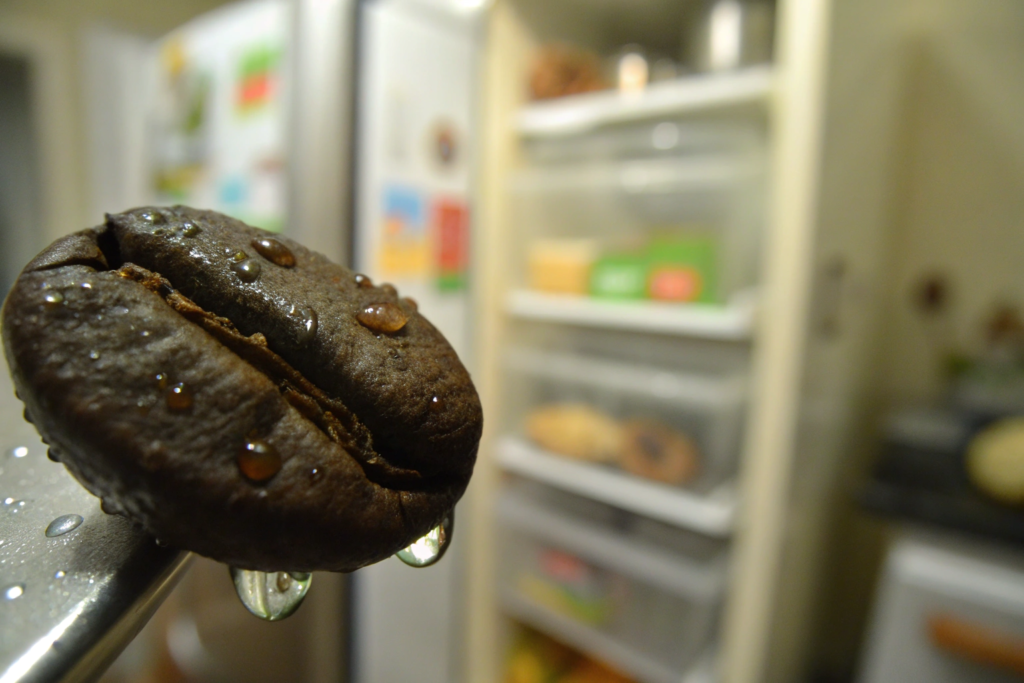
Condensation is the killer. When you take cold beans out of the fridge into a warmer room, water droplets instantly form on their surface. This moisture is then absorbed by the porous beans, dissolving and pushing out the precious volatile oils and aromatic compounds that create the coffee's flavor and aroma. This process, known as staling, happens incredibly fast when moisture is involved. It effectively washes the flavor right out of your beans before you even grind them. You can learn more about the science of staling from coffee resources like the Specialty Coffee Association (SCA).
Can Odors Really Contaminate Coffee?
Yes, completely. Roasted coffee is like a natural air freshener in reverse—it soaks up smells. The cellular structure that holds the coffee's own aromatic oils is porous and perfectly designed to trap other aromas. This is why people used to put coffee grounds in their fridge to deodorize it. When you store your precious beans in there, they will inevitably start to take on the character of their surroundings. This cross-contamination is irreversible. Once your coffee tastes faintly of garlic, there's no going back.
How Can You Freeze Coffee Beans Correctly?
So, the fridge is out. But what about the freezer? You've got a large quantity of beans and want to preserve that "just roasted" flavor for months. You're worried about freezer burn or making a mistake that ruins the whole batch. The key is to understand that you're not just "freezing" the beans; you're creating a state of suspended animation for them.
Freezing can be an excellent tool for long-term storage, but only if you follow the rules meticulously. The goal is to protect the beans from air, moisture, and light in a stable, deep-freeze environment. The biggest mistake people make is using a single large bag that they open and close repeatedly. This introduces moisture and temperature fluctuations, which is just as bad as using the fridge. The correct method involves small, single-use portions.
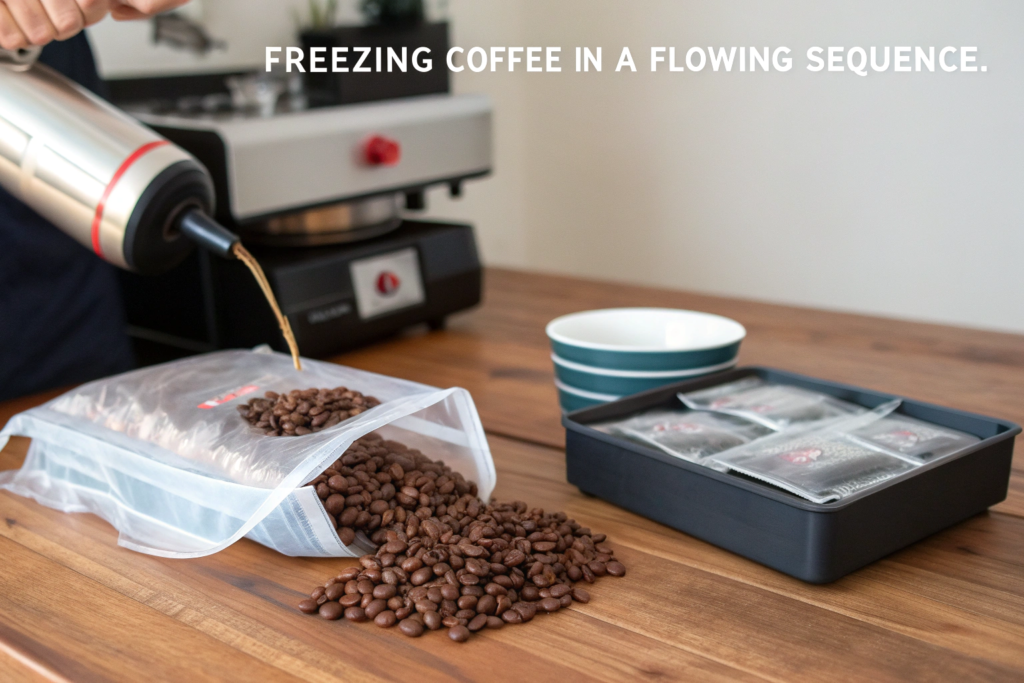
Here at Shanghai Fumao, we recommend this method to roasters who buy our green beans and want to preserve the profile of a specific roast for archival or competition purposes. It works. First, divide your coffee into small portions you'll use within a week. Then, and this is non-negotiable, remove all the air using a vacuum sealer. Place these airtight packages in the coldest part of your freezer and do not touch them until you're ready to use a whole bag.
What is the Correct Way to Thaw Frozen Beans?
When you're ready for a new batch, take one package out of the freezer and let it thaw completely on the counter without opening it. This may take several hours. Allowing it to come to room temperature while still sealed prevents condensation from forming on the beans themselves. Once it's fully thawed, open the bag, grind the beans, and enjoy coffee that tastes remarkably close to the day it was roasted. This patient thawing process is just as critical as the freezing itself.
Why Must the Portions Be Small?
The "single-use" portion approach is the most critical part of the process. Every time you open a bag of frozen coffee, you expose it to warmer, humid air, causing damaging condensation and temperature shock. By using small, weekly-sized portions, you ensure that the main batch remains in a stable deep-freeze. You only ever thaw what you need, preserving the integrity of the rest of your stock. It’s about minimizing environmental shock to the beans.
What is the Best Method for Everyday Storage?
Okay, freezing is great for long-term preservation, but what about the bag of coffee you're actively using this week? You're not going to freeze a daily supply. The problem is that even on the countertop, coffee is under constant attack from its four main enemies: oxygen, heat, light, and moisture. How do you protect the beans you're using right now?
The best everyday storage solution is simple and effective: an opaque, airtight container stored in a cool, dark place. Think of a cupboard or a pantry, but not the one right above your oven that gets warm. The original bag the coffee came in, especially if it has a one-way valve and a zip-top, is a good option for the short term. The valve lets CO2 out without letting oxygen in.
However, for the absolute best results, I recommend transferring the beans you'll use over the next 1-2 weeks into a dedicated coffee canister. There are many excellent options on the market, from simple ceramic ones with airtight lids to more advanced models with vacuum pumps that actively remove oxygen. The key is that the container must block light and be truly airtight. This simple practice will make a noticeable difference in the quality of your daily cup.
Should I Store Beans Whole or Ground?
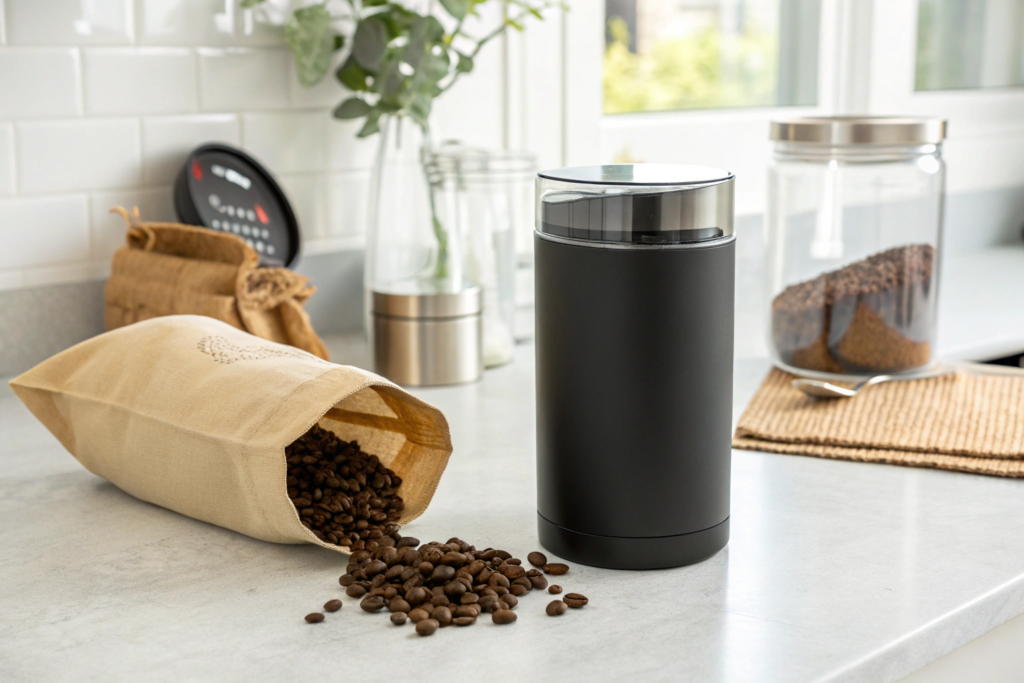
Always, always, store your coffee as whole beans. The moment you grind coffee, you dramatically increase its surface area, exposing all those precious aromatic compounds to oxygen. Ground coffee stales exponentially faster than whole bean coffee—we're talking minutes and hours, not days and weeks. The single biggest improvement you can make to your coffee routine is to grind your beans immediately before you brew. This preserves the peak flavor and aroma that we, the producers, worked so hard to create.
Are Bags Better Than Canisters for Short-Term Storage?
For the first few days after opening, the original high-quality bag with a one-way valve and zip-lock is often sufficient. However, as you use the beans, the "headspace" (the amount of air in the bag) increases, which accelerates staling. A dedicated canister, especially one that helps displace or remove air, is a superior solution for maintaining freshness over a 1-2 week period. It provides a more stable and robust defense against oxygen.
How Does Storage Impact Green Coffee Beans?
So far, we've focused on roasted coffee. But for a large-scale buyer like you, Ron, the stability of your unroasted, green coffee is just as critical. You might be holding inventory for several months, and you need to prevent quality degradation before you even roast. The main enemies are similar, but the stakes are different.
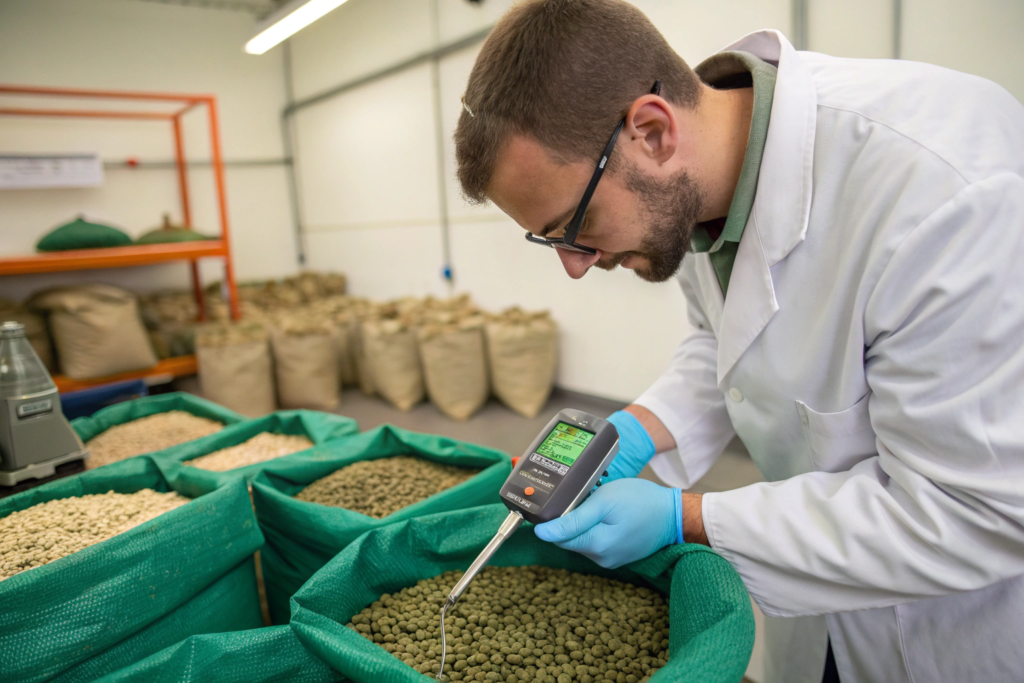
Proper green coffee storage is about preserving potential. The goal is to maintain a stable moisture content (ideally between 10-12%) and protect the beans from absorbing foreign odors or developing defects. Unlike roasted coffee, green coffee doesn't go "stale" in the same way, but it does age. Over time, it can lose its vibrant acidity and complex flavor precursors, leading to a flat, woody, or papery taste in the final roast.
At our facilities in Yunnan, we store our green beans in climate-controlled warehouses using multi-layered, hermetic bags like GrainPro. This creates a stable environment, protecting the beans from humidity fluctuations and oxygen. This is the professional standard, and it's what you should look for in a supplier. It ensures the green beans you buy will roast and taste as expected, month after month.
What is the Ideal Environment for Green Coffee?
The ideal storage for green coffee is a cool, dark, and dry place with a stable temperature and humidity. Extreme fluctuations are the enemy. According to the Coffee Quality Institute (CQI), maintaining a stable environment is key to preventing the loss of organic material and preserving the coffee's original quality. This is why professional warehouses are climate-controlled.
How Long Can You Store Green Coffee?
With ideal storage conditions (like hermetic bags in a climate-controlled warehouse), high-quality green coffee can remain stable for 6-12 months with minimal flavor degradation. Beyond a year, you will likely start to see signs of aging—a faded, yellowish appearance and a loss of vibrant acidity in the cup. For a buyer, this means managing your inventory rotation is crucial to ensure you're always roasting beans at their peak potential.
Conclusion
Navigating the world of coffee storage doesn't have to be confusing. By understanding the science, you can protect your investment and enjoy every cup at its best. The golden rules are simple: never refrigerate your roasted beans. For everyday use, store them as whole beans in an opaque, airtight container in a cool, dark place. And for long-term storage, the freezer can be your best friend—but only if you follow the strict protocol of portioning, sealing, and thawing correctly. For your unroasted green beans, ensuring they are stored in a stable, climate-controlled environment is paramount.
Your coffee beans have taken an incredible journey from a farm—perhaps even from our hills in Yunnan—to your hands. Honoring that journey by storing them properly, both before and after roasting, is the final, crucial step in unlocking their amazing flavor potential. It ensures that the dedication of the farmer and the skill of the roaster are not lost.
If you're looking for a consistent supply of premium green coffee beans that are already stored under ideal conditions and are worth protecting, we invite you to start a conversation with us. We understand the importance of quality at every step of the chain. Please feel free to reach out to my colleague, Cathy Cai, at cathy@beanofcoffee.com to discuss how we can provide the foundation for your perfect cup.