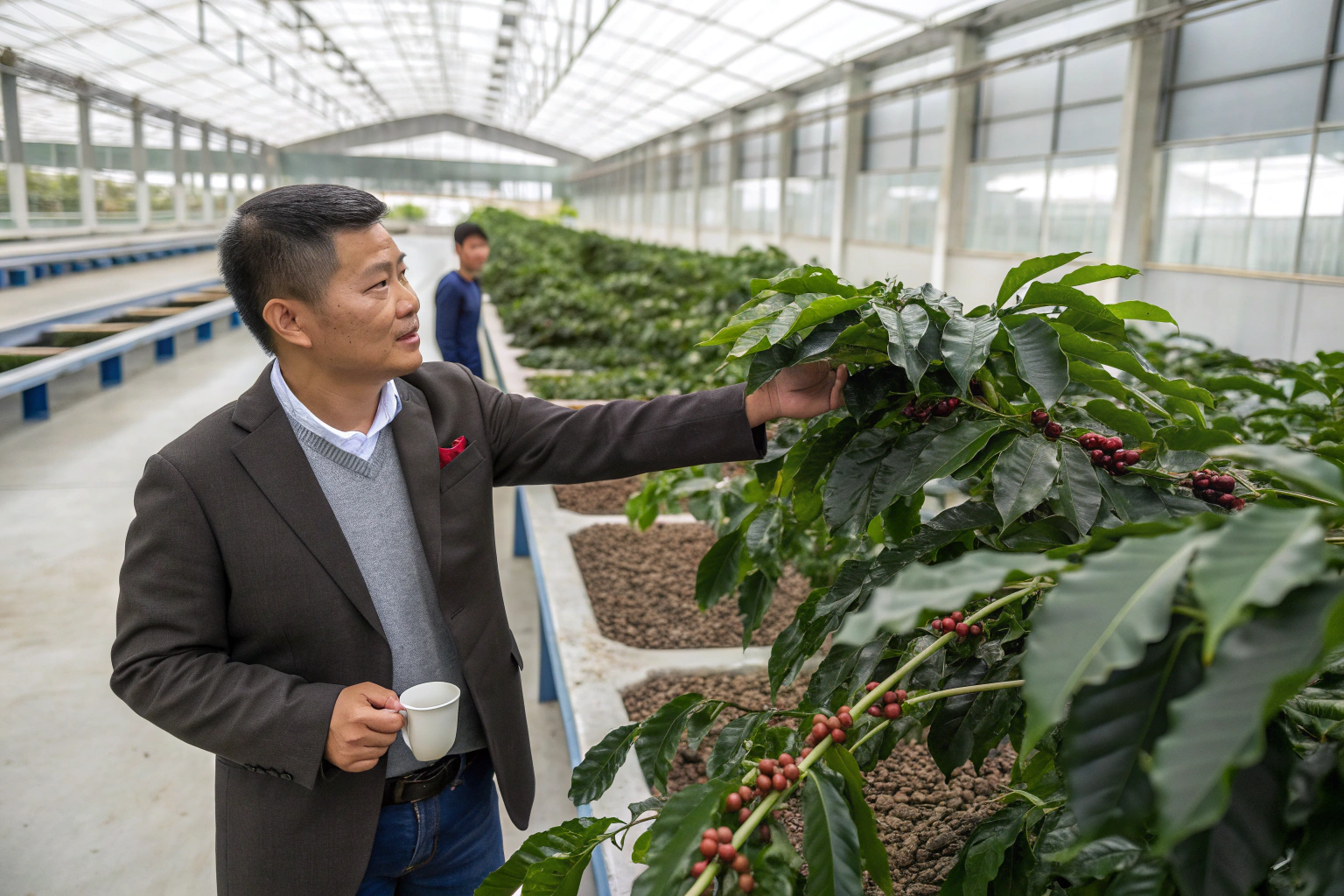
For decades, the global coffee map has been dominated by a familiar set of origins: Brazil for volume, Colombia for balance, Ethiopia for heritage, Vietnam for robusta. Mention "coffee from China," and many buyers still react with surprise, or even skepticism. But that reaction is based on old data. Today, sourcing coffee from China, specifically from Yunnan province, presents a unique and powerful set of advantages that directly address the core pain points of modern importers—like Ron, who is focused on price, timeliness, and security. It’s not just an alternative; for many, it's becoming a strategic choice.
So, what are the real advantages of buying coffee from China? They center on three pillars: competitive and stable pricing due to integrated operations, unmatched logistical speed and reliability for Asian and global markets, and a modern, traceable, and secure supply chain built on large-scale farming and technological investment. As the owner of Bean of Coffee, with our farms in Baoshan, Yunnan, I see these advantages not as marketing points, but as the daily reality of how we serve our clients in North America, Europe, and Australia.
Let's move past the novelty and examine the concrete, operational benefits that make Chinese coffee a smart buy.
How does China offer price stability and value?
The first question is always about cost. Chinese coffee, particularly Yunnan Arabica, is not about being the absolute cheapest. It's about value and stability. You escape the volatility of traditional commodity markets and the "origin premium" often attached to more established names. The price you see is more likely to be the price you get, from contract to shipment.
This stability stems from structure. Much of Yunnan's coffee is grown on larger, managed farms and cooperatives—like our 10,000-acre operation—rather than fragmented smallholdings. This scale allows for controlled costs, efficient processing, and direct sales. There's less speculation and fewer middlemen. For a buyer tired of "inefficient pricing," this is a breath of fresh air.

Is Chinese coffee cheaper than other origins?
It can be highly competitive, especially when you factor in total landed cost. While the FOB price per pound for a Yunnan Arabica might be similar to a Central American coffee, the savings emerge elsewhere.
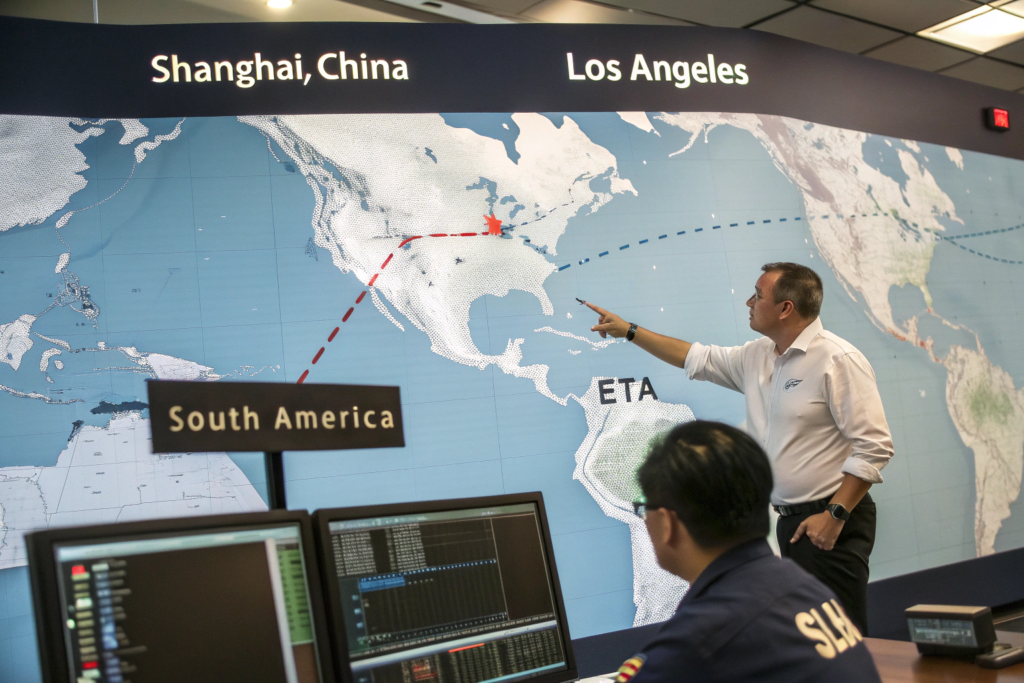
The biggest factor is shipping time and cost to major markets, especially in Asia and the West Coast of North America. A container from Yunnan to Los Angeles can be weeks faster and sometimes cheaper than one from South America or Africa due to shorter transit routes and high volume of vessels. This reduced freight cost and lower inventory carrying cost directly improves your margin. Furthermore, as a newer origin, Yunnan coffee doesn't yet carry the heavy "brand premium" of, say, a Jamaican Blue Mountain, meaning you pay more for the bean quality itself, not just the name.
How does the supply model ensure consistent quality?
Price stability means little without quality stability. This is where China's modern agricultural approach shines. Large estates implement standardized farming and processing protocols.
From selective picking to controlled fermentation, drying, and sorting, every step is monitored. This results in remarkable batch-to-batch consistency. You're not buying a speculative "spot" lot of variable quality; you're buying a specific grade (e.g., our Premium Arabica) with defined parameters (screen size, moisture, defect count). This reliability reduces your risk and simplifies your roasting—you know exactly what you're getting, every time. The Coffee Quality Institute concepts of quality control are deeply aligned with this approach.
What are the logistical and shipping benefits?
This is perhaps the most underrated and powerful advantage. In today's world, timeliness isn't a luxury; it's a requirement for just-in-time production. China's position as the world's manufacturing and logistics hub directly benefits coffee exporters.
The infrastructure—from internal roads in Yunnan to the massive container ports of Shanghai, Ningbo, and Shenzhen—is world-class. Shipping schedules are frequent and reliable. For a buyer in Seattle, a coffee shipment from Yunnan can have a transit time 10-15 days shorter than one from Brazil or Colombia. That's two fewer weeks of capital tied up in transit.
How does proximity to major markets reduce lead times?
For buyers in Asia (Japan, South Korea, Australia), the advantage is overwhelming. Shipping time is measured in days, not weeks. This allows for a radically responsive supply chain. You can order closer to your actual need, reducing inventory costs and the risk of coffee aging in your warehouse.
Even for Europe, the route via the Suez Canal is efficient and well-serviced. This logistical speed addresses Ron's primary pain points of "sailing schedules" and "timeliness" head-on. It turns a long, anxious wait into a predictable, shorter timeline. When you work with an exporter like Bean of Coffee who understands this logistics network intimately, you gain a partner who can navigate it optimally.
Are customs and documentation processes streamlined?
Yes, significantly. China has decades of experience as the world's top exporter. The processes for export documentation, phytosanitary certificates, and customs clearance are highly systematized and efficient.
A professional exporter will handle all this seamlessly. There's less chance of delays due to bureaucratic inexperience or paperwork errors. For sensitive shipments, we can leverage bonded logistics and consolidated air freight options out of major hubs like Hong Kong or Shanghai. This professional ecosystem reduces the "security" risk in your supply chain—things don't get lost in transit or stuck at origin due to avoidable administrative hurdles. Familiarity with Incoterms 2020 and international trade documentation is standard practice for reliable Chinese exporters.
How reliable and traceable is the Chinese supply chain?
Security and trust are paramount. Buying from an unknown smallholder via multiple intermediaries is risky. China's coffee industry, particularly in Yunnan, is increasingly built on a model of vertical integration and technological traceability.
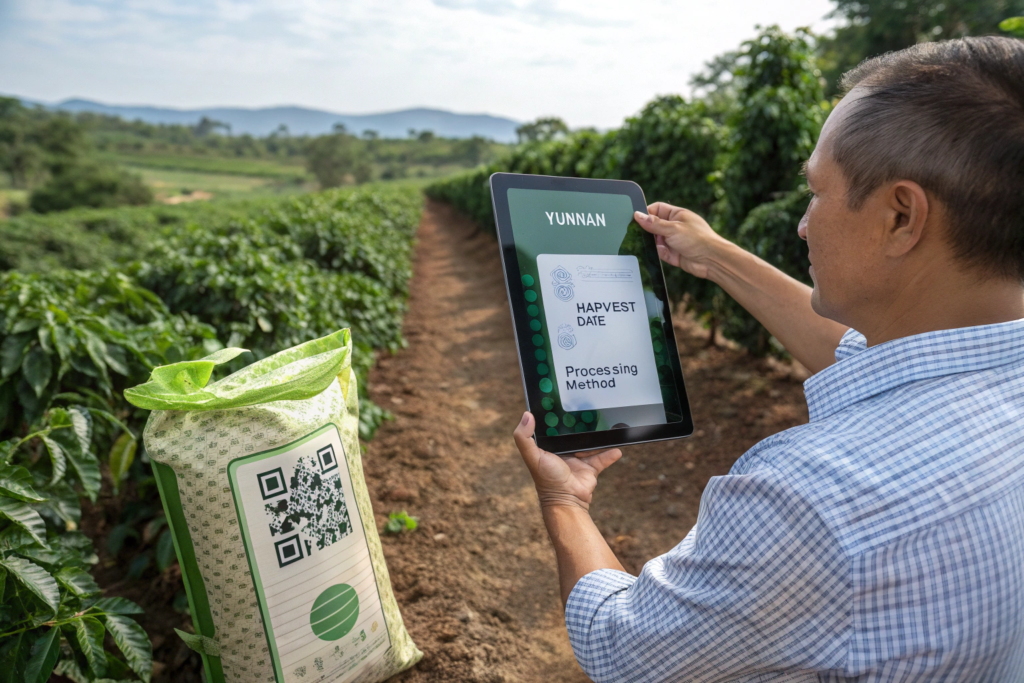
When you buy from a major plantation or a tightly managed cooperative, you are buying directly from the source. There is full traceability back to the farm, and often to the specific plot and harvest date. This is not just a claim; it's backed by lot codes and, increasingly, digital records.
What does direct farm ownership mean for buyers?
As a plantation owner, I can speak directly to this. Direct ownership and control mean we are accountable for every step. There is no blaming a "sub-supplier." If there's a quality issue, we fix it at the root. If there's a delay, we manage it internally.
This control translates to security for you. Payment terms can be more flexible because the risk is lower for both parties. Communication is direct—you can talk to the people who make the decisions on the farm and in the processing mill. This builds a partnership, not just a transaction. It’s the foundation of being a "safe, reliable, stable, and trustworthy" supplier. Our clients know they can reach our team, like Cathy Cai, and get answers that come straight from the source.
How are quality standards and certifications managed?
China's entry into the specialty coffee market is happening with a modern mindset. This means an acute awareness of international standards. Farms and processors are rapidly adopting certifications like Organic, Rainforest Alliance, and Fair Trade where market demand exists.
More importantly, there is a strong focus on the core metrics that matter: bean density, moisture content, defect count, and SCA cupping scores. The approach is data-driven. At Bean of Coffee, we cup every lot and provide score sheets. This objective quality validation gives you, the buyer, a clear, professional benchmark to evaluate our product against any global origin. We're not asking for trust based on origin mystique; we're providing data based on universal standards.
What is the future potential of Chinese coffee?
Buying from China isn't just about the coffee of today; it's about partnering with an origin on a steep upward trajectory. Yunnan's quality curve is one of the steepest in the world. Investment in processing experiments (honey, natural, anaerobic) and new varietals is intense.
By building a relationship now, you secure access to a pipeline of improving quality and innovation. You become part of the story of an emerging origin, which is a powerful narrative for your own brand. The potential for exclusive, unique microlots is growing every year.

Conclusion
The advantages of buying coffee from China are pragmatic and powerful: cost-effective stability through integrated operations, superior logistics speed leveraging world-class infrastructure, and a secure, traceable supply chain built on scale and modern management. It offers a way to de-risk your sourcing, shorten your cash-to-cash cycle, and access a consistent, high-quality product that is rapidly evolving.
It's time to look at China not as a curiosity, but as a competitive origin that solves real-world business problems for importers. The market has evolved, and the smart money is taking notice.
Ready to experience these advantages firsthand? Talk to a supplier who embodies them. At Bean of Coffee, we are that direct source. We invite you to evaluate our Yunnan Arabica, Catimor, and Robusta not as "Chinese coffee," but as simply excellent coffee with a compelling business case. Contact our export manager, Cathy Cai, at cathy@beanofcoffee.com to request samples and discuss how our origin can become your advantage.