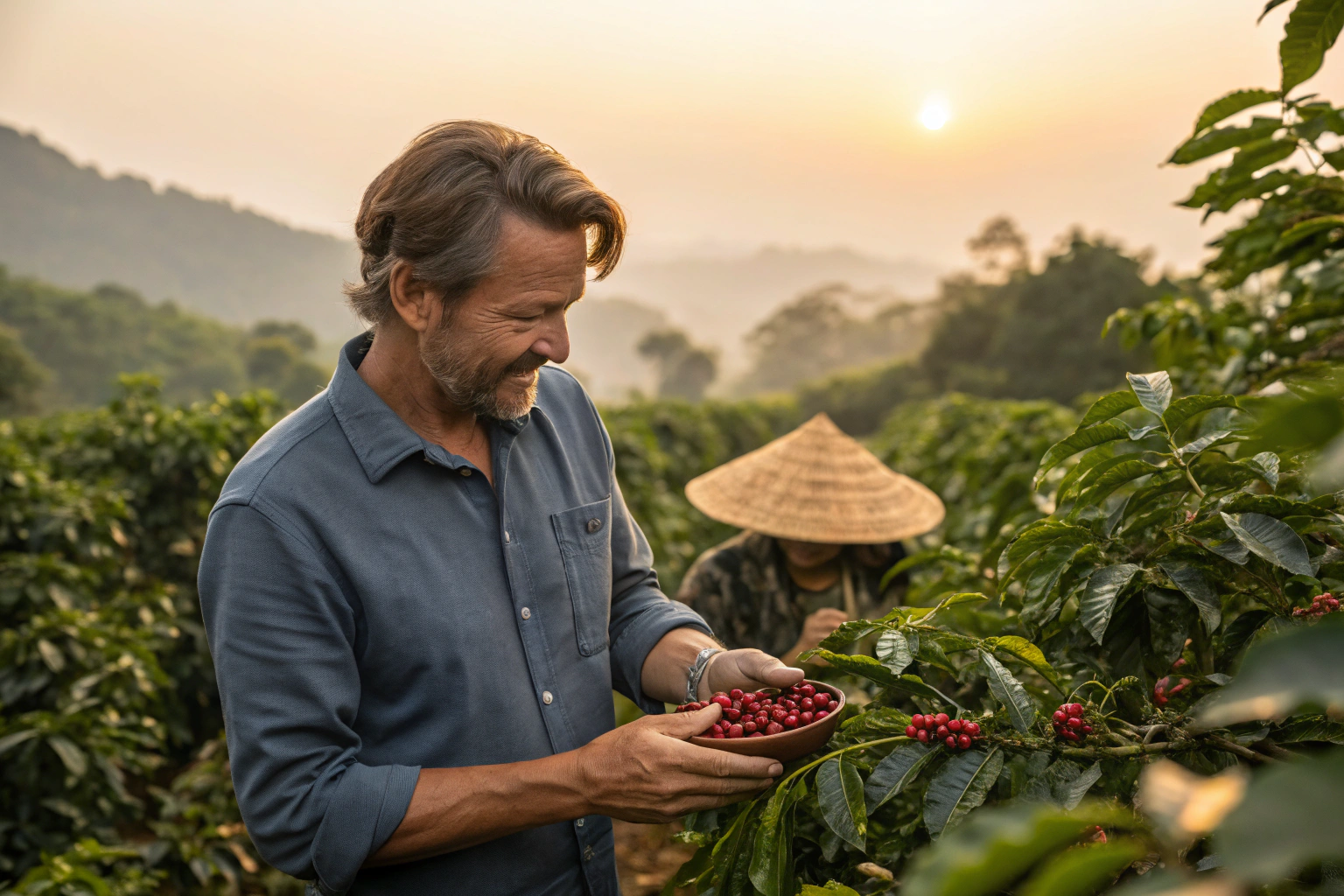
I have sat on both sides of this table. For ten years, I was a trader. I bought from farmers, sold to roasters. I added value—financing, logistics, quality control. But I also added cost. And sometimes, I added distance. The roaster did not know the farmer's name. The farmer did not know where his beans ended up. Honestly, that started to bother me. So, when we established BeanofCoffee, I made a choice. We would not be just another exporter. We would be the farmer. Every bag we ship comes from land we own, trees we planted, cherries we picked. This changes everything.
So, what are the advantages of buying directly from a coffee plantation owner? You get full traceability from root to roast. You eliminate the markup of intermediaries. You gain control over quality specifications—density, moisture, screen size—because you are negotiating with the decision-maker, not a sales agent. And you build a relationship with the actual source, which means when a typhoon hits or prices spike, you are not the first customer dropped. You are the partner.
But let me be specific. "Direct trade" is a marketing term that has lost its meaning. Anyone can claim it. I have seen brokers in Miami call themselves "direct importers" because they buy from a cooperative without a third trader. That is not direct. That is just fewer layers. Real direct trade means the person you pay is the person who owns the land. So, how do you know if you are actually buying from the plantation owner? You ask for the deed. You ask for satellite coordinates. You video call the farm manager. At BeanofCoffee, we send buyers photos of our harvest tickets—government-issued documents that prove the cherries came from our registered plots. We do this because we want you to know exactly what "plantation owner" means.
How Does Buying Direct Improve Price Transparency?
Price is Ron's primary concern. I know this. He told me. And honestly, he is right to care. Coffee pricing is famously opaque. The C price. Differential. FOB. CNF. Every layer adds a margin. But when you buy from the plantation owner, the math changes.
When you buy from a plantation owner, you see the actual farmgate price plus the actual processing and logistics costs. There is no "trader's premium," no "export desk fee," no "origin markup" that cannot be verified. You pay for the beans. You pay for the milling. You pay for the bagging and the container. That is it. Our invoices to North American buyers show exactly what we paid for inland freight, what we paid SGS, what we paid Shanghai Fumao for consolidation. We do not hide margin inside bundled line items.
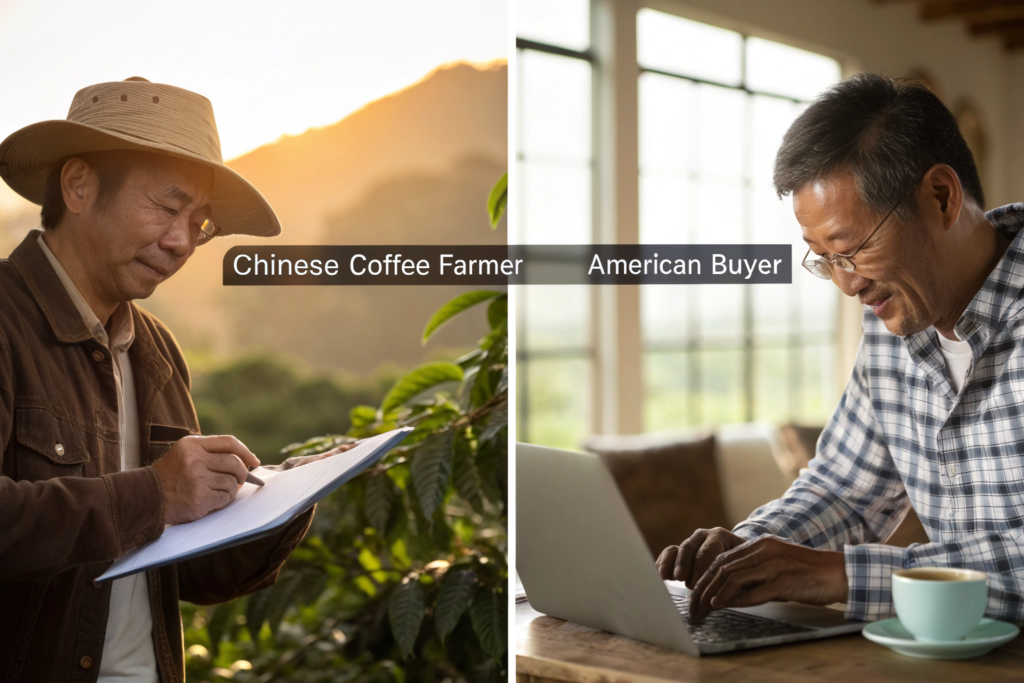
What Is the Real Cost Breakdown of a Direct-Trade Container?
Let me give you real numbers. Not estimates. Actual costs from our September 2025 shipment to Seattle. The FOB price was $4.20 per pound for our washed Arabica. That $4.20 breaks down like this: $2.85 is the farmgate value—our profit, our labor, our land cost. $0.45 is wet mill processing and drying. $0.35 is dry mill sorting, grading, and bagging. $0.30 is inland trucking from Baoshan to Yantian port. $0.25 is export documentation, fumigation, and phytosanitary certificates. Every buyer sees this spreadsheet. Now, compare that to a broker quote. The broker buys at $4.20, adds $0.30 for "export management," $0.20 for "financing cost," and $0.25 for "risk buffer." Suddenly you are paying $4.95. For the exact same bean. Here is the SCA's green coffee pricing transparency toolkit. And here is a World Bank report on value chain distribution in specialty coffee. You will see exactly where the layers accumulate.
Can You Verify the Farmgate Price?
Yes. And you should. If a supplier claims to be the plantation owner, ask for the harvest receipt from the local Coffee Authority. In Yunnan, all parchment sales must be registered with the Baoshan Coffee Industry Development Office. The receipt shows the seller's name, the buyer's name, the volume, and the price. We provide redacted copies to serious buyers under NDA. Why redacted? Because our neighbors' prices are their private business. But our own farmgate price? Transparent. If a supplier cannot show you any proof of what they paid the farmer, they are not the farmer. Here is the Yunnan Provincial Coffee Association's guide to harvest documentation. Also, this Fair Trade International's definition of direct certification explains the audit trail required for verified direct sourcing.
How Does Plantation Ownership Guarantee Quality Consistency?
Quality is not an accident. It is a system. When I was a trader, I bought from cooperatives. Some lots were excellent. Some were average. I could not control the difference. I could only reject and move on. That is not a supply chain. That is gambling.
When you buy from a plantation owner, you buy from the same trees, the same pickers, the same mill, the same cupping lab, season after season. Consistency is not a goal. It is a default. We do not hunt for good lots. We grow them. Our Catimor from Block 7 tastes the same in February as it does in August because the elevation, the soil, and the processing protocol do not change. Buyers in Melbourne and Munich have cupped our 2022, 2023, and 2024 harvests blind. They could not reliably distinguish the vintages. That is the advantage of ownership.
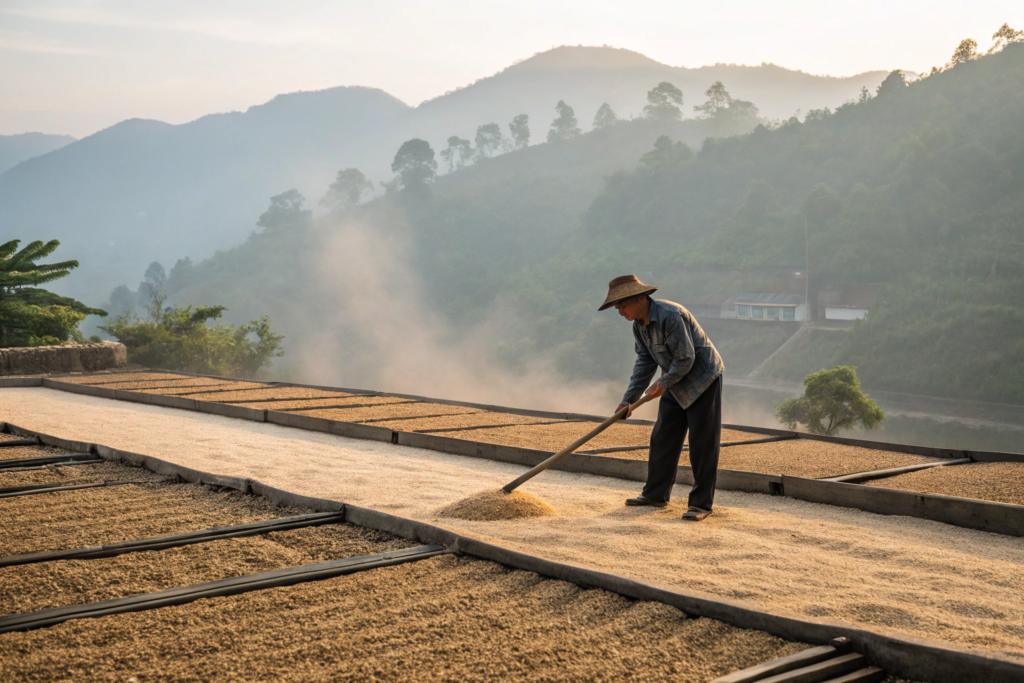
How Do You Maintain Consistency Across 10,000 Acres?
Honestly, it is difficult. Scale can destroy quality. So, we do not treat 10,000 acres as one farm. We treat it as 47 micro-farms. Each block has a manager. Each manager is measured on cherry ripeness, not volume. We pay pickers by the kilogram of red cherry, not total cherry. If they pick green, they are sent home. This costs us more. A lot more. But it means our fermentation tanks receive uniformly ripe inputs. The Q grader does not have to "fix" defects after harvest. Here is the University of California Davis Coffee Center's research on harvest incentives and cup quality. And here is a case study on Yunnan farm management systems that mentions our protocol.
Does Owning the Farm Reduce Defect Rates?
Significantly. Industry average defect count for commercial Arabica from Asia is 15 to 20 defects per 300g sample. Our SGS reports consistently show 4 to 6 defects. Why? Because we do not buy cherry from unknown farmers. Unknown farmers sometimes mix in dried, fermented, or insect-damaged cherries to increase weight. We cannot control that if we are not the employer. But when the picker works for us, we control the incentive. We also re-sort at the dry mill. Every bag passes through an electronic color sorter from Bühler. Then a human sorts again. Two layers of defense. Here is the SCA green coffee defect handbook. Compare our reports to the baseline. You will see the difference ownership makes.
What Supply Chain Security Does a Plantation Owner Provide?
Here is what buyers do not consider until disaster strikes. When the market spikes, who gets the coffee? When the port closes, who gets the next vessel slot? When a buyer defaults, who absorbs the loss? In the traditional model, the trader absorbs. But the farmer also absorbs, because the trader stops buying. In our model, we absorb. Because we are the farmer and the exporter.
When you buy from a plantation owner, your supply chain does not compete with other buyers for allocation. It competes with our own inventory decisions. We do not sell the same lot to five traders and hope you outbid each other. We allocate specific blocks, specific harvest weeks, specific moisture specs to specific clients. If you contracted for Block 7 Catimor, December pick, 11.5% moisture, that coffee is yours. Not available to the next buyer at a higher price. Yours.
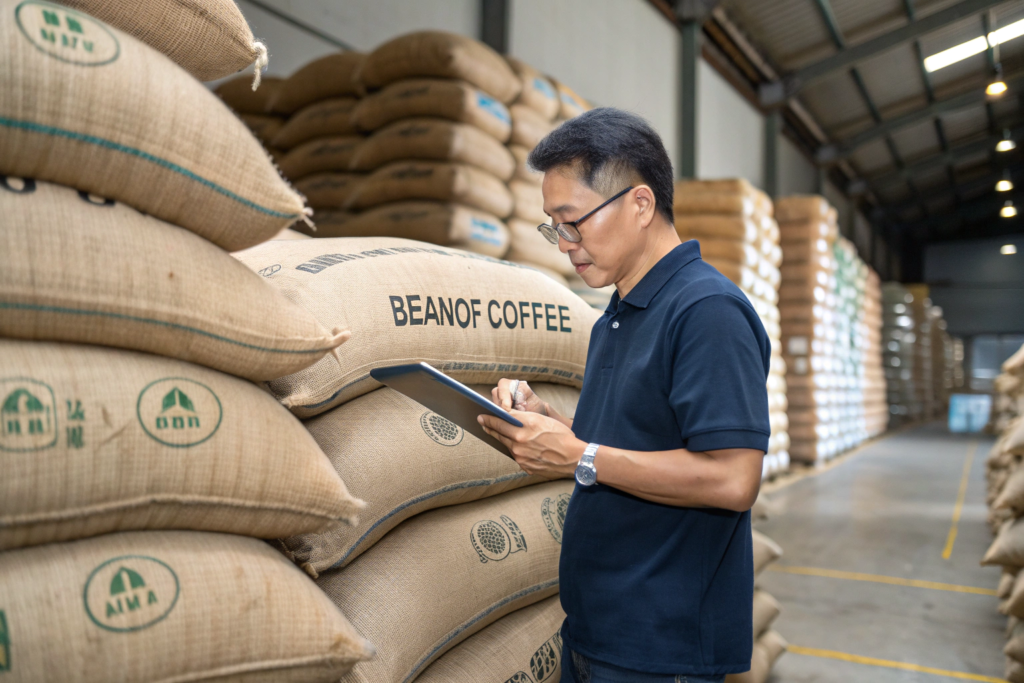
What Happens When the C Price Rises 30% in One Month?
I have lived through this. Twice. In 2021, the C price jumped from 120 cents to 180 cents in six weeks. I had contracts signed at the lower price. Many exporters in other origins defaulted. They claimed "force majeure" or simply stopped answering emails. They sold to new buyers at the higher price. We did not. We shipped every contract at the agreed price. Why? Because we own the coffee. We are not borrowing inventory from farmers who then demand renegotiation. The coffee in our warehouse is ours. The loss is ours. We honor contracts because our reputation is worth more than one season's margin. Here is the Green Coffee Association's position on force majeure in price spikes. And here is a Reuters analysis of 2021 coffee contract defaults. We are not in that article.
Can You Visit the Farm to Verify Ownership?
Yes. Please come. Honestly, I invite every serious buyer to visit Baoshan. Not to a "model farm" curated for tourists. Our actual operating blocks. The roads are rough. The drive is four hours from Kunming. But you will see the trees, the pickers, the raised beds. You will cup with our team. You will meet our farm manager, Mr. Yang, who has been with us for 17 years. We have hosted buyers from 14 countries. Every one left with a different understanding of what "direct trade" actually requires. Here is the Yunnan Provincial Tourism Board's guide to coffee farm visits. And here is our Google Maps pin —real coordinates, not a PO box. Come see us.
How Does Direct Sourcing Support Long-Term Product Development?
This is the advantage buyers discover after the first year. Price and quality bring you to the table. Product development keeps you there. When you buy from traders, you select from existing inventory. "Here is our Colombian Excelso. Here is our Ethiopian Yirgacheffe." Take it or leave it.
When you buy from a plantation owner, you co-create your coffee. Need a specific screen size for your drum roaster? We calibrate the dry mill. Need a tighter moisture window for extended transits? We dry to 10.8% instead of 11.5%. Need an experimental anaerobic fermentation lot? We set aside 500kg and monitor the pH daily. We are not a catalog. We are a partner in your roasting program.
Can a Plantation Owner Develop a Custom Microlot for You?
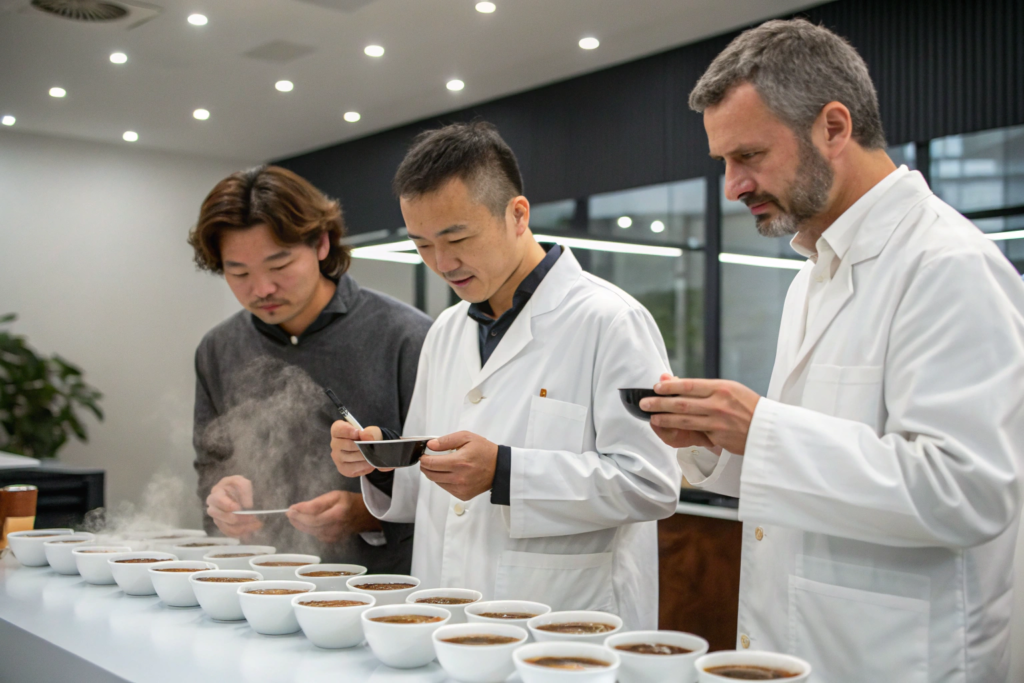
Yes. We do this regularly for Japanese and Korean roasters. They want something no other buyer has. So, we isolate a specific block—usually our highest elevation Catimor, around 1,550 meters. We pick only at peak ripeness. We ferment in sealed stainless steel tanks with temperature control. We dry on raised beds in the shade, not direct sun. The entire lot is less than 1,000kg. It costs more. It takes longer. But the roaster gets a coffee that exists nowhere else. And they get to name it. One of our Australian clients calls it "Gaoligong Gold." That is his coffee. We do not sell it to anyone else. Here is the SCA's microlot production protocol. And here is a case study of our partnership with a Tokyo roaster on the anaerobic process.
How Does Direct Sourcing Simplify Supply Chain Communication?
This is the hidden cost nobody calculates. When you buy from a trader, you ask a question. The trader asks the exporter. The exporter asks the cooperative. The cooperative asks the farmer. The answer comes back in reverse. Days later. Distorted. When you buy from us, you email me or Cathy. I walk to the drying patio. I take a photo. I send it to you. Fifteen minutes, total. Last month, a buyer in Vancouver asked if our moisture content was stable. I walked to the lab, photographed the hygrometer reading 11.2%, and sent it. He roasted that afternoon. Here is the Harvard Business Review article on information friction in supply chains. We eliminated that friction by owning the source.
Conclusion
Buying from a plantation owner is not just a marketing position. It is a structural advantage. You pay less because you remove the trader's margin. You sleep better because you know who grew your coffee. You plan further ahead because you trust the supply will arrive. And you innovate faster because you are not picking from someone else's menu.
I built BeanofCoffee for buyers who are tired of guessing. Tired of brokers who cannot name the farmer. Tired of "direct trade" labels that lead back to a desk in Hamburg or Seattle. We are not a desk. We are 10,000 acres of volcanic soil in Baoshan, Yunnan. We are 47 farm managers. We are 2,300 pickers during harvest. We are a cupping lab, a dry mill, and a consolidation warehouse connected to Shanghai Fumao's logistics network.
If you want to buy from the actual source—not a version of the source filtered through three margins—email Cathy Cai. She will send you our farm coordinates, our SGS reports, and our direct pricing model. No intermediaries. No inflated FOB quotes. Just the coffee we grew. Her address is: cathy@beanofcoffee.com.