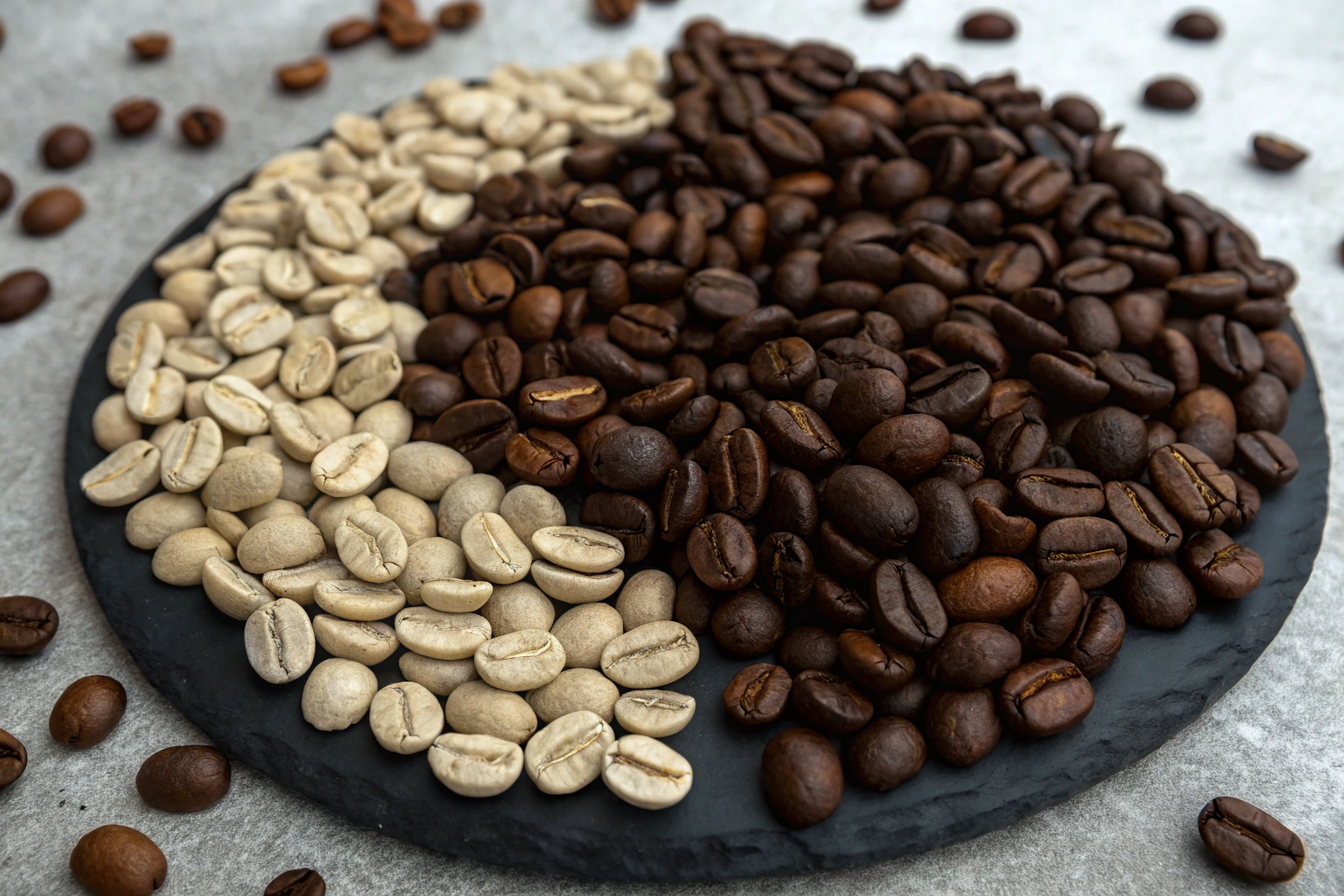
In the world of specialty coffee, "100% Arabica" has long been marketed as the ultimate seal of quality. This has led many roasters and cafe owners, perhaps including yourself, to view Robusta as an inferior, undesirable bean. You're like my client, Ron; you're focused on quality and reputation. You worry that adding Robusta to your blend would be seen as "cheating" or compromising on quality.
But what if I told you that this black-and-white view is outdated? What if blending Robusta with Arabica, when done intentionally and with high-quality beans, isn't a compromise, but a strategic enhancement? The primary benefits of blending Robusta with Arabica are a significant increase in crema thickness and stability, a bolder and more intense flavor profile that cuts through milk, a substantial boost in caffeine content, and a notable reduction in the overall cost of the blend.
This isn't about diluting good coffee with a cheap filler. It's about the art of synergy—creating a blend that is greater than the sum of its parts. On our 10,000-acre estate in Yunnan, where we cultivate both premium Arabica and Fine Robusta, we see this not as a compromise, but as a craft. In this article, I'll break down the tangible benefits of this classic partnership and show you why it might be the smartest move for your espresso program.
How Does Robusta Create a Superior Crema?
Let's start with the most visible benefit, the one your customers will see before they even take a sip: the crema. You've probably struggled with shots from 100% Arabica blends that look thin, pale, or have a crema that dissipates in seconds. This is a common frustration.
This is where Robusta works its magic. Robusta beans naturally contain fewer lipids (oils) and a different chemical structure that allows them to produce a thicker, more compact, and significantly more stable crema. When you add even 10-15% of a good Robusta to your espresso blend, the difference is dramatic. You'll see a rich, hazelnut-colored, tiger-striped crema that lasts for minutes, not seconds.
For a cafe, this is a huge advantage. It provides a wider window for serving the espresso before it "dies," and it creates a much more visually appealing drink for the customer. It's the foundation of a professional-looking espresso, cappuccino, or latte. While the main differences between Arabica and Robusta are many, this impact on crema is one of the most compelling reasons for a roaster to embrace blending.
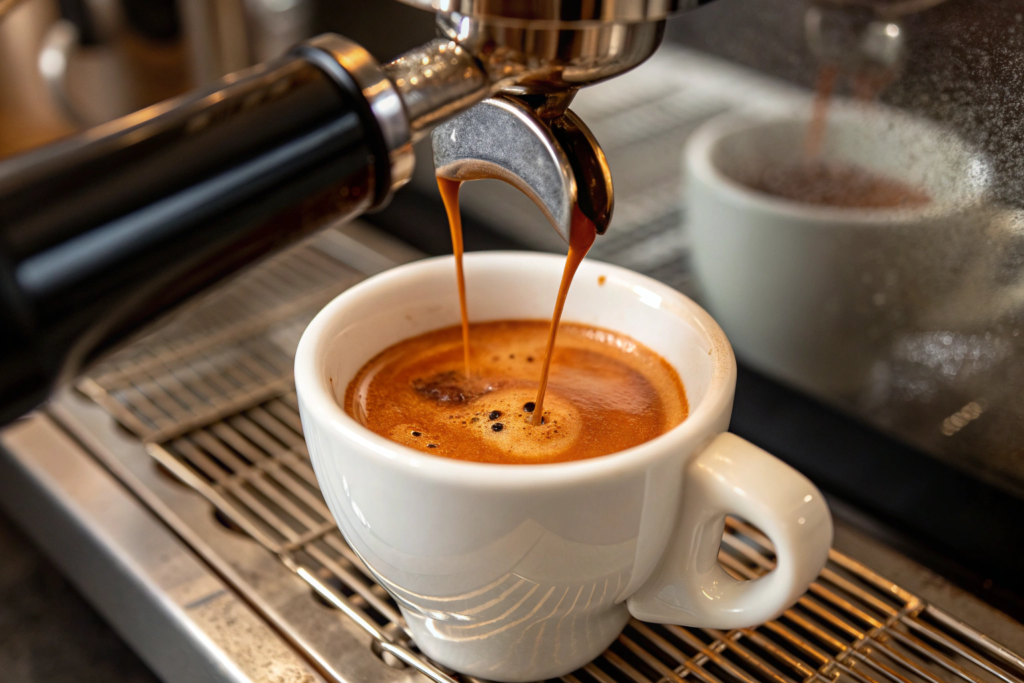
Why is Crema Important?
Crema is more than just a pretty foam; it is a symphony of sensory delight, a golden-brown crown that crowns the espresso shot with both visual allure and profound impact. It acts as a delicate sponge, trapping the most aromatic compounds released during the intense extraction process—those elusive notes of dark chocolate, toasted nuts, ripe berries, and subtle floral hints—locking them in to create an explosion of aroma that wafts up as you bring the cup to your nose, inviting you to savor the experience before a single sip.
Does this Apply to Drip Coffee?
No. Crema is a phenomenon unique to espresso, created by emulsifying coffee oils under high pressure. The benefits of Robusta on crema are specific to espresso extraction. For other brew methods, you might be more interested in which beans work best for black coffee, which usually points towards 100% Arabica.
How Does Blending Create a Bolder Flavor Profile?
You serve a latte made with a delicate, fruity 100% Arabica blend. The customer tastes it and says, "I can't really taste the coffee." This is a common problem. The subtle, acidic notes of many Arabicas can get completely lost when mixed with several ounces of steamed milk.
Blending with Robusta is the classic Italian solution to this problem. Robusta brings a powerful, deep, and low-acid "coffee" flavor that has the intensity to punch through milk and sugar. It adds notes of dark chocolate and a pleasant bitterness that provides a strong foundation for milk-based drinks. While a 100% Arabica might be perfect for a nuanced pour-over, it can be too timid for a latte.
By creating a blend, you get the best of both worlds. The Arabica provides the aromatic complexity and sweetness, while the Robusta provides the body, intensity, and classic coffee "punch." This creates a more balanced and satisfying beverage for the majority of espresso-based drink consumers. It's a way to ensure your coffee's character is never drowned out.

What is the Ideal Blend Ratio?
There is no single perfect ratio; it depends on your target flavor profile. A classic Italian espresso blend might use 70% Arabica and 30% Robusta for a very bold, intense result. A more modern specialty blend might use 90% Arabica and just 10% of a high-quality "Fine Robusta" to add crema and body without significantly altering the flavor profile. Experimentation is key.
Does this Make the Coffee More Bitter?
Yes, Robusta does add a degree of bitterness, as it has higher caffeine content and different organic compounds. However, in a well-balanced blend and a properly extracted espresso, this bitterness is perceived as a positive, "bold" attribute, not a harsh, negative one. It provides a pleasant counterpoint to the sweetness of the milk.
How Does Blending Impact Cost and Consistency?
Let's talk business. You're running a company, and you need to manage your costs to be profitable. The rising price of high-quality Arabica is a constant pressure on your margins. This is, for many roasters, the most compelling reason to master the art of blending.
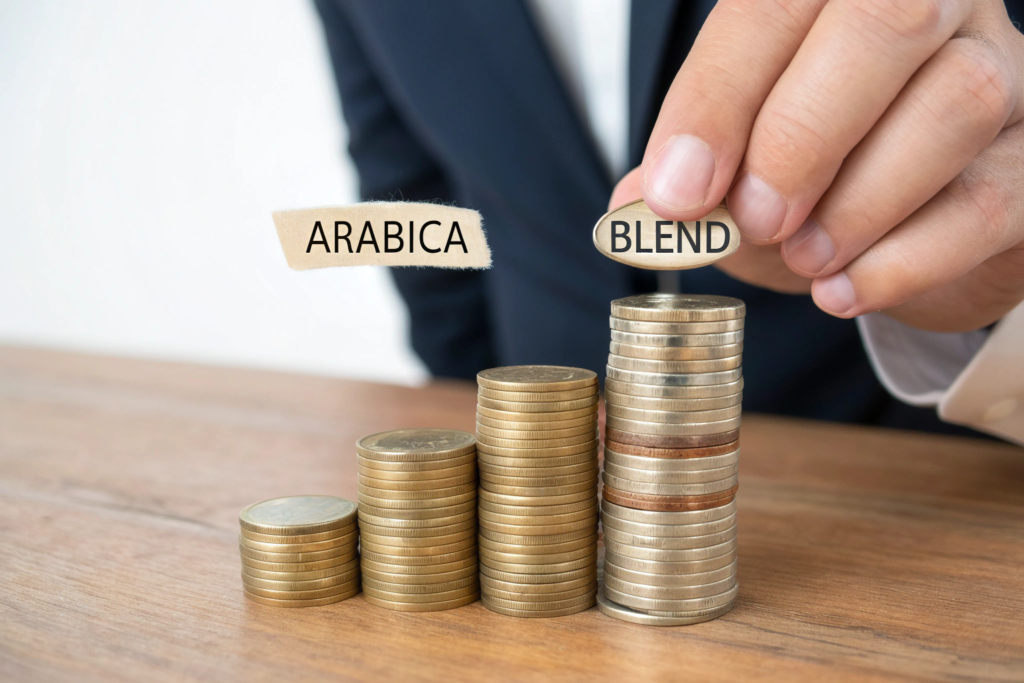
As we've explored when looking for alternatives to expensive Arabica, Robusta is a hardier, higher-yielding crop, which makes its production cost significantly lower. By strategically substituting 10-30% of your expensive Arabica with a high-quality, but less expensive, Fine Robusta, you can dramatically lower the average cost per kilogram of your blend. This cost saving can be the difference between a profitable espresso program and one that struggles to break even.
Furthermore, Robusta can add a layer of consistency to your blend. The flavor profile of Robusta is generally more stable and less subject to the subtle seasonal variations of delicate Arabicas. By using it as a consistent base component, you can create a more uniform, year-round flavor profile for your house espresso, which is a huge benefit for brand identity and customer loyalty.
Are You Sacrificing Quality for Cost?
Not if you use a "Fine Robusta." If you use a cheap, commodity-grade Robusta, then yes, you are absolutely sacrificing quality. But if you use a clean, well-processed Fine Robusta from a reputable source like our farm, Shanghai Fumao, you are making a strategic choice to enhance certain attributes (crema, body) while also gaining a cost advantage. It's an intelligent business decision, not a compromise.
How Much Can You Save?
The exact savings depend on the market prices at the time, but it's not uncommon for a Fine Robusta to be 30-50% less expensive than a mid-range specialty Arabica. If Robusta makes up 20% of your blend, this can easily translate to a 6-10% reduction in your total green bean cost for that product—a significant saving at scale.
What Other, Less Obvious Benefits Are There?
Beyond the "big three" of crema, flavor, and cost, there are other, more subtle benefits that make blending an attractive option for roasters and consumers alike.
First, as mentioned, is the caffeine kick. With nearly double the caffeine of Arabica, adding Robusta to a blend gives it a noticeable extra jolt. For the morning commuter or the student pulling an all-nighter, this added functional benefit is a real selling point. Second, blending can improve the roasting process. Robusta beans have a different density and structure, and incorporating them can sometimes make the overall blend easier to roast consistently, especially for darker roast profiles.
Finally, embracing Robusta blends is a sustainable choice for the industry. Robusta's resilience to climate change and disease makes it a more secure crop for the future. By creating a market for high-quality Robusta, the industry supports farmer livelihoods and encourages agricultural diversity, which is critical for the long-term health of the entire coffee ecosystem. This aligns with the work of research organizations like World Coffee Research, which focuses on securing the future of coffee.

Does the Blend Affect Grind Setting?
Yes, potentially. Robusta beans are often denser than Arabicas. A blend containing Robusta might require a slightly different grind setting on your espresso grinder compared to a 100% Arabica blend to achieve the same extraction time. This is a normal part of "dialing in" a new coffee.
Can You Use Robusta Blends for Other Methods?
While they are optimized for espresso, many classic Southern Italian or Vietnamese coffee preparations use Robusta-heavy blends for drip or phin filter methods. They produce a very strong, intense, and chocolatey cup that is traditionally served with sweetened condensed milk.
Conclusion
The art of blending Robusta with Arabica is a time-honored tradition for a reason. It is a masterful act of synergy, not a compromise. By skillfully combining the two, a roaster can create an espresso blend that delivers a visually stunning, thick, and stable crema, a bold flavor that shines in milk-based drinks, and a satisfying caffeine kick—all while being more cost-effective and consistent.
The key is to shed the outdated prejudice against Robusta and embrace the new reality of "Fine Robusta." When you source a clean, well-processed Robusta and treat it as a valuable ingredient, you unlock a powerful tool to elevate your espresso program, delight your customers, and strengthen your business.
If you are ready to explore the strategic advantages of blending, we are uniquely positioned to be your partner. We grow both species with meticulous care and can provide you with the perfect components to create your own signature blend. Please reach out to my colleague, Cathy Cai, at cathy@beanofcoffee.com to discuss your vision and request samples.