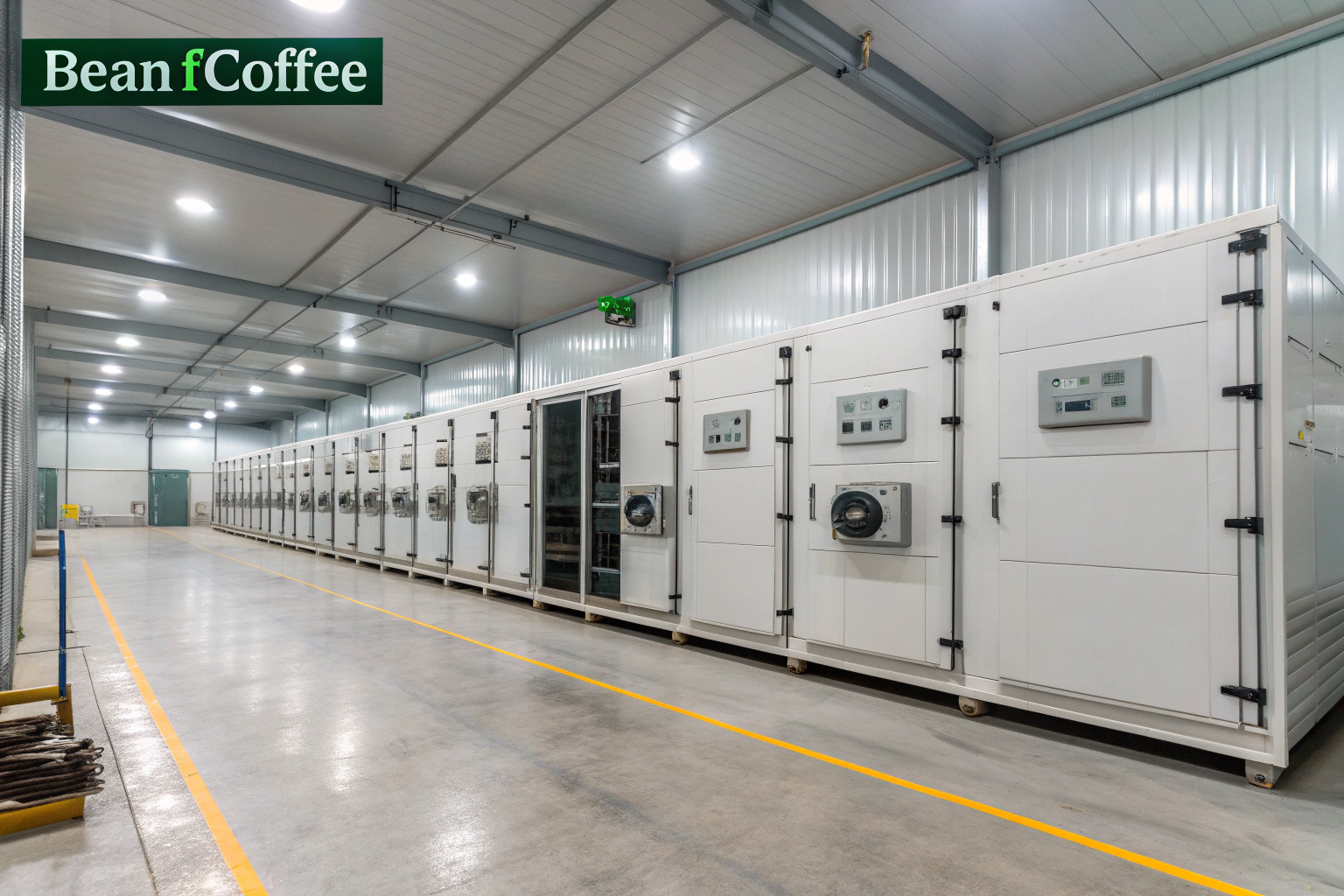
You've imported a container of premium green beans from Yunnan. They arrived at 11.2% moisture, perfectly milled, with an 85-point cupping score. You plan to roast them over the next 8 months. But as they sit in your warehouse through a humid summer, you notice a slow decline—the vibrant acidity fades, the aromatics flatten, and a subtle stale note creeps in. For a roaster, brand owner, or serious cafe, this is a silent profit killer. The quality you paid for is literally evaporating. So, how do you hit the pause button on time?
The answer is professional cold storage. It's not just a fridge; it's a controlled environment that dramatically slows the chemical processes of staling. For an exporter like BeanofCoffee, cold storage at origin is a value-added service we offer for our highest-grade lots. For you, the buyer, it's an insurance policy that preserves the intrinsic quality and economic value of your green coffee inventory. In a business where freshness equates to flavor and flavor equates to price, cold storage is the difference between selling a vibrant single-origin and discounting a bland one.
So, if you're holding green coffee for more than 2-3 months, you need to understand the science and economics of putting it "on ice." Let's chill out and look at the facts.
How Does Cold Storage Chemically Preserve Coffee Quality?
Green coffee is a living, breathing seed. After processing, its metabolism slows but doesn't stop. Two key chemical processes drive staling: oxidation and the loss of volatile aromatic compounds. Warmth and humidity accelerate both. Cold storage works by drastically slowing down the molecular motion that drives these reactions.
The Science of Slowing Down:
- Oxidation Reduction: Oxygen in the air reacts with the oils and organic compounds in the bean, producing stale, cardboard-like flavors. The Arrhenius equation in chemistry tells us that for every 10°C (18°F) drop in temperature, the rate of a chemical reaction (like oxidation) is roughly halved. Storing at 10-12°C (50-54°F) versus a typical 20-25°C (68-77°F) warehouse can slow oxidation by 60-75%.
- Volatile Aroma Preservation: The hundreds of compounds that give coffee its complex fragrance (like fruity esters, floral aldehydes) are constantly evaporating. Cold temperatures reduce their vapor pressure, meaning they stay locked inside the bean much longer.
- Moisture Stability: Cold storage units maintain not only low temperature but also controlled humidity (typically 55-65% RH). This prevents the beans from absorbing ambient moisture (which can lead to mold and off-flavors) or losing moisture and becoming brittle.
Think of it like putting fine wine in a cellar versus leaving it on a sunny counter. The cold, stable environment doesn't improve the coffee, but it preserves its peak state for years, not months. This is a direct investment in quality control for your roasting business.
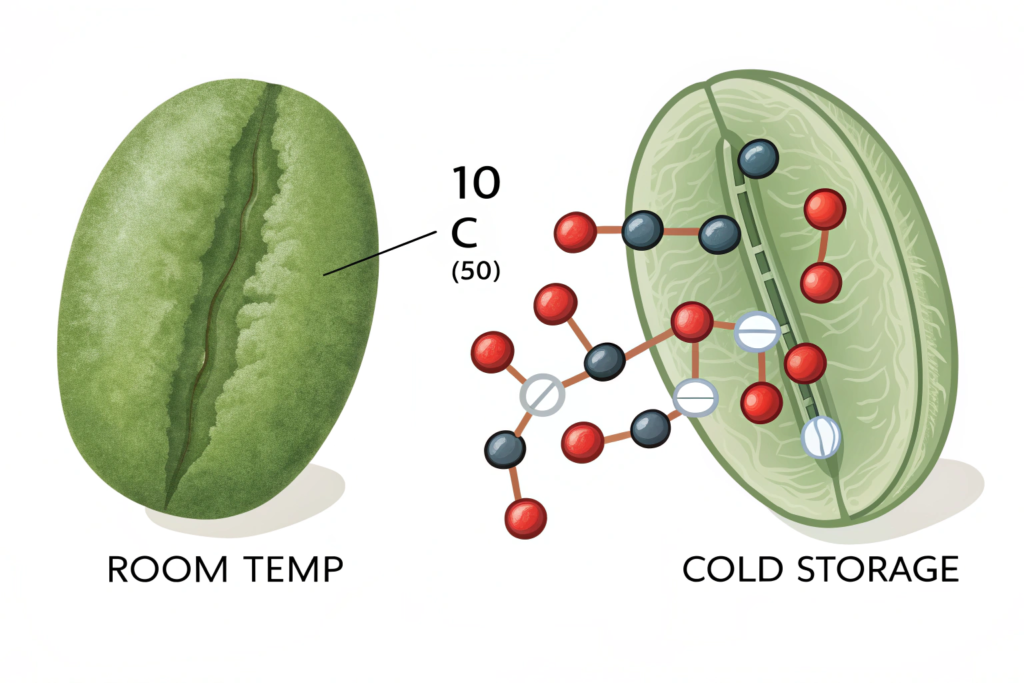
What is the "glass transition" temperature for green coffee?
This is an advanced concept but core to the science. Around 0-5°C (32-41°F), the cellular structure of the coffee bean enters a "glassy state," where molecular movement is nearly frozen. This is the ultimate preservation zone. However, for practical long-term storage, 10-12°C (50-54°F) is the sweet spot, balancing preservation efficacy with energy costs and preventing any risk of condensation ("sweating") when beans are removed.
How does cold storage affect different processing methods?
All coffees benefit, but some gain more. Natural processed beans, with their higher sugar content and fruit-derived volatile compounds, are particularly prone to rapid staling and flavor shift at warm temperatures. Cold storage locks in their intense fruity character. Washed processed beans, prized for their clarity and acidity, also see their bright, clean notes preserved far longer. We use cold storage specifically for our microlot Naturals and high-altitude Washed Arabicas to guarantee their profile reaches our clients intact.
What Are the Direct Financial and Operational Benefits for Roasters?
Beyond preserving flavor, cold storage is a powerful financial tool. It transforms green coffee from a perishable good into a stable asset, unlocking flexibility and protecting your bottom line.
1. Extended Shelf Life and Purchasing Power:
- Buy in Bulk, Save More: You can capitalize on lower prices by purchasing an entire harvest lot (e.g., a 60-bag pallet) without fearing it will stale before you can roast it. This volume discount directly improves your margin.
- Seasonal Sourcing Flexibility: You are no longer forced to roast a Costa Rican crop in March and a Yunnan crop in August immediately upon arrival. You can source year-round, store coffees at their peak, and create blends or single-origin offerings on your own schedule.
- Buffer Against Supply Shocks: Having a 6-12 month reserve of key blend components in cold storage protects you from sudden price spikes, shipping delays, or quality issues with a new crop.
2. Quality Consistency for Your Brand:
- Stable Roast Profiles: Beans that have not degraded in storage behave consistently in the roaster. Your development times, color readings, and final flavor remain stable, making production roasting predictable and reducing waste from re-dialing.
- Year-Round Offerings: You can offer a popular single-origin coffee (like our Yunnan Catimor) consistently for 10-12 months, building customer loyalty, rather than having it change or disappear every 3 months.
3. Reduced Risk and Waste:
- Eliminate "Past-Peak" Losses: The financial loss from having to discount or dump coffee that has gone flat is eliminated.
- Secure High-Value Lots: For competition coffees, microlots, or expensive Geshas, cold storage is non-negotiable insurance. The cost of storage is trivial compared to the value of the asset.
For a business focused on price and timeliness like Ron's, the ability to buy strategically and hold without loss is a game-changing competitive advantage.

How do you calculate the ROI on a cold storage room?
Consider the cost of a small walk-in cooler ($8k-$15k) versus the value it protects. If it allows you to safely hold $50,000 of green coffee that would otherwise depreciate in quality by 10% over 6 months, you've saved $5,000 in value erosion in the first half-year, not to mention the savings from bulk purchases. The ROI is often under 24 months for a serious roaster. For smaller operations, shared or third-party cold storage is a viable option.
What is the difference between short-term "resting" and long-term "aging"?
This is crucial. Resting (1-2 months): Green coffee needs 4-8 weeks after milling to degas and stabilize. This is done at moderate warehouse temps. Long-Term Storage (3-24 months): This is where cold storage shines. After the resting period, coffee is moved to cold storage to halt further significant chemical change. Some coffees (like certain Brazil or Sumatra beans) are intentionally aged in warm, humid conditions to develop a specific woody, spicy profile—a completely different, and risky, process. Cold storage is for preservation, not active aging.
How Does Cold Storage at Origin Benefit the Importer?
The preservation clock starts ticking the moment the coffee is milled. Having the exporter implement cold storage at the origin point—before the long ocean voyage—is the ultimate head start. It ensures the coffee arrives at your port in the same state it left the mill.
BeanofCoffee's Origin Cold Storage Advantage:
- Pre-Voyage Preservation: Our premium lots are bagged and immediately moved into our climate-controlled cold storage in Yunnan. They wait there at 12°C/55% RH until the container is booked. This means the beans spend zero time degrading in a warm, humid origin warehouse.
- Mitigates "Container Sweat" Risk: The temperature swing during a sea voyage can cause condensation inside the container ("cargo sweat"), which can rewet bags and cause mold. Starting the journey cold reduces this thermal shock and moisture risk.
- Guaranteed Freshness Upon Arrival: When you receive our cold-stored lot, its post-harvest freshness is essentially "paused." The 6-8 week voyage hasn't aged it. This gives you the maximum possible shelf life on your end. It's a direct answer to the pain point of timeliness and quality degradation in transit.
This service is particularly valuable for roasters who do not have their own cold storage yet. You receive a product that is effectively "pre-preserved."
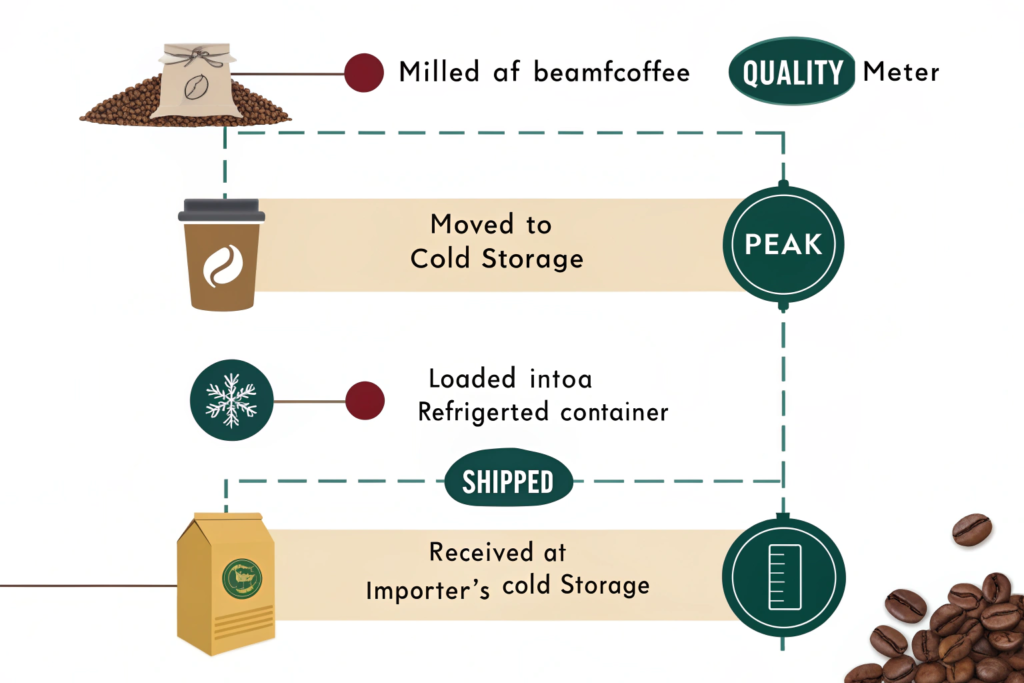
Should you request a refrigerated container for shipping?
For the utmost protection, especially for high-value lots, yes. A refrigerated (reefer) container maintains a set temperature (e.g., 12°C) throughout the voyage. This is the gold standard for door-to-door cold chain. It is more expensive than a dry container. A cost-effective alternative is using an insulated container with desiccants, which buffers against external temperature swings. We can arrange either based on your needs and budget. For most coffees, our origin cold storage combined with standard dry container shipping (if the transit time is under 8 weeks) is highly effective.
How can you verify the cold storage claims of a supplier?
Ask for evidence. A reputable supplier should provide:
- Warehouse records: Temperature and humidity logs from the storage period.
- Photographs/Videos: Of the cold storage facility with bags visible.
- Lot-specific tracking: Proof that your specific lot was segregated and stored under these conditions.
At BeanofCoffee, we are transparent about our storage protocols because it's a key part of our value proposition for specialty clients.
What Are the Practical Steps for Implementing Cold Storage?
Adopting cold storage requires planning, but it's not overly complex. Here’s how to approach it, whether you're a roaster or a distributor.
For Roasters & Importers:
- Assess Your Volume: Calculate the volume of coffee you need to store for 4+ months. This defines the size of the unit you need.
- Choose Your System:
- Walk-in Cooler: Best for medium to large volumes. Requires installation but offers best access and organization.
- Reach-in Coolers/Cold Rooms: Good for smaller volumes or sample libraries.
- Third-Party Logistics (3PL): Rent space in a professional cold storage warehouse. Ideal if you lack capital or space.
- Set Your Parameters: Aim for 10-12°C (50-54°F) and 55-65% Relative Humidity. Invest in a reliable digital hygrometer/thermometer to monitor.
- Manage Condensation: When removing bags from cold storage, let them acclimate to room temperature in their sealed bags for 24-48 hours before opening. This prevents warm, moist air from condensing on the cold beans.
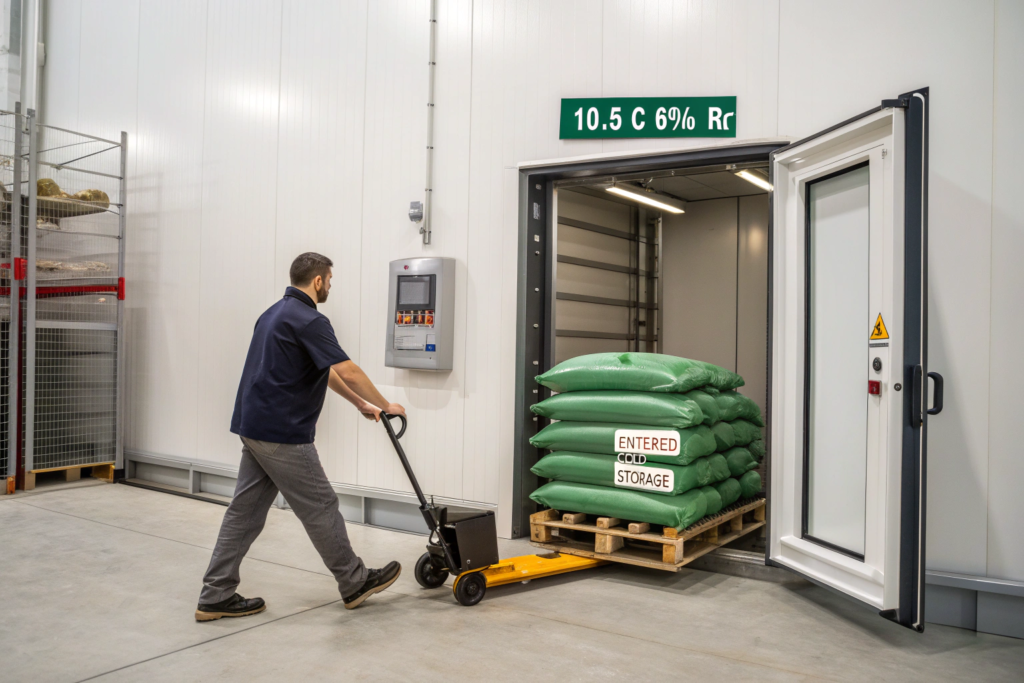
- Inventory Management: Implement a strict FIFO (First-In, First-Out) system. Label every bag with the date it entered cold storage.
Working with Your Supplier:
Specify in your contract that certain lots are to be cold-stored at origin prior to shipment. Be prepared to pay a small premium for this service, as it ties up the exporter's capital and space. We offer it as an option because we know it delivers superior value.
What about energy costs and environmental impact?
Modern, well-insulated coolers are surprisingly efficient. The energy cost is a minor operational expense compared to the value preserved. To improve sustainability, look for units with high-efficiency compressors and consider powering them with renewable energy if possible. The environmental cost of wasted coffee (landfill, lost production resources) is far greater than that of refrigeration.
Can you cold store all your green coffee?
It's not always necessary. For high-turnover commercial blend components that you'll roast within 8-10 weeks, a cool, dark, dry warehouse shelf is sufficient. The strategic use of cold storage is for your premium, slow-moving, or strategically held coffees. This tiered approach optimizes cost versus benefit. Think of it as your "vault" for your most valuable assets.
Conclusion
Cold storage for green coffee beans is not a luxury; it's a strategic tool for quality preservation and financial management. It chemically slows staling, protects your purchasing power, ensures brand consistency, and can be applied at both origin and destination to create a seamless quality chain.
In a competitive market where flavor is currency, cold storage is the bank that keeps your capital secure. It allows you to sell freshness, not just coffee.
Preserve your investment from the source. BeanofCoffee offers origin cold storage for our premium lots, delivering peak-freshness green beans to your roastery. Contact Cathy Cai to discuss our cold-stored coffee options and storage specifications: cathy@beanofcoffee.com. Lock in quality.