You walk into a specialty roastery or browse a coffee menu online. You're faced with a choice: single-origin coffees, each with a story of a specific farm or region, or blends with intriguing names like "Sunrise Blend" or "Foundation Espresso." If you're a roaster, cafe owner, or coffee buyer, you've likely wrestled with this core product strategy decision. Is blending just a way to use up leftover beans or hide lower-quality stock? Absolutely not. When executed with intention, a dual-origin blend is a masterful tool that delivers unique advantages a single origin simply cannot, especially for businesses focused on consistency, broad appeal, and commercial viability.
The primary benefits of a well-crafted dual-origin coffee blend are enhanced flavor complexity and balance, superior supply chain and price stability, and optimized performance for specific applications—most notably espresso and milk-based drinks. By strategically combining two complementary beans, a roaster can engineer a consistent, crowd-pleasing flavor profile that mitigates the inherent seasonal variability of coffee, creates a more forgiving and soluble product for brewing, and provides a reliable cornerstone for a business. For the end-drinker, this often translates to a more accessible, balanced, and consistently delicious daily cup.
Think of it like building a championship sports team. You wouldn't field a team of only strikers or only defenders. You combine distinct strengths to create a cohesive, resilient, and winning unit. A dual-origin blend applies this principle to flavor, economics, and logistics. Let's break down exactly how.
How Does Blending Create a More Balanced and Complex Flavor?
A single-origin coffee is a pure expression of its terroir. This can be its greatest strength, but also a limitation. A coffee from Ethiopia might be explosively floral and acidic, while one from Brazil is all chocolate and nuts. Each can be excellent alone but might not offer the complete, rounded experience many consumers seek.
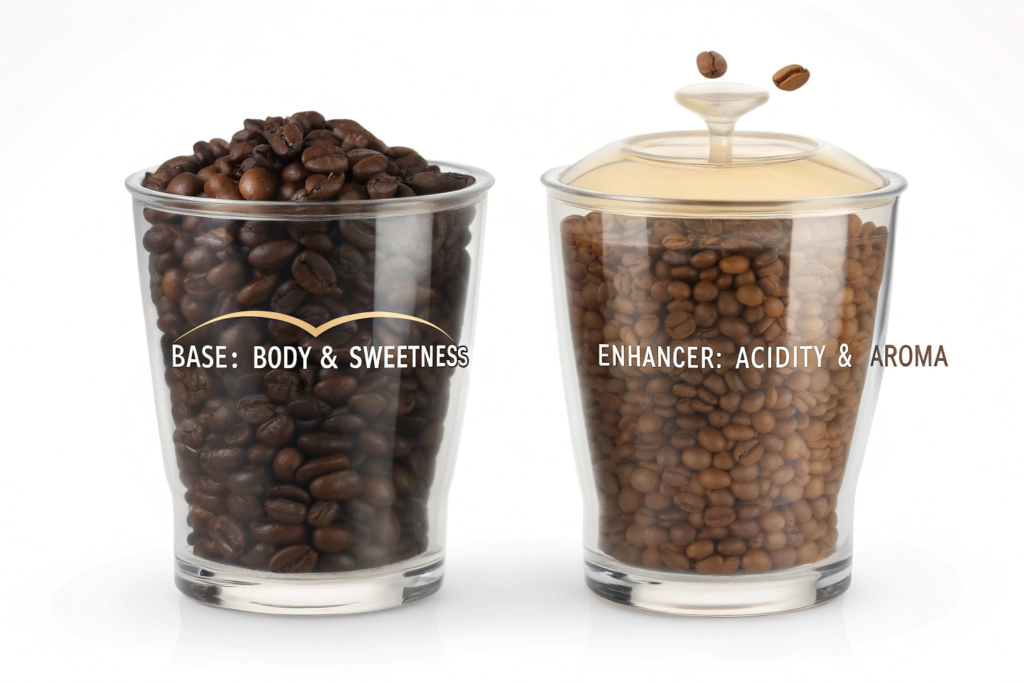
Blending allows a roaster to become a flavor architect. The most common and effective dual-origin strategy is the Base + Enhancer model:
- The Base (60-80% of the blend): This bean provides the structural foundation. It's chosen for body, sweetness, and low-to-medium acidity, with primary notes of chocolate, caramel, or nuts. It's the comforting, reliable backbone of the cup. Beans from regions like Brazil, Sumatra, or our own Yunnan Catimor are classic base candidates.
- The Enhancer (20-40% of the blend): This bean provides the "sparkle" and aromatic lift. It's selected for its distinctive character: brighter acidity, fruity, floral, or wine-like notes. It adds complexity and intrigue without overwhelming. Washed Ethiopian, Kenyan, or some Central American coffees often play this role.
The result is a cup that has the satisfying, creamy mouthfeel and sweetness people love, elevated by a layer of brighter, more complex flavors. This creates a more approachable yet interesting profile that appeals to a wider audience than a potentially challenging single-origin. It's the coffee equivalent of a perfectly balanced dish—not just one overpowering note.
Can Blending Improve a Less Expensive Coffee?
Yes, strategically. This is a key economic benefit. A high-quality, but perhaps less complex (and more affordable) base bean can be dramatically elevated by a smaller percentage of a more exquisite, expensive enhancer. For instance, blending 75% of our cost-effective, chocolatey Yunnan Arabica with 25% of a vibrant, pricey Ethiopian heirloom creates a final product that tastes far more premium than its weighted average cost. This allows roasters to offer exceptional taste at a competitive good price, improving value for customers and margins for themselves.
How Does Blending Manage Acidity and Aftertaste?
Acidity is a crucial component of coffee's liveliness, but in high doses, it can be perceived as sour or sharp. Blending provides a calibration tool. By using a low-acid base, a roaster can dial in the exact desired level of brightness by adjusting the percentage of a high-acid enhancer. Furthermore, a sweet, clean base can "shorten" or clean up the sometimes lingering, drying aftertaste of a very acidic coffee, leading to a more pleasant, finish. This level of control is impossible with a single bean.
How Do Blends Offer Unmatched Supply Chain Stability?
This is the most critical business argument for blends, especially for roasters and cafes serving a consistent house espresso. Coffee is an agricultural product. A single-origin lot is finite. When it's gone, you must find a new one, which will inevitably taste different due to annual weather variations, processing changes, or crop cycles. This forces constant menu updates, staff retraining, and customer re-education.
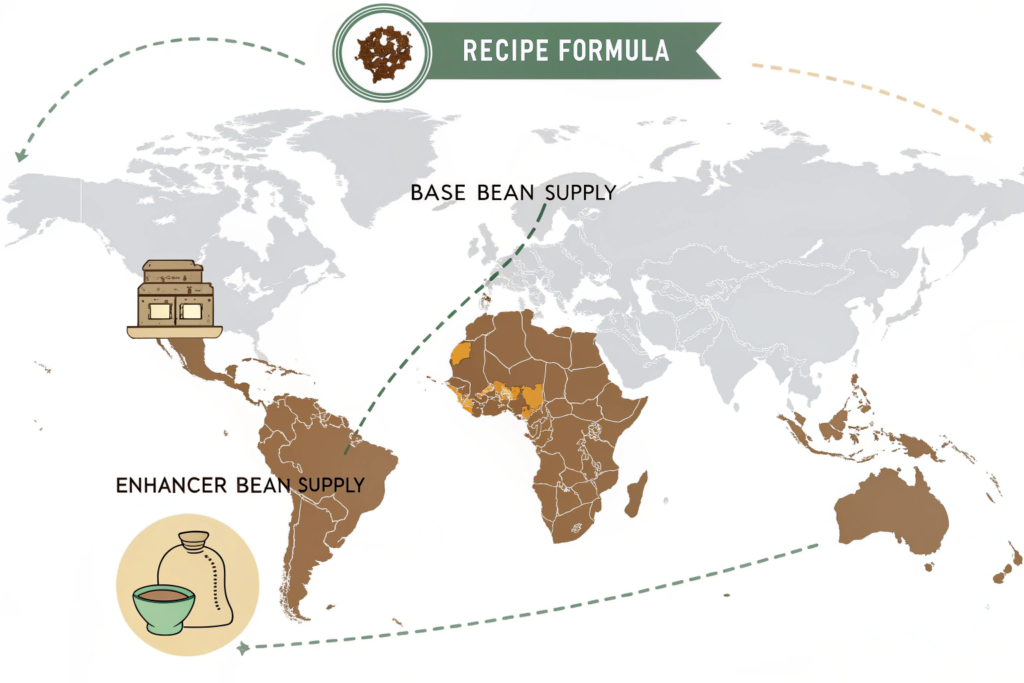
A dual-origin blend acts as a hedge against this variability. The roaster's commitment is to a flavor profile, not to a specific farm lot. The recipe is defined by roles: "We need a bean that provides chocolate and body" and "We need a bean that provides fruity brightness." If a Brazilian crop fails or spikes in price, a roaster can source a similar bean from Colombia, Peru, or Yunnan, China to fulfill the "base" role. As long as the "enhancer" character remains consistent, the overall blend flavor can be maintained. This flexibility is the bedrock of a stable and reliable business. It enables forward planning, long-term contracts, and protects against the volatility of a single commodity market. For a supplier like Shanghai Fumao, providing a consistent, high-quality base bean makes us an invaluable, trustworthy partner in a roaster's blend strategy.
What is the Impact on Cafe Operations and Branding?
For a cafe, the house blend is the heart of the operation. Its consistency is paramount.
- Barista Workflow: Baristas can dial in the grinder and master recipes for one core product, leading to faster service and higher quality.
- Inventory Simplicity: Managing one primary coffee SKU is far easier than cycling through multiple single-origins.
- Brand Identity: The blend becomes the cafe's flavor identity. Customers develop loyalty to that specific taste.
A dual-origin blend, managed by a skilled roaster, makes this operational nirvana possible. It's the workhorse that drives predictable daily revenue.
Can Blending Mitigate Price Risk?
Absolutely. By having a flexible recipe, a roaster can continuously seek the best-value components that fit the flavor roles. If the C-market price for a traditional base origin rises, they can trial alternatives from other regions. This sourcing agility, inherent to the blend model, is a direct tool for cost control. It allows for strategic purchasing and protects profit margins without sacrificing the end-cup quality that customers expect.
Why Are Dual-Origin Blends Especially Suited for Espresso?
Espresso is a magnifying glass for coffee. Its high-pressure, short-time extraction amplifies both glorious sweetness and glaring flaws. While stunning single-origin espressos exist, they can be temperamental, with a very narrow window for perfect extraction. Dual-origin blends are, in many ways, designed for espresso's demands.
The reasons are rooted in physics and chemistry:
- Optimized Solubility & Extractability: Different beans have different densities and cellular structures. A base bean (like a lower-grown Brazilian) might develop body but extract slowly. An enhancer bean (like a high-altitude Ethiopian) is often denser and more soluble. Blending them creates a more homogeneous particle bed during grinding, leading to a more even and balanced extraction in the 25-30 second window, reducing risks of sourness (under-extraction) or bitterness (over-extraction).
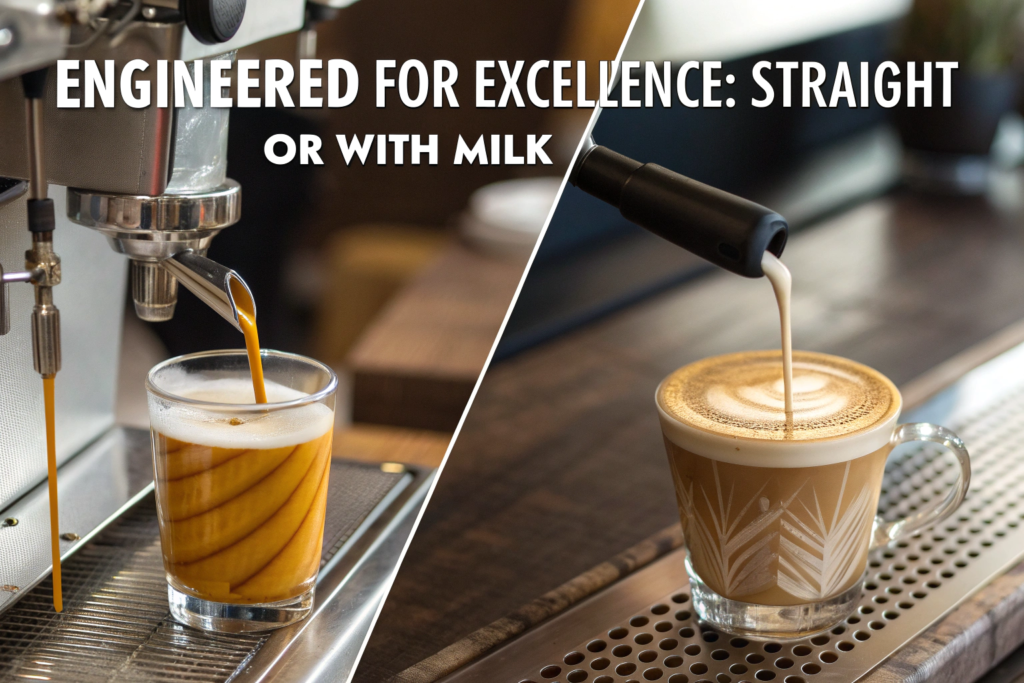
- Built for Milk: Over 70% of espresso-based drinks include milk. A blend's structure is ideal for this. The base bean provides the sweetness and body that can stand up to and complement steamed milk, creating a harmonious, creamy cappuccino or latte. The enhancer bean adds just enough aromatic complexity to keep the drink from tasting flat. A very fruity, light-roast single-origin can often taste sour, thin, or clash with milk.
- Crema and Mouthfeel: The oils and soluble solids from a well-developed base bean contribute to a stable, velvety crema and a rich, coating mouthfeel—hallmarks of a quality espresso.
For a commercial setting, an espresso blend isn't just a product; it's a mission-critical tool for quality and efficiency.
What is a Classic, Proven Dual-Origin Espresso Blend Formula?
The "Brazil + Ethiopia" blend is a time-tested blueprint for success.
- Brazil (Base): Delivers low acidity, big body, and clear, sweet notes of milk chocolate, nuts, and brown sugar.
- Ethiopia (Enhancer): Contributes vibrant floral aromatics, citrus or berry-like acidity, and a complex, tea-like finish.
This pairing yields an espresso with thick crema, a sweet and approachable core, and a lively, fragrant finish that keeps it interesting sip after sip. Roasters worldwide adapt this model using comparable beans, such as using our Baoshan Arabica as a stable, chocolatey Asian alternative to a Brazilian base.
Should You Blend Before or After Roasting?
This is a key technical decision. Pre-blending (mixing green beans before roasting) allows the beans to "season" together, often resulting in a more integrated, harmonious cup and simplifying the roasting process to a single profile. Post-blending (roasting each component separately to its optimal profile before mixing) offers maximum control over each bean's development but adds production complexity. For a dual-origin blend aiming for balance and efficiency, pre-blending is often the preferred method.
How to Market and Explain the Value of a Blend?
In a market that often glorifies single-origin purity, you must craft a compelling narrative for your blend. The story shifts from a singular "place" to one of purpose, craft, and consistency.
Your communication should highlight intention and benefit:
- "Our Foundation Espresso: A crafted blend where chocolatey Yunnan body meets the citrus sparkle of Ethiopia. Balanced for a smooth, sweet shot that shines in milk."
- "The Consistent Cup: We blend two complementary origins to deliver the rich, reliable flavor you love, every day, all year round."
Position the roaster as a master blender—a curator and creator. This frames the blend not as a lesser product, but as a more sophisticated, intentional one. For the customer, the value is clear: a guaranteed great experience.
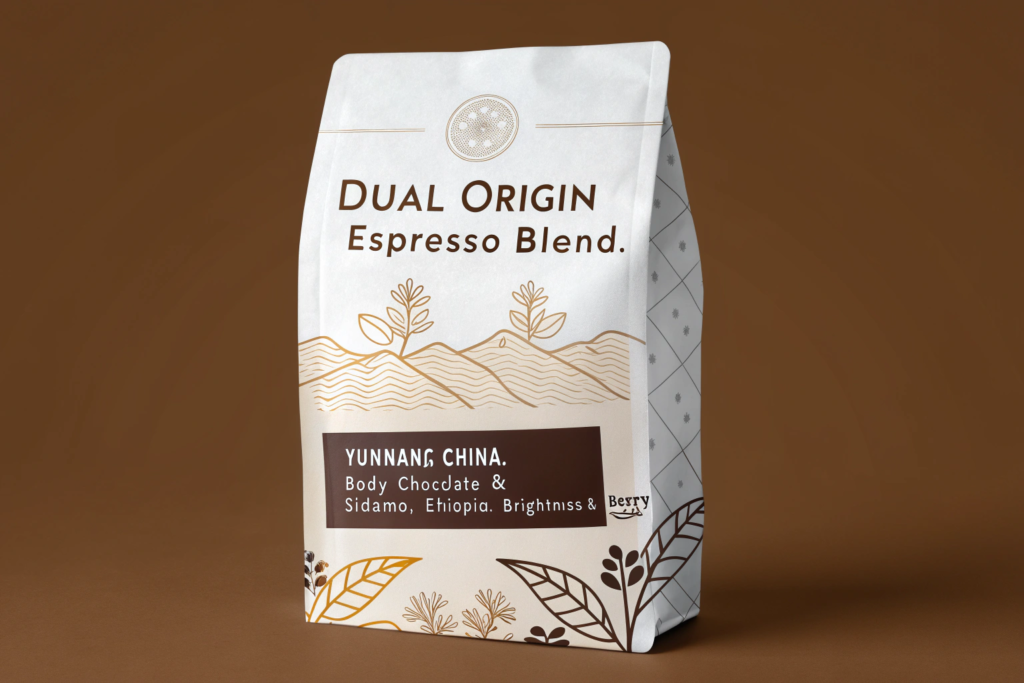
Should You Disclose the Origins in the Blend?
Transparency builds trust and educates. Yes, you should name the origins (e.g., "Yunnan, China & Sidamo, Ethiopia"). This maintains a connection to the farm story while teaching customers about the art of blending. It also distinguishes your craft blend from anonymous commercial blends. Explain the "why": "We source Yunnan for its creamy, nutty base, and Sidamo for its vibrant berry notes to create this unique harmony."
How Does a Blend Simplify the Customer's Decision?
In a crowded cafe or online store, a well-presented house blend serves as the trusted, go-to recommendation. It answers the questions, "What's good here?" or "What do most people get?" It reduces choice paralysis. By positioning your dual-origin blend as the flagship, balanced, and versatile option, you guide customers toward a satisfying choice that reliably represents your brand's best work.
Conclusion
Dual-origin coffee blends are a sophisticated and powerful tool in a roaster's or cafe's arsenal. They transcend being merely a product to become a strategy for achieving flavor balance, operational consistency, and commercial resilience. While single-origins offer a pure, seasonal expression of place, blends represent the roaster's skill in composing a harmonious, stable, and purposeful taste experience that stands up to the demands of daily service and diverse palates.
For businesses built on reliability, customer satisfaction, and smart economics, a well-designed dual-origin blend is often the unsung hero and the foundation of success.
If you are looking to develop a signature, market-leading blend and seek a reliable, high-quality, and cost-effective base component, our Yunnan coffees are an ideal candidate. At Shanghai Fumao, we provide the consistent, traceable beans that form the dependable foundation of great blends worldwide.
To request samples for blending experiments or to discuss a custom blend collaboration, please contact our head of sales and product development, Cathy Cai. She can connect you with our technical team. Reach her at cathy@beanofcoffee.com. Let's build a blend that becomes your customers' favorite.