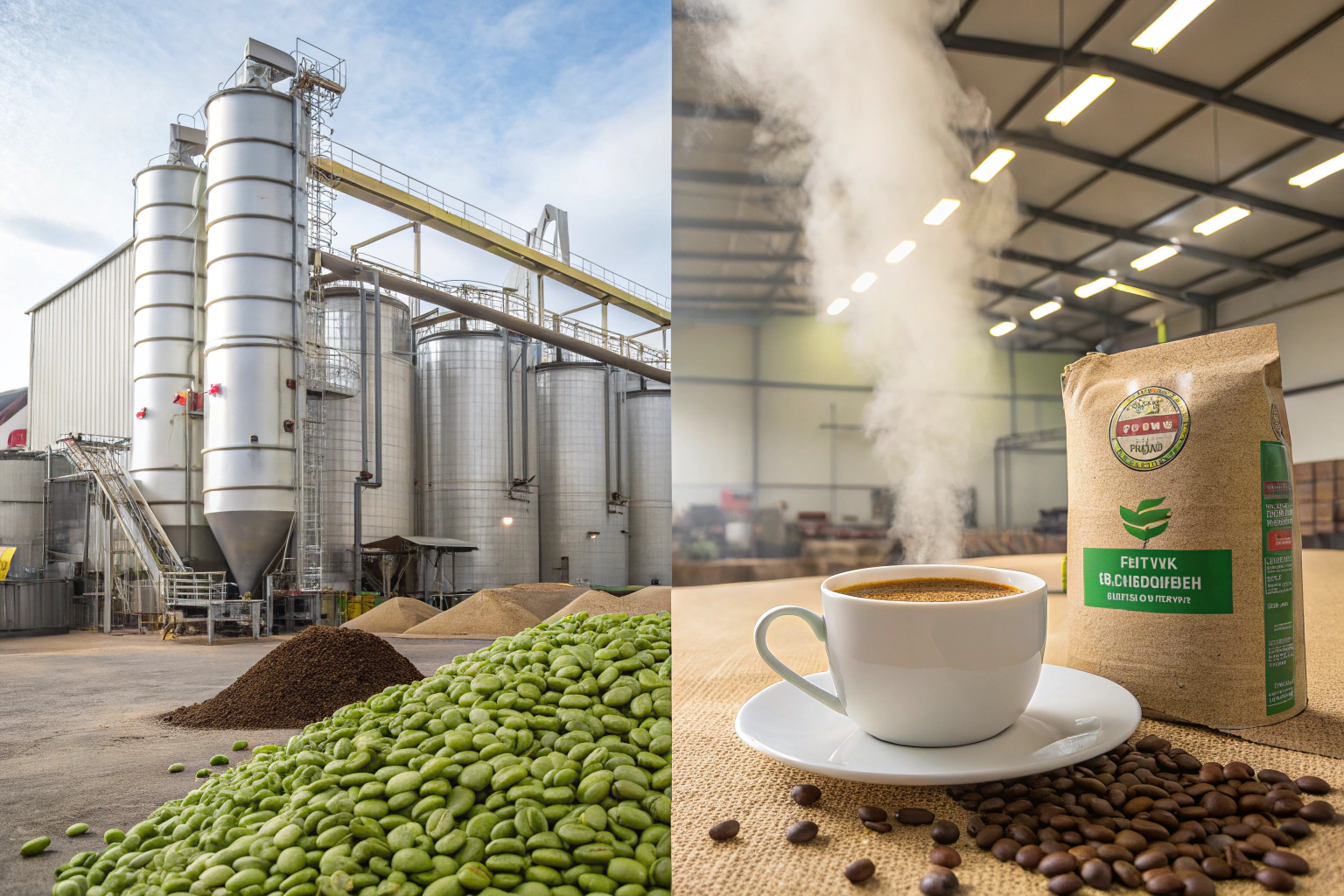
You know, for years I focused only on green bean exports. That's what we do best at BeanofCoffee—growing premium Arabica on our 10,000 acres in Yunnan. But over time, I kept hearing the same question from buyers: "Do you offer instant coffee too?" At first, I didn't understand why. Instant coffee had a reputation—lower quality, mass-market, not for serious coffee people.
The short answer is that instant coffee manufacturing offers significant benefits including extended shelf life (up to 20-30 years for some products), reduced shipping weight and volume (up to 80% less than green beans), consistent flavor profiles, lower production costs for buyers, and access to mass-market and food service channels where fresh brewing isn't practical.
But here's what I learned. The instant coffee market is huge—and growing. It's not just about cheap products anymore. Modern instant coffee technology can preserve remarkable flavor. And for many buyers, the operational benefits outweigh any perceived quality differences. Let me walk you through what I've discovered about this side of the industry.
What Are the Production Advantages of Instant Coffee?
The manufacturing process itself creates advantages that green bean production simply can't match. Let's start with the basics. Picture this: in a state-of-the-art facility, where the air hums with the soft whir of precision machinery and the faint scent of polished metal mingles with a hint of warm, earthy aroma from the raw materials being processed. Unlike the sun-drenched fields where green beans sway gently in the breeze, their vibrant green pods glistening with morning dew and the occasional flutter of a butterfly, our manufacturing environment is a controlled symphony of efficiency.
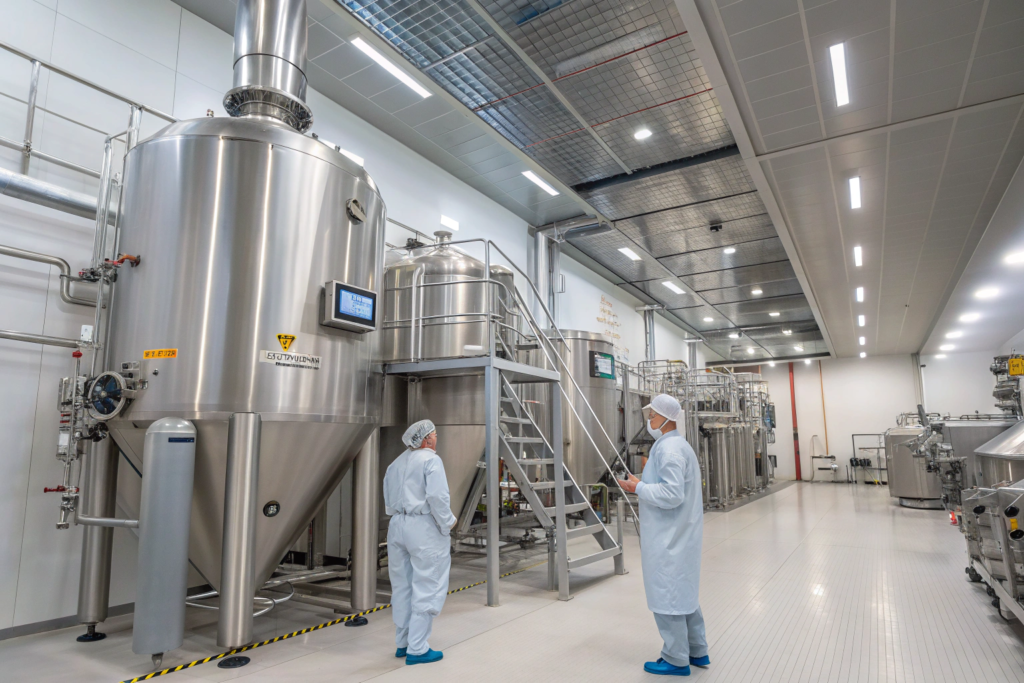
How does spray drying work and why does it matter?
Spray drying is the most common method for instant coffee production. Roasted coffee is ground and brewed in large industrial extractors—essentially giant coffee makers. The resulting liquid concentrate is sprayed into a chamber of hot, dry air. As the droplets fall, water evaporates instantly, leaving behind small, soluble coffee powder or granules.
The key advantage is efficiency. One continuous process turns brewed coffee into shelf-stable powder. No grinding, no portioning, no brewing equipment needed at the consumer end. Just add water.
Freeze-drying is another method—more expensive but better for flavor preservation. The brewed concentrate is frozen and then placed in a vacuum chamber where ice sublimates directly to vapor, leaving behind coffee solids. The structure remains more intact, which helps preserve volatile aromatics. Companies like Nestlé and JDE Peet's have perfected these technologies over decades.
What raw materials work best for instant coffee?
This surprised me. The best instant coffee doesn't necessarily come from the highest-grade specialty beans. In fact, Robusta often outperforms Arabica in instant production.
Why? Robusta has higher soluble solids content—about 28-30% versus Arabica's 18-20%. That means more coffee ends up in the final product from the same starting weight. Robusta also provides better body and crema in the final cup, which instant drinkers often prefer.
That doesn't mean Arabica isn't used. Premium instant blends combine Arabica for flavor with Robusta for body and yield. And high-quality Robusta—like the kind we grow in Yunnan—can produce excellent instant coffee.
We supply green beans specifically for instant production through partners like Shanghai Fumao. The specifications are different—screen size matters less, defect tolerance is different, but quality still matters.
What Are the Logistics Benefits for Buyers?
For buyers, the logistics advantages of instant coffee are nothing short of transformative, a silent revolution that turns the mundane into the miraculous with every carefully calculated step. This is where the numbers really tell the story—where cold, hard data dances with the warm, tangible reality of a product that defies the constraints of time and space. Imagine, if you will, a bustling warehouse in Brazil, where sun-ripened coffee cherries have been transformed into rich, aromatic grounds, then into the concentrated essence of instant coffee.
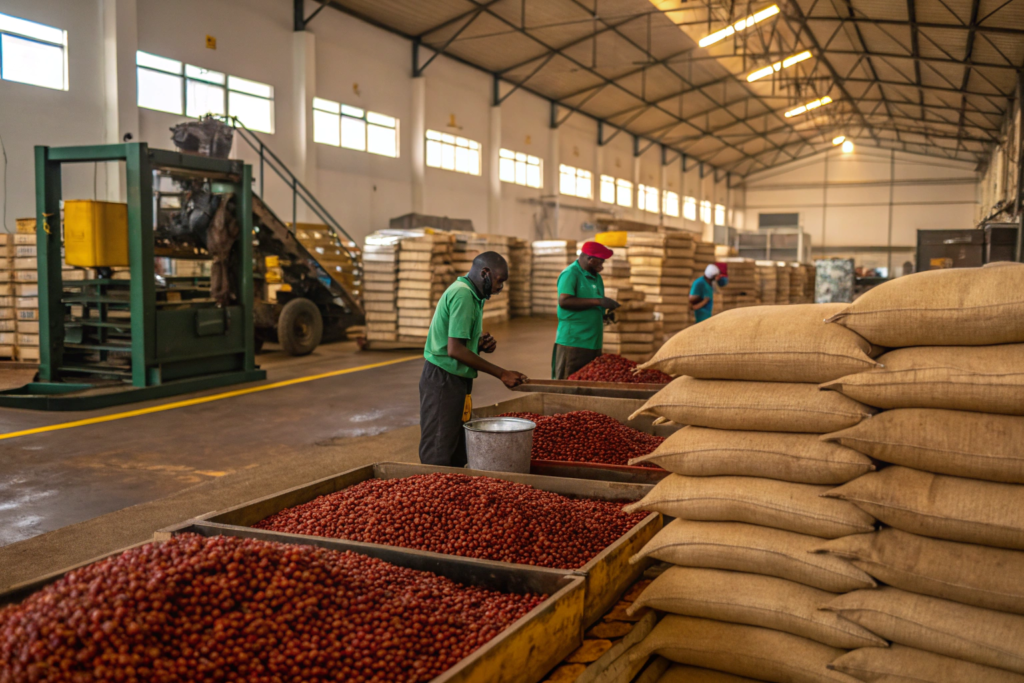
How much weight and volume do you save?
Green coffee is heavy and bulky. A typical 20-foot container holds about 19-20 metric tons of green beans in 60-70 kg bags. That's a lot of shipping cost.
Instant coffee reduces all of that. Because instant coffee is concentrated—about 2.5-3 kg of green beans produce 1 kg of instant coffee. So for the same coffee quantity, you're shipping 60-70% less weight.
Volume savings are even greater. Instant coffee powders and granules are denser than whole beans. They pack into smaller spaces. A container of instant coffee represents 3-4 times more "cups" than a container of green beans.
For buyers in remote locations or with high shipping costs, this is huge. Less freight cost. Less warehouse space. Less handling. The savings add up quickly.
What about shelf life and storage?
This is one of the biggest advantages. Green coffee is perishable. It ages. It loses quality over months. It needs careful climate control.
Instant coffee? Properly packaged, it lasts for years. Some freeze-dried instant coffees have shelf lives of 20-30 years. The water is gone. The degradation processes that affect green and roasted coffee can't happen.
Storage conditions matter less too. Instant coffee needs protection from moisture and oxygen—that's what the packaging provides. But temperature swings? Humidity changes? Much less concern. You don't need climate-controlled warehouses.
For food service buyers, military contracts, emergency preparedness, or any application where long-term storage matters, instant coffee is the obvious choice. Organizations like the US Department of Defense have used instant coffee for decades precisely for this reason.
What Are the Market and Consumer Benefits?
Beyond the bustling realms of production facilities and the intricate dance of logistics networks, instant coffee extends its reach into markets where fresh coffee, with its delicate beans and labor-intensive brewing rituals, simply cannot tread. This is not merely about convenience; it is a masterful act of matching product to use case, a symphony of practicality and accessibility that resonates in the most unexpected corners of the world. Imagine a remote mountain village at dawn, where the first light struggles to pierce the mist, and a weary traveler reaches for a small, foil-wrapped packet—its edges crisp, its contents a deep, rich brown that promises warmth.
With a single scoop, a dash of hot water from a portable stove, and a gentle stir, a cup of coffee materializes, its aroma curling upward like a whispered secret, instantly transforming the cold morning into a moment of comfort. Or picture a busy urban office at 3 a.m., where deadlines loom and exhaustion clings to every eye; an employee fumbles through a desk drawer, pulls out a canister of instant coffee, and within seconds, a steaming mug appears, its bold, robust flavor cutting through the haze of fatigue, reigniting focus and determination.

Who buys instant coffee and why?
The largest instant coffee markets are in Asia—China, Japan, South Korea, Vietnam, India. Also the UK, Russia, and parts of Eastern Europe. In these markets, convenience often trumps freshness concerns.
Office coffee service is huge. Instant coffee packets, vending machines, bulk dispensers—all rely on instant because it's simple and consistent. No beans to grind. No brewers to maintain. No waste.
Food service loves instant for the same reasons. Large-volume urns of coffee can be made instantly from powder. Consistency is guaranteed batch to batch. Training staff is trivial.
Outdoor and travel applications—camping, hotels, airlines—all depend on instant. You can't haul an espresso machine up a mountain. You can carry instant coffee packets.
Even specialty coffee is getting into instant. Companies like Sudden Coffee (now part of Blue Bottle) created high-end instant using freeze-drying technology. The market is evolving.
How does consistency benefit brands?
With fresh coffee, every batch is slightly different. Harvest variation. Roast variation. Brewing variation. For a brand selling whole bean coffee, that's fine—even desirable. It shows authenticity.
For a brand selling instant coffee, consistency is everything. Consumers expect the same cup every time. Instant manufacturing delivers that. The blending happens at industrial scale. The extraction is controlled. The powder is homogeneous.
For private label brands, this is perfect. You can develop one formulation and reproduce it indefinitely. No seasonal variation. No supplier changes affecting flavor. Your product stays your product.
What Are the Sustainability Angles?
Instant coffee manufacturing isn't just about economics; it's a symphony of sustainability woven into every step, from the sun-dappled plantations to the sleek production lines, offering benefits that are both obvious and surprisingly profound. Picture vast coffee farms where shade-grown beans thrive, their roots gripping nutrient-rich soil, reducing erosion and nurturing biodiversity—birds chirp among the canopy, butterflies flit, and the air hums with life, a stark contrast to monoculture fields.

Does instant coffee reduce waste?
Yes, in several ways. First, the concentration effect means less packaging and transport emissions per cup. Second, instant coffee produces no spent grounds at the consumer level—all the coffee is consumed.
At the manufacturing level, spent grounds from extraction can be used for energy. Many instant coffee plants burn the residual biomass to power their operations. Some even generate excess energy for the grid.
And because instant coffee has longer shelf life, less product gets thrown away. Retail waste is lower. Consumer waste is lower. Every cup that gets drunk instead of thrown out is a win.
Can instant coffee support farmer livelihoods?
This is complicated. Instant coffee has historically used lower-grade beans, paying farmers less. But that's changing.
As specialty instant grows, demand for quality beans increases. Farmers who can't compete in the whole bean specialty market—maybe because of location, variety, or infrastructure—can still sell good quality beans for instant production.
And instant creates volume. The mass market consumes enormous quantities. Those volumes support farming communities that might not survive on specialty alone.
We see this in Yunnan. Some of our beans go to instant producers. Others go to specialty roasters. Both channels support our farms and workers. Shanghai Fumao helps us navigate both markets.
Conclusion
Instant coffee manufacturing offers real benefits that go beyond the old "cheap coffee" stereotype. Production efficiency, dramatic logistics savings, extended shelf life, market reach, and even sustainability advantages make it a smart choice for many buyers.
At Shanghai Fumao, we now supply both green beans and beans destined for instant production. Our 10,000 acres in Yunnan produce quality that works across applications—from high-end single-origin to reliable instant coffee.
If you're considering instant coffee for your business—whether as a manufacturer, brand owner, or distributor—reach out. Cathy Cai coordinates our export relationships and can connect you with the right grades, volumes, and specifications. Email her at: cathy@beanofcoffee.com. Let's talk about how instant coffee can work for you.