You're constantly navigating a fragmented and often opaque supply chain. You buy beans from an importer, who bought them from an exporter, who bought them from a processing mill, who bought them from hundreds of small, anonymous farmers. At each step, quality can be compromised, information can be lost, and costs are added. You might receive a great sample, but the final container tastes different. You ask for details about the farming practices, and you get vague answers. This is a huge pain point: the lack of control and transparency creates risk, uncertainty, and erodes your confidence in the product you're selling to your own customers.
Honestly, the single greatest benefit of vertical integration in coffee is unparalleled quality control and complete transparency. When one company owns and manages every step—from the seed in the ground to the sealed bag in the container—there are no gaps where quality can slip or information can be lost. It transforms the supply chain from a disjointed series of hand-offs into a single, seamless, and fully accountable process. For a buyer, this means greater consistency, direct access to information, and a level of trust that is impossible to achieve in a traditional, fragmented model.
From my perspective as the owner of Shanghai Fumao, this is the very foundation of our business. We chose to build a vertically integrated model, owning our 10,000 acres of coffee plantations in Yunnan, precisely so we could make a promise of quality to our partners and have the control to back it up. It's more difficult and capital-intensive, but it's the only way to guarantee excellence. Let's explore what this means for you in practical terms.
How Does Vertical Integration Guarantee Quality and Consistency?
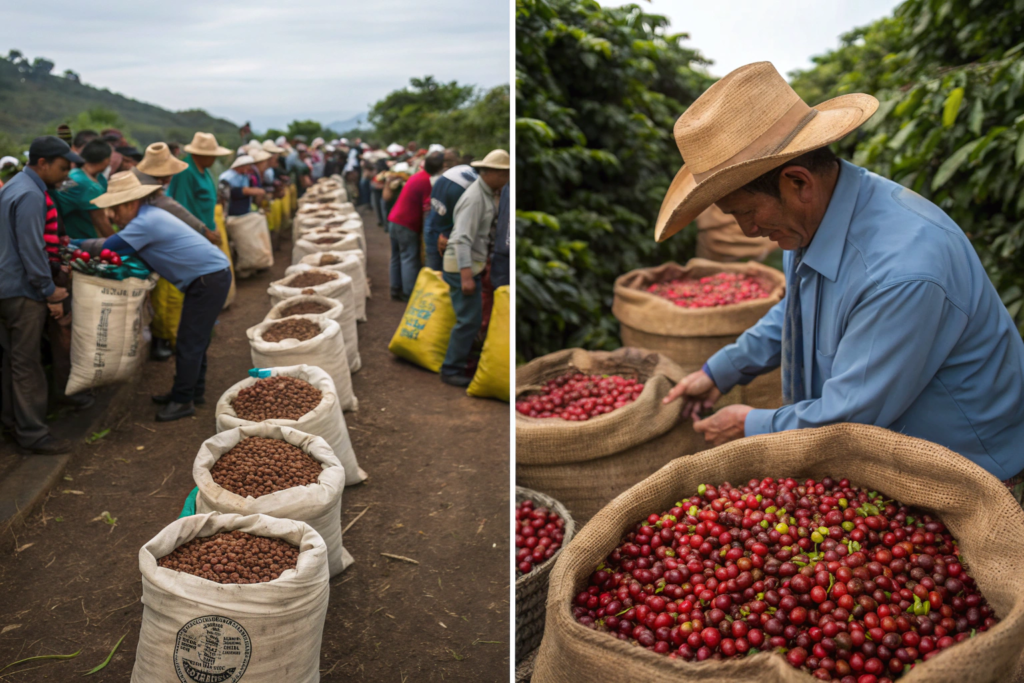
In a traditional supply chain, a coffee mill might buy cherries from hundreds of different smallholder farmers. The quality of those cherries can vary dramatically—some might be perfectly ripe, some under-ripe, some over-ripe. These are all mixed together, and the final quality is simply the average of the inputs. This creates inconsistency from lot to lot.
Vertical integration completely eliminates this problem. Because we own the farms, we have absolute authority over every agricultural decision that impacts quality, long before the coffee ever reaches the processing mill. We are not just buyers of cherries; we are the cultivators. This control at the source is the bedrock of quality. It allows us to standardize practices and make decisions based on quality, not just volume.
How does control at the farm level impact quality?
We control everything:
- Agronomy: We decide which coffee varieties to plant, how to manage soil health through specific fertilization programs, and how to prune the trees for optimal cherry development.
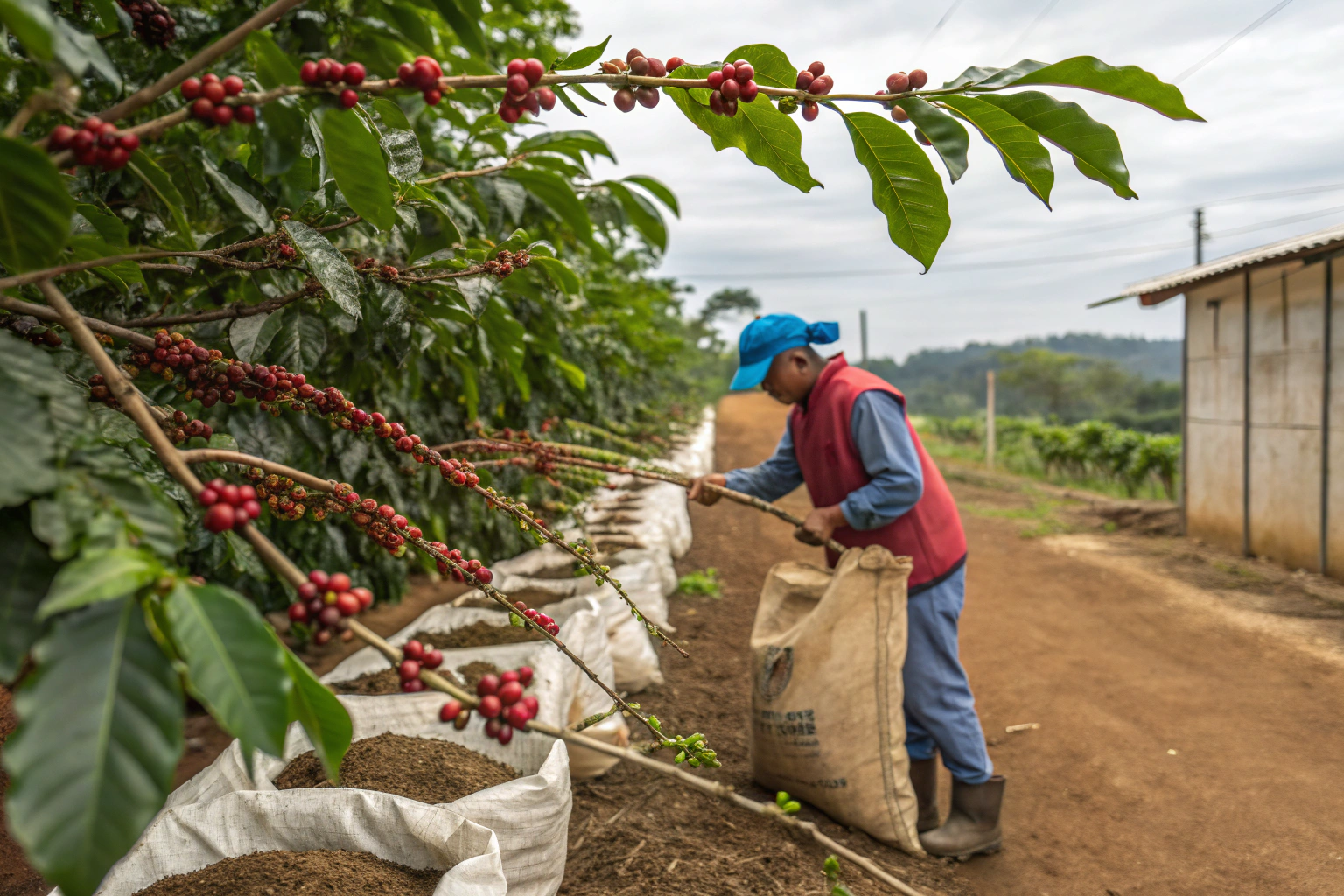
- Harvesting: This is critical. We can implement and enforce strict harvesting protocols, training our dedicated teams to pick only the perfectly ripe, deep-red cherries. We can afford to make multiple passes through the same trees, which is something a farmer selling to a local market often cannot do. This selective harvesting is the single most important step in achieving a sweet, clean cup profile.
- Post-Harvest Processing: The moment a cherry is picked, the clock starts ticking. Because our processing facilities are located on or near our farms, we can move the harvested cherries to the depulping machines or drying beds within hours, not days. This prevents unwanted fermentation and the development of off-flavors, preserving the pristine quality of the fruit.
How does this lead to greater consistency for a buyer?
When you buy a lot of our Washed Catimor in May, and then re-order it in September, you can be confident that it came from the same trees, was picked by the same trained teams, and was processed using the exact same protocols. We can provide this level of consistency because we control all the variables. In a fragmented chain, the coffee in the September shipment might come from a completely different group of farms than the May shipment, even if it has the same regional name. This is why vertical integration is the ultimate tool for creating a reliable, repeatable product for your roastery.
What Does "True Traceability" Mean for Your Brand?
"Traceability" is a popular buzzword in the coffee industry, but it often means very little. In a traditional chain, it might just mean you can trace the coffee back to a specific region or a large cooperative. You have no real insight into the specific farm or the practices used.
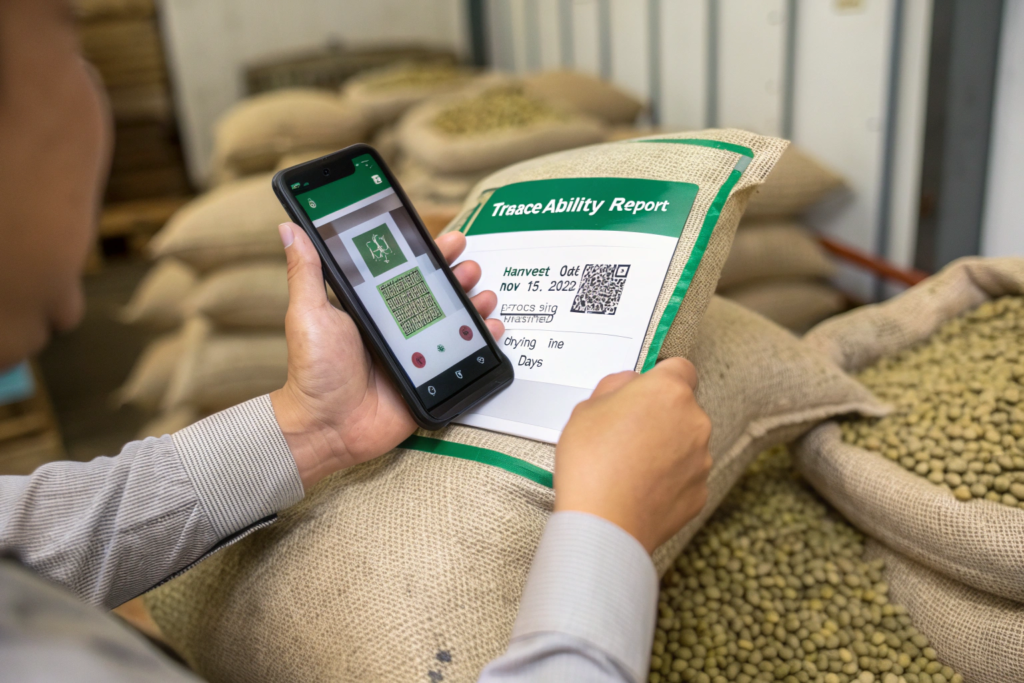
With vertical integration, traceability is not a marketing story; it's a data report. Because we manage every step, we have the data for every step. We can tell you not just the farm, but the specific block of the farm the coffee came from. We can tell you the exact dates it was harvested, the specific fermentation time for that lot, and the moisture content curve during its drying period. This isn't just about satisfying curiosity; it's about providing you with powerful marketing content and a new level of assurance.
How can you leverage this traceability in your marketing?
This level of detail allows you to tell a much more compelling and authentic story to your customers. Instead of a generic "Coffee from China," you can say: "This coffee comes from Block 7B of the 'Mountain View' farm in Baoshan, Yunnan, owned by our partners at Shanghai Fumao. It was harvested during the second week of November and processed using a 48-hour anaerobic fermentation to bring out its unique strawberry notes." This kind of specific, verifiable detail builds immense trust and allows you to justify a premium price. It connects your customer directly to the origin.
How does it improve your risk management?
Complete traceability also means complete accountability. In the unlikely event of a quality issue, we don't have to guess where the problem occurred. We can review the data from every single step for that specific lot—from the picking team to the drying patio conditions. This allows us to pinpoint and correct any issues with a level of precision that is impossible in a fragmented system where everyone can blame someone else. For a buyer, this means you are working with a partner who takes full ownership of the product.
How Does Vertical Integration Lead to Greater Efficiency and Cost Control?
Every time coffee changes hands in a traditional supply chain, a middleman adds their margin. The farmer sells to a local collector, who sells to a mill, who sells to an exporter, who sells to an importer, who finally sells to you. That's at least four different companies adding their markup before the coffee even reaches your roastery.
Vertical integration collapses this entire chain. By acting as the farmer, the mill, and the exporter all in one, we eliminate these multiple layers of intermediary costs. While we still have our own operational costs and need to make a profit, the overall structure is far more efficient. A significant portion of the savings from this efficiency can be passed on to you, the buyer. This means you can often get a higher-quality, fully traceable coffee for a price that is competitive with a lower-quality, less traceable coffee from a fragmented supply chain.

How does it improve communication and speed?
Think of the communication chain. In a traditional model, if you have a question about the coffee, your question has to travel up through four or five different companies to get an answer. The process is slow, and the information often gets distorted along the way. In our vertically integrated model, you speak directly to us. We are the source. You can get a clear, accurate answer about farming practices or processing details in a single email or phone call. This efficiency saves you time and frustration.
Does this mean it's always cheaper?
Not necessarily on the surface, but it almost always provides better value. A vertically integrated coffee might have the same price per pound as a coffee from a traditional chain. However, the integrated coffee comes with guaranteed consistency, complete traceability, and a direct line of communication. You are getting a de-risked, higher-assurance product for the same price. The "total cost of ownership," when you factor in the reduced risk of quality issues and the marketing value of the story, is often significantly lower.
How Does It Foster Innovation and Better Partnerships?
One of the most exciting benefits of vertical integration is the potential for true collaboration and innovation. In a fragmented chain, a roaster's feedback rarely makes it back to the actual farmer who grew the coffee. The communication channel is simply too long and broken.
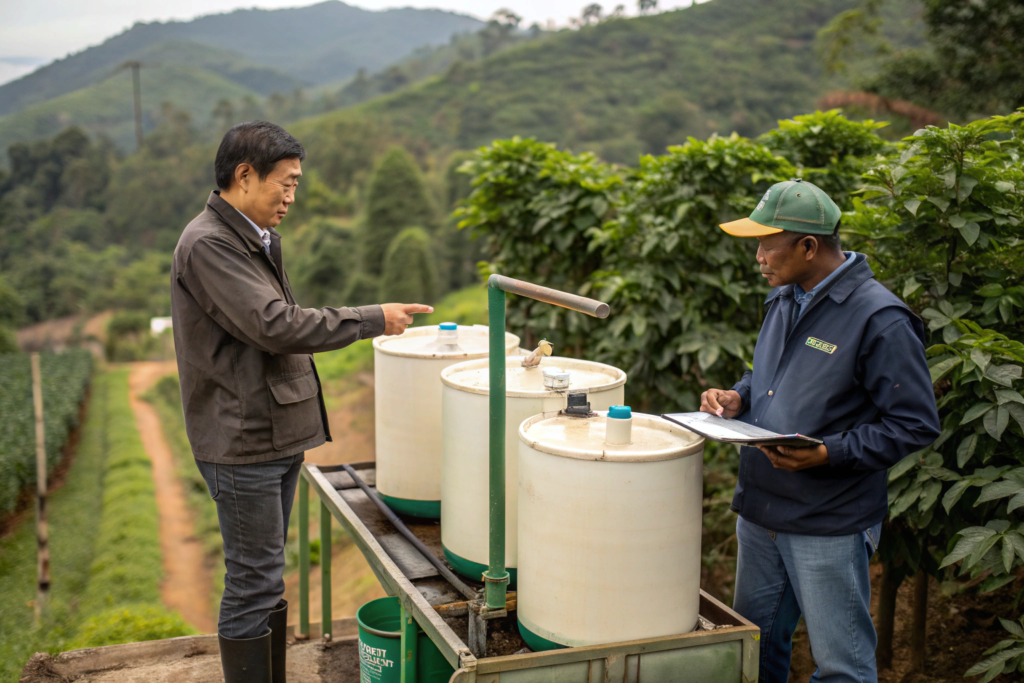
Because you are speaking directly to the entity that controls the farm, you can have a real impact on the product itself. You can work with us to create custom-tailored lots of coffee. This transforms the buyer-seller relationship from a simple transaction into a dynamic, creative partnership.
How can a buyer participate in product development?
Imagine being able to tell your supplier: "I love your washed coffee, but my market is really excited about anaerobic fermentation right now. Would it be possible for you to process one 10-bag lot from your best plot using a 96-hour anaerobic method for me next harvest?" With a vertically integrated partner like Shanghai Fumao, this is not a fantasy; it's a real conversation we can have. We have the control and the expertise to experiment with processing methods based on our partners' needs.
How does this build a stronger, more resilient business relationship?
When you co-create a product with your supplier, the relationship deepens. You become invested in each other's success. You are no longer just a name on a purchase order; you are a valued partner who is helping to drive innovation. This leads to greater loyalty, better communication, and a shared sense of purpose. It creates a powerful competitive advantage, as you can develop unique products for your market that your competitors, who are stuck in the traditional supply chain, simply cannot access.
Conclusion
Vertical integration is more than just a business school buzzword; it's a fundamental solution to the most persistent problems in the coffee supply chain. It replaces opacity with transparency, inconsistency with reliability, and fragmentation with accountability. For a buyer, partnering with a vertically integrated producer means gaining unprecedented control over your product's quality, unlocking a powerful and authentic story for your brand, and achieving greater efficiency. It means transforming your supplier from a simple vendor into a strategic partner who is invested in your success from the ground up.
We built our business on this model because we believe it's the best way to deliver on the promise of exceptional coffee. If you are tired of the risks and frustrations of a fragmented supply chain and are ready to experience the benefits of a true farm-to-container partnership, we invite you to connect with us. Contact our coffee specialist at cathy@beanofcoffee.com.