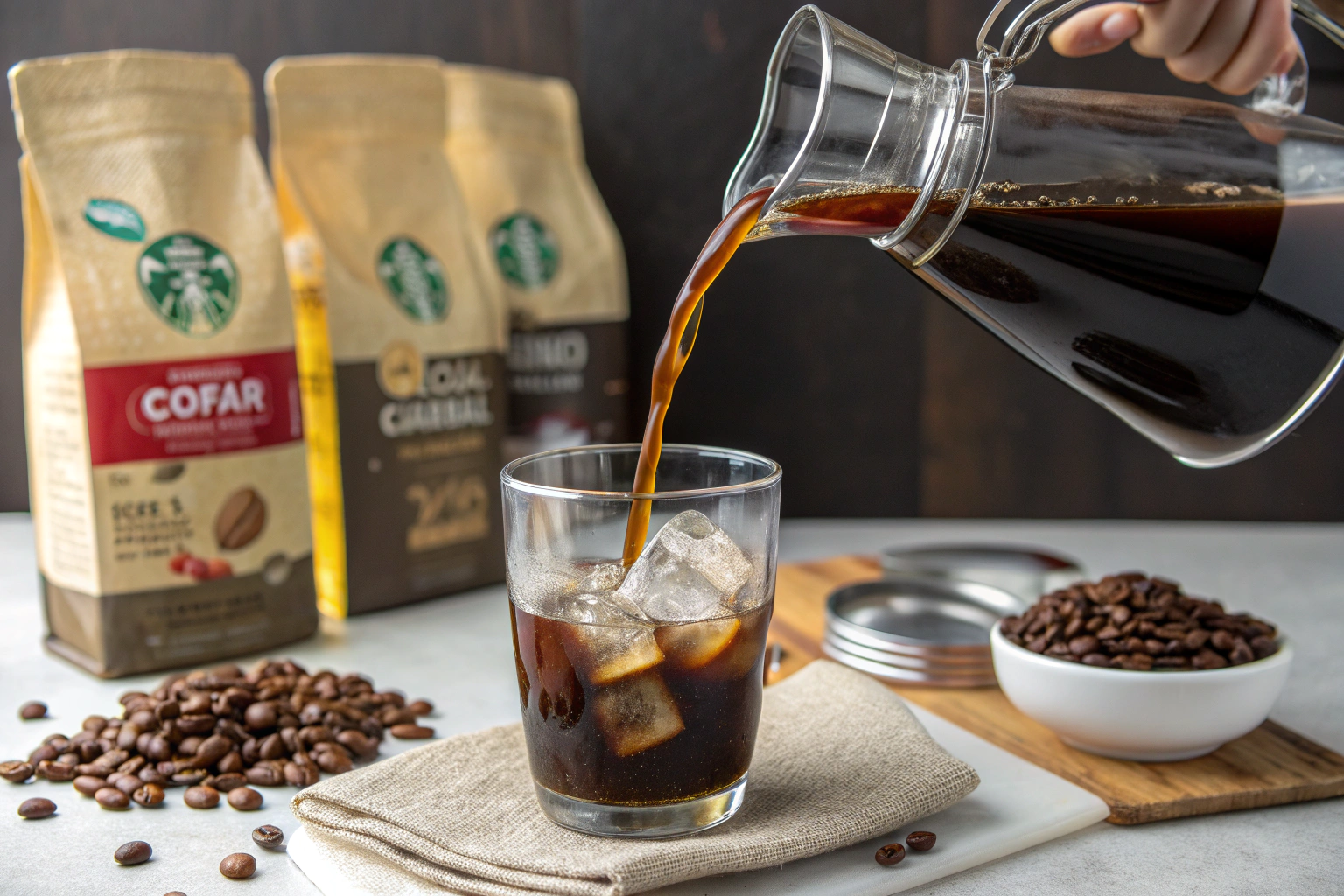
You're planning your summer menu and cold brew is at the top of the list. But when you take your flagship single-origin Ethiopian, steep it for 18 hours, and serve it over ice, something falls flat. The bright, floral notes that shone in a hot brew have vanished, leaving behind a thin, muted drink. You're wasting expensive coffee. For a business owner, choosing the wrong bean for cold brew isn't just a taste misstep—it's a direct hit to your profit margin. The cold brew process demands a specific kind of coffee, one that can stand up to and be enhanced by long, cold extraction.
So, what are the best coffee varieties for cold brew? The answer prioritizes body, sweetness, and chocolatey/nutty flavor notes over delicate acidity and florals. Varieties like Brazil Santos, Sumatra Mandheling, and certain Yunnan Catimor lots excel because their inherent characteristics are amplified by cold brewing. At Bean of Coffee, we analyze our Yunnan Arabica, Catimor, and Robusta not just for hot coffee, but for how they perform in this growing, high-margin category. The "best" variety is the one that delivers the sensory experience customers expect from cold brew, reliably and cost-effectively.
Let's explore the science of cold extraction and identify the varieties and processing methods that create a rich, smooth, and profitable cold brew.
How does cold brew extraction differ from hot brewing?
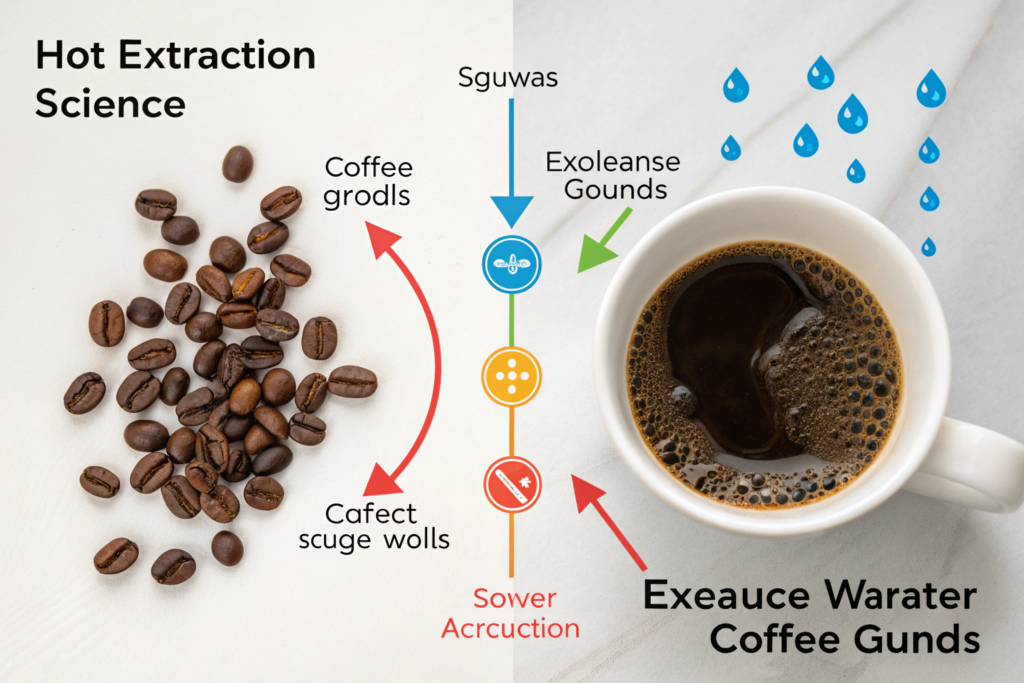
This is the fundamental question. Hot water (195-205°F) is an aggressive solvent. It quickly extracts a wide range of compounds: bright acids, delicate aromatics, sugars, and bitter oils. Cold water is a much gentler, more selective solvent.
The long steeping time (12-24 hours) allows cold water to slowly pull out sugars and soluble solids that contribute to sweetness and body, while largely leaving behind the harsh acidic compounds and bitter oils that dissolve more readily at high temperatures. This is why cold brew is naturally less acidic and smoother. However, it also means the subtle, volatile acids that define a delicate Ethiopian or Kenyan are often lost. You need a coffee whose best qualities are not those fragile top notes.
What chemical compounds are highlighted in cold brew?
Cold brewing favors the extraction of certain compounds:
- Sucrose and Polysaccharides: These contribute directly to sweetness and a full, syrupy mouthfeel (body).
- Certain Caffeine and Chlorogenic Acid Derivatives: The extraction is different, often resulting in a perceived "smoother" caffeine experience and lower perceived acidity.
- Maillard Reaction Products: These are the compounds developed during roasting that give flavors of chocolate, nuts, caramel, and toast.
Conversely, it under-extracts:
- Citric, Malic, and Tartaric Acids: The source of fruity brightness in hot coffee.
- Some Volatile Aromatic Compounds: The delicate floral and tea-like notes that can make a hot coffee spectacular.
Therefore, you want a coffee that is already rich in the first group of compounds before brewing.
Why is roast profile more critical than origin for cold brew?
While origin sets the potential, the roast determines what you can extract. For cold brew, you generally want a medium to medium-dark roast.
- Light Roasts: Retain more origin acidity and delicate notes, which are wasted in cold brew. They can result in a sour, tea-like, and under-developed cold brew.
- Medium-Dark Roasts: Develop more of the Maillard reaction products (chocolate, nut, caramel) and reduce acidic sharpness. The sugars are caramelized, making them more soluble and accessible to the cold water, yielding a sweeter, fuller cup.
This is why a medium-dark Brazilian or Sumatran often outperforms a light-roasted Ethiopian for cold brew. The roast profile aligns with the extraction method.
What are the top coffee varieties and origins for cold brew?
Given the extraction science, we can identify varieties and origins that are genetically and environmentally predisposed to produce beans with the right structure: low acidity, high body, and inherent chocolate/nut notes.
Think "foundational" coffees rather than "highlight" coffees. These are often the workhorses of espresso blends, and for good reason—they provide the backbone.
Why are Brazilian and Sumatran coffees so popular?
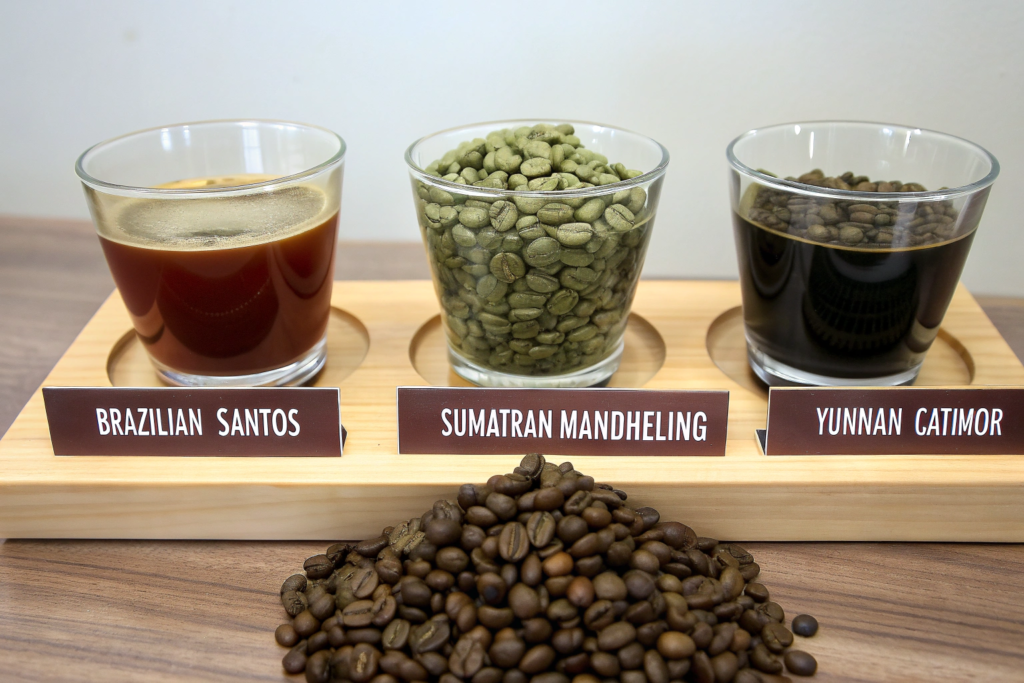
- Brazilian Santos (often Bourbon or Mundo Novo variety): This is the classic cold brew choice. Grown at lower altitudes, Brazilian beans are naturally lower in acidity. They have a inherent nutty, chocolatey profile with a heavy body. They are also typically the most cost-effective, which is crucial for a product that uses a high coffee-to-water ratio. They provide a consistent, crowd-pleasing base.
- Sumatran Mandheling (Typica or local varieties): Processed using the unique "wet-hulled" (Giling Basah) method, Sumatrans are famous for their earthy, herbal, and spicy notes (like cedar, tobacco, dark chocolate) and incredibly heavy, syrupy body. These bold, low-acid flavors translate powerfully into cold brew, creating a complex, robust profile. They can be divisive hot, but are often loved in cold brew.
Can Yunnan coffees make great cold brew?
Absolutely, and this is a growing opportunity. Our Yunnan Catimor is a standout for cold brew applications.
- Catimor Varietal: This hybrid is known for its disease resistance and often produces a cup with good body, lower acidity, and notes of dark chocolate, spice, and sometimes nutty or tobacco-like flavors. When roasted to a full medium or medium-dark, these characteristics are perfect for cold brew.
- Yunnan Arabica: Certain lots, especially those from lower altitudes within the region, can develop a malty, cocoa-like profile with a rounded body when roasted appropriately. They offer a unique origin story compared to the traditional South American options.
We at Bean of Coffee specifically select and roast lots from our farms to optimize them for cold brew extraction, ensuring a flavorful and cost-effective product for our clients.
How should you process and roast coffee for cold brew?
Choosing the right origin and variety is only half the battle. How you process and roast those beans will make or break your final product. The goal is to maximize sweetness and minimize distracting acidity at every stage.
Processing refers to how the coffee cherry is removed from the bean after harvest. This has a profound impact on flavor long before roasting begins.
Is natural or washed processing better for cold brew?
This depends on the flavor profile you want.
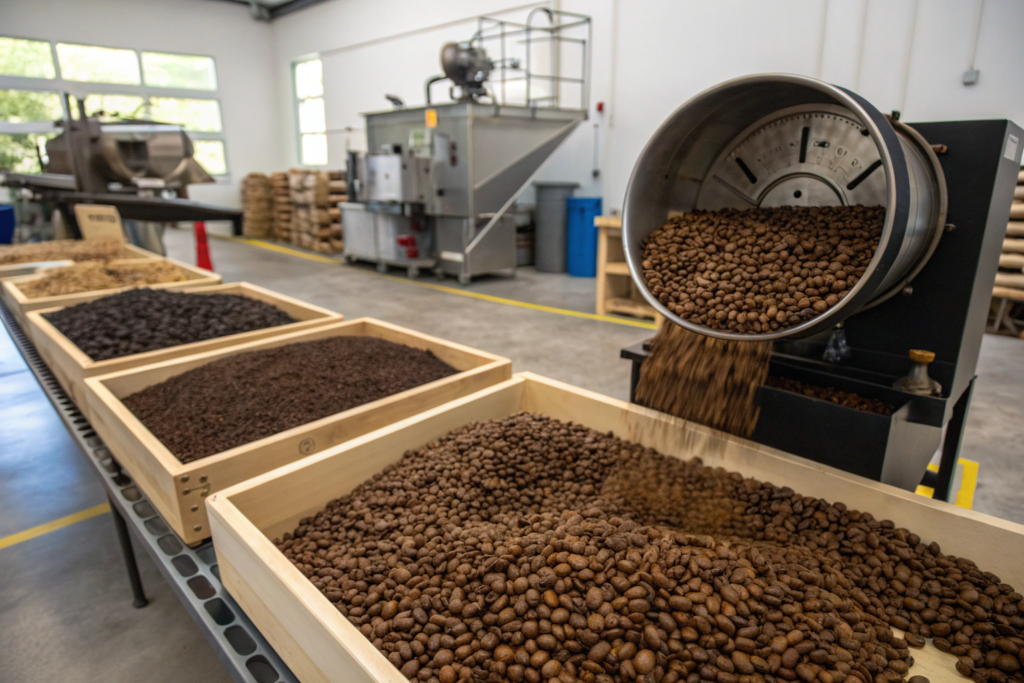
- Natural (Dry) Processed: Beans are dried inside the whole fruit. This imparts intense fruit-forward sweetness, berry notes, and a heavier body. For cold brew, a natural Brazilian or Ethiopian can add a wonderful jammy, sweet dimension that stands up well. It can be a great choice for a more complex, fruity cold brew.
- Washed (Wet) Processed: The fruit is removed before drying, resulting in a "cleaner" cup that highlights the bean's inherent characteristics (acidity, clarity). For cold brew, a washed Sumatran or Colombian will emphasize chocolate, nut, and herbal notes without fruity interference.
Many blenders use a mix. For example, a base of washed Brazilian for chocolate/nut body, blended with a smaller percentage of natural Ethiopian for a hint of berry sweetness. The National Coffee Association USA has resources on processing methods that influence these choices.
What is the ideal roast profile for cold brew?
Aim for a fully developed medium to medium-dark roast. Key markers:
- Color: Visibly darker than a city roast, with some surface oil visible post-rest (especially for medium-dark).
- Development Time: Ensure a sufficient development time after first crack (e.g., 20-30% of total roast time) to fully develop sugars and reduce grassy, acidic notes.
- Goal: The beans should smell deeply of chocolate, caramel, or toasted nuts—not of grass, bread, or sharp fruit. A slightly longer roast helps ensure those harsh acids are broken down, leaving behind the compounds that cold water can best extract.
What are the practical business considerations?
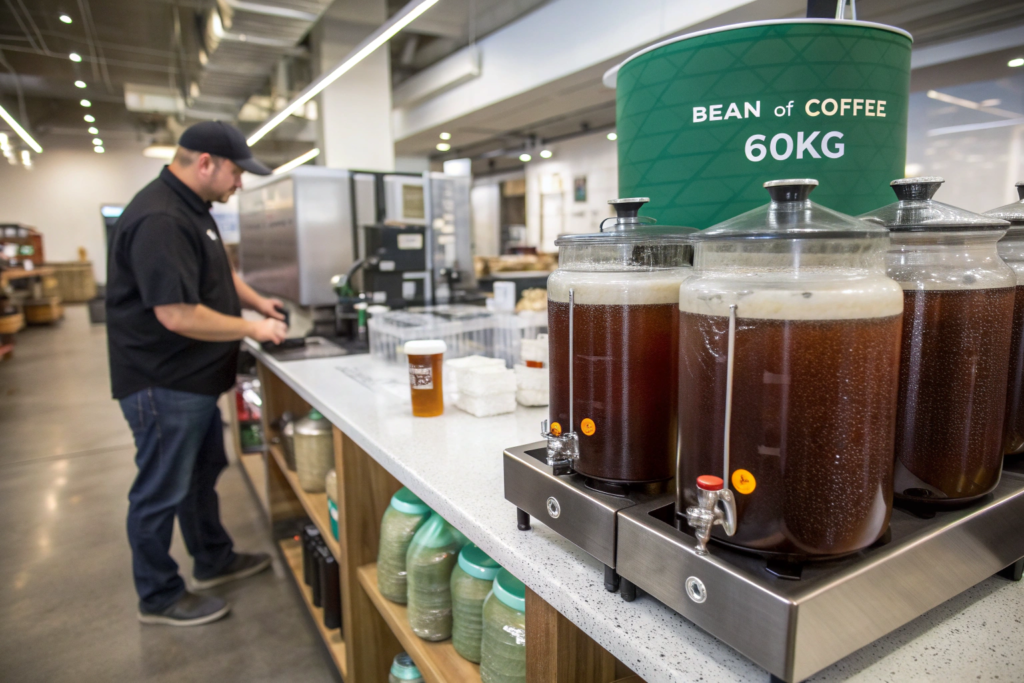
Choosing a coffee isn't just about taste; it's about economics, consistency, and scale. Cold brew is a high-volume product. The cost of goods sold (COGS) is critical.
You need a bean that is not only delicious but also available in large volumes year-round, at a stable price. This is why Brazilian coffees dominate—they are the world's largest producer, ensuring supply and price stability.
Should you use single-origin or blends for cold brew?
For most cafes and brands, a blend is the most practical and consistent choice.
- Consistency: Blending allows you to maintain a uniform flavor profile year-round, even as individual crop lots change.
- Cost Control: You can use a high percentage of a cost-effective base (like Brazilian) and smaller percentages of more expensive coffees to add complexity (like a natural process or a Sumatran).
- Tailored Flavor: You can engineer the exact balance of chocolate, nut, sweetness, and body you want.
A single-origin can be a great limited-time offering or signature drink, but for a core menu item, a well-designed blend is king.
How do you calculate the best value (cost vs. flavor)?
This is a key calculation. Use a simple formula:
(Flavor Score) / (Price per Pound) = Value Index
A Brazilian might have a "Flavor Score" of 8/10 for cold brew at $3/lb. A more exotic lot might score 9/10 but cost $6/lb.
- Brazilian Value Index: 8 / 3 = 2.67
- Exotic Lot Value Index: 9 / 6 = 1.5
The Brazilian offers better value for the cold brew application, where subtle complexities are muted. This analytical approach prevents you from overspending on attributes the brewing method won't highlight.
Conclusion
The best coffee varieties for cold brew are those that naturally excel in body, sweetness, and chocolatey/nutty flavors—traits that are highlighted, not hidden, by the cold, slow extraction process. Brazilian Santos and Sumatran Mandheling are time-tested champions for their reliable profiles and value. Emerging origins like Yunnan, particularly the Catimor variety, offer a compelling and cost-effective alternative with similar structural benefits.
To optimize any variety for cold brew, pair it with a processing method that enhances sweetness or clarity, and roast it to a full medium or medium-dark level to develop the necessary sugars and reduce acidity. For business success, prioritize consistent, scalable blends that deliver great flavor at a responsible cost-per-cup.
Ready to craft a standout cold brew? Start with the right bean. At Bean of Coffee, we can provide samples of our Yunnan Catimor and selected Arabica lots roasted specifically for cold brew extraction. Discover how our beans can become the profitable, flavorful foundation of your cold brew program. Contact our export manager, Cathy Cai, at cathy@beanofcoffee.com to discuss your needs and request cold brew-specific samples.