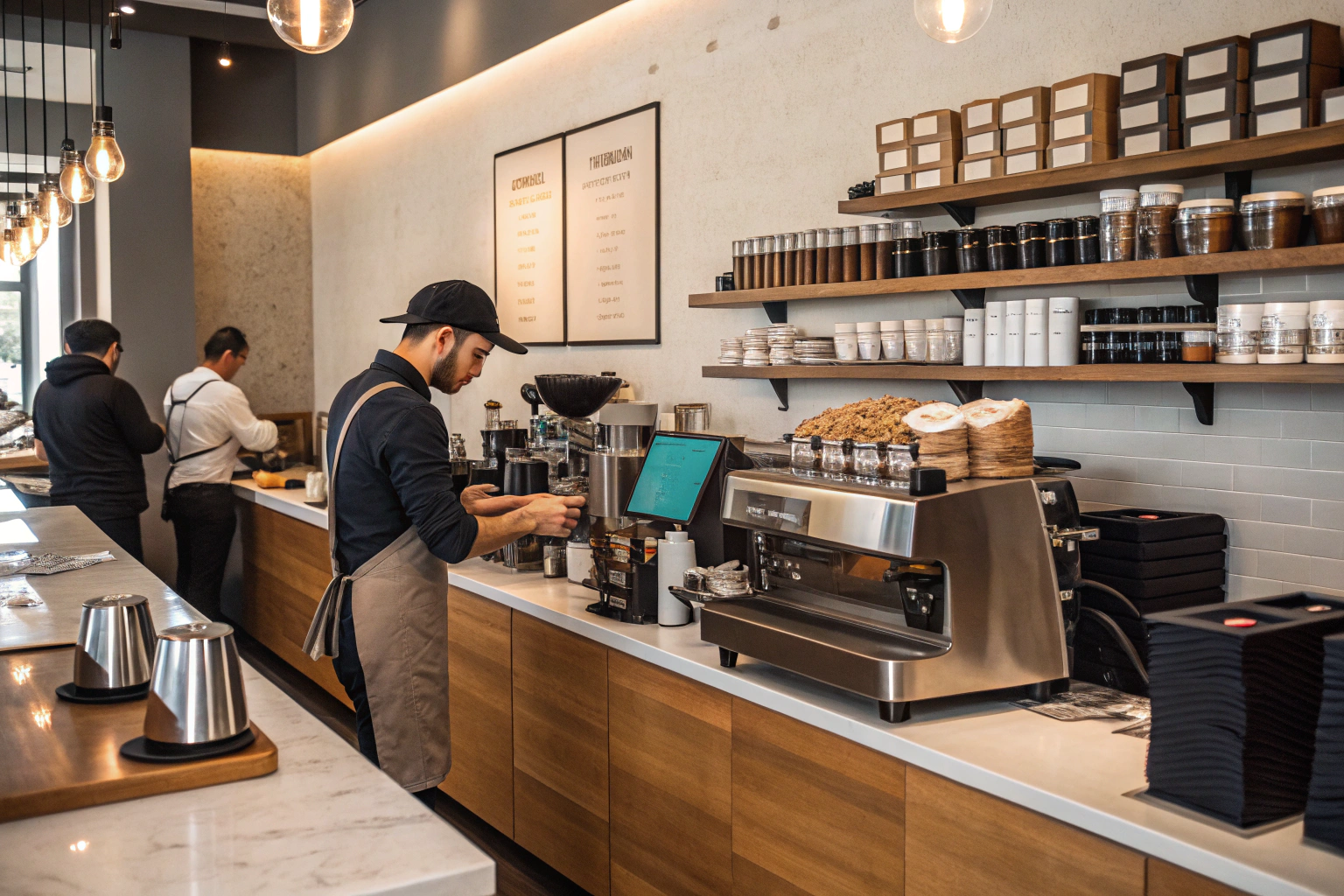
You're living the dream. You're surrounded by the aroma of great coffee, and you're the master of your own domain. But behind the romantic facade lies a relentless operational reality. You're dealing with inventory management, staff scheduling, equipment maintenance, and a line of customers who all want their perfect coffee right now. The pain point is the constant feeling of being pulled in a million directions at once. You're so busy putting out small fires—a broken grinder, a new barista making mistakes, running out of oat milk during the morning rush—that you have no time to think strategically about growing your business. You're trapped in the business, not working on it.
Honestly, the best practice for coffee shop operations is to build a business that can run smoothly without you. This is achieved by creating and implementing standardized systems for the three core pillars of your operation: 1) Workflow and Speed (the 'Bar'), 2) Customer Service and Experience (the 'Floor'), and 3) Inventory and Business Management (the 'Back Office'). By systematizing these areas, you reduce chaos, empower your staff, ensure consistency, and free yourself up to be a business owner, not just the busiest barista.
From my perspective as a supplier at Shanghai Fumao, I see a direct parallel. We can't produce thousands of tons of consistent, high-quality coffee by relying on improvisation. We rely on strict, documented protocols for everything from harvesting to processing to exporting. The same discipline is what separates a struggling cafe from a thriving, scalable one. Let's break down the best practices for each of these three pillars.
How Do You Optimize Workflow for Speed and Quality?
The coffee bar is your production line. Every wasted step, every moment of hesitation, every bit of unnecessary movement costs you time during a busy rush. And in a coffee shop, speed is second only to quality. An efficient workflow doesn't just make you faster; it reduces stress on your baristas and leads to a more consistent product.
The key to an efficient workflow is "economy of motion." You need to design your bar layout and processes to minimize the number of steps a barista has to take to complete an order. Everything they need should be within arm's reach, and the sequence of tasks should flow in a logical, linear fashion.
Think of it like a dance. A well-designed bar allows for a smooth, graceful performance, while a poorly designed one leads to a clumsy, chaotic shuffle.
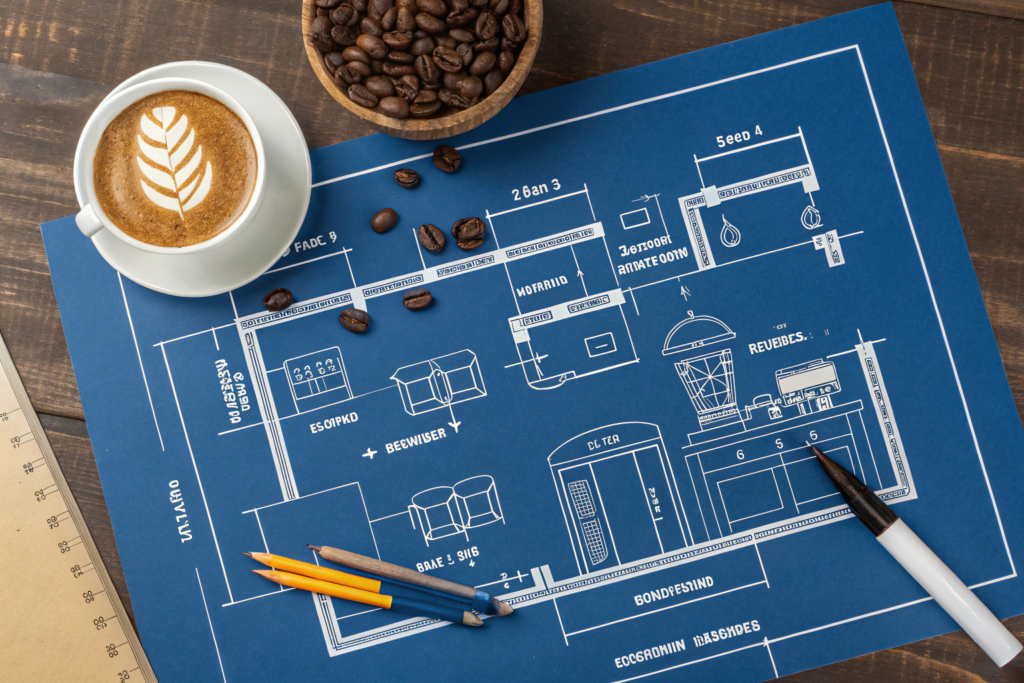
How do you design an ergonomic bar layout?
- The "Golden Triangle": The three most-used pieces of equipment are the espresso grinder, the espresso machine, and the point-of-sale (POS) system where orders come in. These should be as close to each other as possible. A barista should be able to grind, tamp, pull a shot, and take the next order with minimal movement.
- Logical Flow: The bar should be set up to follow the life of a drink. For example: POS -> Grinder -> Espresso Machine -> Milk/Syrup Station -> Lid/Handoff Area. A barista should not have to walk back and forth across the bar to complete a single order.
- "Reach, Don't Run": Store your most-used items (cups, lids, popular milk types, cleaning cloths) within immediate reach of the main workstation. Less-used items can be stored further away. Every time a barista has to bend down or walk to a back fridge for a carton of oat milk, you're losing precious seconds.
How do you standardize your drink-making process?
- Recipe Bible: Every single drink on your menu should have a clear, written recipe that is posted or easily accessible. This includes the exact dose of coffee, volume of milk, number of syrup pumps, and the correct preparation method. This is non-negotiable for consistency. A "large latte" should be the same no matter which barista is on shift.
- "Always" and "Never" Rules: Establish simple, unbreakable rules for quality control. For example: "Always purge the grinder before the first shot of the day." "Always wipe the steam wand immediately after use." "Never use a shot that has been sitting for more than 10 seconds." These simple rules prevent common mistakes and maintain a high standard of quality and cleanliness. Using high-quality, consistent beans from a reliable supplier like Shanghai Fumao is the first step, but these protocols are what ensure that quality makes it into the cup.
How Do You Systematize the Customer Experience?
Your coffee can be perfect, but if a customer has a negative interaction with your staff or feels unwelcome in your space, they will not come back. The customer experience is just as much a part of your product as the coffee itself. The challenge is that "good service" can be subjective. The solution is to systematize it.
You need to clearly define what "good service" looks like in your cafe and then train your staff on specific, actionable behaviors. It's about creating a consistent, positive, and welcoming environment for every single person who walks through your door. This means moving from "just be friendly" to defining the specific steps of a friendly interaction.

How do you script the key customer interactions?
"Scripting" doesn't mean your staff should sound like robots. It means giving them a playbook for common situations so they don't have to improvise.
- The Greeting: What is the standard greeting? Is it a simple "Hello, welcome in!"? Is it "Good morning, what can I get started for you?" Everyone on staff should greet customers within a few seconds of them entering.
- The Order: Train staff to make eye contact and actively listen. Teach them to ask clarifying questions ("Did you want that hot or iced?") to prevent mistakes. Empower them to make recommendations ("If you like chocolatey notes, you should try our new single origin from Yunnan.").
- The "Hand-Off": This is the last point of contact and is crucial. The barista should call out the drink clearly and loudly, make eye contact with the customer, and say "Thank you, enjoy your day!" A warm hand-off makes the customer feel valued, not just processed.
How do you handle problems and complaints gracefully?
Problems will happen. A drink will be made wrong, an order will be forgotten. A system for handling these issues prevents a small mistake from turning into a negative online review.
- The L.A.T.T.E. Method: This is a popular customer service recovery model. Listen to the customer's complaint without interrupting. Apologize for the mistake. Take action to solve the problem immediately (e.g., remake the drink). Thank the customer for bringing it to your attention. Ensure satisfaction, perhaps by offering a voucher for a free pastry on their next visit.
- Empowerment: Give your staff the authority to solve problems on the spot without needing to get a manager. Empower your lead barista to remake a drink or give a refund, no questions asked. This shows the customer that you trust your staff and that you prioritize their satisfaction.
How Do You Manage the "Back Office" with Precision?
This is the part of the business that customers never see, but it's the engine that keeps everything running. Poor back-office management is where profits leak away. Running out of key supplies loses you sales, while over-ordering ties up cash in dead stock. Precision and data are your best friends here.
You must implement a robust system for tracking inventory, managing costs, and scheduling staff. Stop managing your business based on "gut feelings" and start using data to make informed decisions. A simple spreadsheet can be the most profitable tool in your entire cafe.

What is the "Par Level" system for inventory?
This is the simplest and most effective inventory system for a cafe.
- For every single item you stock (from bags of coffee to sleeves of cups to bottles of vanilla syrup), you determine a "par level." This is the ideal amount of that item you should have on hand at the start of a busy day.
- At the end of each day or every other day, a designated person does a quick count of these key items.
- You then order just enough to get you back up to your par level.
- This system prevents both stock-outs and over-ordering. It's simple, visual, and can be taught to any staff member. You should have a clear list of suppliers for each item, like having Shanghai Fumao as your designated primary supplier for your house espresso beans.
How do you use data to optimize your schedule and menu?
- Labor as a Percentage of Sales: Your Point of Sale (POS) system is a data goldmine. Most modern systems can tell you your sales by the hour. You should be scheduling your staff based on this data. Your labor cost should ideally be a consistent percentage of your sales (e.g., 25-30%). If you are fully staffed at 2 PM on a Tuesday when your sales are very low, you are losing money.
- Menu Performance Analysis: Your POS can also tell you which items are your bestsellers and which ones don't sell at all. Once a quarter, review this data. If you have a specialty drink on the menu that only sells twice a week, it's probably not worth the inventory and training cost to keep it. Use this data to prune your menu and focus on what your customers actually want. This is a key practice for cost control.
How Do You Build and Empower a Winning Team?
You can have the best systems in the world, but they are useless without a great team to execute them. Your staff are not just employees; they are the living embodiment of your brand. Investing in their training, well-being, and professional growth is the single highest-return investment you can make in your business.
The best practice is to create a culture of ownership and excellence. This means hiring for attitude, training for skill, providing clear expectations, and trusting your team to do their jobs well. A great team is not managed with fear; it is led with respect.

How do you create an effective training program?
- Don't "Trial by Fire": Never throw a new barista onto the bar during a busy rush. Your training program should be structured. It should start with the "why" (your brand's mission), move to the basics (the menu, the POS), and only then move to hands-on coffee making in a low-pressure environment.
- Shadowing and Mentorship: Pair new hires with your best, most experienced barista. Have them shadow for several shifts before they are allowed to work solo. This mentorship model is incredibly effective for transferring skills and culture.
- Ongoing Education: Great staff are curious. Hold regular "cuppings" to taste new coffees together. Bring in guest trainers. Provide resources for them to learn more about the industry. A knowledgeable barista is a more passionate and effective salesperson.
How do you retain your best people?
- Pay a Competitive Wage: This is the baseline. You cannot expect to retain top talent if you are paying minimum wage. Research what other high-end cafes in your area are paying and aim to be at or above that level.
- Provide a Path for Growth: Not everyone wants to be a barista forever. Create a simple career ladder. A new hire starts as a "Trainee," moves to "Barista," then could become a "Shift Lead," an "Assistant Manager," or a "Head of Coffee." This shows them that there is a future for them in your company.
- Recognition and Respect: The simplest things often matter most. Say "thank you" at the end of a long shift. Publicly praise a team member who went above and beyond for a customer. Create a positive, respectful work environment where people feel valued. This is the "glue" that holds a great team together.
Conclusion
Running a successful coffee shop is a complex balancing act, but it doesn't have to be chaotic. By implementing clear, standardized systems for your workflow, your customer service, your back-office management, and your team development, you can transform your business. These best practices create a foundation of consistency and efficiency that reduces stress, improves profitability, and delights customers. Most importantly, they empower you to step back from the day-to-day grind and focus on what you do best: leading your business and sharing your passion for great coffee with the world.
As your supplier, we understand that our role is to be the most reliable and consistent part of your operation. We deliver exceptional coffee, on time, every time, so you can focus on the thousand other details of running your business. If you're looking for a foundational partner who understands the operational realities of a coffee shop, we're here for you. Contact our coffee specialist at cathy@beanofcoffee.com.