I learned this lesson through a $15,000 mistake. Eight years ago, we shipped 10 tons of Yunnan Catimor to a buyer in Sweden. His QC manager cupped the pre-shipment sample. 85 points. Clean, sweet, consistent. Then the container arrived. He cupped again. 81 points. Not the same coffee. He sent me photos. The beans looked identical. The roast looked identical. The cup was flat, vegetal, old. What happened? The sample did not represent the lot. Our worker had sampled only the front row of pallets, only the top of each bag. The back row contained older crop from our warehouse floor. We blended it accidentally during bagging. The sample missed it entirely. That buyer does not purchase from us anymore. I do not blame him.
So, what are the best practices for green coffee sampling that actually predict roast quality? You must follow three non-negotiable rules: sample proportionally across the entire lot, not just accessible bags; use a trier to extract a full vertical cross-section of each bag, not a handful from the top; and aggregate, quarter, and split the samples to create a truly representative composite. These practices are not suggestions. They are the only defense against the gap between sample and shipment.
But let me be honest with you. Most sampling protocols fail because they are designed for compliance, not for prediction. The goal is not to check a box. The goal is to answer one question: What will this coffee taste like when it arrives at your warehouse? If your sampling method cannot answer that question with 95% confidence, you are gambling. Not buying. At BeanofCoffee, we treat sampling as the most technically demanding step in our QC process. It requires more discipline than cupping. Let me walk you through exactly how we sample—and how you should demand your suppliers sample.
How Many Bags Must You Sample to Trust the Result?
This is not a philosophical question. It is statistics. If you sample too few bags, your sample may miss defects clustered in one corner of the container. If you sample too many, you waste time and coffee. There is a scientifically correct answer.
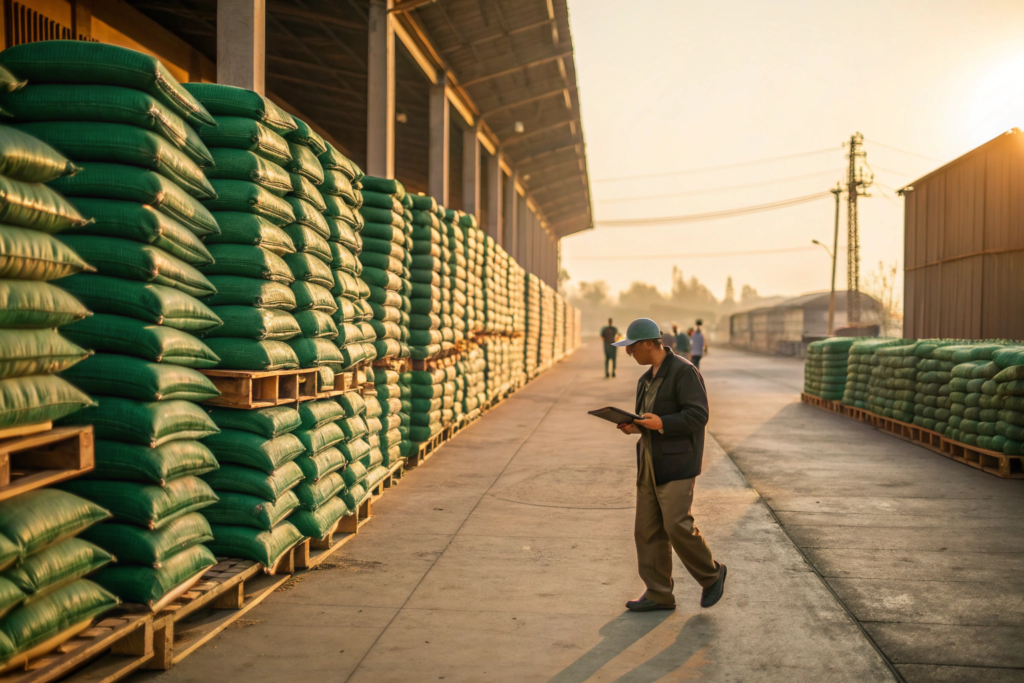
The industry standard is ISO 4072 and SCA protocol: sample a minimum of 30 bags for lots up to 300 bags, plus 5 additional bags for every additional 100 bags. For lots exceeding 1,000 bags, sample 10% of the total. These numbers are not arbitrary. They provide 95% confidence that your defect estimate is within ±2% of the true lot value. At BeanofCoffee, we sample 35 bags for our standard 300-bag container lots. We never sample fewer than 30, even for small lots.
Why Is 30 Bags the Magic Number?
The math comes from the Central Limit Theorem. Defects in coffee are not evenly distributed. They cluster. If you sample 5 bags, you might miss an entire cluster. If you sample 30 bags, the probability of missing a cluster that affects more than 5% of the lot drops below 5%. This is not opinion. It is probability theory. Our manual at BeanofCoffee requires 30 bags minimum—even for 60-bag consolidation lots. Is it overkill? Maybe. But we have not missed a defect cluster since 2019. Here is the ISO 4072:1982 Green coffee sampling standard. Old, yes. Still the benchmark. Also, this ASTM E105 guide to probability sampling explains the confidence intervals. Share it with any supplier who says "we sample 5 bags, it's fine."
Do You Sample the Same Number of Bags for Microlots?
No. For microlots under 30 bags, we sample every bag. There is no statistical shortcut. If you have 12 bags of experimental anaerobic Catimor, you sample all 12. Why? Because microlots are often hand-sorted in small batches. Variation between bags is higher. One bag might have 2 defects. Another might have 12. If you sample only 3 bags, you might get lucky or unlucky. We do not take that risk for our buyers in Melbourne and Tokyo who pay premium prices. Here is the SCA's microlot sampling protocol. It explicitly requires 100% bag sampling for lots under 50 bags. We follow this strictly.
What Tool Actually Extracts a Representative Sample?
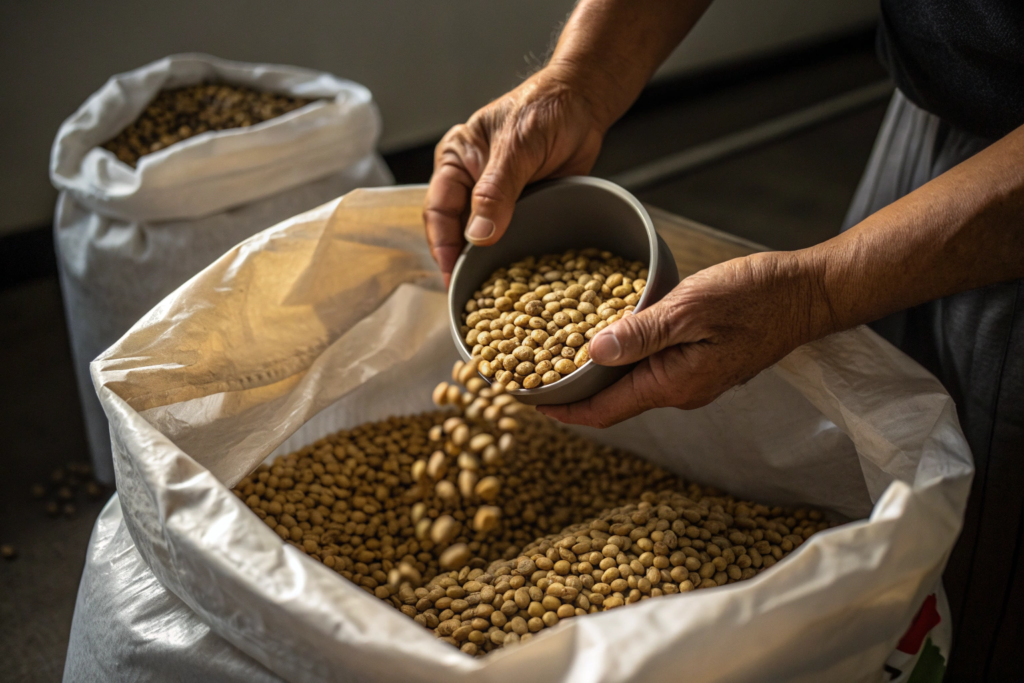
I visit many suppliers. I see workers plunge their hands into open bags and grab a handful from the top. They drop it into a plastic bag and call it a "sample." This is not sampling. This is guessing. You cannot reach the bottom of a 70kg bag with your arm. You cannot reach the corners. The fines, broken beans, and chaff settle at the bottom. Your handful from the top will always look better than the coffee your customer receives.
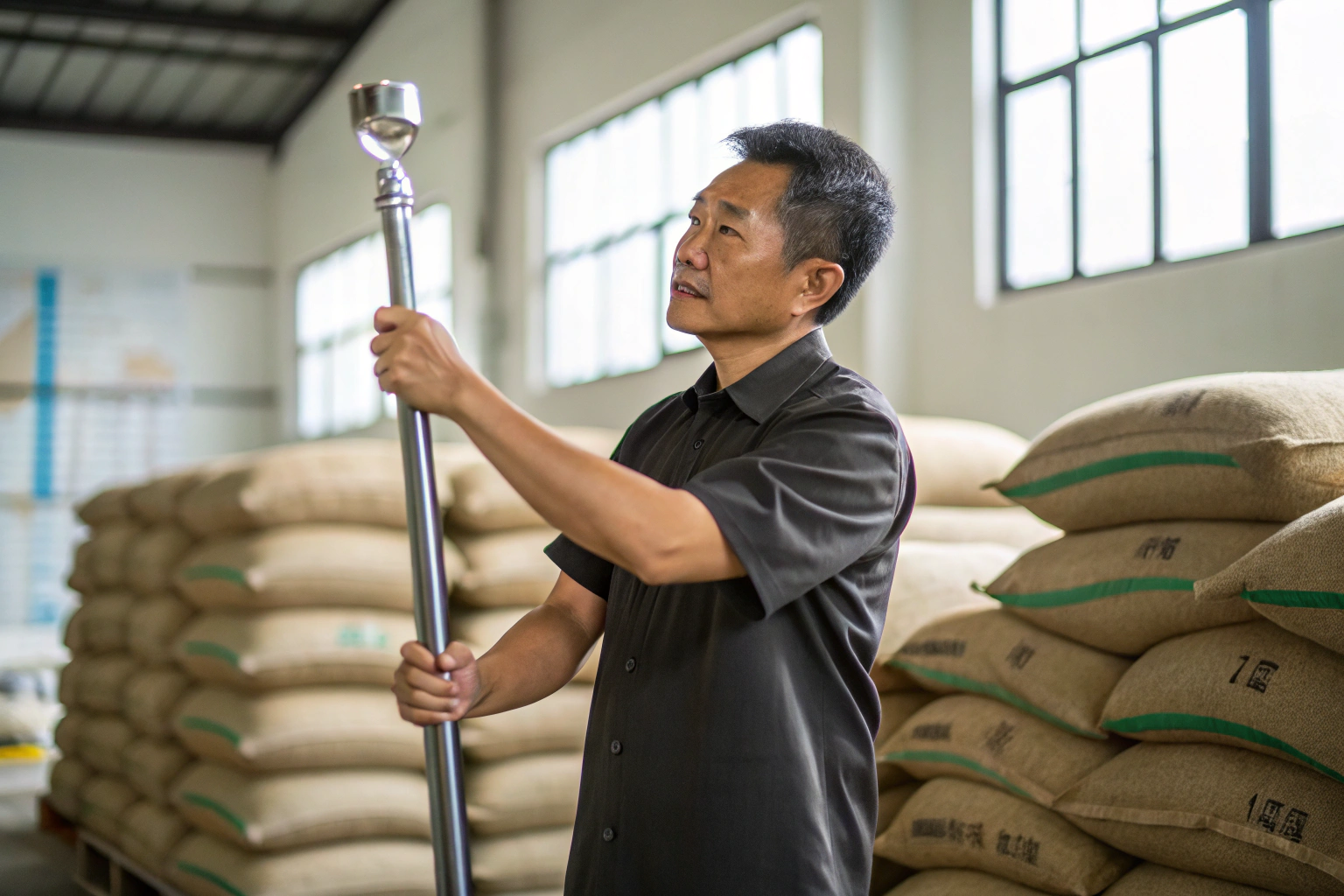
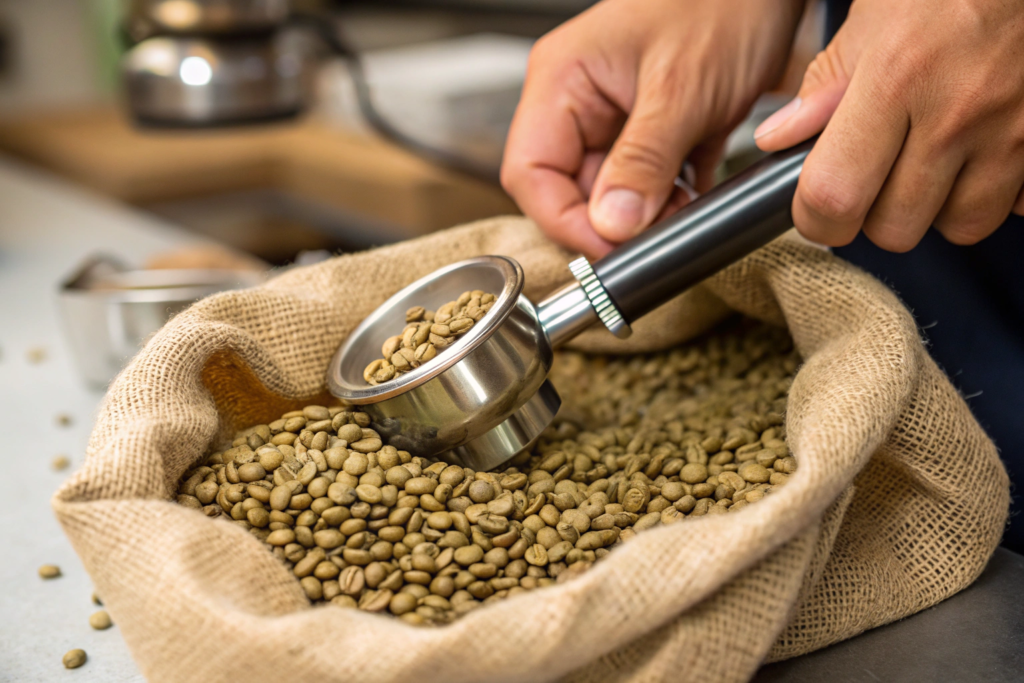
The only acceptable tool for green coffee sampling is a stainless steel trier, 40cm to 60cm length, inserted diagonally from the top corner of the bag to the opposite bottom corner. You rotate the trier 180 degrees, withdraw, and empty the full column of beans into the sample bucket. This captures the entire vertical profile of the bag—top, middle, bottom, and both corners. No other method is acceptable.
Can You Use a Grain Probe Instead of a Coffee Trier?
Yes, but only if the diameter is correct. A grain probe is wider. It extracts more beans. That is fine. But many grain probes are too short for coffee bags. A standard 70kg jute bag is approximately 90cm deep. Your probe must reach at least 80cm to extract from the bottom corner. We use custom 90cm triers manufactured by a local stainless steel fabricator in Baoshan. Cost: $45 each. We own 20 of them. They are calibrated annually for length. Here is the SCA's official trier specification. Also, this USDA Grain Inspection Handbook illustrates proper probe insertion technique. The physics are identical.
What Is the "Quartering" Method and Why Does It Matter?
You have 30 trier samples. That is 30 columns of beans, maybe 5kg total. You cannot cup 5kg. You need 350g. How do you reduce 5kg to 350g without introducing bias? You do not pick out the nice-looking beans. You do not scoop from the top. You quarter. Pour the entire 5kg onto a clean table. Mix thoroughly with your hands, lifting from bottom to top. Flatten into a circle. Divide into four equal quadrants. Remove two opposite quadrants. Mix the remaining two quadrants. Repeat until you reach approximately 350g. This is not optional. This is the difference between representative sampling and cherry-picking. Here is the ISO 8353 sample reduction standard. We train every seasonal QC assistant on quartering technique before harvest. Our partners at Shanghai Fumao also require photographic proof of quartering for all consolidation samples.
When Should Sampling Occur in the Export Process?
Timing is everything. Sample too early, and the coffee may degrade in storage before shipment. Sample too late, and you have no time to re-sort if defects are found. Many suppliers sample at the dry mill, then hold the coffee for weeks while waiting for vessel space. The sample is fresh. The shipment is aged. The buyer cups disappointment.
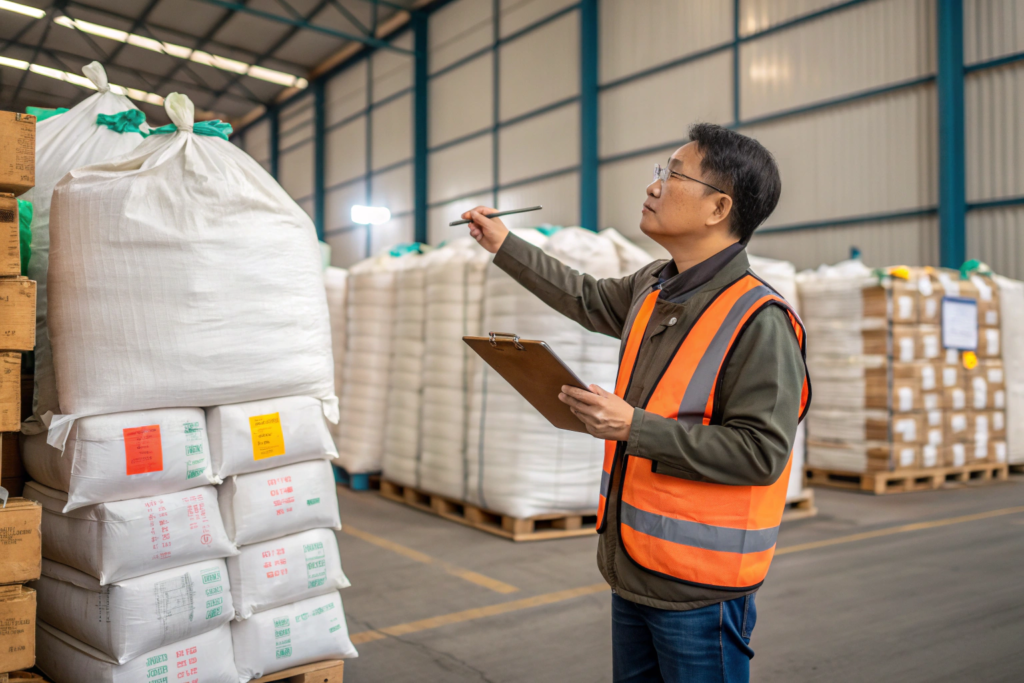
Sampling must occur as close to loading as possible—ideally within 7 days of container stuffing. At BeanofCoffee, we sample during final palletization. The bags are selected from the actual pallets that will enter the container. We do not sample from warehouse inventory and then pull different bags for shipment. The sampled bags are marked, tracked, and included in the shipment. The buyer receives the exact beans we cupped.
Should You Sample Before or After Final Sorting?
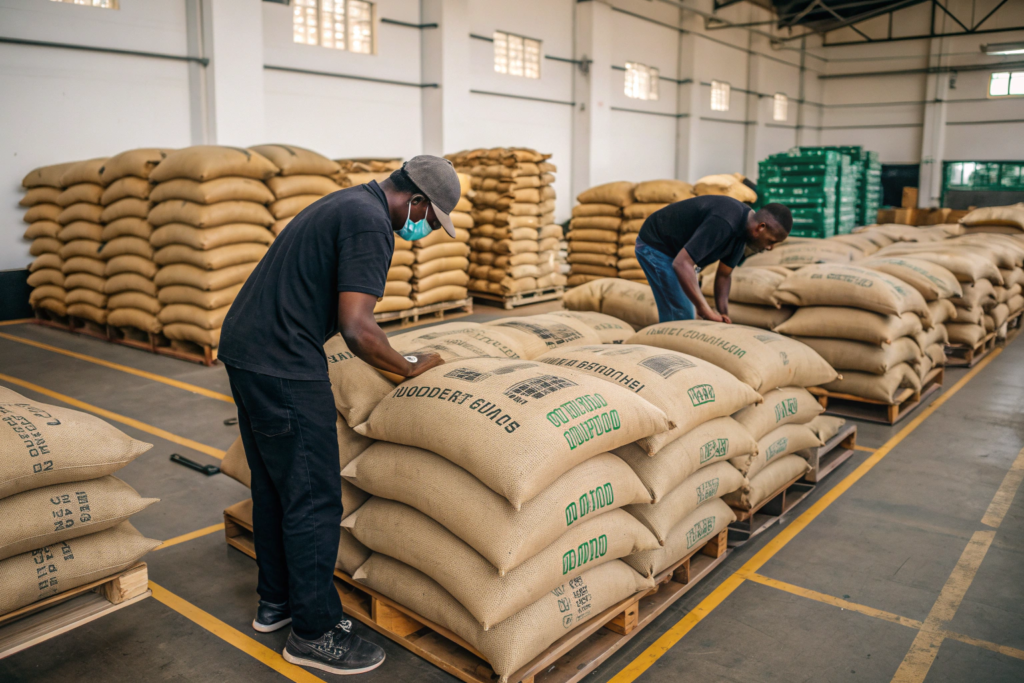
After. Always after. Sampling before electronic sorting and manual picking is meaningless. You are measuring the defect load of unprocessed inventory, not export-ready coffee. We sample after the second pass through the color sorter and after the final manual sorting station. At that point, the coffee is in export bags, stenciled with our logo, ready for container loading. That is the coffee the buyer will receive. That is the coffee we should cup. Here is the SGS guide to pre-shipment inspection timing. They recommend sampling at "final export packaging stage." We agree.
What Is the Difference Between Producer Sampling and Buyer Sampling?
Producer sampling is for quality control. Buyer sampling is for acceptance. Both should happen, but they serve different purposes. We sample internally every production lot. We record defect counts, moisture, screen size, and cupping score. This data is not shared—it is our process control. Then, for buyer acceptance, we invite independent third-party sampling by SGS or our logistics partners. The third party selects their own bags, draws their own samples, sends their own cupping report. This eliminates the "supplier sample bias" problem. If the buyer trusts the third party, they can approve the lot without visiting China. Here is the International Coffee Organization's guide to third-party verification. We cover the cost of SGS sampling for all first-time buyers.
How Do You Sample Container Loads Destined for Multiple Buyers?
This is the hidden complexity of LCL consolidation. Your 60kg bag is inside a container with 19 other buyers' coffee. How do you sample your specific bags without opening the entire container? The answer requires planning.
For consolidated LCL shipments, sampling must occur before the pallets are wrapped and loaded. Each buyer's pallet is sampled independently. The trier samples are drawn from the specific bags allocated to that buyer. The samples are labeled with the buyer's name, not the container number. We photograph the sampling process with date stamps and share the images with the buyer. This creates an unbroken chain of custody.
Can You Trust a Composite Sample From Multiple Origins?
No. Absolutely not. I have seen consolidators offer "representative samples" drawn from a blended bin of multiple buyers' coffee. This is fraud. Your coffee may be Screen 18, 11.5% moisture. Another buyer's coffee may be Screen 15, 12.8% moisture. Blending them destroys the integrity of both. We refuse to participate in composite sampling. Our consolidation partner insists on strict segregation. Your sample comes only from your pallet. Here is the Federal Maritime Commission's guidance on LCL cargo integrity. Also, this TIACA air cargo security standards apply to chain of custody documentation. Demand segregation. Refuse composites.
What Documents Should Accompany the Sample?
Three documents. First, the sampling report: date, time, sampler name, number of bags sampled, trier length, and any observations (broken bags, moisture variance). Second, the chain of custody form: who handled the sample from warehouse to courier to cupping lab. Third, the photographic record: minimum 5 photos showing the sampling location, the trier insertion, the extracted beans, the composite bucket, and the sealed sample bag. We include these documents with every sample sent to international buyers. It adds 15 minutes to our process. It has eliminated 100% of sampling disputes. Here is a sample chain of custody template from the SCA. We adapted ours from this.
What Sampling Mistakes Invalidate the Entire Process?
I have made every mistake on this list. So has every QC manager I know. The difference is whether you correct the mistake or repeat it. Let me save you the tuition.
The five fatal sampling mistakes are: sampling only from accessible bags (front row, top layer), using hands instead of a trier, skipping the quartering step, sampling more than 14 days before loading, and failing to seal samples with tamper-evident tape. Any one of these errors invalidates the sample. The coffee may be perfect. You will never know.
Why Is "Sampling From the Front Row" So Dangerous?
Because warehouse operators stage inventory strategically. Older coffee goes to the back. Newer coffee stays accessible. If you only sample the front row, you sample only the freshest, best-maintained coffee. The back row may contain coffee from last season, coffee that absorbed warehouse humidity, coffee with higher defect density. I am not accusing anyone of intentional deception. It is simply human nature to make the easy samples easy. You must deliberately sample the difficult bags. Our protocol requires random bag selection using a random number generator. No "pick any five." We generate coordinates: Row C, Pallet 4, Bag 7. The sampler goes to that exact bag, even if it is at the bottom of a stack. Here is the NIST guide to random sampling in manufacturing. The principles apply directly to coffee warehousing.
Does Moisture Content Variation Require Separate Sampling?
Yes. If your lot shows moisture variation greater than 0.5% between bags, you have a problem. One sample cannot represent both 10.8% and 12.3% moisture coffee. They will roast differently. They will age differently. Our protocol includes in-line moisture testing during bagging. Every 10th bag passes through a near-infrared moisture meter. If variance exceeds 0.5%, we halt packing and recalibrate the dryer. The lot is not released until moisture is stabilized. Here is the Dickey-John coffee moisture handbook. Also, this UC Davis research on moisture uniformity demonstrates that uneven moisture is the leading cause of roast inconsistency. We share our moisture logs with buyers who request them—no secrets.
Conclusion
Green coffee sampling is not glamorous. It does not appear on Instagram. It will never be a marketing differentiator. But it is the single most predictive step in the entire quality control chain. You can have perfect terroir, perfect processing, perfect roasting. If your sampling is biased, your quality assessment is worthless.
I learned this through failure. I paid $15,000 for a lesson in vertical coring and random selection. I do not want you to pay that same tuition. So, I am telling you exactly what we do at BeanofCoffee: 30 bags minimum, 90cm trier, diagonal insertion, full column extraction, mechanical quartering, photographic documentation, third-party verification. It is boring. It is repetitive. It is expensive. It is non-negotiable.
If your current supplier cannot explain their sampling protocol in this much detail, you are accepting unnecessary risk. Email Cathy Cai. She will send you our complete sampling checklist and the name of the independent inspector we use for all North American shipments. You do not have to guess with us. Her address is: cathy@beanofcoffee.com.