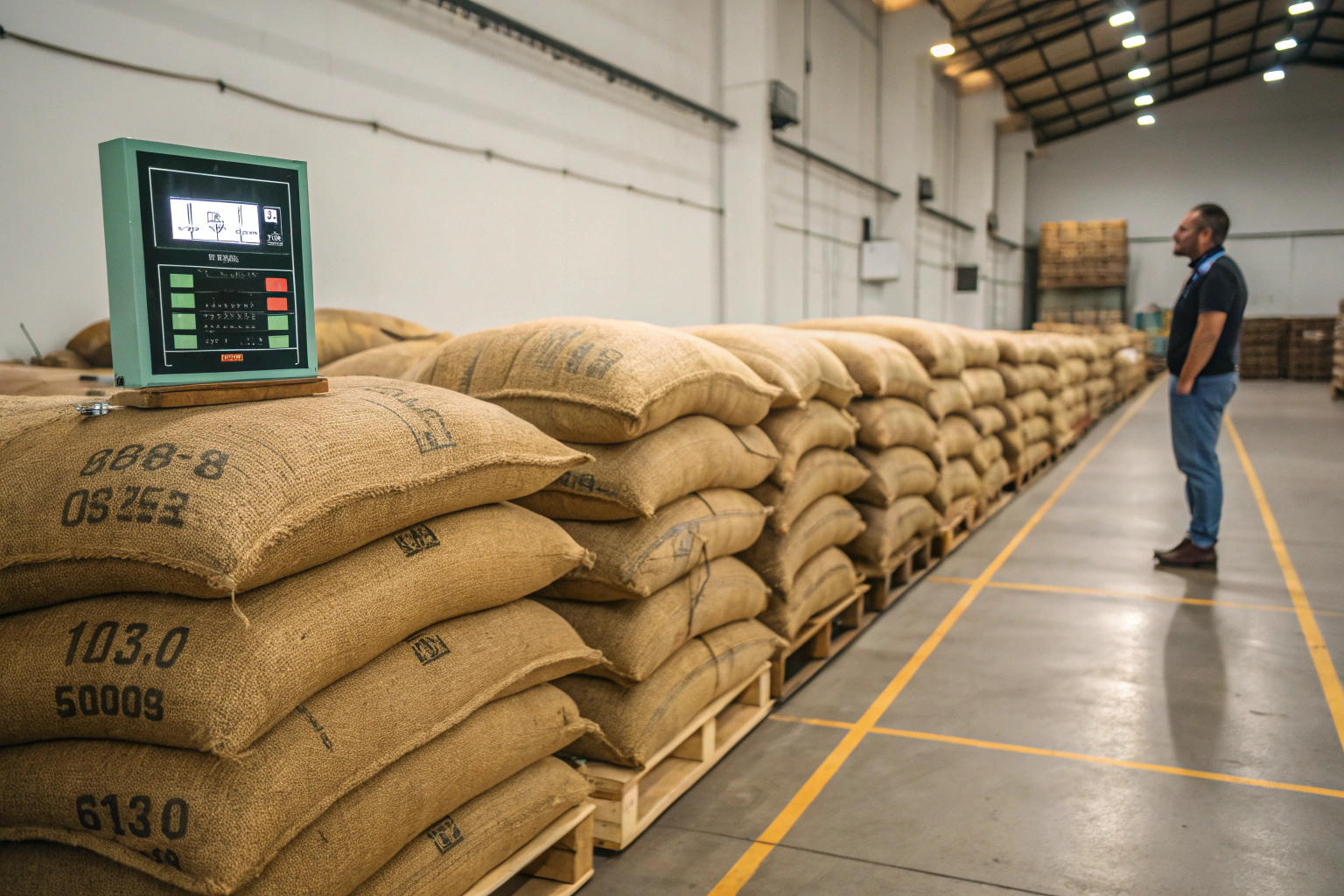
As a coffee buyer, you invest a significant amount of capital in your green coffee inventory. You've spent weeks sourcing the perfect beans, perhaps from our own plantations in Yunnan. The coffee arrives, smelling fresh and vibrant. But then it sits in a warehouse for weeks or months. You're worried. Will it taste the same when you're ready to roast it? Could it absorb strange odors, lose its flavor, or even develop mold? This is a major pain point, as improper storage can silently erode the quality of your most valuable asset, turning a great coffee into a mediocre one.
Honestly, the best practices for green coffee warehousing revolve around maintaining a stable, controlled environment with a temperature between 60-70°F (15-21°C) and a relative humidity of 55-65%. The coffee must be stored in a clean, dark, and well-ventilated space, elevated on pallets away from walls, and isolated from any strong odors. It's not just storage; it's preservation.
I see warehousing as the final act of stewardship for the coffee we grow. We go to incredible lengths to produce exceptional beans, and we need that care to continue until the moment they are roasted. A warehouse isn't just a holding space; it's a vault designed to protect flavor and investment. Let's walk through the essential practices that separate a professional coffee warehouse from a simple storage shed.
Why Are Temperature and Humidity So Critical?
If you remember only one thing about coffee storage, let it be this: stability is everything. Green coffee beans are hygroscopic, meaning they act like a sponge, absorbing and releasing moisture from the air around them. Fluctuations in temperature and humidity are their greatest enemies.
Extreme or fluctuating temperature and humidity are critical to avoid because they cause the coffee's moisture content to change, which rapidly accelerates the aging process. High humidity can lead to mold growth, while low humidity can cause the beans to dry out, resulting in a loss of volatile aromatic compounds and a flat, woody taste. A stable environment keeps the coffee in a state of suspended animation, preserving its original character.
Think of a fine wine cellar. You wouldn't store a valuable bottle of Bordeaux in a hot garage. Green coffee is just as sensitive. The goal is to create an environment that is so stable, the beans don't "realize" they've left the controlled conditions of their origin country. This is why we at Shanghai Fumao pay as much attention to our warehousing partners as we do to our farming practices.
What happens if the warehouse is too hot and humid?
This is the danger zone. A warm, damp environment is the perfect breeding ground for mold, which, as we know, can produce harmful mycotoxins. Even without mold, high humidity (above 70%) will cause the beans to absorb moisture, increasing their water activity. This "wakes up" the bean's cellular activity, causing it to age rapidly. The flavor profile will degrade quickly, losing its bright acidity and complex notes, and developing musty or baggy flavors.
What if it's too cold or dry?
A very dry environment (below 50% humidity) is also damaging. The coffee will lose its own internal moisture to the surrounding air. This moisture is essential for preserving the bean's cellular integrity and its volatile aromatic compounds—the very things that create flavor and aroma. The beans can become brittle, and the resulting cup will taste flat, papery, and lifeless. While less dangerous than high humidity, it's equally destructive to the coffee's quality and your investment.
How Should Coffee Be Physically Stored in the Warehouse?
Proper environmental control is useless if the coffee is stored incorrectly within the space. The physical layout of the warehouse is crucial for maintaining airflow, preventing contamination, and ensuring easy access for inventory management. You can't just pile the bags up in a corner.
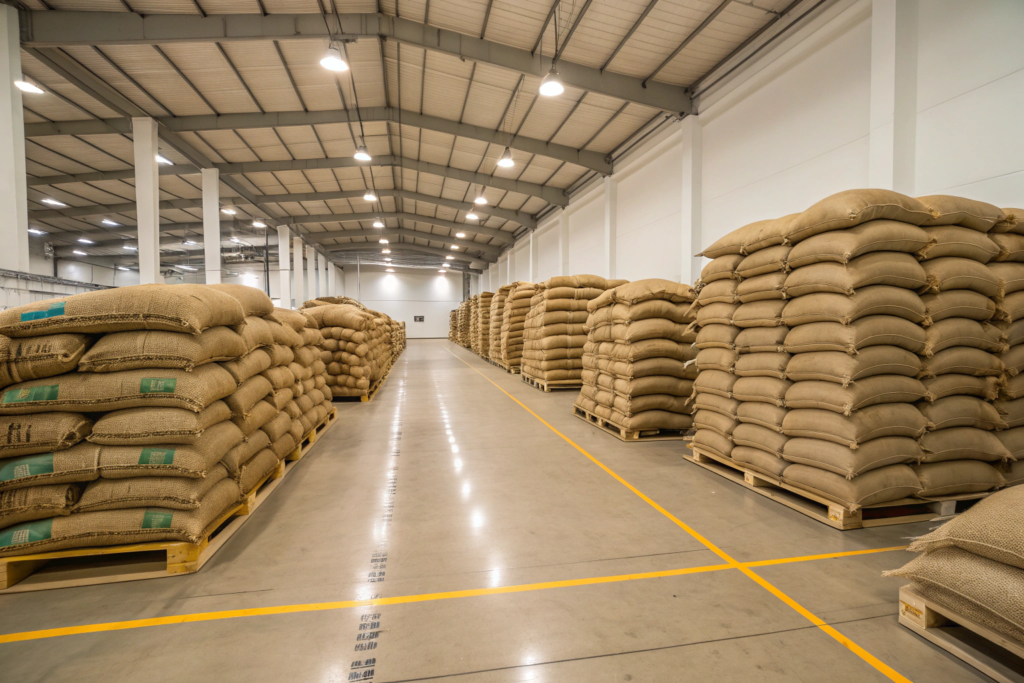
Green coffee should always be stored on pallets to keep it off the floor, away from potential moisture and pests. The pallets should be stacked with at least 18 inches of space away from any walls and with clear aisles between rows to promote adequate air circulation. This prevents the formation of microclimates and ensures the entire lot is kept in a uniform environment.
This practice, known as creating "islands" of coffee, is standard in any professional warehouse. It allows air to move freely around every stack of bags, preventing moisture buildup and helping to maintain a consistent temperature throughout the storage area. It also makes it much easier to inspect the coffee regularly and to implement a "First-In, First-Out" (FIFO) inventory system.
Why use pallets?
Placing coffee bags directly on a concrete floor is a recipe for disaster. Concrete can transmit moisture and cold, which will be absorbed by the bottom layer of bags, leading to condensation and potential mold. Pallets, typically made of wood or plastic, elevate the coffee, creating a crucial buffer zone that protects it from ground-level risks.
What is FIFO and why is it important?
FIFO (First-In, First-Out) is an inventory management principle stating that the first coffee that comes into the warehouse should be the first coffee that goes out to be roasted. This ensures that your oldest stock is used first, minimizing the time any single bag of coffee spends in storage. A well-organized warehouse with clear aisles and proper labeling makes implementing FIFO simple. It's a fundamental practice for preserving freshness across your entire inventory.
What Are the Biggest Contamination Risks in a Warehouse?
A warehouse is often a busy place, with other goods coming and going. Because coffee beans are so porous and absorbent, they are incredibly susceptible to picking up unwanted taints from their surroundings. Protecting your coffee from these external contaminants is just as important as managing the climate.
The biggest contamination risks in a warehouse are strong odors, dust, and pests. Coffee will readily absorb any ambient smells—from chemicals, other foods, or vehicle exhaust—leading to tainted flavors. It must be stored in a dedicated, odor-free area, and a robust pest control program must be in place.
I once heard a horror story about a roaster who stored their prized Gesha coffee next to a pallet of garlic powder. The coffee was completely ruined, tasting faintly of garlic. This is an extreme example, but it illustrates the point perfectly. This is why specialized coffee warehouses, like those certified by the Specialty Coffee Association (SCA), have strict rules about not storing any other aromatic products in the same space.
How do you prevent odor contamination?
The only way to prevent odor contamination is through isolation. Ideally, green coffee should be stored in a facility or a segregated section of a warehouse that is used exclusively for coffee. The area should be far from loading docks where trucks may be idling, and there should be a strict policy against storing any chemicals, spices, or other aromatic goods nearby. Even the materials used in the warehouse, like treated wood pallets, should be vetted to ensure they don't impart any chemical smells.
What does a good pest management program look like?
A professional warehouse will have an Integrated Pest Management (IPM) program. This doesn't just mean spraying chemicals. It's a proactive approach that includes:
- Sealing the Building: Ensuring there are no gaps in doors, windows, or walls where pests can enter.
- Regular Cleaning: Maintaining a high level of sanitation to remove potential food sources and nesting materials.
- Trapping and Monitoring: Placing traps (like pheromone traps for coffee moths) around the facility to monitor for any pest activity.
- Targeted Intervention: Using pesticides only as a last resort and in a targeted manner, never as a preventative blanket spray around the coffee itself.
How Do Packaging and Technology Improve Storage?
The traditional jute or burlap sack is an icon of the coffee industry, but it offers very little protection from the outside world. It's breathable, which means it does nothing to stop moisture fluctuations or odor contamination. This is why modern packaging technology has become a game-changer for preserving coffee quality.
Using high-barrier plastic liners, like GrainPro or Ecotact, inside the traditional jute sack is a best practice that creates a hermetically sealed environment for the green coffee. This liner isolates the beans from the ambient humidity, prevents odor contamination, and dramatically extends the coffee's shelf life by preserving its original moisture content and aroma.
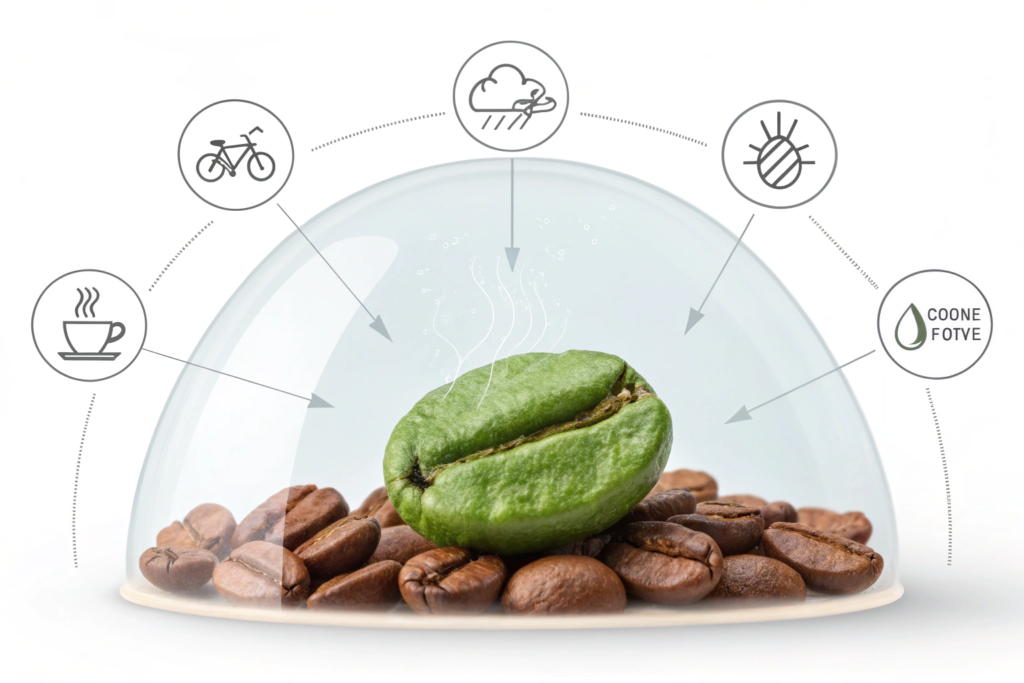
This technology has revolutionized coffee storage. It essentially creates a private, stable micro-climate for the beans inside the bag. It's the single biggest leap forward in warehousing practice in the last 50 years. At Shanghai Fumao, we ship all of our specialty-grade coffees in these high-barrier bags as a standard practice. It's an extra layer of insurance that guarantees the coffee you receive is as fresh as the day it left our mill.

How do high-barrier bags work?
These bags are made from a multi-layer plastic with very low oxygen and water vapor permeability. When sealed, they lock in the coffee's moisture content at the point of origin and prevent any external moisture or odors from getting in. This protects the coffee not only during its long ocean journey but also during its time in your warehouse, making it much more resilient to any minor environmental fluctuations.
What other technology is used in modern warehouses?
Modern coffee warehouses are becoming "smart" warehouses. They use a network of remote sensors to constantly monitor temperature and humidity in different zones, sending alerts if conditions go outside the ideal range. Warehouse Management Systems (WMS) are sophisticated software platforms that track every single bag of coffee, manage inventory using the FIFO principle, and provide complete traceability from the moment a bag arrives to the moment it leaves. This technology provides data, control, and peace of mind.
Conclusion
Proper green coffee warehousing is not a passive activity; it is an active and scientific process of preservation. By focusing on the core principles of environmental stability, organized physical storage, contamination prevention, and modern packaging technology, you can protect your coffee inventory from degradation. This ensures that the investment you made in high-quality beans pays off in the roaster and in the cup, not lost to the silent threats of a poor storage environment. It transforms your inventory from a depreciating asset into a stable, well-preserved vault of flavor.
We are committed to ensuring our coffee's quality is protected at every stage, and that includes providing you with beans that are packed and prepared for optimal storage. If you're ready to build a supply chain founded on quality from the farm all the way to your warehouse, we're here to help. Contact our coffee specialist at cathy@beanofcoffee.com to learn more about our best practices and to secure a supply of coffee that is built to last.