
As a coffee business owner, you look at your brand—your logo, your packaging, your cafe's decor—and you get a sinking feeling. It felt right five or ten years ago, but now it looks dated, generic, and tired. You see new, exciting coffee brands popping up with compelling stories and beautiful designs, and you feel like you're being left behind. The pain point is immense: your coffee is still excellent, but your brand no longer reflects that quality. You're losing relevance in a crowded market, and you know you need a change, but the idea of a full rebrand is terrifying. Where do you start? What if you get it wrong and alienate your existing customers?
Honestly, the best strategy for a coffee rebrand is to treat it not as a cosmetic makeover, but as a strategic realignment of your business. It begins with a deep, honest audit of your current brand's strengths and weaknesses and a clear definition of your future goals and target audience. The most successful rebrands are not just about a new logo; they are about telling a more authentic, compelling, and relevant story across every single touchpoint, from the design of your coffee bags to the way your baristas greet customers.
From my perspective, we at Shanghai Fumao are constantly engaged in a form of rebranding. We are working to change the world's perception of "Chinese coffee" from a low-grade commodity to a high-quality specialty origin. This isn't just about new marketing; it's about fundamentally improving our product and telling a true, powerful story about it. Your rebrand must follow the same principle: it must be an authentic reflection of a deeper truth or a new ambition. Let's break down the strategies to get it right.
How Do You Start? The "Brand Audit" and Goal Setting Phase.
Before you hire a designer or think about new colors, you must look inward. A rebrand that isn't grounded in a clear strategy is just redecorating.
Isn't a rebrand just about creating a new logo? Absolutely not. That's one of the last steps. The first step is to ask the hard questions. Why are we doing this? Who are we trying to reach? What is the core, authentic story that we are not telling effectively right now? Without clear answers to these questions, you are just throwing money at a design problem. This initial phase is about research and soul-searching.
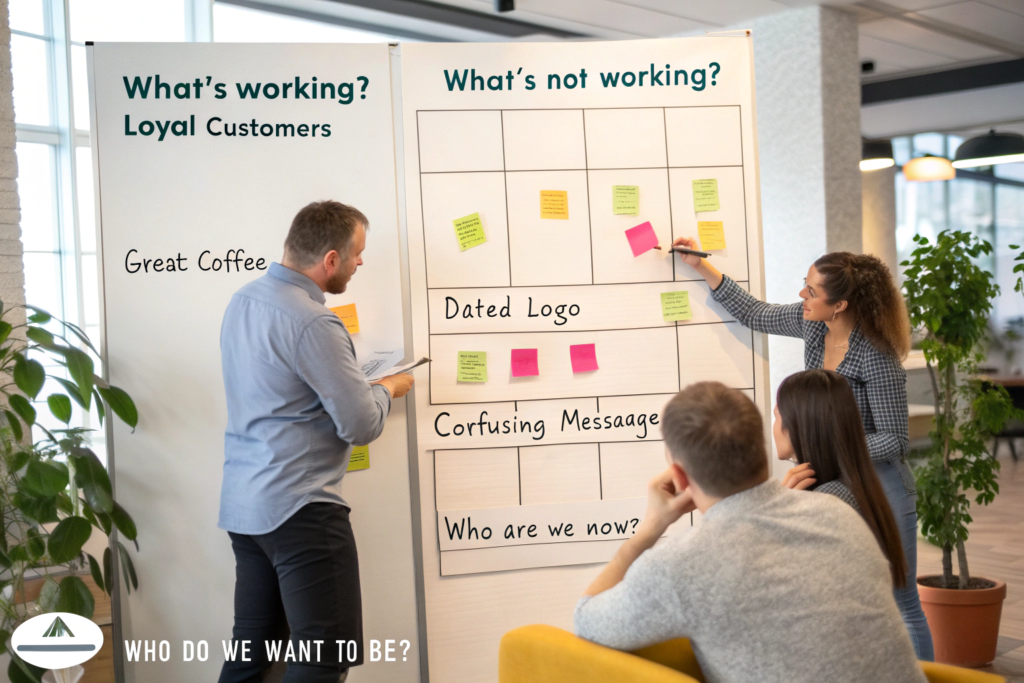
What questions should you ask in a brand audit?
- Brand Perception: How do your current customers see you? How do you think they see you? (Use surveys or informal interviews to get honest answers). How do your employees see the brand?
- Competitive Landscape: Who are your main competitors, especially the new, successful ones? What are they doing well? Where is the "white space" or opportunity for you to be different?
- Strengths & Weaknesses: What are the core equities of your current brand that you absolutely must not lose? (e.g., a reputation for friendliness, a specific beloved blend). What are the biggest liabilities holding you back? (e.g., packaging that looks like every other brand on the shelf).
How do you set clear goals for the rebrand?
Your goals must be specific. "To look more modern" is not a goal.
- Good Goal Example 1 (Market Repositioning): "To shift our brand perception from a 'comfortable, traditional coffee shop' to a 'premium, specialty coffee destination' to attract a younger, more discerning clientele and justify a price increase."
- Good Goal Example 2 (Expansion): "To create a new brand identity and packaging system that is scalable and looks professional on grocery store shelves as we expand into wholesale."
- Good Goal Example 3 (Storytelling): "To rebrand around our new commitment to direct-sourcing from specific farms in Yunnan, China, making traceability and origin the central theme of our story."
How Do You Craft Your New Brand Story and Messaging?
Once you know why you're rebranding, you need to define what you're going to say. Your brand story is the foundation of your new identity. It's the narrative that will inform your logo, your packaging, your website copy, and your social media posts.
My story is just "we make good coffee." That's a feature, not a story. A story has a character (you, the founder, or the farmer), a setting (your community, or the origin farm), and a plot (your journey, your mission, your unique process). You need to find the most authentic and compelling narrative that sets you apart. This is where you define your "why."
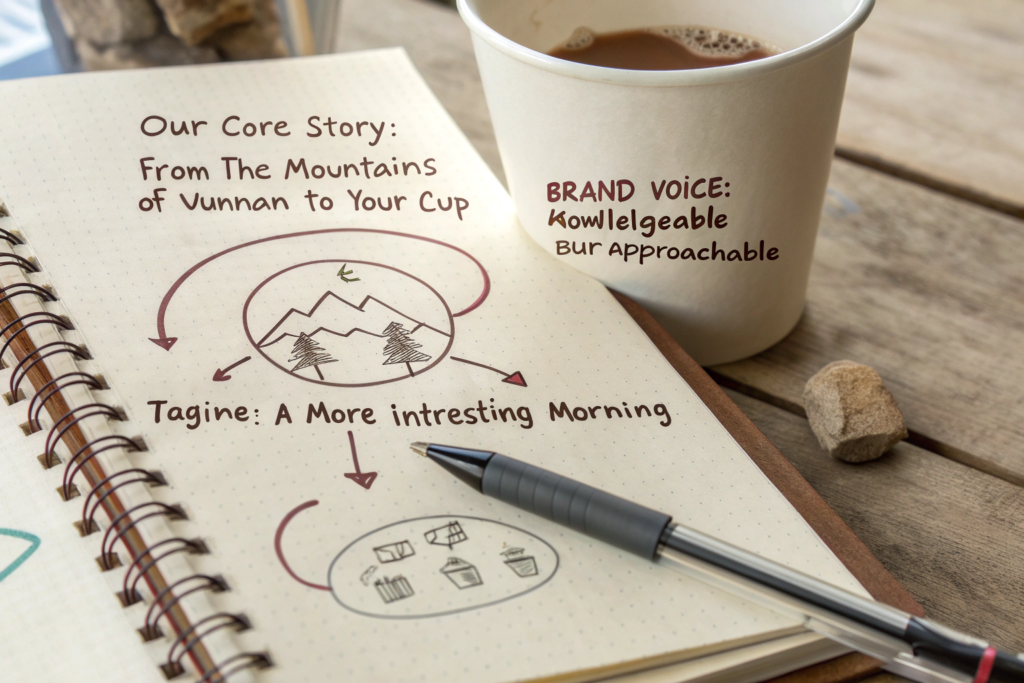
What are some powerful coffee brand narratives?
- The Founder Story: "I started this roastery in my garage because I was obsessed with finding the perfect espresso. That obsession for perfection is still in every bag we sell."
- The Origin Story: "We fell in love with the unique, tea-like coffees from the Baoshan region of Yunnan. Our mission is to share the story of this incredible, emerging origin with the world." This is a core part of our identity at BeanofCoffee.com.
- The Community Story: "We're more than a coffee shop; we're the living room of our neighborhood. Our brand is about fostering connection, one cup at a time."
- The Process Story: "We are obsessed with the science of roasting. Our rebrand is about showcasing our technical expertise and the meticulous data-driven approach we take to unlock the best flavor in every bean."
How do you define your brand voice?
Once you have your story, you need to decide how you will tell it. Your brand voice is your personality. Are you:
- Knowledgeable & Authoritative? (Like a scientist or a connoisseur).
- Warm & Approachable? (Like a trusted friend).
- Playful & Irreverent? (Like a witty artist).
- Minimalist & Elegant? (Like a luxury brand).
This voice must be consistent everywhere, from your Instagram captions to the text on your menu.
How Do You Translate the Story into a Visual Identity?
Now you can start thinking about the logo. The visual identity is the tangible expression of your strategy and your story. It's not just about making things look pretty; it's about making strategic design choices that communicate your new message.
Should I just hire a cheap designer online? You can, but it's a huge risk. A rebrand is a major business investment. It's worth partnering with a professional brand designer or agency that has experience in the consumer goods or coffee space. A good designer won't just give you a logo; they will create a complete visual identity system that works across all your touchpoints.
This system includes your logo, color palette, typography, and imagery style.
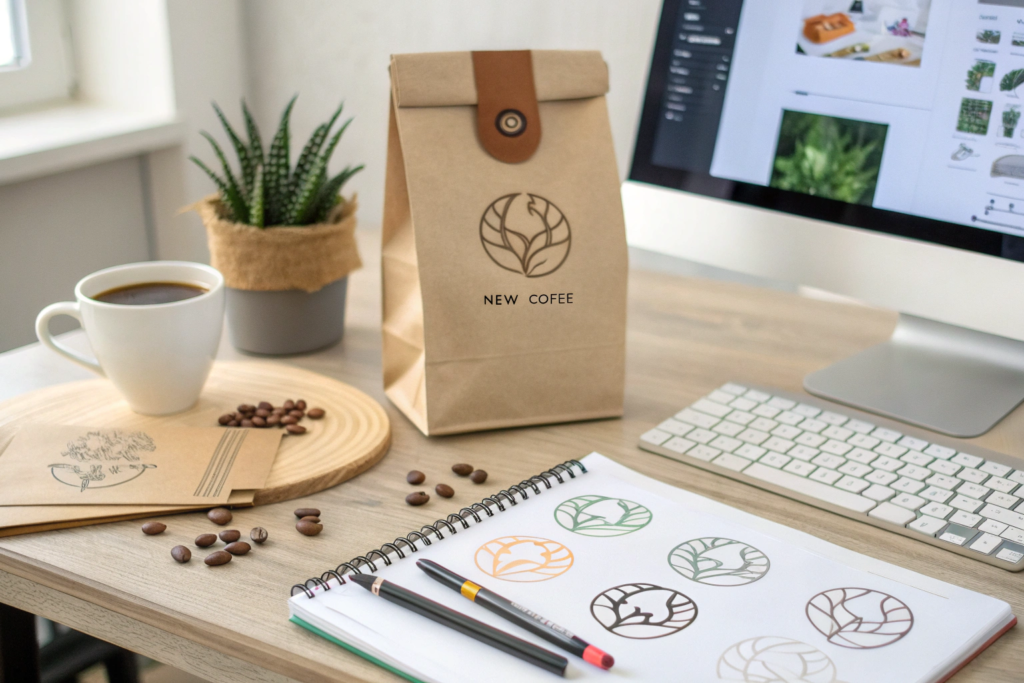
What makes a good coffee logo?
- Simplicity & Scalability: It needs to look good on a tiny social media profile picture and on a large sign.
- Memorability: Is it distinctive enough to stand out?
- Appropriateness: Does it feel like it belongs to your new brand story? (e.g., an elegant, serif font for a luxury brand; a bold, hand-drawn script for an artisanal, rustic brand).
What are the key elements of the visual system?
- Color Palette: Colors evoke powerful emotions. Are you earthy and natural (browns, greens)? Or are you modern and vibrant (bright, bold colors)?
- Typography: Your choice of fonts is critical. It sets the tone of your voice.
- Packaging: This is your most important brand asset. It's your "salesperson on the shelf." The design must be eye-catching, tell your story, and clearly communicate the key information (origin, flavor notes, etc.). Investing in great packaging design is non-negotiable.
- Imagery Style: How will you use photography and illustration? Will it be bright and airy, or dark and moody? This needs to be consistent.
How Do You Launch the New Brand and Manage the Transition?
You've done all the hard work. You have a new brand identity you are incredibly proud of. Now you have to reveal it to the world. A rebrand launch should not be a quiet, unannounced change. It should be a confident, celebratory event.
What if my old customers hate it? This is a common fear, but it can be managed. The key is to bring your loyal customers along on the journey. Don't just spring it on them. Tease the change, explain the "why" behind it, and frame it as a positive evolution that will lead to an even better experience for them.

What are the steps for a successful launch?
- The Internal Launch: Your employees are your most important brand ambassadors. Launch the new brand to them first. Get them excited, explain the story, and train them on how to talk about it.
- The "Tease" Phase: A week or two before the launch, start teasing the change on social media. "Something new is brewing..." "A new chapter begins on [Date]."
- The Big Reveal: Launch the new brand across all channels simultaneously. Your website, social media profiles, packaging, and physical cafe should all switch over on the same day.
- Tell the Story: On launch day, publish a blog post or a video telling the story of the rebrand. Explain why you did it and what it means for the future of your company. Be open and passionate.
- Create an Event: Host a launch party at your cafe. Offer special promotions. Invite local media or influencers. Make it a celebration.
How do you handle negative feedback?
There will always be some people who resist change.
- Listen Respectfully: Acknowledge their feelings. "We understand that the old logo was beloved, and we appreciate your loyalty over the years."
- Confidently Explain the "Why": "We made this change because we wanted our brand to better reflect the incredible quality of the coffee we source and our commitment to telling the stories of farmers from places like Yunnan."
- Stand Firm: Don't get defensive or apologize for the change. A rebrand is a forward-looking business decision. Show confidence in your new direction.
Conclusion
A successful coffee rebranding is a profound act of business transformation. It's a declaration of who you are and where you are going. By starting with a deep strategic audit, crafting an authentic brand story, translating that story into a cohesive visual identity, and launching it with confidence and celebration, you can do more than just change your look. You can reignite passion for your business, attract a new generation of customers, and build a brand that is as compelling and high-quality as the coffee you serve. It's a challenging journey, but it's one that can secure your relevance and success for years to come.
As you consider your own brand story, remember that a powerful narrative often starts at the source. The story of a unique origin, like our specialty coffees from Yunnan, can be a powerful foundation for a rebrand. If you're looking for a coffee with a story worth telling, we're here to help you write that next chapter. Contact our coffee specialist at cathy@beanofcoffee.com.